Scott Rolen worried about the Phillies’ commitment to winning. He didn’t have the same concerns about the Cardinals.
 On July 29, 2002, the Cardinals traded for Rolen, acquiring the third baseman, along with pitcher Doug Nickle, from the Phillies for infielder Placido Polanco and pitchers Bud Smith and Mike Timlin.
Having struck out in their efforts to get Rolen to sign a contract extension before he could become eligible to enter free agency after the 2002 season, the Phillies sought to trade him.
The Cardinals were the beneficiaries, adding Rolen to an imposing lineup with Jim Edmonds, Albert Pujols and Edgar Renteria.
The Phillies had losing records in six of Rolen’s seven seasons (1996-2002) with them and never qualified for the playoffs. With the Cardinals, Rolen played in two World Series, helping them to a championship in 2006.
Hoosier hot shot
Rolen was born in Evansville, Ind., and raised in Jasper, Ind. When he was a youth in the 1980s, his parents would make the 200-mile drive with him from Jasper to St. Louis to attend Cardinals games at Busch Memorial Stadium. “It’s the place I always dreamed of playing,” Rolen told ESPN.com years later.
At Jasper High School, Rolen won the state’s Mr. Baseball honor given to the best prep player. He also received basketball scholarship offers from schools such as Georgia and Oklahoma State. Georgia recruiters promised he’d start in the backcourt as a freshman, according to the Philadelphia Daily News.
Rolen was 18 when the Phillies picked him in the second round of the June 1993 amateur draft. After he signed with them that summer, Phillies scouting director Mike Arbuckle brought Rolen to St. Louis and had him take grounders at third base during infield practice before a game against the Cardinals.
“Dave Hollins, then the Phillies’ third baseman, took one look at the eager Indiana schoolboy standing at his position and said, ‘Get lost,’ ” according to Philadelphia Inquirer columnist Jim Salisbury.
Described by the Inquirer as “a spectacular fielder with gap power,” Rolen, 21, made his big-league debut for the Phillies against the Cardinals at Philadelphia on Aug. 1, 1996. To open a spot for him at third base, the Phillies shifted the positions of a pair of former Cardinals, moving Todd Zeile from third to first and Gregg Jefferies from first to left.
With his parents and high school coach in attendance, Rolen got his first hit, a double against Donovan Osborne. Boxscore
Hurt feelings
In 1997, his first full season in the majors, Rolen earned the National League Rookie of the Year Award. The next season, he had 31 home runs, 110 RBI and won a Gold Glove Award, the first of eight he would receive in his career. Video
During the 2001 season, Rolen’s relationship with Phillies management soured. In June, after Rolen went hitless with three strikeouts in the Phillies’ one-run loss to the Red Sox, manager Larry Bowa told the Philadelphia Daily News that Rolen was “killing us” in the middle of the lineup.
(Rolen hit .350 with runners in scoring position for the 2001 Phillies. Overall, for the season, he had 25 home runs and 107 RBI.)
“Rolen believes that his manager should be like a family member, there to protect, encourage and nurture,” Jim Salisbury noted in the Philadelphia Inquirer. “He felt betrayed by Bowa, felt like the man who should have been building his confidence was tearing it down.”
Two months later, Phillies adviser Dallas Green, who had managed the club to a World Series title in 1980, said in a radio interview that Rolen “can be greater but his personality won’t let him.”
“Scotty is satisfied with being a so-so-player” Green said.
Stung by the criticism, Rolen told the Philadelphia Inquirer, “I don’t feel as welcome here in this organization as I have in the past.”
Phillies general manager Ed Wade wanted to sign Rolen to a long-term contract extension and keep him from opting for free agency after the 2002 season. In November 2001, Wade told the Philadelphia Daily News he offered Rolen $90 million guaranteed over seven years, plus three option years that could bring the total contract value to $140 million, but Rolen rejected it because he questioned whether the team was committed to winning.
Almost an Oriole
With Rolen showing no intention of signing a contract extension, the Phillies tried to trade him at the December 2001 baseball winter meetings. The Cardinals were interested until the Phillies asked for Rookie of the Year Award winner Albert Pujols to be included in a package of players, the St. Louis Post-Dispatch reported.
The Phillies and Orioles “came agonizingly close” to a nine-player deal involving Rolen, the Philadelphia Inquirer reported. According to the Baltimore Sun, the Orioles agreed to send pitchers Sidney Ponson, Buddy Groom, Erik Bedard and Sean Douglass plus utility player Jeff Conine to the Phillies for Rolen, pitcher Chris Brock, infielder Kevin Jordan and a prospect.
When Orioles general manager Syd Thrift called club owner Peter Angelos to tell him about the trade, Angelos asked what it would take to sign Rolen to a contract extension. “Thrift suggested at least a 10-year, $150 million bid,” the Baltimore Sun reported.
Angelos nixed the trade.
Done deal
When the 2002 season began, Rolen still was with the Phillies. He played well, but the Phillies didn’t, and they shopped him.
The Cardinals made a proposal on July 25, but it nearly fell apart on July 28, according to the Philadelphia Daily News.
The Cardinals initially insisted Rolen had to agree on terms of a contract extension with them before a trade could be made, the Post-Dispatch reported. They also wanted the Phillies to pay the remaining portion of Rolen’s 2002 salary.
On July 29, the Phillies came close to trading Rolen to the Reds, according to the Philadelphia Daily News. Reds general manager Jim Bowden told WLW radio he had a trade in place for Rolen but couldn’t make it work financially, The Cincinnati Post reported.
The Phillies went back to the Cardinals, who relented on their demands after the Phillies agreed to take Mike Timlin along with Placido Polanco and Bud Smith in the trade. Unloading Timlin opened room on the payroll for the Cardinals to pay the remainder of Rolen’s 2002 salary.
Happy days
Rolen, 27, went from a last-place team to a first-place team. “I feel as if I’ve died and gone to heaven,” he told ESPN.com.
According to the Philadelphia Daily News, Bowa said he called Rolen after the trade and left a message. “I told him, ‘It’s been a pleasure managing you. If everybody played the game like you do, there would be no problems. Careers are short. Try to be happy wherever you end up.’ “
In his Cardinals debut, on July 30, 2002, at Miami, Rolen was 2-for-4 with a run and a RBI. Boxscore
“I’ve been given an opportunity right now and I’m going to run through a wall to try to take advantage of it,” Rolen said to the Philadelphia Daily News.
On Aug. 16, 2002, Rolen played in Philadelphia for the first time since being traded. Enduring what the Philadelphia Inquirer described as “an evening of boos and insults,” Rolen had two hits against Randy Wolf. Boxscore
A month later, Rolen agreed to a $90 million eight-year contract extension with the Cardinals. “It wasn’t a chase for the last dollar,” Rolen told the Post-Dispatch. “It was a chase for happiness.”
Bad vibes return
In 2004, the Cardinals won the National League championship and Rolen had his best season: .314 batting average, .409 on-base percentage, 34 home runs, 124 RBI and 109 runs scored.
The happiness began to fade the next year when an injury to his left shoulder limited Rolen to 56 games. Rolen believed the Cardinals misled him about the severity of the injury, the Post-Dispatch reported, and it caused a strain in his relationship with manager Tony La Russa.
In 2006, La Russa benched a slumping Rolen during the National League Division Series. In the World Series, Rolen hit .421 and helped the Cardinals prevail against the Tigers.
After the 2007 season, La Russa sent Rolen a letter, expressing his opinions of the player, and Rolen didn’t like it. When La Russa signed in October 2007 to remain Cardinals manager, Rolen requested a trade. He was dealt to the Blue Jays for Troy Glaus in January 2008.
In six seasons with St. Louis, Rolen had a .286 batting average and .370 on-base percentage. In 17 years in the majors with the Phillies, Cardinals, Blue Jays and Reds, he produced 2,077 hits, 316 home runs and 1,287 RBI.
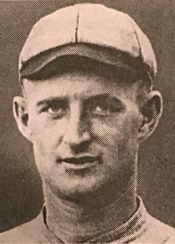 In 1922, Doak pitched a pair of one-hitters for the Cardinals.
 On July 19, 2002, the Cardinals acquired Finley from the Cleveland Indians for minor-league first baseman Luis Garcia and a player to be named. Three weeks later, the Cardinals sent another prospect, outfielder Coco Crisp, to the Indians, completing the deal.
 On June 19, 1932, Tex Carleton got his first win for the Cardinals with a two-hit shutout of the New York Giants at the Polo Grounds.
 An exceptional Little League, Pony League and high school player, Deras was signed by the Cardinals, who outbid multiple teams with the intention of grooming him to replace Ken Boyer at third base.
 Morris, 21, had a date with a female friend, and two reserved-seat tickets to that night’s game between the Reds and Cardinals at Sportsman’s Park in St. Louis.
 RetroSimba