With the sort of name once found in dime store novels, Pickles Dillhoefer made quite an impression as a Cardinals catcher.
 At 5 feet 7, 154 pounds, Pickles was a gherkin who played a position filled with hulks. What he lacked in size he made up for in spirit. Aggressive and energetic, Dillhoefer was popular with teammates and fans.
An example of his fiery approach occurred on Aug. 4, 1921, when he came to the defense of a fallen teammate in a game against the Giants.
Sadly, six months later, soon after one of the happiest events of his life, Dillhoefer experienced a tragic twist of fate.
On the move
William Martin Dillhoefer was born and raised in Cleveland. The first four letters of his surname led to him being called Pickles by boyhood pals, according to the Society for American Baseball Research. The nickname followed Dillhoefer into baseball.
Dillhoefer reached the big leagues with the Cubs as a backup catcher in 1917 and made his debut in a game against the Cardinals. Boxscore
After the season, the Cubs swapped Dillhoefer, Mike Prendergast and $55,000 to the Phillies for Bill Killefer and future Hall of Famer Grover Cleveland Alexander. Dillhoefer played in eight games for the 1918 Phillies before enlisting in the Army during World War I.
Discharged, he was packaged in a trade on Jan. 21, 1919. The Phillies sent third baseman Milt Stock, pitcher Dixie Davis and Dillhoefer to the Cardinals for pitcher Gene Packard and infielders Doug Baird and Stuffy Stewart.
Handy man
Frank Snyder was the Cardinals’ Opening Day catcher in 1919, with Dillhoefer and Verne Clemons the backups. When the Cardinals dealt Snyder to the Giants in July 1919, Clemons became the starter.
Sometimes, when Dillhoefer wasn’t playing, manager Branch Rickey used him as a coach on the baselines. Dillhoefer possessed a “foghorn voice and peppery coaching tactics,” the St. Louis Star-Times noted.
A right-handed batter with little power, Dillhoefer made 24 starts at catcher for the Cardinals in 1919 and 57 in 1920.
The Star-Times described Dillhoefer as “a brainy player noted for his aggressiveness.”
According to the St. Louis Post-Dispatch, “Dillhoefer was one of the most popular players in St. Louis. He had such a fighting spirit, boundless enthusiasm and excellent baseline coaching qualities. He was considered one of the club’s best assets on the field and at the box office.”
Playing rough
On Thursday afternoon, Aug. 4, 1921, when the Giants and Cardinals played at Sportsman’s Park in St. Louis, the catchers were Frank Snyder, the former Cardinal, and Dillhoefer.
The Cardinals broke a scoreless tie in the sixth inning. Joe Schultz led off with a single, advanced to second on Milt Stock’s sacrifice bunt and scored on a Rogers Hornsby single.
In the eighth, Schultz collapsed when hit behind the left ear by a pitch from Art Nehf. The plunking apparently was unintentional because Nehf’s “groan of regret could be heard in the press box,” the Post-Dispatch reported.
Cardinals rushed from the dugout to attend to Schultz. “After two or three minutes, he was able to sit up and take a drink,” according to the Post-Dispatch.
Dillhoefer barked at the Giants, accusing Nehf of trying to brush back Schultz. He warned them to be ready to duck when it was their turn to bat.
Those were fighting words to Frank Snyder. He approached Dillhoefer, threw down his mask and glove, and “began swinging rights and lefts,” the Post-Dispatch reported.
Snyder landed at least one punch to Dillhoefer’s face, according to the New York Daily News.
Snyder was 6 feet 2 and 185 pounds, five inches taller and more than 30 pounds heavier than his counterpart, but Dillhoefer “waded right in and was holding his own” until umpire Ernie Quigley got between the two men.
Quigley “locked his arm around Snyder and pushed him halfway across the diamond,” the Post-Dispatch reported. “Either Quigley is very strong, or Snyder did not want to fight any more, for Quigley wheeled him around the field like a toy wheelbarrow.”
Snyder and Dillhoefer were ejected. As Schultz was helped to the dugout, “several policemen appeared on the scene, half a dozen Cardinals held the enraged Dillhoefer, and the crowd yelled at Snyder,” the Post-Dispatch reported.
According to the Star-Times, Snyder “tried to climb into the stands” to reach the hecklers, and was escorted by two policemen to the dugout.
Angered by something a spectator said, Giants outfielder Casey Stengel started a fight and was ejected. “In the excitement,” the Post-Dispatch noted, “half a dozen bottles and several seat cushions were thrown in the general direction of the Giants’ dugout.”
After play resumed, Cardinals rookie starter Bill Pertica completed a six-hit shutout. Boxscore
Heartbreaking turn
Dillhoefer made 42 starts for the 1921 Cardinals and was in their plans for the next season.
On Jan. 14, 1922, Dillhoefer married teacher Massie Slocum in her hometown of Mobile, Ala. After a honeymoon in New Orleans, they were returning to St. Louis when Dillhoefer became ill. He was admitted to St. John’s Hospital in St. Louis on Jan. 19 and was diagnosed with typhoid fever.
According to the Mayo Clinic, typhoid fever is caused by salmonella typhi bacteria. Contaminated food and water or close contact with an infected person cause typhoid fever.
Dillhoefer, 28, still was in the hospital when he died on Feb. 23, barely a month after his wedding.
“I can hardly believe Dilly is gone,” manager Branch Rickey told the Star-Times from the Cardinals’ spring training camp in Orange, Texas.
“I knew he was a very sick man, but it is a big shock to learn of his death. Dillhoefer endeared himself to me and all the players. He wasn’t very big as catchers go, but he made up for lack of size by possessing a lion heart.”
Two days after his death, Dillhoefer was buried in Mobile. Among the pallbearers were Rickey, Cardinals players Verne Clemons, Bill Sherdel and Milt Stock, and Cardinals scout Charley Barrett, the Associated Press reported.
The St. Louis Browns, who held spring training in Mobile, were represented at the funeral by manager Lee Fohl, coach Lefty Leifield and catchers Hank Severeid and Pat Collins.
According to the Society for American Baseball Research, Dillhoefer’s widow remained a teacher and never remarried. She died in 1985, 63 years after her wedding, and was buried beside her husband.
 In 1941, Krist posted a 10-0 record for them.
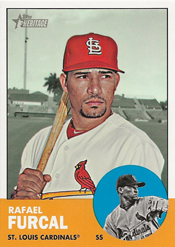 On July 31, 2011, the Cardinals acquired Furcal from the Dodgers for outfielder Alex Castellanos. As a player with 10 years or more of big-league service, including at least five with the same team, Furcal’s permission was needed to make the deal.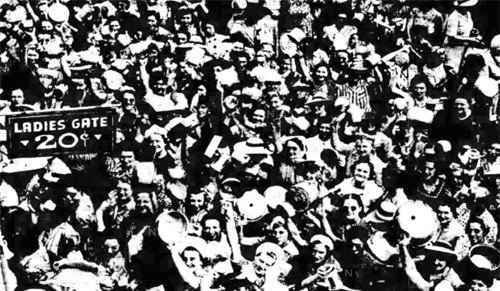
 On July 27, 2011, Rasmus was the marquee name in a multi-player trade the Cardinals made with the Blue Jays. The Cardinals dealt Rasmus and pitchers Trever Miller, Brian Tallet and P.J. Walters for pitchers Edwin Jackson, Octavio Dotel, Marc Rzepczynski and outfielder Corey Patterson.
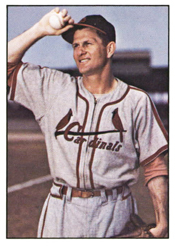 On July 16, 1946, Dusak hit a three-run walkoff home run in the ninth, enabling the Cardinals to complete a four-game sweep of the front-running Dodgers.
 RetroSimba