From the start of his big-league career with the Cardinals, Albert Pujols showed he was a special talent.
 On April 2, 2001, Pujols made his debut in the majors in the Cardinals’ season opener against the Rockies at Denver.
Pujols, 21, earned a spot on the Cardinals’ Opening Day roster and in their starting lineup after arriving at spring training as a non-roster player with one year of experience in the minors.
Playing multiple positions, Pujols had an awesome April and gave notice he would be a force in the big leagues.
Big leap
Playing for Maple Woods Community College in Kansas City, Pujols was chosen by the Cardinals in the 13th round of the June 1999 amateur draft on the recommendation of scout Dave Karaff. Pujols signed with them in August.
His first professional season was in 2000 when he played for three Cardinals farm teams. Most of his games were with Class A Peoria. A right-handed batter, Pujols totaled 41 doubles and 96 RBI for the season.
At spring training with the Cardinals in 2001, Pujols hit .349, rarely struck out and played five positions: left field, right field, third base, first base and shortstop. Yes, shortstop.
For instance, in one exhibition game, Pujols started in right field before he shifted to shortstop and turned “a nifty double play as he fielded a grounder and stepped on the bag ahead of a charging runner,” the St. Louis Post-Dispatch reported.
Cardinals manager Tony La Russa said, “I watched him take ground balls in Florida at short. I talked to him about it and he said he played it in college.”
Pujols impressed Cardinals talent evaluators, including La Russa, but most thought it would be unlikely for him to make the jump from Class A to the big leagues.
La Russa was “against keeping Pujols unless he could find some steady playing time for him,” the Post-Dispatch reported.
As the start of the season neared, Pujols told the newspaper, “If I had to go to the minor leagues tomorrow, it would be fine with me.”
When Bobby Bonilla went on the disabled list, it cleared a spot on the Opening Day roster for Pujols.
“The more we saw him, the more we felt he could definitely contribute,” Cardinals general manager Walt Jocketty said.
Starting lineup
With the Rockies starting left-hander Mike Hampton on Opening Day, La Russa wanted right-handed batters in the lineup. He chose Pujols to start in left field instead of Ray Lankford.
“He’s really got a maturity about him you don’t see very often in young players,” La Russa said. “You don’t see it in older players.”
Batting sixth, Pujols was 1-for-3 against Hampton. He nearly had a hit in his first at-bat when he pulled a pitch hard on the ground, but “was robbed” by third baseman Jeff Cirillo, who fielded the ball and threw him out, the Post-Dispatch noted.
After a flyout in the fourth, Pujols singled to left in the seventh, then was caught attempting to steal second. Video
Pujols downplayed the significance of his first hit. “I’ve been doing it the whole spring training,” he told the Post-Dispatch. Boxscore
Historic homers
Four days later at Phoenix, Pujols, batting fifth and playing right field, hit his first big-league home run, a two-run shot against the Diamondbacks’ Armando Reynoso. Video
“Pujols, who had been fed a steady diet of breaking pitches, jumped on a 1-and-2 hanger and sent it into the left field seats,” the Post-Dispatch reported. Boxscore
When the Cardinals played their 2001 home opener on April 9, Pujols started at third base and batted seventh. In the first inning, he made a barehand grab of Todd Walker’s swinging bunt and threw him out at first.
In the second, Pujols got a fastball from Denny Neagle on a 1-and-2 count and drove it over the wall in left for a two-run home run, his first at St. Louis. Pujols rewarded the applauding fans with a curtain call.
Pujols was the first Cardinals rookie to hit a home run in his first home game since Wally Moon did it in 1954, according to the Post-Dispatch.
The Rockies showed their respect for the rookie in the ninth when they walked him intentionally with two on and none out. Boxscore
Fitting right in
Pujols batted .370 in April, with 34 hits and 27 RBI in 24 games. His on-base percentage for the month was .431.
“I don’t think anybody has told him this is a pretty tough league,” Cardinals pitcher Andy Benes said.
The Sporting News noted, “Pujols has an air about him, as if he belongs in the major leagues, even though he has just one year of pro experience.”
Expos manager Felipe Alou, like Pujols, a native of the Dominican Republic, marveled that when the rookie stepped into the batter’s box, “He stands there like a man. They didn’t teach him fear where he grew up.”
Pujols remained consistently productive and versatile throughout the 2001 season. He made 52 starts at third base, 38 in left field, 33 in right field, 31 at first base and two as designated hitter.
Named the recipient of the National League Rookie of the Year Award, Pujols led the 2001 Cardinals in runs (112), hits (194), doubles (47), home runs (37), RBI (130), batting average (.329) and total bases (360). Video
According to the Cardinals’ media guide, Pujols was the first National League rookie to hit at least .300 with 30 home runs, 100 RBI and 100 runs scored.
Pujols also was the first player since Ken Boyer in 1961 to lead the Cardinals in batting average, home runs, RBI and runs scored in one season.
Cardinals coach Mike Easler said solid mechanics enabled Pujols to hit pitches of all speeds and locations.
In describing Pujols’ batting approach, Easler told The Sporting News, “He stays quiet, the less movement the better. He’s got a good, solid base, knees flexed, slightly in. He’s pre-loaded, meaning his hands are back. He’s got vision. The eyes are focused on the release point. He’s almost a no-strider. That quiets his head down, so he sees the ball better.”
 Multiple teams made offers for Carlton after the Phillies said they might deal him in exchange for five or six premium players.
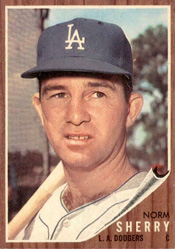 A catcher who earned a reputation for leadership while playing for the Dodgers and Mets, Sherry became a coach and manager.
 On March 27, 1961, Jackson suffered a fractured jaw when Snider’s bat splintered and struck Jackson in the face during a spring training game.
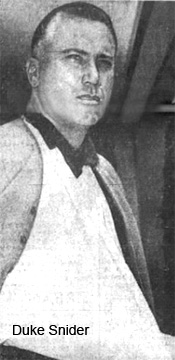 In the third, Gibson threw a pitch on the outside corner to Snider, a left-handed batter. In the book “From Ghetto to Glory,” Gibson said, “I pitched away to Snider because he was a good pull hitter.”
 Soon after Cormier debuted in the majors with the Cardinals in 1991, Duquette, the Montreal Expos’ general manager, tried to acquire the
 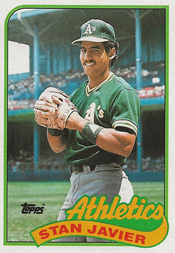 On March 26, 1981, Javier signed with the Cardinals as an amateur free agent.
 RetroSimba