Feeds:
Posts
Comments

(Updated March 5, 2022)

An injury to Tommy Herr opened a path to the big leagues with the Cardinals for Rafael Santana.

On Feb. 16, 1981, the Cardinals purchased the contract of Santana, a minor-league infielder, from the Yankees on a conditional basis. The Cardinals wanted to take a look at Santana in training camp before deciding whether to keep him or send him back to the Yankees.

After choosing to retain Santana and assigning him to their farm system, the Cardinals agreed to give the Yankees a player to be named as compensation.

Santana remained in the minors the next two seasons and wasn’t prominent in the Cardinals’ plans when spring training began in 1983, but that changed when Herr, their second baseman, got sidelined because of a knee injury.

Santana made the 1983 Cardinals’ Opening Day roster as a backup infielder. A year later, he replaced Jose Oquendo as Mets shortstop. He still was the starter at that position in 1986 when the Mets became World Series champions.

Minor prospect

Born and raised in the Dominican Republic, Santana was 18 when he signed with the Yankees in 1976. He spent four seasons (1977-80) in their farm system, with Class AA being the highest level he reached.

When the Cardinals acquired Santana in 1981, they sent him to their Class AA club at Arkansas. He played shortstop and batted .233 for the season.

For a while that year, it seemed the Cardinals had gotten the worst of the deal.

Go figure

On June 7, 1981, four months after they got Santana, the Cardinals sent pitcher George Frazier, who was with their Springfield, Ill., farm team, to the Yankees as the player to be named, completing the transaction.

According to columnist Dick Young in The Sporting News, the Cardinals and Cubs had agreed to a swap of Frazier for pitcher Doug Capilla in spring 1981, but when Cubs manager Joey Amalfitano objected, the trade was called off. Then the Cardinals sent Frazier to the Yankees.

The move got little attention. A right-hander, Frazier was 3-11 with three saves in parts of three seasons (1978-80) with the Cardinals.

“I had three trials and I really had not done a magnificent job,” Frazier told the St. Louis Post-Dispatch. “I was getting to a stagnant situation.”

The Yankees sent him to their farm team in Columbus, Ohio. “I thought I was going from one graveyard to another,” Frazier said.

After Yankees minor-league coach Sammy Ellis changed Frazier’s delivery and taught him to throw a forkball, he thrived. In 27 appearances for Columbus, Frazier was 4-1 with nine saves.

In August 1981, when closer Goose Gossage developed shoulder soreness, the Yankees called up Frazier and he gave the bullpen a boost. In 16 relief appearances for the Yankees, Frazier had three saves and a 1.63 ERA. He also won Game 2 of the American League Championship Series against the Athletics.

The storybook run from Cardinals reject to Yankees standout skidded to a halt in the 1981 World Series. Frazier was the losing pitcher in Games 3, 4 and 6 versus the Dodgers. Unfazed, he told the New York Times, “If I was still with the Cardinals, I’d be home fishing or mending fences. I’d rather be where I am.”

Getting a chance

With Class AAA Louisville in 1982, Santana primarily played third base and also made starts at shortstop and second. A right-handed batter, he impressed the Cardinals by learning to hit to the opposite field. His .286 batting mark was the best he produced since becoming a professional.

When Santana went to spring training in 1983, “it was unlikely” he would make the Cardinals’ Opening Day roster, the Post-Dispatch reported. The defending World Series champions were set at the three positions Santana played. Starters were Herr at second, Ozzie Smith at short and Ken Oberkfell at third. Mike Ramsey was the backup at second and short. Jamie Quirk could fill in at third.

When Herr injured his left knee and needed arthroscopic surgery in March, Ramsey took over at second and the Cardinals sought a backup. The candidates were a pair of rookies: Santana and Kelly Paris.

Santana, 25, emerged as the favorite. One reason: he was out of options. If the Cardinals sent Santana to the minors, he would have to clear waivers before they could recall him. Cardinals manager Whitey Herzog also rated Santana “a better infielder defensively” than Paris, the Post-Dispatch reported.

“What he’s really done is grow up a lot,” Herzog said of Santana. “He’s more mature than he was when we got him.”

The Cardinals opened the 1983 season with Ramsey at second, Herr on the disabled list and Santana as the backup middle infielder.

Coming through

On April 29, 1983, Herr was reinstated to the roster but the Cardinals kept Santana. That night, Santana got his first big-league hit, a single against the Giants’ Jim Barr. Boxscore

Two weeks later, the Cardinals played the Giants again. In the top of the ninth, with the Cardinals trailing by a run, Santana made his fourth plate appearance in the majors, batting with the bases loaded and two outs.

“I wasn’t nervous,” Santana told the Post-Dispatch. “I’m never nervous in this game.”

Santana blooped a two-run single against Gary Lavelle, putting the Cardinals ahead. “I didn’t hit it good,” Santana said. “It was off the end of the bat, but there was nobody there to catch it.”

The Giants rallied for two runs versus Bruce Sutter in the bottom half of the inning and won. Boxscore

On June 16, Ramsey went on the disabled because of a back ailment. When he returned in July, Santana was shipped to Louisville.

Santana played in 30 games for the 1983 Cardinals, made one start at second base and hit .214. At Louisville, he mostly played third and batted .281.

Big Apple adventures

As a veteran of six seasons in the minors, Santana was eligible to become a free agent. Unable to keep him, the Cardinals released him on Jan. 17, 1984.

“He’s not flashy, but he’s always consistent, always makes the plays,” Cardinals director of player development Lee Thomas told the New York Daily News. “That son of a gun made a good hitter out of himself. He wasn’t as good a hitter when we got him as he was when we let him go.”

The Dodgers, Mets and Tigers made Santana offers. “I picked the Mets because I thought I had a better chance with this organization as a utility player,” Santana told the Daily News. “When I signed, I didn’t dream I could become the regular shortstop.”

Jose Oquendo was the Mets’ shortstop, but he fell into disfavor with manager Davey Johnson. “Oquendo can be a great shortstop, but right now he doesn’t know how to play shortstop,” Johnson said to the Daily News. “He has a great arm, but doesn’t know how to use it. Rafael Santana knows how to play shortstop.”

Santana replaced Oquendo as the Mets’ shortstop in July 1984. Nine months later, Oquendo was traded to the Cardinals.

In 1986, Santana’s fielding was a factor in the Mets’ success. He fielded flawlessly in the National League Championship Series versus the Astros and made one error in 58 innings against the Red Sox in the World Series.

After the 1987 season, Santana was traded to the Yankees and he was their shortstop in 1988. After sitting out the 1989 season following elbow surgery, Santana closed his playing career in a brief stint with the Indians.

Santana played in the infield with first baseman Keith Hernandez for three franchises: Cardinals (1983), Mets (1984-87) and Indians (1990).
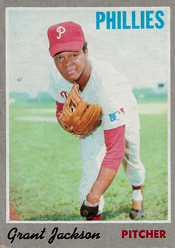
Grant Jackson made his mark in the majors as a reliever, but his work as a starter, including gems against the Cardinals, made him an all-star.

A left-hander, Jackson pitched 18 seasons in the majors.

For his career, Jackson was 62-33 as a reliever and had 79 saves. In Game 7 of the 1979 World Series, he pitched 2.2 innings of scoreless relief versus the Orioles and was the winning pitcher for the champion Pirates. Boxscore

When he first got to the majors with the Phillies, Jackson wanted to be a starter. In 1969, while in the Phillies’ rotation, he beat the Cardinals twice, impressing their manager, Red Schoendienst. When it came time to pick pitchers for the National League all-star team, its manager, Schoendienst, chose Jackson as one of the nine.

Getting initiated

Jackson was about to turn 23 when he got to the big leagues with the Phillies in September 1965. It was a rough introduction.

In his debut, a relief stint against the Reds, Jackson gave up a three-run home run to Frank Robinson. Boxscore

In his next appearance, a relief stint against the Cardinals, Jackson gave up a three-run home run to Lou Brock. Boxscore

Two appearances, two home runs allowed, both to future Hall of Famers. Welcome to the big leagues, Mr. Jackson.

Speed it up

After spending most of the 1966 season in the minors, Jackson stuck with the Phillies and pitched effectively in relief. In 1968, Jackson had a 1.97 ERA in 27 relief appearances.

The Phillies left him unprotected in the expansion draft for 1969, but he wasn’t selected. “Jackson was disappointed by that,” The Sporting News reported. “He made no secret of his desire to get away from the Phillies. He wanted a chance to pitch regularly as a starter.”

Jackson got his chance to start in 1969 as a replacement for Chris Short, who developed back trouble. Jackson found his stride when he picked up his pace between pitches. “Before, he was too deliberate,” pitching coach Al Widmar told The Sporting News. “He was trying to make every pitch a masterpiece.”

In command

On April 25, 1969, Jackson was matched against Bob Gibson in a start against the Cardinals at Philadelphia. Jackson pitched a complete game, held the Cardinals to one unearned run and got the win. The game was completed in one hour, 48 minutes. Boxscore

Jackson limited the two-time defending league champions to seven singles and a walk. Dal Maxvill, who went hitless, told the St. Louis Post-Dispatch, “I don’t think he should beat us quite that easily.”

Ahead 1-0, the Phillies broke open the game with four runs in the sixth against Gibson. Jackson started the uprising with a bunt single.

After he took the first pitch from Gibson, Jackson looked to third-base coach George Myatt and “he gave me the sign for a drag bunt,” Jackson told the Philadelphia Daily News.

Jackson, the Phillies’ fastest runner, bunted the ball to the right side and legged out a single “despite Gibson’s catlike pickup and throw,” the Philadelphia Daily News reported.

Stunned but impressed, Phillies manager Bob Skinner remarked, “He says Myatt gave him the sign? We don’t have any play like that for our pitchers.”

Nine days later, on May 4, 1969, Jackson started versus the Cardinals again at St. Louis. Matched against Dave Giusti, Jackson pitched his first shutout in the majors. Boxscore

Costly mistake

The next time Jackson faced the Cardinals was July 10, 1969, at Philadelphia. The game turned in the fourth inning. Ahead 2-1, the Cardinals had runners on second and third, two outs, and Julian Javier at the plate. 

Javier pounded left-handers. He hit .319 against them in 1969. With first base open and light-hitting Steve Huntz on deck, Skinner went to the mound and told Jackson to pitch around Javier instead of issuing an intentional walk.

Javier worked the count to 1-and-1 before he pulled a pitch hard on the ground along the third-base line and into left field for a two-run double.

“That was my mistake,” Skinner, a former teammate of Javier with the 1964-66 Cardinals, told the Post-Dispatch. “I knew how well he hit left-handers.” Boxscore

Ups and downs

Five days later, on July 15, 1969, Schoendienst named Jackson to the all-star team. The other left-handers selected to the staff were the Cardinals’ Steve Carlton and the Mets’ Jerry Koosman.

That night, Jackson started against the Cardinals and took the loss. In the fifth, after he got thrown out by Curt Flood while running from first to third, Jackson was routed, giving up four runs in the bottom half of the inning. Boxscore

In September, Jackson lost to the Cardinals for the third consecutive time, dropping his record for the season to 12-15. Boxscore

Grand finale

On Oct. 2, 1969, the Cardinals closed out their season with a game against the Phillies at St. Louis. The matchup was Gibson, seeking his 20th win, versus Jackson. It was quite a duel.

As the game entered the 12th with the score tied at 2-2, both starters still were pitching.

In the bottom half of the inning, Mike Shannon drew a leadoff walk. After failing twice to advance Shannon to second with a sacrifice bunt, Vic Davalillo tapped a grounder to the right of the mound. According to the Philadelphia Inquirer, Jackson could have had a forceout at second but played it safe and threw to first, retiring Davalillo.

After Jerry DaVanon was walked intentionally, Gibson hit the first pitch from Jackson to Rick Joseph at third. Joseph stepped on the bag for a forceout of Shannon and had an “easy chance” to get Gibson at first to complete a double play, but his throw pulled Richie Allen off the base, the Philadelphia Daily News reported.

With DaVanon at second and Gibson at first, Lou Brock batted and coaxed a walk on a 3-and-2 pitch.

The next batter, Curt Flood, fouled off the first pitch, then watched four in a row go out of the strike zone. The walk, which drove in DaVanon from third with the game-winning run, was the last plate appearance for Flood as a Cardinal. Five days later, he was traded to the Phillies. Boxscore

The win gave Gibson 20 in a season for the fourth time. The only other Cardinals pitcher to do that was Dizzy Dean.

Jackson finished the season at 14-18 with a 3.34 ERA. He had four shutouts and 13 complete games.

Jackson went on to make 692 appearances, 83 as a starter, with the Phillies (1965-70), Orioles (1971-76), Yankees (1976), Pirates (1977-81 and 1982), Expos (1981) and Royals (1982).

He was 7-11 with six saves and a 3.85 ERA in 66 appearances, including 11 starts, versus the Cardinals. Jackson pitched more innings (149.2) against the Cardinals than he did versus any other opponent.

An unsolved mystery of baseball is the case of the abduction of Roberto Clemente.

In 1970, the Pirates’ outfielder and future Hall of Famer revealed he had been abducted at gunpoint a year earlier by four men in San Diego and robbed. Clemente said he thought he would be shot and left for dead. Instead, he said, he was released and his possessions were returned.

No arrests were made and no witnesses came forward. Details were inconsistent. Published reports, for instance, said the incident occurred in May 1969. More likely, it happened in August 1969. Skeptics abounded.

Clemente’s story sounded similar to one told 40 years earlier by Cardinals pitcher Flint Rhem, who claimed he was abducted in New York by two men, held at gunpoint and forced to drink to excess so he would be unable to make a start against the Dodgers.

Absent a Sherlock Holmes to crack the case, Clemente’s version is the only one available.

In his biography, “Clemente: The Passion and Grace of Baseball’s Last Hero,” author David Maraniss concluded of the kidnapping tale, “Whatever the hidden reality, it fit perfectly into the mythology of Roberto Clemente as a man of the people, respected even by urban desperados.”

Going public

On Aug. 9, 1970, after the Pirates beat Nolan Ryan and the Mets in Pittsburgh, reporter Bill Christine of the Pittsburgh Press approached Clemente in the clubhouse. Clemente, the only player left in the locker room, was sorting his fan mail with help from a personal assistant.

Christine had gotten a tip about a bizarre incident involving Clemente in San Diego a year earlier. He asked Clemente about it and Clemente decided to tell the tale publicly for the first time.

“I haven’t told this story to many people because I figured if any of the four robbers heard about it they might be looking for our ballplayers when we go out there again,” Clemente told Christine.

Taken away

The Pirates were in San Diego to play the Padres on Friday night, Aug. 8, 1969. In the fourth inning, Clemente was ejected by plate umpire Lee Weyer for arguing a called strike. Boxscore

Clemente went to his room at the team hotel. Most published accounts identified it as the Town and Country in the Mission Valley section of San Diego.

Clemente, who roomed alone, phoned his wife, Vera, according to Christine. Clemente complained to her about his shoulder aching and said he was thinking about quitting. She urged him to continue playing.

Shortly after midnight, Clemente went looking for a place to eat. 

Dressed in a sport coat and tie, Clemente was about to leave the hotel when teammate Willie Stargell entered the lobby. Stargell had a carryout order of fried chicken and told Clemente it was from a place nearby. Clemente walked to it, got an order to go and headed back to the hotel.

Clemente was about 400 feet from the hotel “when a car with four men stopped him. One produced a gun and they ordered him to get in,” Christine reported.

Clemente said he was forced to lie on the floorboard in the back of the car and a gun was put to his chin, the Associated Press later reported.

Don’t kill me

The abductors took Clemente to a spot overlooking the valley. Police later told the Associated Press the location probably was Balboa Park.

Everyone got out of the car and Clemente was ordered to strip. He removed everything except his undershorts.

“The man with the gun shoved Clemente in the direction of the car, pushing him backwards across the right front hood. He stuck the gun in Clemente’s mouth,” Christine later reported.

The other men went through Clemente’s discarded clothes and took about $250 from his wallet. The gunman removed an All-Star Game ring from Clemente’s finger.

“This is when I figure they are going to shoot me and throw me into the woods,” Clemente told Christine.

“I thought if they killed me, and threw me someplace, nobody would have ever been able to find me.”

Desperate, Clemente said he informed the kidnappers he was a Padres ballplayer. Clemente told Christine he did that because he thought the men might not know the Pirates were a baseball team.

Clemente said he told them, “If you really need the money, take it, but don’t kill me. Don’t kill anybody for money.”

One of the men who searched Clemente’s wallet found his Major League Players’ Association membership card. The All-Star Game ring was additional verification he was a ballplayer.

Change in plans

According to Clemente, when the abductors realized he was a big-leaguer, they told him to dress and gave back his money, wallet and ring. Clemente said he was driven to within three blocks of the hotel and released.

“I started walking, and then I heard their car returning,” Clemente said to Christine.

Clemente said he feared the men were coming back to harm him. As the car pulled up beside him, Clemente said, one of the men handed him the bag of fried chicken. Clemente said he waited for them to drive off and tossed the bag away before returning to the hotel.

Clemente didn’t report the incident to police. He said to Christine he told four people about the abduction the next day: wife Vera, teammate Jose Pagan, coach Bill Virdon and general manager Joe Brown. Later, the Associated Press reported Clemente told umpire Lee Weyer. Pirates player Matty Alou also knew, according to The Sporting News.

Lots of questions

Christine’s exclusive appeared in the back of the Pittsburgh Press sports section, above the big-league box scores, in the Aug. 10, 1970, edition. Though underplayed, the story was picked up by wire services and published throughout the United States.

Charley Feeney of the rival Pittsburgh Post-Gazette wrote, “OK, so it’s a whopper of a tale. Some people don’t believe.”

One of the doubters was Mets first baseman Donn Clendenon, who was a teammate of Clemente for eight years with the Pirates. “I believed everything until the part about the guys giving Clemente back his money and his fried chicken. Nobody steals money and gives it back,” Clendenon said.

Though Christine scooped him, Feeney, an experienced baseball reporter, wrote, “It’s felt here the Clemente story is true. Fantastic to be sure, but true. Roberto Clemente is not some kind of nut.”

Asked by The Sporting News why he didn’t report the abduction to police, Clemente replied, “Why should I report it? I am alive, no? I got everything back that they took.”

Clemente said he decided to go public when Christine started asking questions. “I figured I better tell the story so that it would be printed right,” Clemente said.

Padres manager Preston Gomez told both Pittsburgh newspapers that San Diego police wanted to question Clemente. “People in town, and the police, are very disturbed about the Clemente kidnapping story,” Gomez told the Pittsburgh Press.

Something is afoul

Clemente didn’t let the commotion caused by his story hurt his performance on the field. On the day Christine’s article was published, Clemente played against the Mets and got two hits and a walk against Tom Seaver. Boxscore

On Aug. 18, 1970, Clemente turned 36. Two days later, the Pirates embarked on a road trip, starting with games at Los Angeles. Clemente went on a tear, with five hits against the Dodgers on Aug. 22 Boxscore and five more on Aug. 23. Boxscore

From there, the Pirates went to San Diego for the first time since Clemente told about his abduction.

After a day off on Aug. 24, the Pirates and Padres opened a two-game series on Aug. 25. Clemente, leading the National League in hitting at .363, was in the lineup as the right fielder.

When Clemente took his position in the bottom of the first inning, someone in the stands dropped a live chicken over the outfield fence and it crept up on Clemente. A batboy removed the bird from the field.

“Clemente was unimpressed with the prank,” according to the Pittsburgh Press.

The Pittsburgh Post-Gazette speculated “it could have been a gag arranged by some San Diego players.” Christine wrote that someone in the Padres’ front office hatched the idea. Boxscore

Four years later, in 1974, a radio station had a college student, Ted Giannoulas, wear a chicken suit for promotional gigs, and his antics led to the San Diego Chicken becoming a popular sports mascot at Padres games.

Quick work

On Aug. 26, 1970, the day after the chicken incident, Clemente said he spoke with police. At Clemente’s suggestion, the meeting was held in his hotel room, the Pittsburgh Post-Gazette reported.

According to the Pittsburgh Press, Clemente “was visited by a San Diego detective, who wanted a perfunctory, first-hand explanation” of the abduction.

“The policeman came away with the same story told in Pittsburgh a couple of weeks ago, plus Roberto’s autograph” the Pittsburgh Press reported.

According to the Associated Press, police detective Hanly Pry said he was convinced “Clemente was telling the truth” after questioning him “for two hours.”

In a followup, the Pittsburgh Press reported Clemente said he spent “only 15 minutes with the San Diego authorities.”

Clemente said he considered the case closed.

After he was fired from his job as Cardinals manager, Ken Boyer stayed with the organization and worked for his successor, Whitey Herzog.

In February 1981, Boyer was at Cardinals spring training camp as an instructor, working with players who a year earlier he had managed.
It was one of multiple roles Boyer would fill for the Cardinals in 1981.

Helping hand

Cardinals general manager John Claiborne asked Boyer to stay with the franchise after Herzog replaced Boyer as manager in June 1980.

Boyer, an all-star and Gold Glove Award winner when he was Cardinals third baseman in the 1950s and 1960s, accepted the invitation and was assigned to visit the farm clubs, instructing and evaluating prospects.

In August 1980, Claiborne was fired and Herzog took on the additional role of general manager.

Boyer and Herzog became friends in 1966 when both were with the Mets. Boyer, the third baseman, and Herzog, a coach, shared an apartment in New York with Yankees players Roger Maris and Clete Boyer, Ken’s brother.

After he took over the baseball operations of the Cardinals in 1980, Herzog assigned Boyer to be an advance scout for the 1981 season.

“Whitey told me I’ve got the job that, in the back of his mind, he always thought he’d like to have,” Boyer told the St. Louis Post-Dispatch.

Boyer’s job was to watch opposing National League teams and file reports on strengths and weaknesses before the Cardinals played them. He also was tasked with watching six American League clubs to rate players the Cardinals might want to acquire.

In addition to the scouting job, Boyer was asked by Herzog to come to training camp at St. Petersburg, Fla., in 1981 and help out in early drills.

Boyer agreed and was on the field daily with the Cardinals players in preparation for the Grapefruit League exhibition season.

Staying informed

When he was done helping on the field at training camp, Boyer took on the scouting assignment with gusto. He told the Post-Dispatch two other organizations had made offers to him to be a minor-league manager, but he rejected both in order to stay with the Cardinals.

“I’m really excited about it,” Boyer said of the scouting role. “It really keeps you in touch with all the right people … and it keeps you in touch with the players. You can ask a ballplayer two questions and he might tell you what’s going on with his club and around the whole league.”

In June 1981, while the major-league players were on strike and scouting was curtailed, Boyer stepped in when the Cardinals needed an interim manager at their farm team in Gastonia, N.C., after Joe Rigoli was suspended for bumping an umpire during an argument.

Boyer was back scouting when the players ended their strike in August.

Ol’ Kentucky home

After the 1981 season, the Cardinals’ top farm team relocated from Springfield, Ill., to Louisville. The owner of the Louisville Redbirds, A. Ray Smith, asked the Cardinals for Boyer to be the manager. They’d been together before. When the Cardinals’ Class AAA farm team was at Tulsa, Smith was the owner and Boyer was manager from 1974-76. 

Boyer never had been to Louisville and wasn’t keen on giving up a job scouting major-league teams to return to riding buses in the minors, but he agreed to visit before making up his mind.

Dan Ulmer, co-chairman of a committee to raise funds to refurbish a football stadium into a ballpark for the Redbirds, told the Louisville Courier-Journal, “Boyer didn’t think too much about the idea at first. Before he came here, he probably gave Louisville about a rating of 3 on a scale of 10. When he saw the stadium and the enthusiasm, we quickly moved up to about an 8 in his estimation.”

On Nov. 13, 1981, Boyer was introduced as Redbirds manager at a news conference in Louisville.

“This is a great opportunity for me,” Boyer told the Courier-Journal. “I welcome this challenge to get back into managing.”

Noting the widespread support for the return of a Class AAA ballclub to Louisville for the first time since 1972, Boyer said to the Associated Press, “It’s more like moving into a big-league market than a minor-league one.”

Attending the news conference as an observer was resident Pee Wee Reese, the former shortstop of the Dodgers. Reese had been team captain of the Dodgers, just like Boyer had been team captain of the Cardinals.

When Boyer spotted Reese, he said to him, “We’re going to make this Cardinals country, Captain. The Dodger Blue has gone as far as it can go. What do you think of that?”

“Reese shrugged,” Billy Reed of the Courier-Journal noted. “As a lifelong Louisvillan, he’s happy to see Class AAA baseball come back to town.”

Terrible time

Shortly after he was named Louisville manager, Boyer, 50, had a routine physical examination. The doctor ordered a biopsy, which revealed Boyer, a smoker, had inoperable cancer in both lungs and the esophagus, according to the book “Ken Boyer: All-Star, MVP, Captain.”

Boyer, divorced, initially told only his children about the diagnosis, according to the biography. He began receiving treatment in St. Louis after Thanksgiving Day. Boyer eventually informed Cardinals management, according to the book, but requested no announcement about his condition.

In January 1982, Boyer went to Mexico to receive treatments of the drug laetrile. Extracted from apricot pits, laetrile was not approved in the United States as an effective treatment for cancer.

After Boyer failed to show for a promotional event in Louisville on Jan. 21, 1982, the Courier-Journal reported he was “seriously ill.”

A. Ray Smith confirmed to the newspaper that Boyer had lung cancer, but said, “In my judgment, I think he’ll manage here.”

Joe McDonald, assistant to Whitey Herzog, said, “We expect Ken Boyer to be our manager in Louisville this season.”

A month later, on Feb. 22, 1982, with spring training approaching, Smith said Boyer wouldn’t be able to manage the Louisville club. Boyer’s health problems “are very serious,” Smith told the Associated Press.

Smith wanted former Angels manager Jim Fregosi to replace Boyer, but Fregosi declined, the Courier-Journal reported.

Cardinals scout Joe Frazier, former manager of the Mets, was chosen to manage Louisville in 1982. Frazier and Boyer were Cardinals teammates in 1955 and 1956.

Seven months later, on Sept. 7, 1982, a month before the Cardinals became World Series champions, Boyer, 51, died in St. Louis. 


(Updated March 5, 2023)

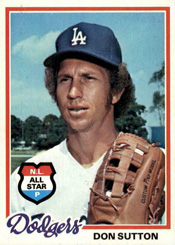
After getting caught breaking the rules in a game at St. Louis, Don Sutton and the Dodgers denied, covered up and threatened to sue. The National League caved.

On July 14, 1978, Sutton, the Dodgers’ ace, was ejected by umpire Doug Harvey for pitching a defaced baseball against the Cardinals.

The punishment for such a violation included a 10-day suspension, but National League president Chub Feeney opted not to take that disciplinary action after getting a visit from Sutton’s lawyer.

Under suspicion

A right-hander, Sutton was a gifted pitcher who consistently achieved double-digit season win totals.

He also had a reputation for doctoring the ball. The Cardinals accused him of throwing a spitball the first time they faced him his rookie season. Ten years later, the Cardinals’ Lou Brock implied Sutton used Vaseline to make his pitches dart and dip. Reds manager Sparky Anderson complained Sutton routinely broke the rules by scuffing the ball.

Scuffing “makes the ball unpredictable,” Cardinals catcher Ted Simmons told the St. Louis Post-Dispatch. “It’s like a dry spitball.”

On June 8, 1977, in a game versus the Cubs, Sutton was ejected for the first time. Bill Buckner, an ex-Dodger, was batting against Sutton when he asked plate umpire Bruce Froemming to inspect the ball. Cubs manager Herman Franks joined in, requesting a search of Sutton. Umpires obliged, but found nothing.

Before delivering his next pitch, Sutton knelt on the mound and belligerently rubbed the ball in the dirt, the Los Angeles Times reported. Dick Stello, umpiring at third, asked for the ball. Sutton fired it low and hard, and the ball skimmed past Stello and into left field.

Froemming started out to the mound to confront Sutton. “His face was red and his veins were throbbing,” Sutton told the Los Angeles Times. “I called him a fat, gutless, little jackass.”

Sutton was ejected. Boxscore

Finding evidence

A year later, Sutton, 33, was seeking his 200th career win in a Friday night start for the Dodgers at Busch Memorial Stadium. The Cardinals had the worst record (35-53) in the league and the Dodgers were defending champions.

Early in the game, either in the second or third, Jerry Crawford, umpiring at first, looked at the ball after the Cardinals had made the last out of the inning. Crawford showed it to crew chief Doug Harvey and said, “Doug, this ball has been defaced,” the Los Angeles Times reported.

Harvey told Crawford to hold onto the ball.

In the sixth, after Keith Hernandez lined out to center fielder Bill North to end the inning, North rolled the ball toward the infield. Harvey, umpiring at second, picked up the ball and saw it was defaced.

According to Harvey, “the ball had an identical type of scuff mark” as the one Crawford showed him a few innings earlier, the Los Angeles Times noted.

Harvey went to Dodgers manager Tommy Lasorda and said, “Someone is fooling with the baseball.”

“I told him if the pitcher pitched another defaced ball I would eject him,” Harvey recalled to The Sporting News.

You’re out

In the seventh, the Cardinals’ Mike Tyson flied out to right fielder Rick Monday for the third out of the inning. As the Dodgers left the field, Harvey called for the ball. He saw the same scuff mark in a similar spot as the other two balls.

There was, Harvey told the Los Angeles Times, “a roughness on the ball almost in exactly the same spot on all three. It was enough of a scuff to alter the flight of the ball.”

Harvey ordered the Dodgers to return to the field and ejected Sutton. He declared Sutton’s last pitch to Tyson a ball and told Tyson to get back into the batter’s box.

Lance Rautzhan relieved Sutton and got Tyson to again fly out to Monday in right.

The Cardinals, ahead, 2-1, when Sutton was tossed, scored twice against rookie Bob Welch in the eighth and won, 4-1, behind Pete Vuckovich’s three-hitter. Boxscore

Reasonable doubt?

In the clubhouse, Sutton told the Post-Dispatch, “I’m suing Harvey, the National League and whoever runs the umpiring for depriving me of my rights to earn a living as a pitcher.”

The Dodgers claimed the scuff marks on the balls were caused by the AstroTurf.

“It’s like bouncing a leather basketball on asphalt,” Rick Monday told the Los Angeles Times. “That’s what happens to a baseball on AstroTurf.”

Lasorda said Sutton “did absolutely nothing to the ball.”

Technically, Lasorda may have been correct. Post-Dispatch columnist Bob Broeg reported a Cardinals player suggested a Dodgers infielder concealed in his glove a piece of sandpaper with which to scuff the baseball for Sutton.

Harvey told the Post-Dispatch, “I want to make it clear I’m not saying Sutton was doing it. I’m just saying it was Sutton who was pitching a defaced baseball.”

The Post-Dispatch noted that because all three balls were defaced in the same area and in the same manner “it hardly could be a matter of coincidence.”

“I was three-fourths sure Sutton was doing it,” Harvey told The Sporting News.

Backing down

Sutton was represented by Ed Hookstratten, an attorney whose celebrity client list ranged from entertainers Elvis Presley and Joey Bishop to broadcasters Tom Brokaw and Vin Scully. Hookstratten was the husband of actress Patricia Crowley, who starred in the TV series “Please Don’t Eat the Daisies.”

Hookstratten met Feeney at the National League office in New York and presented the artificial turf theory, The Sporting News reported.

“They didn’t have a case,” Hookstratten said. “Those artificial fields are so tough on the ball that everyone is throwing doctored pitches.”

Hookstratten phoned Sutton and said, “I met with Mr. Feeney. You’re not suspended. Keep your mouth shut and I’ll talk to you later.”

On July 17, three days after Sutton was ejected, Feeney ruled there was insufficient evidence for a suspension. “The action taken by the umpires was proper … but no further disciplinary action appears appropriate at this time,” Feeney said.

In his Post-Dispatch column, Broeg wrote, “Feeney fumbled.”

The beat goes on

The next night, July 18, Sutton started against the Pirates at Pittsburgh. He wore a T-shirt with the words, “Not Guilty,” under his uniform jersey. Sutton pitched a six-hitter and got the win, No. 200 for his career. Boxscore

Sutton joined Don Drysdale as the only pitchers with 200 wins as Dodgers. “When you talk about him, you’re talking about durability, consistency and dependability,” Sutton said. “I want to be thought of in that light.”

(In the book “The Head Game,” Drysdale told writer Roger Kahn, “I threw a good spitball. When I wet the ball and kept my fingers on the smooth part, the bottom would drop out of the pitch when it reached the plate. A pretty good fastball that falls off the table.”)

A month later, Sutton again made headlines when, in an interview with the Washington Post, he said Reggie Smith, not Steve Garvey, was the Dodgers’ best player. When Garvey confronted Sutton about it in the clubhouse before a game against the Mets, they argued and got into a fight.

The rough-and-tumble Dodgers went on to win the 1978 National League pennant.

Sutton ranks as the Dodgers’ franchise leader in career wins, strikeouts, shutouts and innings pitched.

Sutton and Harvey both were elected to the National Baseball Hall of Fame.

Mike Gallego fielded with reliable consistency, but he had trouble hitting and staying healthy during his time with the Cardinals.

On Jan. 11, 1996, the Cardinals signed Gallego, a free agent, for one year at $300,000.

The deal reunited Gallego with Tony La Russa, the manager who was in his first season with the Cardinals. Gallego played for La Russa with the Athletics and they were part of three American League championship teams.

Like Gallego, La Russa had been an infielder who fielded better than he hit. Gallego became such a La Russa favorite that Cardinals coach Rene Lachemann dubbed him “Michael La Russa,” according to the St. Louis Post-Dispatch.

Versatile and valuable

Gallego was born and raised in the Los Angeles area and played college baseball at UCLA. The Athletics selected him in the second round of the 1981 amateur draft. He played multiple infield spots, but considered second base to be his natural position.

While in the minors in 1983, Gallego learned he had testicular cancer. He had surgery and returned to the lineup two months later.

Gallego reached the majors with the Athletics in 1985. In 1990, he was their Opening Day second baseman. When Walt Weiss got hurt in the playoffs, Gallego was the shortstop in the World Series against the Reds.

“Most guys think about getting the game-winning hit,” Gallego said. “For me, I’ve always gotten a bigger thrill out of a great defensive play.” Video

Granted free agency in October 1991, Gallego signed with the Yankees. He had a stellar season in 1993, hitting .283 with 20 doubles as a utility player.

A free agent after the strike-shortened 1994 season, Gallego rejoined La Russa and the Athletics. He was the Opening Day second baseman in 1995, but severely injured his left heel in May and spent nearly three months on the disabled list.

Familiar face

After the 1995 season, the Cardinals pursued a pair of free agents, Craig Biggio and Tony Phillips, for the second base job, but Biggio stayed with the Astros and Phillips went to the White Sox.

That left injury-prone Geronimo Pena as the incumbent at second base.

The Cardinals wanted an experienced backup to Pena. Gallego, 35, was sought by the Rangers, but went with the Cardinals, in large part, because of La Russa.

“I love him a lot,” La Russa told the Post-Dispatch.

General manager Walt Jocketty said, “He has a flair about him, whether he’s diving or turning the double play.”

The Cardinals’ plans went awry at spring training. Pena suffered a stress fracture of the right knee and ended up in the minors.

Gallego injured his right hamstring when he dived for a ball. He returned later in spring training, but tore the same hamstring running the bases.

Another potential option, Jose Oquendo, no longer was effective. He was released and chose to retire. That left David Bell, entering his second season in the majors, as the Cardinals’ second baseman.

Wanting more, the Cardinals signed Luis Alicea, waived by the Red Sox, to play second. Alicea had been with the Cardinals for five seasons before being traded.

Getting a chance

Gallego went to Scottsdale, Ariz., for two months to heal his hamstring. In the last week of May, he showed up in St. Louis to field grounders and take swings. The Cardinals sent him to their farm club in St. Petersburg, Fla., to test his leg in minor-league games.

“Gallego has a lot to show me,” La Russa said. “It’s going to be tricky. The club has a good feeling and you don’t like to mess with the chemistry.”

Alicea made the decision easier for La Russa. On July 11, in a game against the Cubs, Alicea made his 19th error of the season and committed a baserunning mistake. Boxscore

“I’ve played poorly defensively,” Alicea said. “To win, you’ve got to have good defense. I’ve never played so bad before.”

The next day, Gallego made his Cardinals debut, getting the start at second base versus the Cubs. Boxscore

“There is an opportunity for Gallego to earn a lot of playing time,” La Russa said. “If we keep him healthy, you’ll see some second base play.”

Wizard at second

Gallego was as good as gold with his glove. After Gallego made two diving stops on July 17 against the Reds, La Russa told the Post-Dispatch, “I’m 100 percent sincere when I say this but he plays second base like Ozzie Smith plays short.” Boxscore

Gallego said, “Being compared to Ozzie Smith obviously is a great compliment, but I could never put myself in his league.”

Gallego made no errors in his first 163 fielding chances for the Cardinals. The problem was his hitting. He batted .189 in July and .208 in August. Alicea returned to the starting lineup in late August and was the primary second baseman in September when the Cardinals clinched a division title.

In the 1996 regular season, Gallego played 359.2 innings at second base and made three errors. Alicea played 954 innings at second base and committed a league-high 24 errors. Gallego hit .210 for the season. Alicea hit .258.

In Game 1 of the National League Championship Series against the Braves, Alicea hyperextended an elbow in a collision with Chipper Jones, La Russa said. Gallego started five of the six remaining games. He made one error and hit .143.

End of the line

After the 1996 postseason, the Cardinals went shopping for an upgrade at second base. They pursued Ryne Sandberg of the Cubs and Jeff King of the Pirates before landing Delino DeShields, a free agent who left the Dodgers.

Alicea, a free agent, signed with the Angels. Gallego was in limbo. The Cardinals didn’t offer him salary arbitration, meaning he was ineligible to play for them until May 1, 1997.

Shortly before the start of spring training, Gallego signed a minor-league contract with the Cardinals and was invited to camp. “My main objective was to prove to them and myself that I could still play,” Gallego said.

When the 1997 regular season began, Gallego stayed in extended spring training, then joined the Louisville farm club. He got called up to the Cardinals in May to fill a utility role.

Gallego fielded well but hit .163.

In July 1997, the Cardinals gave Gallego the chance to return to Louisville, but he declined and was released.

“We had a really good run together,” La Russa said. “We had a lot more good times than tough ones.”