Feeds:
Posts
Comments

John Claiborne lasted a mere 22 months as Cardinals general manager because he didn’t produce the results club owner Gussie Busch wanted and didn’t connect with Busch the way Whitey Herzog did.
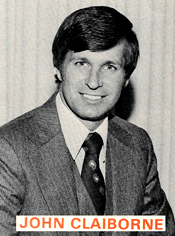
In what the St. Louis Post-Dispatch described as “a surprise move,” Busch fired Claiborne on Aug. 18, 1980, citing “basic disagreements” between the two “regarding progress of the team in all areas of operation.” Two weeks later, Herzog was promoted from manager to general manager.

Given the authority to rebuild the Cardinals into a club featuring defense, speed and relief pitching, Herzog transformed them from losers in 1980 to World Series champions in 1982.

Front office intrigue

A St. Louis native who worked in the front offices of the Mets, Cardinals, Athletics and Red Sox, Claiborne, 39, was hired to replace his mentor, Bing Devine, as Cardinals general manager in October 1978 on the recommendation of Busch’s personal attorney, Lou Susman.

In 1979, the Cardinals finished 86-76, but it was a different story the next year. The 1980 Cardinals were 8-10 in April and 8-18 in May. Claiborne had made a bad trade, acquiring Bobby Bonds to play left field after Lou Brock retired, failed to sign top free agents and didn’t obtain a closer for the bullpen.

On June 8, 1980, with the Cardinals’ record at 18-33, Claiborne fired manager Ken Boyer between games of a doubleheader and Herzog was hired as the replacement.

After a couple of weeks as manager, Herzog was called into Busch’s office and asked to give his assessment of the team. In his book, “White Rat: A Life in Baseball,” Herzog said he told Busch, “Well, Chief, you’ve got a bunch of prima donnas, overpaid SOBs who ain’t ever going to win a goddamned thing. You’ve got a bunch of mean people, some sorry human beings. It’s the first time I’ve ever been scared to walk through my own clubhouse. We’ve got drug problems, we’ve got ego problems and we ain’t ever going anywhere.”

Herzog said, “I’ve never seen such a bunch of misfits. Nobody would run out a ball. Nobody in the bullpen wanted the ball.”

Busch asked, “You really think it’s that bad?”

“I know so,” Herzog responded. “We’ve got to do some housecleaning.”

Personnel flops

Busch began thinking the housecleaning should start with Claiborne.

“Claiborne went to the Cardinals as an innovative thinker,” columnist Bill Conlin wrote in The Sporting News. “He convinced Gussie Busch that the free-agent raffle was a viable shortcut to a pennant. The trouble was, despite St. Louis’ willingness to spend, John couldn’t sign any first-liners.”

The free agents signed by Claiborne were pitchers Darold Knowles and Don Hood, and reserve outfielder Bernie Carbo.

“Claiborne spent too much money for too little talent,” wrote Rick Hummel in the Post-Dispatch.

Top free agents such as outfielder Pete Rose, pitcher Tommy John and closer Mike Marshall rejected Cardinals offers.

“In two or three cases, our offer actually was the best, but the player chose another club,” Claiborne said.

Post-Dispatch sports editor Bob Broeg noted Claiborne could have acquired Cubs closer Bruce Sutter for catcher Terry Kennedy, first baseman Leon Durham and second baseman Tommy Herr, but declined. “A sizable request, yes, but there’s an old saw in baseball that if you think you’re only one player away from competing for the top banana, you’ll give more than you can get,” Broeg wrote.

Claiborne “probably hesitated when he should have acted,” Post-Dispatch columnist Tom Barnidge concluded. “This club did, after all, need a relief pitcher like a cripple needs a cane.”

Drinking buddies

As Busch was contemplating what to do, Herzog met for lunch with Bing Devine and told him he was having trouble getting access to Busch. In his book, Herzog said Devine replied, “You’ve got a hell of an advantage. You drink. So does Gussie. Claiborne doesn’t drink. Just call him up and tell him you’re coming out for a few beers.”

Herzog said he followed Devine’s advice. He called Busch and told him, “I’m coming out to have a beer and a braunschweiger sandwich.”

Herzog began meeting regularly at Busch’s home and told him what should be done to improve the team. “Sometimes I’d bring him some fresh fish, which he loved, or some headcheese, which a friend of mine made. We’d sit and eat sandwiches, play gin and drink beer.”

After hearing how Herzog thought the Cardinals should be rebuilt, Busch decided Claiborne wasn’t up to the task and fired him.

Claiborne told the Post-Dispatch, “I was a failure at trying to win quickly. The blame has to be placed on someone and I accept it.”

Though Herzog undercut Claiborne by going directly to Busch with his thoughts rather than working through the general manager, Herzog was taken aback when Busch fired Claiborne, The Sporting News reported. Asked about Busch’s decision, Herzog said, “You wonder why at this time.”

Herzog said he wasn’t interested in being general manager because the job was too time-consuming. “I like to hunt, fish and golf,” Herzog said.

Executive level

Busch put attorney Lou Susman in charge of conducting a search for Claiborne’s replacement.

While Susman was interviewing candidates in New York, Herzog was called to Busch’s home by club vice president Margaret Snyder and told Busch wanted him to be general manager. Herzog asked for time to think about it.

In his book, Herzog said, “I didn’t really want to be a general manager,” but he was concerned someone would be hired who he couldn’t work with. So he called Busch and accepted.

When his promotion to general manager was announced Aug. 29, 1980, Herzog told the Post-Dispatch, “I feel I’m the right guy for the job. I don’t know how anybody can be better qualified for it than me. I decided this is one time I can control my own destiny. I sure as heck didn’t come here to be general manager, but I can do more for the Cardinals as GM than as field manager.”

Former Cardinals manager Red Schoendienst became interim manager.

Herzog wanted to hire Gene Mauch or Dick Williams to be Cardinals manager after the 1980 season but couldn’t work out an arrangement. On Oct. 24, 1980, the Cardinals announced Herzog would have the dual role of general manager and manager. Herzog hired his friend, Joe McDonald, former general manager of the Mets, to be executive assistant/baseball and take care of the administrative and business duties while Herzog focused on baseball matters.

Cardinals cleanup hitter Pedro Guerrero resorted to using his hands, not his bat, to connect against Astros pitcher Danny Darwin.

On Aug. 16, 1990, during a game between the Astros and Cardinals at Busch Memorial Stadium in St. Louis, Guerrero got upset with Darwin for throwing a pitch too close to him.

When Darwin reached first base on a single, he and Guerrero argued and Guerrero struck him.

Feeling frustrated

With the Astros ahead, 3-1, in the sixth inning, the Cardinals had runners on second and third, two outs, and Guerrero at the plate. Darwin threw a fastball that was “head high, but looked to be over the inside corner of the plate,” according to the St. Louis Post-Dispatch.

Guerrero said he thought the pitch was intended to hit him, but plate umpire Mark Hirschbeck told the Post-Dispatch, “It was not even close.”

After Guerrero struck out, stranding the runners, he glared at Darwin. “He was just looking to start something,” Hirschbeck said. “He was yelling, ‘I’m going to get you.’ ”

Said Darwin: “I don’t appreciate the look he gave me.”

Sticks and stones

The hard feelings carried over to the next inning.

With two outs and none on in the seventh, Darwin singled versus reliever Scott Terry. Standing at first base, Darwin and Guerrero jabbered at one another.

According to Guerrero, “When he got to first base, I said, ‘Hey, man, what’s wrong? Can’t anybody look at you?’ ”

According to Darwin, “When I got to first base, Guerrero said, ‘What’s your problem?’ I said, ‘What’s my problem? You mean I can’t pitch inside?’ He said, ‘I know you’re going to pitch inside.’ I said, ‘Then why’d you give me that look?’ ”

Guerrero said Darwin “pointed a finger in my face” and started cussing at him. Umpire Bob Davidson said both players were cussing at one another.

Davidson stepped between the two, but Guerrero reached around and hit Darwin, the Post-Dispatch reported. Video at 4:28 mark

Both benches emptied. Guerrero and Darwin were ejected, and Astros manager Art Howe also was tossed for arguing with the umpires.

In a corridor leading to the clubhouse, Guerrero and Astros coach Ed Ott shouted at each another before police arrived and separated them, the Post-Dispatch reported. Boxscore

Guerrero said he offered to fight Darwin anywhere he wanted to meet. “I’m not afraid of anybody,” Guerrero said.

Darwin said, “He’s a cheap-shot artist. I think he’s gutless. If he thinks he can intimidate me, he’s crazy. I’ve hit guys a lot meaner than him.”

Play ball

In remarks to Cardinals broadcaster Mike Shannon, Guerrero said Astros pitchers threw at him in a series at Houston, and he needed to put a stop to it when Darwin pitched him high and tight at St. Louis.

Guerrero may have been brushed back by the 1990 Astros but he wasn’t hit. Guerrero got plunked once in 1990 and it happened in September when he was struck on the right forearm by a pitch from the Phillies’ Jose DeJesus.

On Aug. 26, 1990, 10 days after his altercation with Guerrero, Darwin again started against the Cardinals at Houston and got a complete-game win. Guerrero wasn’t there for a rematch. He was on the disabled list because of a strained lower back. Boxscore

Guerrero batted .333 (8-for-24) versus Darwin in his career and never was hit by a pitch from him.

(Updated Nov. 24, 2024)

In the longest outing of his Cardinals career, Bob Gibson set a record that illustrated his consistency, dominance and endurance.

On Aug. 12, 1970, Gibson pitched 14 innings for a complete-game win in the Cardinals’ 5-4 victory over the Padres in St. Louis.

In the second inning, Gibson got his 200th strikeout of the season when he fanned Nate Colbert. Gibson, 34, became the first pitcher to strike out 200 batters in a season eight times.

Gibson’s 14-inning stint versus the Padres surpassed a pair of 13-inning complete games he pitched against the Giants on July 7, 1965, Boxscore and on July 25, 1969. Boxscore

Wobbly warm-up

Before his Wednesday night start against the last-place Padres, Gibson didn’t throw well in the bullpen. “I wouldn’t have given two cents that he’d go nine innings,” manager Red Schoendienst told the St. Louis Post-Dispatch.

Though he lacked command of his pitches, Gibson retired the first nine batters in a row, including four on strikeouts. “I was lucky in the early innings that they were swinging,” Gibson told the Associated Press. “A lot of the strikeout total has to do with the ballclub you’re facing.”

The Padres scored a run in the fourth and three in the sixth. Colbert, a St. Louis native, put the Padres ahead, 4-3, in the sixth with a two-run home run that landed 10 rows up in the seats in left. “I was hitting the corners, but I hung some pitches, too,” Gibson told the Post-Dispatch.

The Cardinals tied the score at 4-4 in the eighth on Dick Allen’s home run versus starter Danny Coombs.

Carrying on

Gibson held the Padres scoreless over the last eight innings.

He worked out of a jam in the 11th. After the Padres loaded the bases with one out, Gibson’s former teammate, Ed Spiezio, batted. With the count 3-and-2, Gibson got Spiezio to ground into a double play. “Gibson didn’t have his real good stuff, but you could see him reach back for something extra in that spot,” Padres manager Preston Gomez said to the Post-Dispatch.

In the 13th, Gibson struck out the side. After pitching the 14th, Gibson was ready to come out if the Cardinals didn’t score in the bottom half of the inning, he told the Post-Dispatch.

Ron Willis, a former Cardinal, was the Padres’ pitcher in the 14th. Dal Maxvill, who batted .201 for the season, led off the inning with his fourth consecutive hit, a single. Gibson, who hit .303 in 1970, was allowed to bat. He bunted and reached safely on a fielder’s choice, with Maxvill advancing to second. Lou Brock’s sacrifice bunt moved the runners to second and third, and Leron Lee got an intentional walk, loading the bases.

The next batter, Carl Taylor, worked a walk, scoring Maxvill from third with the decisive run and giving Gibson his hard-earned win. Boxscore

Wins matter most

Gibson gave up 13 hits and struck out 13.

Asked about becoming the first to achieve eight 200-strikeout seasons, Gibson told the Post-Dispatch, “I’m pleased to have the record. It shows I was a consistent pitcher over the years. Winning games is the big thing, though.”

Gibson threw 178 pitches in the marathon against the Padres, but said, “I don’t care about the number of pitches. You can throw 90 pitches and lose.”

(In a 2018 interview with Stan McNeal of Cardinals Yearbook, Gibson said, “I never came out of a game because of pitch count … I went out there to win a ballgame and complete a ballgame. The idea of getting through the fifth inning with a lead was very important. It doesn’t seem to be anymore. A manager will take you out if he sees you’re in trouble in the third inning and have a three-run lead. I’d have a heart attack if they’d tried that with me.”)

The win gave Gibson a 16-5 record for the season. He went on to finish at 23-7 with 274 strikeouts, earning his second National League Cy Young Award. The 23 wins and 274 strikeouts were his single-season career highs.

Gibson had a ninth season of 200 strikeouts when he fanned 208 batters in 1972. His 3,117 career strikeouts, as well as his 251 career wins, are most by a Cardinals pitcher.

The Cardinals were the opponent when Bob Sebra saved his spot in the Expos’ rotation, and again when he fulfilled a boyhood dream with the Phillies. Near the end of his career, Sebra pitched in the Cardinals’ system.

A right-hander, Sebra pitched in the majors with the Rangers (1985), Expos (1986-87), Phillies (1988-89), Reds (1989) and Brewers (1990).
Sebra, who had a career record of 15-29 in the majors, was 3-2 against the Cardinals. He had more wins versus the Cardinals than he did against any other foe.

In 1993, hoping for a chance to get back to the majors, Sebra signed with the Cardinals and spent the season as a starter for their Class AAA Louisville team.

Going the distance

As a youth in southern New Jersey, Sebra was a Phillies fan, attended their games at Veterans Stadium in Philadelphia and hoped to pitch for them. He played collegiate baseball for the University of Nebraska, but it was the Rangers, not the Phillies, who selected him in the fifth round of the 1983 amateur draft.

Sebra made his big-league debut with the Rangers on June 26, 1985, in a start against the Mariners. After the season, he was traded to the Expos for slugger Pete Incaviglia.

On Aug. 12, 1986, Sebra pitched his first complete game in the majors in the Expos’ 10-3 victory over the Cardinals at Montreal. Sebra also produced two hits and a walk. His first major-league hit, a single versus John Tudor, sparked a seven-run inning. Boxscore

In control

In 1987, Sebra was an Expos starter, but he lost eight of his first 11 decisions, including four in a row, and was in danger of being dropped from the rotation.

On June 26, 1987, two years to the day after he made his debut in the majors, Sebra started against the Cardinals at Montreal, looking to show the Expos they should stick with him. Sebra was matched against Cardinals rookie Joe Magrane, who won his first five decisions and was undefeated in the big leagues.

Locating his breaking pitches, Sebra held the Cardinals to six hits, walked none and struck out 10 in nine innings, earning the win in a 5-1 Expos victory. Boxscore

When Sebra throws breaking balls for strikes “it makes his fastball so much more effective,” Expos pitching coach Larry Bearnarth told the Montreal Gazette.

After Terry Pendleton singled with two outs in the fourth, Sebra retired the next 13 batters in a row. Cardinals cleanup hitter Jack Clark struck out three times and grounded into a game-ending double play.

“He was kind of like a right-handed Fernando Valenzuela,” Clark said to the St. Louis Post-Dispatch. “He had everything.”

Said Cardinals manager Whitey Herzog: “I don’t think anybody would have beaten that guy tonight. He had control.”

Sebra also had a single in the fifth, igniting a three-run inning.

The Cardinals went on to win the 1987 National League pennant. Sebra finished the season with a 6-15 record.

Rooting interest

In 1988, the Expos demoted Sebra to the minors. Pitching on a staff with prospect Randy Johnson, Sebra was 12-6 with a 2.94 ERA for Class AAA Indianapolis.

On Sept. 1, 1988, the Expos traded Sebra to the Phillies. Two weeks later, Sebra got his first win for the team he followed as a youth, beating the Cardinals at Veterans Stadium in Philadelphia. It was Sebra’s first win in the majors since July 12, 1987, with the Expos, and ended a streak of eight consecutive losses for him in the big leagues. Boxscore

Sebra allowed five walks and four hits, but just two runs, in five innings against the Cardinals. “It was ugly,” he told the Philadelphia Daily News.

Said Lee Elia, manager of the last-place Phillies: “Getting this win was probably more important for him than it was for us. It gives him a sense of accomplishment.”

Down on the farm

Four years later, while in the minor leagues in 1992, Sebra had surgery on his right elbow. The Cardinals signed him to a minor-league contract in January 1993 and assigned him to Louisville.

Sebra was a consistent starter for Louisville, even though he felt persistent pain in his right arm. In the clubhouse, Louisville Courier-Journal columnist Pat Forde observed Sebra had 14 stainless steel acupuncture needles embedded in his right arm in an effort to relieve the pain.

“I had a friend in Omaha who studied acupuncture in China,” Sebra explained. “He said to do it for 10 days and see what happens. It’s feeling real good.”

Sebra, 31, led the Louisville staff in starts (26) and innings pitched (145) and tied with Tom Urbani for the team lead in wins (nine), but he didn’t get back to the majors.

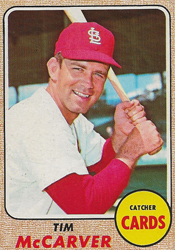
A helicopter ride late on a winter night gave Cardinals catcher Tim McCarver a closer look at a mountain than he would have cared to experience.

The helicopter carrying McCarver in January 1968 veered in time to avoid a collision with Big Savage Mountain, about 20 miles west of Cumberland, Maryland, near the Pennsylvania border.
Four years earlier, the mountain was the site of a deadly crash involving a massive military aircraft carrying two nuclear bombs.

Air disaster

On Jan. 13, 1964, a U.S. Strategic Air Command B-52 left an Air Force base in Massachusetts and headed to its home station near Albany, Ga. The eight-engine plane had a five-person crew and carried two 24-megaton nuclear bombs.

At about 2 a.m., the B-52 flew into a snowstorm near Big Savage Mountain and experienced severe turbulence. The violent shaking caused the plane’s vertical stabilizer to break off and the aircraft became uncontrollable. The pilot, Major Thomas McCormick, ordered the crew to bail out into the blizzard.

The B-52, the biggest plane in the Strategic Air Command, crashed near the base of Big Savage Mountain on its western slope.

The two nuclear bombs onboard were unarmed, meaning safety mechanisms prevented the weapons from exploding. An unarmed nuclear bomb is designed not to explode until a crew member activates it, an Air Force spokesman told the Associated Press. The bombs were found intact in the wreckage, the Cumberland Evening Times reported.

Two of the crewmen survived. Three didn’t. Snow drifts were waist high, the Associated Press reported, and the temperature was at or below zero.

Major McCormick parachuted safely to the ground. “It was real rugged where I came down and the snow was several feet deep,” he told the Cumberland News.

After daybreak, Major McCormick trekked several miles, found his way to a farmhouse near Grantsville, Maryland, and called authorities to report the crash.

Rescuers found the co-pilot, Captain Parker Peeden, who survived by using his parachute to provide a shelter, the Cumberland Evening Times reported.

Two other crewmen, Major Robert Payne, the navigator, and Sergeant Melvin Wooten, the tail gunner, parachuted to the ground but died of exposure. Major Robert Townley, the radar bombardier, didn’t eject and was killed in the crash.

Catcher in the wry

Four years later, Tim McCarver was in Cumberland, Maryland, to speak at its Dapper Dan Club dinner. The Dapper Dan Club, founded and operated by Pittsburgh Post-Gazette sports editor Al Abrams, raised funds for charities in Pittsburgh and other towns. Proceeds from the Cumberland dinner benefited the Allegany County League for Crippled Children.

McCarver was a prize catch for the dinner at St. Mary’s Church hall on Sunday night, Jan. 21, 1968. Glib and personable, he was the catcher for the Cardinals, who three months earlier had won the World Series championship. His appearance helped draw a sellout crowd of 700 to the Dapper Dan banquet.

After McCarver agreed to be the guest speaker, he learned he needed to be in St. Louis by noon on Monday Jan. 22, the day after the dinner, for Army reserve duty. Abrams arranged for a private helicopter to take McCarver from Cumberland to Pittsburgh immediately after the banquet to catch a flight to St. Louis.

Tight schedule

Others on the dais included Orioles pitcher Pete Richert, retired big-league players Dick Groat and Jerry Lynch, University of Maryland head football coach Bob Ward and West Virginia University head football coach Jim Carlen. Pirates broadcaster Bob Prince was toastmaster.

The dinner started at 6 p.m. and McCarver was a hit with the audience. In his remarks, McCarver made special mention of Groat, the shortstop who was his Cardinals teammate from 1963-65. “Dick taught me how to conduct myself both on and off the field,” McCarver said. “I learned a lot of baseball from him.”

When the dinner ended at 9:40 p.m., McCarver, Abrams and Prince left immediately for the helicopter ride to Pittsburgh.

“That wasn’t soon enough,” the Cumberland Evening Times reported. “The weather won the race.”

Sharp turn

The helicopter had been airborne for about five minutes when “a huge mountain, completely shrouded by dark clouds, loomed ahead,” Abrams reported in the Pittsburgh Post-Gazette.

Big Savage Mountain, 2,986 feet at its peak, barely was visible in the icy fog.

Listening to a warning from air traffic control crackle into his earphones, pilot Dick Jarrard “suddenly made a 180-degree turn” and headed back to the Cumberland airport, Abrams reported.

“Don’t worry, men” Jarrard told his passengers. “I received orders to turn back. It’s too soupy here. That big, black blotch you saw ahead of us was Big Savage Mountain. I didn’t want to put a dent in it.”

Jarrard later told them, “The weather ahead was socking in fast.”

Abrams recalled, “By the time the helicopter touched the cold, cold ground, Tim McCarver’s face had turned ashen white.”

According to Abrams, McCarver said to no one in particular, “Let me out of here. You guys can ride this thing, not me.”

Four days earlier, McCarver and his wife Ann had become parents for the second time when Ann gave birth to a girl, Kelly.

A private plane was chartered to take McCarver from Cumberland to Washington, D.C., where he got a flight to St. Louis in time to report for military reserve duty the next day.

Abrams, Prince and the pilot stayed overnight in Cumberland and flew in the helicopter to Pittsburgh the next morning.

Years later, recalling the helicopter adventure, McCarver told Abrams, “I’ll never forget that ride.”

It took until 1964 for all the teams in the major leagues to have integrated housing for their players at spring training.

On March 4, 1964, the Minnesota Twins became the last club in the big leagues to end segregation of blacks and whites in spring training residences. The move came 99 years after the end of the Civil War and four months before enactment of the federal Civil Rights Act of 1964.

Twins owner Calvin Griffith acted after civil rights groups planned to picket the regular-season home opener in protest of the segregated housing.

Racism and inequality

In Orlando, where the Twins trained, their white players, manager, coaching staff and front-office personnel stayed at the Cherry Plaza Hotel on Lake Eola in downtown Orlando.

Because the Cherry Plaza discriminated against blacks, the Twins’ black players stayed at the Hotel Sadler. Located on West Church Street, it was described by the Orlando Sentinel as “the first hotel for blacks in central Florida.”

Most major-league teams training in Florida were slow to end segregated housing. In St. Petersburg, where the Cardinals trained, their black players stayed at a boarding house, and their white players stayed in a waterfront hotel. In 1961, activist Dr. Ralph Wimbish and Cardinals first baseman Bill White led the effort to get Cardinals owner Gussie Busch to end the segregated housing. Unable to find a suitable integrated hotel, the Cardinals leased a St. Petersburg motel and had the entire team and their families stay there.

Three years later, under duress, Calvin Griffith and the Twins did it differently.

High-rise hotel

In 1950, the Eola Plaza apartments opened in Orlando. The nine-story building was one of the tallest in the region, and nearly every room offered a view.

Businessman William Cherry bought the building in the mid-1950s and converted it into a hotel, the Cherry Plaza. It featured a nightclub, the Bamboo Room, and banquet facility, the Egyptian Room.

Calvin Griffith considered the Cherry Plaza to be the best hotel in Orlando. The Twins arranged to make it their spring training headquarters, even though the Cherry Plaza wouldn’t allow blacks to stay there.

Bellman to boss

In 1963, Henry Sadler, who had been a bellman at the San Juan Hotel in downtown Orlando, opened the Hotel Sadler, a two-story turquoise and white structure. According to the Orlando Sentinel, Sadler built the hotel with financial help from Calvin Griffith.

The Hotel Sadler became a mecca for black baseball players and entertainers such as Ray Charles and James Brown, Sadler’s daughter, Paula, told the newspaper.

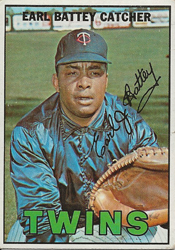
“I have as good a room at the Sadler as I have anywhere in the American League,” Twins catcher Earl Battey told The Sporting News.

Speaking out

Earl Battey liked the Hotel Sadler, but he and his black teammates objected to being segregated. “Our position was that equal but separate accommodations was still discrimination,” Battey told the Minneapolis Star-Tribune.

Another black Twins player, outfielder Lenny Green, said to The Sporting News, “We wanted to be treated like any other player.”

Minnesota Gov. Karl Rolvaag appointed a three-member review board to investigate charges of discrimination against black Twins players at spring training, The Sporting News reported. Rolvaag appointed the panel after Minnesota’s State Commission Against Discrimination ordered a public hearing.

Minnesota attorney general Walter Mondale, the future vice president of the United States, spoke out against the Twins’ segregated conditions.

Minneapolis mayor Arthur Naftalin was informed the NAACP (National Association for the Advancement of Colored People) and the Congress of Racial Equality planned to picket the Twins’ regular-season home opener unless integrated housing was provided to the team. Naftalin called Griffith and urged him to “lay down the law” to Cherry Plaza Hotel management and insist they admit blacks, the Minneapolis Star-Tribune reported.

Quality inns

On Feb. 10, 1964, the U.S. House of Representatives passed the federal Civil Rights Act of 1964, prohibiting discrimination in public accommodations on the basis of race, color, religion or national origin. The proposal needed approval of the U.S. Senate before President Lyndon Johnson could enact it.

Griffith said he tried to convince Cherry Plaza Hotel manager Frank Flynn to accept blacks, but Flynn refused. Griffith said he and traveling secretary Howard Fox looked into other Orlando lodgings, and all except the Cherry Plaza and the Robert Meyer Motor Inn, which opened on Lake Eola in 1963, were objectionable. Like the Cherry Plaza, the Robert Meyer Motor Inn wasn’t integrated.

“There are two first-class hotels in Orlando and neither will accept Negroes,” Griffith told the Minneapolis Star-Tribune. “That’s all there is to it. Sure, there are places integrated in Orlando, but they’re nothing we would stop at. We’re not going to go to a third- or fourth-rate hotel just to accommodate the civil rights people. If we’re going to integrate, let’s go first class.”

Orlando mayor Robert Carr said it was “ridiculous” to claim good integrated accommodations were unavailable in the city.

With Griffith unwilling to take the team out of the Cherry Plaza Hotel, civil rights groups went ahead with plans for demonstrations to show “our displeasure with the team’s management for not making a strong effort to change the discrimination policy,” said Minneapolis NAACP president Curtis Chivers.

“The Negro members of the team aren’t in a position to do too much and it’s the responsibility of civil rights groups to act in their behalf,” Chivers said.

Making the move

Howard Fox indicated the threat of pickets provided the impetus for Twins management to find integrated housing, The Sporting News reported.

Twins players, coaches and manager Sam Mele were moved to the Downtowner Motor Inn, a chain motel in downtown Orlando. The motel had been integrated since it opened 15 months earlier.

Unmarried players and married players whose wives were not at spring training were moved to the Downtowner. Married players with wives present were allowed to make their own arrangements. Griffith and others in the Twins front office remained in the Cherry Plaza Hotel, The Sporting News reported.

A total of 27 members of the Twins’ team, including a half-dozen blacks, moved to the integrated motel, the Minneapolis Star-Tribune reported.

“We had to give up a little in the quality of accommodations,” Griffith told the Minneapolis newspaper. “As a matter of fact, neither the white nor the Negro players will have quite such commodious quarters as when they were separated, but we have accomplished the primary purpose of bringing our players together without discrimination.”

It’s a small world after all

On June 19, 1964, the U.S. Senate passed the Civil Rights Act. It was signed into law by President Johnson on July 2, 1964.

Three months later, on Oct. 25, 1964, President Johnson visited Orlando and stayed at the Cherry Plaza Hotel, which integrated after passage of the Civil Rights Act.

At spring training in 1965, all of the Twins were housed at the Cherry Plaza Hotel. The Twins went on to win the 1965 American League pennant.

On Nov. 15, 1965, a month after the Dodgers beat the Twins in Game 7 of the World Series, Walt Disney held a news conference in the Egyptian Room of the Cherry Plaza Hotel and announced plans for the creation of Disney World.