A short stint with the Cardinals was the end of the line in the playing career of Gary Sutherland. Afterward, he dropped them a line in gratitude.
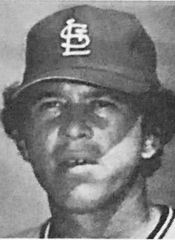 A utilityman whose best position was second base, Sutherland played 13 seasons in the majors with the Phillies (1966-68), Expos (1969-71), Astros (1972-73), Tigers (1974-76) and Padres (1977) before finishing with the 1978 Cardinals.
He appeared in 10 games for the Cardinals, a team on its way to 93 losses. Cut from the roster in May, Sutherland, 33, sent the team a letter. According to the St. Louis Post-Dispatch, it read:
“Dear Cards:
“I’m sorry I wasn’t able to say goodbye to all of you and that I wasn’t able to contribute much to the ballclub other than keeping the smokers stocked in cigarettes, and having an unblemished record as a prosecuting attorney (in clubhouse mock court hearings).
“My career has been a very good one for me and I have no regrets whatsoever other than having to leave so many friends. Everyone’s playing days must end some day and it seems my time has come …
“I want to wish everyone the best of luck. There’s still a long way to go and I know you’re capable of making it to the top this year. How can you miss? If I can’t make the team, as great as I am, you’ve got to be the best.”
Sutherland went on to become a scout for the Dodgers and Angels, then moved into the Angels’ front office. He was 80 when he died on Dec. 16, 2024.
Baseball bloodlines
Gary Sutherland was raised in Glendale, Calif., by a father (Ralph) who pitched in the Cardinals’ system and was 15-3 for Newport, Ark., in 1936, and a mother who was a catcher for a semipro softball team in Culver City, Calif. Dad pitched batting practice to Gary and his brothers and mom caught their throws in the backyard. Gary’s older brother, Darrell, pitched in the majors for the Mets and Indians.
A second baseman at University of Southern California, Gary Sutherland was chosen for the U.S. team that went to the 1964 Summer Olympics in Tokyo. Baseball then was a demonstration sport, not in medal competition.
The Phillies signed Sutherland, 20, in November 1964. Minor-league teammates dubbed him Casper, as in the cartoon ghost, because of his pale complexion. (Sutherland later was diagnosed with hypoglycemia, or low blood sugar.)
After reaching the majors in September 1966, Sutherland stuck with the Phillies as a utility player the next two seasons. He appeared at second base, shortstop, third base, left field, right field, and went to the Florida Instructional League to learn catching in case he was needed in an emergency.
A right-handed contact hitter _ “The name of his game is ping, not power,” Bill Conlin noted in the Philadelphia Daily News _ Sutherland stung the Cardinals a couple of times in 1968.
With the Cardinals ahead, 3-2, at Philadelphia, the Phillies had two on, two outs, in the ninth when Sutherland batted against rookie reliever Hal Gilson. Left fielder Lou Brock shifted toward left-center because, as manager Red Schoendienst told the St. Louis Post-Dispatch, Sutherland “never pulls the ball.”
Gilson threw a slider down and in _ “Always a tough pitch for me to handle,” Sutherland told the Daily News. To nearly everyone’s surprise, he drove it toward the corner in deep left. Brock made a long run and leaped. The ball barely went over his glove for a double. Both runners scored, giving the Phillies a 4-3 walkoff win. “He probably won’t pull the ball to the left field corner the rest of the year,” Schoendienst moaned to the Post-Dispatch. Boxscore
Four months later at St. Louis, Ray Washburn started for the Cardinals in his first appearance since pitching a no-hitter. With the score tied at 1-1 in the ninth, the Phillies had a runner on third, two outs, when Washburn intentionally walked former teammate Bill White to pitch to Sutherland. Swinging at a slow curve, Sutherland lashed a double to center, driving in the winning run. Boxscore
Original Expo
The Expos selected Sutherland in the October 1968 National League expansion draft. Gene Mauch, Sutherland’s first big-league manager, was with Montreal. Expos scout Eddie Lopat, who watched Sutherland hit .339 for the Phillies in September 1968, told the Montreal Star, “He’s the best utilityman I saw in the National League.”
Sutherland became the Expos’ starting second baseman. Mauch stuck with him even after Sutherland went hitless in his first 22 at-bats.
On June 8, 1969, Sutherland helped the Expos end a 20-game losing streak. Ahead 2-0 on a Rusty Staub home run, the Expos had runners on the corners, one out, in the fourth against the Dodgers’ Bill Singer when Sutherland perfectly executed a suicide squeeze bunt, scoring Mack Jones from third. The Expos won, 4-3. Boxscore
Sutherland finished the 1969 season with 130 hits (third-most on the club) and 26 doubles. Platooned with Marv Staehle in 1970, Sutherland slumped to .206, then reverted to a reserve role in 1971 after the Expos acquired Ron Hunt.
Traded to the Astros in 1972, Sutherland spent most of that season and the next in the minors.
Tiger tale
Getting demoted “was quite a shock,” Sutherland said to the Detroit Free Press, but a silver lining was he got to play regularly and that helped improve his hitting. He batted .299 for Oklahoma City in 1972 and .294 for Denver in 1973.
The Tigers acquired Sutherland to be their second baseman in 1974. “I’m not going to be outstanding in anything because I’m limited in so many ways,” Sutherland cautioned the Free Press. “I don’t have enough power to hit a lot of home runs and I don’t run well enough to be a .300 hitter.”
He did enough to stay in the lineup. Adept at turning the double play “about as well as any second baseman in the business,” according to the Montreal Star, Sutherland also contributed at the plate for the Tigers. In 1974, he had career highs in hits (157), RBI (49) and total bases (194). With the 1975 Tigers, Sutherland combined 130 hits with a career-best 45 walks.
Though he ended up with just 24 home runs in the majors, Sutherland had some surprising swats. He slugged homers in consecutive seasons versus the Cardinals’ Steve Carlton at Montreal. Boxscore and Boxscore
With the Tigers, facing Catfish Hunter for the first time, Sutherland hit two homers in a game at Oakland. A disgusted Hunter told the San Francisco Examiner, “Both pitches in the same spot, fastball up, slider up, both landed in the same spot.” Sutherland, a good sport, said to the newspaper, “I’m sure the wind helped them out.” Boxscore
The Tigers dealt Sutherland to the Brewers in June 1976. Released after the season, he joined the 1977 Padres and hit .316 for them as a pinch-hitter.
Good connections
Hoping to keep playing after getting released by the Padres in December 1977, Sutherland called Buzzie Bavasi of the Angels and asked for a roster spot. Bavasi said he didn’t have an opening. Soon after, in a talk with St. Louis general manager Bing Devine, Bavasi learned the Cardinals were seeking a backup infielder. Bavasi suggested Sutherland.
The Cardinals signed Sutherland to a minor-league contract and invited him to spring training as a non-roster player. Sutherland beat out Ken Oberkfell for one of the two reserve infield spots. The other went to Mike Phillips.
The 1978 Cardinals, though, were a mess. Manager Vern Rapp was fired in April, Ken Boyer replaced him and Sutherland no longer fit the plans. In eight plate appearances for the Cardinals, he produced one hit and two sacrifice bunts.
Just before getting released, Sutherland made an important contribution to the Cardinals. Bing Devine was considering a trade for Padres outfielder George Hendrick. Devine asked Sutherland for an opinion of his former Padres teammate. As Devine recalled to the Post-Dispatch, Sutherland “told me he never knew of a player who had a better relationship with his teammates than Hendrick did with the Padres.”
Devine made the deal and Hendrick helped the Cardinals become World Series champions in 1982.
The ability to assess talent helped Sutherland become a Dodgers scout and coordinator of their professional scouting department. Then the Angels hired him for the same roles.
Sutherland “was a significant influence” in the Angels’ decision to hire manager Mike Scioscia, the Los Angeles Times reported. Scioscia led the Angels to their only World Series title in 2002.
Sutherland became special assistant to Angels general manager Bill Stoneman. Sutherland and Stoneman had been Expos teammates. According to the Times, Sutherland rose to No. 2 on the Angels’ baseball operations staff.

 RetroSimba
I really admire his sense of humor, humbleness and realism. Truth is though, that Gary Sutherland wouldn’t have played 13 years in the Major League if not for the fact that he was a valuable asset to the team. While I completely understand that it was probably best having him at second base I couldn’t help but notice that for his career when he filled in at third base and left field he hit .368 and .291 respectively. And thank goodness he encouraged Bing Devine to make a trade for George Hendrick.
I am glad the attributes of Gary Sutherland you cited came through in the story, Phillip.
The move to platoon the rookie with Johnny Briggs in left field early in the 1967 season was a bold decision by Phillies manager Gene Mauch. According to the Philadelphia newspapers, Mauch did it because he wanted to find a place for Sutherland to play after he hit well in 1967 spring training. (The infield spots were filled.)
Asked about playing the outfield for the first time since high school, Sutherland said, with typical candor, to the Philadelphia Daily News, “Playing it now, I am scared to death.” However, Mauch said, “Anybody who can play shortstop can play anywhere. If Gary can hit, we’ll find a position.”
Regarding Sutherland’s hitting, Mauch told the Daily News, “Gary has a good stroke _ not a swing, a stroke.”
In June 1967, the Phillies sent Dick Groat to the Giants and gave the shortstop job to Sutherland. “Over the long haul, we feel Gary Sutherland will do as much at shortstop for the Phillies as Dick Groat,” Mauch told the Daily News. However, it didn’t work out. As a shortstop, “there are people who say he is too timid, his hands are too tight and his range is too sparse,” Stan Hochman of the Daily News noted.
Gotta love a ballplayer with a sense of humor.
Yes, indeed, especially the self-deprecating kind.
Though Gary Sutherland in 1968 was dubbed by the Philadelphia Daily News as “the forgotten man on a team fans were forgetting in droves,” Phillies manager Bob Skinner noted, “He doesn’t gripe or sulk.”
Great research as always Mark. He sure came from good baseball pedigree. Very impressed that he sent the team a letter and of course, the Cards lost 93 games because of Sutherland being cut. HA. He will always be part of Expos lore. Funny to think that kids born after 2004 might have no idea who the Expos were.
The effort to write and send the letter impressed me, too, Steve.
I hope young people in Montreal some day find it cool to celebrate the Expos and the city’s baseball history. I wonder whether Canadian actor Donald Sutherland ever met Gary Sutherland when he was an Expo?
It’s too bad Gary Sutherland didn’t have a more productive stint with the Brewers. Their manager in 1976, Alex Grammas, had been a similar style of player and he appreciated Sutherland. In a swap of second basemen, the Brewers sent Pedro Garcia to Detroit for Sutherland in June 1976. According to The Sporting News, the Tigers first tried to get second baseman Lenny Randle from the Rangers for pitcher Joe Coleman. When that attempt failed, they made the deal with the Brewers. Garcia was on the outs with Brewers management because of his constant feuding the year before with manager Del Crandall. After Garcia learned he had been traded for Sutherland, he told The Sporting News, “I think I’m worth more than that.”
Soon after he joined the Brewers, Sutherland sprained a knee and went on the disabled list. After the season, the Brewers signed Sal Bando to play third and shifted Don Money from third to second, leading to the decision to release Sutherland.
God dang I love your knowledge and incredible research Mark. I love my Brewers more and more since Gary connected us in the amazing thing that wordpress is or the internet or whatever. i know technology has its definite dangers, but i guess like anything else, there are positives too.
Man, I would give anything to have a cup of coffee and about 30 minutes with one of these “baseball lifers.”
I hope you get that chance some day, Gary, and that you get to write about it. That would be a treat for all.
Long time reader first time commenter. Love the stories you put together. Keep up the great work Mark .
Thank you for your readership and encouragement. It is much appreciated!