Feeds:
Posts
Comments

Archive for the ‘Executives’ Category

(Updated March 15, 2023)

In March 1988, the NFL approved the move of the St. Louis football Cardinals to Arizona, leaving the St. Louis baseball Cardinals as the sole tenant of Busch Memorial Stadium for the first time since it opened in 1966.
curtis_greerThe departure of the football Cardinals ended 28 years of NFL existence in St. Louis, but it was a boon to the baseball Cardinals, who benefitted from improvements to Busch Memorial Stadium.

In April 1988, when the defending National League champion Cardinals opened their baseball season a month after the football Cardinals left St. Louis, 1,000 seats and 10 luxury suites were added to Busch Memorial Stadium, increasing seating capacity for baseball to 54,224.

A year later, among the upgrades made to the stadium for the 1989 Cardinals baseball season were a 65,000-watt sound system, seven new concession areas and remodeling of 11 others.

In 1992, the baseball Cardinals installed a spongier and darker artificial playing surface. Four years later, they went to a natural grass surface at Busch Memorial Stadium for the first time since 1969.

Bill Bidwill, owner of the football Cardinals, asked the NFL on Jan. 15, 1988, for permission to move to Phoenix because he believed Busch Memorial Stadium limited his revenue opportunities and he didn’t have hope a football stadium would be built in St. Louis. The NFL wanted Bidwill to relocate the team to Baltimore because it intended to place an expansion franchise in Phoenix.

Bidwill preferred Arizona. Sun Devil Stadium in Phoenix offered 73,000 seats (20,000 more than Busch Memorial Stadium did for football). Bidwill stood to gain $2.5 million from luxury suite seats. He also was optimistic of having a domed stadium built in downtown Phoenix.

On March 15, 1988, NFL owners voted 26-0, with two abstentions, to approve the move. Abstaining were Raiders owner Al Davis and Dolphins owner Joe Robbie.

(Davis, in a legal battle with the league, told the New York Times, “It’s all a sham. They vote any way they want and allow anyone they want to move.” Robbie told the St. Louis Post-Dispatch he abstained out of loyalty to his friend Joe Foss, who headed a group seeking an expansion franchise in Phoenix. “A man who forgets his friends doesn’t deserve friends,” Robbie said.)

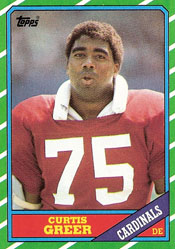
Cardinals defensive lineman Curtis Greer said Bidwill had given St. Louis the chance to build a stadium and keep the team.

”I would think that you’ve got to appreciate Mr. Bidwill’s patience in trying to give the city of St. Louis time to get a new stadium,” Greer said to the Post-Dispatch. ”I think it was about 3 1/2 years since he first talked of moving. He took the route of being courteous and following the guidelines of the league. I think you’ve got to admire a guy like that.”

St. Louis mayor Vincent Schoemehl ripped the NFL for permitting the move. Schoemehl told the Post-Dispatch that “communities have a right to be treated better” by the NFL.

“This is a reflection on them (the NFL) and not us,” Schoemehl said. “I think our code of conduct in this city is frankly superior to theirs.”

Regarding the NFL commissioner, Schoemehl added, “I find it hard to hold Pete Rozelle in high regard.”

Seven years later, St. Louis regained a NFL franchise when the Rams moved there from Los Angeles. The Rams played their first four home games of the 1995 season at Busch Memorial Stadium before relocating to a domed stadium built for the franchise in downtown St. Louis.

After the 2015 season, the Rams returned to Los Angeles.

Previously: Football Cardinals finally got it right with Don Coryell
Read Full Post »

In 1943, the defending World Series champion Cardinals shifted their spring training site from Florida to Illinois. Compared with where other big-league clubs had to go, the Cardinals considered themselves fortunate.

billy_southworth2With the United States pouring resources into its fight against Germany and Japan in World War II, big-league baseball offered to help conserve by placing travel restrictions on where clubs could train in the spring.

Clubs were ordered to choose sites north of the Potomac and Ohio rivers and east of the Mississippi River.

The Browns of the American League selected Cape Girardeau, Mo., located 135 miles south of St. Louis. (Because Cape Girardeau is on the west bank of the Mississippi, the Browns technically were in violation of the rules, but baseball officials allowed it.)

The Cardinals picked Cairo, Ill., the southernmost spring training site of all 16 major league clubs. Cairo, then a town of 14,000, is located where the Ohio River flows into the Mississippi. It is 40 miles south of Cape Girardeau.

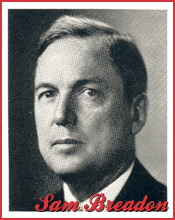
“We’re going farther south than any other big-league training outfit,” Cardinals owner Sam Breadon said to The Sporting News. “We’ll be only a short distance from Tennessee and the weather down there is always from 12 to 15 degrees warmer than it is in St. Louis.”

Here is where the big-league teams trained in 1943:

NATIONAL LEAGUE

CLUB……………1943 TRAINING SITE……………1942 TRAINING SITE

Braves…………..Wallingford, Conn……………………..Sanford, Fla.

Cardinals……….Cairo, Ill……………………………………St. Petersburg, Fla.

Cubs………………French Lick, Ind……………………….Catalina Island, Calif.

Dodgers…………Bear Mountain, N.Y…………………..Havana, Cuba

Giants……………Lakewood, N.J………………………….Miami, Fla.

Phillies…………..Swarthmore, Pa……………………….Miami Beach, Fla.

Pirates……………Muncie, Ind…………………………….San Bernardino, Calif.

Reds………………Bloomington, Ind…………………….Tampa, Fla.

AMERICAN LEAGUE

CLUB……………1943 TRAINING SITE……………1942 TRAINING SITE

Athletics…………Wilmington, Del………………………..Anaheim, Calif.

Browns…………..Cape Girardeau, Mo…………………..DeLand, Fla.

Indians…………..West Lafayette, Ind……………………Clearwater, Fla.

Red Sox………….Medford, Mass………………………….Sarasota, Fla.

Senators…………College Park, Md………………………Orlando, Fla.

Tigers……………..Evansville, Ind…………………………Lakeland, Fla.

White Sox………..French Lick, Ind………………………Pasadena, Calif.

Yankees……………Asbury Park, N.J…………………….St. Petersburg, Fla.

The Cardinals didn’t report to Cairo, Ill., until mid-March, at least two weeks later than they usually went to St. Petersburg. They trained outdoors on a large field and indoors in a high school gym.

According to The Sporting News, the field drained well, “usable the day after a heavy rainfall,” and the gym was like “a steam room” because the Cardinals kept the temperature above 80.

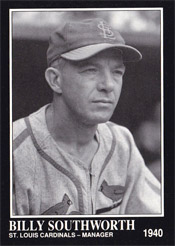
Cardinals manager Billy Southworth projected a positive attitude, telling The Sporting News after the first week of workouts, “Let us have three days outdoors out of every five and we’ll be in thoroughly satisfactory condition for the pennant race. And let us have warm weather through most of the last two weeks and we’ll be in as good condition as we could attain anywhere in the country.”

The Cardinals’ Cairo spring didn’t hurt. They repeated as National League champions in 1943. They trained again in Cairo in 1944 and 1945 (winning a World Series title in 1944) before returning to St. Petersburg in 1946.

Previously: How Mort Cooper pitched 2 straight 1-hitters for Cardinals

Read Full Post »

(Updated July 4, 2020)

The St. Louis Cardinals and Milwaukee Brewers are rivals in the National League Central Division now, but in 1953 Milwaukee appeared to be a rival in trying to lure the Cardinals from St. Louis.

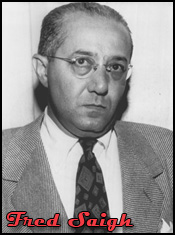
fred_saighHow close the Cardinals came to moving to Milwaukee in February 1953 is unclear, but Anheuser-Busch wasn’t willing to take any chances. The St. Louis-based brewery stepped forward and bought the Cardinals from Fred Saigh when it appeared Saigh was willing to sell to a Milwaukee syndicate.

Tax cheat

On Jan. 28, 1953, Saigh, who had owned the Cardinals since 1947, was sentenced to 15 months in prison and fined $15,000 for federal income tax evasion.

“This means, of course, I will have to dispose of the Cardinals,” Saigh said in addressing the court. “There is no way I can stay in baseball.”

Saigh, an attorney who invested in commercial real estate, had entered a plea of no contest to two counts of evading $19,299 in taxes.

Addressing Judge Roy Harper in court after the sentence was announced, Saigh said, “I think you’ve been too tough with me.”

Replied Harper: “You plead that you are guilty to those essential elements, and if you were not guilty, you should have stood upon a plea of not guilty. Don’t come in and plead before me and then ask me to say you are wrong.”

Buy and sell

Saigh and Postmaster General Robert Hannegan purchased the Cardinals from Sam Breadon in 1947 for about $4 million, but, the Associated Press reported, “by what Saigh termed a ‘gimmick’ in the tax law, he and Hannegan were able to buy the club and its widespread minor-league holdings for a cash outlay of only $60,800.”

Because of failing health, Hannegan sold his stake in the Cardinals to Saigh in January 1949.

Four years later, facing jail time, Saigh put a price tag of $4.5 million on the Cardinals, according to the Associated Press. Several media outlets reported Bill Walsingham, a Cardinals executive and nephew of Sam Breadon, was the leading candidate to buy the club. Joe Reichler of the Associated Press wrote: “Bill Walsingham Jr. probably will be the new owner of the St. Louis Cardinals.”

By Feb. 1, 1953, The Sporting News reported, Saigh had received 30 to 40 bids for the franchise. Quietly, Anheuser-Busch indicated to Saigh it might be interested in buying the Cardinals.

Out-of-town shoppers

Saigh claimed the best offer he received was in excess of $4 million from a Milwaukee group that planned to move the Cardinals to Wisconsin.

“When it became apparent that an out-of-town group was ready to purchase the Cardinals at a price which I felt was a fair value for the club, I informed Mr. (August) Busch and his associates of the impending sale,” Saigh said in a statement.

The Sporting News reported the Milwaukee businessmen had the “inside track” to buy the Cardinals. Saigh was “about to close a deal with a Milwaukee group,” according to the Associated Press.

In his book, “Stan Musial: The Man’s Own Story,” the Cardinals outfielder said Saigh, after being approached by the Milwaukee group, “prepared to go to New York to get commissioner Ford Frick’s approval for sale of the Cardinals.” Before Saigh departed, Musial said, a group consisting of Anheuser-Busch executives and St. Louis bankers convinced him to delay until they had a chance to prepare a bid.

Local discount

On Feb. 20, 1953, Saigh announced he was selling the Cardinals to Anheuser-Busch for $3.75 million, less than what he could have gotten from the Milwaukee buyers, he claimed.

The Associated Press wrote, “The St. Louis Cardinals, close to being transferred to Milwaukee a week ago, counted themselves as one of the money clubs today with solid financial backing in the old hometown. Anheuser-Busch Inc. bought the club for the announced purpose of keeping the Cardinals in St. Louis.”

Anheuser-Busch representatives told reporters Saigh had “made several important concessions to keep (the Cardinals) here and deserves sincere appreciation.”

R.G. Lynch of the Milwaukee Journal reported a different version. In a piece picked up by The Sporting News, Lynch wrote Saigh had hyped the notion of a Milwaukee offer in order to drive up the purchase price from Anheuser-Busch.

“There’s a big chuckle in the St. Louis baseball deal,” Lynch wrote. “It involves the Milwaukee offer, which Fred Saigh says he turned down in order to keep the Cardinals in St. Louis. There was no Milwaukee offer. All Saigh ever had was an inquiry from Fred Miller, Milwaukee brewer, as to how much he wanted for the property. The answer was $4 million-plus, and that was the end of it.

“Saigh was forced to sell and every potential buyer knew it. So he grasped at this straw and built it into a scarecrow.

“Whether or not this maneuver helped Saigh to get a better price, no one will ever know, except the Anheuser-Busch people, and they won’t tell.”

Fearing he couldn’t compete with the financial resources of Anheuser-Busch, Bill Veeck, owner of the St. Louis Browns, tried moving his club to Milwaukee but the American League blocked the deal. In March, Milwaukee got its team when the Braves moved there from Boston just before the start of the 1953 season.

Saigh died at 94 in December 1999. In an obituary, the New York Times reported: “Saigh was released from prison in November 1953 after serving six months and soon began buying shares in Anheuser-Busch. He was said to have become the largest single owner of the brewery’s stock outside the Busch family, at one point with holdings worth about $60 million.”


Read Full Post »

(Updated Dec. 27, 2015)

Sam Breadon was principal owner of the Cardinals from 1920 through 1947.

Born July 26, 1876, in New York City, Breadon, nearly penniless, went to St. Louis in 1902 to join a friend in the garage business. Backed by customers impressed by his work and demeanor, Breadon started his own automobile and garage business in 1903 and soon became successful. He also became a fan of the local National League baseball club, the Cardinals.
In 1917, Breadon paid $2,000 to become an investor in the Cardinals. Three years later, he rose to principal owner and president of the franchise.

Though he was tight-fisted with finances and sometimes displayed a cold demeanor (“The fear of poverty haunted him all through his years, even after he could write a check for seven figures,” The Sporting News surmised), Breadon was, by most accounts, an effective and savvy executive.

Here are five more facts about Breadon:

1. The Cardinals won nine National League pennants and six World Series titles while Breadon was their principal owner. To put that in perspective, the National League won eight World Series titles between 1926-46. The Cardinals won six of those. (The others were the 1933 Giants and 1940 Reds.)

In his obituary in May 1949, The Sporting News wrote of Breadon, “His name was synonymous with baseball success.”

2. In May 1925, Breadon boldly elevated second baseman Rogers Hornsby to player-manager, replacing Branch Rickey, who returned to the front office. A year later, Hornsby led the Cardinals to their first pennant and first World Series championship. Rickey, meanwhile, began building the franchise-controlled farm system that would supply the Cardinals with top talent for decades. (By 1939, Breadon owned 16 farm teams outright and had working agreements with 12 others.)

Though he traded Hornsby to the Giants (for Frankie Frisch) after the World Series when Hornsby demanded a three-year contract rather than the one-year deal offered, Breadon’s promotion of Hornsby to manager created a culture change, with long-term implications.

“It gave us our first pennant, it made our players pennant-conscious and it enabled Rickey to move into the front office, where he had a much better opportunity to develop and exercise his talents,” Breadon said to The Sporting News.

3. Shortly after gaining control of the Cardinals, Breadon made a deal that solidified the financial foundation of the franchise. The Cardinals had been playing their home games at dilapidated Robison Field. Breadon convinced Phil Ball, owner of the St. Louis Browns of the American League, to take in the Cardinals as a tenant at Sportsman’s Park.

That enabled Breadon to demolish Robison Field and sell most of the property to the city for $200,000 (the city planned to build a high school on the site) and sell the rest of the land for $75,000 to a trolley company for a loop that would provide access to the school.

“It was the most important move I ever made on the Cardinals,” Breadon told The Sporting News. “… It gave us money to clean up our debts, and something more to work with. Without it, we never could have purchased the minor-league clubs, which were the beginning of our farm system.”

4. Breadon pinched pennies, but his generosity also quietly helped several former Cardinals.

For years, Breadon sent a monthly check to Grover Cleveland Alexander, the Cardinals’ hero of the 1926 World Series, when the pitcher was in financial trouble, The Sporting News reported.

Though ace pitcher Mort Cooper had bolted the Cardinals because of a contract dispute in 1945, prompting them to trade him, Breadon came to Cooper’s aid when Cooper was arrested and charged with passing bad checks in 1948. Breadon bailed Cooper out of jail, covered the reimbursements on the bad checks and sent Cooper monthly payments to help him get out of a financial hole, The Sporting News reported.

5. In 1939, Breadon prevented Rickey from dealing Marty Marion to the Cubs. At the time, Marion and Bobby Sturgeon were shortstops in the Cardinals’ farm system. According to The Sporting News, Rickey thought Sturgeon was the better prospect and wanted to offer Marion to the Cubs for cash.

“No,” Breadon responded, “if we sell one of them, we’ll sell Sturgeon.”

In a compromise (at this point in their working relationship, Breadon and Rickey often were clashing), the Cubs were allowed to make a choice between the two shortstops. To Breadon’s relief, Chicago chose Sturgeon. Marion, who would earn the nickname “Mr. Shortstop” because of his stellar fielding, would join the Cardinals in 1940 and help them to four pennants and three World Series titles.

“He’s the best ever,” Billy Southworth, who managed the Cardinals to three consecutive pennants (1942-44), said of Marion to The Sporting News. “He anticipates plays perfectly, can go to his right or left equally as well and has a truly great arm. Some of the things he does have to be seen to be believed.”


Read Full Post »

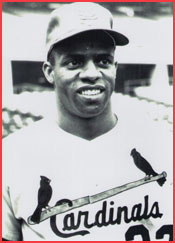
Before the 1967 season, Ted Savage competed with Mike Shannon for the role of starting third baseman of the Cardinals. Neither could have imagined then that both would have long careers with the Cardinals after their playing days.

Shannon, who would win the third base job, played until 1970. After a year as the franchise’s assistant director of promotions and sales, Shannon became a Cardinals broadcaster in 1972 and remained in the job through the 2021 season.

Savage spent three (1965-67) of his nine years in the majors as a Cardinals reserve. He joined their front office in September 1987 as assistant director of community relations and minor-league instructor. The 2012 season was his 25th and last in the Cardinals’ front office. At 75, he retired as director of target marketing in the Cardinals Care and community relations department.

A native of the St. Louis-area town of Venice, Ill., Savage signed with the Phillies as an amateur free agent in 1960 and quickly made a favorable impression. In 1961, Savage was named most valuable player of the Class AAA International League after hitting .325 with 24 home runs, 31 stolen bases and 111 runs scored for Buffalo.

Savage became the Phillies’ left fielder as a rookie in 1962 and hit .266 with 16 stolen bases. He was traded to the Pirates after the season, beginning a journey that would land Savage with eight big-league teams between 1962 and 1971.

In December 1964, the Pirates traded Savage and pitcher Earl Francis to the Cardinals for second baseman Jack Damaska and outfielder Ron Cox.

A substitute school teacher in St. Louis during the off-season (he was graduated from Lincoln University, with a bachelor’s degree in education), Savage reported to spring training in 1965 with the Cardinals’ minor-league players. He began the regular season with Class AAA Jacksonville, stole 34 bases in 87 games and was called up to St. Louis on July 23 after reserve outfielder Carl Warwick was dealt to the Orioles.

Savage didn’t get a hit until his 19th at-bat as a Cardinal. The slump-busting double on Aug. 2 sparked a winning rally against the Dodgers. Boxscore

Two weeks later, Savage hit his first and only Cardinals home run, a two-run shot off Joe Nuxhall of the Reds. Boxscore

The highlights were too few. Savage hit .159 (10-for-63) in 30 games for the 1965 Cardinals. He opened the 1966 season with Class AAA Tulsa.

“Ted is really something,” Tulsa manager Charlie Metro told The Sporting News. “He can do everything _ and well. I consider him a better center fielder than eight of those now up in the big leagues.”

Savage, hitting .317 with 34 doubles, 18 homers and 43 steals for Tulsa, was called up to the Cardinals in August 1966. He was instrumental in helping St. Louis to a 5-1 victory over the Pirates on Aug. 27. Savage doubled and scored against starter Steve Blass and rapped a two-run double off reliever Pete Mikkelsen. Boxscore

Just as in 1965, though, Savage mostly struggled, batting .172 (5-for-29) in 16 games for the 1966 Cardinals.

After the season, Savage was sent by the Cardinals to the Florida Instructional League with the intent of being converted to a third baseman. He also received instruction on playing second base. Savage responded well to the challenges.

Wrote The Sporting News: “Besides playing a slick hot corner, Savage also won three straight games for the Cards. In one, he stole home with the winning run. In another, he drove in the deciding run with a single. And, in the third, he hit a game-winning 415-foot homer.”

Meanwhile, Shannon also was working toward a conversion from outfield to third base. In December 1966, the Cardinals traded their starting third baseman, Charlie Smith, to the Yankees for right fielder Roger Maris.

Though Shannon was regarded the frontrunner to replace Smith, Savage was considered a good bet to win a spot with the 1967 Cardinals. St. Louis ace Bob Gibson told The Sporting News, “Ted’s really improved. He’s got lots of guts and he could help some team right now.”

His confidence bolstered, Savage had a spectacular spring training, hitting .364 in exhibition games. Cardinals hitting instructor Joe Medwick said, “Savage became a good hitter again by going with the pitch.”

Savage made the 1967 Opening Day roster as a reserve infielder-outfielder. (Shannon was the starting third baseman and Lou Brock, Curt Flood and Maris were the outfielders).

However, Savage hardly played _ and when he did, he wasn’t effective. With his batting average at .125 (1-for-8), Savage was in the visitors’ clubhouse at Forbes Field in Pittsburgh when manager Red Schoendienst informed him he was being optioned to Tulsa. Angered, Savage grabbed a ukelele he had purchased and smashed it against his locker, The Sporting News reported.

The Cardinals switched gears. They sent Savage to the Cubs rather than return him to the minor-league system. Savage made an immediate impression in Chicago. He twice scored on steals of home. On June 2, his first time facing the Cardinals since his departure, Savage hit a home run against Steve Carlton, one of two he would hit against the St. Louis left-hander that season. Boxscore

Savage told The Sporting News he was sorry he had smashed the ukelele and explained, “I figured I had done everything they (the Cardinals) had asked me to. I just wasn’t going to go back to the minors.”

Savage also would play for the Dodgers, Reds, Brewers and Royals. His best season was 1970 when he hit .279 with 12 homers and 50 RBI for the Brewers.

After his playing career, Dr. Ted Savage earned a Ph.D. degree in urban studies from St. Louis University and spent nine years as athletic director at Harris-Stowe State University in St. Louis before joining the Cardinals’ front office.

Read Full Post »

« Newer Posts