Feeds:
Posts
Comments

Archive for the ‘Executives’ Category

(Updated Oct. 23, 2020)

If general manager Dal Maxvill had been willing to part with pitcher Joe Magrane, Don Mattingly might have been a first baseman for the Cardinals instead of spending his entire playing career with the Yankees.
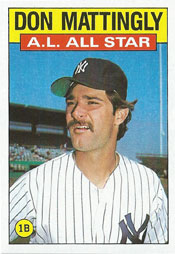
don_mattinglyIn 1988, Mattingly was feuding publicly with Yankees owner George Steinbrenner. That fueled media speculation the Yankees were willing to trade Mattingly, who expressed interest in the Cardinals because of the proximity of St. Louis to his hometown of Evansville, Ind.

“Growing up in Evansville, I was a fan of the St. Louis Cardinals,” Mattingly told the New York Daily News.

The Cardinals admitted interest in pursuing a deal. Media reports suggested the Yankees would want shortstop Ozzie Smith or center fielder Willie McGee in return, but the player New York apparently wanted most was Magrane, who at the time was St. Louis’ prized pitching phenom.

No respect

In August 1988, Mattingly, 27, was a five-time all-star who had earned an American League Most Valuable Player Award, one batting title and three Gold Glove awards, but he became disgruntled with the way he believed Steinbrenner was treating Yankees players.

“The players get no respect around here,” Mattingly said to the Associated Press. “They (management) give you money, that’s it. Not respect. Money is not respect.”

Reports spread quickly that an angry Steinbrenner intended to trade Mattingly. The Cardinals, who had just acquired first baseman Pedro Guerrero from the Dodgers, were willing to move Guerrero to left field and open the job at first base for Mattingly.

“I see where Mattingly wants to go to St. Louis,” Cardinals manager Whitey Herzog said to the St. Louis Post-Dispatch. “That takes care of us. Steinbrenner sure wouldn’t trade him where he wants to go. You know what I mean? He’d say, ‘I’ll show him. I’ll trade him to Seattle.’ ”

Still, baseball writers produced a stream of reports that speculated on a deal between the Yankees and Cardinals.

On Sept. 4, 1988, Rick Hummel of the Post-Dispatch wrote, “The Cardinals have some players in which the Yankees would seem interested. Certainly the Yankees would want a starting pitcher. Joe Magrane probably is unavailable. But Greg Mathews, if he shows he has recovered from elbow surgery, might be.”

Hummel suggested several possible packages to land Mattingly, including Mathews, McGee and catcher Tony Pena, or Mathews and Ozzie Smith.

About a month later, under the Post-Dispatch headline, “Maxvill Says He’ll Pursue Mattingly,” the general manager told Hummel, “I definitely want to talk to them.”

Wizard a Yankee?

Two days later, in a column that rocked Cardinals Nation, Tom Wheatley of the Post-Dispatch opined, “Ozzie Smith must go. And if the Wizard of Oz can be used as bait to land a whopper such as Don Mattingly, all the better.”

Maxvill said he made more inquiries about acquiring Mattingly, but he told Hummel, ‘I don’t think they’re interested in moving him as much as everybody thinks. That’s what I thought before and it’s been reinforced to me.”

Just when it appeared the possibility of a trade had waned, Murray Chass of the New York Times, citing an anonymous American League club executive, reported the Cardinals, Cubs, Padres or Giants were close to making a deal for Mattingly.

Wrote Chass: “If the Cardinals, for example, were really serious about the pursuit of Mattingly, they would have to offer the Yankees Joe Magrane … The Cardinals, however, will not offer Magrane; therefore, no deal.”

Magrane, 24, was the National League earned-run average leader (2.18) in 1988, his second season with St. Louis.

In December 1988, the Post-Dispatch reported why a deal for Mattingly appeared dead: “Maxvill said the New York Yankees never had asked seriously about acquiring (Ozzie) Smith in a Don Mattingly deal. Pitcher Joe Magrane’s name, on the other hand, did come up in discussions with the Yankees. But Maxvill said the Cardinals would be highly reluctant to part with him.”

Magrane achieved a career-high 18 wins for the 1989 Cardinals. Mattingly stayed with the Yankees and completed his 14-season big-league career with them in 1995. He finished with a .307 career batting mark and 2,153 hits.
Read Full Post »

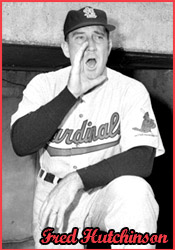
Ignoring the recommendation of general manager Bing Devine, Cardinals owner Gussie Busch ordered the firing of manager Fred Hutchinson.

fred_hutchinsonAt the press conference on Sept. 17, 1958, a distraught Devine spoke so glowingly about Hutchinson that the reporters there said it seemed like the manager was being hired, not fired.

Hutchinson had managed the 1957 Cardinals to an 87-67 record and second-place finish in the National League. Based on that performance, Busch was expecting the Cardinals to contend for a pennant in 1958.

However, the 1958 Cardinals lost 14 of their first 17 games. Lacking both power and run production, the Cardinals entered September in the second division of the eight-team league.

Busch wanted a change. Devine, in his first season as St. Louis general manager, wanted to keep Hutchinson and shake up the coaching staff instead.

Dick Meyer, an aide to Busch, called Devine and instructed him to prepare a report on his recommendations for the team. Devine was given a date and time to meet with Busch and Meyer and present the report.

Done deal

In his book “The Memoirs of Bing Devine,” Devine told writer Tom Wheatley, “So I wrote my report and I spent a lot of time on it … When we had our meeting, I handed the report to Mr. Busch. It featured rehiring Fred Hutchinson.

“Mr. Busch took the report and put it on his desk. He didn’t read it. He didn’t even open it.”

Instead, Busch told Devine, “We’re going to get rid of Fred Hutchinson. And you don’t need to think about replacing him because I already have the manager: Solly Hemus.”

Said Devine: “I was kind of hurt by the whole process of firing Hutchinson and hiring Hemus … I had made what I thought was a thorough report and the determination was made for me without my views being considered.”

On Sept. 13, Devine informed Hutchinson he would be fired during the last week of the season. When word leaked and reports appeared in the press, the Cardinals moved up the date of the dismissal, calling the press conference for Sept. 17.

Hearts and flowers

The Associated Press described Devine as “grim-faced” as he announced Hutchinson and his coaching staff were fired. (Coach Stan Hack agreed to remain as interim manager for the final 10 games.) Hutchinson, who attended the press conference, “appeared in good spirits,” the Associated Press reported.

Devine told The Sporting News, “We have no direct criticism and this is most difficult when it’s a man like Hutch, who gave us full effort, was most cooperative and 100 percent in giving young players a chance.”

According to United Press International, “It appeared clear Hutch was the victim of baseball’s strange logic: If the bus breaks down, fire the driver.”

The Cardinals, who were 69-75 when Hutchinson was fired, finished 72-82 and tied for fifth. They were last in the National League in runs (619), RBI (570) and home runs (111) and committed 151 errors, second-most in the league.

“It’s apparent the club has to score more than it did this year,” Hutchinson said. “It’s a good 50 runs behind the second-poorest offensive club in the league. Both the pitching and defense have to be steadier, too.”

Hutchinson was 232-220 in three years (1956-58) as Cardinals manager. Three years after his firing, he managed the Reds to the 1961 pennant. Hemus, a former Cardinals infielder, went 190-192 as St. Louis manager before he was fired in July 1961 and replaced by one of his coaches, Johnny Keane.

Read Full Post »

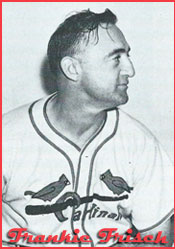
In September 1938, the relationship between Cardinals manager Frankie Frisch and executive Branch Rickey had become irreparable.

frankie_frisch2Cardinals owner Sam Breadon liked and respected Frisch, but he determined he couldn’t afford to lose Rickey.

On Sept. 11, 1938, Breadon reluctantly fired Frisch.

Frisch had been a Hall of Fame-caliber second baseman for the Cardinals and was Breadon’s favorite player. In 1933, Frisch became the Cardinals’ player-manager, replacing Gabby Street, and led them to a World Series championship the following year. The Cardinals contended in 1935 and 1936, finishing second in the National League both years.

Aggressive and feisty, Frisch managed the Cardinals’ rough-and-tumble Gashouse Gang clubs that featured colorful characters such as Dizzy Dean, Pepper Martin, Joe Medwick, Rip Collins and Leo Durocher.

Frisch was Breadon’s guy more than he was Rickey’s and he and Rickey clashed. Rickey, for instance, wanted Frisch to move center fielder Terry Moore to third base.

At a Chamber of Commerce luncheon at St. Louis in April 1938, Rickey put the heat on Frisch, telling the audience, “Except for pitching, this is the greatest ballclub the Cardinals ever had.”

Instead, the Cardinals were in sixth place in September 1938 and speculation grew Frisch wouldn’t be brought back in 1939.

Don Gutteridge, third baseman for the 1938 Cardinals, told author Peter Golenbock for the book “The Spirit of St. Louis” that “during the latter part of the season all of us were thinking Frankie might get fired …My guess is that Frisch wanted to play certain players and Rickey wanted him to play somebody else.”

Showdown with Breadon

After Labor Day, Frisch went to Breadon, seeking to learn whether he had the owner’s support. “I have the greatest admiration for the old man (Breadon),” Frisch told The Sporting News. “He’s been swell to me right along and we never had a cross word, but I had heard reports a new manager was to be brought in for 1939 and on Sept. 9 I decided to find out where I stood.

“I told the old man that if he was planning a change I would like to be free now so that I could get lined up with some other club. Breadon said he would give me his answer Sunday (Sept. 11). You know the rest.”

According to multiple published reports, Breadon told Frisch he would have to accept a pay cut if he wanted to return in 1939. When Frisch and Breadon were unable to agree on salary terms, Breadon told Frisch before the Pirates-Cardinals game at Sportsman’s Park on Sept. 11 that the manager would be replaced.

In a Page 1 article headlined “Sam Breadon Fires Frisch to Keep Peace With Rickey,” The Sporting News reported that Clarence “Pants” Rowland, a representative of Cubs owner P.K. Wrigley, had met three times with Rickey. Rowland, acting on instructions from Wrigley, offered Rickey either the job of president or general manager of the Cubs, The Sporting News surmised.

Breadon figured it was easier to replace a manager than it was to find a substitute for Rickey, but he didn’t like making the move.

As Frisch prepared to leave the ballpark after his termination, Breadon “put his arms around Frankie, bade him goodbye and there was mist in his eyes when he turned quickly and hustled out of the room,” The Sporting News reported.

“A good manager”

“I do not blame (Frisch) for the position of the club this year,” Breadon told The Sporting News. “He has not done anything we can find fault with and he has been a good manager.”

(In six seasons as Cardinals manager, Frisch had a record of 458-354, a .564 winning percentage.)

Rickey remained in the background and didn’t talk with reporters about Frisch’s departure. Frisch declined to discuss his strained relationship with Rickey.

“I leave St. Louis with the best of feeling toward the club officials, players and fans,” Frisch said. “… You know how it is _ a manager’s welcome often wears out with the front office.”

Wrote Jack Cuddy of The Pittsburgh Press: “When (Frisch) received his walking papers from president Sam Breadon and marched into the dressing room during Sunday’s game at St. Louis, the Gashouse Gang died a sudden death. His dismissal meant the final triumph of Branch Rickey in a long-standing feud. Rickey … always has been opposed to the hell-for-leather philosophies of the Gas House Gang on or off the field.”

Mike Gonzalez, the Cardinals’ Cuban-born coach, took over as manager for the rest of the 1938 season. Rickey selected Ray Blades, manager of the Cardinals’ Rochester farm club, to manage St. Louis in 1939.

Frisch was part of the Braves’ radio broadcast team in 1939 and became manager of the Pirates in 1940.

Previously: Why Cardinals dealt Dizzy Dean to Cubs 75 years ago

Read Full Post »

(Updated Aug. 14, 2026)

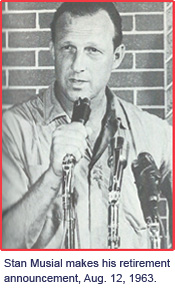
A timely talk with the Cardinals’ general manager helped Stan Musial determine how to inform his teammates and fans he would end his major-league playing career after the 1963 season.

stan_musial27On Aug. 12, 1963, Musial surprised many with a tearful announcement of his retirement plans at a Cardinals team picnic.

Privately, the Cardinals’ all-time greatest player had reached his decision on July 25 at Milwaukee. That day, Musial, 42, had driven in the winning run for the Cardinals with a single against another 42-year-old, Braves pitcher Warren Spahn. Boxscore

Though Musial wasn’t hitting at the level he had when he won seven National League batting championships, he still was effective, ranking among the top five on the club in RBI, but his fading fielding skills in the outfield convinced him it was time to quit playing.

In his book “Stan Musial: The Man’s Own Story,” Musial said, “I noticed that I really had difficulty untracking to get started after a fly ball.”

From Milwaukee, the Cardinals went to Chicago to play the Cubs. General manager Bing Devine joined the team there and invited Musial to breakfast in his hotel suite. Musial suspected Devine wanted to know his plans for 1964.

“The words came hard because it’s not easy to quit,” Musial said in his book.

Musial said to Devine, “After this year, Bing, I’ll have had it.”

“Devine seemed relieved, as relieved as I was when I got the words out,” Musial said. Musial told Devine he wanted to make the announcement in St. Louis and he wanted his teammates to hear it first. Devine suggested Musial use the team picnic on Aug. 12 as the venue and Musial agreed.

The picnic, on a rainy Monday, was at Grant’s Farm, the estate of Cardinals owner Gussie Busch. Players, their families, team officials and a small group of reporters attended. Busch was out of town for a family wedding.

Only Musial, his family and Devine knew what he planned to say at the gathering. Many anticipated Musial would wait until after the season to reveal his plans.

Musial was “choked with emotion,” the Associated Press reported, as he announced that 1963 would be the last of his 22 seasons as a player.

“Baseball has been my life,” Musial said. “I have loved St. Louis and this ballclub and I have had fun all these years … I’ve had the best job in the world. The thrill of putting on a major-league uniform, hitting, fielding and playing ball is greater than any other job I could ever have.”

Musial acknowledged he would become a grandfather in September 1963. His son, Dick, and daughter-in-law Sharon were expecting their first child.

In an effort to lighten the mood after the emotional retirement announcement, The Sporting News reported, Musial turned to his wife, Lil, and said, “I don’t think you want to kiss an old, retired ballplayer.”

Replied Lil: “I don’t think you want to kiss an old grandmother.”

Charlie James was tabbed to replace Musial in left field for the 1964 Cardinals, but he fizzled. To replace James, Bing Devine obtained Lou Brock in June 1964. Brock sparked St. Louis to the National League pennant and a World Series title.

In the book “The Man Stan Musial Then and Now,” Musial said, “If I had been in left field for the Cardinals in 1964, (they) would not have won that long-awaited pennant … I could no longer do the things a dashing, daring Lou Brock did.”

Read Full Post »

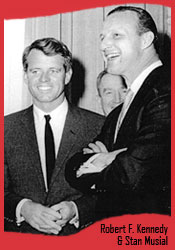
In 1968, the Cardinals, and all major league teams, were faced with a decision of whether to play games on the day of slain Sen. Robert F. Kennedy’s burial and on the national day of mourning declared in his honor.

stan_rfkCardinals players said publicly they didn’t want to play on either day, but, facing the prospect of forfeiting if the Reds didn’t join them in sitting out, the Cardinals played three games in less than 24 hours over both days.

Other teams and players acted more defiantly, displaying the leadership and clarity baseball commissioner William Eckert lacked.

Kennedy, the New York senator and candidate for the 1968 Democratic presidential nomination, was shot in the predawn morning of June 5, hours after he won the California primary. He died on June 6 at age 42.

The funeral for Kennedy was scheduled for Saturday, June 8, at St. Patrick’s Cathedral in New York. Burial was planned for about 5 p.m. at Arlington National Cemetery near Washington. A train would transport Kennedy’s body from New York to Washington.

President Lyndon Johnson declared Sunday, June 9, a national day of mourning in tribute to Kennedy.

Eckert ordered no big-league game on June 8 would start until after the burial.

The Yankees, Senators and Cubs called off their afternoon home games scheduled for June 8. The Astros called off one of their doubleheader games against the Pirates and said the other game would be held after the burial.

At San Francisco, Mets players refused to play the Giants that Saturday. Mets management supported the players’ decision. The Giants front office, expecting a large crowd at Candlestick Park, was miffed, but agreed to call off the game when Mets officials refused to change their stance.

Other afternoon games, including Cardinals at Reds, were moved to night starts. The Cardinals-Reds game was rescheduled for 7 p.m.

However, when the train carrying Kennedy’s body was delayed by large crowds along the route from New York to Washington, the burial was pushed back several hours.

Cardinals and Reds players held separate pre-game meetings, took the field for warmups, and returned to the clubhouses again when they learned the burial wouldn’t be held before the 7 p.m. game time, the Associated Press reported.

Cardinals players wanted to call off the game, The Sporting News reported, but because they were the visitors they left the decision to the Reds.

Reds manager Dave Bristol urged his team to play. Pitcher Milt Pappas, the Reds’ player representative, disagreed. Pappas told Bristol most Reds players preferred not to play the game, the Associated Press reported. Bristol responded that if he could find nine players to take the field the Reds would play.

“If we go out (on the field to play), we all go out,” Pappas replied. “If we do go out, find yourself a new player representative.”

Pappas took a vote of Reds players on whether to play. The outcome was 12-12, with one abstaining, The Sporting News reported. A second vote was held and the result was 13-12 in favor of playing.

“Pappas lost a power struggle within the club when several players heeded the urgings of manager Dave Bristol to play the game,” The Sporting News reported.

Pappas, telling the Associated Press his “days with the club are numbered,” resigned as player representative.

The June 8 game began at 7:45 p.m. and the Cardinals won, 7-2, before 13,368. Boxscore

“Our position was that we had scheduled this game in good faith at a time about an hour and a half after the burial was scheduled,” Reds general manager Bob Howsam said. “We would have waited if the delay had been a short one.”

Pappas and catcher Tim McCarver, the Cardinals’ player representative, said both clubs voted not to play the doubleheader scheduled for Sunday, June 9, the national day of mourning for Kennedy.

Eckert declared that management of each home club would decide whether to play games that Sunday.

(Two months earlier, Eckert had called off all big-league spring training exhibition games on April 7, the national day of mourning for slain civil rights leader Dr. Martin Luther King Jr. Also, in respect for King’s funeral on April 9, all of the major-league regular-season openers scheduled for April 8 and April 9 were moved to April 10.)

The Orioles called off their June 9 doubleheader with the Athletics and the Red Sox called off their game with the White Sox. All other home teams, including the Reds, decided to play that Sunday.

The Reds scheduled a memorial service for Kennedy before the first game of the doubleheader. The Cardinals won the opener, 10-8, on Lou Brock’s three-run home run. Boxscore The Reds won the second game, 7-6, on shortstop Leo Cardenas’ RBI-double in the 12th off reliever Steve Carlton, the Game 1 starter. Boxscore Attendance was 28,141.

Pappas pitched in relief in both games, yielding a run in eight total innings, and was booed by fans. (Two days later, Pappas was traded to the Braves.)

At Houston that Sunday, Astros third baseman Bob Aspromonte and first baseman Rusty Staub, and Pirates third baseman Maury Wills, refused to play, protesting the decision to hold the game on the national day of mourning. All were fined by their teams.

Pirates outfielder Roberto Clemente decided to join Wills in sitting out the game, but changed his mind after a meeting with manager Larry Shepard, The Sporting News reported. “I preferred not to play,” Clemente said. “The disturbing thing to me was the indifferent attitudes of some of our players.”

Frank Mankiewicz, press secretary for Robert Kennedy, sent telegrams to Pappas, Aspromonte, Staub, Wills and Mets manager Gil Hodges (on behalf of the entire team), thanking them for the stances they took. “Please accept my personal admiration for your actions,” Mankiewicz wrote in the telegrams.

He said Kennedy’s widow, Ethel, would write personal letters to those who received telegrams, the Associated Press reported.

Wrote Bob August of the Cleveland Press, “Baseball’s observance of Senator Kennedy’s death was disorganized, illogical and thoroughly shabby.”

Under the headline, “The Aftermath _ Baseball Takes A Beating,” The Sporting News reported, “Baseball wallowed in a morass of confusion and acrimony in trying to decide what to do about paying respect to Sen. Robert F. Kennedy … For the most part, there was no concrete plan on how mourning for (Kennedy) would be handled.”

Previously: Bob Gibson put aside grief to pitch while mourning MLK

Read Full Post »

(Updated May 28, 2026)

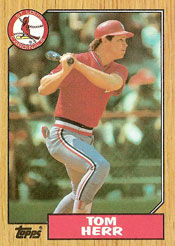
Desperate for a power-hitting right fielder and feeling the sting of the defection of free-agent Jack Clark, the Cardinals stunned nearly everyone when they traded second baseman Tommy Herr, a stalwart of their three pennant-winning teams of the 1980s, to the defending World Series champion Twins in 1988.

tom_herrAs he departed, Herr said he hoped to return to the Cardinals as their manager.

When he arrived in Minnesota, Herr told the Minneapolis Star-Tribune, “I tried to take the trade like a man, but when the plane left St. Louis I cried like a baby for a half hour.”

In the book “Whitey’s Boys,” Herr said, “I didn’t handle it very well. I kept looking back instead of looking forward. I was looking at it more that the Cardinals didn’t want me than that the Twins wanted me. If I had put a more positive spin on it, I would have reacted better. I had to do some serious regrouping on the plane because I was a basket case.”

Surprise move

On April 22, 1988, Herr was dealt to Minnesota for outfielder Tom Brunansky. The trade was announced after the Mets beat St. Louis, 4-0, dropping the Cardinals’ record to 4-11.

Joe Durso of the New York Times wrote, “It stunned Herr and his teammates as they came into the locker room. Herr was asked to step into manager Whitey Herzog’s office, where he received the news from Herzog and Dal Maxvill, the Cardinals’ general manager.”

Said Herr: “Sure, I’m shocked. I’ve loved my years as a Cardinal and it’s hard to say goodbye.”

Acknowledging it was difficult to inform Herr of the trade, Herzog told the St. Louis Post-Dispatch, “Tommy always knew he was my type of player from day one. It was tough.”

Herr played 10 seasons (1979-88) with the Cardinals, batting .274 with 1,021 hits in 1,029 games. He was the starting second baseman on the pennant-winning clubs of 1982, 1985 and 1987. He was an all-star in 1985 when he placed third in the National League in both RBI (110) and doubles (38). Herr ranked among the top three second basemen in the league in fielding percentage six times.

“It’s not an easy thing trading a great ballplayer and a fine gentleman,” Maxvill said to the Associated Press.

Mets third baseman Howard Johnson told the Post-Dispatch, “I think the Cardinals have dealt themselves a blow. A guy like Tommy Herr is a pretty valuable part of your ballclub.”

Three factors prompted the trade:

Factor No. 1

The Cardinals’ top run producer, Clark, signed with the Yankees after the 1987 season. Jim Lindeman, the 1988 Opening Day right fielder, was headed to the disabled list because of back spasms. The Cardinals were averaging 2.8 runs per game. Brunansky, who hit 20 or more home runs in six consecutive seasons (1982-87) for the Twins, provided a much-needed power source.

“The deciding factor was our (poor) run production,” Maxvill said to the Associated Press. “Brunansky can help.”

Cardinals pitcher John Tudor told the Post-Dispatch, “It was kind of pleasant to see that they’re trading to win instead of sitting on their attendance.”

Factor No. 2

The Cardinals feared Herr would depart for free agency. Herr was in the final season of a four-year contract. After losing reliever Bruce Sutter and Clark to free agency, the Cardinals were determined to get value in return for Herr before he could depart.

Herzog told the Minneapolis Star-Tribune, “We just can’t keep losing players like that. It was something we felt had to be done right now.”

“I could see the writing on the wall,” Herr said to the Post-Dispatch, “but I didn’t think it would happen this soon.”

Said Mets first baseman Keith Hernandez, who played with Herr on the 1982 World Series champion Cardinals: “If they had Clark, Tommy Herr’s on the team.”

Herzog told the Post-Dispatch, “If they’d tell me they were going to re-sign him, then who knows what we’d do?”

Regarding whether the Cardinals ever did have interest in re-signing him before he became eligible for free agency, Herr said, “I knew I’d find out sooner or later what the thinking was here. It was sooner rather than later.”

Factor No. 3

The Cardinals had a replacement for Herr. Luis Alicea, a first-round selection of the Cardinals in the 1986 draft, was promoted from Class AAA Louisville to replace Herr at second base.

“We think we have a fine young man who is ready to be an everyday player here in Alicea,” Maxvill said to United Press International.

Timely chat

Twins general manager Andy MacPhail told the Minneapolis Star-Tribune he made a social phone call to Maxvill on April 21. “At the time, I didn’t think there was any chance of a trade,” MacPhail said.

As the conversation evolved, MacPhail mentioned the Twins needed a left-handed batter for the top of their order.

“He made it clear he couldn’t trade Willie McGee or Vince Coleman,” MacPhail said.

Herr, a switch-hitter, fit the need.

MacPhail said Maxvill asked about third baseman Gary Gaetti and outfielder Kirby Puckett. “I told him I wouldn’t trade Gaetti and that my house would be burned to the ground if I traded Puckett,” MacPhail said.

Familiar foe

The Twins had defeated the Cardinals in a seven-game World Series in October 1987. Six months later, they were swapping position starters.

“I will miss Tom Brunansky,” Gaetti said. “It’s like a cold shower and a slap in the face at the same time.”

Minneapolis Star-Tribune columnist Sid Hartman reported, “Twins officials maintain Brunansky’s speed is down from last year, that he hasn’t covered the ground in right field as well and that his arm is not as strong.”

Herzog told the Post-Dispatch, “To tell you the truth, the only time I’ve ever seen Brunansky play in person was in the World Series, but over the last 10 years he’s always had pretty good bat potential and he’s had good power statistics. He’s always been a good outfielder with a good throwing arm.”

Minneapolis Star-Tribune columnist Dan Barreiro wrote, “Brunansky had his limitations, we all know how streaky he could be, but he still was a hitter with power numbers.”

For Brunansky, the trade was the chance for a new adventure. “It’s going to be exciting,” he said.

For Herr, the trade took him away from his professional roots and a place he had hoped to grow his career. “I’m proud of the accomplishments I’ve had here,” Herr said before leaving. “I wanted to play my whole career here. That dream has gone. It’s been a good time. Maybe I’ll be back and manage this ballclub.”

Years later, when asked about Herzog, Herr told Cardinals Magazine, “Whitey had a profound effect on me. He was the guy who gave me my shot as a regular … The confidence he showed in me really put me over the top.”


Read Full Post »

« Newer Posts - Older Posts »