Feeds:
Posts
Comments

Archive for the ‘Games’ Category

In his lone season with the Cardinals, Gino Cimoli achieved a standard no other St. Louis right-handed batter had matched in 20 years.

Cimoli hit 40 doubles for the 1959 Cardinals.

He was the first Cardinal to reach the 40-double mark since Stan Musial hit 41 in 1954 and the first right-handed batter to do it for St. Louis since Joe Medwick’s 48 in 1939.

Cimoli’s output placed him fourth in the National League in doubles in 1959, trailing only the Reds’ Vada Pinson (47), the Braves’ Hank Aaron (46) and the Giants’ Willie Mays (43).

Cimoli was an unlikely candidate to hit 40 doubles. In a 10-year big-league career, his next-best total was 22 doubles.

Acquired by the Cardinals from the Dodgers on Dec. 4, 1958, for outfielder Wally Moon and pitcher Phil Paine, Cimoli opened the 1959 season as the starting center fielder, ahead of Curt Flood.

In need of better corner outfield play _ the Cardinals had three first basemen (Stan Musial, Joe Cunningham and Bill White) playing outfield _ St. Louis sometimes shifted Cimoli to right or left and put Flood in center.

Cimoli played 95 games in center field, 56 in right and 47 in left for St. Louis.

Primarily batting second in the order, Cimoli had 145 hits in 143 games, batting .279 with eight home runs and 72 RBI.

On May 10, 1959, he went 7-for-10 with six runs, three doubles, a homer and four RBI in the Cardinals’ doubleheader split with the Cubs.

In the opener, won by the Cubs, 10-9, Cimoli was 4-for-6 with a double, homer and two RBI. Boxscore

In the second game, Chicago led 7-6 in the ninth before Cimoli’s RBI-double into the left-field corner tied the score. Flood followed with a single, scoring Cimoli with the winning run in St. Louis’ 8-7 victory. Boxscore

“It’s great to play every day,” Cimoli told the Associated Press. “I’m off to a good start (.349 batting average) and I feel I have a better future with the Cardinals than I did with the Dodgers.”

Desperate for pitching after finishing in seventh place with a 4.34 team ERA in 1959, the Cardinals dealt Cimoli and pitcher Tom Cheney to the Pirates for pitcher Ron Kline, an 11-game winner, on Dec. 21, 1959.

The deal backfired on St. Louis. Kline was 4-9 with a 6.04 ERA in 34 games for the 1960 Cardinals. Cimoli, used as a regular replacement for outfielders Roberto Clemente, Bill Virdon and Bob Skinner, helped Pittsburgh to the 1960 World Series title.

Read Full Post »

The Cardinals rejected a chance to acquire Chuck Tanner in June 1957 and he made them pay a couple of months later.

As an outfielder for the Braves and Cubs in the 1950s and as manager of the Pirates and Braves in the 1970s and 1980s, Tanner had a long history as a Cardinals opponent.
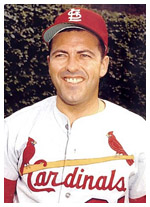
Tanner broke into the majors with the Braves in 1955. On Aug, 15, he had his first three-RBI game as a big leaguer in the Braves’ 12-1 victory over St. Louis. Boxscore Three days later, Tanner hit a home run against Larry Jackson in the second inning, sparking the Braves to a 5-3 win against the Cardinals. Boxscore

On Sept. 16, 1955, Tanner’s three-run home run against Brooks Lawrence erased a 3-1 Cardinals lead and paced the Braves to a 9-4 victory. Boxscore

In 1957, the Braves were headed to a National League championship. To help their pennant push, the Braves wanted St. Louis outfielder Del Ennis. On June 1, the Braves offered the Cardinals three players _ Tanner, reliever Dave Jolly and their choice of a pitcher, Ray Crone or Gene Conley _ for Ennis, the Associated Press reported.

Cardinals general manager Frank Lane wanted more _ either pitcher Juan Pizarro or pitcher Bob Trowbridge. When the Braves declined, trade talks ceased.

A week later, the Cubs claimed Tanner off waivers.

Inserted into the starting outfield, Tanner produced. In two games against the Cardinals in August 1957, he went 5-for-8 with two runs scored and three RBI. On Aug. 13, Tanner was 3-for-4 with two RBI in Chicago’s 6-2 victory over the Cardinals. Boxscore Two days later, Tanner’s seventh-inning home run against the Cardinals’ Sam Jones helped the Cubs to a 4-1 win. Boxscore

In 1958, Tanner’s last season as a National League player, he delivered a key blow against the Cardinals in an unusual situation. On Aug. 31, the Cubs led, 2-1, in the third with two on and Lee Walls at the plate. Cardinals starter Sal Maglie brushed back Walls with a pitch the Cubs batter claimed hit him.

Umpire Frank Secory ruled the ball missed Walls, who argued and was ejected. Tanner took over the at-bat and hit a three-run home run, helping Chicago to an 8-5 victory. Boxscore

Tanner batted .236 with four home runs and 20 RBI in his career against the Cardinals.

After managing the White Sox and Athletics, Tanner went to the National League as manager of the Pirates (1977-85) and Braves (1986-88).

Tanner had a 76-106 record as manager against the Cardinals. He was 29-25 versus St. Louis in the 1970s and 47-81 when facing the Cardinals in the 1980s.

Read Full Post »

In his first two appearances for the Cardinals, Ron Piche earned saves in both games, energizing a staff making a mid-summer push to get the club back into the pennant race.

Piche couldn’t sustain that splendid start, however, and, after finishing the 1966 season with the Cardinals, never pitched in the major leagues again.

Piche made his major-league debut with the Braves in 1960.

After four seasons with the Braves and a year with the Angels, Piche, 31, began the 1966 season with Class AAA Seattle of the Pacific Coast League. On April 30, 1966, the Cardinals acquired Piche for Earl Francis, a former big-league pitcher who was on their Class AAA Tulsa roster.

Piche, 31, was assigned to Tulsa, managed by Charlie Metro, and he performed well as a reliever. On July 4, 1966, he got his break. With Cardinals general manager Bob Howsam and farm director Sheldon Bender in attendance, Piche made a rare start and pitched a complete-game four-hitter in Tulsa’s 11-2 victory over Tacoma.

The win boosted Piche’s record to 5-3 with a team-best 2.20 ERA and impressed Howsam and Bender.

On July 17, 1966, Cardinals starter Art Mahaffey was lifted with one out in the first inning after surrendering three runs on three hits and two walks. With his staff weakened by injuries and overwork, Cardinals manager Red Schoendienst seriously considered using infielder Jerry Buchek and outfielder Mike Shannon in emergency relief.

Instead, the Cardinals dispatched Mahaffey to Tulsa two days later and promoted Piche, who was 6-3 with a 2.00 ERA in 25 games for the Oilers.

The Cardinals began winning, playing as hot as the mid-summer temperatures.

On July 21, 1966, against the Braves at St. Louis, starter Al Jackson took a 7-2 lead into the eighth inning. When he tired, allowing two runs with one out, Schoendiest turned to Piche to protect the 7-4 lead in his Cardinals debut.

Piche faced two batters in the eighth and three in the ninth _ and retired all five on groundouts, earning his first big-league save since 1961 with the Braves.

The win was the Cardinals’ fourth in a row and evened their record at 46-46. Boxscore

The next day, at Chicago, Piche saved a 9-4 Cardinals victory over the Cubs with two scoreless innings of relief, moving St. Louis above .500 for the first time in more than a month. Boxscore

In two games with St. Louis, Piche had more saves than he had in his previous four big-league seasons combined.

Sparked by the improved pitching, the Cardinals climbed to seven games above .500 before slipping back again.

Piche earned a win against the Dodgers with two perfect innings of relief in St. Louis’ 3-2, 13-inning victory on Aug. 20, 1966. Boxscore

He finished with a 1-3 record, two saves and a 4.26 ERA in 20 relief appearances.

In the winter, the Cardinals assigned Piche to Tulsa. He pitched well for manager Warren Spahn’s Oilers in 1967 (4-2, 3.07 ERA in 46 games) but never got called back by the Cardinals.

On April 22, 1968, St. Louis traded Piche and pitcher Jack Lamabe to the Cubs for pitchers Pete Mikkelsen and Dave Dowling.

Piche pitched in the minor leagues until 1972 before he became a coach, scout and community ambassador for the Expos. Nicknamed “Monsieur Baseball” in Quebec, he was elected to the Canadian Baseball Hall of Fame.

Read Full Post »

(Updated April 13, 2025)

Hall of Fame left-hander Warren Spahn never pitched for the Cardinals, but his final games as a pitcher were with the St. Louis organization.

Spahn, who had 363 big-league wins, primarily with the Braves, got his first try at being a manager in 1967 with the Cardinals’ Class AAA Tulsa Oilers.
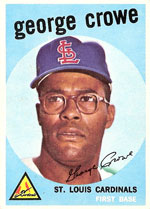
The Oilers were a team of former big-league veterans (pitcher Tracy Stallard, outfielder Joe Christopher) and a few prospects (pitchers Mike Torrez and Wayne Granger).

By August, Spahn’s pitching staff was weakened by injuries. So, at 46, he placed himself on the active roster and into the starting rotation.

Spahn had made his last big-league appearance in 1965, with the Giants. He pitched in three games with the Mexico City Tigers in 1966.

Former Braves catcher, Joe Torre told Cardinals Yearbook in 2014, “Spahn was easy to catch, a walk in the park, because his control was impeccable.”

On Aug. 7, 1967, a Monday night in Tulsa before a crowd of 4,238, Spahn started against the Hawaii Islanders and their 30-year-old right-hander, Bill Haywood. Catching for Tulsa was Pat Corrales.

Tulsa scored four times in the first. When Spahn held Hawaii scoreless through the first three innings, it appeared the old master was headed for a successful comeback. Then it fell apart. Hawaii scored a run in the fourth and four in the fifth, taking a 5-4 lead. After Spahn departed with one out in the fifth, the game unraveled in the hands of the bullpens. Tulsa won, 14-13.

Spahn’s line: 4.1 innings, 4 hits, 4 runs (3 earned), 4 walks and 4 strikeouts.

Five nights later, Aug, 12, Spahn started again, at Oklahoma City against the 89ers before a gathering of 1,028. When he left after two innings, Oklahoma City led, 3-0, and went on to win, 3-2, handing Spahn the loss in the last start of his professional career.

Spahn’s line: 2 innings, 3 hits, 2 runs, 1 walk, 1 strikeout.

Spahn also made a relief appearance, consisting of two-thirds of an inning, for Tulsa. In his three games for the Oilers, Spahn was 0-1 with a 6.43 ERA.

Spahn remained as Tulsa manager until 1971, but he never pitched again.

Read Full Post »

George Crowe was a pinch-hitter and reserve first baseman for the Cardinals from 1959-61. He played a more valuable role to the team as a mentor to Curt Flood.

Acquired by the Cardinals from the Reds in an October 1958 trade, Crowe was 37, a veteran who had played in the Negro National League and who broke into the majors in 1952 with the Boston Braves.
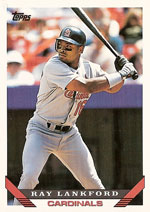

Flood, 21, was in his second full season in the majors in 1959 and still trying to establish himself as an everyday center fielder. His fielding was superb, but his hitting was inconsistent. Cardinals manager Solly Hemus was giving time to veteran Gino Cimoli in center field.

In his book, “The Way It Is,” Flood said, “During 1959 … I was playing in fewer games and having trouble hitting above .250. I now became more worried about my swing, and more receptive to help.

“The coaches were willing to coach, but were not good enough theoreticians or communicators to do me much good. As usually happens when a player needs assistance of that kind, I finally got it from another player _ George Crowe, who knew batting theory and was more articulate about it than anyone else on the Cardinals … George straightened me out. He taught me to shorten my stride and my swing, to eliminate the hitch, to keep my head still and my stroke level. He not only told me what to do, but why to do it and how to do it. He worked with me by the hour.”

In his book, “Stranger To The Game,” pitcher Bob Gibson said, “Flood … benefited from the soft wisdom of George Crowe, who was an independent, unconventional thinker and a father figure to both of us when we came up.

“Although Crowe never played regularly with the Cardinals, he was an established home run hitter and he knew one when he saw one. He also knew that Flood, at 165 pounds, wasn’t one … So Crowe talked Curt out of being another Willie Mays and gently persuaded him to guide the ball to right field in pursuit of .300.”

A left-handed batter, Crowe hit .301 with eight home runs in 77 games for the 1959 Cardinals. Four of those homers were as a pinch-hitter. He had 21 RBI with his first 24 hits for St. Louis.

Crowe’s eighth-inning solo homer off Art Fowler snapped a 5-5 tie and lifted St. Louis to a 6-5 victory over the Dodgers on April 25, 1959. Fowler retired 11 in a row before Crowe’s blast deep into the pavilion in right-center. Boxscore

Two weeks later, on May 7, Crowe ripped a three-run, pinch-hit homer over the pavilion roof against the Cubs’ Moe Drabowsky in a 4-3 Cardinals victory. Stan Musial won it for St. Louis with his 400th career homerBoxscore

And on Aug, 13, 1959, Crowe belted a pinch-hit grand slam against the Dodgers’ Roger Craig. Boxscore

“Crowe has fulfilled all of our expectations,” Cardinals general manager Bing Devine told the St. Louis Post-Dispatch during the 1959 season. “… He’s intelligent, likes to win and accepts his part-time assignment well.”

Crowe slumped to .236 in 73 games in 1960. When his big-league career ended, after playing in seven games for the 1961 Cardinals, Crowe held the major league record for career pinch-hit homers (14).

In October 1961, the Cardinals signed him to scout for them.

Read Full Post »

(Updated April 3, 2020)

On April 3, 1994, the Cardinals and Reds opened the major-league season with a controversial Easter night game at Cincinnati’s Riverfront Stadium.

Because of the weather (39 degrees at first pitch, with steadily falling temperatures after a day of rain and snow flurries), the game probably shouldn’t have been played, but ESPN was televising a season opener for the first time and had heavily promoted it, so every effort was made to proceed as planned.

Reds owner Marge Schott and many Reds fans were opposed to their team opening the season on a Sunday night.

The Reds traditionally opened their season with a weekday afternoon game, starting with a parade in the morning. Cincinnatians adored the tradition and treated the day like a holiday.

To many Reds fans, the Sunday night opener was unacceptable and some expressed dissatisfaction by boycotting. The announced attendance was 32,803 in a stadium that seated almost 55,000. It was the smallest Opening Day crowd in Riverfront Stadium’s 24-year history and the first time the Reds hadn’t sold out a season opener in 10 years.

Schott and the Reds had agreed to the game when first approached, but Schott tried to renege when she learned the city wouldn’t host a parade before a night game.

“ESPN and Major League Baseball will have their Opening Day tonight,” Schott told the Associated Press. “The Reds’ opener is Monday.”

Schott, back in charge of the club after serving an eight-month suspension for racially offensive conduct, ordered no bunting adorn the stadium for the night game. There were no player introductions. A Cincinnati radio station urged fans to display banners criticizing ESPN.

Jon Miller, who broadcast the game for ESPN with former Reds second baseman Joe Morgan, said, “I don’t understand how they would downplay the Sunday game. It’s a marketing person’s dream: the Sunday opener and the traditional opener (Monday). What more could you want?”

Schott urged fans and her team to treat the opener like an exhibition. She spoke about the importance of the parade that would be held Monday morning. “We’ll have 20 more floats than we’ve ever had before,” she said. “The Air Force is coming in. Oh, and we’re going to have 300 pigeons, so keep your hat on.”

The Cardinals’ Ray Lankford, the first batter of the 1994 season, lined a 3-and-2 pitch from Jose Rijo over the left-center field fence for a home run. Video

It was the first time in eight years a leadoff batter opened the season with a homer. (Dwight Evans did it for Boston against Detroit’s Jack Morris in 1986). It also was the first time a Cardinal hit a homer in the first inning of the first game since Darrell Porter launched a three-run shot off Houston’s Nolan Ryan in 1982.

“I was just anxious to get going,” Lankford said. “When I was in here stretching, I started thinking about being the first batter of ’94. I wanted to do something. I couldn’t have asked for anything better than that to open the season.”

With the score 3-3 in the fourth, Cardinals pitcher Bob Tewksbury, a notoriously poor hitter, swung at a first-pitch fastball and lined a two-run, two-out double to center off Rijo, putting St. Louis ahead to stay, 5-3.

“I wasn’t going to give him a chance to throw a slider,” Tewksbury told The Cincinnati Post. “I was going to swing early and often. If I take that first pitch, I’ll never see a fastball.”

The unsung hero for the Cardinals was reliever Vicente Palacios. In the seventh, with St. Louis ahead 6-4, the Reds loaded the bases with two outs and Reggie Sanders at the plate. Sanders had homered in his previous at-bat, and there was a strong sense this was the moment for the Reds to strike. Palacios struck out Sanders and the Cardinals went on to win. Boxscore

“It didn’t seem like opening night at all,” Tewksbury said. “Part of that I think is because it was a night game and part of that was that Marge treated it like she didn’t want it to be the opening game.”

Said Reds catcher Joe Oliver: “It was the first game this year and it just seemed like a middle of the season game. It was sort of disappointing. We got hyped and went out there and the place was half full.”

Cincinnati Post columnist Paul Daugherty wrote, “Riverfront Stadium had all the ambiance of a garage sale. At Schott’s behest, the Reds accorded the game all the pomp of a rain delay … By the time the Reds batted in the bottom of the ninth, it was close to 11 p.m. and there weren’t more than 10,000 fans still in the stadium. Maybe they were frozen to their seats.”

Read Full Post »

« Newer Posts - Older Posts »