Feeds:
Posts
Comments

Archive for the ‘Games’ Category

(Updated Jan. 9, 2019)

In October 2010, Rick Ankiel joined Babe Ruth and Smoky Joe Wood as the only big-league players since 1900 to appear in postseason games as starting pitchers and as starters at another position.

Ankiel started in center field for the Braves on Oct. 7, 2010, in Game 1 of the National League Division Series at San Francisco.
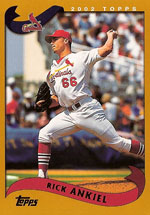
It was the first time Ankiel had started a postseason game at a position other than pitcher. Ankiel appeared in two games as a pinch-hitter for the Cardinals in the 2009 NL Division Series against the Dodgers, but didn’t start a game.

Ankiel’s first postseason starts were as a pitcher for the Cardinals in the 2000 NL Division Series against the Braves and in the 2000 NL Championship Series against the Mets.

Those performances were the start of Ankiel’s stunning slide from pitching phenom to flop.

After posting an 11-7 record and striking out 194 in 175 innings during the regular season, Ankiel got the start in Game 1 of the 2000 Division Series at St. Louis. The Cardinals struck for six runs in the first and kept a 6-0 lead heading to the third before Ankiel unraveled.

The rookie left-hander gave up four runs, four walks and five wild pitches in the inning before being lifted with two outs. Boxscore

St. Louis held on for a 7-5 win and eventually swept the series, advancing to face New York for the pennant.

In Game 2 of the NL Championship Series at St. Louis, Ankiel got the start, lasted two-thirds of an inning and yielded two runs, three walks, a hit and two wild pitches. The Mets won, 6-5, and went on to clinch the series in five games. Boxscore

Though Ankiel made a relief appearance in Game 5 of the series, his career as a pitcher was in tatters. He pitched in 11 more big-league games before successfully converting into a power-hitting outfielder.

The Society for American Baseball Research confirmed Ruth and Wood, like Ankiel, made postseason starts as pitchers and as outfielders.

Ruth started Game 2 of the 1916 World Series for the Red Sox against Brooklyn. He pitched 14 innings and earned the win, outdueling Sherry Smith in Boston’s 2-1 victory. Boxscore

Ruth also was the starting pitcher for Boston in two games of the 1918 World Series against the Cubs before he went on to star as baseball’s iconic slugging outfielder in seven World Series for the Yankees.

Wood started three games as a pitcher for the Red Sox against the Giants in the 1912 World Series. Eight years later, his pitching career cut short by a severe shoulder injury, he was the starting right fielder for the Indians in Game 1 of the 1920 World Series against Brooklyn. Boxscore

Ninety years later, Ankiel equaled the feat.

When Ankiel hit a home run for the Braves in Game 2 of the 2010 NL Division Series against the Giants Boxscore, he and Ruth became the only big-league players to both start a postseason game as a pitcher and hit a home run in the postseason as a position player.

Ankiel hit his postseason home run in the 11th inning on a fastball from Ramon Ramirez, snapping a 4-4 tie and carrying the Braves to a victory.

In his 2017 book “The Phenom,” Ankiel said, “The contact was so pure I could barely feel the ball off the bat … I don’t recall being happier on a baseball field than I was that October night in San Francisco.”

Read Full Post »

(Updated Dec. 8, 2024)

Tom Niedenfuer yielded two of the most famous home runs in Cardinals history.

As the closer for the Dodgers in 1985, Niedenfuer gave up the game-winning home run to Ozzie Smith in the ninth inning of Game 5 of the National League Championship Series, leading to broadcaster Jack Buck’s memorable call of “Go crazy, folks. Go crazy.”
With the score tied at 2-2, Niedenfuer relieved starter Fernando Valenzuela in the bottom of the ninth. He retired Willie McGee on a pop-up, but then threw a pitch down and in that Smith golfed over the fence in right for a 3-2 Cardinals win.  Boxscore

In a 2010 interview with Jerry Crowe of the Los Angeles Times, Niedenfuer said the pitch was supposed to be up and in. He said the homer by Smith was a fluke because it was the shortstop’s first in the big leagues while batting left-handed. Story

(Recalling the homer in a 2016 interview with Cardinals Yearbook, Smith said, “When I walked to the plate, my intention was not to hit the ball out of the ballpark because that’s not what I do. My job was to get myself in scoring position and let the big guys drive me in. {Niedenfuer} supplied the power and I supplied the technique.”)

Two days after the Smith homer, the Dodgers led 5-4 after eight innings of Game 6 at Los Angeles. Though Niedenfuer already had pitched 1.2 innings in relief of Orel Hershiser, manager Tommy Lasorda sent Niedenfuer to pitch the ninth.

After Cesar Cedeno struck out, McGee singled and swiped second. Smith walked. When Tom Herr grounded out to first, McGee and Smith each advanced a base. With first base open and the Dodgers an out away from squaring the series, Jack Clark, the Cardinals’ top power hitter, strode to the plate.

Niedenfuer told the Times he and Lasorda never considered issuing an intentional walk to Clark because a left-handed batter, Andy Van Slyke, was on deck, and because Niedenfuer had struck out Clark in the seventh on a fastball off the plate. Niedenfuer wanted to start off Clark with the same pitch.

This time, Clark ripped it 450 feet to left for a three-run homer that gave St. Louis a 7-5 lead. When Ken Dayley retired the Dodgers in order in the bottom of the inning, the Cardinals were National League champions and Niedenfuer was the goat. Boxscore

Afterward, describing Clark’s homer to The Sporting News, Niedenfuer said, “The only way that thing would have stayed in the park was if it had hit the Goodyear blimp and dropped straight down.”

Two days later, a resilient Niedenfuer played golf with Hall of Fame pitcher Sandy Koufax, “and then I started working out for next year.”

Niedenfuer, though, never was the same. The Dodgers dealt him to the Orioles in May 1987. He signed with the Mariners as a free agent for 1989. When Seattle released him in April 1990, the Cardinals signed him.

In 52 appearances, Niedenfuer was 0-6 with two saves and a 3.46 ERA for a St. Louis team that finished in last place in the East Division.

It would be Niedenfuer’s final season in the major leagues.

Read Full Post »

If not for the timely hitting of the Cardinals’ Julian Javier, baseball fans would have been talking about the third no-hitter in postseason history, not the second, when Roy Halladay pitched his gem on Oct. 6, 2010, for the Phillies against the Reds.

Javier, St. Louis’ second baseman, doubled with two outs in the eighth inning in Game 2 of the 1967 World Series to break up the no-hit bid of Boston’s 25-year-old ace, Jim Lonborg.

Until Halladay pitched his no-hitter in Game 1 of the National League Division Series, Lonborg had come closest to pitching a hitless game in the postseason since Don Larsen did it for the Yankees against the Dodgers in Game 5 of the 1956 World Series.
Lonborg retired the first 19 batters before Curt Flood walked on a 3-and-2 pitch with one out in the seventh in that second game of the World Series at Boston on Oct. 5, 1967. He then got Roger Maris on a flyout and Orlando Cepeda on a groundout to end the inning.

In the eighth, with anticipation building and a light rain falling, Tim McCarver and Mike Shannon grounded out. Lonborg was four outs from a no-hitter.

Javier, a right-handed batter, stepped to the plate. A .257 career hitter, Javier had produced one of his best seasons in 1967, hitting .281. Lonborg’s first pitch to him was a “high slider that hung up a bit.” Javier ripped it into the left field corner.

Bobby Tolan followed with a groundout, and Lonborg retired the Cardinals in order in the ninth, giving the Red Sox a 5-0 win and evening the series. Boxscore

Lonborg later revealed he achieved the one-hitter despite developing a blister on his right thumb that kept him from getting a proper grip on his breaking pitches. “If I hadn’t gotten the blister, I might have been able to get Javier,” Lonborg told The Sporting News.

Lonborg pitched effectively inside. Cardinals manager Red Schoendienst complained that Lonborg purposely was delivering brushback pitches, a charge Lonborg denied.

Despite Lonborg’s dominance, the Cardinals were reluctant to praise him. “He’s not quick, but he keeps the ball in good spots,” said St. Louis speedster Lou Brock. “He’s no Juan Marichal or Gaylord Perry.”

In Game 5, Lonborg pitched a three-hitter, winning 3-1. The Cardinals got the upper hand in Game 7, winning 7-2 behind Bob Gibson and knocking out Lonborg after 6 innings. The decisive blow: Javier’s three-run home run off Lonborg.

Read Full Post »

(Updated Dec. 16, 2019)

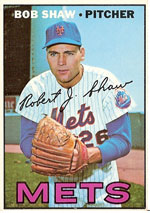
Bob Shaw outdueled Sandy Koufax in a World Series game, taught Gaylord Perry how to throw the spitball and frustrated the Cardinals after he joined the Mets.

Shaw started Game 5 of the 1959 World Series for the White Sox and beat Koufax and the Dodgers, 1-0, before more than 92,000 spectators at the Los Angeles Memorial Coliseum. Boxscore
Five years later, Shaw was with the Giants and became a mentor to Perry, a future Hall of Famer.

In his book “Me and the Spitter,” Perry said Shaw’s spitball was “one of the best I’ve ever seen.” After seeing how Shaw’s spitball fooled batters, Perry said, “I knew how Tom Edison felt when he discovered the electric light.”

“Bob and I worked for hours,” Perry said. “I studied his every movement. The old dew drop takes total dedication, like any new pitch you learn, only more so.”

On June 10, 1966, the Giants sold Shaw’s contract to the Mets.

Three days, later, on June 13, 1966, he made his Mets debut in a start against the Cardinals in Game 1 of a Monday night doubleheader at Shea Stadium and pitched a five-hitter, beating the Cardinals, 5-2. Shaw allowed one extra-base hit, a triple by Phil Gagliano. Using the bat of teammate Ken Boyer, Shaw also singled twice in three at-bats against Al Jackson. Boxscore

Shaw said he was motivated to pitch a complete game because he had something to prove to the Giants and their pitching coach, Larry Jansen, “who didn’t think I could go more than six innings,” Shaw told The Sporting News.

Eight nights later, on June 21, 1966, in St. Louis, Shaw started against the Cardinals again and beat them, 2-1, on a four-hitter, walking none and striking out nine. Tim McCarver’s solo home run in the seventh cut in half the Mets’ 2-0 lead, but Shaw retired the Cardinals in order in the eighth and ninth. Boxscore

The Cardinals said Shaw threw a spitball and repeatedly asked the umpire to check the ball.

“It’s a psychological advantage,” Shaw said to the New York Daily News. “If you get them thinking that way, it’s the greatest thing in the world.”

Cardinals manager Red Schoendienst told the St. Louis Post-Dispatch “there’s no question that Shaw throws a spitter,” but said, “You just have to learn to hit it, wet or not.”

Cardinals pitcher Tracy Stallard said, “Spitball or not, Shaw pitched quite a game. You’ve got to admire him. He battles you and that’s the name of the game.”

Said Cardinals shortstop Dal Maxvill: “The way Shaw was throwing tonight, he wouldn’t give his own mother a good pitch to hit.”

Shaw went on to post an 11-10 record and 3.92 ERA in 25 starts for a Mets team that finished in ninth-place at 66-95.

The next year he pitched for the Mets and Cubs, ending an 11-year big-league career that began in 1957 with the Tigers.

Shaw became a successful commercial real estate developer and youth baseball coach in Jupiter, Fla. He managed a team from Jensen Beach, Fla., to the American Legion World Series championship in 1986.

Read Full Post »

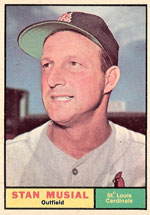
Stan Musial apparently played a significant role in the development of Doug Harvey as a Hall of Fame umpire.

It just didn’t happen exactly the way the Baseball Hall of Fame has reported it.

In the spring 2010 edition of Memories And Dreams, the official magazine of the Hall of Fame, the museum’s director of communications, Craig Muder, wrote a profile of Harvey.

Here is what Muder wrote about Musial and Harvey regarding an undated game in 1962 between the Cardinals and Dodgers:

Early in his career, Harvey called out future Hall of Famer Stan Musial on a pitch from another future Hall of Famer, Don Drysdale. The pitch appeared to be a strike _ until it darted four inches off the plate at the last second, a common path of Drysdale’s wicked deliveries.

Musial, who was playing in his 21st big league season, gently told Harvey to “calm down and slow down.” Harvey took the advice to heart. He taught himself to slow down his calls, thus establishing his deliberate style. That extra moment in time allowed Harvey to perfect his craft.

It is unclear whether Muder got his information from Harvey, or whether it came from an October 1992 Baseball Digest magazine article by Jerome Holtzman. Wrote Holtzman:

He was a rookie, his first time in St. Louis, working his third plate game, the Dodgers against the Cardinals. Ninth inning, two outs, score tied, full count, Don Drysdale pitching and Stan Musial coiled, ready to swing.

Drysdale delivered. Plate umpire Doug Harvey, seeing the ball in flight, raised his right hand, signaling strike three. It was 30 years ago, in 1962. But Harvey has not forgotten. The pitch broke to the outside and missed the plate by six inches.

“And there I am standing with egg on my face, the crowd booing,” Harvey recalled. “Musial never looked at me. He told the bat boy to bring him his glove. Then, without turning, he said, ‘Young fellow, I don’t know what league you came from, but we use the same plate. It’s 17 inches wide.’ “

Immediately, Harvey learned two lessons:

“That’s when I realized why they call him ‘Stan the Man.’ And I learned not to anticipate the call.”

Both stories are well-told. Both have significant inaccuracies.

Drysdale faced the Cardinals six times in 1962. Harvey worked the plate in only one of those games, July 25. Musial had three at-bats against Drysdale in that game. He popped out twice and hit a two-run home run. He didn’t strike out. Drysdale pitched seven innings, not nine.

I believe the basic story about Musial and Harvey is true, but I’m convinced it happened on May 11 in St. Louis and that Stan Williams, not Drysdale, was the pitcher.

Harvey worked a Dodgers-Cardinals game behind the plate for the first time that Friday night at Sportsman’s Park. Williams, like Drysdale, a powerful right-hander, started for the Dodgers.

Leading off the bottom of the second inning, Musial was called out on strikes by Harvey.

The setting (St. Louis), the time of year (early in the season), the teams, the call, the batter and the fact it was Harvey’s first time working the plate in a Dodgers-Cardinals game all fit the anecdote. But it could only happen with Williams, not Drysdale, on the mound. Boxscore


Read Full Post »

(Updated July 3, 2020)

On July 3, 1967, the eve of Independence Day in St. Louis, the Cardinals and Reds put on an explosive display using fists instead of fireworks.

In the first inning, the Reds were humiliated when the Cardinals built a 7-0 lead in support of Bob Gibson.

With two outs, Lou Brock attempted to steal second.

He was unsuccessful, but to the Reds it was an unnecessary attempt to pile on.

“A guy who tries to steal with a seven-run lead has to be nuts … Our club has pride,” Reds shortstop Tommy Helms said to the St. Louis Post-Dispatch. “We don’t like to be shown up.”

When Brock next came to bat, leading off the fourth with the Cardinals still ahead 7-0, reliever Don Nottebart drilled him with a pitch.

Gibson knew what to do next. When Tony Perez led off the Cincinnati fifth, Gibson unleashed a fastball toward Perez’s ear. Perez dived to the dirt to avoid being hit.

In his book “Stranger to the Game,” Gibson said, “My first pitch buzzed past Perez’s ear, which should have been an indication that I wasn’t trying to hit him. If a pitcher is trying to hit a batter, the last place he wants to throw the ball is at the head because it’s the easiest thing to move. When I wanted to hit somebody, I threw slightly behind him because a batter will instinctively jump backwards when he sees the ball coming toward him.”

Added Gibson, “The brushback of Perez was merely a message to lay off Brock.”

Broiling hot

On the next pitch, Perez flied out to right. On his way to the dugout, he crossed in front of the mound and said something to Gibson that the pitcher described as “uncharacteristically nasty.”

Gibson took a few steps toward Perez. So did Cardinals first baseman Orlando Cepeda. This star-studded convergence of future Hall of Famers caused both benches to empty.

No punches were thrown, but just when it appeared order was being restored, the Reds relievers came storming onto the field from the bullpen. They were led by Bob Lee, a hulk who made a beeline for Cepeda.

“Lee started calling me names,” Cepeda said.

Said Lee: “I came in from the bullpen because it looked to me as if Cepeda was going to swing at Perez. I grabbed Cepeda and shoved him out of the way.”

In Cepeda’s biography, “Baby Bull,” Cardinals catcher Tim McCarver said Lee “ran in to where we were standing and said, ‘Cepeda! I want you, Cepeda!’  Then Orlando smoked him. This ignited the worst fight I was ever in.”

Gibson recalled in his autobiography, “As Lee was looking around and ranting, Cepeda tapped him on the shoulder and coldcocked him with a single punch.”

Said McCarver: “Bob Lee sure got more than he wanted when he went after Orlando.”

Lee told a different version. “I didn’t swing at anyone and nobody hit me,” Lee said. “Cepeda took one swing at me. I couldn’t get at him, or I would have put his lights out.”

Out of control

If the words between Gibson and Perez lit the fuse, the altercation between Cepeda and Lee set off the explosion.

According to the book “El Birdos,” Cepeda punched Pete Rose three times in the back of the head.

“Rose was like a wild man after being sucker-punched by big Orlando Cepeda,” the Cincinnati Enquirer reported. “He was swinging in all directions and not missing too often.”

Gibson wrestled with Helms as the fight spilled into a dugout. When Rose and others went to Helms’ rescue, Gibson began grabbing Reds players in the dugout and hurled them, one by one, onto the field. Cardinals outfielder Bobby Tolan, watching from the top dugout step, dived into the pile of brawlers to help Gibson.

“I actually got in some good licks on Rose and Helms,” Gibson said.

Said Cardinals broadcaster Jack Buck: “I’ll never forget the sight. There was Gibson in the Reds’ dugout visibly manhandling about three Reds and tossing them bodily out of the dugout and onto the field.”

When Nottebart grabbed McCarver, Brock “planted a punch” on the Reds pitcher, “leaving his calling card in blood,” the Dayton Daily News reported.

Lou Smith of the Enquirer described the free-for-all as “the wildest this writer witnessed in more than three decades of writing baseball. It was a lulu.”

According to multiple published accounts, it took 20 St. Louis policemen 12 minutes to break up the fights.

When Reds first baseman Deron Johnson saw a policeman confront manager Dave Bristol, Johnson said, “Don’t you draw a stick on him,” the Dayton Daily News reported.

One policeman, Robert Casey, suffered a dislocated jaw in the fracas. “I don’t know whether I was hit by a fist or an elbow,” Casey said.

McCarver said, “Bristol threw a punch and broke Casey’s jaw.”

About 25 players and coaches were treated for wounds, mostly cuts and bruises. Among the injured: Gibson (jammed right thumb), Helms (chipped tooth), Nottebart (facial cuts) and Bristol (gashed leg).

The eyeglasses of Cardinals second baseman Julian Javier were shattered and he had to wear reading glasses the rest of the game. “He said he could see the ground balls, but not the pop flies,” Cardinals manager Red Schoendienst said.

Lee was the only player ejected.

Gibson, who was crafting a perfect game (the first 13 batters were retired, nine on strikeouts) before the fights began, stayed in, lasted 7.2 innings and got the win in a 7-3 Cardinals victory. Boxscore

Gibson said the fight “lit a fire” in the Cardinals and helped propel them to the pennant and the World Series championship that season.

Said Brock: “We hadn’t been going well and that fight really woke us up.”

Read Full Post »

« Newer Posts - Older Posts »