Feeds:
Posts
Comments

Archive for the ‘Games’ Category

They were a couple of neighborhood guys from the Bedford-Stuyvesant section of Brooklyn. Lenny and Tommy. Common names. Uncommon talents.

Lenny Wilkens and Tommy Davis grew up playing stickball and church league basketball against one another. At Boys High School, they became friends.

Davis was a prep baseball and basketball standout. Wilkens was trying to find his way. When Wilkens was a senior, he acted on Davis’ suggestion and went out for the basketball team. It opened the door to a lifetime of opportunity.

Wilkens became a player and coach in the NBA. He was elected to the Naismith Basketball Hall of Fame for success in both roles. Davis became a big-league baseball player. He was a two-time National League batting champion and twice hit game-winning home runs against Bob Gibson.

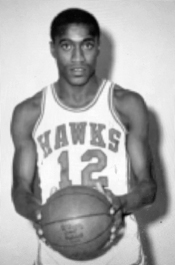
St. Louis was where Wilkens began his pro career. The best of his eight seasons for the St. Louis Hawks was 1967-68 when the slender guard was runner-up to a giant, Wilt Chamberlain, for the NBA Most Valuable Player Award.

As a player, Wilkens twice led the NBA in assists (1969-70 and 1971-72). As a coach, he led the Seattle SuperSonics to a NBA title (1978-79) and amassed 1,332 wins. Only Gregg Popovich (1,390) and Don Nelson (1,335) achieved more wins as NBA coaches. Wilkens was 88 when he died on Nov. 9, 2025.

Hard road to travel

Wilkens was the son of a black father and white mother. He was about kindergarten age when his father, a chauffeur, died of a perforated ulcer.

Lenny’s mother, Henrietta, raised him and his three siblings in a cold-water tenement flat. Heat came from a coal stove. They survived “on powdered milk and peanut butter,” according to the New York Daily News.

“Quite frankly, it is a mystery to me how any kid was able to make it under such circumstances,” Rev. Thomas Mannion, a parish priest at Brooklyn’s Holy Rosary Catholic Church, told the New York Times.

Henrietta worked in a candy factory. At 8, Lenny got a job in a market, scrubbing floors and delivering groceries. Father Mannion became a surrogate dad. “I had great faith in him,” Wilkens said to the New York Times. “I’d get discouraged and sometimes pretty angry, but Father Mannion … was always there to prod me and keep me from giving up.”

In 1979, Wilkens’ wife, Marilyn, told the newspaper that Father Mannion “was a tremendous influence on (Lenny). He kept him out of trouble in those early days when Lenny was growing up in a very bad neighborhood.”

Wilkens was an altar boy. According to the Los Angeles Times, Tommy Davis recalled a day during their youth when police frisked Wilkens for switchblades and instead found only rosary beads. As Father Mannion told the New York Times, “He somehow rose above the neighborhood.”

The priest was among the first to teach Wilkens about basketball, “setting up chairs for Wilkens to dribble in and out of in the Holy Rosary gym,” according to the New York Daily News.

Get in the game

Wilkens had a bad experience the first time he tried out for the high school basketball team. Coach Mickey Fisher “inadvertently whacked him in the face with his hand as he demonstrated a technique,” the New York Daily News reported.

Offended, Wilkens left and stayed away from the basketball team his first three years in high school. Meanwhile, Tommy Davis developed into an all-city forward. As Davis recalled to United Press International, early in their senior year he said to his friend, “Come on out and play, man. You know Mickey didn’t mean it. You can make this team. We need you.”

Father Mannion also urged Wilkens to try out for the team because he saw basketball as a path to a college scholarship.

Wilkens relented and made the team for the 1955-56 season. However, he was scheduled to graduate in January 1956. So he played in just seven games before receiving his diploma and leaving school.

Undeterred, Father Mannion wrote to a friend, a priest, Rev. Aloysius Begley, athletic director at Providence College, and asked him to consider awarding Wilkens a basketball scholarship. Providence coach Joe Mullaney wanted Tommy Davis, but the Brooklyn Dodgers signed him. After Mullaney’s father scouted Wilkens in a New York summer tournament and recommended him, Providence gave the scholarship.

Wilkens was thin and barely taller than 6-foot. Though his features were frail, he had a basketball toughness honed from playing against older, bigger foes on the Brooklyn playgrounds. He was an aggressive defender and an electric playmaker. As Wayne Coffey of the New York Daily News noted, Wilkens had “the body of a twig and the hands of pickpocket, and a calm that followed him like a shadow.”

An economics major who spent summers working on Brooklyn docks loading cargo, Wilkens planned to teach. He was surprised when St. Louis selected him with the sixth pick in the first round of the 1960 NBA draft. The top two picks were Oscar Robertson (Cincinnati Royals) and Jerry West (Los Angeles Lakers).

“I never thought I was good enough to play up there,” Wilkens told the Springfield (Mass.) Republican. “Playing pro ball after I graduated from Providence wasn’t on my list of things to do.”

Tasked with trying to convince Wilkens he could succeed, St. Louis scout Stan Stutz took him to his first NBA game _ Hawks at Boston in the playoffs. “Stutz told me to watch the play of the Hawks guards (Sihugo Green and Johnny McCarthy),” Wilkens recalled to the Springfield newspaper. “After watching them, I told myself I could play as good as those guys. That’s when I decided I had a chance to make it in the NBA.”

The right stuff

Wilkens was correct about his abilities. He excelled in the NBA as a savvy backcourt talent and unassuming team leader. “The quietest man ever to come out of Brooklyn,” Frank Deford of Sports Illustrated described him.

When he joined the Hawks, Wilkens’ job was to pass the ball to the frontcourt trio of Bob Pettit, Cliff Hagan and Clyde Lovellette. “It was pattern ball, not really my game,” Wilkens told Sports Illustrated, “but you had to adjust to it.”

The cast of teammates eventually changed but Wilkens remained the constant, running the show on the floor. “He can dribble through a briar patch,” Sports Illustrated declared. “He knows the perfect pass to make and, perhaps more important, realizes that most often it need not be a fancy one … Best of all, he has the ability to pace a game, to enforce a tempo.”

Wilkens did it all without fanfare. Frank Deford described him as “shy, with mournful brown eyes.” Jim Murray of the Los Angeles Times noted, “He looks constantly as if he got bad news from home or a telegram from the front. He makes a basset hound look happy.”

Before the 1967-68 season, coach Richie Guerin gave Wilkens the green light to run a fast-break offense and pressure defense. Wilkens made it work. He was the quarterback of a team that included Zelmo Beaty, Bill Bridges, Joe Caldwell, Lou Hudson and Paul Silas. The Hawks won 16 of their first 17 games. Wilkens “is more responsible for our success than anybody,” Guerin told Jim Murray.

For the season, Wilkens averaged 20 points and 8.3 assists per game. He had a triple double _ 30 points, 12 rebounds, 13 assists _ in an October game against the New York Knicks, and was unstoppable (39 points, 18 assists) in a January win versus Seattle. Game stats and Game stats

Hawks management declared the 1967-68 regular-season finale, a home game against Seattle, as “Lenny Wilkens Night.” In a halftime ceremony, the club gave him a green Cadillac and other gifts. Cardinals baseball outfielder Curt Flood, an artist, did an oil painting of Wilkens and presented it to him. Then Wilkens went back to work. He finished the game with 19 points and 19 assists. Game stats

Facing the San Francisco Warriors in the playoffs, the Hawks were beaten in four of six games. The second of their two wins came in Game 5 at home when Wilkens had 20 points and 10 assists. It turned out to be the last game for the Hawks in St. Louis. The franchise relocated to Atlanta in May 1968. Game stats

Enduring friendship

Wilkens never played for Atlanta. On Oct. 12, 1968, he was traded to Seattle for Walt Hazzard. Three days later, Tommy Davis was selected by the Seattle Pilots in the American League expansion draft.

More than a decade after Davis convinced Wilkens to try out for high school basketball, the two friends were reunited nearly 3,000 miles from Brooklyn as professional athletes in Seattle.

As a boy, baseball was Wilkens’ sport of choice, according to the New York Daily News. During the spring and summer of 1969, Wilkens seldom missed a Seattle Pilots home game, the Tacoma News Tribune reported. He’d wait for Davis outside the clubhouse afterward.

Though he was traded to Houston on Aug. 30, 1969, Davis at season’s end was the Pilots’ leader in RBI (80) and doubles (29).

Grateful for the time he and Wilkens had together that year, Davis told Sports Illustrated, “I love Lenny. He is … a true friend who can be depended upon … He is steadfast and honorable … I love Lenny for what he has achieved. He went in there with all those big guys and proved to them he could do it on quickness and guts and dedication. We used to say of him that he was like the man who wasn’t there _ he wasn’t there until you read the box score.”


Read Full Post »

A run-of-the-mill second game of a Saturday afternoon doubleheader at Wrigley Field turned into a showcase featuring a trio of future Hall of Fame pitchers.

Jim Kaat and Lee Smith were the starters in the Cardinals versus Cubs game on June 26, 1982, at Chicago. Kaat got the win and Smith took the loss in a 2-1 St. Louis triumph. The save went to Bruce Sutter. All three pitchers would be elected to baseball’s shrine in Cooperstown, N.Y.

For Sutter, earning a save was standard _ a five-time National League saves leader with the Cubs (1979-80) and Cardinals (1981-82 and 1984) _ but starts were uncommon then for Kaat and always were rare for Smith.

A prominent starter during his prime with the Twins and White Sox, Kaat was converted to a relief role in 1979. The start against the Cubs was just his second in two years.

Smith pitched in 1,022 games in the majors but made only six starts.

The longshot odds of Kaat and Smith opposing one another as starters made their matchup extra-special.

Making adjustments

Kaat, 43, was the primary left-handed reliever in a 1982 Cardinals bullpen that had Sutter as the closer and Doug Bair as the right-handed setup man. After Kaat struggled early _ his ERA for the season was 6.75 on May 1 _ pitching coach Hub Kittle worked with him to use a sidearm motion. “When he drops down, his ball moves more,” Kittle told the St. Louis Post-Dispatch. “I think he throws harder down low, too.”

The altered delivery helped Kaat. He didn’t allow a run in 12 of 15 relief appearances from May 2 to June 20.

Meanwhile, Smith, 24, was part of a 1982 Cubs bullpen with veterans Willie Hernandez, Bill Campbell and Dick Tidrow. Hernandez and Campbell got most of the save opportunities early in the season, but Cubs pitching coach Bill Connors told the Chicago Tribune, “Smitty can be a bullpen star. If you need a strikeout, he’s the guy who’s going to get it for you. Some people say he’s not consistent with his fastball, that he tires easily and loses his stuff. They’re wrong.”

When Cubs starters Dickie Noles (knee) and Randy Martz (shoulder) went on the disabled list in June, manager Lee Elia moved Smith into the rotation. Before then, his only big-league start came in the 1981 season finale against the Phillies.

Smith started twice for the 1982 Cubs before facing the Cardinals.

Fine-tuned engine

With the Cubs’ top run producer (Bill Buckner) and best home run hitter (Leon Durham) batting left-handed, Cardinals manager Whitey Herzog chose a pair of left-handers, Dave LaPoint and Kaat, to start the June 26 doubleheader.

In Game 1, LaPoint (eight innings) and Sutter (one) confounded the Cubs, and St. Louis won, 4-1. Boxscore

As Kaat recalled to podcaster Jon Paul Morosi, “I’m sitting in the clubhouse and (broadcaster) Harry Caray’s on the air and he’s saying, ‘Well, the Cardinals got the best of us, but we’ve got a chance in Game 2, because we’ve got hard-throwing Lee Smith and the Cardinals got 43-year-old, soft-tossing Jim Kaat.’ ”

(Kaat had been around so long that his manager, Whitey Herzog, batted against him 20 years earlier when Herzog was with the 1962 Orioles. Kaat struck Herzog on the right elbow with a pitch and Herzog had to leave the game.)

The Cubs scored a run in the first, but Kaat found a groove and held them scoreless over the next five innings. Described by the Tribune as “a genuine geriatric marvel,” Kaat relied on “guile, breaking stuff and an occasional sneaky fast one,” the newspaper noted.

“In relief pitching, you have a tendency to come in and gun like you’re gunning the engine of a car,” Kaat said to the Post-Dispatch. “Starting pitching is entirely different. I don’t try to throw as hard. I try to stay within myself.”

Unlike Kaat, Smith was a hotrod. Displaying a 95 mph fastball, he gave up a run in the second on consecutive doubles by Ken Oberkfell and Gene Tenace. The winning run came in the third when, with two outs, Lonnie Smith singled, stole second and scored on a Keith Hernandez single.

Herzog said he planned to let Kaat pitch five innings, but he sent him out in the sixth because Buckner and Durham were due to bat. Kaat retired the side in order, then was lifted for a pinch-hitter in the seventh.

On being taken out after throwing 82 pitches, Kaat told the Post-Dispatch, “Emotion always tells you that you could have gone longer, but common sense tells you that you’ve got to bring pitchers in when you’ve got our bullpen.”

The Cubs loaded the bases in the seventh against Bair, and again in the eighth versus Bair and Sutter, but couldn’t score either time. (The Cubs stranded 11 runners in the game.) Sutter got his second save of the day with a scoreless ninth. The win for Kaat was his 280th in the majors.

Kaat, Sutter and Smith were three of eight future Hall of Famers in uniform during that game. The others: Cardinals shortstop Ozzie Smith, Cubs second baseman Ryne Sandberg, Cardinals manager Whitey Herzog, Cardinals coach Red Schoendienst and Cubs coach Billy Williams. Boxscore

What a relief

Smith was 0-4 with a 4.94 ERA as a starter for the 1982 Cubs. In July, they moved him back to the bullpen and he excelled as the closer (seven saves, 1.32 ERA in August; seven saves, 0.57 ERA in September.) He never started another game in the majors.

Kaat returned to the Cardinals bullpen. In July, he allowed just one run in 14 appearances. The Cardinals gave him one more start, his 625th and last in the big leagues, on Sept. 18 against the Mets. Boxscore

Sutter (nine wins, 36 saves, 70 games pitched) and Kaat (five wins, two saves, 62 appearances) helped the 1982 Cardinals become division champions. Then they won the National League pennant and World Series title.

Kaat pitched his final season, his 25th in the big leagues, with the 1983 Cardinals before being released in July.

After stints with the Cubs and Red Sox, Smith was acquired by the Cardinals in May 1990. In four seasons (1990-93) with St. Louis, Smith earned 160 saves. Only Jason Isringhausen has more saves (217) as a Cardinal. In 1991, Smith had 47 saves for St. Louis. The only Cardinals with a higher single-season total are Ryan Helsley (49 in 2024) and Trevor Rosenthal (48 in 2015).

Read Full Post »

In 2025, Jim Kaat was interviewed by Jon Paul Morosi for the Baseball Hall of Fame podcast “The Road to Cooperstown.”

Here are excerpts:

Being enshrined in the Baseball Hall of Fame:

Kaat: “I’m probably the only pitcher inducted based on longevity, dependability, accountability (rather than) dominance … There are a lot of guys who are there because they’re thoroughbreds, but there’s room for a Clydesdale as well.”

The secret to pitching 25 years (1959-83) in the big leagues:

Kaat: “I didn’t play Little League baseball. I didn’t really pitch organized baseball until I was about 15 _ American Legion ball in Michigan. Before that, we just had neighborhood kids, you’d get eight, 10 kids together, and go out and play … My sports were fast-pitch softball and bowling. Little did I know that those two exercises are great for the pitching arm … because your arm is going underhanded. I didn’t abuse my arm. Lucas Giolito (2019 all-star) threw 90 mph when he was 14 years old. He’s probably suffered through some injuries because of that. I probably threw 90 in my early 20s. There wasn’t an emphasis on velocity. It was movement and control.”

On youth baseball today:

Kaat: “It’s become so competitive. There is so much pressure on these young kids that I think a lot of times, by the time they’re 16, they’re probably burned out. A lot of it is the coaches and the parents … When I see the parents nowadays, they’re hanging on the fence, screaming at their kids, ‘Get the ball over.’ They’re paying big money to send these kids to these schools. They’ve taken the fun out of it. I never had to go through that. I think that’s a big reason I was able to pitch for a long time.”

On his father, John Kaat:

Kaat: “I have a picture on my desk of my dad standing in front of the Hall of Fame in 1947. He went to see Lefty Grove’s induction. That was his favorite player. He was an avid fan.”

On what he might have done if he didn’t become a big-league pitcher:

Kaat: “I’d have loved to have been a small-town high school basketball coach. You’d have a lot of influence on kids.”

On Twins teammate and fellow Hall of Famer Harmon Killebrew:

Kaat: “Harmon kind of set the tone for the behavior of the Twins … If you look at his penmanship, it’s the most immaculate, perfect, and he taught all the Twins players … He insisted, ‘Don’t you want to write your name so people know who you are?’ (Today) the Twins’ top-paid player, Carlos Correa, (signs) C.C. You don’t even know who it is.”

On Twins teammate and fellow Hall of Famer Rod Carew:

Kaat: “He took batting practice with us the end of 1966 and he was hitting some home runs. Then I think he found out that we didn’t care about exit velocity or launch angle … He was a magician with the bat. He changed his stance pitch to pitch. He moved all over the place. He got about some 30 bunt hits a year.”

On Twins teammate and fellow Hall of Famer Tony Oliva:

Kaat: “American League catchers in those days … would say the one guy we feared coming up in a clutch situation was Tony O. because Tony was that blend of power, average and speed.”

On Sandy Koufax, the Dodgers starter who opposed Kaat in Games 2, 5 and 7 of the 1965 World Series (Koufax won two of the three):

Kaat: “Happy to say he became a friend. He’s one of the (congratulatory) calls I got when I (was elected to) the Hall of Fame. We’ve stayed in touch. We’ve had some dinners together through (ex-Cardinal) Bill White, who was my broadcast mentor. He and Sandy live close to one another in the summer in Pennsylvania. I cross paths with Sandy a fair amount.”

On White Sox teammate and fellow Hall of Famer Dick Allen, who came up to the majors with the Phillies:

Kaat: “Had he been brought up in the Cardinals organization, where they had more black players, (Lou) Brock and (Curt) Flood, (Bob) Gibson, Bill White … it would have been easier for him … Dick suffered a lot in Philadelphia … It was tough for him as a black star in Philadelphia.”

On pitching for the Phillies (1976-79):

Kaat: “The end of my time in Philadelphia in 1979, I wasn’t pitching much. Danny Ozark was not a manager that had much confidence in guys who didn’t throw hard. I used to tell him, ‘Danny, Walter Johnson’s not around anymore.’ ”

On pitching in 62 games for the 1982 Cardinals at age 43 and being a part of a World Series championship team:

Kaat: “That was the most exciting team … The most enjoyable year I ever had … We hit 67 home runs as a team, stole 200 bases, had Bruce Sutter at the end of the games … To see that team play every day and the havoc it created for the opposition … Willie McGee would get on first. Boom! He’s on third … That was such a rush for me, waiting that long and to be a part of a team that … was totally foreign to the way the game is played today … Baseball came from the words base to base, and that’s what we did … That was the kind of baseball I was raised on.”

On what he told rookie pitcher John Stuper, who, with the Cardinals on the brink of elimination, pitched a four-hitter to beat Don Sutton and the Brewers in World Series Game 6:

Kaat: “I was kind of like a mentor to Stuper. I sat with him on the plane (after Game 5). I said, ‘Stupe, nobody expects you to win tomorrow. We’re facing Don Sutton. He’s going to the Hall of Fame. (Pretend) it’s a 10 o’clock in the morning exhibition game. Have some fun out there. Don’t worry about it.’ ”

On Cardinals teammate Keith Hernandez:

Kaat: “I don’t think there was ever a player I played with that was more intense on every play of the game … He kind of personified our team in that every play, every day, there was an intensity that’s hard to have over 162 games.”

On what he’s most proud of in his broadcasting career:

Kaat: “I learned from Tim McCarver to be honest and objective … Not being a homer.”

Read Full Post »

Dick Nen reached the pinnacle of his career in his first big-league game. He played in 366 more after that, but nothing topped what he did against the Cardinals in his debut.

On Sept. 18, 1963, in his second at-bat in the majors, Nen slammed a home run for the Dodgers, tying the score in the ninth inning and stunning the Cardinals. The Dodgers went on to win, completing a series sweep that put them on the verge of clinching a pennant.

Three decades later, reflecting on his storybook feat in St. Louis, Nen told the Palm Beach Post, “I should have walked away right then. That was my one day.”

Prized prospect

The California town of South Gate, seven miles south of downtown Los Angeles and dubbed the “Azalea City,” is the birthplace of Dick Nen as well as other sports figures such as NFL commissioner Pete Rozelle, Baseball Hall of Fame umpire Doug Harvey and Red Sox second baseman Doug Griffin.

After attending Los Angeles Harbor College, Nen went to Long Beach State and played baseball there. A left-handed batter, he hit with power and fielded gracefully at first base. Kenny Myers, the scout who brought Willie Davis to the Dodgers, signed Nen for them. Two weeks later, the Cubs offered $100,000 for Nen, but the Dodgers declined, the Los Angeles Times reported.

In 1961, Nen’s first pro season, with Reno, he produced 32 home runs, 144 RBI and batted .351. In a home game against Fresno, he blasted a ball out of the park and onto the roof of an indoor municipal swimming pool 100 feet beyond the outfield fence. With 177 hits and 102 walks, he had a .458 on-base percentage.

Promoted from Class C Reno to Class AAA Spokane in 1962, Nen was limited to 72 games. He joined the team after the season started because of a military commitment and then was sidelined when a thrown ball struck him below the right eye. Back with Spokane in 1963, Nen had 84 RBI and a .369 on-base percentage (167 hits and 75 walks).

Welcome aboard

On Tuesday night, Sept. 17, 1963, Spokane lost in the finale of the Pacific Coast League championship series at Oklahoma City. Nen was called up to the Dodgers after the game. On Wednesday, Sept. 18, he boarded a flight in Oklahoma City, arrived in St. Louis in the afternoon and went directly to the ballpark, where the Dodgers were to play the Cardinals that night in the finale of a three-game series. Issued uniform No. 5, Nen took batting practice, then settled in to watch the game from the dugout.

After losing the first two games and falling three behind the front-running Dodgers, the Cardinals desperately needed a win in Game 3. With Bob Gibson pitching for them, the Cardinals appeared on their way to achieving their goal, leading 5-1 through seven innings.

A pitcher, reliever Bob Miller, was due to be the first batter for the Dodgers in the eighth. Dodgers manager Walter Alston, seeking a left-handed pinch-hitter to send against Gibson, had two options: Derrell Griffith, called up from Class AA, or Nen, called up from Class AAA. Neither had been in a big-league game.

Alston chose Nen. “I was scared stiff,” Nen recalled to the Los Angeles Times. “I had no idea I’d be called upon.”

In making his big-league debut, Nen joined Truck Hannah (1918 Yankees), Johnny Reder (1932 Red Sox) and Eddie Kazak (1948 Cardinals) as players whose last names spell the same forward and backward. Since then, the list includes Toby Harrah (1969 Senators), Mark Salas (1984 Cardinals), Dave Otto (1987 Athletics), Robb Nen (1993 Rangers), Juan Salas (2006 Rays), Marino Salas (2008 Pirates), Fernando Salas (2010 Cardinals) and Glenn Otto (2021 Rangers).

Nen lined out sharply to center fielder Curt Flood, but the Dodgers went on to score three times in the inning, cutting the St. Louis lead to 5-4. Nen stayed in the game, taking over at first for Ron Fairly, who had been lifted for pinch-hitter Frank Howard during the eighth-inning rally.

In the ninth, with one out, none on, Nen batted for the second time. Right-hander Ron Taylor threw him a fastball, low and away. “I put the ball where I wanted it,” Taylor told the St. Louis Post-Dispatch.

Nen drove it onto the pavilion roof in right-center for a home run, tying the score. “I knew I hit it good,” Nen told the Los Angeles Times, “but I had no idea it was a home run until I saw the umpire give the home run sign.”

Watching on TV in California, Nen’s father and sister whooped with joy. Nen’s mother, attending a church function, got a call from her daughter, who exclaimed, “Richard hit a home run to tie the (score).”

The game moved into extra innings and became a duel between relievers Ron Perranoski (Dodgers) and Lew Burdette (Cardinals). With two on in the 11th, Nen nearly got a game-winning single, but second baseman Julian Javier ranged far to his left, made what the Post-Dispatch described as “an improbable glove-hand stop” of the grounder, wheeled and threw out Nen at first. In the 13th, with Dodgers runners on second and third, one out, Burdette issued an intentional walk to Nen. “A pretty high compliment for a rookie in his first big-league game,” columnist Jim Murray noted.

Maury Wills followed with a grounder, sending home the runner from third with the winning run. Boxscore

On the Dodgers’ flight home, most of the talk concerned Nen’s heroics. “I never saw anybody break in more spectacularly,” pitcher Johnny Podres told the Long Beach Independent. “That was the biggest homer of the year. It gave us the shot in the arm we needed.”

The Dodgers’ plane landed at 4:08 a.m. When Nen got home, his parents greeted him with a big spaghetti breakfast, featuring their homemade sauce.

A few days later, Sept. 24, the Dodgers clinched the pennant. Then they swept the Yankees in the World Series. Nen joined the club too late to be eligible, but he pitched batting practice before Game 4 and was given a $1,000 winner’s share.

Wanted in Washington

Nen’s home run against the Cardinals turned out to be his only hit as a Dodger.

Entering 1964 spring training as a candidate to earn a spot on the Dodgers’ Opening Day roster, Nen “developed the bad habit of lowering his back shoulder when he swings,” the Associated Press reported.

He was sent back to Spokane and spent the season there. In December 1964, the Dodgers dealt Nen, Frank Howard, Ken McMullen, Pete Richert and Phil Ortega to the Senators for Claude Osteen, John Kennedy and $100,000.

The Senators were managed by ex-Dodgers first baseman Gil Hodges. At spring training in 1961, Hodges had given pointers to Nen on how to play first base.

Nen, 25, began the 1965 season in the minors, but when Senators first baseman Bob Chance failed to hit as hoped, Nen was brought up in July to replace him. Nen started 63 games at first base for the 1965 Senators and hit .317 with runners in scoring position. He slugged two homers against Catfish Hunter, a walkoff homer to beat Luis Tiant and a grand slam versus Fred Talbot. Boxscore Boxscore Boxscore Boxscore

“This boy has all the qualifications to be a dandy player,” Senators general manager George Selkirk told the Washington Daily News. “… He’s our first baseman and I don’t see anyone taking it away from him.”

The good vibes didn’t last long. Nen had a terrible spring training in 1966. When the season opened, ex-Cardinal Joe Cunningham was the Senators’ first baseman and Nen was on the bench. In June, the Senators got Ken Harrelson from the Athletics and he took over at first base. Nen batted .213.

Nen “has the idea in his head that he is going to be lousy in the spring and so naturally he is,” Senators coach Joe Pignatano told Jerry Izenberg of the Newark Star-Ledger. “You can’t come in here thinking that way and expect to be anything but bad. When you do that, you concede the job. He could win it in a minute if he’d hit the way we think he can.”

Years later, Nen said to the Miami Herald, “I struggled most of my career, especially with the mental part. I always had to find ways to overcome the bad times and look forward to the good times. It seems like I went through more bad times than good. I should have done a lot better.”

In 1967, Nen was the Senators’ Opening Day first baseman, but in May they got Mike Epstein from the Orioles and he became the starter. Nen batted .218.

Seeking a pinch-hitter, the Cubs acquired Nen a week before the start of the 1968 season. On May 15, his two-run single in the ninth inning against Jack Billingham beat the Dodgers. It was Nen’s first National League hit since his 1963 home run versus the Cardinals. Boxscore

After batting .181 for the 1968 Cubs, Nen was returned to the Senators. He played his last game in the majors for them in June 1970.

All in the family

Nen’s son, Robb Nen, became a prominent big-league reliever. In 10 seasons with the Rangers (1993), Marlins (1993-97) and Giants (1998-2002), Robb had 314 saves, 45 wins and a 2.98 ERA. He pitched in two World Series (1997 Marlins and 2002 Giants) and was the National League saves leader (45) in 2001.

“Nen has the kind of arm that comes along once every 10 years,” Marlins general manager Dave Dombrowski told the Miami Herald in 1997.

Dick Nen said to the San Francisco Examiner, “We don’t know where the good arm came from. It didn’t come from me. He must have gotten it from my wife.”

Read Full Post »

In 2025, Tony La Russa was interviewed by Jon Paul Morosi for the Baseball Hall of Fame podcast “The Road to Cooperstown.”

Here are excerpts:

Being a lifelong learner:

La Russa: “The educational emphasis was from my mother … She was insisting on me going to college. (La Russa earned a law degree from Florida State.) The other thing she did, for which I am forever thankful, as early as I can remember, I learned to read. She always made books available, a lot of times they were books about the West, and to this day I have a love affair with books. You’ll never see me without one.

“The other part of learning is the game of baseball, and that was my dad. His brothers, my uncles, they ate it and talked it, and that’s all we ever discussed. I learned about baseball when I was 4, 5, 6 years old and have loved it ever since.”

First language he spoke as a youth in Tampa’s Ybor City section:

La Russa: “Totally Spanish because my dad spoke Spanish … The truth is that as I got ready to go to elementary school, as I was approaching 6 years old, I had to learn to speak English.”

Baseball team or player he followed as a youth:

La Russa: “My dad was a 6-day-a-week hard laborer. I mean, he worked, but on Sunday, during spring training, we’d go see the Reds or White Sox in Tampa, or we’d go to St. (Petersburg) for the Cardinals or Yankees. At that early age, the guy who caught my attention was Mickey Mantle.”

In 1963, La Russa, 18, with the Kansas City Athletics, got his first big-league hit, a triple versus the Orioles’ Steve Barber, who won 20 that year. La Russa’s first big-league RBI came against the Twins’ Camilo Pascual, a 21-game winner in 1963. Boxscore and Boxscore

What it was like being in the majors as a teen:

La Russa: “The players, by and large, were not hard on me at all. That’s when I first met Charlie Lau. He was a backup catcher (and later a coach on La Russa’s White Sox staff.) Guys like … Norm Siebern, Jerry Lumpe. These guys were really careful, especially when we got to big cities, that I didn’t get in trouble.”

Playing for the Atlanta Braves the last part of the 1971 season:

La Russa: “For six weeks I watched Henry Aaron and got to know him. That’s a blessing that’s impossible to describe unless you know Hank. Just a beautiful man … We used to fly commercial back then. One day I’ll never forget, we were flying back from L.A. to Atlanta at night and everybody’s sleeping, and I’m walking down the aisle and Hank is awake and he said, ‘Sit down.’ We talked for the rest of the flight and mostly what we talked about was experiencing the Dodgers and how often they hit him or knocked him on his butt …

“In those days, there wasn’t the protection of the hitter that there is today. These guys today don’t have any idea … If you swung the bat, they’d aim right at your head to try to scare you. The courage of those great sluggers was something special. I just wish that today’s hitters would be more thankful that Major League Baseball is protecting them, because it’s a scary thing when guys are throwing at your head … Hank, they couldn’t scare him and they couldn’t stop him.”

On getting a single (against the Orioles’ Dave McNally) as a pinch-hitter in his first at-bat for the Oakland Athletics, after their move from Kansas City, in 1968 and scoring the winning run as a pinch-runner (for the Cubs’ Ron Santo) in his last big-league appearance in 1973:

La Russa: “I like to use that as an example of just how lousy my (big-league playing) career was … Pinch-hitting. Pinch-running. Those are my highlights and they’re best forgotten.” Boxscore and Boxscore

Toughest challenge he faced when he became a big-league manager with the White Sox in 1979:

La Russa: “When you go into a game and you know you are overmatched. Think about it: In 1979, the managers were legends you knew by their first names. Billy (Martin), Earl (Weaver), Whitey (Herzog), Sparky (Anderson), Gene (Mauch), Chuck (Tanner). What they would contribute to the game versus what I could …

“I used to ask these great men questions. Every one of them but two answered right away … Gene Mauch and Earl Weaver were very honest and told me, ‘Young man, do you know what the longevity of a major-league manager is nowadays?’ I said, ‘No.’ They said, ‘Maybe three years.’ So they said, ‘If you’re still here three years from now and you ask me a question, I’ll answer it, but I’m not going to waste my time with you (now) because I don’t think you’ll be around.’ ”

Advice from former White Sox and Orioles manager Paul Richards, who was White Sox director of player development when La Russa began managing in their organization:

La Russa: “He said two things to me. One, if (the players) don’t trust you, they won’t follow you. So don’t ever, ever not tell them the truth … Paul also said … (because) you have such scrutiny of every move you make, you have a natural instinct sometimes to cover your butt, and he said, ‘Tony, if you do that, you’ll never know if you’re good enough.’ He said, ‘Trust your gut, don’t cover your butt.’ … I can honestly say, maybe because I had a law degree waiting (if managing didn’t work out), I never managed afraid, and it was a big asset.”

On Dave Duncan, the catcher who was La Russa’s teammate with the A’s before becoming pitching coach for most of the clubs La Russa managed:

La Russa: “Dunc early on was always somebody that stood out with his maturity, intelligence, competitiveness, toughness. I mean, he caught Game 7 of the 1972 World Series against the Big Red Machine and that was his only start. The A’s were getting ready to upset The Machine.

(In the bottom of the ninth, with Oakland ahead, 3-2, the Reds had a runner on first, two outs, and switch-hitter Pete Rose at the plate against Rollie Fingers when manager Dick Williams went to the mound.)

“Dick had Vida Blue warming up. He went out there to make the (pitching) change and said, ‘I’m going to turn Pete Rose around, to the right side. Dunc said, ‘Dick, don’t do that. Vida’s a starter. Who knows what you’re going to get. Rollie can get this guy out.’ Dick said, ‘OK.’ ”

Rose flied out and the Athletics were World Series champions. Boxscore

Managing against Dusty Baker:

La Russa: “The only time he and I had big problems was when we were in the same division together. That was Cubs and Cardinals; Reds and Cardinals … I can’t wait to welcome him into the Hall of Fame, which is going to happen very soon.”

On the backup slider Dodgers’ Kirk Gibson hit for a walkoff home run to beat Dennis Eckersley and the A’s in Game 1 of the 1988 World Series:

La Russa: “When we got two strikes on him, you see Dunc (in the dugout) give the sign: Up and away. That two-strike pitch should have been a high fastball. He could have gotten a base hit, but he wouldn’t have hit a home run.” Boxscore

How the A’s recovered to become World Series champions the next year:

La Russa: “Adversity can be the best teacher … The next spring we decided we were going to be on a mission … Talented guys on a mission … Their minds were just zeroed in on (there will be) no regrets.”

Managing the Cardinals to World Series titles in 2006 and 2011:

La Russa: “We got in the (playoffs) the last day of the year both times … We got in (there) in fighting, competitive form … So much of getting to October and winning in October is about head, heart and guts. It’s about taking that talent and never giving in, never giving up … It’s mindset … You’re surrounded in the clubhouse with guys who are tough-minded and … never stop competing. I’m very proud of those clubs.”

On Game 6 of the 2011 World Series when the Cardinals, on the brink of elimination, scored twice in the ninth and twice in 10th before winning in the 11th:

La Russa: “When you get that far, you have such a feeling of confidence and pride … Even at the end, when we were down two in the ninth … we felt confident … Guys were on the top step of the dugout, without any prompting, saying, ‘We can do this.’ … Don’t ever underestimate the importance of how strong your mind is and your will and what you can accomplish.”

On retiring from managing after the 2011 World Series and coming back at age 76 to manage the White Sox in 2021:

La Russa: “I kept hearing I was too old and couldn’t relate, but we won 93 games. We had six winning months … The next year I got cancer and I had to leave in August.”

On the state of big-league baseball today:

La Russa: “I’m not pleased with the game that I see _ the accent on getting the ball in the air, and strikeouts are OK, and getting overwhelmed by pitching …

“Putting the ball in play and hitting where it’s pitched creates rallies. I think it’s easier to win now if you’re playing against a team that has a guy on second base with nobody out, down a run, and guys try to hit two-run homers, and get beat by a run. When the pitching is really good and you’re trying to do the most things (at the plate), that is stupid, right? When the pitching is really good, you better work to get a single, do something to advance the runners, score. Big is not going to beat you. Little is going to give you a chance to win.”

On starting pitchers not being expected to go deep into games:

La Russa: “We got to change that. The game is better when people say, ‘Hey, do you know who’s starting today,’ and they (the starters) get into the last third of the game … We got to stretch them out.”

On being inducted into the Baseball Hall of Fame:

La Russa: “The great Tom Seaver, a friend, told me the day I got in, ‘You know, you’re a coattail Hall of Famer.’ Right away, I said, ‘I know, because the Hall of Fame is for players that have been great.’ To get a manager in there, it’s because of the organization, the scouting, the player development, the players. I said, ‘I understand, Tom.’ Then he told me, ‘You know what an honor it is to be here?’ I said, ‘I think so. Why?’ He said, ‘If you mess this up, I’ll have you deducted faster than you were inducted.’ “

Read Full Post »

President William Howard Taft was a large man with a big appetite for food and baseball. During a visit to St. Louis, he was treated to generous portions of both.

On May 4, 1910, Taft attended two big-league games that afternoon, watching an inning of a National League matchup, Reds versus Cardinals, at Robison Field before going to Sportsman’s Park to see some American League action between Cleveland and the Browns.

A month earlier, at Washington, D.C., Taft became the first U.S. president to attend an Opening Day baseball game. He threw the ceremonial first pitch to Walter Johnson, who then crafted a one-hit shutout for the Senators in their victory against the Athletics. Boxscore

Described by the St. Louis Post-Dispatch as a “jovial baseball fan,” Taft attended 14 big-league games during his term (1909-13) as president, according to the book “Baseball: The Presidents’ Game.”

Athlete and student

Born and raised in the Mount Auburn neighborhood of Cincinnati, Taft “loved baseball and was a good second baseman and a power hitter” as a youth, according to Peri E. Arnold, professor emeritus of political science at the University of Notre Dame.

At Yale University, Taft was intramural heavyweight wrestling champion as a freshman, according to the National Constitution Center. (In 1997, he was inducted into the National Wrestling Hall of Fame in Stillwater, Okla.)

However, on the advice of his father, Taft gave up sports to focus on his studies. He graduated second in his class at Yale. Taft went to law school at the University of Cincinnati, became an attorney and then a judge in Ohio.

Encouraged by his wife Nellie to get into national politics, Taft accepted an offer from President William McKinley in 1900 to lead a commission to oversee the Philippine Islands.

As Peri E. Arnold noted, “Out of the victory in the Spanish-American War, the Philippine Islands had become a U.S. protectorate. McKinley wanted Taft to set up a civilian government. This entailed drafting and implementing laws, a constitution, an administration and a civil service bureaucracy.”

Taft improved the economy of the Philippine Islands, built roads and schools, and gave the Filipino people participation in government, according to the White House Historical Association.

In February 1904, President Theodore Roosevelt appointed Taft to the cabinet as secretary of war. “Taft became Roosevelt’s chief agent, confidant and troubleshooter in foreign affairs,” according to Peri E. Arnold. “He supervised the construction of the Panama Canal, made several voyages around the world for the president … and functioned as the provisional governor of Cuba.”

Taft served as secretary of war for four years before he accepted the Republican presidential nomination in June 1908. He won the election, defeating Democrat William Jennings Bryan, and was inaugurated in March 1909.

Motor man

President Taft’s main purpose for visiting St. Louis on May 4, 1910, was to address the Farmers Convention. His agenda for that Wednesday also included a businessmen’s luncheon, a dinner banquet with transportation leaders and the two baseball games.

The plan was to drive Taft from point to point during his stay. Taft was an automobile enthusiast. According to William Bushong of the White House Historical Association, “Taft believed in the future of the automobile and … was never happier than in the back seat of his touring car speeding through the countryside with the wind in his hair. Not required to observe speed limits or stop signs when driving the president, chauffeur George H. Robinson would blow the horn in advance of an intersection and fly through it.”

In 1910, most people didn’t have automobiles _ the number of cars in the U.S. then totaled 500,000 for a population of 92.2 million _ and driving laws still were being worked out.

For Taft’s drives through St. Louis, it was arranged for the fire department chief and four firemen with a chemical tank and hose to trail the president “on every foot of his journey,” the Post-Dispatch reported. “The police have agreed to waive the speed limit for one day and everywhere the president goes he will burn up the ozone at a terrific rate … There will be only one restriction on the president while here, and that is he must obey that part of the new traffic ordinance which directs automobiles to keep on the right side of the street at all times.”

Food for thought

Taft’s train from Cincinnati, where he attended the opening of the May Music Festival, arrived in St. Louis’ Union Station at 8:30 a.m. At least 1,000 uniformed St. Louis police officers, 75 plainclothes detectives and the entire 93-man mounted police force were called to duty, joining a Secret Service escort in providing protection for the president, the St. Louis Globe-Democrat reported.

From the train station, Taft was whisked to breakfast at the St. Louis Club on Lindell Boulevard. Taft weighed more than 300 pounds and he arrived in St. Louis hungry. For breakfast, he consumed two slices of corn bread, a portion of fish, two eggs on toast, three lamb chops, an olive, a radish, two pieces of celery and three cups of coffee, the Post-Dispatch reported.

Fortified, Taft was driven to the St. Louis Coliseum at Washington and Jefferson avenues for his 11 a.m. speech at the Farmers Convention. The Coliseum was a state-of-the-art entertainment and convention venue. Italian tenor Enrico Caruso performed there in April 1910 with the Metropolitan Opera Company.

After delivering his speech before a gathering of 8,000, Taft was driven to the Southern Hotel for a noon luncheon with the Business Men’s League. The menu featured soft shell crab, milk-fed chicken breast and strawberry melba.

Taft enjoyed a bowl of soup before the crab course was presented. He “took one bite of the crab and then put it aside,” the Post-Dispatch reported. “He refused to even look at the crab and for several minutes showed no interest in the meal. He glanced at a cucumber sandwich and bestowed an equal favor on some asparagus. The president’s eyes brightened considerably when he was brought a breast of milk-fed chicken. Seizing his knife and fork, he proceeded to show what a hungry man can do to a well-cooked chicken. Taft had his chicken finished before the others near him had fairly begun on theirs.”

Big fan 

The end of lunch signaled it was time for baseball. In his remarks to the luncheon crowd, Taft said, “I attend baseball games for two reasons: First, I enjoy the game, and, second, I want to encourage it.”

On his way to Robison Field for the 3:30 game between the Reds and Cardinals, Taft stopped at the YWCA headquarters at Seventh and Olive streets and pledged support for the organization’s $400,000 building fund campaign.

At the ballpark, Taft took his place in a special box seat section built for him next to the Cardinals’ bench, the Globe-Democrat reported. He received a rousing reception from most of the 4,500 spectators, according to the newspaper.

It was pre-arranged that Taft would leave the game at 4 p.m.

After the Reds went down in order against hard-throwing Bob Harmon, the Cardinals teed off on a former teammate, Fred Beebe. Miller Huggins, whom the Cardinals acquired for Beebe, led off with a walk. Sending 10 batters to the plate, the Cardinals used four singles, three walks and some shoddy fielding by the Reds to score five runs in the first.

Then it was time for Taft to depart. He didn’t miss any suspense. The Cardinals scored seven runs in the third and cruised to a 12-3 triumph. Boxscore

The Browns led, 1-0, when Taft entered Sportsman’s Park in the third inning while Terry Turner was at bat for Cleveland. The game was halted and the players lined up to greet Taft as he walked past. Ten box seat sections were reserved for Taft and his entourage. Taft was provided a special chair, with ample width, on which to sit, the Globe-Democrat reported.

Most of the 4,200 spectators gave Taft an ovation before he settled in to watch the game. The Browns’ pitcher was Joe Lake, a Brooklyn native and former dockworker. Cy Young, 37, pitched for Cleveland.

The score still was 1-0 when Taft prepared to leave after the top of the fifth. As the president was exiting, Browns pitcher Rube Waddell, the eccentric former Athletics ace described by the Society for American Baseball Research as having “the intellectual and emotional maturity of a child,” ran to Taft and offered his hand. “Taft shook it heartily,” the Globe-Democrat reported.

Taft was in his suite at the Hotel Jefferson by 5 p.m. Meanwhile, the Browns kept playing. With the score tied, 3-3, the game was halted after 14 innings because of darkness. Boxscore

At a banquet in the hotel that night, Taft feasted on lake trout, filet mignon and frozen pudding before addressing members of the Traffic Club, mostly railroad executives and representatives of other transportation industries.

When he finished, printed copies of songs were placed at every plate and guests were encouraged to sing along as the orchestra played popular tunes. “The president sang with especial gusto when ‘Has Anybody Seen Kelly?,’ ‘Take Me Out To The Ballgame,’ ‘I’ve Got Rings On My Fingers, Bells On My Toes,’ and ‘Sun Bonnet Sue’” were rendered, the Globe-Democrat reported.

Then Taft was driven to Union Station, where he boarded his private railroad car attached to a Baltimore & Ohio train. When the train departed for Washington, D.C., at 1:45 a.m., Taft was sound asleep.

Read Full Post »

« Newer Posts - Older Posts »