Feeds:
Posts
Comments

Archive for the ‘Games’ Category

In his last appearance of the 1970 season, Steve Carlton survived a beanball battle and avoided becoming the first Cardinals pitcher in 50 years to lose 20 games.
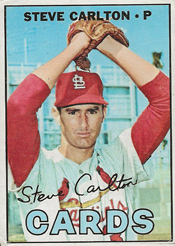
On Sept. 26, 1970, Carlton pitched a three-hitter and got the win in a 7-2 Cardinals triumph versus the Expos at Montreal. A left-hander and future Hall of Famer, Carlton finished 10-19 in 1970.

The last Cardinals pitcher with 20 losses in a season was another future Hall of Famer, Jesse Haines, who was 13-20 in 1920.

No Cardinals left-hander has had a 20-loss season.

The most losses by a Cardinals pitcher in one season is 25. Stoney McGlynn was 14-25 for the 1907 Cardinals and Bugs Raymond was 15-25 for the 1908 Cardinals.

Head games

Carlton reported late to spring training in 1970 because of a contract dispute and struggled throughout most of the regular season. He was 1-2 in April and 1-4 May. Carlton didn’t have a winning record in any of the first five months of the season and entered September at 7-18.

After winning two of three decisions in September, Carlton went into his last start looking to end on a positive note against the Expos, who had beaten him twice during the season.

He was matched against Expos starter Bill Stoneman, who had angered the Cardinals by throwing at them.

On Aug. 9, Stoneman threw a pitch close to the head of the Cardinals’ Richie Allen. Cardinals pitcher Jerry Reuss retaliated by plunking Stoneman with a pitch on the peak of his batting helmet. Boxscore

A month later, on Sept. 5, Stoneman hit the Cardinals’ Joe Torre with a pitch. Boxscore

Stoneman hit 14 batters with pitches, the most in the major leagues in 1970. Expos manager Gene Mauch claimed the reason Stoneman hit so many was because the batters leaned in toward the plate in anticipation of his breaking pitches, The Sporting News reported.

Law and order

Trouble started early in the late September showdown between Carlton and Stoneman.

In the second inning, Stoneman hit Jose Cruz with a pitch.

Carlton retaliated by brushing back Stoneman with a pitch in the third. “You can’t let a pitcher go after your hitters,” Carlton told The Sporting News. “I’ve got to protect my guys.”

Hoping to defuse the tension, umpires issued an warning to both teams. Mauch stormed onto the field, objecting to the warning, and was ejected.

In the fourth, a defiant Stoneman hit Torre with a pitch and was ejected.

“That guy throws at six or seven guys every game,” Cardinals manager Red Schoendienst told the Montreal Gazette. “That’s his best pitch.”

Expos catcher John Bateman, miffed about the ejections of Mauch and Stoneman, expressed his frustrations to the umpires in the fifth inning and was tossed, too.

Win some, lose some

The Cardinals broke a 1-1 tie with three runs in the eighth. Torre hit a two-run triple against Dan McGinn and Ted Simmons drove in Torre with a single versus Claude Raymond.

In the ninth, Carlton was hit in the rump by a pitch from Mike Wegener. “I don’t understand him hitting me,” Carlton said. “I thought everything was settled by that time.”

Players from both teams swarmed onto the field, but “nobody swung. They just jabbered and looked tough,” the Montreal Gazette reported.

After the Cardinals scored three times in the top of the ninth, the Expos added a run in the bottom half of the inning on a leadoff home run by Gary Sutherland before Carlton retired the next three batters, completing the win. Boxscore

Though he avoided a 20-loss season for the Cardinals, Carlton wasn’t so fortunate three years later with the Phillies. In 1973, Carlton lost six of his last eight decisions and finished with a record of 13-20. The 20th loss came against the Cardinals at St. Louis. Boxscore
Read Full Post »

(Updated Feb. 6, 2025)

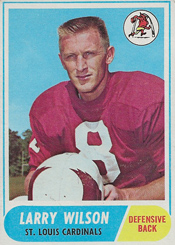
Even when the St. Louis football Cardinals didn’t play well, Larry Wilson could make them winners.

A prime example occurred on Oct. 31, 1966, when the Cardinals played the Chicago Bears at Busch Memorial Stadium in St. Louis.
Cardinals quarterback Charley Johnson completed a mere four passes in the game, Bears running back Gale Sayers threw for nearly as many yards (39) as Johnson did (47) and the Bears totaled 282 yards compared with 166 for the Cardinals, but St. Louis won, 24-17.

The difference was Wilson, the Cardinals’ wiry safety. He intercepted three passes, returning one for a touchdown, setting up another score and preventing the Bears from mounting a late rally.

“If there’s a finer defensive back in pro football, I’d like to see him,” a grateful Charley Johnson told the St. Louis Post-Dispatch. “Larry plays 100 percent all the time and doesn’t know there’s any other way.”

Super safety

Wilson was born and raised in Rigby, Idaho, a small town about 95 miles from Yellowstone National Park. His mother died when he was a boy and his father, a truck driver, continued to care for him.

An accomplished prep athlete, Wilson wanted to play football at Idaho State, but his father convinced him to take a chance at a larger school, Utah, according to the Post-Dispatch.

Wilson played offense and defense at Utah, excelling as a running back and cornerback. At nights, he worked as a watchman at the Salt Lake City zoo.

The Cardinals selected Wilson in the seventh round of the 1960 NFL draft, but he also got an offer from the Buffalo Bills of the fledgling AFL. Wilson was close to signing with the Bills for $10,000, the Post-Dispatch reported, but when they refused his request for an additional $500 bonus, he chose the Cardinals.

Cornerback was Wilson’s initial position with the Cardinals, but he flopped and shifted to safety.

His big break came in 1961 when assistant coach Chuck Drulis designed a defense featuring a safety blitz. Wilson was as adept at pressuring and sacking the quarterback as he was at picking off passes.

After the debut of the safety blitz in the 1961 season opener against the New York Giants, Cardinals defensive back Jimmy Hill told Wilson, “You played a whale of a game. We’re going to call you Wildcat Wilson,” the Post Dispatch reported.

The name stuck. The safety blitz became known as wildcat in the Cardinals’ playbook and Wildcat Wilson was the player who did it best.

According to Bob Broeg of the Post-Dispatch, Wilson said the safety blitz required a player with “the soul of a linebacker” and “the mentality of a mule.”

In his book “Instant Replay,” Green Bay Packers guard Jerry Kramer said, “I honestly think their safety, Larry Wilson, is the finest football player in the NFL, and he fired up their whole team. He blitzed. He shot. He red-dogged. He hurled himself through the air to make tackles. His enthusiasm was infectious.”

Bring on the Bears

In 1966, Wilson was in his prime. A year earlier, he secured his place in NFL lore when he intercepted a pass while both of his fractured hands were in casts.

Wilson had five interceptions in the first seven games of 1966 heading into the Week 8 Monday night matchup against the Bears.

The Bears’ quarterback was Rudy Bukich, who was born and raised in St. Louis.

After the Cardinals went ahead, 7-0, on a three-yard rushing touchdown by rookie Johnny Roland, Wilson intercepted a Bukich sideline lob to Sayers and returned the ball to the Bears’ 18-yard line. Soon after, Roland scored again on another three-yard carry and the Cardinals led, 14-0.

The Cardinals harassed Bukich with a stunting, blitzing defense and he was sacked four times in the first half. He played most of the game with his throwing hand taped after he jammed it in the first quarter, “but refused to use the injury as an alibi” for the passes intercepted by Wilson, the Chicago Tribune reported.

After Wilson’s first interception, Bears assistant coach Luke Johnsos led Bukich to a remote corner of the bench and talked quietly with him. He told Bukich to call audibles when he noticed the Cardinals’ defense shifting, the Tribune reported.

“We knew they’d do a lot stunting with their linemen and blitzing with the linebackers,” Johnsos said.

A one-yard plunge into the end zone by Bukich in the second quarter made the score 14-7 and the Bears got within three, 14-10, with a field goal in the third.

Difference maker

The Cardinals had planned to throw often against the Bears, the Post-Dispatch reported, but changed course because Johnson was misfiring. He said, “I’ve had bad games, but none as bad, so far as mechanically throwing the ball … I just didn’t have control of the ball.”

Early in the fourth quarter, Johnson did get a pass to tight end Jackie Smith, who would have scored, but Smith dropped the ball. The Cardinals settled for a field goal and a 17-10 lead.

The Bears responded with an 80-yard completion from Bukich to Dick Gordon for an apparent touchdown to tie, but the play was nullified by a holding penalty.

Said Bears head coach George Halas, whose club was penalized nine times: “The Cardinals should award the game ball to one of the officials … I am amazed at the bad officiating.”

On the Bears’ next possession, Bukich again looked to Gordon, who ran a down-and-out pattern, but Wilson cut in front of the receiver, intercepted the ball and returned it 29 yards for a touchdown and a 24-10 lead.

Wilson’s scoring play provided the margin of victory. The Bears got within seven, 24-17, when Sayers snared a pass from Bukich and went 80 yards for a touchdown.

According to the Tribune, after making the catch, “Sayers, covered by linebacker Bill Koman in the flat, spun out of Koman’s arms and outdistanced a flock of Cardinals in a 60-yard race for the goal.”

After stopping the Cardinals, the Bears looked to drive for another score, but Wilson ended their hopes with his third interception.

“He’s unreal,” Cardinals kicker Jim Bakken said. “Nobody could hang in the air as he did for that third interception.” Game stats and Video

Wilson finished with a career-high 10 interceptions in 14 games in 1966, helping ensure his eventual election to the Pro Football Hall of Fame.

Read Full Post »

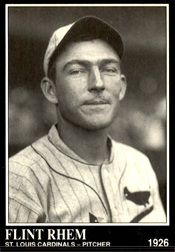
Flint Rhem was a Cardinals pitcher with an addiction to alcohol and a fiction writer’s imagination.

During the National League pennant race in September 1930, Rhem went missing for about 24 hours before his scheduled start for the Cardinals against the Dodgers at Brooklyn.

When he eventually showed up at the team hotel in Manhattan, Rhem told Cardinals manager Gabby Street he’d been kidnapped by two men who didn’t want him to face the Dodgers, held at gunpoint and forced to drink to excess.

Rhem had gone on a binge, all right, but neither the Cardinals nor the newspapers bought his tall tale of a kidnap.

Though he did miss his start against the Dodgers, Rhem recovered to win his next two starts and help the Cardinals clinch the pennant.

Back in business

After splitting a doubleheader with the Braves at Boston on Sept. 14, the 1930 Cardinals were in second place in the National League heading into a three-game series with the first-place Dodgers at Brooklyn.

Rhem was the Cardinals’ choice to start Game 2 of the series. A right-hander, Rhem, 29, had won his last six decisions and was 10-8 for the season.

Rhem’s status as a valued starter represented quite a comeback. A year earlier, Rhem’s career was headed in the wrong direction. Though he was a 20-game winner for the 1926 World Series champion Cardinals and an 11-game winner when the club won another pennant in 1928, Rhem got in trouble with management because of his drinking, the St. Louis Star-Times reported, and was banished to the minors in 1929.

When Gabby Street replaced Bill McKechnie as manager for 1930, Rhem pledged to stay sober and was given a chance for redemption. He appeared to be succeeding until the setback in September.

Flush with cash

Before the Cardinals left Boston and headed to Brooklyn, Rhem won $200 on a horse race, Cardinals players told the Brooklyn Daily Eagle. The windfall might have had something to do with what happened next.

The Cardinals had a day off in New York on Monday, Sept. 15, before opening the series against the Dodgers on Tuesday, Sept. 16.

Rhem failed to show in the Cardinals’ clubhouse at Ebbets Field for the Sept. 16 game, the Star-Times reported. When his room at the Alamac Hotel on Broadway and 71st Street in Manhattan was checked, it was discovered it hadn’t been occupied. No one knew where he went.

The Cardinals won the series opener, 1-0 in 10 innings, behind the shutout pitching of Bill Hallahan and moved into a first-place tie with the Dodgers. Boxscore

That night, Rhem, who was supposed to start the next day, arrived at the hotel “in a condition unbecoming a major-league player,” the St. Louis Post-Dispatch reported.

“He came wandering back, babbling a weird tale of how he had been kidnapped,” the Star-Times reported.

Spinning a yarn

Rhem said he was standing outside the hotel on Sept. 15 when two men approached, thrust revolvers into his ribs and motioned for him to get into a waiting taxi, the Daily Eagle reported.

Rhem said the men told him, “Get in there. We are going to get you drunk so you won’t be able to pitch against our (Dodgers).”

According to the Daily Eagle, Rhem said he was driven to a “log cabin” in the Bronx. The version Rhem told the St. Louis Globe-Democrat was he was taken to a roadhouse.

Rhem said the men forced him to drink straight alcohol all night on Sept. 15 and all day on Sept. 16, the Post-Dispatch reported.

Rhem said the men drove him back to within a few blocks of the hotel when they were satisfied he was too inebriated to pitch the next day.

Asked by the Daily Eagle for his reaction to Rhem’s story, Cardinals executive Branch Rickey replied, “Bunk.”

Forgive us our trespasses

According to the Globe-Democrat, Rhem told manager Gabby Street, “What could I do? They just made me go along with them.”

According to the Star-Times, Street responded, “It isn’t so much that you let me down and let the St. Louis ballclub down, but you let 24 of your pals down. That’s what’s rotten … For heaven’s sake, Flint, straighten up and be a man.”

Admonished, Rhem was sent to bed and the Cardinals instructed the hotel to prohibit telephone calls to and from his room, the Post-Dispatch reported.

Street decided no disciplinary action would be taken because Rhem had stayed out of trouble since Street became manager. “He has been hewing to the line all summer,” Street told the Globe-Democrat.

Red Smith of the Star-Times was less forgiving. He described Rhem as being “coddled and pampered” and concluded, “Rhem, who apparently cares more for the bright lights than he does for the Cardinals’ chances of entering the World Series, will, for the time being, go unpunished for quitting cold on his manager and comrades just when they needed him most.”

Rhem’s antics brought to mind his former Cardinals teammate, Grover Cleveland Alexander, another pitcher whose drinking got him into trouble.

Making amends

With Rhem unavailable, Syl Johnson got the start in the second game of the series on Sept. 17, limited the Dodgers to three runs in seven innings, and enabled the Cardinals to come back for a 5-3 victory. Boxscore

According to the Daily Eagle, Rhem sat glumly in the corner of the locker room and “kept his head down while he dressed.”

The next day, Sept. 18, Rhem pitched batting practice before the series finale, the New York Daily News reported. Behind the pitching of Burleigh Grimes, the Cardinals completed a series sweep with a 4-3 victory and moved two games ahead of the Dodgers with nine to play.

Rhem delivered in the stretch, making two starts against the Phillies and winning both. The wins gave him eight in a row and a record of 12-8.

The Cardinals won seven of their last nine and clinched the pennant. In the World Series against the Athletics, Rhem started Game 2 versus the Athletics and lost.

Rhem pitched in 10 seasons for the Cardinals and was 81-63.

Read Full Post »

After playing a twi-night doubleheader in St. Louis, the Dodgers were grateful to arrive alive for their afternoon game in Chicago the next day.

leo_durocher3On Sept. 15, 1945, a passenger train carrying members of the Dodgers from St. Louis to Chicago collided with a gasoline tanker truck at a road crossing in Manhattan, Ill.
The locomotive engineer was killed in the crash. The train’s fireman was burned, but survived with assistance from the Dodgers’ trainer.

None of the Dodgers were badly injured.

Scheduling conflicts

After playing a doubleheader at Cincinnati on Tuesday, Sept. 11, the Dodgers arrived by train in St. Louis the morning of Wednesday, Sept. 12, and were scheduled to play a doubleheader that evening versus the Cardinals.

The Cardinals won the opener but the second game was called off because of rain. Another doubleheader was scheduled for Thursday, Sept. 13, but rain wiped out both games. The games were rescheduled for Friday, Sept. 14, which was supposed to be a travel day for the Dodgers.

Dodgers manager Leo Durocher requested day games for the Sept. 14 doubleheader so that his club would have time to rest after traveling to Chicago for their day game on Saturday, Sept. 15, against the Cubs, but Cardinals owner Sam Breadon scheduled the Sept. 14 doubleheader to start at 5 p.m.

The Dodgers sent Les Webber, their starting pitcher for the Sept. 15 day game, to Chicago ahead of time.

The weather in St. Louis was chilly and damp on Sept. 14 and the doubleheader attracted a mere 2,103 paid customers, but both games were played. The Dodgers swept. Boxscore and Boxscore

The setbacks dropped the Cardinals 3.5 games behind the league-leading Cubs.

All aboard

After the Sept. 14 doubleheader, the eight starting position players for the Dodgers departed for Chicago on one train and the remainder of the club left on the midnight train, the Wabash Limited.

The same eight position players had started both games of the Sept. 14 doubleheader. They were Eddie Stanky, Goody Rosen, Augie Galan, Dixie Walker, Ed Stevens, Frenchy Bordagaray, Tommy Brown and Mike Sandlock.

Boarding the midnight train were manager Leo Durocher, coaches Chuck Dressen and Red Corriden, traveling secretary Harold Parrott, trainer Harold Wendler, and players Hal Gregg, Cy Buker, Vic Lombardi, Babe Herman, Ralph Branca, Tom Seats, Johnny Peacock, John Dantonio, Clyde King, Eddie Basinski, Art Herring, Curt Davis and Luis Olmo.

The Wabash Limited was a train operated by the Wabash Railroad, a Midwestern rail line popularized by the song, “The Wabash Cannonball.” The train of seven cars and three baggage coaches was listed as passenger train No. 18 on its run from St. Louis to Chicago.

The Dodgers were riding in the rear passenger car. Because of wartime restrictions, sleeper berths were limited, so the Dodgers settled for a day coach. Some of the team members were asleep on the floor of the passenger car when the train approached a diagonal crossing at Route 52, the main business street in the village of Manhattan, about 45 miles southwest of Chicago, at 6:30 a.m. on Sept. 15.

Death on the tracks

A truck, pulling two full gasoline tankers, tried to get through the crossing, but the train hit the rear tanker, causing an explosion, the Decatur (Ill.) Daily Review reported. The locomotive engine became enveloped in fire. Most of the windows on the train were shattered, sending glass flying inside the passenger cars, and flames lapped the open frames.

The train pushed the truck along the track before stopping and the inferno set fire to the office of the nearby Alexander Lumber Company, the Decatur newspaper reported. Two of the lumber company’s warehouses also were destroyed by the blaze, according to the Chicago Tribune.

“Townspeople who saw the collision declared the train was a flaming torch … and the Manhattan fire department had its work cut out for it to keep the flames from destroying the whole of the little town,” The Sporting News reported.

The driver of the train, engineer Charles Tegtmeyer, 69, died instantly of burns while in the cab of the locomotive. Tegtmeyer went to work for the Wabash Railroad as a fireman in 1901 and was promoted to engineer in 1910, the Decatur newspaper reported.

George Ebert, the train’s fireman, who was responsible for maintaining the correct steam pressure in the engine’s boiler, jumped from the locomotive.

Dodgers trainer Harold Wendler “saw the fireman lying outside on the embankment, his blue overalls smoldering,” The Sporting News reported.

According to the Decatur newspaper, Dodgers team members helped Ebert out of his burning clothes.

Wendler administered first aid to Ebert until an ambulance arrived and took him to a hospital about 10 miles away in Joliet, Ill.

The truck driver, Herman Cherry, was picked up along the road and taken to a Joliet hospital by a passing motorist, the Decatur newspaper reported.

Show must go on

According to The Sporting News, Leo Durocher kept the Dodgers calm in the moments immediately following the collision. “Don’t run, fellows,” Durocher said. “Take it easy and go out by the rear door.”

Six passengers on the train were injured slightly by broken glass, the Decatur newspaper reported. According to The Sporting News, Dodgers player Luis Olmo was cut on his right arm by flying glass. Coach Chuck Dressen injured a knee.

The train never left the track, the Decatur newspaper reported. After the fire was extinguished, the entire train was taken to Chicago.

The Dodgers played their game that afternoon and were defeated, 7-6, by the Cubs. Boxscore

Five players who were on the damaged train played in the game: pinch-hitters Babe Herman and Johnny Peacock, and relief pitchers Tom Seats, Clyde King and Cy Buker.

Read Full Post »

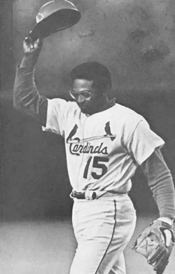
Cardinals slugger Dick Allen gave a grand goodbye to Connie Mack Stadium.

On Sept. 8, 1970, in a game between the Cardinals and Phillies, Allen hit a home run in his final at-bat at Connie Mack Stadium, his baseball home for his first seven seasons in the majors.

Allen wasn’t expected to play in the game because he hadn’t fully recovered from a hamstring injury, but he didn’t want to miss the chance to appear a final time in the ballpark where he performed for the Phillies from 1963-69.

Rising to the occasion, Allen went out with flair.

Old venue

The Tuesday night game was the Cardinals’ last in Philadelphia for 1970 and their last in Connie Mack Stadium. The ballpark was named Shibe Park when it opened in 1909 as the home of the Athletics. The Phillies moved there from Baker Bowl during the 1938 season. Shibe Park was renamed Connie Mack Stadium in 1953.

The Phillies were moving to newly constructed Veterans Stadium in 1971.

Allen, acquired by the Cardinals in October 1969, was providing the run production the club sought until he injured a hamstring in his right leg during a steal of second base on Aug. 14, 1970. Boxscore

At the time of the injury, Allen, a right-handed batter, was on pace to hit 45 home runs for the season, The Sporting News calculated. The Cardinals’ franchise record was 43 by Johnny Mize in 1940. The club mark for a right-handed batter was 42 by Rogers Hornsby in 1922.

Allen sat out about a week, made two pinch-hitting appearances, and went back on the shelf.

Unexpected visitor

Allen hadn’t started a game since the day he was injured, so it was a surprise when he was listed as cleanup batter and first baseman in the lineup card Cardinals manager Red Schoendienst submitted before the start of the series finale at Philadelphia.

“Allen didn’t get to the park until 7 o’clock and how his name got onto Red Schoendienst’s lineup card is something of a mystery,” Bill Conlin reported in the Philadelphia Daily News.

Years later, in the book, “Redbirds: A Century of Cardinals Baseball,” Bob Broeg revealed “a wobbly Allen” was “full of giggle water” when he insisted on playing.

“His wife even phoned Red Schoendienst and asked the manager not to play him,” Broeg wrote. “Red concurred, but Richie was so persuasive that Red shrugged his shoulders and put him in the lineup.”

According to the Philadelphia Inquirer, “Allen called Schoendienst before the game and asked to go back in the lineup.”

Phillies manager Frank Lucchesi told the Philadelphia Daily News, “I was quite frankly surprised to see his name on the lineup card. We were under the impression he was too hurt to play.”

Delightful drama 

Before a gathering of 3,995 spectators, the game matched starting pitchers Steve Carlton of the Cardinals and Rick Wise of the Phillies. Two years later, they would be traded for one another.

In his first three plate appearances, Allen walked, singled and struck out.

With the Cardinals ahead, 3-2, Allen batted with two outs and none on in the eighth. Barring a Phillies comeback, it figured to be his last at-bat at Connie Mack Stadium. In the Phillies’ bullpen, pitcher Woodie Fryman said to coach Doc Edwards, “You better believe he wants to hit one out.”

According to the Philadelphia Daily News, Fryman turned to reliever Ken Reynolds and said, “Don’t be surprised if he does it right here.”

Allen got a pitch to his liking. “It was a slider out over the plate that didn’t do anything,” Wise told the Philadelphia Inquirer.

When Allen hit the ball, Bill Conlin wrote in the Philadelphia Daily News, “it started out like a vicious zapper to left-center. Then it appeared the ball would clatter off the sign that advertises dog food. Somehow, though, the ball never changed its flat, whistling trajectory until it thudded off a fan in the lower deck.”

Said Edwards: “It hit some kid in the chest and they carried him out. That ball never was more than 10 feet high the whole 400 feet.”

Allen limped around the bases, “blew a double kiss to some fans behind the dugout and kept going right down the dugout steps,” Conlin observed.

Joe Hague replaced Allen at first base in the bottom of the eighth.

The Cardinals went on to win, 6-3, and when reporters went into the clubhouse, Allen was gone. Boxscore

“He’ll probably be sore tomorrow,” Schoendienst said, “but he wanted to give it a try.”

Power supply

The next night, at Pittsburgh, Allen was in the starting lineup against the Pirates. In the fifth inning, his right leg tightened when he swung and missed at a pitch. The Cardinals said he suffered a muscle cramp. Vic Davalillo finished the at-bat for Allen. Boxscore

Allen appeared as a pinch-hitter on Sept. 10 and never played in another game for the Cardinals. His totals for the 1970 season: 34 home runs and 101 RBI in 122 games. His on-base percentage was .377.

The 34 home runs were the most by a Cardinal since Stan Musial hit 35 in 1954.

Allen was consistent, hitting 17 home runs for the Cardinals at home and 17 on the road. He hit more home runs (six) versus the Phillies than he did against any other foe in 1970.

The Cardinals traded Allen to the Dodgers after the season.

In his book, “Stranger to the Game,” Cardinals pitcher Bob Gibson said of Allen, “He wasn’t your all-American boy, by any means, and he did some things, mainly drinking, that people frowned on, but I maintain that if he had been white, he would have been considered merely a free spirit. As a black man who did as he pleased and guarded his privacy, he was instead regarded as a troublemaker.

“As a teammate, I can honestly say that I was crazy about the guy,” Gibson said. “He swung that big, old 42-ounce bat like nobody I’d ever played with, and when he lit into a fastball, (stuff) happened. That’s all I cared about.”

Read Full Post »

On June 21, 1991, about a month after Rickey Henderson of the Athletics set the record for most career stolen bases in the major leagues, I got to interview the man who had held the mark, Lou Brock.

In downtown Cincinnati to promote an Upper Deck Heroes of Baseball old-timer’s game at Riverfront Stadium, Brock met at the Hyatt Regency hotel with my colleague, Geoff Hobson, and me for a wide-ranging interview.

A Baseball Hall of Fame inductee who achieved 3,023 hits and 938 stolen bases during his career with the Cubs and Cardinals, Brock was thoughtful, pleasant and generous with his time.

Brock was present when Henderson broke the stolen base record with his 939th steal on May 1, 1991, at Oakland against the Yankees.

Here are excerpts from our tape-recorded interview a few weeks later:

Q.: It was a curious moment when Henderson broke your record. He raised the base above his head and was kind of defiant when he said, “Lou Brock is the symbol of great base stealing, but today I am the greatest of all time.” Do you think that was a proper way to accept the record?

Brock: “I went to him the night before and asked if he wanted help writing something to say. He said yes. I told him if I wrote something down he’d have to read it at the microphone, but he wanted to do it from the heart.

“Rickey wasn’t prepared. He didn’t have a sounding board. What was shocking to me was how exposed he was while going for a major record. You have to have somebody helping you screen the attention.”

Q.: When you were chasing Ty Cobb, did you have someone to help you?

Brock: “When I was going for records, most of the guys I chased were gone. So I was just going after paper. Rickey not only came face to face with history, but I was there physically, and that probably added to the pressure.”

Q,: What else can you tell us about your experience with Rickey Henderson?

Brock: “We ate dinner together the night before and we played cards together the night before that. Rickey was like a son to me. He and my son, Lou Brock Jr., got along well. They talked the same language. The inning before Rickey broke the record, he and I were talking underneath the stands. I told him he had to take control of the game. Let them react to you.”

Q.: Do you see a difference in base stealing today versus when you played?

Brock: Guys like myself, Maury Wills, Luis Aparicio were pioneers, making the basepaths super highways. Teams watered the infield to stop you. You’d have to run on the edge of the infield grass because you knew the ground there was firm. Now, there’s no highway patrol to tell you how fast to go and no citizen’s arrest if you’re going too fast.”

Q.: Do you think you are appreciated as an all-round player, not just a base stealer?

Brock: “Baseball has become highly specialized. They market you in slugging or fielding, and the total player can get lost. My signature is all over stolen base records, but my mark is on other places as well.”

Q.: What was it like when you were with the Cubs before going to the Cardinals?

Brock: “I was a kid with two left feet then. I hadn’t done anything spectacular. I was waiting to hear from Cubs management that I was being sent back to the minor leagues.

“It was frustrating. I was one of those guys who was a shooting star in the organization and went straight up to the top. I came out of Class C baseball to the big leagues in the same year. It was a curse and a blessing. The blessing was I was in the big leagues. The curse was I had to learn to play baseball against the best. You begin to feel you don’t belong.”

Q.: Did you welcome the trade to the Cardinals in June 1964?

Brock: “My last hit for the Cubs was a two-run homer to win a ballgame against the Pirates. The next day I was traded. I got the call from the Cubs general manager, John Holland. He said, ‘Your contract is being transferred.’ Transferred? What the hell is transferred?

“When he told me I had been traded to St. Louis, and who I had been traded for, Ernie Broglio, Bobby Shantz, I thought, ‘Wow, I have value. I really do belong here.’ You begin to take a different view of yourself. It can change all in that one moment.”

Q.: Do you think the Cubs would have won a pennant if you stayed?

Brock: “They probably would have won in 1967, 1968, 1969 and maybe 1970 if they had a leadoff man. The leadoff man is very important because he sets the table for how the game will be played. You look at all your great teams. They have a leadoff guy who can set the table and force the other team to beat what you put on it.”

Q.: One of your teammates on those 1960s Cardinals was Curt Flood. Do you think he’ll ever get his due for what he did to challenge the reserve clause and open the door to free agency for players?

Brock: “He was a pioneer who ended up with arrows in his back because of the stance he took in regards to the system. Curt wanted us to look at baseball hard, to dust if off, polish it up.”

Q,: You rose to national prominence in the 1967 World Series against the Red Sox when you hit .414 and set a World Series record for steals, with seven. What can you tell us about that?

Brock: “Dick Williams was the manager of those 1967 Red Sox. When I was with the Cubs in 1963, we played the Red Sox in a spring training game in Arizona. I got the sign to steal third. Dick Williams was the third baseman. I went diving into third head-first and Dick blocked me and stepped on my hand. I couldn’t get to the base. He tagged me out and said, ‘Kid, what do you think this is, the seventh game of the World Series?’

“So in the seventh game of the 1967 World Series, I’m on second base, and I look into the Red Sox dugout and see Dick Williams and I say to myself, ‘This is too good to be true.’ So I steal third. It couldn’t be more appropriate.”

Q.: You played in three World Series with the 1960s Cardinals. What was it like being on those teams?

Brock: “We had practical jokers on our team. Tim McCarver was one of the best. Bob Gibson was one of the best. Roger Maris was quiet, but he was one of them. I was surprised he fit in that well with that group of guys. They nailed my shoes to the floor a couple of times.

“We were pretty much like the Gashouse Gang. Nobody knew it, but we were just that wild. Maris joined right in.”

Q.: How is it those 1960s Cardinals teams had so many leaders among the players?

Brock: “I call them fighters. One of the differences between the Cubs and the Cards then was attitude.

“With the Cubs, we’d lose and the manager and coaches would say, ‘Sit at your locker and think about the game. Think about how you lost.’

“With the Cards, we lost the first game I was in a St. Louis uniform. I was expecting everyone to sit down and put their heads in their lockers. Then I heard the manager and coaches say, ‘Go get your rest. Those guys got lucky today. We’re going to kick their butts tomorrow. Somebody on that other team is going to pay for it tomorrow.’

“That whole attitude was right down my alley.”

Read Full Post »

« Newer Posts - Older Posts »