Disheartened when the Cardinals benched him indefinitely, Stan Musial was willing to accept a trade to the Pirates.
 In 1960, Cardinals manager Solly Hemus took Musial out of the starting lineup and relegated him to a pinch-hitting role. Hemus made the move, with the approval of the front office, because Musial wasn’t hitting for average and Hemus perceived Musial’s fielding as more a liability than an asset.
A seven-time National League batting champion, Musial, 39, was stunned and saddened by the Cardinals’ determination he was washed up.
If the Cardinals couldn’t use him, the first-place Pirates were willing to take him and play him at first base. Asked whether he’d agree to a trade to the Pirates and a chance to finish his playing career near his hometown of Donora, Pa., Musial replied, “Yes.”
In his autobiography, “Stan Musial: The Man’s Own Story,” Musial said, “Few realize how close I came to finishing my career with Pittsburgh.”
Fading star
After batting .255 in 1959, the first season he didn’t top .300, Musial faithfully followed a physical fitness and diet program during the winter and reported to 1960 spring training camp in shape.
The Cardinals opened the 1960 season with Musial at first and with an outfield of Leon Wagner in left, Bill White in center and Joe Cunningham in right.
Musial hit .300 in 13 games in April, but slumped in May. As Musial’s batting average dipped, Hemus utilized him sporadically and erratically. “I know he had lost confidence in me,” Musial said in his autobiography.
The 1960 Cardinals lost 16 of their first 26 games and were a half-game out of last place after play on May 15. Hemus experimented with various lineups in an effort to jolt the Cardinals. “If ever a manager panicked, I’m afraid Hemus did,” Musial said in his book.
On May 22, 1960, Bob Broeg of the St. Louis Post-Dispatch and Bob Burnes of the St. Louis Globe-Democrat came out with columns criticizing the Cardinals for unfair treatment of Musial.
Broeg wrote, “If they’re trying to embarrass a man who never embarrassed them, either by word or deed, the Cardinals are succeeding.”
Burnes wrote, “What concerns us is the way an extraordinary performer and complete team man is being pushed around. Certainly his years of service to the Cardinals entitle him to more than that. What we are wondering is whether the Cardinals are trying to embarrass Musial into retiring.”
Reserve role
A few days later, Musial’s batting average for the season was at .250 when he was called to a meeting at the home of Cardinals owner Gussie Busch. Joining them were club executive Dick Meyer, general manager Bing Devine and Hemus. They informed Musial he was being benched because Hemus wanted a younger lineup.
Musial told them he would do what the club wanted. In his book, Musial said he was “hurt and disappointed” by the decision.
On May 27, 1960, Hemus started Curt Flood in center field in place of Bill White and moved White to first base in place of Musial.
Musial “has been benched indefinitely,” the Post-Dispatch reported.
“Solly and I agreed that Solly ought to play his best lineup,” Devine said. “We talked it over with Musial and he went along with the plan.”
Musial, who hit .204 in May, told the Associated Press, “We haven’t been winning and they want to try that new lineup for a while. Anything they want to do is OK with me. We’ll see what happens. I think I’ll be back in the lineup soon.”
Hemus had other ideas.
Pirates treasure
Musial was out of the starting lineup from May 27 through June 23. He appeared as a pinch-hitter nine times in that stretch and had one hit, a double versus Warren Spahn, and his batting average sank to .238.
In his autobiography, Musial said he was planning to quit during the all-star break in July if he wasn’t back in the starting lineup by then.
When the Pirates came to St. Louis for a series in June, their manager, Danny Murtaugh, asked Broeg what was wrong with Musial. Broeg told him all Musial needed was a chance to play and to “go out with a winner.” Murtaugh asked whether Musial would accept a trade to the Pirates. Broeg approached Musial, who responded, “Yes.” Broeg relayed the answer to Murtaugh, who said he would urge general manager Joe Brown to make a deal.
“Musial could mean the difference for us in the race,’ Murtaugh told Broeg.
In a June 14, 1960, column in the Post-Dispatch, Broeg wrote Musial had been “surprised and even a bit stunned” by the Cardinals’ decision to bench him and suggested Musial would be a good fit for the Pirates.
“Although he has been uncomplaining, it’s apparent he was hurt,” Broeg told readers. “Hurt enough, you ask, to go to Pittsburgh if he had a chance to play rather than sit on the bench, a chance perhaps to achieve the thrill of one more World Series? Yes.”
The Pirates wanted Musial, but couldn’t afford to offer much, Brown said to Broeg. Another option would be for Musial to ask the Cardinals for his release, leaving him free to sign with the Pirates. Either way, Brown said, it would put Bing Devine in a bind, and he didn’t want to do that to his colleague.
“As much as we’d like to have Musial,” Brown told Broeg, “I just can’t do it to Bing Devine. Sure, if Musial were released, we would grab him in a minute … and to offer too little would be taking advantage of the public sentiment, which is sure to be strongly behind Musial, not the ball club. Devine would be on a spot where i don’t care to put him.”
Still The Man
When Bob Nieman got injured and newly acquired Walt Moryn struggled to hit, Hemus put Musial back into the lineup as the left fielder on June 24, 1960.
Musial was 1-for-8 in his first two games back and his batting average fell to .229, but then he went on a tear. Musial produced 11 hits in 19 at-bats over his next five games, raising his batting mark to .281. He continued his blistering pace and got his batting average to .300 at the all-star break.
“He’s been amazing,” Cardinals third baseman Ken Boyer told the Globe-Democrat. “He’s delivering the big hits.”
Said Hemus: “Stan is popping the ball again.”
National League all-star manager Walter Alston of the Dodgers chose Musial as an all-star reserve.
On the field at Kansas City before the All-Star Game, Musial was approached by Red Sox counterpart Ted Williams, 41, who was in his last season as a player and batting .341. According to Bob Burnes, the conversation went like this:
Williams roared: “Hey, man, get on the train.”
Musial: “What train is it?”
Williams: “The one back to the minors. Us old guys are through. We’ve had it.”
The two laughed and Williams said, “What in the world got into you?”
Musial: “Just pecking away, just pecking away. I lucked a few, thumbed a few and then I got a couple of good ones.”
Williams: “Oh, hell, I wasn’t talking about your hitting. I wasn’t worried about that. What I’m talking about is that base you stole the other day.”
Musial: “Say, that was something, wasn’t it?”
The stolen base on July 8 was Musial’s first since 1957.
Musial hit .352 with 21 RBI in 21 games for the Cardinals in July. He hit .253 in August and .226 in September, finishing the season at .275 with 17 home runs and 63 RBI. He hit .338 with runners in scoring position and was 5-for-8 with the bases loaded.
“I look back on 1960 as a season of frustration and vindication, of sadness and success,” Musial said in his book. “It was the most emotional season I ever experienced.”
The Pirates went on to win the National League pennant, their first since 1927, and prevailed against the Yankees in the World Series. The Cardinals challenged the Pirates for a while and placed third at 86-69.
“I missed a chance to play in another World Series,” Musial said, “but I’m glad now I didn’t ask for my release.”
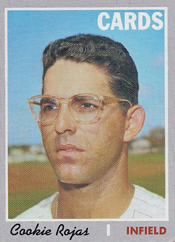 On June 13, 1970, the Cardinals traded Rojas to the Royals for outfielder Fred Rico. The deal brought an unsatisfactory end to an unexpectedly short stint with the Cardinals for Rojas.
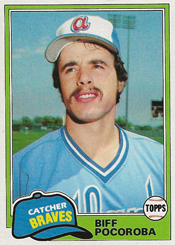 A switch-hitting catcher, Pocoroba played 10 years in the major leagues, all with the Braves.
 A right-handed pitcher, Locke played in nine seasons in the majors leagues, primarily with the Indians, Phillies and Angels.
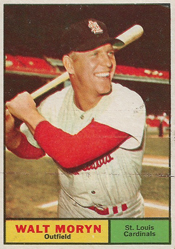 On June 15, 1960, the Cardinals acquired Moryn from the Cubs for utility player Jim McKnight and $25,000.
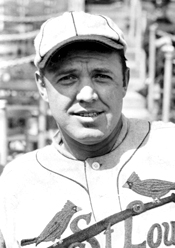 On June 16, 1930, the Cardinals acquired Burleigh Grimes from the Braves for pitchers Bill Sherdel and
 RetroSimba