Feeds:
Posts
Comments

Archive for the ‘Hitters’ Category

The Astrodome opened in Houston in 1965 and was billed “the eighth wonder of the world.” To the Cardinals, there was nothing wonderful about it.

The Cardinals lost the first five games they played at the Astrodome, scoring a total of eight runs. They were swept by the Astros in a three-game series in May, losing by scores of 6-1, 3-2 and 4-3, and were swept again, in a two-game series, in July, losing by scores of 2-0 and 3-2.

When the Cardinals returned to Houston Sept. 30 to close the 1965 regular season with a four-game series against the Astros, they were in seventh place in the National League at 77-80 and the Astros were ninth at 64-94.

Based on how the Cardinals produced in their first two trips to the Astrodome _ and with regulars such as third baseman Ken Boyer, first baseman Bill White and shortstop Dick Groat out of the lineup as manager Red Schoendienst took a look at younger players _ there was no way to anticipate the breakout performance St. Louis was about to unleash.

The Cardinals produced 19 RBI in defeating Houston, 19-8, before a Sept. 30 Thursday night gathering of 7,494.

The 19 RBI are the third-highest total in Cardinals history. Others that surpassed or matched it:

_ 25 RBI for St. Louis in the Cardinals’ 28-6 victory over the Phillies on July 6, 1929. Boxscore

_ 20 RBI for St. Louis in the Cardinals’ 21-5 victory over the Giants on Aug. 2, 1948. Boxscore

_ 19 RBI for St. Louis in the Cardinals’ 20-2 victory over the Dodgers on July 24, 1937. Boxscore

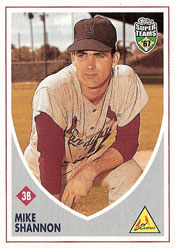
Against Houston, the Cardinals started a lineup that included right fielder Mike Shannon batting cleanup, rookie George Kernek (.143 batting average) playing first base, and Jerry Buchek (.227) at shortstop, Phil Gagliano (.241) at third base and Dal Maxvill (.135) at second base.

All nine Cardinals starters produced at least one RBI in the game. Starting pitcher Nelson Briles had two. His two-run single highlighted a six-run first that chased Astros starter Jim Ray.

The Cardinals scored in every inning except the second and the third. Buchek, batting seventh, had a game-high five RBI. He had a two-run home run against Dave Giusti in the fifth, a RBI-groundout in the seventh and a two-run double in the ninth.

Gagliano and Maxvill each had three RBI. Left fielder Lou Brock and center fielder Curt Flood had four hits apiece. Brock singled twice in the first.

The Cardinals led 16-2 in the seventh. When the game finished in a relatively snappy 2:49, the Cardinals had 19 runs on 19 hits and seven walks. Boxscore

Part Three: Forsch vs. Forsch: Bob had edge in brotherly matchup

Part One: Cardinals first visit to Houston

Read Full Post »

When the Houston Colt .45s began play in the National League in 1962, one of the most anticipated homestands was the one with the Cardinals.

Houston had been a Cardinals minor-league affiliate from 1921-35 and from 1946-58. Many in the region were Cardinals fans.

The 1962 Cardinals had several close connections to Houston. Cardinals manager Johnny Keane and pitching coach Howie Pollet were Houston residents. Keane had played for Houston (1934-37) and also had managed the club (1946-48). Pollet had pitched for Houston (1939-41).

Also, Cardinals coach Harry Walker had been the last Houston manager (1956-58) while it was a Cardinals affiliate. Top 1962 Cardinals players, such as third baseman Ken Boyer and pitcher Larry Jackson, had played for the Houston farm club.

St. Louis made its first visit to Houston for the second homestand in Colt .45s history (the franchise changed its name to Astros in 1965). The Cardinals and Colt .45s were scheduled for three midweek night games April 24-26.

The Cardinals won one, lost one and tied another. Two games each were decided by a run and the other ended in a tie after 17 innings.

According to Clark Nealon of the Houston Post in a story for The Sporting News, Houston “waited years for the first National League series with the St. Louis Cardinals and when it came it was tremendous.”

Houston 4, Cardinals 3, April 24, 1962

In pre-game ceremonies, The Sporting News reported, each member of the Cardinals was “introduced individually to ringing applause.”

At the end, the cheers were for Houston starter Hal Woodeshick, who pitched a six-hitter.

Houston left fielder Don Taussig, who had played for the Cardinals in 1961, hit a solo home run off Jackson in the sixth.

With one on and two outs in the ninth, Bill White ripped a sinking liner that Houston right fielder Johnny Weekly snared at his shoetops.

Attendance was 19,335 _ impressive for a weeknight at a ballpark that seated about 25,000. Boxscore

Cardinals 5, Houston 5, 17 innings, April 25, 1962

In the afternoon, Keane was honored at a Chamber of Commerce luncheon and presented with a replica of a Colt .45 gun. He told the audience, “We’re a lot better club than we showed you on April 24.”

The Cardinals’ manager again was honored in ceremonies before the game. Among his gifts was a king-sized pass to “the first World Series game in Houston.” (It would be 2005 before Houston made its first World Series appearance.)

The game began at 8:02 p.m. It was halted at 1:15 a.m. because of a local curfew in Houston that forbid starting an inning after 12:50 a.m. The game was replayed on another date but all the statistics counted.

Boyer’s RBI-single to left in the ninth off Turk Farrell scored Julian Javier from second, tying the score 5-5.

Ed Bauta pitched eight scoreless innings for the Cardinals after entering in the 10th.

The Cardinals had runners on first and second with no outs in the top of the 17th, but Doug Clemens struck out and Red Schoendienst hit into a double play.

Six Houston pitchers struck out 18 Cardinals, including Boyer three times. Houston left 16 runners on base and the Cardinals stranded 15. Boxscore

Cardinals 3, Houston 2, April 26, 1962

The Cardinals were spared embarrassment by salvaging a victory in the series. Bob Gibson pitched a two-hitter for his first win of the season and Stan Musial drove in the deciding run with a two-out single in the eighth, scoring Curt Flood from third base. Boxscore

Part Two: Cardinals broke Astrodome hex with 19 RBI in one game

Part Three: Forsch vs. Forsch: Bob had edge in brotherly matchup

Read Full Post »

Matty Alou, one of baseball’s best hitters in the 1960s and 1970s, had one of the most productive seasons of his 15-year big-league career with the Cardinals.

Alou is best remembered for his years with his first major-league team, the Giants, and his time with the Pirates, with whom he won a National League batting crown, hitting .342 in 1966.

Often overlooked is Alou’s splendid 1971 season with the Cardinals. Alou had career highs of 74 RBI and seven home runs with the 1971 Cardinals and hit .315 in 149 games.

A left-handed batter, Alou was adept at hitting the ball to all fields.

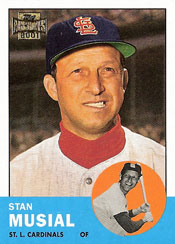
“Matty and Stan Musial handle the bat better than anyone I’ve ever seen,” Cardinals hitting coach Ken Boyer told The Sporting News in August 1971. “Like Stan, Matty has a great level swing, and, like Stan, he can handle just about any kind of pitch.

“Alou uses bats of at least 10 different weights,” Boyer said. “He studies the pitchers and the defense as well as anybody because he’s always looking for some way to beat you.”

The Cardinals acquired Alou and pitcher George Brunet from the Pirates for pitcher Nelson Briles and outfielder Vic Davalillo on Jan. 29, 1971.

In announcing the deal, Cardinals general manager Bing Devine said he and manager Red Schoendienst agreed Alou, 33, would bat leadoff and play center field. Left fielder Lou Brock would move from the leadoff spot to bat No. 3 in the order and second baseman Ted Sizemore, acquired from the Dodgers, would bat between Alou and Brock.

“Guys like Alou and Sizemore make things happen,” Devine said. “They ought to help make the Cardinals a much more exciting team.”

Alou said his goal was to hit .335 for the 1971 Cardinals. “I like to hit in St. Louis. It’s a good park for hitters. The ball comes off the AstroTurf good and the ground in front of the plate is hard.”

The Cardinals batted Alou, Sizemore and Brock in the top three spots of the order for the first 14 games of the 1971 season and went 8-6 before Schoendienst returned Brock to the leadoff spot and moved Alou to the No. 2 position.

Alou was a free swinger and Brock’s ability to steal bases was compromised when Alou would foul off or hit, rather than take, pitches. It was when Schoendienst moved Sizemore to No. 2 in the batting order and Alou to No. 3 that the Cardinals’ offense clicked. Asked to explain why he had so many more RBI with the Cardinals than he had with the Pirates, Alou said, “It makes a lot of difference hitting behind Lou Brock instead of (Pirates catcher) Jerry May and the pitcher.”

Alou hit .332 in 78 games from the No. 2 spot and .294 in 46 games from the No. 3 position.

Though he began the 1971 season as St. Louis’ center fielder, Alou moved to right field after Jose Cardenal was traded to the Brewers, and took over first base for Joe Hague when the Cardinals inserted Luis Melendez as the right fielder.

Alou hit .313 in 73 games as the center fielder, .364 in 20 games as the right fielder and .305 in 58 games as the first baseman.

In 1972, Alou played first base and right field for the Cardinals and hit .314 in 108 games, but the Cardinals wanted to move Joe Torre from third base to first base. Out of contention for a postseason spot, the Cardinals traded Alou to the Athletics on Aug. 27, 1972, for outfielder Bill Voss and a minor leaguer.

Speaking to reporters about how he enjoyed his time with the Cardinals, Alou called Schoendienst the “best man I ever played for. He kept everybody loose.”

Alou was reacquired by the Cardinals for the stretch run on Sept. 6, 1973, in a cash deal with the Yankees. He hit .273 in 11 games. After the season, the Cardinals sold his contract to the Padres.

Alou’s career statistics as a Cardinal: .314 batting average, 322 hits in 268 games, 30 stolen bases.

Matty Alou and his brothers Felipe and Jesus all were big-league outfielders. Asked in October 1971 who was the best ballplayer of the three, Felipe told The Sporting News, “I have the most ability. Matty is the best hitter. He has more guts and confidence than Jesus (Alou) and I put together. But Jesus is the most professional of all three.”

Read Full Post »

(Updated May 30, 2020)

Among the factors that make Game 6 of the 2011 World Series an instant classic is the extreme rarity of the type of comeback mounted by the Cardinals.

The Cardinals twice were a strike away from elimination but rallied to score twice in the ninth to tie and twice in the 10th to tie before winning, 10-9, in the 11th on a home run by David Freese. Boxscore

Until Game 6 against the Rangers, only twice before had the Cardinals rallied from two-run deficits in the ninth and 10th innings to win games, according to the Elias Sports Bureau. Both of those occurred in regular-season games.

Here’s a look at both:

CARDINALS vs. PADRES

On May 30, 1982, at St. Louis, the first-place Cardinals scored three in the ninth to tie the score and three in the 10th to beat the Padres, 6-5.

With the Padres ahead, 3-0, the Cardinals’ Keith Hernandez and George Hendrick each singled off Gary Lucas in the bottom of the ninth, and Lonnie Smith doubled, scoring Hernandez.

On a groundout by Mike Ramsey, Hendrick held third and Smith held second. Julio Gonzalez followed with a grounder to shortstop Mario Ramirez, who flipped the ball to third baseman Luis Salazar. As Hendrick broke for home plate, Smith got caught in a rundown and collided with Salazar in the basepath. Smith appeared to have been tagged out, the St. Louis Post-Dispatch reported, but Salazar was called for obstruction by umpire Joe West. Smith was awarded third base, Gonzalez took second and Hendrick scored, cutting the Padres’ lead to 3-2.

“If we execute the play right, then we’re OK,” Padres manager Dick Williams told United Press International. “It was a routine rundown play, but we didn’t execute it.”

With first base open, Lucas intentionally walked David Green, loading the bases.

Tommy Herr, batting for pitcher Doug Bair, hit a sacrifice fly to left, scoring Smith with the tying run. Ozzie Smith grounded out, ending the inning.

In the 10th, the Cardinals turned to closer Bruce Sutter, who gave up two runs on a pair of singles, a double and a walk.

After Lucas retired the first two Cardinals batters in the 10th, Hendrick singled, Lonnie Smith drove him in with a double and Ramsey singled in Smith with the tying run.

Rattled, Lucas hit Gonzalez with a pitch and was relieved by rookie Floyd Chiffer. Cardinals manager Whitey Herzog countered by sending Dane Iorg to bat for Green.

“What I didn’t want to have happen eventually did,” Williams said to the Associated Press. “… I didn’t want to face Iorg with a right-handed pitcher.”

Said Iorg: “I was calm. I was probably the calmest player out there.”

With the count 1-and-1, Chiffer delivered a high, inside pitch. Iorg swung, breaking his bat, and hit a soft liner to center for a single, scoring Ramsey from second and giving the Cardinals a 6-5 victory. Boxscore

“As long as I have a line drive stroke, it doesn’t make any difference where it hits my bat,” Iorg said.

CARDINALS vs. PHILLIES

On June 6, 1990, at St. Louis, a struggling Cardinals team scored twice in the ninth to tie and three times in the 10th to beat the Phillies, 12-11.

The Phillies went ahead, 9-7, in the top of the ninth on a two-run home run by Ron Jones. “As the ball landed in the right field seats, lightning cracked over the rim of Busch Stadium,” the Philadelphia Daily News reported, “and thunder rumbled and a full moon broke through the dark and stormy skies.”

In the bottom half of the ninth, the Cardinals had Dave Collins on second with two outs when Phillies manager Nick Leyva replaced Pat Combs with closer Roger McDowell.

The move backfired. Ozzie Smith singled, scoring Collins. Smith stole second, Willie McGee walked and Pedro Guerrero drove in Smith with a single, tying the score at 9-9. After a walk to Terry Pendleton, Todd Zeile grounded out, forcing extra innings.

In the 10th, the Cardinals turned to Frank DiPino, who gave up a two-out, two-run single to Sil Campusano.

Undaunted, the Cardinals began the bottom of the 10th with singles by Milt Thompson and Jose Oquendo against McDowell. Denny Walling singled, scoring Thompson.

After Cardinals manager Whitey Herzog sent in Rex Hudler to run for Oquendo, Vince Coleman executed a sacrifice bunt, advancing Hudler to third and Walling to second. Leyva ordered McDowell to walk Ozzie Smith, loading the bases.

With Willie McGee up next, Leyva replaced McDowell with Terry Mulholland and positioned his outfielders to play shallow. McGee responded with a double over the head of center fielder Len Dykstra, scoring Hudler and Walling for a 12-11 Cardinals victory. Boxscore

“That might be the screwiest game I’ve ever seen,” Herzog told the Post-Dispatch.

Said McGee: “The only better game I’ve played in was against Chicago in 1984 when Ryne Sandberg hit two home runs off Bruce Sutter (and McGee hit for the cycle).”

DiPino, amazed he earned the win, said, “I almost fainted in the dugout.”

Read Full Post »

(Updated Oct. 28, 2017)

In a 2011 World Series jammed with dramatic moments, the Cardinals’ championship was defined, in large part, by the home run.

_ Albert Pujols hit three home runs in Game 3.

_ David Freese hit a walkoff 11th-inning home run in Game 6.

_ Allen Craig hit three home runs, including a go-ahead shot in Game 7.

_ The eight home runs hit by the 2011 Cardinals established the franchise record for most in a World Series. The previous mark was set in 1968 when the Cardinals hit seven home runs in a World Series against the Tigers.

_ The nine home runs allowed by the 2011 Cardinals are tied for the second-most in the franchise’s World Series history. Only the Yankees, with 10 in 1964, hit more home runs against the Cardinals in a World Series.

_ The 17 total home runs by the Cardinals and Rangers are the most in a World Series involving the Cardinals. The previous high was 15 total home runs _ in the 1964 World Series between the Cardinals and the Yankees and again in the 1968 World Series between the Cardinals and the Tigers.

Here are the home run totals in World Series involving the Cardinals:

YEAR…….CARDINALS HRS…….OPPONENT HRS…….TOTAL HRS

1926………4………………………….4…………………………8

1928………1………………………….9…………………………10

1930……..2………………………….6………………………….8

1931……..2…………………………..3…………………………5

1934……..2………………………….2………………………….4

1942……..2………………………….3………………………….5

1943……..2………………………….2………………………….4

1944……..3………………………….1………………………….4

1946……..1………………………….4………………………….5

1964……..5………………………….10……………………….15

1967……..5…………………………8………………………….13

1968……..7…………………………8………………………….15

1982……..4…………………………5………………………….9

1985……..2…………………………2………………………….4

1987……..2…………………………7………………………….9

2004…….2…………………………4…………………………..6

2006…….2…………………………4…………………………..6

2011……..8…………………………9………………………….17

2013…….2………………………….4………………………….6

Read Full Post »

(Updated Dec. 21, 2024)

Lost amid the historical splendor of Albert Pujols’ performance in Game 3 of the 2011 World Series was the achievement of Yadier Molina.

Though it paled in comparison to the hitting of Pujols (the first Cardinals player with three home runs, five hits and six RBI in a World Series game), Molina also accomplished a franchise standard in Game 3.

Molina became the first Cardinals catcher with four RBI in a World Series game.

Molina produced a two-run double in the fifth inning off Scott Feldman, a sacrifice fly in the sixth off Mike Gonzalez and a RBI-double in the eighth off Mark Lowe in the Cardinals’ 16-7 victory over the Rangers Oct. 22. Boxscore

The performance by Molina continued a remarkable year for him at the plate. In the regular season, Molina hit a team-best .305, with 32 doubles, 14 home runs and 65 RBI.

Asked about his hitting approach, Molina said to Stan McNeal of Cardinals Yearbook in 2019, “One thing my dad told me was never strike out. Try to hit the ball. That’s something that has stayed with me. When I get two strikes, I just try to hit the ball.

“Right now, players want to hit the ball so hard, but they’re striking out too many times. Why? If you hit the ball 100 mph but strike out more than 100 times, why don’t you hit the ball 95, 90 mph and get base hits? They’re trying to hit the ball 450 feet, but you can hit it 380 and still get a home run.”

Recalling how Yadier learned to hit as a youth in Puerto Rico, his brother Bengie Molina, who also played in the majors, said in an article he did for the 2019 Cardinals Yearbook, “Our game was tape ball. We’d get a newspaper and scrunch it into the shape of a ball, then wrap it with electrical tape. For hitting, we’d cut a broomstick down to the length of a bat.

“We also learned to hit by doing a really challenging drill with my dad. He would sit in a chair and flip corn kernels or dried beans to us, which we tried to hit with a broomstick … The more we practiced that drill, the better our hand-eye coordination got. I believe that’s one reason Yadi has never struck out much.”

Until Game 3 of the 2011 World Series, Molina had played in 10 World Series games over three years (2004, 2006 and 2011) and had produced one RBI. That came on a double in Game 4 of the 2006 World Series against the Tigers. Boxscore

Tim McCarver and Joe Garagiola had held the club record for most RBI by a catcher in a World Series game, with three. McCarver did it twice. As a broadcaster on the telecast of the Cardinals-Rangers Game 3, McCarver witnessed Molina’s performance.

Here’s a look at the three-RBI games by McCarver and Garagiola:

TIM McCARVER

In each World Series game in which McCarver drove in three runs, one swing produced the RBI each time.

In Game 5 of the 1964 World Series, McCarver hit a three-run home run off Yankees reliever Pete Mikkelsen in the 10th inning, snapping a 2-2 tie and carrying the Cardinals to a 5-2 victory. Boxscore

Four years later, McCarver launched a three-run, fifth-inning home run off reliever Pat Dobson in the Cardinals’ 7-3 Game 3 victory over the Tigers in the 1968 World Series. Boxscore

JOE GARAGIOLA

One of three Cardinals in the game to get four hits (Whitey Kurowski and Enos Slaughter were the others), Garagiola drove in his three runs off three relievers in St. Louis’ 12-3 victory over the Red Sox in Game 4 of the 1946 World Series. Boxscore

Garagiola had a RBI-single off Jim Bagby in the third inning, a RBI-double off Bill Zuber in the seventh and a RBI-single off Mace Brown in the ninth.

Read Full Post »

« Newer Posts - Older Posts »