Feeds:
Posts
Comments

Archive for the ‘Hitters’ Category

In Bernard Malamud’s novel, “The Natural,” the central character, Roy Hobbs, wears baseball uniform No. 45. In the movie version, though, his number is 9.

The decision to switch from No. 45 to No. 9 was made by Robert Redford, the actor who portrayed Hobbs in the 1984 film. Redford did it to honor his favorite ballplayer, Ted Williams, who wore No. 9 for the Red Sox.

“When I was growing up, the only real hero I ever had was Ted Williams,” Redford told Esquire magazine in 1988.

An actor, director and producer, as well as an ardent environmentalist, Redford had leading roles in several quality movies, including “Butch Cassidy and the Sundance Kid” (1969), “The Candidate” (1972), “The Sting” (1973), “Three Days of the Condor” (1975) and “All the President’s Men” (1976). He won an Academy Award for best director in the first feature film he directed, “Ordinary People” (1980). Redford was 89 when he died on Sept. 16, 2025.

Books, art and baseball

Redford’s father, Charles, and mother, Martha, were married three months after he was born in Santa Monica, Calif. His father was a milkman and the family resided in an ethnically diverse neighborhood. “We weren’t impoverished, but we were on the lower end of things,” Redford recalled to Esquire in 2017.

As a youth, “Redford spent hours in the children’s section at the local library where he became fascinated with books on Greek and Roman mythology,” according to CNN.

(In explaining his vision for “The Legend of Bagger Vance,” the 2000 sports fantasy movie he directed, Redford told the Los Angeles Times, “The library is where I got this mythology.”)

Redford’s other boyhood interests included drawing (“In class, under the table, I would draw because I was bored,” he told Esquire) and baseball.

“I loved Ted Williams,” Redford told the Denver Post in 1986. “What I loved most was that he was good and had that arrogance because he knew he was good.”

Redford played youth baseball _ “I wanted to be a professional ballplayer,” he said to the Boston Globe in 2016 _ and, like Ted Williams, he batted left-handed.

Until he was 14, Redford spent summers in Austin, Texas, where his maternal grandfather had a place on a lake, according to the Austin American-Statesman. Meanwhile, Redford’s father, seeking a better income, became an accountant and moved the family to suburban Van Nuys in California’s San Fernando Valley. Redford found Van Nuys to be conformist and dull.

“When we moved to the Valley, I felt like I was being tossed into quicksand,” Redford recalled to the Los Angeles Times in 1997. “There was no culture. It was very oppressive. I would have preferred the Hispanic neighborhood I grew up in.”

(Redford told Joanne Stang of the New York Times in 1966, “I really loved Los Angeles when I was growing up _ the tar streets and all the space _ but, each time I’ve come back, there have been a few more developments and a few more supermarket complexes … Finally there was no resemblance to what I knew as a kid, so I don’t feel any connection to it now, and that’s sad.”)

At Van Nuys High School, Redford was a classmate of Don Drysdale, the future Hall of Fame pitcher. Van Nuys won San Fernando Valley League championships in each of Drysdale’s three varsity seasons. Later, when Redford became famous, some published reports incorrectly suggested he and Drysdale had been baseball teammates. Jim Heffer, a pitcher on those Van Nuys title teams, said Redford never played for the Van Nuys varsity. “I never once saw Redford so much as with a glove in his hand,” Heffer told the Los Angeles Times in 1993.

Young and restless

Another myth involving Redford and baseball relates to his days as a student at the University of Colorado. Contrary to many published reports, Redford didn’t go there on a baseball scholarship. “We have no evidence to suggest that he received a baseball scholarship or ever played on the baseball team here,” University of Colorado athletic department spokesman Steve Hurlbert told Mitchell Byars of Axios Boulder in September 2025.

In 1966, Redford said to the New York Times, “I really went to Colorado to ski and be in the mountains, which I love. I told everybody at home I intended to be a lawyer to get them off my neck. I took a liberal arts course, then just art, and my grades fell apart.”

Redford spent most of his college days (and nights) partying. “I wasn’t ready to be a student,” he told the Associated Press in 1987. “(Colorado) was definitely known as a party school. The temptations were great.”

In 1955, late in his freshman year, Redford’s mother died of a blood disorder associated with the birth of twin girls, who lived only a short while. According to the New York Times, “her death left him angry and disillusioned.”

“I felt betrayed by God,” Redford recalled to biographer Michael Feeney Callan.

In 2017, Redford told Michael Hainey of Esquire, “My mom felt I could do anything. She was the only one who told me that, the one who really did believe that I was going to do things. She encouraged me to constantly be opened up. I took it all for granted as a teenager. When she died … the regret that I had was that I couldn’t thank her.”

Redford quit college during his sophomore year in 1956. (Twenty-one years later, at a University of Colorado commencement, Redford was given an honorary degree, citing his establishment of a nonprofit educational enterprise, the Sundance Institute in Provo Canyon, Utah, devoted to the arts. His father, Charles, attended the ceremony. According to Scripps Howard News Service, Redford held the degree over his head, “smiling broadly, with both fists clenched in triumph,” and said it was “certainly every bit as important as the Oscar.”)

After dropping out of college, Redford worked in a California oil refinery until he earned enough money to head to Europe, where he hoped to become a painter.

“I was in Cannes and I was hitchhiking and I couldn’t afford a room,” Redford recalled to Esquire. “I was sleeping underneath a pier, in a sleeping bag, and in the daytime I’d walk the streets. I met this older woman. She must have been 20 years older than me. She ran a little shop. We became friends and then we got extremely close. So I lived there for a while.”

In Paris, according to the New York Times, Redford sold sidewalk sketches for pocket money. In Florence, he made $200 from a show of canvases and used the cash to make his way to New York. Redford briefly attended Pratt Institute in Brooklyn, intending to be a set designer. A friend recommended the American Academy of Dramatic Arts as a place to learn about the theater. Redford went there and took up acting.

Parts in television and on Broadway led to Redford being cast in film. A breakthrough was co-starring with Jane Fonda in “Barefoot in the Park” (1967). Redford’s good looks helped get him roles. According to the Los Angeles Times, though, he turned down the lead in 1967’s “The Graduate” because “nobody will believe I am a 21-year-old college student who never got laid.”

Hollywood treatment

Redford was 47 when filming for “The Natural” took place in 1983. War Memorial Stadium in Buffalo was the site of many of the film’s baseball scenes.

Gene Kirby, a baseball consultant for the movie, recalled to the New York Times, “Getting ready for a scene to be shot in the rain, Redford came onto the field, escorted by an assistant holding a large umbrella over his head. I was standing alongside the camera at second base. As he approached me, he looked over and said, ‘I’ll bet Ted Williams never came onto the ballfield this way.’ ”

Former Cardinals minor-leaguer Tony Ferrara, batting practice pitcher for the Mets and Yankees, had a bit part in the film. “I did all the pitching to Robert Redford, who was a good hitter,” Ferrara told Dave Anderson of the New York Times. “His idol was Ted Williams and he stood up there like Ted Williams, with the bat straight up. I knew where and how he liked the ball … He hit a few out on me.”

Redford had hoped Williams would join him on the set.

“When I was making ‘The Natural,’ I tried to get hold of him,” Redford said to Mike Barnicle of Esquire in 1988. “I wanted to make that movie with him. I wanted to make it in Fenway Park and wear Williams’ No. 9. I wanted to shoot the last scene there … the home run … the lights exploding … me wearing No. 9. God, I would have gotten out of the business after that. That would’ve been a career for me.”

Redford told the Boston Globe that when he invited Williams to watch the filming, Williams, in turn, invited him to go fly-fishing, but Redford said he “never had the pleasure” of following up on the offer. Redford and Williams never met.

(Describing himself as a lifelong Red Sox fan, Redford told the Globe in 2016, “I had the joy of my life a few years ago when I sat behind the catcher at Fenway and they beat the Yankees.”)

Bernard Malamud’s 1952 novel, “The Natural,” was inspired by a 1949 incident involving Phillies first baseman Eddie Waitkus, who was shot in the chest by a deranged admirer, 19-year-old Ruth Steinhagen, in a Chicago hotel room. New York Times reviewer Harry Sylvester hailed Malamud’s work as “a brilliant and unusual book.”

Unlike the novel, the 1984 movie, “The Natural,” was Hollywood hokum. As the Times noted, the movie had “a happy, even exalted, ending for its baseball hero instead of the author’s profoundly pessimistic and sardonic conclusion.”

Times movie critic Vincent Canby wrote that the filmmakers “transform something dark and open-ended … into something eccentricly sentimental.” Movie clip

American audiences, naturally, lapped up the sappiness. “The Natural” grossed $48 million in the United States and the film became part of baseball lore. Several props from the movie, including the complete Roy Hobbs uniform and his bats, “Wonder Boy” and “Savoy Special,” were donated to the Baseball Hall of Fame in Cooperstown, N.Y.

Read Full Post »

When Walter Johnson emerged from the California oil fields to become the fireballing ace of the American League with the Washington Senators, he caught the attention of an Akron, Ohio, high schooler, George Sisler.

In the book “My Greatest Day in Baseball,” Sisler recalled to Lyall Smith, “Walter still is my idea of the real baseball player. He was graceful. He had rhythm and when he heaved that ball in to the plate, he threw with his whole body so easy-like that you’d think the ball was flowing off his arm and hand … I was so crazy about the man that I’d read every line and keep every picture of him I could get my hands on.”

Though first base became his featured position, Sisler took up pitching in high school, and at the University of Michigan, because of his admiration for Johnson.

In June 1915, after graduating from Michigan with a degree in mechanical engineering, Sisler signed with the St. Louis Browns, who were managed by his former Michigan baseball coach, Branch Rickey.

On his way to developing into one of the most prolific hitters in baseball, Sisler also pitched for the Browns in 1915 and again in 1916. Matched against his favorite player, Sisler outperformed Johnson _ twice.

Good investment

After Sisler’s sophomore season at Michigan, Rickey left to join the Browns. Batting and throwing left-handed, Sisler continued to excel as a first baseman, outfielder and pitcher as a junior and senior. In “My Greatest Day in Baseball,” Sisler recalled, “All this time I was up at school, I still had my sights set on Walter Johnson … I felt as though I had adopted him … He was really getting the headlines in those days and I was keeping all of them in my scrapbook.”

In Sisler’s final game for Michigan, on June 23, 1915, against Penn, he had three hits and five stolen bases, including a steal of home. With his collegiate career complete, Rickey gave Sisler $10,000 and brought him from campus to the Browns. “In getting Sisler, I staked a lot,” Rickey told the St. Louis Post-Dispatch. “I plunged for the first time in my life and I believe I made no mistake.”

Rickey planned to play Sisler at first base, all three outfield positions and as a pitcher. As the Associated Press noted, Sisler “combined incredible speed (on the field) with remarkable coordination, a great arm and unusual intelligence.”

“My, but he was fast,” Rickey told the wire service, referring to Sisler’s agility. “He was lightning fast and graceful, effortless. His reflexes were unbelievable. His movements were so fast you simply couldn’t keep up with what he was doing. You knew what happened only when you saw the ball streak through the air.”

On June 28, 1915, at Comiskey Park in Chicago, Sisler, 22, made his big-league debut. He pinch-hit in the sixth and singled, then stayed in the game and pitched three scoreless innings against the White Sox. Boxscore

“Next day, I was warming up when Rickey came over to me,” Sisler recalled to the Associated Press. “He was carrying a first baseman’s glove.”

“Here,” Rickey said to Sisler, “put this on and get over there to first base.”

Batting in the No. 3 spot, Sisler got a hit, scored a run and fielded flawlessly, making 12 putouts at first. Boxscore

“Rickey would pitch me one day, stick me in the outfield the next and then put me over on first the next three or four,” Sisler said to the Associated Press.

The rookie went on to make 33 starts at first, 26 starts in the outfield and pitched in 15 games, including eight as a starter. His pitching record was 4-4 with a 2.83 ERA and he hit .285, including .341 with runners in scoring position.

Sisler won his first start as a pitcher, a complete game against Cleveland, even though he walked nine, allowed seven hits and plunked a batter. (Cleveland stranded 14 runners.) At Fenway Park in Boston, he got a hit against Babe Ruth and had two RBI and two stolen bases in the game. Boxscore and Boxscore

The season highlight, though, was his duel with Walter Johnson.

Hero worship

On Aug. 28, 1915, after the Browns beat the Senators, 2-1, in 12 innings at St. Louis, Rickey told Sisler he’d be the starting pitcher against Walter Johnson the next day, Sunday, at Sportsman’s Park.

In “My Greatest Day in Baseball,” Sisler said, “I went back to my hotel that night but I couldn’t eat. I was really nervous. I went to bed but I couldn’t sleep. At 4 a.m. I was tossing and rolling around and finally got up and just sat there, waiting for daylight and the big game.”

Johnson entered the contest with a 20-12 record and 1.73 ERA. Sisler was 3-3 with a 2.40 ERA and a batting mark of .301.

“It was one of those typical August days in St. Louis,” Sisler recalled to Lyall Smith, “and when game time finally rolled around it was so hot that the sweat ran down your face even when you were standing in the shadow of the stands.

“All the time I was warming up I’d steal a look over at Johnson in the Washington bullpen. When he’d stretch way out and throw a fastball, I’d try to do the same. Even when I went to the dugout just before the game started, I was still watching him as he signed autographs and laughed with the photographers and writers.”

On the mound, Sisler managed to stay calm, even when the Senators scored a run in the first. Johnson gave up two tallies in the second and then both pitchers got into good grooves.

The first time Johnson batted against Sisler he blooped a single to right. In the fifth, Johnson plunked Sisler with a pitch. Three innings later, Sisler blooped a single against his idol.

In the seventh, Chick Gandil “bounced a single off Sisler’s shins,” according to the Post-Dispatch. “The ball went from the bat to the pitcher’s shin bone on a line. When the contact of ball and bone was heard, the fans gasped. They thought Sisler surely had a broken leg. Sisler didn’t even investigate. He just kept on pitching and retired the next three men in order.”

Tricks of the trade

With the Browns clinging to the 2-1 lead, the key play came in the eighth. Leading off for the Senators, Ray Morgan reached first on an error but injured a leg on his way to the bag. Horace Milan, making his big-league debut, ran for Morgan. Danny Moeller bunted and first baseman Ivon Howard fielded the ball, then flipped it to second baseman Del Pratt, covering first, for the out. Milan moved to second.

With the sleight of hand of a magician, Pratt pretended to throw the ball to Sisler, but instead tucked it under his right arm and returned to his second base position. Milan didn’t notice that Pratt still had the ball. Neither did Senators manager Clark Griffith, who was coaching at first.

When Eddie Foster stepped to the plate, Griffith called out to Milan to take a longer lead off second, so he’d be better able to score on a hit. When Milan drifted far off the bag, keeping his eye on Sisler, Pratt dashed over and tagged out the startled rookie. A big Senators threat was thwarted by the hidden ball trick.

More drama followed in the ninth. With Howie Shanks on first and one out, Walter Johnson batted against Sisler. The Senators put on a hit-and-run play. As Shanks broke from first, Johnson scorched a liner but it rocketed directly to shortstop Doc Lavan, who snared the ball, then threw to first, catching Shanks well off the bag and completing the double play.

In a showdown with his idol, Sisler won. Boxscore

As Sisler left the field, he looked toward the Senators dugout, hoping to make eye contact with Johnson, but he’d already headed to the locker room. Recalling the moment in “My Greatest Day in Baseball,” Sisler said, “I don’t know what I expected to do if I had seen him. For a minute I thought maybe I’d go over and shake his hand and tell him that I was sorry I beat him, but I guess that was just the silly idea of a young kid who had just come face to face with his idol.”

Encore, encore!

The next year, Fielder Jones, who replaced Branch Rickey as Browns manager, used Sisler mostly at first base but he did make three pitching starts, including a rematch with Walter Johnson.

On Sunday, Sept. 17, 1916, at St. Louis, Sisler tossed his lone big-league shutout, beating Johnson and the Senators, 1-0. Sisler escaped several jams and benefited from some fielding gems.

In the first inning, the Senators got two singles, but one runner was out trying to stretch the hit into a double and the other was caught trying to steal second. In the third, the Senators loaded the bases with none out but couldn’t score.

The Browns got their run in the fifth when catcher Grover Hartley’s first hit in two weeks produced a RBI.

The play of the game occurred in the eighth. Ray Morgan led off for the Senators and belted a drive toward the flag pole in the deepest part of the Sportsman’s Park outfield. It had the look of a triple, maybe even an inside-the-park home run, but the Browns’ Cuban center fielder, Armando Marsans, gave chase.

“Going at full speed, with his back toward the diamond, Marsans made a leaping stab with his bare hand, just as the ball was sailing over his shoulder,” the St. Louis Globe-Democrat reported.

The Washington Post proclaimed it as “one of the most wonderful feats ever seen in any ballyard.”

The Senators applied more pressure in the ninth, putting two on with one out, but Browns shortstop Doc Lavan, described by the Post-Dispatch as “the gamest little gazelle in the game,” made two nifty fielding plays, ranging far to his left to turn potential infield hits into outs and preserving the win for Sisler. Boxscore

According to the Baseball Hall of Fame, in explaining how his pitching helped his hitting, Sisler said, “I used to stand on the mound, study the batter and wonder how I could fool him. Now when I am at the plate, I can more easily place myself in the pitcher’s position and figure what is passing through his mind.”

Hit man

Years later, Bob Broeg of the Post-Dispatch wrote, “Sisler drew more satisfaction from the two games he pitched (versus Johnson) than from all his batting, baserunning and fielding achievements.”

That’s no small statement because Sisler achieved several stellar feats, including:

_ Twice hitting better than .400 in a season _ .407 in 1920 and .420 in 1922.

_ Wielding a 42-ounce bat, Sisler totaled 257 hits in 1920. Only Ichiro Suzuki (262 in 2004) produced more.

_ Batting .340 for his career and totaling 2,812 hits. Sisler likely would have achieved 3,000 if he didn’t sit out the 1923 season because of a sinus infection that caused double vision.

_ Batting .337, with 60 hits, against Walter Johnson.

_ Four times leading the American League in stolen bases.

Ty Cobb called Sisler “the nearest thing to a perfect ballplayer,” according to the Baseball Hall of Fame.

Sisler pitched in 24 games in the majors and was 5-6 with a 2.35 ERA. Cobb went 0-for-6 against him. In 111 innings, Sisler never allowed a home run.

Read Full Post »

When Davey Johnson was a second baseman for the Orioles in the early 1970s, long before the time when analytics became as much a part of the game as balls, bats and gloves, he voluntarily developed computer programs to construct optimized lineups and brought the data to manager Earl Weaver.

“I found that if I hit second, instead of seventh, we’d score 50 or 60 more runs and that would translate into a few more wins,” Johnson told the Baltimore Sun. “I gave it to him (Weaver), and it went right into the garbage can.”

Later, as a big-league manager, Johnson put his computer skills to good use, leading the Mets to a World Series title in 1986 and taking four other clubs (1988 Mets, 1995 Reds, 1996 Orioles and 1997 Orioles) to league playoff finals.

Johnson, however, wasn’t a push-button manager. He relied on instincts as well as calculations. “You’ve still got to allow for your gut feeling,” he told the New York Times.

“You gamble against the odds sometimes,” Johnson said. “If not, you’ll become a statistic in somebody else’s computer.”

A three-time American League Gold Glove Award winner, Johnson played in four World Series, including in 1966 when he became the last batter to get a hit against Sandy Koufax. According to the St. Louis Post-Dispatch, when reminded of that years later, Koufax quipped, “Yeah, that’s why I retired.” Boxscore

With the Braves in 1973, Johnson slugged 43 home runs, breaking the big-league record for a second baseman held by Rogers Hornsby, who hit 42 for the 1922 Cardinals. (Marcus Semien topped Johnson with 45 for the 2021 Blue Jays.) Johnson also played in the same lineup with two home run kings _ Hank Aaron of the Braves and Sadaharu Oh of the Yomiuri Giants.

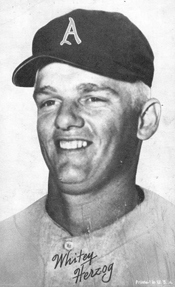
As a player and as a manager, Johnson was a persistent foe of the Cardinals. He had a career .456 on-base percentage against them, and batted .424 with 11 RBI in 10 games versus St. Louis in 1973. When Johnson managed the Mets, he and Cardinals manager Whitey Herzog dominated the National League East Division in the mid-1980s. From 1985-88, Johnson’s Mets and Herzog’s Cardinals each won two division titles. Johnson was 82 when he died on Sept. 5, 2025.

Facts and figures

Davey Johnson was born while his father, Lt. Col. Frederick A. Johnson, was in the U.S. Army during World War II. Lt. Col. Johnson was serving in an advanced tank corps on the front line in North Africa when he was captured. He spent the rest of the war in prison camps. The officer tried three times to escape. Malnourished, Lt. Col. Johnson weighed 83 pounds when liberated, according to a newspaper report. He retired from the military in 1962, the year his son Davey signed with the Orioles after playing shortstop for Texas A&M and studying veterinary medicine.

While with the Orioles, Johnson earned a degree in mathematics from Trinity University in San Antonio and took graduate courses in computer science at Johns Hopkins University. “When he was a player … he was always asking why,” Orioles executive Frank Cashen told the New York Times. “I think the main influence on him was his mathematics.”

Earl Weaver said to the Baltimore Sun, “Davey was always the type of player that was inquisitive. He always wanted to know what I was trying to do and why I was trying it. That is the type of player who is going to be a successful manager.”

Naturally, his Orioles teammates nicknamed him Dum-Dum. “He was a guy who was always thinking about things,” pitcher Jim Palmer told the Sun. “Very cerebral, maybe even to the point of overanalyzing a situation.”

(According to the Sun, Palmer once said, “Johnson thinks he knows everything about everything.” Told of Palmer’s comment, Johnson laughed and said, “No, actually, I know a little about everything.”)

Frank Cashen recalled to the New York Times, “He was a different sort of cat. In salary negotiations, he was in a class by himself. He’d come in with a stack of computer printouts to prove he should bat someplace else in the lineup, or that he deserved more money. He had all these statistics.”

Or, as Cashen put it to the Sun, “Davey was always single-minded, willing to swim against the tide.”

During Johnson’s playing days with the Orioles (1965-72), personal computers were uncommon. So Johnson got permission to use the computer system at National Brewing, a company run by Orioles owner Jerry Hoffberger.

“When you apply statistics to something like baseball, you’ve got the problem of the number of limited chances,” Johnson said to the New York Times. “If you flipped a coin 10 times, you might get nine heads, but if you flipped it 1,000 times, you’d come close to 500 heads. The Standard Deviation Chart says a 5 percent deviation in 1,000 times is acceptable. One day, Jim Palmer was pitching and he was wild. So I trotted over and told him, ‘Jim, you’re in an unfavorable chance deviation situation. You might as well quit trying to hit the corners and just throw it over the plate.’ He told me to get back to second base and shut up.”

Big bopper

With first-round draft choice Bobby Grich ready to take over at second base, the Orioles traded Johnson to the Braves in November 1972. The Braves got him to replace Felix Millan, who was dealt to the Mets. They hoped Johnson would provide good glovework. They weren’t expecting him to hit with power. Johnson’s highest home run total with the Orioles was 18 in 1971.

However, with the 1973 Braves, Johnson turned into … Hank Aaron. Johnson clouted 43 homers and drove in 99 runs. With 151 hits and 81 walks, he produced an on-base percentage of .370 and had fewer than 100 strikeouts.

The top four home run hitters in the National League in 1973 were the Pirates’ Willie Stargell (44), Johnson (43) and his Braves teammates Darrell Evans (41) and Hank Aaron (40).

The Braves’ ballpark was a home run haven dubbed “The Launching Pad.” Johnson popped 26 homers at home in 1973 and 17 on the road. Aaron told Jesse Outlar of the Atlanta Constitution, “He doesn’t go for any bad pitches. He makes them pitch to him, waits for his pitch. He has a great swing.”

According to Thomas Boswell of the Washington Post, Johnson would “crowd the plate, dare the pitchers to bean him (and) feast on the inside pitch.”

Whether in Atlanta or St. Louis, Johnson was tough on Cardinals pitchers. On June 9, 1973 at Atlanta, he had three hits, including a home run, and a walk, scored three runs and knocked in two. Two months later in a game at St. Louis, Johnson again produced three hits, including a homer, and a walk. He drove in four runs, scored once and stole a base. Boxscore and Boxscore

In April 1975, Johnson and the Braves parted ways. He spent two unhappy seasons playing in Japan, where he clashed with popular manager Shigeo Nasashima and was booed. Returning to the U.S., Johnson finished his playing career with the Phillies (1977-78) and Cubs (1978).

Candid and formidable

After three seasons in the Mets’ system, two as a manager; one as an instructor, Johnson returned to the majors as Mets manager in 1984 and made them contenders. Frank Cashen, who had moved from the Orioles to the Mets, told the New York Times, “Davey makes moves in a game that are so good they are absolutely eerie. Other managers are thinking of the moves they’ll make this inning. Davey is thinking of the moves he’ll make three innings from now.”

As a sign of the respect he had for Johnson, Jim Leyland, a future Hall of Fame manager, called him “McGraw,” in reference to the manager with the most National League wins, John McGraw. Whitey Herzog said to the Post-Dispatch of Johnson, “I always thought he did a pretty good job of running the ballgame.”

Johnson’s managing methods usually worked, but his personality sometimes got him crossways with the front office. As Joseph Durso of the New York Times noted, Johnson “speaks so bluntly that people duck or cringe.”

It’s part of the reason he didn’t stay in one place for too long. He managed the Mets (1984-90), Reds (1993-95), Orioles (1996-97), Dodgers (1999-2000) and Nationals (2011-13).

“Davey Johnson isn’t the easiest guy to get along with,” Tony Kornheiser of the Washington Post wrote. “You wouldn’t want him living next door. He is abrasive and confrontational … Davey tends to manage from the position that he’s smarter than you and everybody else in the room. His history is that he wears out his welcome rather quickly.”

However, Kornheiser concluded, “There may be some discomfort about what Davey is as a manager, but here’s what Davey does as a manager: He wins.”

Mets pitcher Ron Darling, who majored in French and Southeast Asian history at Yale, told the New York Times, “I think of Davey the way I used to think of my father _ always pushing me to do better … He doesn’t walk through the locker room and chat with players about how they’re doing. That’s not his style … Davey expects you to do your job, period … I think there’s calculation in his being aloof. By not telling you what he’s going to do, he gains a little edge on you. If you carry it out far enough, though, it’s a sadistic edge.”

In 2012, 26 years after he managed the Mets to a World Series title, Johnson, nearly 70, still was successful. He led the Nationals to 98 wins, most in the majors. Their reward for that was a playoff matchup against the Cardinals, a team that finished fifth in the National League. In the decisive Game 5, the Cardinals rallied for four runs in the ninth on a pair of two-out, two-run singles from Daniel Descalso and Pete Kozma. Boxscore

Typically direct, Johnson said to the Associated Press, “Not fun to watch … We just need to let this be a lesson … learn from it, have more resolve, come back and carry it a lot farther.”


Read Full Post »

Sometimes in baseball a weak swing at a bad pitch can produce a good result. It happened that way for Randy Moffitt, a reliever for the Giants during the 1970s.

On July 8, 1974, at Jarry Park in Montreal, Moffitt pitched 3.1 scoreless innings against the Expos and was credited with a win.

His pitching, though, was only part of the reason the Giants prevailed. Moffitt’s bat was a factor, too. Actually, it wasn’t his bat. It belonged to teammate Bobby Bonds. Moffitt just happened to swing it. Well, actually, he didn’t swing. Moffitt simply moved the bat in the general direction of the pitch. Physics did the rest.

Here’s what happened:

With the score tied in the 10th inning, the Giants had a runner on first and none out. Moffitt was up next. Expecting the bunt sign, he reached for the heaviest bat he could find and grabbed one belonging to Bonds, the Giants’ home run leader that season.

“I could never swing that thing around deliberately,” Moffitt told the Montreal Gazette. “I had the fat bat because it was easier for me to bunt with that.”

Pitching was starter Steve Rogers, who hadn’t allowed a hit since the third inning.

The Expos, too, were expecting Moffitt to bunt. He had just two big-league hits and never had driven in a run. The corner infielders, first baseman Mike Jorgensen and third baseman Ron Hunt, moved way in, positioning themselves about 15 feet from the plate.

“Those two guys were sitting right in his lap,” Giants manager Wes Westrum told the San Francisco Examiner. “There was no way he could have sacrificed.”

Moffitt got the sign to swing away. Now he had to try to get that heavy bat around to meet the pitch.

Rogers delivered. “A fastball right down the middle,” Moffitt said to the Gazette.

No, said Rogers to the Montreal Star. “I didn’t throw him a fastball. It was a slider, high, and it was over the middle of the plate.”

A right-handed batter, Moffitt was hoping he could chop a grounder past Hunt. “I didn’t take a cut at the ball,” Moffitt told the Gazette, but somehow the bat connected solidly with the pitch.

Moffitt said to the Associated Press, “The ball hit the bat more than I hit the ball.”

It lifted into the air and carried _ way out to left-center. Playing in, left fielder Bob Bailey and center fielder Willie Davis turned and chased the ball but it landed past them and rolled toward the fence.

Mike Phillips scored from first with the go-ahead run and Moffitt hustled around the base paths. He thought he had a chance for an inside-the-park home run, but instead stopped at third with a stand-up triple because, “I decided I needed my strength for the finish,” he told the Associated Press.

Moffitt retired the Expos in the bottom half of the inning, sealing the 5-4 win. Boxscore

A sinkerball specialist, Moffitt was a better pitcher than hitter. In 12 seasons in the majors with the Giants (1972-81), Astros (1982) and Blue Jays (1983), he had 43 wins and 96 saves. Moffitt was 76 when he died on Aug. 28, 2025.

All in the family

Randy Moffitt was the younger brother of Billie Jean King, the tennis champion. Their parents, Billy and Betty Moffitt, raised Billie Jean and Randy in Long Beach, Calif. Billy was a fireman who later became a baseball scout for the Brewers.

“When Billie Jean was 10 years old, she was the star shortstop in the North Long Beach Girls’ Softball League,” Billy Moffitt said to Allen Abel of the Toronto Globe and Mail. “Her speed was her best asset. She could outrun all the other girls. She loved to play ball, but one day I told her, ‘There’s no future in this for a girl.’ I tried to get her into something that she could continue to do as she got older. I suggested swimming, but she said she didn’t like to swim. I sent her out to play golf, but she thought it was too slow. When she was 11, I gave her a racquet. She came back after the first day and said, ‘This is it. I’ll never give this up.’ ”

Randy Moffitt was five years younger than his sister. As Billy Moffitt recalled to the Globe and Mail, “He had to tag along to the tennis courts every day with his big sister. He won his share of tournaments, too, but his heart just wasn’t in it. Having to follow his sister everywhere made him sour on tennis. It wasn’t easy for him, being in the background all those years. He was always a quiet kid.”

At 14, Randy Moffitt quit playing competitive tennis. He said he turned to baseball because there weren’t enough boys his age to challenge him in tennis, according to the Globe and Mail.

Asked if he’d played tennis against his sister, Moffitt told Newsday, “When she’s serious, I couldn’t take a point off her, but she gets to laughing.”

Sink or swim

A pitcher and shortstop for Long Beach Polytechnic High School, Moffitt advanced to Long Beach State. The Giants picked him in the first round of the January 1970 amateur draft. Two years later, he was in the majors, joining a Giants bullpen with the likes of ex-Cardinal Jerry Johnson and 42-year-old Don McMahon.

Moffitt’s first save came against the Cardinals when he pitched two scoreless innings in relief of Sam McDowell. Boxscore

Moffitt led the Giants in saves in 1974 (15), 1975 (11) and 1976 (14).

In 1979, Moffitt began experiencing daily bouts with nausea. He passed blood, lost weight. “You can’t imagine how it feels to be nauseous every minute of every day,” Moffitt told the Houston Chronicle.

He eventually was diagnosed with having cryptosporidiosis, a disease caused by a parasite in the gastrointestinal tract.

It wasn’t until 1981 that doctors found a treatment to rid him of the illness. That year, during the players’ strike, the Giants released Moffitt. At 33, he was faced with having to rebuild his playing career.

The Astros signed him to a minor-league contract in 1982. Moffitt began the season at Tucson, but got brought up to the Astros in late April. He pitched in 30 games for them and posted a 3.02 ERA.

Granted free agency, Moffitt went to the Blue Jays in 1983. “He’s got a nasty sinker,” Blue Jays manager Bobby Cox told Peter Gammons of the Boston Globe. “He’s tough on right-handers. He’s unbelievably competitive.”

Moffitt had six wins and a team-leading 10 saves for the 1983 Blue Jays, but it turned out to be his last season in the majors. A free agent, Moffitt got a look from the Brewers, who agreed to send him to their Vancouver farm team. He signed in June 1984, was activated in July and released in August.

Read Full Post »

Marc Hill was supposed to be the catcher who moved Ted Simmons from behind the plate to first base in St. Louis.

Hill threw with the strength and quick release of Johnny Bench. He worked well with pitchers, caught pop flies and dug balls out of the dirt.

The problem was Hill didn’t hit like Simmons. He didn’t hit like Keith Hernandez either. With Hernandez emerging as the Cardinals’ first baseman, there was no place to move Simmons, a future Hall of Famer.

Blocked from getting much playing time with the Cardinals, Hill was traded to the Giants. His catching skills kept him in the majors for 14 seasons, including a stretch with the White Sox when Tony La Russa was their manager. Hill was 73 when he died on Aug. 24, 2025.

Catching on

Hill was from the Missouri town of Elsberry, located in Mississippi River bottomland, about 60 miles north of St. Louis. The area is known as a haven for duck hunters.

According to the St. Louis Post-Dispatch, Cardinals equipment manager Butch Yatkeman, a family friend, arranged for Hill, then 16, his parents and sister to attend a game of the 1968 World Series at Busch Memorial Stadium. Yatkeman also tipped off the Cardinals to Hill’s baseball talents.

Hill’s father, Henry, a St. Louis Browns minor leaguer in 1946, encouraged his son to lift weights. Hill also got strong working in the lumber yard his father managed. He became a baseball and basketball standout for Lincoln County High School.

In 1970, the Cardinals sent scouting supervisor Fred McAlister and instructor Vern Benson to see Hill, 18, play in a tournament at Hannibal, Mo. They liked what they saw. The Cardinals chose him in the 10th round of the June 1970 amateur draft. “He has a real major-league arm and good catching ability,” Cardinals general manager Bing Devine told the St. Louis American.

At the lowest levels of the minors, though, Hill’s inability to hit became a concern. In his first two seasons, at Sarasota (Fla.) in 1970 and at Cedar Rapids (Iowa) in 1971, he had more strikeouts than hits. “Hill was almost useless as a batter,” Cardinals instructor George Kissell told the Post-Dispatch. “You could almost walk through the batter’s box and he still couldn’t hit you.”

Nicknamed Booter, as in Boot Hill, the catcher’s hopes of reaching the majors appeared on the brink of being buried. “If I could just hit, I’d have it made,” Hill told the Mexico (Mo.) Ledger.

Making the majors

A turnaround came in 1973. Hill totaled 20 doubles, 12 home runs and 57 RBI for Cardinals farm clubs. His catching dazzled. According to the Tulsa World, Arkansas manager Tom Burgess said Hill “throws better than Johnny Bench, or anybody” and predicted “Hill will move Ted Simmons to another position.”

The Cardinals, in the thick of a division title chase, called up Hill, 21, for the last two weeks of the 1973 season. For the opener of the final series of the year, manager Red Schoendienst showed supreme confidence in Hill, having him make his big-league debut as the starting catcher against the Phillies. Simmons, 24, shifted to first base, replacing injured Joe Torre.

“Before the game, I was so scared they almost had to push me out of the dugout,” Hill recalled to Milton Richman of United Press International. “Ted (Simmons) asked me if I was nervous. I said yes and he said, ‘Try not to be. We’ll help you along.’ And he certainly did.

“We had a close relationship, Ted and I. There was no bitterness between us because we played the same position. He kind of nursed me, took care of me.”

With Hill catching, Mike Thompson (four innings) and Diego Segui (five innings) combined on a two-hit shutout in a 3-0 Cardinals triumph. Boxscore

Encouraging words

Before a spring training game at St. Petersburg, Fla., in 1974, Cardinals broadcasters Jack Buck and Mike Shannon told Reds catcher Johnny Bench about Hill’s laser beam throws from the plate to second base. Then, as Hill recalled to Milton Richman, “I was sitting on the Cardinals’ bench, pretty much by myself. I saw Johnny Bench walk by and I just plain shook in my britches. ‘There’s Johnny Bench, the best catcher in baseball,’ I said to myself.”

Bench gave a hello, told Hill he’d heard good reports about him and wished him well, United Press International reported.

Though Hill was star-struck in Bench’s presence, Cardinals management had no doubt he was ready for the majors.

“I don’t know of any catcher in the big leagues who throws better than Hill does,” Red Schoendienst said to the Post-Dispatch. Cardinals director of player personnel Bob Kennedy told the Columbia (Mo.) Daily Tribune, “He’s the best defensive catcher in all of baseball.”

Nontheless, the Cardinals determined Hill, 22, would be better off playing every day in the minors rather than serving as Simmons’ backup. So Tim McCarver was kept as the reserve catcher and Hill began the 1974 season with Tulsa.

Change of plans

Playing for Tulsa manager Ken Boyer, Hill hit with power, drove in runs and excelled at catching.

“I am not being cocky when I say I know I am going to be the Cardinals’ catcher pretty soon,” Hill said to Tulsa World sports editor Bill Connors in May 1974. “Ted Simmons knows it. He has been very nice to me … He has said he … will be glad to get down to first base whenever the Cardinals think I am ready … He may hit .350 when he gets that strain (of catching) off his legs.”

The Cardinals called up Hill in July 1974. He was the starting catcher in six games but didn’t hit well. Returned to Tulsa, Hill came back to St. Louis in late August, taking the roster spot of Tim McCarver, who was shipped to the Red Sox. Hill mostly sat and watched, though, because Simmons hit .349 with 27 RBI in 27 September games. “I’m not concerned about someone taking my catching job away from me,” Simmons told the Columbia Daily Tribune.

Meanwhile, Keith Hernandez, brought from Tulsa to St. Louis with Hill, made a strong impression with his fielding at first base and with his .415 on-base percentage (10 hits, seven walks) in 41 plate appearances.

The Cardinals concluded they’d do best having Simmons and Hernandez in the lineup in 1975. Two weeks after the 1974 season ended, they traded Joe Torre to the Mets for Ray Sadecki and Tommy Moore, and Hill to the Giants for Elias Sosa and backup catcher Ken Rudolph.

In explaining why he traded Hill, Bing Devine told the Post-Dispatch, “We couldn’t afford the luxury of keeping Hill and not playing him.”

Stop and go

In six seasons (1975-80) with the Giants, Hill played for four managers (Wes Westrum, Bill Rigney, Joe Altobelli, Dave Bristol). He was the Giants’ Opening Day catcher for three consecutive years (1977-79) but also was platooned with the likes of Dave Rader, Mike Sadek and Dennis Littlejohn.

Facing the Cardinals for the first time since the trade, Hill threw out Lou Brock on three of five steal attempts in May 1975. Boxscore, Boxscore, Boxscore

(Hill also went hitless in seven at-bats during the series.)

Described by the San Francisco Chronicle as “lead-legged,” Hill seemed to be trudging perpetually uphill when on the base paths. “The harder I try to run, the slower I get,” he told the San Francisco Examiner.

It was both a shock and thrill when Hill got his only stolen base in the big leagues _ against the Cardinals on May 2, 1978, at St. Louis.

With Bob Forsch pitching, Ted Simmons catching and Hill the baserunner on first, the Giants called for a hit-and-run with Johnnie LeMaster at the plate. Hill took off with the pitch, but LeMaster didn’t connect. Hill rumbled into second with a steal. Boxscore

Two weeks later, in a ceremony between games of a Cardinals-Giants doubleheader in San Francisco, Giants owner Bob Lurie and National League stolen base king Lou Brock presented Hill with the base he stole.

Helping hand

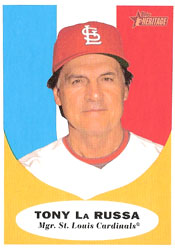
Milt May became the Giants’ catcher in 1980 and Hill was sent to the Mariners. Granted free agency after the season, he signed with the White Sox and spent six seasons (1981-86) with them as backup to catcher Carlton Fisk. “We have the best backup catcher in the game in Marc Hill,” White Sox manager Tony La Russa said to the Chicago Tribune.

La Russa and Hill developed a mutual respect. “I’ve never met anybody as totally unselfish as Marc Hill,” La Russa told the Tribune. Hill said to the newspaper, “Tony treats me like a superstar.” In May 1986, when reports circulated that White Sox general manager Ken Harrelson might fire La Russa, Hill gave teammates T-shirts with the words: “Save the Skipper.”

Hill became a minor-league manager in the farm systems of the White Sox, Mariners and Pirates. With Jacksonville in 1994, his shortstop was 18-year-old Alex Rodriguez. Hill twice served as a big-league coach _ in 1988 for Astros manager Hal Lanier and in 1991 for Yankees manager Stump Merrill.

Read Full Post »

In June 2025, Ted Simmons was interviewed by Jon Paul Morosi for the Baseball Hall of Fame podcast “The Road to Cooperstown.”

Here are excerpts:

On the influence of his mother, Bonnie Sue:

Simmons: “She worked in a factory. A tool and die place for 36 years and went every day … I saw a work ethic … My mother was a real monument for me and taught me what hard work, living a good, solid life behaviorally meant, and was responsible for giving me those kinds of traits and skills that I tried to keep my entire life.”

The reaction of his mother when Simmons in 1996, the year he turned 47, earned a degree from the University of Michigan, fulfilling her hope that one of her four offspring would graduate from college:

Simmons: “My mom (that day) was the happiest girl there ever was. It’s a really nice thing for me to think back upon.”

On first attending the University of Michigan during the campus unrest of the 1960s:

Simmons: “I often think about the middle 1960s when I think of today … In many ways, the way our society is today is volatile. When I was going to class in Ann Arbor, the walk through campus, you’d see blacks protesting, females protesting, foreign people protesting, and, politically, the place was on fire … It was all around you.”

On becoming an art and antique collector with his wife Maryanne, whom he married in May 1970, five years after their first date:

Simmons: “My wife was a fine arts major … My world began to open up when I saw who she was and what she was doing … (Cultural) diversity was really important to me. It’s where I saw understanding, education … (Cultural) diversity and baseball were such a gift. It took me everywhere in this world … and I learned from that.”

On spending his free time during baseball road trips visiting museums:

Simmons: “It’s just like a post-graduate degree. You don’t get the sheepskin, but you get the knowledge, and the knowledge is what you want … I was into it.”

On a lesson learned early in his pro playing career from Cardinals instructor George Kissell:

Simmons: “Sacrificing one’s self was one of the keynotes he emphasized. There are times when you must sacrifice yourself for the sake of the team … When you get a bunch of 17-, 18-year-olds, or in today’s game, 21-, 22-year-olds, who have a pocketful of money and a whole head full of ego, it’s hard to convince (them) it’s time to step back and think more in the context of the group as opposed to themselves. Very difficult thing to learn and, unless you learn it, it’s very difficult to end up in the pinnacle, in the seventh game of the World Series, with a team full of individuals.”

On playing for a pennant winner with the 1982 Brewers:

Simmons: “That’s where I … saw what a championship team is like. I saw what it took from the players, their skillset. You don’t fake that stuff … That whole season was just a culmination of a whole lot of hard work and anxiety and hope.”

On the most difficult adjustment to make when reaching the big leagues:

Simmons: “When you first come up, there’s something every opposition pitcher and team is going to find out about you, and that is: Can you hit a fastball that is up in the strike zone and inside? They would throw that every time until you proved you could hit it … because, if you can’t, you will be gone … It’s just an unmerciful thing you have to deal with … It’s the single most difficult pitch. Velocity high in the strike zone inside. It takes the quickest bat. It’s the hardest pitch to get the barrel in a position to hit hard … Inside fastball for a strike is the equalizer, it’s the determiner.”

Best hitter during his time in the majors (1968-88):

Simmons: “George Brett was the best I had seen. He was the best hitter who was all-encompassing. (Rod) Carew, (Tony) Gwynn, (Wade) Boggs _ hitting machines. But the guy who was dangerous and could drive in runs and could beat you was, for that time, Brett. He could manage any pitch.”

In a tribute to his wife Maryanne, who he called “my partner, my companion, my equal,” Simmons concluded his 2021 Baseball Hall of Fame induction speech with a line from “The End,” a Beatles song on the Abbey Road album: “And in the end, the love you take is equal to the love you make.

Simmons: “I had two songs I was thinking about. One was “A Song For You” by Leon Russell. I said no, that’s too obscure for most people. They’ll understand the Fab Four. That lyric _ in the end, the love you take is equal to the love you make _ is the single greatest lyric in my lifetime because it is so all-encompassing … Those are the two real romances in my life: my (baseball) career and my wife.”

Read Full Post »

« Newer Posts - Older Posts »