Feeds:
Posts
Comments

Archive for the ‘Hitters’ Category

(Updated May 19, 2018)

In 1966, Ed Spiezio, hoping to jumpstart his career and contend for the Cardinals’ third base job, hit his first big-league home run for St. Louis. Forty years later, Scott Spiezio, hoping to jumpstart his career and fill a utility role with the Cardinals, hit his first National League home run for St. Louis.

ed_spiezioEd Spiezio and Scott Spiezio were the first father-son duo to hit home runs for the Cardinals. Ed Spiezio played five years (1964-69) for the Cardinals and hit five home runs for them. His son, Scott Spiezio, played two years (2006-07) for the Cardinals and hit 17 home runs for them.

Tony Pena and Francisco Pena became the second father-son duo to hit home runs for the Cardinals. Francisco Pena hit his first Cardinals home run, and his fourth overall in the major leagues, on May 18, 2018, versus the Phillies at St. Louis. His father Tony hit 107 big-league home runs, including 19 in three seasons (1987-89) with the Cardinals

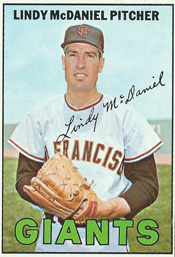
Ed Spiezio, a right-handed batter, played nine big-league seasons (with the Cardinals, Padres and White Sox) and hit 39 regular-season home runs.

Scott Spiezio, a switch-hitter, played 12 big-league seasons (with the Athletics, Angels, Mariners and Cardinals) and hit 119 regular-season home runs. He also hit three postseason home runs, all for the Angels.

Pull hitter

Ed Spiezio hit 18 home runs in 112 games for the Cardinals’ Class AAA Tulsa club in 1966. Spiezio told The Sporting News that Tulsa manager Charlie Metro “wanted me to pull (the ball) because the fences in left are so close in most of the (Pacific Coast League) parks.”

Ed Spiezio said he had been a pull hitter since his youth because “if you tried to hit the ball to right field you were considered a sissy.”

The Cardinals called up Ed Spiezio in September 1966 and gave him a chance to play third base in place of the starter, Charlie Smith.

On Sept. 11, 1966, Ed Spiezio hit his first big-league home run, pulling a Bob Veale pitch over the scoreboard in left field at Forbes Field in Pittsburgh. The solo shot in the fifth inning helped the Cardinals to a 4-3 triumph over the Pirates. Boxscore

Two weeks later, on Sept. 30, 1966, Ed Spiezio hit a two-run home run off future Hall of Famer Ferguson Jenkins, producing all the runs in a 2-0 Cardinals victory over the Cubs at St. Louis. Boxscore

Ed Spiezo’s counterpart, Cubs third baseman Ron Santo, was impressed. “I like Spiezio a lot … He just needs a little more experience, like knowing the pitchers better,” Santo said. “I’ve always admired his poise at bat.”

Ed Spiezio was a utilityman with the 1967 and 1968 Cardinals and appeared in the World Series in both years for them. In December 1968, the Cardinals traded Ed Spiezio and three others to the Padres for pitcher Dave Giusti.

Like father, like son

In February 2006, the Cardinals signed Scott Spiezio, a free agent, to a minor-league contract and brought him to spring training to compete for a utility role.

Scott Spiezio had been the starting first baseman for the 2002 World Series champion Angels. His career spiraled, though, after he became a free agent and signed with the Mariners before the 2004 season. The Mariners released him in August 2005.

Scott Spiezio earned a spot on the Opening Day roster of the 2006 Cardinals.

On April 15, 2006, Scott Spiezio got his first Cardinals hit. In the seventh inning, with the Cardinals leading the Reds, 7-2, at St. Louis, Scott Spiezio slugged a two-run homer run off Mike Burns. Boxscore

Scott Spiezio’s teammates pushed him up the dugout steps for a curtain call from appreciative Cardinals fans. Scott told the St. Louis Post-Dispatch his father was at home, watching the game on television.

Ed Spiezio and Scott Spiezio became the third father and son to play for the Cardinals. The others were outfielder Ed Olivares and his son, pitcher Omar Olivares, and pitchers Pedro Borbon and Pedro Borbon Jr.

Among those pairs, only Omar Olivares hit a home run for the Cardinals.

Previously: Scott Spiezio replaced John Mabry as Cardinals utilityman

Read Full Post »

On the day the 2006 Cardinals played the first regular-season game in their new ballpark before a sellout crowd that included luminaries such as Stan Musial, starter Mark Mulder took center stage with his hitting as well as his pitching.

mark_mulder3On April 10, 2006, Mulder slugged a two-run home run and earned the win in the Cardinals’ 6-4 victory over the Brewers at Busch Stadium III in downtown St. Louis.

After playing at Busch Memorial Stadium from 1966-2005, the Cardinals opened a ballpark that St. Louis Post-Dispatch columnist Bernie Miklasz described as a “splendid new bank vault” for a “revenue-rich franchise.”

Cardinals royalty

Among the 41,936 attendees were retired Cardinals standouts Musial, Lou Brock, Bob Gibson, Willie McGee, Red Schoendienst, Ozzie Smith and Bruce Sutter.

Musial, 85, stood arm in arm with Brock during the national anthem. After the pregame ceremonies, Brock helped Musial walk off the field. “You know why I’ve got this bad knee?” Musial asked Rick Hummel of the Post-Dispatch. “Too many triples. I should have hit more home runs like (Mark) McGwire.”

Gibson and McGee caught ceremonial first pitches from 2006 Cardinals Chris Carpenter and Albert Pujols.

Reflecting on the festivities, Cardinals manager Tony La Russa said, “If you didn’t feel something, then you don’t have a heartbeat.”

Wrecking crew

David Eckstein got the first Cardinals’ hit in the ballpark with a bunt single in the second inning. Pujols hit a solo home run in the third.

In the seventh, with the Cardinals ahead, 4-2, Brewers reliever Jose Capellan walked No. 8 batter Aaron Miles with two outs. Mulder, who had doubled and walked, was up next, and La Russa opted to let him face Capellan.

A left-handed batter, Mulder worked the count to 3-and-2 before hitting his first and only big-league home run, a two-run shot over the wall in right-center field for a 6-2 Cardinals lead.

Calling the game on television, Joe Buck declared, “What a day for the Cardinal lefty … This ball was crushed … A one-man wrecking crew here on April 10.” Video

Said Mulder to the Associated Press: “I was trying not to smile or laugh running around the bases. I wanted to.”

Mulder received a curtain call, then went out to finish the job.

He pitched a scoreless eighth, but in the ninth Mulder yielded a leadoff single to Geoff Jenkins and was relieved by Braden Looper.

Last-inning drama

The first batter Looper faced, Carlos Lee, grounded into a double play, but Bill Hall doubled and Rickie Weeks singled, scoring Hall and cutting the lead to 6-3.

Jason Isringhausen replaced Looper, and after Weeks advanced to second on defensive indifference, Prince Fielder singled, scoring Weeks and getting the Brewers within two at 6-4.

Fielder moved to second on defensive indifference and Corey Koskie walked, increasing the tension. The drama finally ended when Gabe Gross, batting for reliever Danny Kolb, grounded out to Pujols at first. Boxscore

The night before, at Chicago, Isringhausen took the loss after yielding a grand slam to the Cubs’ Michael Barrett. Boxscore

“It was fun to get out there again,” Isringhausen said after his high-wire save against the Brewers. “When things are going bad, it seems like it snowballs, but things will be fine.”

Previously: Mark Mulder, Roger Clemens and the great duel at Busch II

Read Full Post »

Joe Garagiola, a St. Louis native who began his big-league career with the Cardinals, hit his most dramatic home run against his hometown team.

joe_garagiola2Pinch-hitting with two outs in the ninth inning of the second game of a Memorial Day doubleheader, Garagiola hit a three-run walkoff home run that erased a 3-1 deficit and lifted the Pirates to a 4-3 victory over the Cardinals on May 30, 1952.

Garagiola was better known as a broadcaster than as a player, but he had several significant performances during a nine-year playing career in the majors as a catcher with the Cardinals, Pirates, Cubs and Giants.

His most important contribution as a player was his performance for the Cardinals as a 20-year-old rookie against the Red Sox in the 1946 World Series. Garagiola batted .316 (6-for-19), scored twice and had four RBI. He caught 42.2 innings without an error for the Cardinals, who won the championship in seven games.

A left-handed batter, Garagiola hit 42 big-league home runs. In addition to the walkoff home run to beat the Cardinals, he hit two grand slams for St. Louis.

Here is a look at those three home runs:

First base open

The 1952 Pirates were a dreadful team. After the Cardinals beat them, 3-2, in the first game of the May 30, 1952, doubleheader at Pittsburgh, the Pirates’ record was 8-33.

In the second game, starting pitchers Cloyd Boyer of the Cardinals and rookie Ron Kline of the Pirates each pitched eight scoreless innings. Clem Koshorek singled to lead off the bottom of the first for the Pirates. Boyer held Pittsburgh hitless from then through the eighth.

The Cardinals scored three in the top of the ninth, breaking the scoreless tie.

In the bottom of the ninth, Koshorek led off with a bunt single. After Bobby Del Greco popped out, Gus Bell doubled, moving Koshorek to third.

Cardinals manager Eddie Stanky replaced Boyer with Gerry Staley. A starter, Staley was making his first relief appearance of the 1952 season. He issued an intentional walk to the first batter he faced, cleanup hitter Ralph Kiner, loading the bases. A rookie, Brandy Davis, ran for Kiner.

When Jack Merson grounded out, pitcher to first, Koshorek scored, with Bell advancing to third and Davis to second.

Garagiola, who had caught the first game, was sent by manager Billy Meyer to pinch-hit for catcher Clyde McCullough. Meyer wanted a left-handed batter, Garagiola, to face the right-handed Staley.

With two outs and first base open, Stanky could have had Staley issue an intentional walk to Garagiola. On deck was George Strickland, a right-handed batter who hit .177 for the 1952 Pirates.

Instead, the Cardinals pitched to Garagiola, who ended the game with his first home run of the season. Boxscore

Trash talking

Four years earlier, playing in his first game of the season, Garagiola broke a 5-5 tie in the seventh inning with a grand slam off reliever Harry Gumbert, lifting the Cardinals to a 13-7 victory over the Reds at Cincinnati on April 30, 1948.

Garagiola hit a line drive off Gumbert, 38, a former Cardinal, that carried over the right field screen at Crosley Field, according to the Associated Press.

As he rounded the bases, Garagiola was razzed by players in the Reds dugout. Garagiola challenged one of the Reds on his way to bench, The Sporting News reported.

Said baseball commissioner Happy Chandler, who witnessed the incident: “I told manager Eddie Dyer that he’d better have a talk with Garagiola and see that it didn’t happen again.”

Garagiola was 3-for-4 with a walk, two runs scored and four RBI in the game. His teammate, Stan Musial, was 5-for-6 with three runs scored and four RBI. Boxscore

Sizzling in Cincinnati

Two years later, Garagiola hit the second and last grand slam of his big-league career. Again, it occurred in Cincinnati.

On May 28, 1950, in the first inning of the second game of a doubleheader, the Cardinals led, 1-0, and had Red Schoendienst on third and Enos Slaughter on second, one out, when Reds starter Ewell Blackwell issued an intentional walk to Bill Howerton, loading the bases for Garagiola.

The grand slam hit by Garagiola was his first home run of the season, giving the Cardinals a 5-0 lead. Garagiola went 3-for-4 with a run scored and four RBI in a 7-2 Cardinals triumph. Boxscore

Four days later, on June 1, Garagiola separated his shoulder when he tripped over the legs of the Dodgers’ Jackie Robinson on a play at first base.


Read Full Post »

In 1972, at age 36, Bob Gibson lost his first five decisions, causing some to wonder whether he was finished as an effective player for the Cardinals. Instead, Gibson put together a remarkable season, leading Cardinals pitchers in wins and placing among the top five Cardinals hitters in home runs.

bob_gibson21Gibson had 19 wins and five home runs for the 1972 Cardinals. He tied outfielder Luis Melendez for fourth on the club in home runs. The only Cardinals to hit more home runs than Gibson that season were catcher Ted Simmons (16), third baseman Joe Torre (11) and right fielder Bernie Carbo (seven).

Gibson, though, had far fewer at-bats (103) than Simmons (594), Torre (544), Melendez (332) and Carbo (302). It’s not a stretch to think Gibson would have led the 1972 Cardinals in home runs if he had gotten as many at-bats as an everyday player.

Gibson holds the Cardinals record for most home runs in a season by a pitcher. He hit five twice _ in 1965 and 1972.

During a Cardinals career from 1959-75, Gibson hit 24 regular-season home runs and two World Series home runs.

Here is a look at Gibson’s two five-home run seasons:

5 in 1965

_ May 16, Cardinals 6, Pirates 3, at Pittsburgh: In the ninth, with the Cardinals ahead, 5-3, Gibson hit a solo home run off Tommie Sisk. Gibson got a complete-game win even though he yielded 10 hits. Boxscore

_ June 27, Cardinals 8, Cubs 0, at St. Louis: In the second, with the Cardinals ahead, 2-0, Gibson hit a two-run home run off former teammate Ernie Broglio. In pitching the shutout, Gibson struck out 12, including Ron Santo twice. Boxscore

_ Aug. 15, Cardinals 12, Reds 7, at St. Louis: In the second, with the Reds ahead, 3-1, Gibson hit a three-run home run off Sammy Ellis. Gibson yielded seven runs in seven innings, but the Cardinals scored eight in the eighth. Reliever Ray Washburn got the win. Boxscore

_ Aug. 31, Cardinals 3, Cubs 0, at Chicago: In the fifth, with the Cardinals ahead, 1-0, Gibson hit a solo home run off Dick Ellsworth. Gibson pitched a two-hit shutout. The Cubs got back-to-back singles by Don Landrum and Joey Amalfitano with two outs in the sixth. Boxscore

_ Sept. 29, Cardinals 8, Giants 6, at San Francisco: In the eighth, with the Cardinals ahead, 4-0, Gibson hit a grand slam off Gaylord Perry. Gibson gave up five runs in 8.1 innings and got the win. Boxscore

Much ado in ’72

_ June 4, Cardinals 4, Dodgers 0, at Los Angeles: In the ninth, with the Cardinals ahead, 2-0, Dal Maxvill singled with two outs and Gibson followed with a home run off Pete Richert. Gibson pitched a five-hit shutout. Bill Buckner and Wes Parker each singled twice for the Dodgers. Boxscore

_ June 21, Cardinals 14, Padres 3, at St. Louis: In the seventh, with the Cardinals ahead, 10-1, Carbo walked, Maxvill singled and Gibson hit a three-run home run off Mark Schaeffer. Boxscore

The win was Gibson’s 211th, moving him ahead of Jesse Haines and into first place all-time among Cardinals pitchers.

“What I enjoy most about the record is being able to stay with one club long enough to win that many games,” Gibson said to Dave Johnson of the Burlington (Iowa) Hawk Eye. “The longevity factor means more to me than breaking some guy’s record.”

According to the book “Gibson’s Last Stand,” the Cardinals’ ace “pitched most of the game with a pulled hamstring” after scoring on a Lou Brock triple in the second inning.

Stan Landes was the home plate umpire for Gibson’s record-setting win. Landes also was the home plate umpire when Gibson got his first career win on July 30, 1959, at Cincinnati.

_ July 12, Cardinals 7, Braves 0, at St. Louis: In the fourth, with the Cardinals ahead, 3-0, Gibson and Brock hit back-to-back solo home runs off Ron Schueler. Gibson pitched a six-hit shutout in a game played in less than two hours.

“It doesn’t take Gibson long to embarrass you,” Braves manager Lum Harris told the Associated Press.

Said Braves pinch-hitter Jim Breazeale, who struck out against Gibson: “I didn’t even need to carry a bat up there.” Boxscore

_ July 21, Cardinals 2, Braves 1, at Atlanta: With the Cardinals ahead, 1-0, Gibson led off the sixth with a home run off George Stone for the decisive run. Gibson pitched a complete game and earned his 11th consecutive win. Darrell Evans hit a home run in the seventh for the run off Gibson. Boxscore

_ Aug. 30, Giants 3, Cardinals 2, at St. Louis: Gibson led off the sixth with a home run against Jim Willoughby, tying the score at 1-1. The Giants rallied with two runs in the ninth. Gibson struck out 14, including Dave Kingman twice. Boxscore

Previously: Cardinals pitchers enjoy grand slam streak

Read Full Post »

The 1946 Cardinals shifted Stan Musial from left field to first base and it worked out well.

stan_musial30Though he never had played first base as a professional, Musial replaced injured Dick Sisler on June 7, 1946, and started at first base the remainder of the season and in the World Series.

Musial, 25, started 114 regular-season games at first base for the 1946 Cardinals. He ranked second among National League first basemen in double plays turned (119), fourth in putouts (1,056) and fifth in fielding percentage (.989). Musial also led NL first basemen in errors (13).

The change in positions didn’t hurt Musial’s hitting. He led the NL in batting (.365), hits (228), singles (142), doubles (50), triples (20), extra-base hits (86) and total bases (366) for a Cardinals club that won the 1946 World Series championship.

In an editorial, The Sporting News opined, “Usually, so drastic a shift harries the player and hampers his hitting and fielding, but Stan jumped into his new position as if to the manor born.”

It was a remarkable and completely unexpected transformation.

Naval disaster

In 1945, Musial was called into military service and joined the Navy. At Bainbridge, Md., where he was sent for basic training, Musial played in a few ballgames with fellow servicemen.

In his book “Stan Musial: The Man’s Own Story,” Musial recalled, “Although by then I had a reputation as a good defensive outfielder in the big leagues, the Bainbridge athletic director, a lieutenant named Jerry O’Brien, put me at first base. I was amused. O’Brien was not.”

“Get out of there, Musial,” O’Brien ordered. “You’re terrible. You’ll never make anybody’s team at first base.”

Helping the team

That was the extent of Musial’s experience at first base until he got a surprise request a year later.

Sisler, a rookie, had been selected to be the first baseman for the 1946 Cardinals by first-year manager Eddie Dyer. Sisler replaced Ray Sanders, whose contract was sold to the Braves the day before the 1946 season opener.

Sisler was hitting .270 when he injured his hand on June 2, 1946. Harry Walker, an outfielder, replaced Sisler at first base, but Dyer had another player in mind for the position.

“When I reported in the clubhouse, I found a new first baseman’s glove in my locker,” Musial said. “I took the hint and began working out at the infield position.”

A few nights later, Musial said, Dyer asked him to play first base “for the good of the club.”

“I always liked to fool around the bag,” Musial said. “When Skip told me that I was to be the regular first sacker, I was delighted.”

On June 7, 1946, in a game against the Phillies at St. Louis, Musial made his debut as a professional first baseman. He turned two double plays, had 11 putouts and one assist and made no errors. Boxscore

Gamble pays off

After Sisler’s hand healed, Dyer kept Musial at first base.

“St. Louis players liked Musial’s work around the bag, thought the team was stronger with Stan on the infield and what started to be a makeshift developed into a permanent arrangement,” The Sporting News explained. “From all present indications, Stan will continue indefinitely at the position.”

Said Musial: “I would hate to go back to the outfield. Now I am in the game all the way in every play. Not like waiting out there for three or four chances.”

On Aug. 12, 1946, against the Cubs at Chicago, Musial handled 20 chances at first base _ 19 putouts and one assist. Boxscore

“I am quite thrilled over the way my move in converting Stan Musial into a first baseman has turned out,” Dyer told The Sporting News. “… I knew that shifting Musial to first base was a perilous adventure for me. Suppose he had fallen off in his hitting? … I had to risk that. But, then, it wasn’t too big a gamble, for I knew Musial.”

Self-assessment

Musial said his experience as a pitcher in high school and in the minor leagues helped prepare him to play first base with the 1946 Cardinals.

“That taught me how to get around the infield, field bunts and hot smashes, also to get some experience in covering first base when balls were hit to the first baseman,” Musial said.

Assessing his fielding, Musial said, “I am far from a polished first sacker.”

His weakness?

“That dilemma you find yourself in when you get a bad throw is my biggest problem,” Musial said. “Here’s what I mean: One of the infielders makes a wide relay to me. A player who is accustomed to playing the bag will leave it if he sees that he has to and will save the out. I am afraid I can’t do both. So I try to protect the bag and the ball at the same time.”

His strength?

“I can make that first-to-short-to-first double play and that throw to the pitcher when he covers the bag.”

Two-position player

In the 1946 World Series versus the Red Sox, Musial fielded flawlessly at first base. He made 61 putouts, had two assists, turned six double plays and committed no errors in 62 innings.

Musial played the entire 1947 season at first base. In 1948, Dyer moved Musial to right field and put Nippy Jones at first base.

From 1948-54, Musial primarily played outfield. He was the starting first baseman for the Cardinals from 1955-59 and returned primarily to the outfield for the last four years (1960-63) of his career.

Musial made 1,854 career regular-season starts in the outfield and 989 career regular-season starts at first base.

Read Full Post »

(Updated Dec. 16, 2025)

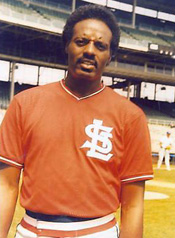
Jose Cardenal faced two daunting challenges with the 1970 Cardinals: (1) replace Curt Flood as the center fielder and (2) defend himself against comments from anonymous teammates who accused him of being selfish and lackadaisical.

jose_cardenalCardenal contributed significantly to a 1970 Cardinals lineup that included Lou Brock, Joe Torre and Dick Allen, but some teammates questioned his desire. Whether the criticism had merit or was based on stereotype is conjecture.

Traded for Pinson

On Nov. 21, 1969, the Cardinals traded right fielder Vada Pinson to the Indians for Cardenal. The Cardinals were seeking a center fielder to replace Flood, who a month earlier had been dealt to the Phillies.

In 12 years with the Cardinals, Flood batted .293, played on two World Series championship clubs and three National League pennant winners and earned seven consecutive Gold Glove awards.

Cardenal, 26, five years younger than Flood and Pinson, hit .257 with 26 doubles and 36 stolen bases for the 1969 Indians. The Cardinals became his fourth club following stints with the Giants, Angels and Indians. Cardenal had been in professional baseball since 1961 when he joined a Giants farm club at age 17 after leaving his home in Cuba.

According to Russell Schneider, who covered the Indians for The Sporting News, “Cardenal, who can be an outstanding fielder and better-than-average hitter when he wants, was a disappointment through most of 1969 … Jose has a tendency toward moodiness when things aren’t going well.”

Neal Russo, who covered the Cardinals, echoed that sentiment, writing that “Cardenal, a brilliant fielder, has a reputation for pouting because of such things as the manager shouting at him.”

Team player

Cardinals general manager Bing Devine sent scout Chase Riddle and assistant player development director John Claiborne to Puerto Rico to watch Cardenal in the winter league.

“Riddle and Claiborne said Cardenal had been doing a good job in the field and had been hitting the ball consistently to right field behind the runner,” Devine said. “He makes contact well. He’s good on the hit-and-run and he looks like he’ll be a good No. 2 man in the batting order.”

Said Cardenal: “I read where I would bat second behind a fast man like Brock. I thought I might be able to help him, my club and myself if I could hit the ball on the ground to the right side.”

Bob Broeg of the St. Louis Post-Dispatch described Cardenal as “a little center fielder with ants in his pants and with a throwing arm that could really skip a ball as fast as he’ll run on the new synthetic surface” at Busch Memorial Stadium.

Cardenal opened the season batting between Brock and Allen. He hit .353 in April and .366 in June.

Said Cardinals manager Red Schoendienst: “He can do everything. He’s one of the best players we have.”

Nasty talk

On July 13, 1970, Bob Broeg wrote in his Post-Dispatch column, “The Cardinals’ image isn’t helped when … a player like Jose Cardenal loafs or lopes to first base … The failure to go all-out with the ball in play has such a deadening effect.”

Asked about his reputation for moodiness, Cardenal told Post-Dispatch reporter Ed Wilks, “If you talk, they say you are … cocky, you talk too much. If you don’t talk, they say you are moody and you don’t want to talk. If I trust you, I talk … The best thing I can do is just smile and be quiet.”

Regarding being a Cardinal, he said, “I love it … It’s a first-class organization.”

In early September, the St. Louis Globe-Democrat reported Cardenal would be traded and quoted anonymous Cardinals players who called him a bad teammate.

Cardenal called a press conference to address the matter and said the accusations “broke my heart because they were so nasty.”

“Cardenal denied the charges that he played only when he felt like it, that he played for himself rather than for the team and that he did not hustle in the outfield or on the bases.” The Sporting News reported.

At a speaking engagement in Peoria on Oct. 31, 1970, Cardinals player Joe Hague criticized Cardenal and Allen for not being “winning types,” The Sporting News reported. Hague said Cardenal was “just not the type who will help make us a team in every sense of the word,” the Post-Dispatch reported.

Winning numbers

Based on statistics, Cardenal had a successful 1970 season. He batted .293 with 162 hits in 148 games, led the Cardinals in doubles (32), placed second in stolen bases (26) behind Brock (51) and was third in RBI (74) behind Allen (101) and Torre (100). Cardenal hit .342 with runners in scoring position.

After the season, the Cardinals acquired Matty Alou from the Pirates and projected him to play center field, with Cardenal moving to right.

Sent packing

Cardenal didn’t perform as well in 1971 as he did in 1970. Eager to give a starting spot to rookie outfielder Jose Cruz, the Cardinals deemed Cardenal expendable.

On July 29, 1971, Cardenal was batting .243 when the Cardinals traded him, infielder Dick Schofield and pitcher Bob Reynolds to the Brewers for infielder Ted Kubiak and minor-league pitcher Chuck Loseth.

“When they traded me, I was hurt and embarrassed,” Cardenal said. “They told me they wouldn’t trade me after the All-Star Game.”

Nearly a quarter-century later, Cardenal returned to the Cardinals as a coach on the staff of their manager, Torre, in 1994 and 1995.


Read Full Post »

« Newer Posts - Older Posts »