Feeds:
Posts
Comments

Archive for the ‘Managers’ Category

Eddie Dyer knew when he wasn’t wanted, so he took the high road out of St. Louis.
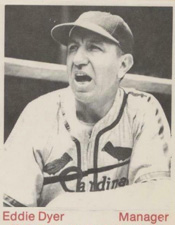
On Oct. 16, 1950, after five seasons as Cardinals manager, Dyer, 51, resigned rather than wait for club owner Fred Saigh to make a change.

Though Dyer led the Cardinals to a World Series championship in 1946, his first year as their manager, and produced second-place finishes in each of the next three seasons, he fell out of favor with Saigh after the Cardinals dropped to fifth place in 1950.

Dyer spent 28 years with the Cardinals as a player, manager and administrator, and his resignation saved Saigh from the unpleasantness of firing an accomplished employee.

Big influence

A left-handed pitcher, Dyer played six seasons (1922-27) for the Cardinals. In 1928, club executive Branch Rickey gave him the chance to manage in the farm system, and Dyer excelled, building a reputation for grooming talent and producing winning teams.

New York Daily News columnist Jimmy Powers noted most of the Cardinals’ Gashouse Gang players in the 1930s “learned the skills of their trade from Eddie. Dyer deserves most of the credit for developing most of the great Gashousers.”

According to Powers, Dyer also “personally polished and readied the core” of the Cardinals’ teams that won four National League pennants and three World Series championships during a five-year span in the 1940s.

When Rickey left for the Dodgers after the 1942 season, Dyer, who earned a college degree at Rice, became the Cardinals’ farm system director. In 1944, he left the club to tend to his multiple and lucrative business interests in oil, insurance, real estate and beverage bottling in Houston.

When Cardinals manager Billy Southworth departed after the 1945 season for a better financial offer to manage the Braves, Dyer replaced him.

Style vs. substance

In Dyer’s first four seasons as Cardinals manager, the club had records of 98-58, 89-65, 85-69 and 96-58. Though successful, Dyer wasn’t beloved by the Cardinals’ fan base.

A St. Louis Globe-Democrat editorial noted, “Cardinals fans were accustomed to the dashing play of the old Gashouse Gang, and Eddie by no stretch of the imagination was a fire-eater manager. The fans recognized this fact and, even with a winning team, Eddie was frequently criticized.”

Dyer also got criticism from the Cardinals’ popular broadcaster, Harry Caray, and his on-air partner, Gabby Street, the former Cardinals manager.

In 1950, the heat intensified. The Cardinals ended June tied with the Phillies for first place, but faded, posting records of 12-16 in August and 13-17 in September.

“Dyer just ran out of farm products,” Jimmy Powers offered. “His Cards were milked dry.”

The 1950 Cardinals finished at 78-75. It was the first time since 1938 they had failed to finish among the top four teams in the National League standings.

According to the St. Louis Post-Dispatch, Gabby Street said at a speaking engagement in Joplin, Mo., “Dyer didn’t always manage the Cardinals to suit me this past season. The Cardinals just didn’t have the hustle. They just didn’t look like any Cardinals ballclub I ever knew.”

Gentleman’s agreement

Saigh had become sole owner of the Cardinals in January 1949, and he wanted to make his mark. After the 1950 season, he did little to squelch speculation of a managerial change. Dyer’s departure “figured in the changes Saigh contemplated,” The Sporting News reported.

Saigh scheduled a meeting with Dyer on Oct. 16, 1950, in St. Louis and said a decision on the manager’s fate would be made then.

Dyer recognized he didn’t have the owner’s support. With his businesses booming in Houston, Dyer didn’t need a baseball job for income, and if he was destined to leave the franchise he had served so long and well, he wanted to do it on his terms.

“He apparently felt he had worn out his welcome in St. Louis and it was time to move on,” the Associated Press reported.

Dyer arrived at the meeting with a resignation letter. Saigh accepted the resignation and agreed to let Dyer announce the news to reporters who had gathered outside Saigh’s Sportsman’s Park office.

Harry Caray was told to stay out of the room when Dyer made his announcement because Saigh feared “an incident,” the St. Louis Post-Dispatch reported. Dyer said Caray’s frequent on-air criticism was “vicious,” The Sporting News noted.

In his book “RedBirds: A Century of Cardinals Baseball,” Bob Broeg said Dyer would have had “a no-hold-barred exit with Saigh” in front of the media if Caray had been allowed to attend Dyer’s session with reporters.

When Caray stayed away, “Eddie agreed to resign gracefully, which was what Fred Saigh wanted,” Broeg observed.

Addressing reporters while perched on the arm of a chair, Dyer said he wasn’t “a candidate” to be Cardinals manager in 1951, thanked several people for their efforts and blamed player injuries for the team’s record in 1950. “I do not believe any club in the National League could have suffered as many and costly injuries as we did and still finish in the first division,” Dyer said.

Given a push

After Dyer read his statement, Saigh told the Globe-Democrat, “This comes as a shock to me.”

Regarding Saigh’s reaction, J. Roy Stockton of the Post-Dispatch wrote, “Even if there was a little salami, what of it? It was a gracious way of bidding a manager goodbye. Dyer’s long service with the club certainly made him entitled to the graceful exit.”

Others noted Dyer’s departure wasn’t solely his decision.

In an editorial, The Sporting News declared Saigh handed Dyer “his pink slip” and gave him “his dismissal notice.”

Bob Burnes of the Globe-Democrat wrote, “You can call it being fired, you can call it resigning or anything you wish.”

John Wray of the Post-Dispatch cited “widespread hostile fan comment” as part of the reason Saigh wanted a different manager.

Burnes called Dyer “one of baseball’s finest gentleman” and added, “Probably many Cardinals fans will be happy at the news Dyer is out. That has been something that always has puzzled us.”

The Sporting News noted Dyer was “strangely lacking in local popularity despite personal charm.”

Cardinals minor-league manager Johnny Keane was considered a leading candidate to replace Dyer, but Saigh instead hired popular shortstop Marty Marion. Marion lasted one season as player-manager and was replaced by Eddie Stanky.

Not until 1964, 18 years after Dyer’s 1946 team, did the Cardinals win another World Series title, and when it happened, Keane was the manager.

Read Full Post »

A kind gesture by Reds manager Sparky Anderson turned a disappointing ending into an uplifting moment.

On Oct. 15, 1970, the Reds were one out away from being eliminated in the decisive game of the World Series against the Orioles. At a time when some managers might be feeling despair, Anderson was feeling compassion.

The Reds’ Pat Corrales, a loyal, seldom-used backup catcher who had experienced personal tragedy, never had played in a World Series game. Realizing Corrales might never get another chance, and knowing how meaningful it would be to him, Anderson sent him to bat for one of the Reds’ hottest hitters, Hal McRae.

In his brief plate appearance, Corrales made the last out of the 1970 World Series, but the result didn’t matter. Unlike Hall of Famers such as George Sisler and Ernie Banks, Corrales had gotten to play in a World Series, and Anderson, in his first season as a big-league manager, had enhanced his growing reputation by being a considerate leader.

Three years earlier, Anderson and Corrales were in the Cardinals’ system _ Anderson as a manager looking to move up in rank, and Corrales as a catcher looking to show he could hit.

Cardinals connections

Anderson joined the Cardinals as a minor-league manager in March 1965. Corrales was acquired by the Cardinals in a trade with the Phillies in October 1965. Cardinals general manager Bob Howsam dealt Bill White, Dick Groat and Bob Uecker to the Phillies for Alex JohnsonArt Mahaffey and Corrales.

After managing St. Petersburg to a 91-45 record in 1966, Anderson was looking to manage the Cardinals’ top farm club, Tulsa, in 1967, but Stan Musial, who’d replaced Howsam as general manager, gave the job to Warren Spahn. Anderson was assigned to manage Modesto. After the 1967 season, Howsam, who had become general manager of the Reds, hired Anderson to manage in the Cincinnati farm system. Two years later, he became manager of the Reds.

Corrales, 25, spent the 1966 season as backup to Cardinals catcher Tim McCarver, but got into a mere 28 games and hit .181. “I’m probably the only guy in the league who has thrown out more runners than he has hits,” Corrales told The Sporting News.

Actually, it was a tie. Corrales finished the 1966 season with 13 hits and threw out 13 runners attempting to steal.

Afterward, Corrales reported to the Cardinals’ Florida Instructional League team to work on his hitting. The manager was George Kissell and Sparky Anderson was his assistant. When Corrales injured a knee, the Cardinals acquired Johnny Romano from the White Sox to be McCarver’s backup. Corrales played the 1967 season at Tulsa for Spahn, and hit .274 in 130 games.

Howsam and the Reds knew their top prospect, Johnny Bench, would be the starting catcher in 1968, replacing Johnny Edwards, and viewed Corrales as a potential backup. On Feb. 8, 1968, Howsam acquired Corrales for the second time, trading Edwards to the Cardinals for him and Jimy Williams. 

Devastating death

Corrales began the 1968 season with the Reds’ farm team at Indianapolis, managed by Don Zimmer, and hit .273 in 77 games. He got called up to the Reds in July to provide relief for Bench, who started 81 games in a row. On July 29, 1968, Corrales was the catcher when the Reds’ George Culver pitched a no-hitter against the Phillies.

Corrales impressed Reds management and was popular with teammates. Asked about Corrales, Pete Rose told The Sporting News, “There’s a man who can do it all. He knows what’s going on out there every minute. Corrales makes a pitcher think on the mound.”

Corrales stuck with the Reds in 1969.

On July 22, 1969, Corrales’ wife, Sharon, 27, gave birth to a son at 5:02 a.m. at Cincinnati’s Christ Hospital. It was the couple’s fourth child. They had three daughters, the oldest, 5, and twins, 3.

Ten hours later, Sharon died in the hospital. The cause was pulmonary embolism, a blood clot in the lungs, the Dayton Daily News reported.

Corrales returned to the Reds a week after Sharon’s funeral. Several teams raised money for an education fund for Corrales’ children, Newsday reported. Among the fund-raisers were the Orioles. According to The Sporting News, Orioles players donated money from fines collected by their clubhouse kangaroo court. Orioles wives raised funds with a bake sale and paper flower sale.

After the 1969 season, the Reds changed managers, replacing Dave Bristol with Sparky Anderson. At spring training in 1970, Anderson said, “In Corrales, I’ve got the best backup catcher in baseball.”

People skills

Corrales hit .236 in 43 games for the 1970 Reds, who finished first in the West Division. Against the Cardinals, he hit .417 (5-for-12).

In the National League Championship Series, the Reds swept the Pirates, and Corrales didn’t play. In the World Series, the Orioles won three of the first four games, and again Corrales didn’t play.

In Game 5 at Baltimore, the Orioles led, 9-3, entering the ninth. Sparky Anderson called to the bullpen, where Corrales had been catching throws from Reds relievers, and told him to come to the dugout.

According to the Dayton Daily News, Anderson approached Hal McRae, who hit .455 in the World Series, and told him, “Unless somebody gets on base before you, I’m going to have Pat hit for you. It’s not a reflection on you. I want him to have a chance to get his name in a World Series box score.”

McRae told Anderson he understood.

After starter Mike Cuellar retired the first two batters, Bench and Lee May, Anderson sent Corrales to the plate. Anderson, who played one season in the majors and 10 in the minors, appreciated a role player such as Corrales, who lived in Bench’s shadow.

“Anyone who plays his heart out for you all year deserves a chance to play in a World Series,” Anderson told the Cincinnati Enquirer. “Corrales has done that for us and I wasn’t going to let this chance get away.”

To the Dayton Daily News, Anderson said, “I wasn’t being sentimental. I was being honest. I’d have let him down by not letting him bat.”

Corrales hit Cuellar’s first pitch to third. Brooks Robinson fielded it and threw to first for the final out, clinching the championship for the Orioles. Boxscore

Explaining why he swung away, Corrales told the Cincinnati Enquirer, “I wasn’t going to take nothing when I went up there. I wanted to hit.”

Regarding the move by Anderson, Corrales told Newsday, “I appreciate he thought of giving me the chance.”

Ritter Collett of the Dayton Journal Herald called Anderson’s action “a considerate gesture, like a coach getting his seniors into the final game.”

Wells Twombly wrote in The Sporting News, “It was a charming gesture, full of good, rich schmaltz. The lovely thing about Sparky is he dares to be corny in a violently cynical age.”

Said Anderson, “The World Series still is the biggest sporting event in America. That’s why I wanted to make sure Pat had a chance to get his name in a box score. It means a lot to a guy.”

Corrales never played in another World Series. He did coach in five World Series (1991, 1992, 1995, 1996 and 1999) for the Braves on the staff of manager Bobby Cox.

Read Full Post »

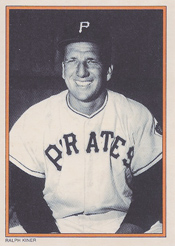
Cardinals manager Eddie Dyer preferred to put Pirates slugger Ralph Kiner on base, representing the potential winning run, rather than give him a chance to hit a walkoff home run.

On Sept. 3, 1950, with the score tied in the bottom of the 10th inning of a game between the Cardinals and Pirates at Pittsburgh, Dyer ordered pitcher Harry Brecheen to give an intentional walk to Kiner with the bases empty and two outs.
The unorthodox strategy backfired when the next batter, rookie Gus Bell, hit a double, scoring Kiner and giving the Pirates a 12-11 victory.

Home run king

The Cardinals carried a four-game losing streak into the Sunday afternoon series finale against the last-place Pirates at Forbes Field.

Kiner hit two home runs. The first was a solo shot against Red Munger in the opening inning. The second home run, a two-run clout versus Cloyd Boyer in the eighth, gave the Pirates a 9-8 lead.

In his first four seasons (1946-49) in the majors, Kiner led the National League in home runs in 1946 (23) and 1949 (54), and tied with Johnny Mize of the Giants for the top spot in 1947 (51) and 1948 (40). Kiner was on his way to winning the league’s home run crown again in 1950.

Comeback Cardinals

Bill Howerton of the Cardinals led off the top of the ninth with a home run into the upper deck in right against Junior Walsh, tying the score at 9-9.

Brecheen, usually a starter, relieved for the Cardinals in the bottom of the ninth and retired the Pirates in order.

In the top of the 10th, the Cardinals scored twice versus Bill Werle. With one out and none on, Red Schoendienst doubled, Stan Musial drove him in with a single and Enos Slaughter tripled, scoring Musial and extending the Cardinals’ lead to 11-9.

Dare to differ

Brecheen retired the first batter, Clyde McCullough, in the bottom of the 10th, but the next two, Pete Castiglione and Bob Dillinger, each hit a home run, tying the score at 11-11. For Castiglione, the home run was his third of the season and for Dillinger it was his first since the Pirates acquired him from the Athletics in July.

After the back-to-back home runs, Brecheen knocked down the next batter, Danny O’Connell, with his first pitch to him. O’Connell grounded out for the second out of the inning.

The next batter was Kiner. The only way he could beat the Cardinals was to hit a home run, but Dyer thought the risk was so high it was worth issuing an intentional walk.

Among the factors influencing Dyer’s thinking:

_ Kiner batted right-handed and Brecheen was a left-hander.

_ Brecheen already had given up two home runs in the inning and thus was vulnerable against Kiner.

“The fact it violated tried and true baseball strategy doesn’t bother us a bit,” columnist Bob Burnes wrote in the St. Louis Globe-Democrat. “We’ve always felt too many managers called too many plays in routine fashion purely because that’s the way the pattern said it should be.”

What did bother Burnes is the slumping Cardinals appeared to have lost confidence. “It was a desperation play, one dictated by something almost akin to panic,” Burnes said.

Take that!

As Kiner watched Brecheen lob four pitches wide of the plate, the fans booed.

With Kiner on first, cleanup hittter Gus Bell batted next. Bell had tripled twice and singled. Though a left-handed batter, Bell hit .320 versus left-handers in 1950.

Bell belted a pitch from Brecheen high and deep to right. The ball “appeared headed into the stands for a home run,” the Pittsburgh Press reported, but it hit high on the screen.

Right fielder Enos Slaughter gave chase and fell. The ball caromed about 35 yards from the screen, the Globe-Democrat reported, giving Kiner time to hustle from first base to home. Bell stopped at second with a double as Kiner crossed the plate with the winning run. Boxscore

The teams combined for 30 hits, including 20 for extra bases.

Each team hit three triples. The Pirates had five home runs and the Cardinals had three.

The Cardinals wasted a big performance from Stan Musial, who had four hits and two walks. Playing near his hometown of Donora, Pa., Musial had a two-run home run and scored four times.

Kiner went on to hit 47 home runs in 1950. Only eight came against left-handers.

Brecheen finished the 1950 season with a 3.55 ERA in 23 starts for the Cardinals and a 10.50 ERA in four relief appearances.

Read Full Post »

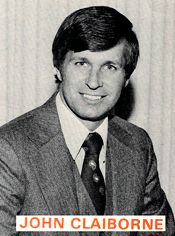
John Claiborne lasted a mere 22 months as Cardinals general manager because he didn’t produce the results club owner Gussie Busch wanted and didn’t connect with Busch the way Whitey Herzog did.

In what the St. Louis Post-Dispatch described as “a surprise move,” Busch fired Claiborne on Aug. 18, 1980, citing “basic disagreements” between the two “regarding progress of the team in all areas of operation.” Two weeks later, Herzog was promoted from manager to general manager.
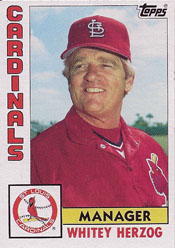
Given the authority to rebuild the Cardinals into a club featuring defense, speed and relief pitching, Herzog transformed them from losers in 1980 to World Series champions in 1982.

Front office intrigue

A St. Louis native who worked in the front offices of the Mets, Cardinals, Athletics and Red Sox, Claiborne, 39, was hired to replace his mentor, Bing Devine, as Cardinals general manager in October 1978 on the recommendation of Busch’s personal attorney, Lou Susman.

In 1979, the Cardinals finished 86-76, but it was a different story the next year. The 1980 Cardinals were 8-10 in April and 8-18 in May. Claiborne had made a bad trade, acquiring Bobby Bonds to play left field after Lou Brock retired, failed to sign top free agents and didn’t obtain a closer for the bullpen.

On June 8, 1980, with the Cardinals’ record at 18-33, Claiborne fired manager Ken Boyer between games of a doubleheader and Herzog was hired as the replacement.

After a couple of weeks as manager, Herzog was called into Busch’s office and asked to give his assessment of the team. In his book, “White Rat: A Life in Baseball,” Herzog said he told Busch, “Well, Chief, you’ve got a bunch of prima donnas, overpaid SOBs who ain’t ever going to win a goddamned thing. You’ve got a bunch of mean people, some sorry human beings. It’s the first time I’ve ever been scared to walk through my own clubhouse. We’ve got drug problems, we’ve got ego problems and we ain’t ever going anywhere.”

Herzog said, “I’ve never seen such a bunch of misfits. Nobody would run out a ball. Nobody in the bullpen wanted the ball.”

Busch asked, “You really think it’s that bad?”

“I know so,” Herzog responded. “We’ve got to do some housecleaning.”

Personnel flops

Busch began thinking the housecleaning should start with Claiborne.

“Claiborne went to the Cardinals as an innovative thinker,” columnist Bill Conlin wrote in The Sporting News. “He convinced Gussie Busch that the free-agent raffle was a viable shortcut to a pennant. The trouble was, despite St. Louis’ willingness to spend, John couldn’t sign any first-liners.”

The free agents signed by Claiborne were pitchers Darold Knowles and Don Hood, and reserve outfielder Bernie Carbo.

“Claiborne spent too much money for too little talent,” wrote Rick Hummel in the Post-Dispatch.

Top free agents such as outfielder Pete Rose, pitcher Tommy John and closer Mike Marshall rejected Cardinals offers.

“In two or three cases, our offer actually was the best, but the player chose another club,” Claiborne said.

Post-Dispatch sports editor Bob Broeg noted Claiborne could have acquired Cubs closer Bruce Sutter for catcher Terry Kennedy, first baseman Leon Durham and second baseman Tommy Herr, but declined. “A sizable request, yes, but there’s an old saw in baseball that if you think you’re only one player away from competing for the top banana, you’ll give more than you can get,” Broeg wrote.

Claiborne “probably hesitated when he should have acted,” Post-Dispatch columnist Tom Barnidge concluded. “This club did, after all, need a relief pitcher like a cripple needs a cane.”

Drinking buddies

As Busch was contemplating what to do, Herzog met for lunch with Bing Devine and told him he was having trouble getting access to Busch. In his book, Herzog said Devine replied, “You’ve got a hell of an advantage. You drink. So does Gussie. Claiborne doesn’t drink. Just call him up and tell him you’re coming out for a few beers.”

Herzog said he followed Devine’s advice. He called Busch and told him, “I’m coming out to have a beer and a braunschweiger sandwich.”

Herzog began meeting regularly at Busch’s home and told him what should be done to improve the team. “Sometimes I’d bring him some fresh fish, which he loved, or some headcheese, which a friend of mine made. We’d sit and eat sandwiches, play gin and drink beer.”

After hearing how Herzog thought the Cardinals should be rebuilt, Busch decided Claiborne wasn’t up to the task and fired him.

Claiborne told the Post-Dispatch, “I was a failure at trying to win quickly. The blame has to be placed on someone and I accept it.”

Though Herzog undercut Claiborne by going directly to Busch with his thoughts rather than working through the general manager, Herzog was taken aback when Busch fired Claiborne, The Sporting News reported. Asked about Busch’s decision, Herzog said, “You wonder why at this time.”

Herzog said he wasn’t interested in being general manager because the job was too time-consuming. “I like to hunt, fish and golf,” Herzog said.

Executive level

Busch put attorney Lou Susman in charge of conducting a search for Claiborne’s replacement.

While Susman was interviewing candidates in New York, Herzog was called to Busch’s home by club vice president Margaret Snyder and told Busch wanted him to be general manager. Herzog asked for time to think about it.

In his book, Herzog said, “I didn’t really want to be a general manager,” but he was concerned someone would be hired who he couldn’t work with. So he called Busch and accepted.

When his promotion to general manager was announced Aug. 29, 1980, Herzog told the Post-Dispatch, “I feel I’m the right guy for the job. I don’t know how anybody can be better qualified for it than me. I decided this is one time I can control my own destiny. I sure as heck didn’t come here to be general manager, but I can do more for the Cardinals as GM than as field manager.”

Former Cardinals manager Red Schoendienst became interim manager.

Herzog wanted to hire Gene Mauch or Dick Williams to be Cardinals manager after the 1980 season but couldn’t work out an arrangement. On Oct. 24, 1980, the Cardinals announced Herzog would have the dual role of general manager and manager. Herzog hired his friend, Joe McDonald, former general manager of the Mets, to be executive assistant/baseball and take care of the administrative and business duties while Herzog focused on baseball matters.

Read Full Post »

(Updated Dec. 8, 2024)

When Whitey Herzog became Cardinals manager, he replaced a friend who had been his roommate and teammate with the Mets.

On June 8, 1980, the Cardinals fired manager Ken Boyer and hired Herzog to succeed him.
Boyer, an all-star and Gold Glove Award winner as Cardinals third baseman in the 1950s and 1960s, was their manager since April 1978. Herzog managed the Royals to three consecutive division titles before being fired after the 1979 season.

In 1966, the Mets had Boyer as their third baseman and Herzog as a coach. In his book, “White Rat: A Life in Baseball,” Herzog said he and Ken Boyer shared a New York apartment with Yankees players Roger Maris and Clete Boyer, Ken’s brother.

“When the Mets were on the road, Clete and Roger had the place, and when the Yankees were on the road, Kenny and I took it over,” Herzog said.

After Boyer was fired by the Cardinals, he told a St. Louis Post-Dispatch reporter, “Wish Whitey Herzog good luck. I hope they can turn it around.”

The comment was relayed to Herzog, who said, “I appreciate that. We are very good friends.”

Time for a change

After Herzog left the Royals, Cardinals general manager John Claiborne called him occasionally to seek his opinions on players. Claiborne and Herzog had worked together for Bing Devine with the Mets.

At one point in their conversations, Herzog said, Claiborne asked whether he’d want to become a paid consultant to the Cardinals. “I told him I didn’t want to get tied up with something like that, but I’d be happy to give him my opinions when he asked for them,” Herzog said.

The 1980 Cardinals hit the skids early and Claiborne and club owner Gussie Busch determined Boyer needed to go.

On Saturday, June 7, 1980, Herzog said he got a call from Busch’s attorney, Lou Susman, who asked him to meet Busch in St. Louis the next morning. Meanwhile, Claiborne headed to Montreal, where the Cardinals were playing, to inform Boyer he was fired. Claiborne intended to get to Montreal on Saturday night and meet with Boyer the next morning, but a rainstorm canceled the connecting flight and Claiborne had to spend the night in Chicago.

On the morning of June 8, 1980, Herzog went to Busch’s estate at Grant’s Farm and Claiborne took a flight from Chicago to Montreal, where the Cardinals and Expos were to play a Sunday afternoon doubleheader.

Herzog met with Busch and Susman, and was offered a one-year, $100,000 contract to manage the Cardinals. When Herzog objected to the length of the contract, Busch countered with a three-year deal through the 1982 season. Herzog accepted and Busch made plans to announce the hiring in a news conference late in the afternoon.

(In a 2016 interview with Cardinals Yearbook, Herzog said he was headed out the front door after learning the contract offer was for one year. According to Herzog, Busch then said, “Come back here. You’re right. The ballplayers have long-term contracts; you should have one, too.”)

At Montreal, the Cardinals lost Game 1 of the doubleheader, dropping their record to 18-33 and giving them 21 losses in their last 26 games.

Boyer was in the clubhouse, making out the lineup card for Game 2, when he looked up and was surprised to see Claiborne enter. “I thought for certain he had come here to discuss possible trades,” Boyer told the Montreal Gazette.

Instead, Claiborne told Boyer he was fired. “This is something you want to talk about to a man face to face, not over the telephone,” Claiborne said.

Claiborne offered Boyer another job within the organization, but Boyer said he wanted time to think it over.

“Boyer was on his way to St. Louis by the second inning of the second game,” the Gazette reported.

Coach Jack Krol filled in as manager for Game 2, and the Cardinals lost again.

Mourning in Montreal

In the locker room, after getting swept in the doubleheader, most Cardinals said they were sorry Boyer was gone and exonerated him of blame for the team’s record. Boyer was 166-191 as Cardinals manager.

In comments to the Post-Dispatch, first baseman Keith Hernandez said the 1980 Cardinals were “the worst team I’ve been on since I’ve been in the major leagues. The worst. We are bad. The manager is only as good as his horses and we don’t have the horses. I’m going to miss Ken Boyer.”

Second baseman Tommy Herr said, “There’s a lack of professionalism among certain players as far as guys running groundballs out, 100 percent all-out effort.”

Cardinals catcher Ted Simmons and pitcher Bob Forsch were two of the players most upset by Boyer’s firing, according to the Post-Dispatch. “Old Cardinals die hard,” Simmons said.

Pitcher John Fugham told The Sporting News, “Unfortunately, there were not 25 people on this team as intense as Kenny Boyer was. Therein lies the problem.”

Vern Rapp, who two years earlier was fired while the Cardinals were in Montreal and replaced as manager by Boyer, was a coach with the 1980 Expos. Asked his reaction to Boyer’s firing, Rapp told the Post-Dispatch, “I feel sorry for anybody it happened to. I know how it feels. It’s not a good feeling.”

Oh, brother

At the news conference at Grant’s Farm introducing him as Cardinals manager, Herzog said, “I’m going to take this dang team and run it like I think it should be run. I don’t think I’ve ever had trouble with players hustling. I understand that’s been a problem here. I think you’ll see the Cardinals running out groundballs.”

Asked whether the Cardinals needed a leader to emerge from within the team, Herzog said, “I don’t need a team leader. I’m the leader.”

Said Busch: “My type of manager, without any argument.”

Born and raised in New Athens, Ill., Herzog described himself as a “very opinionated, hardheaded Dutchman.”

At birth, he was named Dorrell Norman Elvert Herzog. His mother said she intended to name him Darrell, but the name got misspelled. In New Athens, where he excelled at basketball as well as baseball, everyone called him Relly. In the New Athens High School yearbook, it was noted, “He likes girls even more than basketball.” As a professional ballplayer, he got nicknamed Whitey because of his light blonde hair.

Herzog had two brothers _ Therron, who everyone called Herman, and Codell, who everyone called Butzy.

When Herzog was named Cardinals manager, Butzy, who “never played baseball in his life,” told Whitey what lineup he should use to help the Cardinals improve.

“I may play his lineup,” Whitey said.

“He better,” Butzy told the Post-Dispatch, “or we’ll have a fight.”

Whether or not it was with Butzy’s help, the Cardinals went on to win three National League pennants and a World Series championship during Whitey’s 11 years as their manager.

Asked about the style of baseball that became known as Whiteyball, Herzog told Cardinals Magazine, “Whiteyball was nothing more than using speed and playing good, sound, fundamental baseball. And your players have to buy in to it.”

Herzog told Cardinals Yearbook, “We changed the way the Cardinals played baseball. We went back to the old Gashouse Gang philosophy.”

Read Full Post »

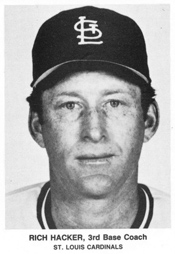
Rich Hacker, a protege of Whitey Herzog, developed and coached players for championship Cardinals clubs.

Hacker managed teams in the St. Louis farm system for four years and was a big-league coach on Herzog’s staff for five seasons, including 1987 when the Cardinals were National League champions. Hacker also was a coach for the Blue Jays when they won consecutive World Series titles in 1992 and 1993.

From boyhood in southern Illinois to his days as a big-league shortstop and later as a scout, manager and coach, Hacker was strongly influenced by Herzog.

Early learner

Hacker was born in Belleville, Ill., and raised in New Athens, Ill., Herzog’s hometown. Rich’s uncle, Warren Hacker, pitched in the majors for 12 seasons and was a 15-game winner for the 1952 Cubs.

Herzog was a big-league outfielder from 1956-63 and “when he would come home to New Athens, there would be a freckle-faced, redheaded kid waiting on his front porch, hoping for a game of catch. The kid’s name was Richie Hacker,” wrote Kevin Horrigan of the St. Louis Post-Dispatch.

“We always knew when he was home,” Hacker recalled. “He drove this big, old Edsel and you couldn’t miss it. He’d bring home bats and balls for us to play with and we’d get a game up out in the street. We’d play pepper and the kid who caught the most balls got to take the bat and ball home.”

Hacker played baseball and basketball at New Athens High School. The Cardinals selected him in the 39th round of the 1965 amateur draft but he enrolled at Southern Illinois University. After his sophomore year, the Mets, whose director of player development was Herzog, took him in the eighth round of the 1967 draft and signed him.

Hacker fielded well but couldn’t hit much. On March 31, 1971, the Mets traded Hacker and Ron Swoboda to the Expos for Don Hahn. Hacker began the season at minor-league Winnipeg, but got called up to the Expos in late June when shortstop Bobby Wine went on the disabled list.

Reaching the top

On July 2, 1971, Hacker made his big-league debut, starting at shortstop in both games of a doubleheader versus the Phillies at Montreal. In the first game, Hacker went hitless against Rick Wise but played flawless defense for winning pitcher Dan McGinn. Boxscore

“Hacker is just a great shortstop,” McGinn told the Montreal Gazette. “He should find it a cinch here after fielding balls on the bumpy infield at Winnipeg.”

In the second game, Hacker got his first big-league hit, a double versus Woodie Fryman to drive in Coco Laboy from third, and “showed the fans why the Expos feel he has a major-league glove,” the Gazette reported. Boxscore

A few days later, when Wine returned, Hacker went back to Winnipeg with instructions to try switch-hitting.

Hacker rejoined the Expos in September. His last hit in the majors came Sept. 26, 1971, when he singled versus Cardinals reliever Dennis Higgins at St. Louis. Boxscore

After spending 1972 and 1973 in the minors, Hacker, 26, was finished as a player. “I knew I wasn’t a prospect anymore,” Hacker said.

Earning respect

Out of baseball for two years, Hacker wanted back in. He spent three seasons (1976-78) as head baseball coach at Southeastern Illinois College and two years (1979-80) as a Padres scout. In 1981, the Blue Jays hired him to scout and to manage their Gulf Coast League team.

Herzog, who joined the Cardinals in 1980, had the dual roles of general manager and manager, and his influence was substantial. The Cardinals hired Hacker to manage their farm club at Johnson City, Tenn., in 1982. Among the prospects at Johnson City were Vince Coleman and Terry Pendleton.

Hacker managed three seasons at Johnson City and one at Erie, Pa.

In November 1985, Hacker was named to the Cardinals’ coaching staff, replacing Hal Lanier, who became Astros manager. Hacker got the job after rejecting a chance to be Astros director of player development, the Post-Dispatch reported.

Herzog regarded Hacker “as one of the brightest minds in the organization,” the Post-Dispatch noted.

“I’ll tell you one thing,” Herzog said. “I wouldn’t have made a guy coach just because he comes from New Athens. Otherwise, I would have brought the bartender in here. He was better to me than anyone else.

“Rich Hacker has a hell of a future in baseball,” Herzog said. “He was a smart player, a smart minor-league manager and a smart scout.”

Hacker was Cardinals first-base coach from 1986-88. When Nick Leyva left the Cardinals’ coaching staff to become Phillies manager, Hacker replaced him as third-base coach in 1989.

Accident victim

After Herzog abruptly quit in July 1990, Joe Torre became manager and wanted to bring in different coaches for 1991. Hacker departed and became third-base coach on the staff of Blue Jays manager Cito Gaston. The Blue Jays won a division title in 1991 and a World Series championship in 1992.

In 1993, when the Blue Jays were on their way to a second straight World Series crown, Hacker made plans to visit his family at home in Belleville, Ill., during the all-star break.

On Sunday, July 11, 1993, Hacker took a flight to St. Louis and arranged to drive himself home. At about 11:45 p.m., Hacker was driving across the Martin Luther King Bridge from downtown St. Louis “when one of two speeding cars that were drag racing across the bridge from Illinois crashed into Hacker’s eastbound vehicle head-on,” the Post-Dispatch reported.

Hacker suffered head injuries and a broken right ankle.

“He was wearing his seat belt,” said Dr. Marc Shapiro, director of trauma services at the St. Louis University Medical Center. “If Mr. Hacker was not wearing his seat belt, his injuries would be much more serious. We might not even be talking about him now.”

Hacker told the Post-Dispatch his condition “was touch and go for a while.” Regarding the accident, Hacker said, “I don’t remember a darn thing. I guess that is the body’s way of protecting us.”

Hacker was in a rehabilitation hospital until Sept. 3, 1993. Among his visitors were Blue Jays team doctor Ron Taylor, the former Cardinals pitcher, and Cardinals coach Red Schoendienst and his brother Elmer. When Elmer Schoendienst was a Cardinals prospect in 1948, he was injured and five teammates were killed when their team bus was hit head-on by a truck near St. Paul, Minn. “He’s been very kind to me,” Hacker told the Post-Dispatch.

On Oct. 8, 1993, Hacker threw the ceremonial first pitch before Game 3 of the American League Championship Series at Toronto.

With Hacker unable to work on the field, the Blue Jays, in a fitting twist, hired Leyva to replace him as third-base coach. Hacker remained on the Blue Jays’ coaching staff in 1994 and was given special assignment duties, including charting every pitch of each game from the press box, Toronto’s National Post reported.

Hacker was out of baseball in 1995, though the Blue Jays paid him his full salary of $75,000, the Post-Dispatch reported. In 1996, he became a Padres scout, a position he held until he retired after the 2003 season.

Several retired Cardinals players posted tributes to Hacker on his obituary page.

John Tudor called Hacker “a class act and great person” and said “he was such an unheralded part of those 1980s teams.”

Ozzie Smith said, “Rich was one of the nicest people I have ever met. We spent a lot of time talking baseball and him hitting me ground balls.”

Read Full Post »

« Newer Posts - Older Posts »