Feeds:
Posts
Comments

Archive for the ‘Opponents’ Category

(Updated April 20, 2022)

In his first season in the National League, Jackie Robinson was a force against the Cardinals, especially in a key September series that secured the Dodgers’ bid to win the 1947 pennant.
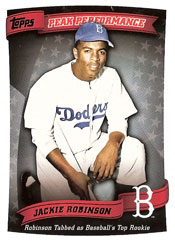
Robinson integrated major-league baseball when he batted second and played first base in the Dodgers’ 1947 season opener on April 15 against the Braves at Brooklyn. Boxscore

The 1947 Dodgers would finish in first by five games over the defending champion Cardinals and Robinson was a big factor. In 23 games against the 1947 Cardinals, Robinson hit .309 with three home runs, four steals, 11 walks and 10 RBI. His on-base percentage was .381.

Proposed protest

Robinson faced the Cardinals for the first time in the regular season on Tuesday afternoon, May 6, at Brooklyn in the opener of a three-game series. Batting second and playing first base, Robinson went 2-for-5 (a pair of singles) with a run scored in the Dodgers’ 7-6 victory. Boxscore

The New York Herald Tribune reported some Cardinals players tried to organize a strike in protest of Robinson’s presence in the major leagues. National League president Ford Frick confirmed to the Associated Press that Cardinals owner Sam Breadon had informed him there was “a movement among the Cardinals to strike in protest during their series if Robinson is in the lineup.”

“From what (Breadon) told me afterward, the trouble was smoothed over,” Frick said.

Breadon, manager Eddie Dyer and several Cardinals players denied knowledge of any strike plan.

“I brought the matter up with two of my leading players,” Breadon said to the Associated Press. “They never intimated that such a thing was even thought of.”

Said Dyer: “The report my club threatened a strike against Robinson is absurd. At no time, to my knowledge, did my players consider such a foolish action. They never discussed it. No one ever discussed it with them.”

Dodgers manager Burt Shotton told the United Press he didn’t believe the Cardinals had intended to strike. “I would have known about it had anything been done,” Shotton said.

Stanley Woodward, sports editor of the New York Herald Tribune, defended the accuracy of the report as “essentially right and factual.”

“The denial by Sam Breadon … is so spurious as to be beneath notice,” Woodward wrote.

in his 1948 book, “Jackie Robinson: My Own Story,” Robinson said, “We played our early May series with the Cards without any overt bad feeling. By and large, the Cardinals treated me as merely another ballplayer.”

Attracting a crowd

Robinson’s first visit to St. Louis with the Dodgers came two weeks later. In his book “1947,” Dodgers broadcaster Red Barber said, “St. Louis was the tough town. If there was to be trouble for Robinson, it figured to be in St. Louis. Robinson knew in advance he would not be permitted to stay in the Chase Hotel with the rest of the team. He was to have a room in town with a Negro family. He would come and go to Sportsman’s Park on his own, and depart by himself.”

Robinson’s first game at St. Louis occurred on Wednesday afternoon, May 21, in a 4-3 Dodgers victory. Robinson helped attract the largest weekday crowd of the season, 16,249. “About 6,000 were Negroes,” noted the St. Louis Post-Dispatch.

“Robinson was cheered each time he went to bat and the Dodgers as a team received more vocal encouragement than they usually get at Sportsman’s Park,” the Post-Dispatch reported.

Robinson was 0-for-4 with a walk and a run scored. Boxscore

Cardinals confrontation

A month later, on June 14 in St. Louis, Robinson lost his temper in an encounter with Cardinals pitcher Harry Brecheen in the second game of a Saturday doubleheader.

Brecheen “was having it easy, throwing up slow twisters and dinky curves that we could not hit for love nor money,” Robinson said in his book.

In the sixth inning, with the Cardinals ahead, 7-0, Robinson batted, “swung at one of those dinkies and topped the ball between the pitcher’s mound and first base,” he recalled. Brecheen fielded the ball, ran toward the base line and waited for Robinson to arrive rather than toss to first base.

“Brecheen knew as well as I did that any other player would have run over him and knocked him down in the hope that he’d drop the ball,” Robinson said. “Of course, that was the sort of thing I’d been told to avoid. I stopped dead on the base line. He tagged me.”

Robinson told Breechen, “You better play your position like you’re supposed to. Next time, I’m going to dump you on the back of your lap.” Boxscore

In his book, Robinson said, “That was the first time I had ever actually lost my temper on the field” since arriving in the big leagues. “It was also the first time I had ever said an angry word to an opposing player.”

Battles in Brooklyn

As the season unfolded, Robinson’s impact grew in games against the Cardinals.

On July 18, Robinson had three RBI, including a two-run home run against Al Brazle, and two runs scored in the Dodgers’ 7-0 victory at Brooklyn. Dodgers starter Ralph Branca pitched seven perfect innings before Enos Slaughter led off the eighth with a single. Boxscore

The next day, Robinson had two hits and a steal of home, though the Cardinals won, 7-5. Boxscore

A month later, on Aug. 20, the Cardinals were back in Brooklyn and Branca was pitching another gem against them until the Cardinals rallied to tie the score with two runs in the ninth inning.

In the 11th, with Hugh Casey pitching for the Dodgers, Slaughter hit a ground ball toward first base. Robinson fielded it and headed to the bag. As Slaughter arrived, he stepped on Robinson’s right foot, spiking him.

Robinson suffered no cut, but, to the Dodgers and the Brooklyn crowd, it appeared Slaughter intentionally tried to injure Robinson. Slaughter said it was an accident, not deliberate.

Robinson told The Sporting News, “All I know is I had my foot on the inside of the bag. I gave Slaughter plenty of room.”

In his book, Robinson said, “I don’t think he did it intentionally … He said later I had taken too much of the bag. I didn’t think so, but in all fairness to him I should report there had been some talk around the league that I was taking too much room on first base when I tagged the bag.” Boxscore

Pennant race

Brooklyn held a 4.5-game lead over the second-place Cardinals heading into their final series against one another Sept. 11-13 at St. Louis. The Cardinals knew their best chance to overcome the Dodgers was to sweep.

Brooklyn won two of the three _ and the standout player was Robinson. He batted .462 in the series.

In the opener, Cardinals catcher Joe Garagiola, running to first base after hitting a grounder, stepped on Robinson’s right heel, “tearing the back of Jackie’s shoe,” the New York Daily News reported.

According to Red Barber, Robinson “was seething, remembering the close call he had suffered when Slaughter’s spikes just missed his Achilles tendon.”

When Robinson batted in the next inning, he and Garagiola exchanged heated words. Garagiola “made a crack about my race,” Robinson said in his book.

According to the St. Louis Star-Times, Garagiola threw down his mask.

“For a moment, it looked as though we would come to blows,” Robinson said.

Plate umpire Beans Reardon stepped between Garagiola and Robinson. Dodgers coach Clyde Sukeforth “charged out of the dugout and berated Garagiola,” the Daily News reported, before Reardon shoved Sukeforth back toward the dugout.

“It was all over fast,” Reardon told the Star-Times. “I just told them, ‘That’s enough, boys. Let’s play ball.’ ”

When Robinson batted again, in the fifth, he slugged a two-run homer, tying the score and sparking the Dodgers to a 4-3 victory. Boxscore

“I don’t think Garagiola did it intentionally,” Robinson told the Post-Dispatch of the spiking, “but this makes three times in two games with the Cardinals that it’s happened. He cut my shoe all to pieces.”

After St. Louis won the second game, 8-7, the Dodgers came back to win the finale by the same score. Robinson had three hits and a walk, but his most important play came on defense. In the eighth inning, the Cardinals had runners on first and second with two outs when Nippy Jones, seeking his eighth hit of the series, hit a pop-up that drifted toward the Dodgers dugout. Robinson reached for the ball, caught it and spilled into the dugout. Boxscore

“As I grabbed that foul, I tried to break my fall,” Robinson told The Sporting News, “but I don’t know what would have happened if Ralph Branca hadn’t tackled me.”
 

Read Full Post »

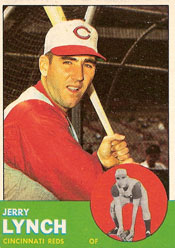
Jerry Lynch, one of the all-time premier pinch-hitters, had more career hits, including two of his most dramatic, against the Cardinals than any other team.

A career .277 batter in 13 big-league seasons (1954-66) with the Pirates and Reds, Lynch hit .301 with 16 home runs against the Cardinals. A left-handed batter, his 128 hits off St. Louis pitching were his most against any opponent.
In 1961, when Lynch helped the Reds to their first National League pennant in 21 years, he hit .404 as a pinch-hitter (19-for-47), with five home runs. Against the Cardinals that season, Lynch hit .333 (10-for-30) overall, with two homers.

Lynch holds the National League record for career pinch-hit homers (18). The big-league mark belongs to Matt Stairs (23 pinch-hit homers). Stairs slugged 14 of those 23 in the National League.

Lynch, an outfielder, hit two big-league grand slams _ both against the Cardinals.

The first occurred on Aug. 7, 1960, in the opener of a doubleheader at St. Louis. Lynch hit an eighth-inning grand slam off reliever Ron Kline, helping the Reds to an 18-4 victory. (Kline and Lynch had been Pirates teammates and eventually became business partners). Boxscore

Four years later, July 21, 1964, at St. Louis, Lynch hit a fifth-inning grand slam against reliever Ron Taylor, lifting the Pirates to an 8-4 triumph. Boxscore

Twice in 1959 Lynch had four-hit games against St. Louis.

On June 28, 1959, Lynch, batting third and playing left field, was 4-for-5 with two doubles and a RBI for the Reds in the Cardinals’ 11-8 victory in Game 2 of a doubleheader at Cincinnati. Boxscore

Less than three weeks later, Lynch, batting fifth and playing left field, went 4-for-5 with four RBI, including a two-run homer off Ernie Broglio, in the Reds’ 7-5 win at St. Louis on July 16, 1959. Boxscore

In the May 1959 edition of Baseball Digest, Si Burick wrote of Lynch, “He was an outfielder who performed atrociously on defense. He moved uncertainly after fly balls. He wasn’t adept at fielding ground balls. He had just a fair arm. What kept him in business was his bat. Even when he wasn’t hitting for an average, he swung with an authority that was recognized by all who saw him.”

Lynch hit Bob Gibson well. He was 18-for-58 (.310) against the Cardinals ace. In the last game he started for the Reds, Lynch drove in three and hit two doubles, both against Gibson, in Cincinnati’s 10-6 victory at St. Louis on May 19, 1963. Boxscore

Four days later, the Reds traded Lynch to the Pirates for outfielder Bob Skinner.

Lynch had started his big-league career with the Pirates in 1954 before being acquired by Cincinnati in December 1956. After learning he’d been reacquired by Pittsburgh in May 1963, Lynch told The Sporting News, “I sure was surprised.”

After his playing days, Lynch and Dick Groat co-owned a Pennsylvania golf course.

Read Full Post »

(Updated Dec. 24, 2018)

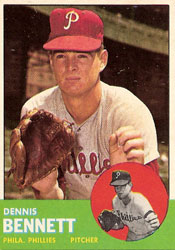
Dennis Bennett played a role in the drama that enabled the Cardinals to overcome the Phillies in the final two weeks of the regular season and win the 1964 National League pennant.

Bennett was a member of the Phillies’ starting rotation in 1964. Before the season, he predicted he’d win 20. His record through July 5 was 9-5, but he lost his next seven decisions.
In early September, Bennett began to regain his winning form, giving Phillies manager Gene Mauch hope for a reliable starter to join stalwarts Jim Bunning and Chris Short. Crediting a sidearm delivery with giving him better control and enabling him to keep his pitches low in the strike zone, Bennett told The Sporting News, “My ball is moving much more. The curve is really breaking off now.”

A left shoulder ailment knocked Bennett off track again.

Bennett, who lost to the Cardinals on May 4 Boxscore and again on July 25 Boxscore, made his last start of the 1964 season on Sept. 29 at St. Louis.

The Cardinals and Phillies were headed in opposite directions. St. Louis had won six in a row and Philadelphia had lost eight in a row. The Cardinals began the day a game behind the first-place Reds and a half-game ahead of the Phillies.

According to the David Halberstam book “October 1964,” Bennett had tendinitis in his left shoulder, resulting in “a dead arm.” Pitching in pain, Bennett was no match for the red-hot Cardinals. They scored a run in the first on a Dick Groat RBI-double and scored twice in the second on a Tim McCarver RBI-single and a Curt Flood RBI-groundout. Bennett was lifted after giving up three runs, five hits and a walk in 1.1 innings.

The Cardinals won, 4-2, and, paired with the Pirates’ 2-0 victory over the Reds, moved into a tie with Cincinnati for first place. The Associated Press reported the defeat was “a near-fatal blow to the Phillies’ slim pennant hopes.” Boxscore

St. Louis went on to win the pennant and the World Series title. Bennett, who finished 12-14 in 1964, was 0-3 with a 15.83 ERA in four games against the Cardinals that season. On Nov. 29, 1964, Bennett was traded to the Red Sox for first baseman Dick Stuart.

Boston, which had a 4.50 team ERA in 1964, was desperate for pitching and was hopng Bennett would become their best left-handed starter since Mel Parnell, who retired after the 1956 season.

Bennett never developed into a big winner. He pitched for the Red Sox, Mets and Angels, appearing in his final big-league game in 1968. He was 43-47 with a 3.69 ERA in seven major-league seasons.

Bennett did get a measure of revenge against the Cardinals. His final big-league win came against them at St. Louis in the first game of a doubleheader on July 16, 1967. Starting for the Mets, Bennett held the Cardinals to one run in seven innings and New York won, 2-1, on Ed Kranepool’s two-run home run against Ray Washburn in the seventh. Boxscore

In 14 career appearances against the Cardinals, Bennett was 2-7 with a 5.95 ERA.

Previously: Ryne Duren threw roadblock at 1964 Cardinals

Read Full Post »

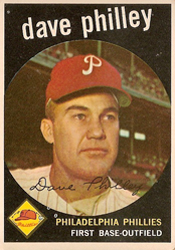
In an 18-year big-league career, Dave Philley spent three seasons in the National League and did some serious damage against the Cardinals.

One of the all-time best pinch-hitters, Philley was a career .270 batter who finished with 1,700 hits. The team against whom he had the highest batting average was the Cardinals.
Philley batted .370 (30-for-81) in 37 career games against the Cardinals. In 1959, playing for the Phillies, Philley blistered Cardinals pitching at a .422 clip (19-for-45).

A switch hitter, Philley made his big-league debut with the White Sox in 1941, served in the military and returned to the majors in 1946. He was an outfielder and first baseman with the White Sox, Athletics, Indians, Orioles and Tigers until joining the Phillies in 1958.

From 1957 through 1959, Philley was one of the premier pinch-hitters in the game. His batting averages as a pinch-hitter in those years:

_ .436 (17-for-39) in 1957 (White Sox and Tigers).

_ .409 (18-for-44) in 1958 (Phillies).

_ .395 (15-for-38) in 1959 (Phillies).

In 1958, Philley hit safely in eight consecutive pinch-hit appearances. When he got a pinch hit in his first appearance of 1959, Philley extended the streak to a major-league record nine.

In 1959, when he turned 40 in May, Philley pounded Cardinals pitching. It began in spring training when Philley ripped a pinch-hit grand slam against Sal Maglie of the Cardinals on March 29 at St. Petersburg, Fla.

Some of Philley’s many highlights versus the Cardinals in 1959:

_ May 5, 1959, Phillies 8, Cardinals 7, at Philadelphia: The Cardinals took a 7-3 lead into the bottom of the ninth, but Philadelphia rallied for five runs against starter Vinegar Bend Mizell and relievers Larry Jackson and Jim Brosnan. Boxscore

Philley, pinch-hitting for catcher Jim Hegan, contributed to the comeback with a RBI-single off Brosnan.

Cardinals manager Solly Hemus told The Sporting News the bullpen collapse was “the worst exhibition I ever saw _ terrible.”

_ June 6, 1959, Phillies 4, Cardinals 3, at Philadelphia: In the 10th inning, Philley, pinch-hitting for catcher Valmy Thomas with two outs and the bases loaded, singled to right against Lindy McDaniel, scoring Richie Ashburn from third for the victory. Boxscore

_ Aug. 9, 1959, Phillies 4, Cardinals 2, at St. Louis: In the ninth inning of the second game of a doubleheader, Philley, pinch-hitting for pitcher Jim Owens, singled to left off Marshall Bridges, driving in Joe Koppe from third with the tie-breaking run. Boxscore

“I’m a better hitter now than I ever was,” Philley said in a 1959 interview with The Sporting News, “and if I had known 10 years ago what I know now, I would have been able to make a potful of money out of this game.

“Of course, as you get older you get smarter up there at the plate and figure the pitchers better, but the main thing is that I’ve cut down on my swing. When I first came up and, in fact, until a few years ago, I was trying to hit home runs. I swung too hard and I had too long a swing. Now I’ve cut my swing down and I have control of the bat and I can wait longer on a pitch.”

In his book “Stan Musial: The Man’s Own Story,” Musial said Philley became “an outstanding pinch-hitter past 40 because he worked so hard to stay in shape.”

Philley was a mentor to the rookie second baseman of the 1959 Phillies, Sparky Anderson. The Sporting News reported Anderson, the future Hall of Fame manager of the Reds and Tigers, “has been one of the most consistent seekers of advice from Philley and believes Dave has helped him in many ways. The two usually sit together on the club’s plane rides and talk baseball by the hour.”

Previously: Cardinals’ collapse part of Larry Jackson’s painful 1961 season

Read Full Post »

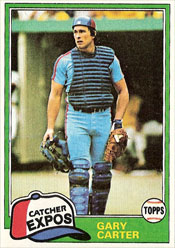
Gary Carter’s most dramatic game against the Cardinals was his first with the Mets. On April 9, 1985, Carter hit a 10th-inning walkoff home run against Neil Allen, lifting the Mets to a 6-5 victory on Opening Day at New York. Boxscore

The Hall of Fame catcher played well against the Cardinals in a big-league career from 1974-92. Carter produced 30 home runs, 127 RBI and a .423 slugging percentage versus the Cardinals.
His two most outstanding games against the Cardinals were at St. Louis while he was with the Expos.

On Sept. 26, 1977, Carter went 3-for-4 with five RBI, scored twice, walked and stole a base in the Expos’ 9-5 victory. It marked the first time Carter, 23, had driven in five runs in a big-league game.

The big blow was Carter’s two-out, three-run home run in the seventh inning off starter Eric Rasmussen, snapping a 2-2 tie. In the ninth, after St. Louis had rallied to tie the score 5-5, Carter hit a two-run single to left off Al Hrabosky and scored on a sacrifice fly, keying a four-run Expos uprising. Boxscore

Three years later, May 31, 1980, Carter delivered another five-RBI performance at St. Louis. He was 4-for-4 with two home runs (including an inside-the-park homer) with three runs scored, but the Cardinals won, 8-6.

Batting in the cleanup spot for the first time that season, Carter blooped a ball into left-center field against Bob Forsch in the sixth. As left fielder Dane Iorg and center fielder Tony Scott chased after it, “Iorg threw a cross block on Scott that would have done any football linebacker proud,” the Montreal Gazette reported. “Scott went down in a heap and stayed there. Iorg recovered, but it was shortstop Garry Templeton who eventually tracked the ball down on the warning track as Carter circled the bases.”

It was the second and last inside-the-park home run of Carter’s big-league career.

“We were both looking at the ball,” Iorg said. “I certainly didn’t see Tony and I’m sure he didn’t see me.”

A two-run homer off Pete Vuckovich in the seventh capped Carter’s outstanding evening. Boxscore

Previously: Cardinals were victims of historic homers by Gil Hodges

Read Full Post »

(Updated Feb. 20, 2023)

Hank Aaron could have added to his home run total if not for an unusual call in a game against the Cardinals.

Aaron, who would break Babe Ruth’s career home run record of 714 in 1974 and finish with 755, hit a home run against the Cardinals in 1965 that didn’t count toward his total.

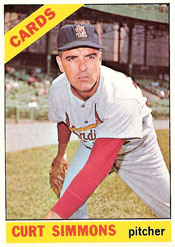
On Aug. 18, 1965, at St. Louis, Aaron came to bat for the Braves against Cardinals starter Curt Simmons with the score tied 3-3 in the eighth.

In his autobiography, “I Had a Hammer,” Aaron said, “I always had difficulty with Curt Simmons because he would put the ball behind his back and then pound his leg with his glove. You never knew where the ball was coming from. Simmons used to drive me crazy with his herky-jerky delivery and his floating change of pace.”

In the 1965 game, Simmons teased Aaron with a changeup so high and so slow it seemed much like a blooper pitch. “I double-hitched my swing,” Aaron said in his book, “and took a big step up to meet the ball.”

Aaron lifted a high fly ball onto the pavilion roof in right for an apparent go-ahead home run.

Instead, Aaron was called out by plate umpire Chris Pelekoudas for being out of the batter’s box when he connected with the ball, nullifying the home run. Pelekoudas, in his sixth season as a National League umpire, ruled Aaron’s left foot was in front of the batter’s box.

“It’s the worst call I’ve ever seen,” Aaron said to the Associated Press. “I did the same thing the time before and popped up, and he (Pelekoudas) didn’t say a word. I always hit Simmons that way.”

Braves manager Bobby Bragan argued with the umpire and was ejected.

“It was either a grudge call, or he wanted to get his name in the paper,” Bragan said. “I’ve never seen such a call.”

Said Pelekoudas: “Bragan’s protest was strictly on judgment. His only argument was about a grudge _ and that is stupid. I didn’t hesitate in making the call.”

Cardinals catcher Tim McCarver said Aaron stepped out of the box and, “I expected (Pelekoudas) to call it.”

Cardinals coach Joe Schultz told the St. Louis Post-Dispatch, “You’ve got to give the umpire credit for having the nerve to call it.”

Aaron said in his book, ‘I won’t swear to you that I didn’t step over the line of the batter’s box, but it was nothing that I or other hitters hadn’t done before.”

Cardinals backup catcher Bob Uecker wasn’t in the game, but years later, in July 1973, he claimed to the Boston Globe and the Associated Press that he “pointed out Aaron’s cleat marks” to Pelekoudas. “It was one of the few occasions I’ve seen Aaron blow his stack,” Uecker said to the Associated Press.

In his 1982 book “Catcher in the Wry,” Uecker told another version. “I had to tell Henry the truth. It wasn’t me,” Uecker said. “Tim McCarver was the catcher who took the homer away from him, but it was the sort of thing I would have been proud to do.”

In the ninth, with Ray Washburn pitching in relief of Simmons, the Braves sent Don Dillard to pinch-hit with a runner on base and two outs. Dillard delivered a home run _ the last of his big-league career.

In a fitting twist, the Cardinals argued the ball hit by Dillard didn’t clear the wall and shouldn’t have been ruled a home run, but the Cardinals lost that argument and the game, 5-3. Boxscore

Umpire Bill Jackowski said the ball hit the top of the wall, caromed off a fan in the stands and bounced back onto the field.

The Post-Dispatch reported the ball Dillard hit “came straight down and hit the outfield wall padding before bouncing onto the field.”

“I came very close to catching the ball,” Cardinals center fielder Curt Flood said to the Post-Dispatch. “I thought it was a big can of corn. There was no way for the ball to come down the way it did if a fan had touched the ball.”

Read Full Post »

« Newer Posts - Older Posts »