Feeds:
Posts
Comments

Archive for the ‘Opponents’ Category

When the Houston Colt .45s began play in the National League in 1962, one of the most anticipated homestands was the one with the Cardinals.

Houston had been a Cardinals minor-league affiliate from 1921-35 and from 1946-58. Many in the region were Cardinals fans.

The 1962 Cardinals had several close connections to Houston. Cardinals manager Johnny Keane and pitching coach Howie Pollet were Houston residents. Keane had played for Houston (1934-37) and also had managed the club (1946-48). Pollet had pitched for Houston (1939-41).

Also, Cardinals coach Harry Walker had been the last Houston manager (1956-58) while it was a Cardinals affiliate. Top 1962 Cardinals players, such as third baseman Ken Boyer and pitcher Larry Jackson, had played for the Houston farm club.

St. Louis made its first visit to Houston for the second homestand in Colt .45s history (the franchise changed its name to Astros in 1965). The Cardinals and Colt .45s were scheduled for three midweek night games April 24-26.

The Cardinals won one, lost one and tied another. Two games each were decided by a run and the other ended in a tie after 17 innings.

According to Clark Nealon of the Houston Post in a story for The Sporting News, Houston “waited years for the first National League series with the St. Louis Cardinals and when it came it was tremendous.”

Houston 4, Cardinals 3, April 24, 1962

In pre-game ceremonies, The Sporting News reported, each member of the Cardinals was “introduced individually to ringing applause.”

At the end, the cheers were for Houston starter Hal Woodeshick, who pitched a six-hitter.

Houston left fielder Don Taussig, who had played for the Cardinals in 1961, hit a solo home run off Jackson in the sixth.

With one on and two outs in the ninth, Bill White ripped a sinking liner that Houston right fielder Johnny Weekly snared at his shoetops.

Attendance was 19,335 _ impressive for a weeknight at a ballpark that seated about 25,000. Boxscore

Cardinals 5, Houston 5, 17 innings, April 25, 1962

In the afternoon, Keane was honored at a Chamber of Commerce luncheon and presented with a replica of a Colt .45 gun. He told the audience, “We’re a lot better club than we showed you on April 24.”

The Cardinals’ manager again was honored in ceremonies before the game. Among his gifts was a king-sized pass to “the first World Series game in Houston.” (It would be 2005 before Houston made its first World Series appearance.)

The game began at 8:02 p.m. It was halted at 1:15 a.m. because of a local curfew in Houston that forbid starting an inning after 12:50 a.m. The game was replayed on another date but all the statistics counted.

Boyer’s RBI-single to left in the ninth off Turk Farrell scored Julian Javier from second, tying the score 5-5.

Ed Bauta pitched eight scoreless innings for the Cardinals after entering in the 10th.

The Cardinals had runners on first and second with no outs in the top of the 17th, but Doug Clemens struck out and Red Schoendienst hit into a double play.

Six Houston pitchers struck out 18 Cardinals, including Boyer three times. Houston left 16 runners on base and the Cardinals stranded 15. Boxscore

Cardinals 3, Houston 2, April 26, 1962

The Cardinals were spared embarrassment by salvaging a victory in the series. Bob Gibson pitched a two-hitter for his first win of the season and Stan Musial drove in the deciding run with a two-out single in the eighth, scoring Curt Flood from third base. Boxscore

Part Two: Cardinals broke Astrodome hex with 19 RBI in one game

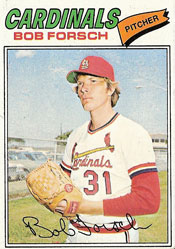
Part Three: Forsch vs. Forsch: Bob had edge in brotherly matchup
Read Full Post »

On July 7, 1974, I went with my parents and younger sister to a Cardinals-Reds doubleheader at Riverfront Stadium in Cincinnati. It was a blistering hot Sunday afternoon along the Ohio River. I was 18 and pumped with a mix of excitement and dread about seeing the team I followed passionately, the Cardinals.

The excitement came from the anticipation of seeing two Cardinals games in one day. The Cardinals were in first place in the National League East, three games ahead of the Expos, and I was getting my first look at them in person that year.
The dread came from knowing the Cardinals would be facing the Big Red Machine. This was the Reds lineup of Pete Rose, Ken Griffey Sr., Joe Morgan, Johnny Bench, Tony Perez and George Foster.

We had missed by one day seeing St. Louis ace Bob Gibson, who had pitched a three-hitter in the Cardinals’ 3-1 victory against the Reds Saturday afternoon. Boxscore

For the doubleheader, the Cardinals’ starters would be a pair of 24-year-old right-handers _ Bob Forsch, making his major-league debut, in Game 1, and Mike Thompson, 0-2 with a 5.06 ERA, in the second game.

Thompson was yanked after allowing three runs on four walks in one inning of Game 2 and never pitched again for St. Louis. (The Reds won, 11-2. Boxscore).

Forsch, though, was splendid in the opener. Paired against Tom Carroll, 21, a right-hander who also was making his major-league debut, Forsch pitched with poise against a potent lineup.

Griffey, Morgan, Perez and Bench each was 0-for-3 against Forsch. Bench struck out twice. Rose managed only an infield single against the rookie.

Center fielder Cesar Geronimo, the seventh-place batter, was Forsch’s nemesis. In the second inning, after a home run by first baseman Ted Simmons gave the Cardinals a 1-0 lead, Geronimo hit a two-out double, scoring Dan Driessen from second base, tying the score.

In the seventh, Geronimo hit a home run against Forsch. It was the deciding run in the Reds’ 2-1 victory. Forsch pitched 6.2 innings, allowing four hits, five walks and striking out two. Boxscore

“When you give up just two runs and four hits, you ought to win,” Tim McCarver, who caught Forsch’s debut game, told the St. Louis Post-Dispatch. “I’m proud of Bobby. He did a good job, an excellent job. You couldn’t ask any more of him.”

I became a big Bob Forsch fan that day and remained so. His sudden death at age 61 on Nov. 3, 2011, stunned and deeply saddened me.

After my wife and I settled in Florida in 2002, we went as spectators to a Cardinals fantasy camp game at Jupiter, Fla., and saw Forsch as he and pitcher Joe Magrane were walking down the right-field line at Roger Dean Stadium. We called to them and they came over and were wonderful to us. I mentioned to Forsch that I had witnessed his debut in the majors. He smiled and said, “In the pregame meeting, they told me, ‘Whatever you do, don’t walk Geronimo.’ Well, I didn’t.”

Forsch wrote a book, “Tales From The Cardinals Dugout,” which I had brought with me and asked him to sign it. In bold, clear handwriting, he wrote, “Diane and Mark: Hope you enjoy! Bob Forsch”

There is a passage in the book where Forsch writes about his big-league debut:

“Tim McCarver caught my first big-league game … Red Schoendienst was the manager then and all Red said before I went to the mound was, ‘Go out and do the best you can. No matter what happens, you’ll get another chance.’ That was good to hear. I didn’t know Red well enough to think he’d lie to me!

“We had gone over the hitters before the game, how to pitch to each one … Geronimo was their center fielder, and he was real fast and a threat to steal. They told me, ‘Just don’t walk him. Make him hit to get on.’ He ended up hitting a double … and a home run. But, hey, I didn’t walk him.”

Read Full Post »

(Updated Oct. 28, 2017)

In a 2011 World Series jammed with dramatic moments, the Cardinals’ championship was defined, in large part, by the home run.

_ Albert Pujols hit three home runs in Game 3.
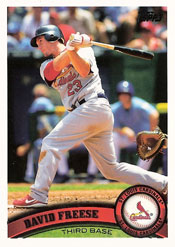
_ David Freese hit a walkoff 11th-inning home run in Game 6.

_ Allen Craig hit three home runs, including a go-ahead shot in Game 7.

_ The eight home runs hit by the 2011 Cardinals established the franchise record for most in a World Series. The previous mark was set in 1968 when the Cardinals hit seven home runs in a World Series against the Tigers.

_ The nine home runs allowed by the 2011 Cardinals are tied for the second-most in the franchise’s World Series history. Only the Yankees, with 10 in 1964, hit more home runs against the Cardinals in a World Series.

_ The 17 total home runs by the Cardinals and Rangers are the most in a World Series involving the Cardinals. The previous high was 15 total home runs _ in the 1964 World Series between the Cardinals and the Yankees and again in the 1968 World Series between the Cardinals and the Tigers.

Here are the home run totals in World Series involving the Cardinals:

YEAR…….CARDINALS HRS…….OPPONENT HRS…….TOTAL HRS

1926………4………………………….4…………………………8

1928………1………………………….9…………………………10

1930……..2………………………….6………………………….8

1931……..2…………………………..3…………………………5

1934……..2………………………….2………………………….4

1942……..2………………………….3………………………….5

1943……..2………………………….2………………………….4

1944……..3………………………….1………………………….4

1946……..1………………………….4………………………….5

1964……..5………………………….10……………………….15

1967……..5…………………………8………………………….13

1968……..7…………………………8………………………….15

1982……..4…………………………5………………………….9

1985……..2…………………………2………………………….4

1987……..2…………………………7………………………….9

2004…….2…………………………4…………………………..6

2006…….2…………………………4…………………………..6

2011……..8…………………………9………………………….17

2013…….2………………………….4………………………….6

Read Full Post »

(Updated May 25, 2019)

The history between the Cardinals and Rangers is highlighted by the seven-game World Series they played in 2011. Before then, their interactions were more quirky than rich.

Since the Washington Senators relocated to Texas and became the Rangers after the 1971 season, they have made some noteworthy trades with the Cardinals.
The Rangers also launched the managerial career of one of the Cardinals’ legends, Whitey Herzog, who was 47-91 with Texas in 1973.

Here’s a look at some of the deals between the Rangers and Cardinals:

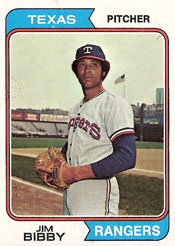
_ Cardinals send pitcher Jim Bibby to the Rangers for pitcher Mike Nagy and catcher John Wockenfuss, June 6, 1973: The trade was a bust for St. Louis. Bibby, seldom used by the Cardinals, became a 19-game winner for Texas in 1974. The right-hander recorded 111 wins in a 12-year big-league career.

Herzog had pushed for the Rangers to acquire Bibby. When Herzog was farm director of the Mets, Bibby was a prospect in New York’s minor league system.

At the time of the trade, Cardinals general manager Bing Devine told The Sporting News, “Whitey said Bibby has a better arm than half his pitchers.”

Nagy never won a game for the Cardinals and Wockenfuss (who became a reliable utility player for the Tigers) never played a regular-season game for St. Louis.

_ Cardinals send outfielder Tommy Cruz and cash to the Rangers for pitcher Sonny Siebert, Oct. 26, 1973: Cruz, the middle of the trio of outfielder brothers for St. Louis (Jose and Hector were the others), never played a regular-season game for Texas.

Siebert, a St. Mary, Mo., native who had success with the Indians and Red Sox, realized a lifelong dream by joining the Cardinals. He had been a high school basketball standout in suburban St. Louis and had been a baseball and basketball player at the University of Missouri.

Siebert, 37, opened the 1974 season in the Cardinals’ rotation. He was 6-3 with a 1.98 ERA on June 10. He finished the season 8-8 with a 3.84 ERA.

The right-hander’s most memorable win for St. Louis came on Sept. 11, 1974, at Shea Stadium in the Cardinals’ 4-3 25-inning victory over the Mets. Siebert pitched 2.1 innings of scoreless relief to earn the win, his last as a Cardinal. Boxscore

_ Cardinals send shortstop Eddie Brinkman and pitcher Tommy Moore to the Rangers for outfielder Willie Davis, June 4, 1975: St. Louis acquired the mercurial Davis with the hope his offense would spark them to a championship in 1975. Though the Cardinals fell short, Davis mostly delivered, filling in for injured outfielders Bake McBride and Reggie Smith.

Davis batted .291 with 50 RBI in 98 games. Brinkman, the Cardinals’ Opening Day shortstop, played one game for cash-strapped Texas before he was peddled to the Yankees. Moore never won a game for the Rangers.

Davis, 35, had clashed with Rangers manager Billy Martin. He staged a sitdown protest in center field when teammate Steve Hargan failed to hit a batter in retaliation after Davis was brushed back by an opponent’s pitch. Davis also irked Texas general manager Dan O’Brien by repeatedly asking for advances in his salary. “At some point, you’ve got to draw the line,” O’Brien told United Press International.

The trade was popular with Cardinals players. St. Louis second baseman Ted Sizemore, who had been Davis’ teammate with the Dodgers, told the Associated Press, “The man can play. He comes to play. He likes to play.”

Said Davis to The Sporting News: “With the Cardinals, I know I can play baseball again without being suppressed. I can be loose again.”

By September, though, Davis’ personal and financial problems caught up with him. He refused to play some games while his wife pursued an alimony case that threatened to restrict his wages. After the season, when he demanded a five-year contract for $1 million, the Cardinals traded him to the Padres.

_ Cardinals send shortstop Royce Clayton and pitcher Todd Stottlemyre to the Rangers for pitcher Darren Oliver, third baseman Fernando Tatis and outfielder Mark Little, July 31, 1998: Clayton and Stottlemyre were eligible to become free agents after the season and the Cardinals were uncertain they could re-sign them.

On the day of the trade, Texas was a game behind the first-place Angels in the American League West. The Cardinals were six games under .500 and 13.5 games behind the first-place Astros in the National League Central.

Clayton hit .285 for Texas in 1998 and Stottlemyre won five of 10 starts, helping the Rangers win the division title. St. Louis general manager Walt Jocketty, meanwhile, was positioning for the future.

“The guy we liked is Tatis,” Jocketty told The Sporting News when the trade was made. “We needed to find a third baseman and he was the best guy available.”

Tatis slugged 34 home runs for the Cardinals in 1999 and contributed to their division championship season in 2000.

Read Full Post »

(Updated Jan. 22, 2019)

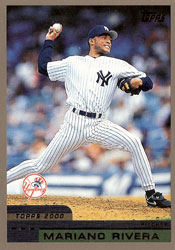
Three saves against the Cardinals are among the career total for the Yankees’ Mariano Rivera, major league baseball’s all-time leader at 652. On Jan. 22, 2019, Rivera became the first player unanimously elected to the National Baseball Hall of Fame by the Baseball Writers Association of America.

In his only three regular-season appearances against the Cardinals, Rivera was at the height of his dominance. He faced 10 batters over 3.1 total innings and only one reached base. Rivera earned saves in all three appearances.

_ Yankees 5, Cardinals 2, June 13, 2003, at New York: It was a postseason-like atmosphere before a Friday night crowd of 55,214 at Yankee Stadium as Rivera entered in the ninth, looking to save the 300th career win for Roger Clemens.

Rivera struck out Orlando Palmeiro and retired Kerry Robinson and Miguel Cairo on groundouts. Boxscore

“I was really happy to go out there and save that game for Clemens,” Rivera told MLB.com. “I wanted to be a part of that … It was a huge game for Roger and for us.”

_ Yankees 5, Cardinals 2, June 15, 2003, at New York: Rivera threw three pitches in the ninth inning to earn the save and give the Yankees a three-game sweep on a Sunday afternoon before 54,797 at Yankee Stadium.

Rivera hit Albert Pujols with a pitch to open the ninth. Ex-Yankee Tino Martinez grounded into a double play and Jim Edmonds, batting for Wilson Delgado, grounded out to second. Boxscore

_ Yankees 5, Cardinals 0, June 11, 2005, at St. Louis: With New York leading 4-0 in the eighth, St. Louis had runners on second and third with two outs when Rivera relieved Tom Gordon. After Larry Walker worked the count to 3-and-2, Rivera delivered a 94 mph fastball on the outside corner. Walker took the called third strike, ending the Cardinals’ threat.

In the ninth, Pujols popped out to first, and Rivera struck out Reggie Sanders and Mark Grudzielanek, preserving the win for Randy Johnson before 50,177 on a Saturday afternoon at Busch Stadium. Boxscore

Read Full Post »

A pair of former Cardinals, Andy Van Slyke and Mike LaValliere, combined to stun St. Louis by making one of baseball’s most sensational defensive plays, one so rare it wouldn’t be accomplished again for 23 years.

On Aug. 21, 2011, in the ninth inning of a game at Detroit, the Indians had runners on second and third with one out when Tigers center fielder Austin Jackson caught a fly ball by Matt LaPorta and unleashed a rocket to catcher Alex Avila, who tagged out Kosuke Fukudome at the plate, completing a double play and sealing an 8-7 win.

According to research by Baseball-Reference.com, it was the first time a major-league game had ended on a double play with a center fielder throwing out a runner at the plate since Sept. 27, 1988, when Van Slyke accomplished the feat.

On April 1, 1987, the Cardinals traded Van Slyke, LaValliere and pitcher Mike Dunne to the Pirates for catcher Tony Pena. The deal helped the Cardinals win the 1987 National League pennant and it also helped the Pirates begin a transformation from also-ran to contender.

On Sept. 27, 1988, the Cardinals were finishing out the final week of the season on their way to a fifth-place finish in the NL East. The Pirates would secure second place, their highest finish since 1983.

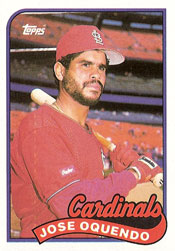
Before a Tuesday night crowd of 8,994 at Three Rivers Stadium, the Pirates took a 3-2 lead into the ninth. Pittsburgh closer Jim Gott, seeking his 34th save, issued a leadoff walk to Jose Oquendo. After Curt Ford struck out, John Morris singled to right, advancing Oquendo to third.

Luis Alicea, a switch-hitting rookie second baseman who had entered the game in the sixth, stepped to the plate and smashed a rising liner to center field _ “a drive,” wrote Paul Meyer of the Pittsburgh Post-Gazette, “that seemed more than deep enough to score Oquendo.”

It seemed everyone in the ballpark, except Van Slyke and LaValliere, thought Oquendo would advance on the sacrifice, tying the score.

“I didn’t think he (Van Slyke) had a chance,” Pirates right fielder Glenn Wilson told Meyer.

Said Pirates manager Jim Leyland: “I thought he (Van Slyke) had no chance, to be honest with you.”

Here’s what Van Slyke said to Meyer:

“I always think I have a chance _ except when I’m standing on the warning track. I threw it as hard as I could. What made it a difficult play was that it was a line drive, and I couldn’t set up (to throw).”

As Oquendo streaked down the third-base line, he saw LaValliere standing motionless at the plate, trying to make it appear a play wasn’t imminent.

“When Andy let the ball go, I caught the runner out of the corner of my eye,” LaValliere said to Meyer. “… I tried to deke the runner to get as much of an advantage as I could. You want the runner to see the plate, so he’ll slide.”

Just before receiving the throw, LaValliere blocked the plate with his left foot. As Oquendo slammed into a shin guard, LaValliere applied the tag and umpire Doug Harvey ruled an out, giving the Pirates a 3-2 victory. Boxscore

“Unbelievable, the way he (LaValliere) kept him off there,’ said Leyland. “That was the key.”

Said Van Slyke: “When I saw Doug Harvey ring him up, it surprised the heck out of me. Mike made just as good a play as I did.”

Cardinals manager Whitey Herzog told the Associated Press, “It was a heck of a play on both ends. Andy made a great throw and he doesn’t get him if Mike doesn’t block the plate.”

In his lead to his game story, Meyer wrote:

You know him as Andy Van Slyke. Tuesday night, though, the Pirates center fielder was Andy Van Strike _ because that’s what he threw to the plate in the ninth inning for the final out of a 3-2 victory over St. Louis that clinched second place for the Pirates.

Twenty-three years later, when the play happened again, the teams and the players were different, but one of the managers was the same. Jim Leyland, Tigers skipper, was the winning manager in both games.

Read Full Post »

« Newer Posts - Older Posts »