Feeds:
Posts
Comments

Archive for the ‘Opponents’ Category

(Updated April 13, 2025)

Nolan Ryan and Danny Frisella, two pitchers Joe Torre hit well in his career, combined to stop the Cardinals third baseman’s April hitting streak.
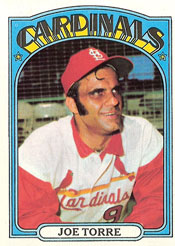
Torre hit safely in each of the Cardinals’ first 22 games of the 1971 season.

Torre’s streak gave him a .386 batting average entering a game against the Mets on April 29, 1971, in St. Louis.

Batting fourth, Torre went 0-for-3 with a walk against Ryan and Frisella. “In a way, I’m relieved,” Torre told the St. Louis Post-Dispatch.

Ryan and Frisella, both right-handers, were unlikely candidates to end Torre’s streak. For his career, Torre hit .318 (7-for-22) against Ryan and .500 (7-for-14) against Frisella.

Facing Ryan in the first inning with two runners on base and one out, Torre rapped into a 6-4-3 double play.

In the fourth, Ryan got Torre on a pop-up to shortstop Bud Harrelson.

Torre led off the sixth with a walk, one of eight Ryan issued in the game.

Frisella, who relieved in the seventh, struck out Torre leading off the eighth.

“At least it was another Italian who stopped me,” Torre told the Post-Dispatch.

The Mets won, 7-0, as Ryan and Frisella combined to limit the Cardinals to three hits. Boxscore

With the streak broken, Torre experienced a brief skid, going hitless in four of five games (1-for-15) and seeing his batting average drop to .340.

He went on to lead the National League in batting that season with a .363 average and 230 hits.

Ken Boyer, hitting coach for the 1971 Cardinals, cited Torre’s “short stride, quick stroke and great stength” for his success. Another Cardinals coach, George Kissell, told The Sporting News that Torre was able to focus on hitting when the Cardinals settled on him as their third baseman.

“For the first time since he joined the club (in 1969), he was able to have a closed mind about playing one position,” Kissell said. “Before, he had to be thinking about first base and catching as well as third base.”

Recalling 1971, Torre told Cardinals Yearbook in 2014, “It was magical, no question. I used to go to sleep at night, knowing which pitcher I would see the next day, and, in my mind, I knew which pitch I wanted to hit off him.”

Read Full Post »

(Updated Oct. 26, 2024)

Here are the top 5 with the most regular-season career grand slams as Cardinals:

_ Albert Pujols, 13 grand slams with the Cardinals. Pujols hit five of his grand slams in 2009, tying Ernie Banks of the 1955 Cubs for the National League single-season record. His 13th grand slam for the Cardinals came on Aug. 18, 2022, versus the Rockies’ Austin Gomber. With the three grand slams Pujols hit for the Angels, he totaled 16 in his career in the major leagues.

_ Stan Musial, 9 grand slams with the Cardinals. Musial hit his first grand slam in 1942 and his last in 1961.

_ Ken Boyer, 7 grand slams with the Cardinals. Not included in that total is Boyer’s most famous grand slam: a sixth-inning shot against Al Downing of the Yankees in Game 4 of the 1964 World Series, giving St. Louis a 4-3 victory. Boxscore

_ Ted Simmons, 7 grand slams with the Cardinals. On June 11, 1979, at Los Angeles, Simmons wiped out a 3-0 Dodgers lead with a third-inning grand slam against former teammate Jerry Reuss. In the ninth, Simmons launched a two-run shot against another former St. Louis teammate, Lerrin LaGrow, snapping a 7-7 tie and giving the Cardinals a 9-7 victory. Simmons totaled nine grand slams: seven for the Cardinals and one each for the Brewers and Braves. Boxscore

_ Yadier Molina, 7 grand slams with the Cardinals. Molina got his first grand slam on April 5, 2010, against Reds reliever Nick Masset. One of Molina’s grand slams was hit against a future Hall of Famer, Roy Halladay of the Phillies, on May 27, 2012, at St. Louis. Boxscore


Read Full Post »

The Cardinals played at Dodger Stadium in Los Angeles for the first time on May 18, 1962.

Bill White drove in three runs and Ken Boyer drove Dodgers starter Johnny Podres out of the game. The Cardinals won, 8-3.  Boxscore

In the first inning, with Red Schoendienst on first and two outs, Boyer hit a drive that struck Podres in the left forearm.

Podres threw three pitches out of the strike zone to the next batter, Gene Oliver, and walked off the field, unable to pitch. Stan Williams relieved and threw ball four to Oliver, loading the bases.

Charlie James followed with a two-run single and the Cardinals were on their way to a fruitful weekend.

The Cardinals won all three games in the series and never used a reliever. Larry Jackson, Ray Sadecki and Curt Simmons pitched successive complete-game victories.

Podres went to the hospital, where X-rays revealed no fracture. Six days later, he started against the Mets and Podres went on to enjoy a 15-win season.

Read Full Post »

When Albert Pujols grounded into three double plays on Opening Day in 2011, it put the spotlight back on Joe Torre.

Torre established a National League record by hitting into four double plays while with the Mets in a game against the Astros on July 21, 1975.
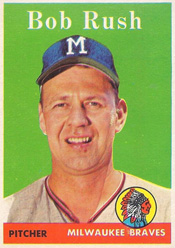
“It’s the first record I’ve ever set in baseball,” Torre told The Sporting News at the time. “But I’m not nearly as embarrassed by it as I am by my RBI total.”

Torre, traded after six seasons with the Cardinals to the Mets on Oct. 13, 1974, for pitchers Ray Sadecki and Tommy Moore, had 21 RBI in New York’s first 73 games in 1975.

Torre became the first player in the 100-year history of the NL to hit into four double plays in a game. He tied the major league record held by American League players Goose Goslin of the 1934 Tigers and Mike Kreevich of the 1939 White Sox.

Second baseman Felix Millan, batting No. 2 in the order for the Mets, had four singles but never reached second base. Torre, batting No. 3 in the order, followed each of Millan’s singles by grounding into double plays against pitcher Ken Forsch, brother of Cardinals pitcher Bob Forsch.

“I couldn’t have set a record without Millan,” Torre said, tongue in cheek, to the Associated Press after the game. “He ought to get an assist.”

Torre grounded into a 1-4-3 double play in the first, a 6-4-3 double play in the third, a 4-6-3 double play in the sixth and another 6-4-3 double play in the eighth. Boxscore

Asked whether he was trying to avoid hitting into a double play when he came to bat in the eighth with runners on first and second and none out, Torre replied, “I wasn’t worried. I wasn’t anxious. I made up my mind to be aggressive.”

Showing a sense of humor, Torre told reporters, “When I retire, I’m going to buy a shortstop and put him in my den. At night, when I’m lonely, I’m going to go down there and hit grounders to him.”

Read Full Post »

Bob Rush gave up 176 home runs in his big-league career. Stan Musial hit more of those than anyone.

Musial hit 10 homers against Rush, a right-hander who pitched for the Cubs, Braves and White Sox from 1948-60.
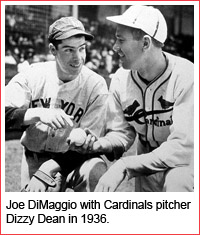
Rush posted a 3.65 ERA despite a 127-152 record in the big leagues.

The first time Musial hit a home run against Rush was Oct. 2, 1949, a solo shot in the fourth inning of a game St. Louis won, 13-5, at Wrigley Field in Chicago. Boxscore

His last two homers against Rush came in one game: July 17, 1958, at St. Louis. Musial hit a two-run homer in the first against Rush and followed with a three-run shot in the third. Boxscore

In a May 1973 interview with Baseball Digest, Rush said of Musial, “He was one of the greatest hitters I ever pitched against or saw during my playing career. He is a real credit to the baseball profession, both on and off the field.”

Musial’s most memorable hit against Rush was a double, not a home run.

On Aug. 12, 1956, Musial doubled in the sixth inning against Rush for the 1,071st extra-base hit of his career, tying Mel Ott of the Giants for the National League record. Boxscore

Rush is one of seven pitchers to yield 10 or more home runs to Musial. The list:

Warren Spahn, 17

Preacher Roe, 12

Johnny Antonelli, 11

Murry Dickson, 11

Don Newcombe, 11

Robin Roberts, 10

Bob Rush, 10

Read Full Post »

(Updated Sept. 13, 2025)

The Cardinals played a role in launching Joe DiMaggio into his Hall of Fame career with the Yankees.

On March 17, 1936, DiMaggio played in his first Yankees game _ a spring training exhibition against the Cardinals in St. Petersburg, Fla.

DiMaggio, 21, displayed his greatness right from the start, with four hits in five at-bats, two runs scored and two RBI in the Yankees’ exhibition opener. He also made what the New York Times described as “a glittering catch” of Charlie Gelbert’s drive to deep center in the seventh inning.

The Cardinals won, 8-7, before about 2,000 spectators on a brisk day at Waterfront Park. According to the St. Louis Post-Dispatch, many fans were “wearing overcoats.”

DiMaggio, who joined the Yankees from San Francisco of the Pacific Coast League, started in center field, batted third in the lineup and received rave reviews.

Under the subhead “DiMaggio Has Great Day,” the New York Times reported DiMaggio was “the one shining light” in the game for the Yankees and concluded “if there was any doubt about this newcomer, he dispelled it today.”

The exhibition featured seven future Hall of Famers in the starting lineups: second baseman Frankie Frisch, left fielder Joe Medwick, first baseman Johnny Mize and shortstop Leo Durocher for the Cardinals, and first baseman Lou Gehrig, second baseman Tony Lazzeri and center fielder Joe DiMaggio for the Yankees.

The Cardinals had 14 hits and capitalized on six Yankees errors (none by DiMaggio). Frisch, the Cardinals’ player-manager, had four hits, three RBI and two runs scored.

With National League president Ford Frick in attendance, the game was played in less than ideal conditions. According to the New York Times, spectators wore overcoats to protect them from “a blustery wind that blew out of the north with galelike force.” The game couldn’t begin until “the infield was rendered presentable by burning gasoline.”

DiMaggio’s triple in the first inning off Cardinals starter Mike Ryba was “a mighty blow to the left-field fence,” the New York Times reported. DiMaggio scored on Gehrig’s single.

In the eighth, DiMaggio’s bases-loaded single to right drove in two.

The starting lineups that day:

CARDINALS

Terry Moore, cf

Frankie Frisch, 2b

Pepper Martin, rf

Joe Medwick, lf

Johnny Mize, 1b

Charlie Gelbert, 3b

Leo Durocher, ss

Bruce Ogrodowski, c

Mike Ryba, p

YANKEES

Roy Johnson, lf

Red Rolfe, 3b

Joe DiMaggio, cf

Lou Gehrig, 1b

George Selkirk, rf

Tony Lazzeri, 2b

Frank Crosetti, ss

Joe Glenn, c

Johnny Broaca, p

(The Cardinals’ Terry Moore ranked with DiMaggio as an elite center fielder. In the book “Few and Chosen,” outfielder Enos Slaughter, who debuted with the Cardinals in 1938, said, “I played against Joe DiMaggio and I played against Willie Mays, and Terry was as good as them. He had speed and a great arm, and nobody charged ground balls from the outfield like Moore. He’d charge the ball and make a perfect throw to third base or home.” In the same book, Marty Marion, Cardinals shortstop of the 1940s, said Moore “wore a very small glove and he had great big hands. I never saw a man with bigger hands than Terry. He often would catch a ball barehanded. I’m taking nothing away from Joe DiMaggio. He was a great center fielder, but he was no better than Terry.”)

The next day, March 18, 1936, the Cardinals beat the Yankees again, 6-5. DiMaggio went 2-for-4, with a triple and a single.

DiMaggio’s torrid start to spring training was an indicator of how he would perform as a rookie. In the 1936 season, DiMaggio hit .323 with 29 home runs, 44 doubles, 15 triples and 125 RBI, leading the Yankees to a 102-51 record and the American League pennant.

The Cardinals finished 87-67 _ five games behind the first-place Giants, who were defeated in the World Series by the Yankees in six games.

Read Full Post »

« Newer Posts - Older Posts »