Feeds:
Posts
Comments

Archive for the ‘Opponents’ Category

(Updated April 26, 2024)

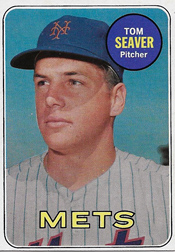
Bob Gibson of the Cardinals and Tom Seaver of the Mets opposed one another 11 times in the regular season and the results paralleled the paths of their careers.

Seaver was the winning pitcher in six of the matchups, Gibson was the winning pitcher three times, and twice their duels ended in no decisions.
The first win for Seaver vs. Gibson came in 1969, a year when he paced the Mets to an improbable World Series title, and the other five occurred in the 1970s, when Seaver was in his prime.

Gibson’s wins versus Seaver came in a three-year stretch, 1968-70, when he twice won the National League Cy Young Award.

From 1971, the year Gibson turned 36, to 1975, Seaver won five decisions in a row versus Gibson.

According to the St. Louis Post-Dispatch, Seaver is the only pitcher to beat Gibson three times in one season. Seaver did it in 1971.

In Gibson’s three wins versus Seaver, the Mets scored a total of four runs.

In Seaver’s six wins versus Gibson, the Cardinals scored a total of seven runs.

Gibson told the Post-Dispatch in 1975, “I could beat him, but that was when I was giving up only one or two runs a game. Later, when I started giving up more runs, he was a tough guy to beat because he wasn’t giving up that many.”

In 2021, catcher Ted Simmons said to the Baseball Hall of Fame yearbook, “Gibson was the best pitcher I ever caught. Seaver was the best pitcher I ever faced, and that’s because I never had to face Gibson.”

Simmons also told the Post-Dispatch in 1976, “Jim Palmer and Nolan Ryan may throw as hard, but as far as total command of what he’s doing, nobody is better than Seaver.”

The first matchup of Gibson versus Seaver may have been the best.

Pair of aces

In 1967, Seaver’s rookie season, he faced the Cardinals once, a start versus Al Jackson.

Seaver’s second career start against the Cardinals came on May 6, 1968, a Monday night in St. Louis, versus Gibson.

Seaver, 23, was making his sixth start of the season and was 1-1 with a 1.71 ERA. He went eight innings in his previous start May 1, a no-decision versus the Phillies.

Gibson, 32, was making his sixth start of the season and was 2-1 with a 1.43 ERA. He went 12 innings in his previous start May 1, a win versus the Astros. “I made 179 pitches in that game, and after 179 pitches, your arm doesn’t feel too good for a while,” Gibson told the Post-Dispatch.

Before his start against Seaver and the Mets, Gibson said, “I had my arm under a heat lamp for 20 minutes, trying to get it loosened up.”

Costly mistake

The Cardinals went ahead, 1-0, with an unearned run against Seaver in the second inning. After Tim McCarver led off with a single, Mike Shannon grounded to first baseman Ed Kranepool, who fielded the ball and turned to throw to second base for what seemed like a certain forceout.

Kranepool cocked his arm but stopped, unsure whether shortstop Bud Harrelson would get to the bag in time to take the throw. When he finally made the throw, Kranepool was off balance. The ball skipped along the ground and bounced off Harrelson’s chest for an error. Julian Javier followed with a single to right, scoring McCarver from second.

The Mets got three hits in the game against Gibson and all came in the fourth inning.

Harrelson led off with a single and advanced to third on Ken Boswell’s single. Art Shamsky lined a hit to left, driving in Harrelson and tying the score at 1-1. With Ron Swoboda at the plate, an inside pitch got away from McCarver, the catcher, for a passed ball, allowing Boswell to move to third and Shamsky to second with none out.

Wrong route

Swoboda hit a fly ball to center. Curt Flood ran forward and made the catch, but as Boswell tagged at third, Flood hesitated before making a throw. “Boswell looked like a cinch to score,” the Post-Dispatch reported.

“I didn’t think we had a chance to get Boswell,” McCarver said.

Flood’s throw tailed toward the third-base line, and McCarver went up the line to retrieve the ball. Boswell beat the throw “by plenty,” the New York Daily News reported, but McCarver was “blocking the line without the ball.”

Instead of barreling into McCarver in a straight path to the plate, Boswell slid wide around the catcher and reached for the plate with his hand.

Boswell touched nothing but dirt. As the ball reached McCarver, he wheeled around and tagged out Boswell to complete a double play. Instead of a 2-1 lead for the Mets, the score remained tied.

Dick Young of the New York Daily News described Boswell’s play at the plate as a “chicken slide.”

“He should have scored easily with the lead run,” Young wrote. “He should have bowled over McCarver.”

Mets manager Gil Hodges told the Post-Dispatch, “In that situation, you can’t go around the catcher. You have to hit him.”

In control

From then on, Gibson and Seaver settled into a groove.

Gibson allowed one base runner after the fourth inning. After Swoboda walked with one out in the seventh, Gibson retired 14 batters in a row.

Seaver held the Cardinals hitless from the third through ninth innings. After Shannon walked in the fourth, Seaver retired 17 in a row until Shannon got an infield hit in the 10th.

As the game entered the 11th, Gibson and Seaver were approaching their limits.

Joe Hoerner was ready in the Cardinals’ bullpen and would have come into the game if it went to a 12th inning. “I can’t let (Gibson) throw his arm out,” manager Red Schoendienst said.

Seaver told the Post-Dispatch the 11th inning would have been his last, too.

Cream of the crop

It took a couple of future Hall of Famers, Lou Brock and Orlando Cepeda, to settle the duel between future Hall of Famers Gibson and Seaver.

Brock led off the bottom of the 11th with a drive to the wall in left-center for a triple. Seaver gave intentional walks to Flood and Roger Maris, loading the bases in hope of a forceout or double play.

Cepeda foiled the strategy, lining Seaver’s first pitch to right for a single to drive in Brock and give the Cardinals and Gibson a 2-1 victory. Boxscore

The win improved Gibson’s career mark against the Mets to 18-3.

“My arm doesn’t hurt half as much as it will tomorrow,” Gibson said, “but that’s the price you have to pay if you want to be a pitcher.”

The 11-inning game was played in a snappy 2:10.

“They don’t fritter around,” Dick Young wrote of Gibson and Seaver. “They get the ball and fire.”

Read Full Post »

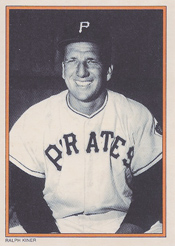
Cardinals manager Eddie Dyer preferred to put Pirates slugger Ralph Kiner on base, representing the potential winning run, rather than give him a chance to hit a walkoff home run.

On Sept. 3, 1950, with the score tied in the bottom of the 10th inning of a game between the Cardinals and Pirates at Pittsburgh, Dyer ordered pitcher Harry Brecheen to give an intentional walk to Kiner with the bases empty and two outs.

The unorthodox strategy backfired when the next batter, rookie Gus Bell, hit a double, scoring Kiner and giving the Pirates a 12-11 victory.

Home run king

The Cardinals carried a four-game losing streak into the Sunday afternoon series finale against the last-place Pirates at Forbes Field.

Kiner hit two home runs. The first was a solo shot against Red Munger in the opening inning. The second home run, a two-run clout versus Cloyd Boyer in the eighth, gave the Pirates a 9-8 lead.

In his first four seasons (1946-49) in the majors, Kiner led the National League in home runs in 1946 (23) and 1949 (54), and tied with Johnny Mize of the Giants for the top spot in 1947 (51) and 1948 (40). Kiner was on his way to winning the league’s home run crown again in 1950.

Comeback Cardinals

Bill Howerton of the Cardinals led off the top of the ninth with a home run into the upper deck in right against Junior Walsh, tying the score at 9-9.

Brecheen, usually a starter, relieved for the Cardinals in the bottom of the ninth and retired the Pirates in order.

In the top of the 10th, the Cardinals scored twice versus Bill Werle. With one out and none on, Red Schoendienst doubled, Stan Musial drove him in with a single and Enos Slaughter tripled, scoring Musial and extending the Cardinals’ lead to 11-9.

Dare to differ

Brecheen retired the first batter, Clyde McCullough, in the bottom of the 10th, but the next two, Pete Castiglione and Bob Dillinger, each hit a home run, tying the score at 11-11. For Castiglione, the home run was his third of the season and for Dillinger it was his first since the Pirates acquired him from the Athletics in July.

After the back-to-back home runs, Brecheen knocked down the next batter, Danny O’Connell, with his first pitch to him. O’Connell grounded out for the second out of the inning.

The next batter was Kiner. The only way he could beat the Cardinals was to hit a home run, but Dyer thought the risk was so high it was worth issuing an intentional walk.

Among the factors influencing Dyer’s thinking:

_ Kiner batted right-handed and Brecheen was a left-hander.

_ Brecheen already had given up two home runs in the inning and thus was vulnerable against Kiner.

“The fact it violated tried and true baseball strategy doesn’t bother us a bit,” columnist Bob Burnes wrote in the St. Louis Globe-Democrat. “We’ve always felt too many managers called too many plays in routine fashion purely because that’s the way the pattern said it should be.”

What did bother Burnes is the slumping Cardinals appeared to have lost confidence. “It was a desperation play, one dictated by something almost akin to panic,” Burnes said.

Take that!

As Kiner watched Brecheen lob four pitches wide of the plate, the fans booed.

With Kiner on first, cleanup hittter Gus Bell batted next. Bell had tripled twice and singled. Though a left-handed batter, Bell hit .320 versus left-handers in 1950.

Bell belted a pitch from Brecheen high and deep to right. The ball “appeared headed into the stands for a home run,” the Pittsburgh Press reported, but it hit high on the screen.

Right fielder Enos Slaughter gave chase and fell. The ball caromed about 35 yards from the screen, the Globe-Democrat reported, giving Kiner time to hustle from first base to home. Bell stopped at second with a double as Kiner crossed the plate with the winning run. Boxscore

The teams combined for 30 hits, including 20 for extra bases.

Each team hit three triples. The Pirates had five home runs and the Cardinals had three.

The Cardinals wasted a big performance from Stan Musial, who had four hits and two walks. Playing near his hometown of Donora, Pa., Musial had a two-run home run and scored four times.

Kiner went on to hit 47 home runs in 1950. Only eight came against left-handers.

Brecheen finished the 1950 season with a 3.55 ERA in 23 starts for the Cardinals and a 10.50 ERA in four relief appearances.

Read Full Post »

Dazzling defense by first baseman Jim Bottomley and ironman relief by Syl Johnson carried the Cardinals to an epic victory over the Cubs and helped change the momentum of the 1930 National League pennant race.

The Cardinals beat the Cubs, 8-7, in 20 innings on Aug. 28, 1930, at Wrigley Field in Chicago.

The triumph was the Cardinals’ ninth in a row and moved them 5.5 games behind the first-place Cubs. The Cardinals went on to win 21 of 25 games in September while the Cubs were 13-13 for the month. The sizzling surge enabled the Cardinals (92-62) to finish in first place, two games ahead of the Cubs (90-64).

The results might have been different if the Cardinals hadn’t won the 20-inning marathon.

Matchup of aces

The starting pitchers for the Thursday afternoon game were spitball specialist Burleigh Grimes for the Cardinals and Pat Malone for the Cubs. Grimes, acquired from the Braves two months earlier, had won six of his last seven decisions for the Cardinals. Malone had won seven in a row and was 16-6 for the Cubs. The matchup attracted about 20,000 spectators.

With the Cardinals ahead, 5-3, in the eighth, Jim Lindsey, working his first inning in relief of Grimes, gave up a two-run double to Footsie Blair, enabling the Cubs to tie the score.

Syl Johnson, who had a 4.83 ERA, replaced Lindsey in the ninth and was in command.

Sherrif Blake, who pitched a complete game two days earlier, became the fourth Cubs pitcher of the day in the ninth and also was sharp. After Blake held the Cardinals scoreless on one hit for three innings, Bob Osborn, who had a 4.84 ERA, took over for the Cubs in the 12th.

Diamond dandy

The Cardinals broke through against Osborn in the 15th. With two outs and none on, Jimmie Wilson singled and scored on Charlie Gelbert’s double. Syl Johnson drove in Gelbert with a single, giving the Cardinals a 7-5 lead.

Pitching in the bottom half of the inning, Johnson got into immediate trouble. Danny Taylor led off and doubled. After High Pockets Kelly flied out, Gabby Hartnett doubled, driving in Taylor, and Les Bell, a former Cardinal, singled, scoring Hartnett with the tying run.

After Osborn bunted Bell to second, Johnson issued an intentional walk to Footsie Blair. A right-handed batter, Woody English, was up next. He swung late at a pitch and slashed the ball hard on the ground along the first-base line.

“It looked like a sure base hit,” the St. Louis Post-Dispatch reported.

As the ball skipped over the bag, Bottomley lunged, extended his glove hand and barely reached the ball, knocking it down.

Bottomley grabbed the ball, rolled over and looked for Johnson to be covering first base, but Johnson wasn’t there. Thinking the ball was headed into the outfield as a game-winning hit, Johnson stayed, transfixed, on the mound.

Reacting quickly, Bottomley, still on the ground, flipped the ball toward home plate. “It wasn’t much of a throw,” the Post-Dispatch noted.

The runner on second, Les Bell, never imagined Bottomley would get to the ball hit by English, and slowed on his way to the plate after rounding third base.

Catcher Jimmie Wilson gathered in Bottomley’s off-target throw and tagged out Bell “an inch from the plate,” the Chicago Tribune reported.

Red Smith covering the game for the St. Louis Star-Times, called Bottomley’s stop of English’s smash “the grandest bit of defensive play” he’d ever seen.

The St. Louis Globe-Democrat described the play as “one of the most spectacular ever seen on a major-league diamond.”

Down to the wire

As the game progressed into the 20th inning, it was about 7 p.m. and darkness was gathering. With no lights at Wrigley Field, the 20th “probably would have been the last inning, regardless of the happenings therein,” the Chicago Tribune reported.

“The plate was in deep shadow and darkness was settling down,” the St. Louis Globe-Democrat confirmed.

With one out and none on, the Cardinals’ Taylor Douthit singled and moved to second when Sparky Adams grounded out to first. Andy High singled, scoring Douthit and giving the Cardinals an 8-7 lead.

In the Cubs’ half of the 20th, Hartnett led off with a single. After Bell flied out on a long drive to center, Hartnett moved to second on Wilson’s passed ball. Zack Taylor, who years later would manage the St. Louis Browns, ran for Hartnett.

The Cubs had two chances to drive in the tying run from second, but Johnson got Cliff Heathcote and Footsie Blair to fly out, ending the game. Boxscore

Fun facts

The game was played in 4 hours, 10 minutes.

Winning pitcher Syl Johnson went 12 innings, gave up nine hits and a walk, and struck out nine.

In addition to his defensive gem, Bottomley hit the game’s lone home run, a solo shot in the second.

All eight Cardinals position players played the entire game and each had at least one hit.

All eight Cubs position players played every inning, too. Hartnett was the only player in the game to get four hits. He also drew a walk.

Cubs cleanup hitter Hack Wilson, who hit .356 with 56 home runs and 191 RBI for the 1930 Cubs, was 0-for-7 with two walks and was the only Cubs batter to strike out three times.

“Any 20-inning game is something for a baseball bug to gurgle about, but this one will go down among the great games of National League history,” the Chicago Tribune concluded.

Cardinals manager Gabby Street told the St. Louis Star-Times, “I tell you, a club that can win a game like (that) can beat anybody.”

Read Full Post »

Cardinals cleanup hitter Pedro Guerrero resorted to using his hands, not his bat, to connect against Astros pitcher Danny Darwin.

On Aug. 16, 1990, during a game between the Astros and Cardinals at Busch Memorial Stadium in St. Louis, Guerrero got upset with Darwin for throwing a pitch too close to him.

When Darwin reached first base on a single, he and Guerrero argued and Guerrero struck him.

Feeling frustrated

With the Astros ahead, 3-1, in the sixth inning, the Cardinals had runners on second and third, two outs, and Guerrero at the plate. Darwin threw a fastball that was “head high, but looked to be over the inside corner of the plate,” according to the St. Louis Post-Dispatch.

Guerrero said he thought the pitch was intended to hit him, but plate umpire Mark Hirschbeck told the Post-Dispatch, “It was not even close.”

After Guerrero struck out, stranding the runners, he glared at Darwin. “He was just looking to start something,” Hirschbeck said. “He was yelling, ‘I’m going to get you.’ ”

Said Darwin: “I don’t appreciate the look he gave me.”

Sticks and stones

The hard feelings carried over to the next inning.

With two outs and none on in the seventh, Darwin singled versus reliever Scott Terry. Standing at first base, Darwin and Guerrero jabbered at one another.

According to Guerrero, “When he got to first base, I said, ‘Hey, man, what’s wrong? Can’t anybody look at you?’ ”

According to Darwin, “When I got to first base, Guerrero said, ‘What’s your problem?’ I said, ‘What’s my problem? You mean I can’t pitch inside?’ He said, ‘I know you’re going to pitch inside.’ I said, ‘Then why’d you give me that look?’ ”

Guerrero said Darwin “pointed a finger in my face” and started cussing at him. Umpire Bob Davidson said both players were cussing at one another.

Davidson stepped between the two, but Guerrero reached around and hit Darwin, the Post-Dispatch reported. Video at 4:28 mark

Both benches emptied. Guerrero and Darwin were ejected, and Astros manager Art Howe also was tossed for arguing with the umpires.

In a corridor leading to the clubhouse, Guerrero and Astros coach Ed Ott shouted at each another before police arrived and separated them, the Post-Dispatch reported. Boxscore

Guerrero said he offered to fight Darwin anywhere he wanted to meet. “I’m not afraid of anybody,” Guerrero said.

Darwin said, “He’s a cheap-shot artist. I think he’s gutless. If he thinks he can intimidate me, he’s crazy. I’ve hit guys a lot meaner than him.”

Play ball

In remarks to Cardinals broadcaster Mike Shannon, Guerrero said Astros pitchers threw at him in a series at Houston, and he needed to put a stop to it when Darwin pitched him high and tight at St. Louis.

Guerrero may have been brushed back by the 1990 Astros but he wasn’t hit. Guerrero got plunked once in 1990 and it happened in September when he was struck on the right forearm by a pitch from the Phillies’ Jose DeJesus.

On Aug. 26, 1990, 10 days after his altercation with Guerrero, Darwin again started against the Cardinals at Houston and got a complete-game win. Guerrero wasn’t there for a rematch. He was on the disabled list because of a strained lower back. Boxscore

Guerrero batted .333 (8-for-24) versus Darwin in his career and never was hit by a pitch from him.

Read Full Post »

The Cardinals were the opponent when Bob Sebra saved his spot in the Expos’ rotation, and again when he fulfilled a boyhood dream with the Phillies. Near the end of his career, Sebra pitched in the Cardinals’ system.

A right-hander, Sebra pitched in the majors with the Rangers (1985), Expos (1986-87), Phillies (1988-89), Reds (1989) and Brewers (1990).

Sebra, who had a career record of 15-29 in the majors, was 3-2 against the Cardinals. He had more wins versus the Cardinals than he did against any other foe.

In 1993, hoping for a chance to get back to the majors, Sebra signed with the Cardinals and spent the season as a starter for their Class AAA Louisville team.

Going the distance

As a youth in southern New Jersey, Sebra was a Phillies fan, attended their games at Veterans Stadium in Philadelphia and hoped to pitch for them. He played collegiate baseball for the University of Nebraska, but it was the Rangers, not the Phillies, who selected him in the fifth round of the 1983 amateur draft.

Sebra made his big-league debut with the Rangers on June 26, 1985, in a start against the Mariners. After the season, he was traded to the Expos for slugger Pete Incaviglia.

On Aug. 12, 1986, Sebra pitched his first complete game in the majors in the Expos’ 10-3 victory over the Cardinals at Montreal. Sebra also produced two hits and a walk. His first major-league hit, a single versus John Tudor, sparked a seven-run inning. Boxscore

In control

In 1987, Sebra was an Expos starter, but he lost eight of his first 11 decisions, including four in a row, and was in danger of being dropped from the rotation.

On June 26, 1987, two years to the day after he made his debut in the majors, Sebra started against the Cardinals at Montreal, looking to show the Expos they should stick with him. Sebra was matched against Cardinals rookie Joe Magrane, who won his first five decisions and was undefeated in the big leagues.

Locating his breaking pitches, Sebra held the Cardinals to six hits, walked none and struck out 10 in nine innings, earning the win in a 5-1 Expos victory. Boxscore

When Sebra throws breaking balls for strikes “it makes his fastball so much more effective,” Expos pitching coach Larry Bearnarth told the Montreal Gazette.

After Terry Pendleton singled with two outs in the fourth, Sebra retired the next 13 batters in a row. Cardinals cleanup hitter Jack Clark struck out three times and grounded into a game-ending double play.

“He was kind of like a right-handed Fernando Valenzuela,” Clark said to the St. Louis Post-Dispatch. “He had everything.”

Said Cardinals manager Whitey Herzog: “I don’t think anybody would have beaten that guy tonight. He had control.”

Sebra also had a single in the fifth, igniting a three-run inning.

The Cardinals went on to win the 1987 National League pennant. Sebra finished the season with a 6-15 record.

Rooting interest

In 1988, the Expos demoted Sebra to the minors. Pitching on a staff with prospect Randy Johnson, Sebra was 12-6 with a 2.94 ERA for Class AAA Indianapolis.

On Sept. 1, 1988, the Expos traded Sebra to the Phillies. Two weeks later, Sebra got his first win for the team he followed as a youth, beating the Cardinals at Veterans Stadium in Philadelphia. It was Sebra’s first win in the majors since July 12, 1987, with the Expos, and ended a streak of eight consecutive losses for him in the big leagues. Boxscore

Sebra allowed five walks and four hits, but just two runs, in five innings against the Cardinals. “It was ugly,” he told the Philadelphia Daily News.

Said Lee Elia, manager of the last-place Phillies: “Getting this win was probably more important for him than it was for us. It gives him a sense of accomplishment.”

Down on the farm

Four years later, while in the minor leagues in 1992, Sebra had surgery on his right elbow. The Cardinals signed him to a minor-league contract in January 1993 and assigned him to Louisville.

Sebra was a consistent starter for Louisville, even though he felt persistent pain in his right arm. In the clubhouse, Louisville Courier-Journal columnist Pat Forde observed Sebra had 14 stainless steel acupuncture needles embedded in his right arm in an effort to relieve the pain.

“I had a friend in Omaha who studied acupuncture in China,” Sebra explained. “He said to do it for 10 days and see what happens. It’s feeling real good.”

Sebra, 31, led the Louisville staff in starts (26) and innings pitched (145) and tied with Tom Urbani for the team lead in wins (nine), but he didn’t get back to the majors.

Read Full Post »

Tony Taylor played his first and last games in the major leagues at St. Louis against the Cardinals. In between, he had two splendid series against them, one in 1960 and the other in 1970.

An infielder who had 2,007 hits in 19 seasons in the big leagues, Taylor primarily played for the Phillies, but entered the majors with the Cubs and was mentored by former Cardinals standout Rogers Hornsby.

Late in Taylor’s career, the Cardinals tried to acquire him, but he opted to return to the Phillies.

Deep in Dixie

Born and raised in Cuba, Taylor liked to study chemistry in school. “If I didn’t go into baseball, I would have become a chemist for a sugar company,” he told The Sporting News.

A friend, Felix Gomez, had played for Texas City, an independent club in the minor leagues, and persuaded Taylor to start a pro baseball career there. Taylor was 18 when he signed with Texas City in 1954. During the season, the franchise was shifted to Thibodaux, La.

On the field, Taylor thrived, playing third base and batting .314, but “off the field, he was confused, anxious and lonely,” The Sporting News reported.

“I was so homesick,” Taylor said.

Taylor said he would have quit during the season, but lacked the money for a plane ticket to Cuba.

The Giants bought his contract after the 1954 season and he spent the next three years (1955-57) in their farm system.

Success at St. Louis

In December 1957, the Cubs chose Taylor in the minor-league draft and he went to spring training in 1958 as a candidate for the third base job. At training camp, Cubs manager Bob Scheffing was impressed with Taylor’s fielding range and moved him to second base, even though Taylor never had played the position. “He’ll get a lot of balls nobody else would reach,” Scheffing said.

Two of the Cubs’ coaches, Hall of Famer Rogers Hornsby and George Myatt, were former big-league second basemen and they helped Taylor make the transition from third base, The Sporting News reported.

As Opening Day neared, the Chicago Tribune reported Taylor “has done slick work at second, ” but added he “has become a controversial figure in camp. There are those who believe he can’t miss but others rate him lacking in big-league ability.”

Scheffing’s confidence in Taylor never wavered. On April 15, 1958, when the Cubs opened the season at St. Louis, Taylor was the second baseman and batted in the leadoff spot. In his first at-bat in the majors, Taylor opened the game with a double against Vinegar Bend Mizell and went on to score, giving the Cubs a 1-0 lead in a game they won, 4-0. Boxscore

In 1960, Taylor was 8-for-14 for the Cubs in a three-game series at St. Louis. Taylor capped the weekend by going 4-for-5 with three RBI in the series finale in what the Chicago Tribune called “a Taylor-made victory” for the Cubs. Boxscore

The St. Louis Post-Dispatch described Taylor as “the quiet man with the loud bat.”

A right-handed batter, Taylor had a powerful build on a 5-foot-9 frame. Rogers Hornsby, who had become a Cubs batting instructor, told The Sporting News he believed Taylor would be a .300 hitter. “If he ever learns to stride into the the ball and pull it,” Hornsby added, “he’ll be a home run slugger.”

Two weeks after his big St, Louis series, Taylor was traded to the Phillies.

Popular with Phillies

Taylor became a Phillies favorite. In 1963, he led National League second basemen in fielding percentage, produced 180 hits and scored 102 runs. Taylor six times had 20 or more stolen bases in a season.

Taylor was the Phillies’ second baseman from 1960-65, moved to a utility role in 1966-67 when Cookie Rojas became the starter, and took over at third base in 1968-69.

In 1970, the Phillies moved Don Money from shortstop to third base and went with rookies Denny Doyle at second and Larry Bowa at shortstop. Taylor, 34, opened the season in left field, but returned to second base when Doyle slumped.

Taylor time

On May 21, 1970, Philadelphia was abuzz with anticipation when the Cardinals opened a four-game series with the Phillies at Connie Mack Stadium. Slugger Richie Allen was playing in Philadelphia for the first time since being traded by the Phillies to the Cardinals.

In the Thursday night series opener, the focus was on Allen, but Taylor, his former road roommate, stole the show.

Cardinals starter Steve Carlton struck out 16 batters in eight innings, but the Phillies led, 3-0, entering the ninth. The Cardinals came back with three runs in the top of the ninth, including two on a home run by Allen, tying the score.

In the bottom of the ninth, the Phillies had runners on first and second, two outs, when Taylor came to the plate. “He was the right guy in the right spot,” Phillies manager Frank Lucchesi told the Philadelphia Inquirer.

Facing reliever Sal Campisi, Taylor told the Philadelphia Daily News, “I try to hit the ball up the middle in a spot like that. I was looking for a strike, a ball I could handle.”

Taylor grounded a single into center field, scoring John Briggs from second and giving the Phillies a 4-3 walkoff victory. Boxscore

Cardinals catcher Bart Zeller, making his big-league debut, told the Post-Dispatch, “Taylor hit a slider up, and we were trying to keep it away, but it got the middle of the plate.”

Tribute for Taylor

The next night, Taylor moved to third base to replace Don Money, who was injured in the series opener when a ball he was about to field struck him in the right eye. Taylor had two hits, scored a run and swiped a base, but the Cardinals won, 6-3. Boxscore

Game 3 of the series was Tony Taylor Night in Philadelphia and he was honored in ceremonies before the game. Standing at home plate with family, including his mother, who arrived from Cuba in March, Taylor was presented with gifts, including a trip to Spain for he and his wife.

Unfazed by the show of affection for Taylor, Bob Gibson struck him out three times in the game and finished with 16 in a 3-1 victory. Taylor did get one of the four hits Gibson allowed. Richie Allen drove in all the Cardinals’ runs with a pair of home runs versus Jim Bunning. Boxscore

The series finale on Sunday afternoon gave Taylor the chance to produce another game-winning hit, and he delivered.

In the 10th inning, with the score tied at 5-5, the Phillies loaded the bases with none out before Taylor lined a single to right on a fastball from Chuck Taylor, scoring Grant Jackson from third and giving the Phillies a 6-5 walkoff triumph. Richie Allen struck out five times in the game. Boxscore

Taylor finished the season with a .301 batting mark. He hit .411 with runners in scoring position.

Tony the Tiger

The Phillies traded Taylor to the Tigers in June 1971. He made the only postseason appearance of his career with them in 1972.

Released by the Tigers in December 1973, Taylor, 38, was pursued by the Cardinals, who wanted him for a utility role, United Press International reported, but he returned to the Phillies and played three more seasons for them.

On Sept. 29, 1976, Taylor ended his major-league playing career where it began, at St. Louis. Batting for pitcher Tug McGraw, Taylor grounded out to second versus John Curtis. Boxscore

Taylor went on to manage in the Phillies’ farm system for five seasons, coached for the Phillies and Marlins and was an instructor for the Giants.

Read Full Post »

« Newer Posts - Older Posts »