The Cardinals never envisioned Dave Giusti to be a closer and neither did the Pirates. When Giusti transformed into one of the National League’s best saves specialists, he helped the Pirates become an East Division power.
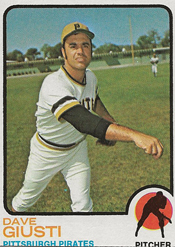 On Oct. 21, 1969, the Cardinals traded Giusti and catcher Dave Ricketts to the Pirates for outfielders Carl Taylor and Frank Vanzin.
Giusti, a right-hander, wanted to remain a starting pitcher and the Cardinals didn’t see a spot for him in their projected rotation in 1970.
The Pirates figured Giusti to be a spot starter and middle-inning reliever.
Giusti became the Pirates’ closer only because they had no one else available after their other options faltered.
His emergence as a stopper gave the Pirates an advantage over the Cardinals. The Pirates finished in first place in the East Division five times in a six-year stretch from 1970-75. The Cardinals, who struggled for bullpen help while trading pitchers who became quality closers, failed to win a title in that period.
Wanted man
After winning their second consecutive pennant in 1968, the Cardinals sought to acquire Giusti from the Astros to join a starting rotation of Bob Gibson, Steve Carlton, Nelson Briles and Ray Washburn. Giusti achieved a double-digit win total for the Astros each season from 1966-68.
On Oct. 11, 1968, the Cardinals got Giusti and catcher Dave Adlesh from the Astros for catchers Johnny Edwards and Tommy Smith, but three days later the Padres selected Giusti in the National League expansion draft.
Cardinals general manager Bing Devine was willing to try again. On Dec. 3, 1968, the Cardinals acquired Giusti from the Padres for infielder Ed Spiezio, outfielder Ron Davis, catcher Danny Breeden and pitcher Philip Knuckles.
Initially, the move paid dividends. Giusti won two of his first three starts for the 1969 Cardinals, but in May he injured his back and spent a month on the disabled list. When he returned, he struggled and was moved into a long-inning relief role. Giusti finished the 1969 season with a 3-7 record and 3.61 ERA.
The Cardinals in 1970 planned to have a starting rotation of Gibson, Carlton, Briles, Mike Torrez and Jerry Reuss. In need of a hitter to improve their bench strength, the Cardinals dangled Giusti in trade talks.
Supply and demand
Devine was confident the Cardinals made a good deal in acquiring Taylor for Giusti. A right-handed batter and the step-brother of Orioles slugger Boog Powell, Taylor hit .348 in 221 at-bats for the 1969 Pirates. He had a .415 batting average (17-for-41) as a pinch-hitter. After Taylor accused Pirates management of keeping him on the bench because of “politics,” teammates nicknamed him “Senator.”
The Tigers offered pitcher Joe Sparma for Taylor, the Pittsburgh Post-Gazette reported, but the Pirates preferred Giusti after getting a recommendation from their best player, Roberto Clemente. “He always had good stuff and he is a tough competitor,” Clemente said.
Pirates general manager Joe Brown told The Sporting News, “He can start and relieve. This was a big factor in making the trade.”
The Pirates projected their 1970 starting pitchers to be Steve Blass, Bob Moose, Dock Ellis, Bob Veale and Luke Walker, but Giusti said, “I want to be in the starting rotation. I think I can be a better pitcher if I’m used in rotation.”
Surprising development
Giusti, 30, went to spring training, hoping to convince Pirates manager Danny Murtaugh to make him a starter. Instead, he pitched poorly, yielding 12 runs in 15 spring training innings.
“His curveball hangs and his fastball lacks zip,” the Pittsburgh Post-Gazette reported. “He is not getting the ball down. Most of his pitches, especially his breaking pitches, appear to go to the hitter’s strength, about chest high.”
Giusti told the Pittsburgh Press, “I guess I was pressing. I went down there trying to show the club I could become the fifth starter and, as a result, I wasn’t throwing the ball the way I can.”
The Pirates opened the 1970 season with Giusti as a middle-inning reliever and Chuck Hartenstein as their closer. A slender right-hander, Hartenstein was nicknamed “Twiggy.” He struggled in April, posting a 7.04 ERA in six appearances. Two other closer candidates, Joe Gibbon and Bruce Dal Canton, weren’t the answer, so in desperation Murtaugh turned to Giusti.
Using a palmball, his version of a changeup, Giusti was able to pitch often and well as the closer. By mid-July, he was 8-0 with 14 saves and a 2.37 ERA.
“He’s our bread and butter now,” Murtaugh said.
In June 1970, the Pirates placed Hartenstein on waivers and he was claimed by the Cardinals. A month later, after he posted an 8.77 ERA in six appearances for the Cardinals, Hartenstein was released.
No relief
Giusti finished with a 9-3 record and 26 saves in 1970. The Pirates (89-73) won the division title, five games ahead of the second-place Cubs, and the Cardinals (76-86) came in fourth.
One of the Cardinals’ biggest problems was relief pitching. The staff produced 20 total saves, including eight by team leader Chuck Taylor.
Cardinals management counted on the starters to pitch deep into games and was slow to recognize the growing importance of having a strong bullpen with a dependable closer. The Cardinals weren’t developing top relievers, and they were giving away pitchers, like Giusti, who had the ability to do the job.
In 1970, three of the top closers in the majors were pitchers recently traded by the Cardinals _ Wayne Granger (35 saves) of the Reds, Giusti (26) and Mudcat Grant (24) of the Athletics. The Pirates acquired Grant from Oakland in September 1970 to join Giusti for the pennant push.
Against the Cardinals in 1970, Giusti was 3-0 with a save.
The next season, the Pirates became World Series champions. Giusti produced 30 saves and a 2.93 ERA. His ERA against the Cardinals, who finished as runners-up to the Pirates in the division, was 1.13. The Cardinals’ saves leader in 1971 was Moe Drabowsky, with eight.
Giusti pitched a total of 5.1 scoreless innings in the 1971 World Series against the Orioles and got a save in Game 4.
In seven seasons with the Pirates, Giusti was 47-28 with 133 saves and a 2.94 ERA.
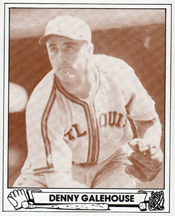 On Oct. 4, 1944, Denny Galehouse outdueled Cardinals ace Mort Cooper and George McQuinn hit a two-run home run in the Browns’ 2-1 victory in Game 1 of the World Series at Sportsman’s Park in St. Louis.
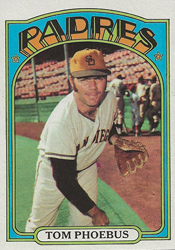 A 5-foot-8 right-hander, Phoebus pitched for seven seasons in the major leagues, primarily with the Orioles.
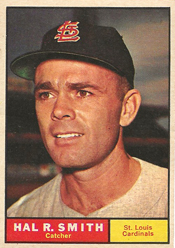 On Sept. 22, 1959, the Cardinals knocked the Dodgers out of first place in the National League with an 11-10 win at Busch Stadium in St. Louis.
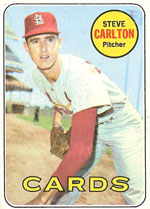 On Sept. 15, 1969, Carlton became the first pitcher in the majors to strike out 19 batters in nine innings, but it wasn’t enough to overcome the Amazin’ Mets.
 On Sept. 14, 1989, the paid attendance to see the Pirates play the Cardinals in a Thursday afternoon game at Busch Memorial Stadium in St. Louis was 1,519.
 RetroSimba