Feeds:
Posts
Comments

Archive for the ‘Opponents’ Category

One of the most glorious seasons in Cardinals history was the most painful in the 13-year big-league career of Gus Triandos.

gus_triandosTriandos was a catcher with the 1964 Phillies, whose late-season collapse enabled the Cardinals to surge to the National League pennant and a World Series title.

A right-handed batter who three times slugged more than 20 home runs in a season for the Orioles, Triandos, 34, was nearing the end of his playing days when he platooned with Clay Dalrymple on the 1964 Phillies.

Though he broke into the majors with the Yankees in August 1953, Triandos never had appeared in a World Series. He spent most of his career with the Orioles before he was traded with outfielder Whitey Herzog to the Tigers in November 1962.

After a season with Detroit, he was dealt with pitcher Jim Bunning to the Phillies in December 1963.

The Phillies had finished last in the National League each season from 1958 through 1961. They hadn’t won a pennant since 1950. But amazing things began to happen for Triandos and the 1964 Phillies.

Triandos dubbed 1964 “the season of the blue snow,” an apparent reference to the Paul Bunyan and blue ox folklore.

What that meant, Triandos told the Chicago Tribune in a 2005 interview, was “so many odd things happened that year” he wouldn’t have been surprised if snow turned blue.

On June 21, 1964, Triandos caught Bunning’s perfect game against the Mets at Shea Stadium. Triandos also drove in two runs and scored a run. Boxscore

Triandos told The Sporting News that Bunning was so relaxed “he was jabbering like a magpie.”

“On the bench before the ninth,” Triandos related, “(Bunning) said, ‘I’d like to borrow (Sandy) Koufax’s hummer for that last inning.’ Then he’s out there with two hitters to go and he calls me out and says I should tell him a joke or something, just to give him a breather.”

The Phillies finished that day in first place. They entered September with a 5.5-game lead over the second-place Reds and were seven ahead of the fourth-place Cardinals.

Holding a 6.5-game lead over the Cardinals and Reds with 12 to play, a pennant seemed a near certainty for the Phillies.

Then they lost 10 in a row.

In that stretch was a three-game sweep by the Cardinals over the Phillies at St. Louis.

The middle game of the set was on Sept. 29, 1964. The Phillies had lost eight straight and had fallen into third place. Behind Ray Sadecki, seeking his 20th win, the Cardinals took a 3-0 lead.

In the fourth, the Phillies made a desperate bid to regain momentum and salvage their season. They loaded the bases on three walks. With two outs and Dalrymple due up, manager Gene Mauch called on Triandos to pinch hit. He singled to center, scoring two and pulling the Phillies within one.

But the Cardinals held on, winning, 4-2, and moved into a first-place tie with the Reds.

The next night, Sept. 30, the Cardinals prevailed, 8-5, over Bunning and the Phillies, while the Pirates beat the Reds, 1-0, in 16 innings. The Cardinals gained sole possession of first place.

Four days later, on the final day of the season, St. Louis clinched the pennant. The Cardinals had won 10 of their final 13, including a stretch of eight in a row.

“Everybody looked at each other and was like, ‘What happened?’ ” Triandos said to the Chicago Tribune in 2005.

The Phillies ended their season with Bunning’s shutout in a 10-0 victory over the Reds. Both the Phillies and the Reds finished a game behind the Cardinals.

In the locker room after the game, Triandos told the Associated Press, “I guess I was more disappointed than anyone. Anybody my age feels that way. There might not be another chance.

“It’s not snowing blue.”

Previously: 1964 Cardinals were menace to Dennis Bennett

Read Full Post »

(Updated April 4, 2019)

Devastated by the assassination of Dr. Martin Luther King Jr., Cardinals pitcher Bob Gibson still fulfilled his professional obligations and pitched the day after King’s death and the day after King’s funeral.

bob_gibson12King was murdered on April 4, 1968, in Memphis. The civil rights leader and clergyman was 39.

In his 1968 book “From Ghetto to Glory,” Gibson said he was in his room at spring training camp in St. Petersburg, Fla., when he thought he heard a television report about King’s death. Uncertain of what he heard, Gibson went to teammate Lou Brock’s room. “Orlando Cepeda was there and from the expressions on their faces I knew I had heard correctly,” Gibson said.

“I think the emotions I felt most strongly were bitterness and frustration.”

In his 1994 book “Stranger to the Game,” Gibson said, “I reeled from the impact of the assassination _ the cold-blooded murder of the one man in my lifetime who had been able to capture the public’s attention about racial injustice, break through some of the age-old social barriers and raise the spirits and hopes of black people across the country.”

On Friday April 5, the day after King’s death, the Cardinals and Tigers proceeded with a scheduled spring training exhibition game at St. Petersburg. Gibson and another black pitcher, the Tigers’ Earl Wilson, were the starters.

Cardinals catcher Tim McCarver, a Memphis native, is quoted in “Stranger to the Game” as recalling an intense conversation before the game with Gibson about King’s death. Said McCarver:

“Everybody on the club was dismayed by what happened to Martin Luther King. It was a very disorienting time in many respects and that was probably the hardest moment. Bob and I had a very serious discussion in the clubhouse that morning. He was very emotional and initially he turned his back on me.

“Probably the last person he wanted to talk to that morning was a white man from Memphis, of all places. But I confronted him on that, as I knew he would have done if the tables had been turned. I told him that I had grown up in an environment of severe prejudice, but if I were any indication, it was possible for people to change their attitudes.

“He didn’t really want to be calmed down and told me in so many words that it was plainly impossible for a white man to completely overcome prejudice … I found myself in the unfamiliar position of arguing that the races were equal and that we were all the same.  It was a soul-searching type of thing and I believe Bob and I reached a meeting of the minds that morning. That was the kind of talk we often had on the Cardinals.”

In “From Ghetto to Glory,” Gibson said, “Some of the white players on the Cardinals felt his death was a shame, but their feeling was not the same as ours. I guess there were more who didn’t care one way or the other than there were those who did care and that’s the whole trouble _ there are too many white people who don’t care.”

On the afternoon of April 5, Gibson pitched four innings against the Tigers and yielded a run on three hits. He also drove in a run with a sacrifice fly. McCarver caught and also produced two singles and scored a run. The Cardinals won, 3-2, on Bobby Tolan’s ninth-inning RBI-single.

The Cardinals and Tigers played again the next afternoon, April 6, in a game won by Detroit, 4-2, at Lakeland, Fla. Brock led off the game with an inside-the-park home run.

President Lyndon Johnson declared Sunday, April 7, a day of national mourning for King. All spring training exhibition games were canceled that day.

The 1968 major-league regular season was scheduled to begin with three Opening Day games on Monday April 8 and eight more openers, including the Braves vs. the Cardinals at St. Louis, on Tuesday April 9. King’s funeral was April 9 in Atlanta.

Gibson said some Cardinals players gathered in Cepeda’s apartment and decided to inform Cardinals management they wouldn’t open the season as scheduled.

But, before the players expressed that view, the major leagues moved back the entire slate of openers to Wednesday, April 10.

Cardinals general manager Bing Devine said it was a time “when unity of thinking, purpose and action is desirable,” the Associated Press reported.

A day after King was buried in Atlanta, the Atlanta Braves faced the Cardinals before 34,740 at Busch Stadium. Among the prominent African-American players in the lineups were Gibson, Brock and Curt Flood for the Cardinals and Hank Aaron for the Braves.

In an interview with the Newspaper Enterprise Association, Aaron said King “could walk with kings and talk with presidents. He wasn’t for lootings and bombings and fights, but he wasn’t afraid of violence either. He was 20 years ahead of his times.”

Gibson never hesitated in making the start in the 1968 opener.

“As disturbed as I was about Dr. King, I knew, also, that I couldn’t let it undermine my pitching,” Gibson said.

Gibson held the Braves to three hits and an unearned run in seven innings and was lifted with the Braves ahead, 1-0. The Cardinals rallied for a run in the eighth on Cepeda’s RBI-double and won, 2-1, on a RBI-single by Dave Ricketts in the ninth. Boxscore

“I had tremendous admiration for Dr. King, for the great work he was doing,” Gibson said in his 1968 book. “His was one approach to the problem and there are others with different approaches and I think you have to have all types if the fight is to be successful. You have to have the non-violent and you have to have the violent. If it could be accomplished the way Martin Luther King wanted it done, that would be the best way.”

The 1968 season turned out to be Gibson’s greatest. He was 22-9 with a 1.12 ERA, pitched 13 shutouts and won both the Cy Young Award and the Most Valuable Player Award in the National League.

Read Full Post »

(Updated Jan. 6, 2016)

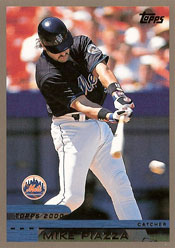
The performance of catcher Mike Piazza against the Cardinals in the 2000 postseason led to his only World Series appearance in a 16-year major-league playing career. It also may have helped his case in getting elected to the National Baseball Hall of Fame.

mike_piazzaPiazza was elected to the Hall of Fame on Jan. 6, 2016. He enhanced his credentials with a standout National League Championship Series for the Mets against the Cardinals. By hitting .412 (7-for-17) with two home runs, three doubles, five walks, four RBI and seven runs scored in the five-game series versus St. Louis, Piazza carried the Mets to their first pennant in 14 years.
[Piazza deserves election to the Hall of Fame, but so does former Cardinals catcher Ted Simmons. Simmons has more hits (2,472) and more RBI (1,389) than Piazza (2,127 hits; 1,335 RBI). Although Simmons had 1,769 more at-bats than Piazza, the point is Simmons is in the same class as Piazza as an overall hitter among catchers. Plus, Piazza wasn’t as good as Simmons on defense. For example, Piazza allowed the most stolen bases of any National League catcher in a season 10 times during his career.]

Tough on Cardinals

Piazza, who played for the Dodgers, Marlins, Mets, Padres and Athletics, hit .331 (112-for-338) with 24 home runs and 65 RBI in 97 regular-season games against the Cardinals in his career.

Cardinals pitching was just the tonic he needed entering the 2000 National League Championship Series. Although he had hit well overall during the 2000 regular season (.324 batting average, 38 home runs, 113 RBI), Piazza had slumped throughout September. His regular-season batting average was .218 after Aug. 27. In the National League Division Series against the Giants, he hit .214.

[Piazza hit .348 (8-for-23) against the Cardinals during the 2000 regular season. On May 27, 2000, in a 12-8 Mets victory at St. Louis, Piazza reached bases in all six of his plate appearances on a home run, single and four walks. Boxscore]

Pacing the Mets

In the first inning of the first game of the National League Championship Series, Piazza established the tone for the Mets. He laced a double down the third-base line off a Darryl Kile curve, driving in the first run and moving Edgardo Alfonzo to third. Alfonzo then scored on a Robin Ventura sacrifice fly, giving the Mets a 2-0 lead on their way to a 6-2 victory at St. Louis.

A headline in the St. Louis Post-Dispatch the next morning read, “Piazza’s MVP Effort Gets Mets Off To Fast Start.”

“We’re a pretty good team,” said Mets manager Bobby Valentine. “And when Mike’s hitting we’re a real good team.”

Said Piazza: “We were able to take the crowd out of the game early, which is big. They’ve got an electric crowd.” Boxscore

In Game 2, a 6-5 Mets victory, Piazza homered off reliever Britt Reames (after nearly being called out on a too-close-to-take 0-and-2 pitch), walked three times and scored twice. Boxscore

Piazza was a central figure in the Cardinals’ lone win of the series, an 8-2 victory in Game 3 at New York. After St. Louis scored twice in the top of the first, Cardinals starter Andy Benes yielded singles to the first two Mets batters in the bottom half of the inning, bringing Piazza to the plate with runners on first and third and no out.

To the Cardinals’ great relief, Piazza hit a weak grounder that third baseman Fernando Tatis scooped on a short hop and turned into a double play. Though a run scored, the Cardinals had gained the momentum by surviving the threat.

“That was key for all of us,” Cardinals catcher Carlos Hernandez said to the Post-Dispatch. “Everybody knows Piazza. He’s a real good hitter. When he got that groundball, I thought it was over. Everybody, when Piazza gets to bat, expects him to hit the ball out of the park.”

Said Piazza: “It was a tough, two-strike pitch, tough to lay off of it.” Boxscore

Sweet dreams

Piazza battered the Cardinals in Game 4 (home run, double, two RBI, three runs and a walk) and in Game 5 (two runs, double and a walk). In the locker room, celebrating the only pennant clinching he’d experience, Piazza told the Post-Dispatch, “It’s like a dream. I hope nobody pinches me. I don’t want to wake up from this.”

Six years later, the Cardinals gained a measure of revenge against both Piazza and the Mets. In 2006, Piazza was with the Padres, who were overwhelming favorites against the Cardinals in the National League Division Series. This time, Piazza hit .100 (1-for-10) in four games against the Cardinals. (Batting against St. Louis for the final time in his career, Piazza, pinch-hitting for Russell Branyan in the eighth inning of Game 4, grounded into a double play against reliever Josh Kinney. Boxscore)

After eliminating the Padres, the Cardinals beat the Mets in a seven-game National League Championship Series before winning the World Series title against the Tigers.

Previously: 2011 Cardinals are first to have top 3 in hitting into double plays

Read Full Post »

(Updated Jan. 23, 2019)

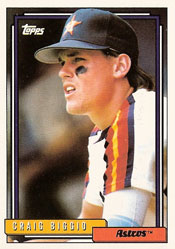
Craig Biggio, a Hall of Famer who spent his career with the Astros, rejected a chance to become a Cardinal in his prime.

craig_biggioBiggio was recruited aggressively by the Cardinals when he became a free agent after the 1995 season. At age 30, he had a chance to be their second baseman at the start of the Tony La Russa era and become part of a franchise that would reach the postseason nine times in La Russa’s 16 seasons as Cardinals manager.
Instead, Biggio remained with the Astros and continued to torment Cardinals pitching.

Biggio had regular-season career bests of 280 hits and 131 RBI against the Cardinals in 20 years (1988-2007) with the Astros. Versus St. Louis in the regular season, he batted .298 with a .378 on-base percentage, 22 home runs, 58 doubles and 31 stolen bases. In the postseason (the National League Championship Series of 2004 and 2005), Biggio hit .250 against the Cardinals.

After the 1995 season, Biggio weighed offers from the Cardinals, Rockies, Padres and Astros. La Russa, who had just been named Cardinals manager, and general manager Walt Jocketty met with Biggio, his wife and agent Barry Axelrod in California in an effort to convince the player to become a Cardinal.

“We were received well,” Jocketty told the St. Louis Post-Dispatch for a story published Dec. 5, 1995. “He likes Tony a lot and would enjoy playing for him. It’s important for him to go to a place where the team is going to be competitive. I think he would enjoy playing here. He’s a guy who would be very important to our program.”

Four days later, Post-Dispatch columnist Bernie Miklasz wrote “Craig Biggio would own this town” if he signed with St. Louis.

The Cardinals offered Biggio a five-year, $25 million contract, the Associated Press reported, but Biggio took the Astros’ four-year, $22 million deal. “I consider myself a loyal person,” Biggio said. “… I want to win in an Astros uniform.”

Twelve years later, when Biggio was finishing his playing career in 2007 with 3,060 hits, La Russa told MLB.com, “Walt and I put a full-court press on Craig (in 1995). I thought we put together a charge that had a chance, but I know … his teammates were also talking to him. He made a smart decision to stay there.”

Biggio told St. Louis writer Rick Hummel in 2007 that a few years earlier La Russa had told him, “I’m still ticked at you for not signing with us.”

“Tony said it in a good way,” Biggio said, “but I was their guy. But I never wanted to leave Houston.”

Biggio, who played most of his career as a second baseman, faced the Cardinals for the first time on Aug. 17, 1988, when he entered the game at Busch Stadium II in the ninth inning as a catcher. Boxscore

In 108 regular-season games at Busch Stadium II (which was the Cardinals’ home through 2005), Biggio batted .314 with 30 doubles, 11 home runs and 60 RBI.

Biggio faced the Cardinals for the final time during a September 2007 weekend series at Busch Stadium III. Before the middle game of the series on Sept. 22, 2007, Jocketty presented Biggio with a check for $3,053 (his hits total at the time) during an on-field ceremony. (Biggio donated the money to a charity.) Cardinals fans gave Biggio an ovation during and after the presentation, MLB.com reported.

“I’ve always said the Cardinals fans are the classiest fans in the game because they appreciate a good play,” Biggio said to the Post-Dispatch.

In remarks to reporters, La Russa called Biggio “the perfect pro.”

“He’s tied for first among guys you respect for all the years I’ve been here,” said La Russa.

Alyson Footer of MLB.com wrote, “Craig Biggio always appreciated the city of St. Louis, the Cardinals organization and Cardinals fans, and during an on-field pregame presentation on Saturday the admiration was reciprocated.”

Biggio appeared in the game that night as a pinch-hitter in the ninth inning and singled against Tyler Johnson. Boxscore

The next day, Sept. 23, 2007, Biggio, playing second base, went 1-for-4 in his final game against the Cardinals. The hit was a seventh-inning single off Russ Springer. When Biggio batted again in the eighth, he received a standing ovation that he acknowledged with a tip of his batting helmet. After flying out to right field, he was removed from the game. Boxscore

In a 2011 interview with the New York Times, Biggio said he “absolutely” could have played another two or three years longer than he did, but he wanted more time with his wife and three children. “I couldn’t look my family in the eyes anymore and justify (playing),” Biggio said. “It was time to go.”

Previously: Lance Berkman and his greatest games as a Cardinal

Read Full Post »

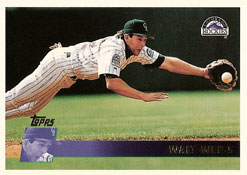
The Cardinals wanted free agent Walt Weiss to be their shortstop for the 1996 season, but Weiss declined St. Louis’ offer because he was concerned how fans would react to him replacing Ozzie Smith.

St. Louis instead acquired shortstop Royce Clayton from the Giants. Weiss re-signed with the Rockies.

As Weiss anticipated, the transition of Smith from St. Louis starter to part-time player was marred by controversy. Smith felt he deserved to remain the everyday shortstop and he clashed with Tony La Russa when the manager chose Clayton as the starter in 1996. Meanwhile, Weiss quietly extended a four-year stretch as the Rockies’ regular shortstop.

Weiss started his major-league career in 1987 with the Athletics and played six seasons in Oakland for La Russa. During that time, Weiss won the American League Rookie of the Year Award and helped the Athletics win three pennants and a World Series title.

Traded by Oakland to the Marlins after the 1992 season, Weiss spent a year in Florida and then two with the Rockies. In November 1995, he declared for free agency.

When the Rockies offered him a two-year contract at $2 million per year, the Cardinals were prepared to counter with a two-year deal plus an option year at $2 million per year, according to the St. Louis Post-Dispatch. The Cardinals were seeking a shortstop because of their concern about whether Smith, who hit .199 in 1995 and who was about to turn 41, could handle the everyday shortstop role in 1996.

On Nov. 20, 1995, St. Louis reporter Rick Hummel wrote: “Free-agent shortstop Walt Weiss apparently has whittled his list to two teams _ Colorado, for whom he played the last two seasons, and the Cardinals.”

A day later, the Rockies announced Weiss had accepted a $4.1 million two-year contract with a player option for 1998 to remain with Colorado.

“Going to St. Louis, I wouldn’t have had the fan support I have (in Denver), especially coming in behind Ozzie,” Weiss said to the Rocky Mountain News.

Post-Dispatch columnist Bernie Miklasz wrote that Weiss rejected the Cardinals “in part because he didn’t want to be the co-star in an Ozzie soap opera.”

Miklasz, writing with foresight, added, “La Russa should have the freedom to choose the lineup. If the Cardinals are serious about winning, then any Ozzie-related PR repercussions should be irrelevant … It’s too bad that this mutually beneficial relationship seems destined to end in so much rancor and bitterness.”

A .258 career hitter in 14 major-league seasons, Weiss was a terror against the Cardinals. The switch-hitter batted .333 (79-for-237) in 76 regular-season games against St. Louis. He had more hits versus the Cardinals than he did against any other team in his big-league career. Weiss batted .357 (41-for-115) in 35 regular-season games at Busch Memorial Stadium.

Perhaps Weiss’ most memorable game against the Cardinals came in Game 1 of the 2000 National League Division Series, when St. Louis starter Rick Ankiel experienced his infamous meltdown.

Playing for the Braves in his final big-league game, Weiss started at shortstop in Game 1. In the third inning, Weiss delivered the two-run single that knocked Ankiel from the game after the left-hander had thrown five wild pitches and walked four that inning. It would be Weiss’ last hit of his big-league career. Boxscore

“Walt Weiss had a superb day afield and at the plate, going 2-for-3 with two RBI and making a great catch on Andres Galarraga’s errant throw to second base in the third.” the Atlanta Journal-Constitution reported. “With runners on first and second, Galarraga made a fine stop on Fernando Vina’s smash, but threw wildly to second. Weiss, fully extended, reached far and low to his right to catch the ball, then searched with his right foot before touching the bag for the force.”


Read Full Post »

Pascual Perez played a significant role in the 1982 Cardinals’ bid to win the National League pennant and reach the World Series.

Perez was the losing pitcher for the Braves against the Cardinals in Game 1 of the 1982 NL Championship Series and he pitched in long relief during Game 3 when St. Louis completed a sweep of the best-of-five playoff.

At the time, Perez, 25, was regarded as one of the most promising talents in the major leagues.

Perez was supposed to start Game 2 of the 1982 NL Championship Series. Braves knuckleball specialist Phil Niekro was matched against Joaquin Andujar in Game 1.

Niekro was protecting a 1-0 lead entering the bottom of the fifth inning during a light rain at St. Louis. After Niekro retired the leadoff batter and closed within two outs of completing the five innings needed to declare an official game, plate umpire Billy Williams halted play. More than two hours later, the game was postponed. Though most agreed the fifth inning likely could have been completed before the rain worsened, Braves manager Joe Torre supported the umpires’ decision, telling The Sporting News, “I don’t think a team should play 162 games and then lose a playoff game in five innings … We don’t want to come in here and steal a game.”

Niekro offered to pitch again in the rescheduled Game 1 on Oct. 7, but Torre instead chose Perez.

Traded by the Pirates to the Braves on June 30, 1982, Perez posted a 4-4 record in helping Atlanta win the NL West Division championship. He made unwanted headlines when he got lost on I-285 while driving to the Atlanta ballpark and missed a start.

Asked by the St. Louis Post-Dispatch how he could make certain Perez found his way to Busch Memorial Stadium for his postseason start against the Cardinals, Torre said, “We gave him a room at the hotel that faces the ballpark.”

For five innings in rescheduled Game 1, it appeared Torre had made the correct choice. Perez pitched effectively, but his counterpart, Bob Forsch, was better. The Cardinals led 1-0 entering the bottom of the sixth. Lonnie Smith started the inning by hitting a grounder to first baseman Chris Chambliss. Perez hustled off the mound to take the toss from Chambliss, but he fumbled the ball and Smith streaked across the bag, credited with an infield single.

“The ball was tailing away from me,” Perez said to the Atlanta Constitution. “I tried to catch it and tag Smith with the ball in the glove. He is a fast man.”

Singles by Keith Hernandez (on a good sinker) and George Hendrick (on a hanging slider) followed, the latter scoring Smith and knocking Perez from the game. The Cardinals scored five times in the inning and went on to a 7-0 victory behind Forsch’s three-hitter. During the regular season, Forsch had yielded 19 hits and 10 runs in 10.2 innings pitched against the Braves. Video

“We misplayed Smith’s groundball and they got a broken-bat hit (by Hendrick) and I think that just kind of set them off,” Braves catcher Bruce Benedict said to the Associated Press. Boxscore

The Cardinals rallied to win Game 2 in St. Louis (Niekro started, but closer Gene Garber took the loss) and headed to Atlanta for Game 3. The Cardinals struck for four runs off starter Rick Camp. Perez relieved in the second, pitched 3.2 innings (yielding a run and three hits) but couldn’t stop St. Louis from sweeping into the World Series with a 6-2 victory. Boxscore

In an 11-year big-league career, including stints with the Pirates, Braves and Expos, Perez posted a 7-6 record and 2.33 ERA in 16 regular-season starts versus St. Louis.

Previously: September hot streak carried 1982 Cardinals to title

Read Full Post »

« Newer Posts - Older Posts »