Feeds:
Posts
Comments

Archive for the ‘Pitchers’ Category

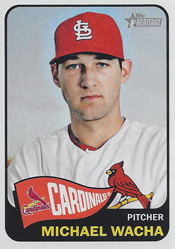
Pitching with the poise and skill of a master, the Cardinals’ Michael Wacha capped his rookie season with a nearly unhittable showing.

On Sept. 24, 2013, Wacha held the Nationals hitless until Ryan Zimmerman got a scratch single with two outs in the ninth.

The near no-hitter came in Wacha’s final appearance of the regular season and solidified a spot for him in the Cardinals’ starting rotation for the playoffs, where he gave an encore that was just as impressive.

Helping hand

In the June 2012 amateur draft, Wacha was chosen by the Cardinals in the first round with a pick given them as compensation for the Angels’ signing of free agent Albert Pujols.

A 6-foot-6 right-hander, Wacha was 9-1 with a 2.07 ERA in 16 starts for Texas A&M in 2012. After the Cardinals signed him, he pitched in 11 games in their farm system that summer.

Assigned to Class AAA Memphis in 2013, Wacha was projected to spend most of the season there, but when Cardinals starters Jaime Garcia and Jake Westbrook got injured in May, Wacha, 21, was called up.

In his debut, a start against the Royals on May 30, 2013, Wacha got a hit before he allowed one. He singled to center in his first big-league at-bat against Jeremy Guthrie in the second inning. Wacha retired the first 13 batters he faced before Lorenzo Cain doubled with one out in the fifth.

Mixing a fastball and changeup and throwing strikes, Wacha gave up two hits, no walks and left after seven innings with a 2-1 lead. The Royals rallied for three runs in the ninth against the relievers and won, 4-2. Boxscore

Two weeks later, Wacha got his first Cardinals win, beating the Mets, and then was sent back to Memphis. He returned to the Cardinals in August, pitched mostly in relief, got sent down again that month and was recalled in September.

The Cardinals, who entered September a game behind the first-place Pirates in the National League Central Division, made Wacha a starter for the stretch run.

Washington shutdown

With Wacha, 22, providing a lift, the Cardinals surged in September. They were atop the division, two games ahead with five left to play, when Wacha made his start against the Nationals on a Tuesday night at St. Louis.

The Nationals, managed by Davey Johnson, featured a lineup with Bryce Harper, Jayson Werth and Ryan Zimmerman, but all were overmatched by Wacha. He retired the first 14 batters before Adam LaRoche reached on a Matt Carpenter error. Other than that, the Nationals managed only leadoff walks from Zimmerman in the seventh and LaRoche in the eighth.

“He was amazing, keeping the ball down, mixing it with the changeup,” Cardinals catcher Yadier Molina told the St. Louis Post-Dispatch. “When you throw hard with the sinker he’s got, the movement, the changeup, it was hard for them.”

With the Cardinals ahead, 2-0, Wacha retired the first two batters in the ninth. Zimmerman was up next and he hit a high bouncer toward the mound. Wacha stretched and nicked the ball with his glove. Charging in from his shortstop position, Pete Kozma scooped the ball off the turf with his bare hand.

“I thought there was a real good chance we were going to see an unbelievable finish to an unbelievable game,” Cardinals manager Mike Matheny said to the Post-Dispatch.

With no time to set, Kozma hurried his throw and first baseman Matt Adams had to come off the bag to snare it as Zimmerman streaked across with a single.

Trevor Rosenthal relieved and got the final out, sealing the win. Boxscore and Video

Wacha finished the 2013 regular season with a 4-1 record and 2.78 ERA for the Cardinals. In five September starts, he was 2-1 with a 1.72 ERA.

Right stuff

The 2013 Cardinals (97-65) had the best record in the National League and were matched in the first round of the playoffs against a team with the third-best mark, the Pirates (94-68). During the season, the Pirates won 10 of 19 versus St. Louis.

In the playoffs for the first time in 21 years, the Pirates won two of the first three in the best-of-five series. With the Cardinals needing to win Game 4 at Pittsburgh to avoid elimination, Mike Matheny chose Wacha as the starting pitcher.

Making his first playoff appearance and pitching for the first time since his near no-hitter versus the Nationals, Wacha delivered another masterpiece. He held the Pirates hitless until the eighth, when Pedro Alvarez hit a solo home run.

Wacha went 7.1 innings and departed with a 2-1 lead. Carlos Martinez and Trevor Rosenthal came through in relief, sealing the win. Boxscore

Pirates right fielder Marlon Byrd, who struck out three times against Wacha, told the Pittsburgh Post-Gazette, “I feel like he’s the next coming of (Cardinals ace) Adam Wainwright. He knows how to pitch. He has that swagger.”

Wainwright told the Post-Dispatch, “Michael may be one of the most talented pitchers I’ve seen.”

Given new life by Wacha’s win, the Cardinals took advantage, prevailing in Game 5 and advancing to the next round against the Dodgers.

Top gun

Wacha dominated the Dodgers, winning Game 2 and the pennant-clinching Game 6. In both, he beat Dodgers ace Clayton Kershaw, who received the second of his three Cy Young awards in 2013.

Asked about Wacha, Chris Carpenter, who earned a Cy Young Award with the Cardinals in 2005 and was 3-0 for them in World Series games, said to the Los Angeles Times, “His maturity level is not normal for a kid that’s his age. It’s been a lot of fun to watch him rise to the occasion. Not only rise to the occasion, but wanting to be in the situation. It’s a tough spot to be when you’re 22 years old.”

In the 2013 World Series, Wacha was opposed by the Red Sox, who had his former American Legion teammate, third baseman Will Middlebrooks. They played together on the same team coached by Wacha’s father, Tom, in Texarkana, Texas. “He really didn’t start throwing hard until his senior year in high school,” Middlebrooks recalled to the Associated Press. “He wasn’t like a dominant pitcher.”

Wacha started and won Game 2 of the World Series, but lost Game 6 when the Red Sox clinched the championship.

For the 2013 postseason, Wacha had as many wins (four) for the Cardinals as he did for them in the regular season.

Reflecting on his debut year in the majors, Wacha told the Post-Dispatch in January 2014, “The goal was just try to win a ballgame for this team. It ended up being a pretty special year.”

In seven years with the Cardinals (2013-19), Wacha had a regular-season record of 59-39. Granted free agency after the 2019 season, he signed with the Mets.

Read Full Post »

(Updated July 3, 2024)

The last home win in St. Louis for the Browns featured two pitchers _ one on the way up; the other on the way down _ who played prominent roles in 1950s baseball lore.

Ralph Branca of the Detroit Tigers and Bob Turley of the Browns engaged in a classic duel at St. Louis on Sept. 5, 1953. Each went the distance in a game the Browns won, 1-0, in 12 innings.

Branca, the Brooklyn Dodgers reject, nearly held the Browns hitless the first nine innings. Turley, a rookie, overpowered the Tigers with a fastball that was perhaps the best in the American League.

As Bob Burnes of the St. Louis Globe-Democrat noted, “This was one of the year’s best ballgames anyplace.”

Witnessed before a mere 1,960 spectators on a Saturday night, it turned out to be the last time the Browns won at home. Three weeks later, the franchise was moved to Baltimore and renamed the Orioles.

Something to prove

Branca was 18 when he debuted with the Dodgers in 1944. He earned 21 wins for them in 1947 and came close to pitching two no-hitters against the St. Louis Cardinals that season.

His good work got obscured by the pennant-clinching home run he gave up to Bobby Thomson of the New York Giants at the Polo Grounds in 1951. 

The next time Branca pitched at the Polo Grounds, he allowed six runs, including a Hank Thompson grand slam, in one inning of work on July 5, 1953. Boxscore

A week later, with his ERA for the season at 9.82, the Dodgers placed Branca on waivers. Every team in the National League, including the Cardinals, declined to claim him. The American League Tigers decided to take a chance.

“I see no reason why he can’t be a big winner for us,” Tigers manager Fred Hutchinson said to the Associated Press. “He’s an intelligent, levelheaded fellow who seems to have all the equipment of a good pitcher.”

In his Tigers debut, against the Browns at Detroit, Branca gave up a home run to the first batter he faced, Johnny Groth. Before the inning was over, Vic Wertz also connected against Branca for a two-run homer. Branca settled down after that and held the Browns scoreless for four innings but was the losing pitcher. Boxscore

Branca got a complete-game win in his next start versus the Athletics. “When the result was announced over the Ebbets Field loudspeaker (in Brooklyn), the jammed stands cheered long and loud,” the New York Daily News reported. Boxscore

Two months later, as he approached his start against the Browns at St. Louis, Branca was 3-4 with a 4.63 ERA with the Tigers.

Local prospect

Bob Turley went to Central High School in East St. Louis, Ill. “He had been a good sandlot pitcher but he wasn’t sensational,” the St. Louis Post-Dispatch noted.

Browns chief scout Jack Fournier, a former Cardinals first baseman, thought otherwise. In the book “We Played the Game,” Turley said, “Fournier had discovered me pitching in a municipal league in East St. Louis in 1948 and asked me to take the nickel bus ride across the river to try out at Sportsman’s Park.”
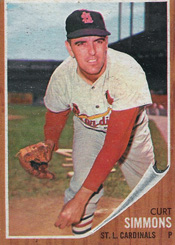
The Browns signed Turley, 17, on the night he graduated from high school and sent him to the Belleville (Ill.) Stags, their Class D farm club. “Belleville wasn’t pitching him at first, so we almost had to fire the manager in order to get them to let Turley pitch,” Browns general manager Bill DeWitt Sr. recalled to the Post-Dispatch.

Turley was 23-5 for the Class C Aberdeen (S.D.) Pheasants in 1949 and 20-8 for the Class AA San Antonio Missions in 1951. San Antonio manager Jo-Jo White, a former big-league outfielder, told the Post-Dispatch, “Turley has everything _ a good fastball, two of the meanest curves I’ve ever seen, the strength to pitch all day, and nerve.”

Turley, 21, got called up to the Browns in September 1951 and made one appearance, a start at home against the White Sox, and lost on a Saturday afternoon before 1,014 fans. “Almost everybody in the stands was my family,” Turley told author Danny Peary. “I got the loss but it was still a real thrill.” Boxscore

A month later, Turley began a two-year hitch in the Army. When he rejoined the Browns in August 1953, he and Harry Brecheen became road roommates. Turley was 22. Brecheen, the former Cardinals pitcher who joined the Browns for his final season, was 38.

In the book “We Played the Game,” Turley recalled, “When I was 11, a team I was on played a three-inning game in Sportsman’s Park before the Cardinals’ game. Our manager gave each of us baseballs for autographing and I asked Harry to sign my ball. He was pitching that day and said he didn’t have time. When we roomed together, you bet your life I reminded him of that day.

“I liked Harry. He was a funny guy with a dry sense of humor and a lot of common sense. He taught me pitching fundamentals, which was important because in those days there weren’t pitching coaches to help us develop.”

On Aug. 31, 1953, Turley, 22, relieved starter Satchel Paige, 47, in the sixth inning against the Washington Senators. Turley hit a home run against Sonny Dixon, but gave up the winning run and took the loss. Boxscore

Turley’s next appearance came in the start versus Ralph Branca and the Tigers.

Pair of aces

It was evident from the start of the game that both Branca and Turley were sharp.

Branca retired the first 12 batters he faced before Vic Wertz opened the fifth with a walk. The first hit he allowed came in the sixth, an infield single by Johnny Groth off the glove of second baseman Fred Hatfield. Branca told The Sporting News, “Hatfield could have thrown out Groth if he had come up with the ball.”

Groth’s single was the Browns’ only hit against Branca in the first nine innings.

Turley was tough, too, striking out 10 Tigers in the first six innings.

Both pitchers took shutouts into the 12th. In the bottom half of the inning, Dick Kokos ended the drama with a home run onto the pavilion roof in right.

Turley allowed three hits, walked four and struck out 14. Branca gave up four hits, walked one and fanned eight. Boxscore

Different paths

The next day, the Tigers won, 5-2, at St. Louis. Then the Browns embarked on a 14-game road trip and went 6-8. They returned to St. Louis to close out the season with a three-game series against the White Sox. The Browns lost all three. The finale, played on Sept. 27, 1953, before 3,174 customers, went 11 innings. Boxscore

Two days later, American League owners approved the move of the Browns from St. Louis to Baltimore after club owner Bill Veeck agreed to sell his controlling interest to a group led by attorney Clarence Miles for $2.5 million.

Branca and Turley took different career paths in 1954. Branca had a 5.76 ERA in 17 games when the Tigers released him in July. After brief stints with the Yankees and Dodgers, he was done pitching at 30 in 1956.

Turley emerged as a force in the American League with the 1954 Orioles. Though he walked more batters (181) than any pitcher in the league, Turley also struck out the most (185) and had 14 wins for a team that totaled 54.

“He’ll be the next to strike out 300 in a season,” Cleveland Indians fireballer Bob Feller predicted to the Post-Dispatch.

Yankees manager Casey Stengel told the newspaper, “He’s the fastest in our league, I’ll guarantee that. Maybe he’s the fastest in baseball. Turley has a great future. He could be a 30-game winner when he reaches his peak.”

After the 1954 season, Turley, along with pitcher Don Larsen, was traded to the Yankees. He told author Danny Peary it was “the greatest day of my life” because it gave him a chance to pitch for a contender.

In his autobiography “The Mick,” Yankees slugger Mickey Mantle said Turley had a knack for determining when an opposing pitcher was going to throw a fastball. Turley would tip off Mantle and other Yankees batters. “Bob would signal me with a piercing whistle if he saw one coming,” Mantle said.

Also, “Turley could throw hard,” Mantle said. “When he was right, nobody threw harder. He was also very smart businesswise. Wherever we went, I’d find him unfolding The Wall Street Journal and reading it from front to back.”

In 1958, Turley (21-7, 2.97 ERA) won the Cy Young Award and was named most valuable player of the World Series. In Game 5 against the Braves, he pitched a five-hit shutout and struck out 10, including Hank Aaron twice. In the decisive Game 7, he relieved Larsen in the third, held the Braves to a run in 6.2 innings and got the win. Boxscore

Turley pitched in five World Series for the Yankees and won four times.

He and Branca finished with somewhat similar records in the big leagues. Branca: 88-68, 3.79 ERA. Turley: 101-85, 3.69.

Read Full Post »

For a while, in the early part of September 1963, Cardinals pitcher Curt Simmons couldn’t do anything wrong at the ballpark.

From Sept. 1 to Sept. 13, Simmons won four starts in a row for the 1963 Cardinals and pitched three consecutive shutouts in that stretch.

His hot streak extended beyond the pitching mound. Simmons drove in runs and, in perhaps the most amazing feat of all, stole home.

Base thief

A left-hander who turned 34 in 1963, Simmons was a starter who overcame career-threatening injuries. Part of the big toe on his left foot was sliced off in a lawn motor accident in 1953 and he underwent surgery to remove bone chips in his left elbow in 1959. After the Cardinals signed him in May 1960 following his release by the Phillies, Simmons mixed more changeups and slow curves into his assortment of pitches.

Simmons was part of a 1963 Cardinals starting rotation with Bob Gibson, Ernie Broglio, Ray Sadecki and Lew Burdette.

On Sept. 1, 1963, Simmons started against the Phillies at Connie Mack Stadium in Philadelphia. In the second inning, with Tim McCarver on first and one out, Simmons hit a Chris Short pitch to the base of the scoreboard in center for a triple. McCarver scored, giving the Cardinals a 1-0 lead.

(The triple was the third and last for Simmons in 20 seasons in the majors. The others came in 1953 against Sal Maglie of the Giants and in 1955 versus Hy Cohen of the Cubs.)

With Julian Javier at the plate, the Cardinals called for a squeeze play. Overeager, Simmons broke for home too soon. Short noticed and tried to throw a pitch that Javier would be unable to bunt. In his excitement, Short threw the ball high over the outstretched mitt of catcher Bob Oldis. Simmons scooted safely to the plate and was credited with a steal of home.

Asked by the St. Louis Globe-Democrat whether he could recall his last previous swipe of home, Simmons said, “Maybe in high school. They don’t want to take too many chances with me (attempting to steal).”

(The steal of home versus the Phillies was the second and last stolen base for Simmons in the majors. The first came 10 years earlier when he swiped second base in a 1953 game against the Pirates.)

In the sixth, with Bobby Locke pitching for the Phillies, George Altman tripled and Simmons drove him in with a sacrifice fly for his second RBI of the game.

Simmons pitched a six-hitter for the win, beating the Phillies for the 12th time in 14 decisions since joining the Cardinals. Boxscore

In command

For the next two weeks, Simmons was unbeatable _ and also untouchable when it came to scoring runs against him.

On Sept. 5, he shut out the Mets and contributed a single and a walk in the 9-0 triumph. He thought he had another hit but his liner with the bases loaded was caught against the wall by right fielder Ed Kranepool. “How could they play me so deep?” Simmons said to the St. Louis Post-Dispatch. “They had a first baseman playing right field. If they had a regular outfielder, he wouldn’t have played so deep.” Boxscore

Four days later, Simmons shut out the Cubs on a five-hitter. Cleanup batter Ron Santo, held hitless, told the Post-Dispatch, “That’s the best I’ve seen Simmons.” Boxscore

On Sept. 13, Simmons pitched his third shutout in nine days when he beat the Braves and Warren Spahn.

Hank Aaron, who sometimes was frustrated by Simmons’ soft tosses, struck out twice. So did Eddie Mathews. Simmons held Aaron, Mathews and Joe Torre hitless. “Simmons is like Spahn,” Mathews said to the Post-Dispatch. “He knows what he’s going to do on every pitch.”

Simmons’ RBI-double down the left field line drove in a run and knocked Spahn out of the game in the second inning. Boxscore

Tough foe

The win streak ended for Simmons on Sept. 17 against his season-long nemesis, the Dodgers. Trailing the first-place Dodgers by two games in the National League standings, the Cardinals sent Simmons against Sandy Koufax, but the Dodgers won, 4-0. Boxscore

When the Dodgers completed a sweep of the three-game series the next night, it virtually secured the pennant for them.

In four starts versus the 1963 Dodgers. Simmons was 0-3, even though he had a 2.00 ERA over 36 innings. He lost twice to Koufax and once to Don Drysdale. The Cardinals totaled three runs in those three defeats.

For the 1963 season, Simmons was 15-9 with a 2.48 ERA. He pitched six shutouts and totaled 232.2 innings. (Koufax had 11 shutouts in 1963 and Spahn had seven.) Simmons also fielded flawlessly, committing no errors in 35 chances.

“Curt doesn’t beat himself,” Cardinals manager Johnny Keane remarked to the Post-Dispatch. “He walks few batters, fields his position and gets a base hit now and then.”

Read Full Post »

Eddie Fisher made sweet music with a pitch that could dance. That’s why the Cardinals wanted his help in their bid for a division title.

On Aug. 29, 1973, the Cardinals purchased the contract of Fisher, 37, from the White Sox. The right-handed knuckleball specialist was in his 15th and final season in the majors.

On the day Fisher was acquired, the Cardinals (67-64) led a weak National League East Division. They were two games ahead of the second-place Pirates (63-64) and 6.5 in front of the last-place Mets (60-70).

With Diego Segui, Orlando Pena, Al Hrabosky and Rich Folkers, the Cardinals had a reliable bullpen but wanted the insurance of another experienced reliever for the title run. Fisher fit the bill.

Home on the range

Fisher attended grades one through 12 at Friendship School in Altus, Okla. “There were only 16 in my graduating class, nine boys and seven girls, including Betty Hudgens, whom I later married,” Fisher recalled to The Sporting News.

He excelled in baseball and basketball. His Altus American Legion baseball teammate, Lindy McDaniel, also became a big-league pitcher. As a high school senior, Fisher was a principal player in a major upset. He shut out state powerhouse Capitol Hill, ending its 66-game winning streak in 1954.

“I could throw the knuckler then, but I could win with just a fastball and curve, so I never used it in a game,” Fisher said to The Sporting News.

After graduating, Fisher got a job in Oklahoma City reading gas meters. He also pitched for the company baseball team. Its manager, Roy Deal, was the father of Cardinals pitcher Cot Deal. Roy helped Fisher get an athletic scholarship to the University of Oklahoma.

Fisher didn’t throw the knuckleball in college either. “Eddie didn’t need the knuckler to win in college ball,” head coach Jack Baer explained to The Norman Transcript, “and there are very few catchers, let alone college catchers, who can handle a knuckler.”

As a college junior, Fisher got an offer from the Kansas City Athletics but opted to return to Oklahoma for his senior year. When no offers came after Fisher completed his college career, Roy Deal contacted a minor-league team in Corpus Christi, Texas, and helped him get a roster spot there.

Tuning up

Corpus Christi, a farm club of the Giants in 1958, was managed by a former American League catcher, Ray Murray, who encouraged Fisher to add the knuckler to his assortment of pitches.

A year later, in July 1959, Fisher, 23, was called up to the Giants. For Fisher’s debut, a start against the Pirates, manager Bill Rigney used backup catcher Jim Hegan, 38, who was in his 16th season in the majors. Experienced catching the knuckler, Hegan guided the rookie through the game. Fisher pitched seven innings, limiting the Pirates to one run and three hits, and got the win. Boxscore

A popular singer at the time also was named Eddie Fisher. The singer’s marriages to actresses Debbie Reynolds (their daughter is actress Carrie Fisher), Elizabeth Taylor and Connie Stevens added to his fame. Asked about sharing a name with the crooner, baseball’s Eddie Fisher told The Norman Transcript, “I can’t sing, and what’s more, I don’t like to.”

Teammates nicknamed the pitcher Donald Duck “because of the excellent imitation he does” of the Walt Disney character, The Sporting News noted.

Higher education

After the 1961 season, Fisher was sent by the Giants to the White Sox for pitchers Billy Pierce and Don Larsen. Pierce and Larsen helped the Giants win the 1962 pennant. The White Sox helped Fisher find his niche. The turning point came during the 1964 season when his teammate, knuckleballer Hoyt Wilhelm, persuaded him to use the knuckler as his main pitch.

“We’d be out there together in the bullpen and we’d talk shop,” Fisher told The Sporting News. “He kept hammering away at me to throw the knuckler more. He insisted it was my out pitch and he finally convinced me.”

The bullpen combination of Wilhelm and Fisher confounded American League batters. With the 1964 White Sox, Wilhelm was 12-9 with 27 saves and a 1.99 ERA. Fisher was 6-3 with nine saves and a 3.02 ERA. In 1965, Fisher led American League pitchers in appearances (82) and was 15-7 with 24 saves and a 2.40 ERA. Wilhelm was 7-7 with 21 saves and a 1.81 ERA.

Their knucklers baffled White Sox catcher J.C. Martin as well. Martin had 24 passed balls in 1964 and 33 in 1965.

Fisher was effective against all styles of hitters. Contact hitter Bobby Richardson batted .103 in 29 at-bats against him. Slugger Jim Gentile came up empty _ hitless in 15 career at-bats. “If it’s a good knuckleball, it doesn’t just float. It moves,” Gentile told The Oklahoman. “Swing at it, it might dip, might rise.”

American League batters hit .192 versus Fisher in 1964 and .205 in 1965. 

That’s a winner

On June 13, 1966, the White Sox traded Fisher to the Orioles for second baseman Jerry Adair. Fisher joined a bullpen with Stu Miller, Moe Drabowsky and Dick Hall.

Fisher made an immediate impact, earning a save or a win in five of his first seven appearances with the Orioles. He pitched in 44 games for them and was 5-3 with 14 saves and a 2.64 ERA. The Orioles (97-63) won the pennant.

Though Fisher led the league in appearances (67 combined for the White Sox and Orioles) for the second year in a row, he didn’t pitch in the 1966 World Series versus the Dodgers. The Orioles swept, getting shutouts from Jim Palmer, Wally Bunker and Dave McNally. The only Orioles reliever to appear in that World Series was Drabowsky, who pitched 6.2 scoreless innings and struck out 11 in Game 1.

Fisher never got to play for another World Series participant. He was with the Indians in 1968 and the Angels from 1969-72 before returning to the White Sox.

Final season

At spring training in 1973, Fisher, 36, had a 1.33 ERA in 27 innings pitched in exhibition games. White Sox manager Chuck Tanner and pitching coach Johnny Sain decided to open the season with Fisher as their No. 3 starter behind another knuckleballer, Wilbur Wood, and Stan Bahnsen.

Fisher won four of his first five decisions, but the good times didn’t last. He slumped in June (10.67 ERA in five starts) and was moved back to the bullpen. In 10 relief appearances covering 35.1 innings, he had a 3.57 ERA, prompting the Cardinals to acquire him. Barney Schultz, Cardinals pitching coach in 1973, helped St. Louis win a World Series title in 1964 as a knuckleball reliever who joined the club in August.

Cardinals manager Red Schoendienst put Fisher to work, pitching him in three consecutive games. In his second appearance, on Sept. 2, 1973, Fisher got the win with a scoreless inning of relief against the Mets. The triumph gave the Cardinals (69-67) sole possession of first place in the division, a game ahead of the Pirates (66-66), and pushed the Mets (63-72) nine games below .500. Boxscore

The next day, the Cardinals played a doubleheader against the Pirates. In the opener, with the score tied at 4-4, Fisher entered in the bottom of the 13th inning. The first batter he faced, Richie Hebner, clobbered a knuckleball to deep right.

“I definitely thought it was gone,” Cardinals catcher Ted Simmons told The Pittsburgh Press. “I was ready to walk off the field.”

Instead, the ball hit the wall and caromed past right fielder Jose Cruz. Center fielder Luis Melendez didn’t back up Cruz as he should. The ball bounced along the artificial surface of the outfield as Hebner steamed around the bases.

Melendez said to The Pittsburgh Press, “I’ve got to be there (backing up the play). If I get there when I was supposed to, it only would have been a double.”

When Melendez finally got to the ball, he reached for it and didn’t come up with it. He reached a second time and again couldn’t grab it. Pirates third-base coach Bill Mazeroski told The Pittsburgh Press that he intended to hold Hebner at third, but when Melendez twice failed to retrieve the ball, “I sent him in. If he picks it up the first or second time, I don’t send him in.”

Hebner scooted to the plate with a walkoff inside-the-park home run, and Fisher was the losing pitcher. Boxscore

Two weeks later, on Sept. 17, Fisher got a win, pitching two scoreless innings and driving in a run with a single against the Expos’ Mike Marshall. Boxscore

By then, though, the Cardinals (74-76) were sliding. The Mets won seven in a row from Sept. 18 to Sept. 25 and finished as the only team in the division with a winning record (82-79).

(The 1973 Cardinals ended 81-81, sixth overall in the National League, a finish that today would have them popping champagne corks and selling postseason merchandise as lame playoff qualifiers.)

Fisher was released by the Cardinals after the season, ending his playing days. He was 2-1 with a 1.29 ERA for them. For his career in the majors, Fisher was 85-70 with 82 saves.

Read Full Post »

A couple of American pitchers finishing out their military service in the Korean War became baseball pioneers of sorts in Japan.

Leo Kiely and Phil Paine were the first to play in the major leagues in the U.S. and in professional baseball in Japan.

Kiely, a left-hander with the 1951 Boston Red Sox, and Paine, a right-hander with the 1951 Boston Braves, played for teams in the Japanese Pacific League in late summer 1953.

Kiely, 23, made his Japanese debut on Aug. 8, 1953, for the Mainichi Orions, according to the Society for American Baseball Research. Paine, 23, made his Japanese debut on Aug. 23, 1953, for the Nishitetsu Lions.

Jersey guy

Born and raised in Hoboken, N.J. (site of the first organized baseball game played in June 1846 between the Knickerbocker Club and New York Nine), Leo Kiely was 5 “when he was run down by an ice truck _ run over twice, in fact, by the same truck,” the Boston Globe reported.

Both of his legs were broken, just under the knees, and he broke his pelvis, too, according to the Globe.

“That ice truck sure tried to do a job on me,” Kiely told the Boston newspaper. “I was playing in an alley when it backed over me and ran over my legs. Then the guy put on full speed ahead and ran over me again.”

As a teen, Kiely worked for $38 a week as a truck driver’s helper on a Hoboken newspaper, The Jersey Observer. Then he became a press room apprentice at the newspaper, serving the role of flyboy. (The term came about because the job required catching stacks of newspapers as they flew off the presses.) “He had dreams of becoming a printer,” the Globe reported.

Kiely also developed into a standout sandlot baseball player. In August 1947, in the championship game of the Build Better Boys Sandlot Association tournament at Jersey City, Kiely, 17, “looked like Frank Merriwell, Jack Armstrong, and the Rover Boys all rolled into one,” the Bayonne Times reported.

He pitched a four-hitter, striking out nine, and hit a home run as Hoboken ended Bayonne’s four-year hold on the league title. Red Sox scout Bill McCarren signed Kiely to a contract.

Because of his childhood accident, “one leg is still a bit shorter than the other and _ even in his baseball shoes _ he has to wear a slight lift in one shoe,” the Globe reported.

In late June 1951, during his fourth season in the minors, Kiely got called up to the Red Sox. Because he had not been to spring training with the big-league club, “most of the Red Sox had never heard of him when he was brought up,” according to the Globe.

Red Sox manager Steve O’Neill put Kiely, 21, into the starting rotation. He made his big-league debut against the Washington Senators on July 2, 1951, and got the win, pitching a complete game. Boxscore

Kiely finished the 1951 season with a 7-7 record and 3.34 ERA for the Red Sox.

Special delivery

Phil Paine, from Chepachet, Rhode Island, excelled in baseball and hockey as a youth. The Philadelphia Phillies signed him when he was 18 and he pitched two seasons in their farm system. When the Phillies exposed him to the minor-league draft, the Braves claimed him in December 1949.

At Hartford in 1951, Paine was managed by Tommy Holmes, the former Braves outfielder who twice led the National League in hits. When Braves manager Billy Southworth resigned in June 1951, Holmes replaced him.

A month later, Paine was told there was a telegram for him in the Hartford clubhouse. “I thought it was from the draft board,” Paine told The Sporting News. “I nearly fell over when I read it and found out I’d been called up to the Braves.”

Paine, 21, went 2-0 with a 3.06 ERA in 21 relief appearances for the 1951 Braves.

“This kid has got a lot of stuff,” Holmes told The Sporting News. 

Braves pitching coach Bucky Walters said to the Globe, “That boy’s got it. Phil has a perfect disposition for a pitcher, including that touch of meanness that a pitcher needs … I think he’s going to be a great pitcher.”

Soldiering on

After their rookie seasons in the big leagues, Kiely and Paine were inducted into the U.S. Army in the fall of 1951. Even with his leg condition, Kiely passed an Army physical. “The Army decided he was fit for service, although disqualified for combat,” The Sporting News reported.

Both men spent most of the Korean War stationed in Japan and pitched for military base baseball teams.

The signing of an armistice on July 27, 1953, brought an end to the Korean War. Kiely and Paine, both still in military service, then joined the Japanese teams, agreeing to play until they were discharged from the Army. Until then, no one who had played in the major leagues had played for a professional team in Japan.

The arrangement was that Kiely and Paine would pitch on their days off from military duty. Paine was paid $575 a game, The Sporting News reported.

According to baseball-reference.com, Kiely went 6-0 with a 1.80 ERA for the Mainichi Orions, and Paine was 4-3 with a 1.77 ERA for the Nishitetsu Lions.

Both men were discharged from the Army in the fall of 1953 and prepared to return to their major-league teams the following spring.

Much had changed since Kiely and Paine last pitched in the majors. The Braves moved from Boston to Milwaukee and Charlie Grimm was the manager. The Red Sox had a different manager, too _ Lou Boudreau.

San Francisco detour

Kiely was 5-8 for the Red Sox in 1954 (the highlight was a shutout of the Philadelphia Athletics), then got moved to the bullpen in 1955 and was 3-3 with six saves and a 2.80 ERA. In the winter, he worked on the docks in Hoboken, according to the Globe.

After posting a 5.47 ERA for the Red Sox in 1956, Kiely was sent to the minors the following year. 

The 1957 season was San Francisco’s last as a minor-league town. Pitching for the San Francisco Seals, Kiely was 21-6 with a 2.22 ERA. Twenty of those wins came in relief.

The Red Sox brought him back in 1958 and Kiely, 28, was 5-2 with 12 saves.

He pitched two more years in the majors _ with the 1959 Red Sox and 1960 Kansas City Athletics. In his final inning, he struck out his former Red Sox teammate, Ted Williams. Boxscore

Cardinals caravan

Paine made 11 relief appearances with the 1954 Braves and 15 with the 1955 team, then spent most of 1956 and 1957 in the minors.

On April 19, 1958, the Cardinals claimed him off waivers and put him in their bullpen. Paine was 5-1 with a save in 46 appearances for the 1958 Cardinals. Combined with his 5-0 mark during his years with the Braves, he had a career record of 10-1 in the majors.

After the season, the Cardinals went on a goodwill tour of Japan and played 16 exhibition games against Japanese all-star teams. Paine was one of eight pitchers the Cardinals brought on the tour.

At Fukuoka, Japan, Paine visited Camp Drake, the military base where he had been stationed, and spoke at a luncheon held in his honor, according to the Society for American Baseball Research. He was the starter and winning pitcher for the Cardinals in the 10th game of the tour at Fukuoka, United Press International reported.

In December 1958, after the Cardinals returned home, they traded Paine and Wally Moon to the Dodgers for Gino Cimoli. The Dodgers made the deal only after the Cardinals agreed to add Paine, the Los Angeles Times reported.

Paine’s former team, the Nishitetsu Lions, offered him a contract to pitch for them in 1959, according to United Press International, but he opted to report to spring training with the Dodgers. They assigned him to the minors and he finished his playing career there.

Read Full Post »

(Updated Jan. 9, 2025)

A couple of Hoosiers made life miserable in Brooklyn for the Cardinals.

In 1953, the Cardinals were 0-11 for the season against the Dodgers at Ebbets Field in Brooklyn’s Flatbush section.

The players most responsible for the Cardinals’ troubles there were pitcher Carl Erskine of Anderson, Ind., and first baseman Gil Hodges of Princeton, Ind.

Dominant Dodgers

The 1953 Brooklyn Dodgers, subjects of the Roger Kahn book, “The Boys of Summer,” were a powerhouse, featuring a lineup with five future Hall of Famers _ Roy Campanella, Gil Hodges, Pee Wee Reese, Jackie Robinson and Duke Snider.

They rolled to the National League pennant with a 105-49 mark, finishing 13 games ahead of the runner-up Braves (92-62) and 22 ahead of St. Louis (83-71).

The Cardinals won seven of 11 against the 1953 Dodgers at St. Louis, but it was a much different story at Brooklyn. Not only did they lose all 11 games at Ebbets Field, they often got crushed. The Dodgers outscored them, 109 to 36, in those 11 games at Brooklyn.

The Cardinals were beaten by scores of 10-1 on June 7, 9-2 on July 16, 14-0 on July 17, 14-6 on July 18, 20-4 on Aug. 30 and 12-5 on Sept. 1.

There were two one-run games, the Dodgers winning both by scores of 5-4. The cruelest for the Cardinals was on June 6, when Hodges wiped out a 4-2 St. Louis lead with a three-run walkoff home run versus Stu Miller in the ninth. Boxscore

Home sweet home

Many players contributed to the Dodgers’ perfect home record against the Cardinals in 1953, but Erskine and Hodges did the most damage.

A right-hander who mixed an overhand curve and changeup with his fastball, Erskine, 26, was nearly unbeatable at Ebbets Field that year. He ended the regular season with a home record of 12-1, including 4-0 versus the Cardinals. All four of his home wins against St. Louis were complete games.

Erskine also won Game 3 of the 1953 World Series at Ebbets Field, setting a record by striking out 14 Yankees batters, including Mickey Mantle four times. “Erskine made the Yankees look like blind men swatting at wasps,” J. Roy Stockton reported in the St. Louis Post-Dispatch. Boxscore

(Since then, the only pitchers with more strikeouts in a World Series game are Bob Gibson, who fanned 17 Tigers in Game 1 in 1968, and Sandy Koufax, who struck out 15 Yankees in Game 1 in 1963.)

“Look, up in the sky….”

When Erskine beat the Cardinals with a five-hitter on May 6, 1953, at Brooklyn, it was his seventh consecutive win against them, dating back to September 1950. Erskine went undefeated versus the Cardinals in 1951 (4-0) and 1952 (2-0). Boxscore

The streak was snapped a week later, May 14, 1953, at St. Louis when Erskine was knocked out in the first inning without retiring a batter. “He had no control, no stuff and no outs,” Dick Young reported in the New York Daily News. “He warmed up for 15 minutes and pitched for five.” Boxscore

Back in Brooklyn, Erskine ducked into a phone booth, donned his Superman cape and beat the Cardinals for the second time in 1953, a four-hitter in a 10-1 rout on June 7. “It was the sort of affair that grew progressively more one-sided and monotonous, finally reaching the stage where many of the fans amused themselves by launching paper planes onto the field,” Dick Young reported. “Some of these came close to hitting Erskine. So did the Cardinals, but not many succeeded.” Boxscore

A month later, Erskine beat the Cardinals at Brooklyn for a third time, even though he gave up nine hits and two walks, threw a wild pitch and committed two errors. Boxscore

Erskine’s fourth home win against the 1953 Cardinals, on Aug. 30, also was his 13th consecutive win at Ebbets Field. Erskine contributed three RBI and scored a run. Boxscore

“Some pitchers were spooked by the thought of working in Ebbets Field with its cozy fences, but not Erskine,” the New York Times noted.

(In his next start, the Braves gave Erskine his lone home loss of 1953. With the score tied at 1-1 in the eighth, Eddie Mathews hit a three-run home run and Jim Pendleton had a two-run shot. Boxscore)

Erskine finished 1953 with a regular-season record of 20-6, including 6-2 versus the Cardinals.

For his career with the Dodgers, Erskine was 122-78, including 66-28 at Brooklyn. He was 23-8 against the Cardinals _ 13-2 at Ebbets Field.

(Erskine’s second win in the majors came against the Cardinals in a 1948 relief appearance. In the book “We Would Have Played For Nothing,” Erskine recalled, “I beat Howie Pollet and he waited for me after the game in the runway to congratulate me. He said, ‘I like the way you throw.’ He was a class act. I think he identified with me because he had a unique pitch _ a straight change _ and I could throw that pitch.” Boxscore)

Among the Cardinals regularly baffled by Erskine were Enos Slaughter (.162 batting average against) and Red Schoendienst (.211). The exception, naturally, was Stan Musial. He batted .336 with eight home runs versus Erskine. According to Time Magazine, Erskine said, “I’ve had pretty good success with Stan by throwing him my best pitch and backing up third.”

In July 2023, Erskine, 96, recalled to Tyler Kepner of the New York Times that Musial “almost never missed a swing. He always hit the ball somewhere.”

In his book, “Stan Musial: The Man’s Own Story,” Musial said, “Erskine had control, a remarkable changeup and a great overhand curve.”

(Erskine had an association with the Cardinals in 1971 when he joined play-by-play men Jack Buck and Jim Woods as a guest analyst on select telecasts of games on KSD-TV Channel 5 in St. Louis.)

Lots of lumber

Three pitchers _ Stu Miller (0-3), Joe Presko (0-3) and Gerry Staley (0-2) _ accounted for eight of the 11 Cardinals losses at Ebbets Field in 1953.

Dodgers hitters were led by Gil Hodges, who had eight home runs and 23 RBI against Cardinals pitching in the 11 games at Brooklyn. Hodges had 16 hits and seven walks in those games.

(In 31 at-bats at St. Louis in 1953, Hodges had no home runs, no RBI and batted .129.)

Others who hammered the 1953 Cardinals at Ebbets Field were Roy Campanella (18 hits, 18 RBI), Jackie Robinson (18 hits, 11 RBI) and Duke Snider (four home runs and 11 RBI).

Read Full Post »

« Newer Posts - Older Posts »