During a stretch in the 1960s, Jim Maloney was as overpowering as National League contemporaries Bob Gibson and Sandy Koufax, but by the early 1970s, when the Cardinals took a chance on him, Maloney’s pitching skill no longer was the same.
 On Jan. 4, 1972, the Cardinals signed Maloney, hoping he could join a starting rotation with Gibson, Steve Carlton and Jerry Reuss.
Three months later, Maloney was gone, and so, too, were Carlton and Reuss.
Fresno fireballer
Maloney was born and raised in Fresno, Calif. For most of his youth, the Cardinals had a farm club in Fresno and Maloney attended the games. He got to see Cardinals pitching prospects such as Larry Jackson (28-4 for Fresno in 1952) and Tom Hughes (20-6 in 1955).
At Fresno High School, Maloney was the shortstop on a team that included a couple of other future big-leaguers: catcher Pat Corrales and pitcher Dick Ellsworth. (Tom Seaver, four years younger, went to Fresno High School after Maloney did.)
On the recommendation of Reds scout Bobby Mattick, Maloney converted from shortstop to pitcher at Fresno City College. The Reds signed him in April 1959 and he got to the majors with them the next year.
A right-hander, Maloney had exceptional velocity.
In his 1968 book “From Ghetto to Glory,” Gibson said, “I don’t throw as hard as Jim Maloney. Nobody throws as hard as Maloney. He’s the only guy who can simply overpower you. You know he’s going to throw the fastball, you set for it, but you still can’t catch up with it.”
Maloney had 15 wins or more for the Reds each season from 1963-68. He remains the Reds’ franchise leader in career strikeouts (1,592).
In 1963, when he turned 23, Maloney was 23-7 with a 2.77 ERA and 265 strikeouts. On May 21 against the Braves, Maloney struck out 16 batters, including eight in a row, in 8.1 innings. “He was faster than anyone else I’ve seen this season,” Hank Aaron told The Cincinnati Post. “Yes, he was faster than Sandy Koufax.” Boxscore
Three months later, after Maloney pitched a two-hit shutout against the Giants, their manager, Al Dark, called him a “right-handed Sandy Koufax,” according to the Dayton Daily News. Boxscore
In the book “We Played the Game,” Reds pitcher Jim O’Toole said, “Maloney had such a great fastball and curve that he was unhittable if he got them both over. He was as good as Koufax.”
In the 1963 season finale, Maloney gave up a pair of singles to Stan Musial, who was playing his last career game with the Cardinals. Afterward, Maloney went to the Cardinals clubhouse to congratulate Musial. When Musial saw him, he said aloud, “Here’s a real tough guy. He had me worried.” Said Maloney to reporters: “I was glad to see him go out hitting.” Boxscore
Hard to hit
In 1965, Maloney finished 20-9 with a 2.54 ERA and 244 strikeouts.
On June 14, he held the Mets hitless for 10 innings before a former Cardinal, Johnny Lewis, led off the 11th with a home run. Maloney struck out 18, but the Mets won, 1-0. Boxscore
Two months later, on Aug. 19 against the Cubs, Maloney got the first of his two no-hitters. He walked 10, hit a batter and struck out 12 in a 1-0 victory in 10 innings. The losing pitcher was Larry Jackson, the former Cardinal who Maloney used to watch pitch for minor-league Fresno. Boxscore and Video
“Basically, every time I went out I told myself I was going to throw a perfect game,” Maloney said to The Cincinnati Post.
Maloney pitched his second no-hitter in 1969 against the Astros, striking out 13. Boxscore (The next Reds pitcher to achieve a no-hitter was Tom Seaver, Maloney’s fellow Fresno High School alumnus, in 1978 against the Cardinals.)
Maloney also pitched five one-hitters in the majors.
Johnny Edwards, the Reds’ catcher before joining the Cardinals in 1968, told The Cincinnati Post, “Jim had what you’d call a light fastball, really easy to catch, because it was a rising fastball, but you’d look at your hand after the game and you’d have a bone bruise.”
Though the Cardinals won three National League pennants during Maloney’s prime years, he was 14-5 against them in his career. In 1968, Maloney was 3-0 with a 1.88 ERA versus the National League champions.
Rough time
An injury on April 16, 1970, sent Maloney’s career into a spiral. In trying to beat the throw of the Dodgers’ Maury Wills on a grounder to deep short, Maloney lunged toward first base and felt intense pain in his left foot. He’d ruptured the Achilles tendon that connects the muscles in the calf to the heel bone.
Fans at Crosley Field booed Maloney as he was carried off the field. “A sad night for Cincinnati baseball,” Bob Hertzel wrote in the Cincinnati Enquirer. Boxscore
Maloney didn’t pitch again for the Reds until September. In seven total appearances for them in 1970, he was 0-1 with an 11.34 ERA. He told The Sporting News, “When I started throwing again in September, I was within a fraction of being my old self. I’m sure I can be just as good as I was before.”
The Reds didn’t want to wait to find out. They offered Maloney to the Cardinals, who were interested “but didn’t feel they could afford what the Reds were after then _ a couple of young prospects,” the St. Louis Post-Dispatch reported.
In December 1970, the Reds traded Maloney to the Angels for pitcher Greg Garrett. Angels manager Lefty Phillips was a friend and mentor to Reds manager Sparky Anderson. “I told Lefty that Maloney is capable of winning the division for them,” Anderson informed the Cincinnati Enquirer.
Instead, the 1971 Angels finished 76-86. Maloney, sidelined by a groin pull, pitched in 13 games and was 0-3 with a 5.04 ERA. Lefty Phillips and general manager Dick Walsh were fired, and Maloney was released.
Tumultuous time
Maloney, 31, contacted the Cardinals and asked for a chance. Fred Koenig, hired by the Cardinals to manage in their farm system after being an Angels coach in 1971, vouched for Maloney. In his last four appearances for the Angels, covering a total of seven innings, Maloney allowed one run. “Koenig said Maloney threw as well as he ever threw,” Cardinals general manager Bing Devine said to The Sporting News.
Admitting it was “a kind of shaking the dice,” Devine signed Maloney and projected him to compete in spring training with Al Santorini, Santiago Guzman and Jim Bibby for the fifth spot in the Cardinals’ starting rotation. The Cardinals’ top four starting spots appeared set with Bob Gibson, Steve Carlton, Jerry Reuss and Reggie Cleveland.
“I have more velocity on my pitches than three-fourths of the pitchers in the majors leagues,” Maloney told The Sporting News.
He reported two weeks early to Cardinals camp and made an effort to be in top shape, walking two to five miles daily and jogging on the beach.
The spring of 1972 turned into a time of upheaval for the Cardinals. In February, Steve Carlton was traded to the Phillies for Rick Wise after club owner Gussie Busch became upset with Carlton’s salary demands. In April, Jerry Reuss was traded to the Astros for Scipio Spinks after Busch became upset with Reuss for growing a moustache.
In four spring training games totaling 13.2 innings, Maloney was 0-3 with a 7.07 ERA and was released by the Cardinals on April 9.
Maloney signed with the Giants, who sent him to their Phoenix farm club. He was 5-1 with a 2.61 ERA in seven appearances for Phoenix, but when no team showed interest in bringing him to the big leagues, he retired in June 1972, soon after turning 32.
After leaving baseball, Maloney said he started drinking too much. “I sort of had a hard time sliding back into society,” he told The Cincinnati Post.
The Giants hired him to manage their Fresno farm team in 1982, but the club finished 50-90 and Maloney was out of baseball again. In 1985, he underwent treatment for alcoholism. He completed the program and went on to become director of Fresno’s Alcoholism and Drug Abuse Council.
 On Dec. 9, 1981, the Cardinals signed Vicente Romo and invited him to their major-league spring training camp.
 A right-handed pitcher who grew up rooting for the Cardinals, Johnson was acquired from the Phillies in the trade that brought slugger Dick Allen to St. Louis.
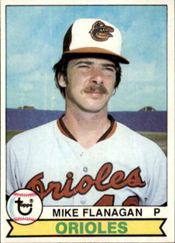 The Orioles made Flanagan the centerpiece of a package they offered to the Cardinals in 1981. In exchange, the Orioles wanted two players the Cardinals were willing to trade, outfielder Sixto Lezcano and shortstop Garry Templeton.
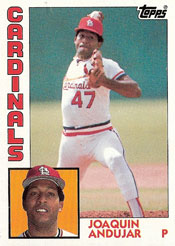 On Nov. 13, 1981, Joaquin Andujar became a free agent after finishing the 1981 season with the Cardinals.
 Described by The Sporting News as “a little stick of a guy who stands 5 feet 10 and weighs 150 pounds” and who “doesn’t show anything in the way of muscles,” Hartenstein was given the nickname Twiggy by a teammate.
 RetroSimba