Feeds:
Posts
Comments

Archive for the ‘Pitchers’ Category

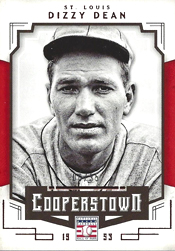
Pitching in relief just two days after making a start, Dizzy Dean got the win and a walkoff home run for the surging Cardinals.

Dean delivered four innings of hitless, scoreless relief and slugged a three-run homer in the bottom of the 10th inning, carrying the Cardinals to a 6-3 triumph over the Reds at St. Louis on Aug. 6, 1935.

The win was the Cardinals’ fifth in a row (they’d extend the streak to eight) during a torrid month when they swaggered into the thick of the National League pennant chase with Gashouse Gang bravado.

Rough and ready

The Depression Era Cardinals looked rough and played hard. In the book “Diz,” Dean biographer Robert Gregory described the Gashouse Gang during an August 1935 road trip: “With matching mud-caked shirts and socks, their pant legs stiffened by grime, they looked like sharecroppers after a day in the fields on their hands and knees.”

New York Sun columnist Frank Graham observed, “They don’t shave before a game and most of them chew tobacco. They have thick necks and knotty muscles, and they spit out of the sides of their mouths and then wipe the backs of their hands across their shirt fronts. They fight among themselves and use quaint and picturesque oaths. They are not afraid of anybody. They don’t make much money, and they work hard for it. They will risk arms, necks and legs _ their own or the other fellow’s _ to get it, but they also have a lot of fun playing baseball.”

Though the Cardinals had a good record (59-39), they were six games behind the front-running Giants (65-33) and two back of the Cubs (64-40) entering their Tuesday afternoon home match against the Reds. The game attracted 2,900 cash customers and 4,700 Knothole Gang youths admitted for free. “That’s a great big crowd for a weekday here,” the Cincinnati Enquirer noted.

With the score tied at 3-3 after six, Dean relieved, following starter Bill Walker (one inning, two runs) and Jesse Haines (five innings, one run).

Haines, 42, was hoping for his 200th career win that day, but the Cardinals failed to score after loading the bases with one out in the sixth, and Dean became the pitcher of record when he entered with the score knotted in the seventh. In his syndicated column, Dean, 25, said, “A few old-timers, what we calls veterans, is a good asset to any team. Look at Pop Haines, who is 42 and stopped the Reds dead yesterday. I hope I’m still pitching in the World Series when I am 42. That’ll give me 60,000 victories.”

Bloop and a blast

Dean, who went five innings in a start two days earlier against the Pirates, retired seven Reds in a row before issuing a walk to Jim Bottomley with one out in the ninth. Then he got Lew Riggs to ground into a double play.

After Dean retired the Reds in order in the 10th, Bill DeLancey was first up for the Cardinals in the bottom half of the inning. DeLancey’s long home run to center in the fourth had given St. Louis a 3-2 lead. This time, he lifted an ordinary fly to short right, but outfielder Ival Goodman couldn’t see the ball in the sun. Second baseman Alex Kampouris raced over to help “but the ball rolled off the ends of his fingers,” according to the Cincinnati Enquirer, and DeLancey was safe at second with a bloop double.

After Emmett Nelson, a rookie from South Dakota, gave an intentional walk to Charlie Gelbert, Leo Durocher executed a sacrifice bunt, moving the runners to second and third. Next up was Dean.

Dizzy swung at Nelson’s first pitch and socked it far up into the seats in left, giving the Cardinals a walkoff win. The Reds lost 10 of 11 games at St. Louis in 1935. “There is a hoodoo for our boys about this field,” the Enquirer noted. Boxscore

Since 1900, Dean and Ferdie Schupp are the only Cardinals pitchers to hit walkoff home runs, according to David Vincent of the Society for American Baseball Research. Schupp did it in the rarest of ways _ an inside-the-park home run _ on Aug. 28, 1919, against the Dodgers’ Leon Cadore for a 4-3 St. Louis victory. It would be Schupp’s only hit in 20 at-bats for the Cardinals that season. Boxscore

Who needs the DH?

Dean produced 21 RBI for the 1935 Cardinals. That rates as the single-season high for a Cardinals pitcher. He drove in those 21 runs on 30 hits. For the season, Dean went 30-for-128 (a .234 batting average), with two home runs and four doubles. During his Cardinals career, he had 74 RBI.

Bob Gibson produced 144 RBI as a Cardinal, including 20 in 1963. Gibson also had 19 RBI in both 1965 and 1970. Bob Forsch had 79 RBI as a Cardinal, with a season high of 12 in 1986.

The last good run producer among Cardinals pitchers was Adam Wainwright. He had 75 career RBI for St. Louis, including 18 in 2016.

The 1935 Cardinals went 22-7 in August and ended the month in first (77-46), a game ahead of the Giants (76-47). Dean was 6-1 in August.

Neither the Cardinals nor Giants, though, won the pennant. The Cubs, who went on a 21-game winning streak and were 23-3 for September, were National League champions at 100-54. The Cardinals (96-58) placed second.

Read Full Post »

At Tigers spring training in 1971, Joe Coleman had the look of a pitcher whose career was on the upswing. Traded by the Senators, Coleman was with a contender for the first time. At 24, the right-hander with a potent fastball and forkball seemed on the cusp of becoming an ace.

Then, a Ted Simmons line drive nearly shattered Coleman’s outlook. Simmons’ scorcher struck Coleman above the right ear, fracturing his skull.
Hardheaded, in more ways than one, Coleman insisted on pitching again as quickly as possible. He returned to the starting rotation in mid-April and won 20 games for the 1971 Tigers.

Nearly 20 years later, in 1990, Coleman and Simmons were part of the same management team. Simmons was the Cardinals’ director of player development and Coleman became the club’s pitching coach.

Part of a three-generation family of big-league pitchers, Joseph Howard Coleman had a 142-135 record in 15 seasons (1965-79) with the Senators, Tigers, Cubs, Athletics, Blue Jays, Giants and Pirates before becoming a coach for the Angels and then the Cardinals.

His father, Joseph Patrick Coleman, was 52-76 in 10 seasons (1942, 1946-51, 1953-55) with the Athletics, Orioles and Tigers.

Joseph Casey Coleman, son of Joseph Howard and grandson of Joseph Patrick, was 8-13 in four seasons (2010-12 and 2014) with the Cubs and Royals.

Teen dream

The first of the Coleman pitchers, Joseph Patrick, attended Malden (Massachusetts) Catholic High School near Boston in the late 1930s. The principal, Brother Gilbert, was a friend of Babe Ruth. During a visit to the school, Ruth took Coleman into a hallway and used an eraser as a ball to show the teen pitcher how to throw a curve, according to Russ White of the Washington Daily News.

When Coleman’s son, Joseph Howard, attended Natick (Massachusetts) High School in the early 1960s, he became a prized pitcher because of his fastball. He spent summers at the Ted Williams boys camp. “Ted taught me more about hitting than anything,” Coleman recalled to the Washington Daily News. “He always wanted to make me a switch-hitter.”

Coleman didn’t become much of a hitter, but his pitching was a different story. In three varsity high school seasons, he was 21-4 and achieved three no-hitters, according to the Boston Globe.

On the recommendation of farm director Hal Keller, the Senators chose Coleman, 18, with the third overall pick in the first round of the June 1965 amateur draft.

To convince Coleman to sign with the Senators instead of opting for college, general manager George Selkirk offered him $75,000 and promised the teen a start in a big-league game that year, the Washington Daily News reported.

Sent to a farm club in Burlington, N.C., Coleman didn’t seem ready for the minors, posting a 2-10 record, let alone the big leagues, but Selkirk delivered on his promise. Called up to the Senators in September 1965, Coleman, 18, was matched against Catfish Hunter, 19, in a start against the Athletics at Washington.

“He’s the youngest looking 18-year-old I’ve ever seen,” Senators manager Gil Hodges told the Washington Daily News. “I doubt if he even shaves yet.”

Among the fewer than 2,000 spectators at the twi-night doubleheader opener were Coleman’s parents. “His father sat in the presidential box, nonchalantly blowing cigar smoke straight up into the sky,” the Washington Daily News noted.

“Old Joe’s as nervous as the kid,” George Selkirk told the newspaper. “Those are his butterflies blowing that smoke out.”

While his father blew smoke, young Joe threw it. Three months after graduating high school, he pitched a four-hitter for a 6-1 victory in his big-league debut. Of Coleman’s 136 pitches, 100 were fastballs.

“I was shaking when I went to the mound,” Coleman told the Boston Globe. “I was still shaking nine innings later. I never did calm down.” Boxscore

The Senators gave him another start, in the last game of the season, and Coleman responded with a five-hitter in a 3-2 win against the Tigers. Boxscore

Good, bad, ugly

Sent back to the minors in 1966, Coleman didn’t impress (7-19), but the Senators wanted to take a look at him in September. Given one start, in the final game of the season, Coleman pitched a six-hitter and beat the Red Sox before a gathering of 485 at Washington. Boxscore

Not even 20, Coleman had made three big-league starts and all three were complete-game wins.

A good pitcher on bad teams, Coleman won eight for the Senators in 1967 and 12 in 1968, the year he developed a forkball to compensate for his inability to throw an effective curve. (Maybe he should have tried learning with an eraser.)

In 1969, Coleman’s former summer camp instructor, Ted Williams, was Senators manager. Coleman again had 12 wins that year, but Williams was of the opinion Coleman would win more if he threw a slider. That led to a rift during the 1970 season. “He wanted me to throw the slider and I tried like a son of a gun to do it,” Coleman told the Detroit Free Press. “I hurt my arm doing it and he thought I was faking it. I didn’t appreciate that and we had a go-round about it.”

Coleman also said to the newspaper, “He wanted me to throw slider, slider and then spot my fastball … I couldn’t pitch that way.”

Coleman’s win total for 1970 fell to eight. At one point, Williams banished him to the bullpen and fined the pitcher for chewing gum on the mound.

The Tigers, who coveted Coleman (his career record against Detroit at that point was 8-0), took advantage of the turmoil in Washington, engineering a trade lopsided in their favor. On Oct. 9, 1970, the Tigers swapped Denny McLain, Elliott Maddox, Norm McRae and Don Wert for Coleman, Ed Brinkman, Aurelio Rodriguez and Jim Hannan.

Looking back on his Senators stint, Coleman told Jim Hawkins of the Detroit Free Press that some of the players “should have been out digging ditches” instead of playing and “we just didn’t have enough professionals on that club.” As for Ted Williams, Coleman said, “I just don’t think we played together as a team as much as we should have … That was Ted’s fault more than anyone else’s.”

True grit

On March 27, 1971, in a spring training game at St. Petersburg, Fla., the Cardinals’ Ted Simmons batted in the fourth inning against Coleman and lined the ball so hard that the pitcher couldn’t get out of the way. “I never saw the ball coming,” Coleman recalled to The Sporting News.

After being struck, Coleman toppled forward and landed with a thud. “It was a sickening sound,” Tigers catcher Bill Freehan told The Sporting News.

Coleman was carried off on a stretcher and sent to a hospital. Neurosurgeons said he had a linear fracture. “Four weeks and several headaches later,” Coleman was restored to the Tigers’ active roster, Curt Sylvester of the Free Press reported.

“I still have headaches, but the doctors say I’ll probably continue to have them until the fracture is completely healed,” Coleman told the newspaper. “The doctors told me that it would be a million-to-one that I’d get hit there again.”

On May 16, 1971, Coleman started against the Senators for the first time since the trade. Taking the mound, he “blatantly mocked his former manager (Ted Williams) by chewing a wad of bubble gum,” George Solomon of the Washington Daily News reported.

Coleman pitched a complete game for the win _ never once throwing a slider _ and the .106 career hitter also contributed two hits and a walk. Boxscore

Coleman went on to pitch 286 innings for the 1971 Tigers. He pitched 16 complete games and was 20-9 (including 3-0 versus the Senators).

On March 27, 1972, exactly one year after he suffered the skull fracture, Coleman was on the mound facing Ted Simmons and the Cardinals again at St. Petersburg. He pitched seven scoreless innings, overcoming any lingering psychological hurdle from the year before.

From 1971-73 with the Tigers, Coleman posted marks of 20-9, 19-14 and 23-15. For eight straight seasons (1968-75), he pitched more than 200 innings each year.

In his lone career playoff appearance, Game 3 of the 1972 American League Championship Series versus the Athletics, Coleman pitched a shutout and struck out 14. “I don’t think I have had a better forkball than I had today,” Coleman said to the Free Press. Boxscore and Video

Taking charge

After his playing days, Coleman coached and managed in the farm systems of the Mariners (1980-81) and Angels (1982-87). When Angels bullpen coach Bob Clear had back problems in 1987, Coleman filled in for him. After Clear retired, Coleman replaced him and was Angels bullpen coach from 1988-90.

Joe Torre was an Angels broadcaster during that time and he and Coleman became pals. “We got to know each other playing golf,” Torre told Dan O’Neill of the St. Louis Post-Dispatch. “We’d talk about last night’s game.”

Torre became Cardinals manager in August 1990. Two months later, he hired Coleman to be the St. Louis pitching coach. “I like the relationship he had with his pitchers and his day-to-day instruction,” Torre told the Post-Dispatch. “… Joe is very good with young pitchers.”

At his first Cardinals spring training in 1991, Coleman had pitchers work on ways to keep batters from getting comfortable at the plate. “I pitched aggressively and I coach aggressively,” Coleman told the Post-Dispatch. “… I feel aggressiveness is on a downward trend in pitching … When (my father) pitched, if someone hit a home run off you, the next guy up was diving … It’s become one-sided the other way … I just want these (pitchers) to feel that part of the plate is theirs.”

As columnist Bernie Miklasz noted, Coleman became “the busiest amateur psychologist in town” during the 1991 season. “He has elevated an average pitching staff, reaching their arms by getting inside their heads.”

Cardinals pitchers in 1991 gave up 648 runs, 50 fewer than the year before. The improvement continued in 1992, when the total number of runs they allowed dropped to 604. “Coleman coaxed dozens of good outings from youngsters Rheal Cormier, Donovan Osborne and Mark Clark after they were rushed into the rotation,” Jeff Gordon of the Post-Dispatch wrote in October 1992.

Ups and downs

The pitching staff in 1993, however, unraveled like an overused batting practice ball. Cardinals pitchers gave up 744 runs, 140 more than the year before. “At the start of the (1994) year, I told Coleman the pitching had to improve and that both our butts were on the line for that,” Joe Torre recalled to the Post-Dispatch.

Under pressure, Coleman took to ranting at pitchers. When that didn’t work, he gave them a three-page letter. “Some basic premises of the letter were for the pitchers to be more aggressive, as in pitching inside; to be team-oriented; and to not feel sorry for themselves,” Rick Hummel of the Post-Dispatch reported.

Nothing worked. Among National League teams, only the Rockies (638) gave up more runs than the Cardinals (621) in strike-shortened 1994.

In a plea for his job, Coleman wrote a letter to club president Mark Lamping: “I learned more about myself (as a coach) this year and what I’m capable of doing than I ever have. I got to the point where I tried to do some things that I can’t do. I tried to restructure people mechanically at the major-league level. You can’t do that … I was looking for a quick fix, and the quick fix wasn’t there. Unfortunately, I didn’t find that out until July. At the beginning of the year, I was coaching to keep my job.”

Under orders from Lamping, Torre fired Coleman. “I still feel Joe Coleman did a good job, but, sometimes, nobody listens to you,” Torre told the Post-Dispatch.

Coleman returned to the Angels and became a special assignment scout. When the Angels fired pitching coach Chuck Hernandez in August 1996, Coleman replaced him. He then remained on the Angels’ big-league staff as a bullpen coach from 1997 to 1999.

From 2000 to 2014, Coleman coached in the farm systems of the Rays, Tigers and Marlins. He spent 50 consecutive years (1965-2014) in pro baseball. Coleman was 78 when he died on July 9, 2025.

Read Full Post »

Ticked off with his Cardinals teammates and the plate umpire, Dizzy Dean threw a tantrum instead of his fastball.

On June 4, 1935, at Pittsburgh, the St. Louis ace experienced an unlucky inning against the Pirates. Dean blamed the umpire and the Cardinals fielders. An argument ensued in the dugout and it nearly led to a fight.

When he returned to the mound, a petulant Dean lobbed soft tosses to Pirates batters, inviting them to bash the ball.

The antics reflected poorly on him. A year earlier, Dean was the pride of St. Louis. A 30-game winner during the 1934 season, he won two more, including Game 7, in the World Series. His sulk in Pittsburgh, though, sullied his stature.

Bad breaks

In the Tuesday game against the Pirates, Dean was in command early. With the Cardinals ahead, 2-0, he retired the first two batters in the third. Then Lloyd Waner walked. On a hit-and-run, Waner took off for second and Woody Jensen sliced a grounder to the left side. Because Leo Durocher correctly went to cover second when he saw Waner break from first, Jensen’s grounder rolled through the vacated shortstop spot and into left for a single, the Pirates’ first hit of the game.

It was a tough break for Dean. He walked the next batter, Paul Waner, loading the bases. Up came the cleanup hitter, Arky Vaughan. Dean got two strikes on him, then threw a pitch that cut the corner of the plate and froze Vaughan. Dean thought it was strike three, ending the inning. Plate umpire Cy Rigler ruled it a ball. Dean ranted and stormed around the mound.

On the next pitch, Vaughan bounced a grounder to Burgess Whitehead, filling in for hobbled player-manager Frankie Frisch at second base. It should have been a routine out, allowing Dean to escape the inning unscathed, but Whitehead fumbled the ball for an error, Lloyd Waner scored from third and the bases remained loaded.

Dizzy was seething, but it got worse. Pep Young followed with a short fly that fell just out of the reach of right fielder Jack Rothrock for a double. All three runners scored, giving the Pirates a 4-2 lead.

After retiring Gus Suhr on a pop-up to end the inning, Dean confronted Frisch in the dugout and demanded to know why the manager didn’t come onto the field to support him in his beef with Rigler. According to the St. Louis Globe-Democrat, Frisch replied, “I can’t umpire the game for you. Let’s bear down and win this.”

Boiling point

Dean pitched a scoreless fourth, but when the Cardinals went to bat in the fifth, he resumed barking at Rigler from the dugout. Teammate Joe Medwick said to him, “Lay off Rigler and bear down in there,” the Globe-Democrat reported.

According to biographer Robert Gregory in the book “Diz,” Dean began berating his teammates as a “bunch of lousy, no-good ballplayers.” First baseman Rip Collins roared at Dean, “Shut up,” then told the pitcher the team was fed up with his “crazy shit” and if he didn’t close his “fucking mouth” somebody was going to do it for him. Dean said, “You do it, if you’re man enough and not yellow.”

According to the “Diz” book, Collins was about to swing at Dean when Frisch stepped between them. A few feet away, Medwick warned the pitcher not to say another thing. Dean said, “Fuck you.”

Medwick then picked up a bat and started toward Dean. Pitcher Paul Dean rushed to his brother’s side. Medwick intended to separate them, saying one swing of the bat to the head would get both, according to biographer Robert Gregory.

Pepper Martin and other Cardinals got in between Medwick and the Deans, preventing any violence. Frisch ordered Dizzy to the other end of the dugout.

Soft tosses

While the drama unfolded in view of spectators seated on the first-base side of the field, the Cardinals scored in the fifth, getting within a run at 4-3.

Frisch kept Dean in the game, but Dizzy’s mood hadn’t improved. Looking to spite his teammates, he began to lob pitches to the Pirates in their half of the fifth. “You or I or Lefty the bat boy could have hit what he was throwing,” J. Roy Stockton reported in the St. Louis Post-Dispatch.

As the Globe-Democrat noted, “It looked as if Dizzy’s offerings were coming up as fat as well-fed geese.”

The Pirates pounded him for four runs in the fifth, gratefully taking an 8-3 lead. According to the Post-Dispatch, Cardinals catcher Bill DeLancey “ran out half a dozen times and pleaded with Dizzy to bear down. Durocher halted the game to do the same thing. Rip Collins added his voice (but) Dizzy was disgusted and he would not pitch Dean baseball.”

After Woody Jensen whacked a soft toss for a home run in the sixth, Durocher threw up his hands in disgust. Asked later about the shortstop’s reaction, “Dizzy said he did not care what Durocher did” and implied Durocher was so clueless he “did not know what town he was playing in,” the Globe-Democrat reported.

Frisch and other Cardinals accused Dean of “laying down” on them. Pirates players also said Dean eased up and quit, according to the Globe-Democrat.

Dean was lifted for a pinch-hitter in the seventh. The Pirates won, 9-5. The loss dropped Dean’s record to 6-5, giving him almost as many defeats as he had during his entire 1934 season (30-7). Boxscore

Bruised feelings

In the clubhouse, Frisch called a meeting and warned Dean that a repetition of his behavior would result in a suspension and $5,000 fine. “No one man is bigger than this game,” Frisch told the Globe-Democrat.

Cardinals owner Sam Breadon said to the St. Louis Star-Times, “I’ll stand behind Frisch 100 percent.”

Dean’s reactions swayed from apologetic to defiant.

“I’m sorry … I just flew off my head,” he said to the Post-Dispatch. He also told the newspaper, “I haven’t done nothing to apologize for. The Cardinals ought to apologize to me. I put money in their pockets winning the pennant and World Series. What do I get for it all? Nothing but a lot of abuse.”

To the Globe-Democrat, Dean said, “The best thing the Cardinals can do is to trade me. I’m not going to stand for this kind of stuff … As for Medwick, I’ll crack him on his Hungarian nose.”

Regarding Frisch’s threat of a $5,000 fine, Dean told the newspaper, “It wasn’t $5,000. It was $10,000. Yeah, ten grand. You know what I think? They’re trying to take away a big chunk of the money my contract calls for.”

(In 1935, Dean got an $18,500 salary, plus a $2,500 signing bonus.)

Most viewed Dean as the villain in the incident. A headline in The Pittsburgh Press declared, “Dizzy Likes To Dish it Out But Can’t Take It.” A Cardinals fan, James MacNaughton Jr. of University City, Mo., sent Dean a telegram: “Take off the high hat, put on your ball cap and win games.”

Two days after Dean’s stunt, Frisch used him in relief of Jesse Haines at Pittsburgh. Dean pitched two scoreless innings and “at times looked as fast as the golf greens at Oakmont” where the U.S. Open was being played near Pittsburgh, the Globe-Democrat reported. Boxscore

(Dean found time during the Pirates series to attend a round of the 1935 U.S. Open. He was seen in the gallery following “The Silver Scot,” Tommy Armour, and South African Sid Brews, according to columnist Paul Gallico.)

When the Cardinals returned by train to St. Louis, Dean was greeted at the station by his wife, Patricia, who told columnist Sid Keener, “I can handle Dizzy. I’m going to take him home and talk to him.”

Forgive and forget

Dean’s first appearance in St. Louis since the Pittsburgh episode came in a start against the Cubs on Sunday, June 9, 1935.

As Dean came off the mound after retiring the Cubs in the first, four lemons were thrown at him from the stands. When he went to bat in the second, another 10 lemons were hurled at Dean and he was booed by some of the 14,500 spectators. Dean pushed one of the lemons out the the batter’s box with the end of his bat, then ripped a single, driving in a run.

“Not a boo or jeer was heard after the second inning,” the Post-Dispatch noted.

Dean doubled to the wall in left in the fourth and, when he doubled again in the seventh, driving in another run, he received a “deafening round of applause,” the Star-Times reported.

His pitching (a six-hitter) was as good as his hitting (two doubles, a single, three RBI, two runs scored). The Cardinals won, 13-2, and, as the Globe-Democrat noted, “in the end, it seemed as if every one was cheering” Dean. Boxscore

“I poured ’em all I had,” Dean told the Post-Dispatch.

Asked about the lemons thrown, Dean said it was the work of Cubs fans. “No true St. Louis fan would do such a thing to Dizzy Dean,” he told the Star-Times.

Dean predicted that if he continued to perform well, “St. Louis fans will be throwing roses at me.”

Dizzy went on to post a 28-12 record for the 1935 Cardinals. Though they had a better mark in 1935 (96-58) than they did in their championship season the year before (95-58), the Cardinals placed second to the Cubs (100-54).

Read Full Post »

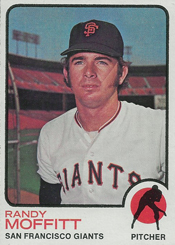
In a move more desperate than daring, the Cardinals attempted to bolster their starting rotation by acquiring a retired pitcher who’d been through a bankruptcy, admitted to having been a problem drinker and was thought to have lost velocity on his pitches.

Ron Bryant, a left-hander who followed a 24-12 record for the 1973 Giants with a 3-15 mark in 1974, then went on baseball’s voluntarily retired list, was dealt to the Cardinals in May 1975. Two months later, they released him.

The Cardinals paid a high price to find out Bryant was washed up. A prospect they traded for him, Larry Herndon, developed into one of the National League’s top rookies in 1976, then became a starting outfielder for the 1984 World Series champion Tigers.

Opportunity knocks

In 1965, Giants scout Eddie Montague went to see a California high school infielder, Bob Heise, play for Vacaville. The opposing pitcher, Ron Bryant of Davis, threw a no-hitter.

On Montague’s recommendation, the Giants drafted Bryant in the 22nd round. He signed the day after his graduation but had low expectations for his baseball career. “I just didn’t believe I had the ability to make the big leagues,” he later said to the Atlanta Constitution. “I didn’t think I had the fastball or anything else.”

Bryant didn’t strike out many _ “I can’t. I am just not an overpowering pitcher,” he told the Atlanta newspaper _ but “he pitched cleverly,” Glenn Dickey of the San Francisco Chronicle noted, and made it to the majors with the Giants as a reliever and spot starter.

The Giants’ equipment man, Mike Murphy, nicknamed Bryant “Bear” because of his resemblance to the animal, not the football coach. Bryant was 6-foot and 210 pounds and “looked like a bear, with his chunky build, his way of walking and his curly hair,” Murphy told The Sporting News.

A performance against the Cardinals in April 1971 earned Bryant a spot in the starting rotation. When Frank Reberger developed a shoulder problem and departed after allowing the first two Cardinals batters to reach base, Bryant relieved, pitched nine innings and got the win. “A major turning point,” he told The Sporting News. “If I hadn’t had that opportunity, or hadn’t pitched well, I might have stayed in the bullpen.” Boxscore

Five days later, Bryant pitched a three-hitter against the Pirates for his first shutout. Boxscore

The Cardinals were involved in another pivotal game for Bryant in June 1972. With one out in the eighth inning and the Giants ahead, 3-0, manager Charlie Fox removed Bryant for a reliever. After the Cardinals rallied and won, Bryant criticized Fox for taking him out. Boxscore

In his next start, against the Cubs, Fox left Bryant alone and he pitched a two-hit shutout. As Bryant headed for the dugout after the final out, Fox came onto the field and bowed to the pitcher. Boxscore

Bryant went on a six-game winning streak and finished the 1972 season with a 14-7 record, including four shutouts, and 2.90 ERA.

Good and bad

While Bryant was progressing on the field, he was having trouble away from baseball. The pitcher and his wife filed for bankruptcy in November 1972, the San Francisco Examiner reported.

After a loss to the Cardinals in May 1973, Bryant’s season record was 3-3. Then, while watching game film, he discovered a flaw in how he was releasing the ball. Bryant made a correction and won eight in a row. Video at 9:20

Bryant stacked up wins faster than any pitcher in the league. He won his 20th before September and finished with 24, most for a Giants left-hander since Carl Hubbell had 26 in 1936. The Sacramento Zoo named a 10-month-old sloth bear in honor of the pitcher nicknamed Bear.

It should have been the best of times for Bryant but it wasn’t. He and his wife divorced. Then there was the drinking. Bryant “drank considerably,” Art Spander of the San Francisco Chronicle noted.

During the 1973 season, Charlie Fox found Bryant “lurking in the hotel bar once too often and pushed him out the door,” according to columnist Wells Twombly.

Glenn Dickey of the Chronicle wrote of Bryant’s 24-win season, “There is no question that the attention went to his head. He drank too much and his marriage disintegrated. Nothing he ever did was intended maliciously, but he did a lot of damage to people, including himself.”

“Drinking had been one of my problems,” Bryant told The Sporting News.

Slip sliding away

When Bryant reported to 1974 spring training, “he was desperately overweight,” Wells Twombly reported. “Not only that, he was living from beer to beer and nearly everybody knew it.”

After a Cactus League game in Yuma, Ariz., the Giants took a bus ride across the desert to Palm Springs, Calif. Shortly after 8 p.m., they arrived at the Tropics, a Polynesian-styled resort that featured a coffee shop (regrettably named Sambo’s), two cocktail lounges (The Reef and The Cellar) and a steakhouse (The Congo Room). The place became a celebrity hangout in the 1960s. Victor Mature (who played opposite Hedy Lamarr in “Samson and Delilah”) had a private table in The Congo Room. Elvis Presley and Nancy Sinatra used to relax by the pool.

The pool looked inviting to Bryant. About 11 p.m., the Bear went belly-flopping down a slide, lost control, tumbled off and slammed into the concrete edge of the pool, opening a gash near his right rib cage. Some 30 stitches were required, The Sporting News reported.

Bryant said drinking didn’t cause the mishap (he’d had two beers, the Examiner reported), but that was no solace to Charlie Fox, who called it “an unfortunate, silly accident,” the Examiner reported.

Sidelined for six weeks, Bryant was ineffective when he returned. His 3-15 record included an 0-2 mark against the Cardinals.

“That pool accident threw everything out of whack,” Bryant told the San Francisco Chronicle. “It preyed on my mind. What happened was my own fault, nobody else’s … I have to admit I should have had more dedication.”

Coming and going

In December 1974, Bryant and his wife remarried and he gave up drinking. However, he came to 1975 spring training at close to 220 pounds, The Sporting News reported, and performed inconsistently. “He would pitch well to a couple of batters and then his mind would wander,” the San Francisco Chronicle observed.

Wes Westrum, who replaced Charlie Fox as manager, said Bryant showed “no velocity” on his pitches, The Sporting News reported. Pitching coach Don McMahon concurred, saying Bryant’s “velocity and control were off.”

Just before the season began, Bryant, 27, told the Giants he was retiring.

“I don’t think there’s any chance I’ll change my mind … I’m not really enjoying playing,” he said to the Oakland Tribune.

Two weeks later, Bryant changed his mind. He asked the Giants to reinstate him, but baseball rules required he had to wait until the season was 60 days old before he could pitch in a regular-season game. For Bryant, that meant June 6.

Uninterested in keeping him, the Giants looked to make a trade. To their glee, the Cardinals agreed to give up two prospects, pitcher Tony Gonzalez and outfielder Larry Herndon, to get him. The deal was made on May 9, 1975.

Unsatisfied with the performances of John Denny and 39-year-old Bob Gibson, the Cardinals were looking to revamp their starting rotation. After dealing for Bryant, they acquired Ron Reed from the Braves. Denny was demoted to the minors, Gibson got banished to the bullpen and Bryant and Reed were tabbed to replace them as starters.

To get much-needed work, the Cardinals sent Bryant to extended spring training in Florida. Primarily facing minor-league rookies whose low-level summer leagues hadn’t started yet, Bryant allowed one hit in six innings.

Next, the Cardinals chose him to start in a June 5 exhibition game against their Class AAA team at Tulsa. It was a disaster. Bryant allowed nine runs and 12 hits in 4.1 innings. “Lots of the time, I didn’t have much of an idea of what I was doing out there,” he confessed to the St. Louis Post-Dispatch.

Nonetheless, the Cardinals activated him. Pitching in relief, he faced three batters in his first appearance and allowed three hits. Boxscore

Then came a start against the Pirates. Bryant gave up two home runs _ a two-run wallop by Willie Stargell and a three-run rocket from Rennie Stennett _ and retired just three batters before being relieved by Gibson. Boxscore

Cardinals manager Red Schoendienst saw enough. He removed Bryant from the starting rotation and put Gibson back in.

Given a chance at relief work, Bryant mostly was ineffective. The Cardinals asked him to accept a demotion to Tulsa but he refused. “If he’d have gone down to Tulsa, where he could do some pitching, he could have come back to spring training (in 1976) and helped us,” Schoendienst told the Post-Dispatch.

Instead, the Cardinals released Bryant on July 31, 1975. In 10 appearances covering 8.2 innings for them, he was 0-1 with a 16.62 ERA.

Two years after leading the National League with 24 wins, Bryant was finished as a big-league pitcher.

Read Full Post »

While pitching in the Cardinals’ organization, Pete Mazar became known as much for his vocal cords as for his arm.

Dubbed the “Frank Sinatra of baseball” for his singing, Mazar, like Ol’ Blue Eyes, was from New Jersey. Sinatra’s hometown was Hoboken, site of the first organized baseball game played in 1846 between the Knickerbocker Club and New York Nine. Mazar grew up in High Bridge, a mere 50 miles from Hoboken but, otherwise, worlds apart.

An urban melting pot across the Hudson River from Manhattan, Hoboken in Sinatra’s time was known for its gritty industrial docks and was the setting for the film “On the Waterfront.” In contrast, the borough of High Bridge has a reputation as a place for parks, trails and scenic beauty. A resident, Howard Menger, wrote “The High Bridge Incident,” a book about his claim of having met space aliens in the woods near High Bridge when he was a boy. Otherworldly, indeed.

Little lefty

Pete Mazar had eight brothers (including a twin) and five sisters, according to The Sporting News. Though no more than 5-foot-9 and 150 pounds, he was a standout athlete in soccer, basketball and baseball at High Bridge High School.

After graduation in June 1940, Mazar was a machinist for the local Taylor-Wharton Iron and Steel Company, makers of railroad fittings and switches and dredging equipment. A left-handed pitcher, he played semipro baseball for the High Bridge team in the well-regarded Tri-County League.

Mazar’s success as a semipro player got him a contract in 1941 with a New York Giants farm club in Milford, Del., but he became ill, pitched briefly and got released, according to the Allentown (Pa.) Morning Call. Returning to High Bridge, Mazar went back to the iron and steel job (the company now was producing material for America’s World War II involvement) and pitched semipro baseball.

In May 1944, with the war depleting baseball team rosters, the Cardinals offered Mazar, 23, a tryout with their Allentown farm club. Allentown manager Ollie Vanek, who had a notable eye for talent (the Cardinals signed 16-year-old Stan Musial on Vanek’s recommendation), took one look at Mazar and gave him a spot on the team. Mazar rewarded him with an 11-6 record.

Promoted by the Cardinals to Columbus (Ohio) in 1945, Mazar pitched a no-hitter against manager Casey Stengel’s Kansas City Blues. Of the 27 outs Mazar recorded using a sharp-breaking curve, 20 came on grounders, the Kansas City Times reported.

American idol

Seven of Mazar’s eight seasons in the Cardinals’ system were spent either with Columbus or Houston. In 1947, he pitched for both. After going 0-4 for Columbus, he was sent to Houston and pitched better for manager Johnny Keane’s club, which was on its way to becoming Texas League champions.

On Aug. 19, 1947, an estimated 13,000 spectators packed into Houston’s Buffalo Stadium for a doubleheader on what was promoted as “appreciation night.” Looking for ways to show their appreciation to fans, club officials gave Mazar a microphone before one of the games and asked him to sing for the crowd. Mazar had “served as a vocalist in a nightclub near his home at High Bridge,” according to The Sporting News.

Crooning hit tunes, Mazar thrilled his audience and was touted as “the Sinatra of baseball,” the Associated Press reported. (Sinatra’s popular songs in 1947 included “Almost Like Being in Love,” “Autumn in New York,” and “Time After Time.”)

Word spread that the Houston club had a silky-voiced troubadour with a smooth delivery. “Now everywhere he goes to play ball, they want him to warble,” according to the Associated Press.

On Aug. 24, it was arranged for Mazar to sing a song before Houston’s game at Dallas. “The crowd of 6,000 roared its approval,” the Associated Press reported. “They called him back for another, and still another. They wanted him for a fourth except that the ballgame had to go on.”

The next night, Aug. 25, Mazar was the starting pitcher for Houston at Oklahoma City. He entertained a crowd of 4,937 with three songs, then got the win against an Oklahoma City club that featured hitters such as Ray Boone and Al Rosen.

Houston club president Allen Russell asked Mazar to spend the winter in Texas so that he could promote his singing.

Fan favorite

Back with Houston and Johnny Keane in 1948, Mazar, 27, had his best season as a pitcher. He won 12 of his first 14 decisions and finished 15-10 with a 2.53 ERA in 228 innings.

His most satisfying win came at home on July 17, 1948. When Houston fans learned Mazar and his wife were expecting their third child, they presented the couple with more than 100 gifts before that night’s game. Mazar thanked the crowd of 7,358, crooned several songs and then pitched a three-hit shutout to beat Tulsa. “I never wanted to win a game so much in my life … I didn’t want to let all of those good people down,” Mazar told The Sporting News.

Mazar’s successful 1948 season didn’t do enough to impress the Cardinals. When they didn’t put him on their 40-man winter roster, the Cubs claimed him in the November 1948 minor-league draft on the recommendation of scout Jigger Statz. Mazar reminded him of Tony Freitas, another pint-sized left-hander who pitched in the majors during the 1930s, Statz told the Los Angeles Times.

Assigned to the Cubs’ Los Angeles Angels farm team in 1949, Mazar was 2-4 for the Pacific Coast League team when he got sent back to Houston in May.

In April 1950, Mazar was struck by a line drive, breaking his left thumb. It didn’t hurt his singing, but it did his pitching. The 1951 season was Mazar’s last in the Cardinals’ system. He pitched three more years in the minors but never reached the big leagues _ either as a player or a singer.

Returning to High Bridge, Mazar and his wife operated a tavern and he also worked as a machinist for F.L. Smidth & Company, makers of equipment for mining and cement industries.

Read Full Post »

One year after they traded Steve Carlton because he wanted a $65,000 salary, the Cardinals offered a college pitcher a six-figure contract.

Michigan State’s Brad Van Pelt, a right-hander with a 100 mph fastball, was the prospect who prompted the Cardinals to consider coughing up the cash. He also was a football talent, a recipient of the Maxwell Award presented to the most outstanding college player in the sport.

Drafted in January 1973 by the baseball Cardinals and the NFL New York Giants, Van Pelt opted for pro football. He went on to play 14 seasons, helping to form one of the all-time best linebacking units.

Abundant athleticism

Van Pelt was from Owosso, Mich., a town 90 miles northwest of Detroit. Thomas Dewey, twice the Republican nominee for president, was from there, too. (Dewey lost to Franklin Delano Roosevelt in 1944 and to Harry Truman in 1948.)

An athlete who excelled in every sport he tried, including bocce, golf and soccer, Van Pelt was a high school sensation as a quarterback in football, a rebounder in basketball (he hauled down 42 in one game) and a pitcher in baseball (consecutive no-hitters as a senior).

The Tigers, his favorite team, chose Van Pelt, 18, in the 14th round of the 1969 June baseball draft but he took a football scholarship from Michigan State instead.

(It was the first of five times Van Pelt was selected in the baseball draft. He declined to sign each time. After the Tigers in June 1969, others to draft him were the Angels in June 1972, Cardinals in January 1973, Pirates in June 1973 and Indians in January 1974.)

“Rangy, fast and strong,” Van Pelt, 6-foot-5, 220 pounds, had the “defensive end’s body with the receiver’s speed,” according to the Lansing State Journal.

Michigan State guard Joe DeLamielleure (elected to the Pro Football Hall of Fame for his skill as a Buffalo Bills and Cleveland Browns lineman) told the newspaper, “Van Pelt was the modern day Jim Thorpe, and that’s no exaggeration … He could have been our starting quarterback because he could throw the ball a mile.”

Michigan State head coach Duffy Daugherty said Van Pelt could have played any position on the football team. “He is the most versatile athlete I’ve ever coached,” Daugherty told the Associated Press.

Daugherty dubbed Van Pelt his “secretary of defense” and put him at safety. Often called a rover back, Van Pelt had the size and speed to intimidate receivers, stuff rushers and pressure quarterbacks with blitzes. “I’ve never seen a safety able to come up to the line of scrimmage to make tackles as quick as Brad can,” Daugherty said to the Flint Journal.

George Perles, an assistant on Daugherty’s staff before eventually becoming head coach, told the Lansing newspaper, “During his college career, he (Van Pelt) might have been the biggest safety in the Big Ten (Conference), if not the country.”

In his three varsity seasons (1970-72), Van Pelt totaled 256 tackles and 14 interceptions. “He (Daugherty) gave me the freedom to blitz when I wanted and to go to the ball on every play,” Van Pelt said to the State Journal. “I can’t thank him enough.”

Man for all seasons

Described by Joe Rexrode of the Lansing newspaper as “the purest all-around athlete in Michigan State history,” Van Pelt played varsity basketball and baseball.

He got into 31 basketball games for head coach Gus Ganakas, who told the State Journal, “Van Pelt helped define the position of power forward.”

In baseball, Van Pelt pitched for head coach Danny Litwhiler, a former big-leaguer who played in two World Series (1943 and 1944) as the Cardinals’ left fielder.

As a sophomore, Van Pelt was on the 1971 Big Ten championship baseball team. The next season, he struck out 84 in 56.1 innings and had a 2.07 ERA. The Angels picked Van Pelt in the 13th round of the June 1972 draft and offered $100,000 _ “The first three days after they made the offer I really thought about signing,” Van Pelt told the Flint Journal _ but he chose to return to college for senior year.

Instead of spending the summer of 1972 pitching in the Angels’ system, Van Pelt went to the Netherlands with an amateur team from Grand Rapids, Mich., to compete in an international honkbal (Dutch for baseball) tournament.

Cardinals calling

After Van Pelt’s senior football season, big-league baseball held a winter draft on Jan. 10, 1973. In those days, a secondary phase was conducted for players who had been drafted in prior years but hadn’t signed.

Selecting seventh in the first round, the Cardinals chose Van Pelt. “He was one of a few premium players available,” Cardinals director of player procurement George Silvey told the St. Louis Post-Dispatch.

Cardinals general manager Bing Devine said to United Press International, “He’s an all-American boy in every sense of the word.”

(The Tigers, who had the next pick after the Cardinals, were planning to draft Van Pelt, the Post-Dispatch reported. When the Cardinals beat them to it, the Tigers went with Van Pelt’s Michigan State teammate, pitcher Larry Ike.)

Van Pelt told the Cardinals he’d wait until the NFL draft was held on Jan. 30, 1973, before making a decision.

When the Cardinals made it known they intended to sign Van Pelt, NFL teams didn’t want to risk losing a first-round pick in a bidding war with a baseball team. As the New York Times put it, Van Pelt became “a player of unquestioned ability but highly questionable availability.”

New York Jets head coach Weeb Ewbank told the Times, “We just didn’t see any sense in fighting baseball for him, but he is one hell of an athlete.”

The Giants, who had traded their first-round pick to the Browns for defensive end Jack Gregory, grabbed Van Pelt in the second round, where, as head coach Alex Webster noted to the Times, “he was worth the risk.”

Decision time

A year earlier, the Cardinals reportedly offered Steve Carlton a 1972 salary of $57,500. Carlton wanted more. As spring training got under way, Carlton said he and the club were less than $10,000 apart, The Sporting News reported, but owner Gussie Busch, angry when the pitcher didn’t sign, ordered Bing Devine to trade him. Carlton was sent to the Phillies, who gave him $65,000 in 1972, and he won 27 games for them that season.

Devine offered a lot more than that to Van Pelt in February 1973. Braving a snowstorm, Devine met with Van Pelt in Owosso and made an enticing pitch. “We went to a peak level with the offer we made him,” Devine told Milton Richman of United Press International. “By that I mean over $100,000.”

Giants owner Wellington Mara followed Devine to Owosso and presented Van Pelt with a three-year, no-cut contract worth $300,000.

Van Pelt said the money offered by the Cardinals and Giants was about the same. “The two offers were so close that I almost thought they had gotten together,” he remarked in an article published in the Post-Dispatch.

Van Pelt chose the Giants primarily because he could begin his pro career in the NFL rather than in baseball’s minor leagues.

(Danny Litwhiler told United Press International that Van Pelt would need at least two years of total concentration on baseball to become ready for the majors. Van Pelt acknowledged to the Jersey Journal, “I know I have a major-league fastball, but my curve leaves a lot to be desired.”)

As Devine said to Milton Richman, “With us, he would have had to go to the minor leagues to develop. With the football Giants, he went right to the big-league club. That was the key.”

Crunch Bunch

The Giants tried Van Pelt at tight end and strong safety during a frustrating rookie year. After Bill Arnsparger replaced Alex Webster as head coach in 1974, Van Pelt shifted to outside linebacker. His career soared when Marty Schottenheimer arrived as linebacker coach in 1975. “I’d say 85 percent of what I am now, I learned from him,” Van Pelt told the Detroit Free Press in 1979.

Van Pelt was named to the Pro Bowl five years in a row (1976-80) and was chosen as the Giants’ player of the decade for the 1970s. “If Brad Van Pelt played on a good team, he would be a household name,” Los Angeles Rams general manager Don Klosterman said to Mike Lupica of the New York Daily News.

The Giants had one winning record in Van Pelt’s 11 seasons with them. As club executive John Mara told the Daily News, “If you look at those (Van Pelt) years, our teams were as bad as could possibly be. We really had some awful teams in the 1970s. He was the one guy who was consistently a good player.”

Van Pelt played for five Giants head coaches _ Alex Webster, Bill Arnsparger, John McVay, Ray Perkins and Bill Parcells. (Bill Belichick was a Giants assistant coach from 1979-84 and Van Pelt’s linebacker coach from 1980-83.)

When Parcells joined the Giants as defensive coordinator on Perkins’ staff in 1981, he installed a 3-4 defense after the club drafted Lawrence Taylor. From 1981-83, the Giants’ four hard-hitting starting linebackers _ Harry Carson, Brian Kelley, Taylor and Van Pelt _ became known as the Crunch Bunch. (Carson and Taylor were elected to the Pro Football Hall of Fame.)

According to Newsday, Taylor called Van Pelt “one of the greatest players I ever played with.”

The arrival of linebacker Carl Banks, a first-round pick from, of all places, Michigan State in 1984 prompted the Giants to break up the Crunch Bunch. In July 1984, Van Pelt was traded to the Minnesota Vikings for fullback Tony Galbreath.

Van Pelt refused to report, telling the Vikings he preferred to be with a team either in California or Florida. He never played a game for the Vikings. They traded him to the Los Angeles Raiders for two draft choices. Van Pelt spent two seasons (1984-85) with the Raiders and one (1986) with the Browns.

In 1998, Van Pelt returned to Michigan State and completed his school work, earning a degree in health and physical education. Three years later, he was inducted into the College Football Hall of Fame. A son, Bradlee, was a quarterback for Colorado State and played in three games for the 2005 Denver Broncos.

Read Full Post »

« Newer Posts - Older Posts »