Feeds:
Posts
Comments

Archive for the ‘Pitchers’ Category

A pitcher with a losing record and a batter with a bad back provided a winning combination for the St. Louis Browns in their World Series debut.
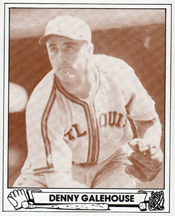
On Oct. 4, 1944, Denny Galehouse outdueled Cardinals ace Mort Cooper and George McQuinn hit a two-run home run in the Browns’ 2-1 victory in Game 1 of the World Series at Sportsman’s Park in St. Louis.

The American League champion Browns, appearing in their only World Series, defied convention all season and did so again against the three-time defending National League champion Cardinals.

Browns manager Luke Sewell bypassed his ace, Nelson Potter, and started Galehouse (9-10) against Cooper (22-7). Galehouse was the first pitcher with a losing season record to start Game 1 of a World Series, The Sporting News reported.

McQuinn, the Browns’ first baseman, was another unexpected standout. He suffered from sciatica and needed to be rested for a stretch of games in early September when his chronic back pain became severe, according to United Press.

McQuinn “rarely gets a good night’s rest,” The Sporting News reported. “He has difficulty in sleeping because if he lies for several hours in one position the back becomes pinched and exceedingly painful.”

Given opportunities on baseball’s biggest stage, though, Galehouse and McQuinn delivered grand performances.

Duty calls

Galehouse, a right-hander, pitched for the Indians and Red Sox before being sent to the Browns in December 1940. Like his Browns teammate, outfielder Chet Laabs, Galehouse was too old for military service in World War II but the Army sent him to work in a plant in 1944 when he was 32.

According to the St. Louis Post-Dispatch, Galehouse was working fulltime at a rubber factory in the Akron-Youngstown region of northeast Ohio in 1944. In May, the Browns arranged for Galehouse to travel by train from Ohio for Sunday games.

Galehouse pitched in three Sunday games in May and three Sunday games in June, losing three decisions, before he got an indefinite leave of absence from the war plant. He became a fulltime member of the Browns’ starting rotation on July 24.

After the Browns clinched the pennant on the last day of the regular season, most expected Sewell to select Potter (19-7) to be the Game 1 World Series starter. Instead, Sewell opted for Galehouse, who in September had a 1.92 ERA in 56.1 innings pitched. Galehouse allowed one earned run in his last three regular-season starts, covering 23 innings.

Sewell hoped his hot starter would win Game 1 and Potter would follow suit in Game 2.

The strategy almost worked.

Great escape

Galehouse got out of an early jam in Game 1 with the help of a questionable decision by Cardinals manager Billy Southworth, who took the bat out of Stan Musial’s hands.

With the game scoreless, Johnny Hopp led off the bottom of the third inning with a single for the Cardinals. Ray Sanders followed with a sinking liner. Right fielder Gene Moore, trying to make a backhand grab, got his glove on the ball, but couldn’t hold it. Hopp, waiting to see whether Moore would catch the ball, advanced only to second on Sanders’ single.

Musial, who batted .347 with 94 RBI during the regular season, stepped to the plate with runners on first and second, none out. After fouling off a pitch from Galehouse, Musial was given the bunt sign. He sacrificed successfully, moving Hopp to third and Sanders to second, but Southworth deprived the Cardinals’ best hitter of a chance to deliver a big blow.

The next batter, Walker Cooper, was walked intentionally, loading the bases with one out for Whitey Kurowski.

After getting two strikes on Kurowski, Galehouse noticed the Cardinals’ batter “was protecting the far side of the plate,” the St. Louis Globe-Democrat reported. Galehouse threw a slider inside and Kurowski swung at it and missed for the second out. Next, Danny Litwhiler hit into a force play at third, enabling Galehouse and the Browns to escape the inning unscathed.

Grantland Rice, writing for the North American Newspaper Alliance, said Galehouse possessed a “stout right arm, cool head and scrappy heart.”

“Galehouse looked cooler than a slice of cucumber on ice,” wrote Rice.

Mighty McQuinn

With two outs in the fourth, Cooper gave up his first hit, a single by Moore.

Up next was McQuinn, a left-handed batter.

McQuinn, 34, hit 11 home runs during the season, but only one after Aug. 13.

With the count 1-and-0, Cooper threw him a fastball. “One of his low, fast ones _ almost too low for me,” McQuinn said to the St. Louis Star-Times.

McQuinn swung and “caught it just right,” he told United Press.

“The noise that followed sounded like the shot from a big gun,” Grantland Rice observed.

McQuinn’s rising line drive headed toward a right-field screen that extended from the wall to the pavilion roof.

“I was a bit worried at first (the ball) wasn’t quite high enough,” McQuinn said to the Globe-Democrat.

According to the Star-Times, “the ball cleared the pavilion roof by no more than a foot or so” for a home run and a 2-0 Browns lead.

St. Louis showdown

Cooper went seven innings, allowing only the two hits, and Blix Donnelly held the Browns hitless over the last two innings.

In the bottom of the ninth, Marty Marion led off with a drive to left-center for the Cardinals. Center fielder Mike Kreevich tried to make a shoestring catch, but barely missed, and Marion had a double.

Galehouse got Augie Bergamo to ground out to second, advancing Marion to third.

Ken O’Dea, batting for Donnelly, battled Galehouse, fouling off six pitches, before he flied out to deep center. Marion scored on the sacrifice fly, moving the Cardinals to within a run at 2-1, but the bases were empty with two outs.

The drama ended when Hopp flied out to right-center. Boxscore

“We were lucky,” Sewell said to the Post-Dispatch. “We had the breaks and I freely admit it. You have to be lucky to win when a pitcher holds you to two hits.”

Said Southworth: “We had everything that usually wins ballgames for you. You couldn’t have asked for better pitching than we got.”

The Browns’ mojo nearly held up in Game 2. Potter limited the Cardinals to two unearned runs, but Donnelly pitched four scoreless innings in relief of Max Lanier and the Cardinals won, 3-2, in 11 innings.

After the clubs split Games 3 and 4, Cooper got his revenge, striking out 12 and beating Galehouse with a 2-0 shutout in Game 5.

Needing one more win for the crown, the Cardinals got it, beating the Browns, 3-1, in Game 6.
Read Full Post »

Tom Phoebus won a start versus Bob Gibson and got traded for Tony La Russa.

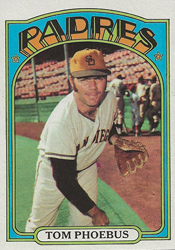
A 5-foot-8 right-hander, Phoebus pitched for seven seasons in the major leagues, primarily with the Orioles.
Phoebus hurled a no-hitter against the Red Sox, won a World Series game and had double-digit win totals for the Orioles in three consecutive years _ 14 in 1967, 15 in 1968 and 14 in 1969.

His career record in the majors was 56-52 with a 3.33 ERA.

Phoebus spent his last two big-league seasons in the National League, with the Padres and Cubs. In six appearances versus the Cardinals, he was 2-2 with two saves and a 3.44 ERA.

Hometown heroics

Born and raised in Baltimore, Phoebus was 18 when he signed with the Orioles as an amateur free agent in June 1960.

In 1961, his second season as a pro, Phoebus struggled to a 1-12 record and 5.53 ERA for Leesburg of the Florida State League. The Orioles stuck with him, though, and he worked his way through their system.

Pitching in 1966 for a Rochester club managed by Earl Weaver, Phoebus was 13-9 with five shutouts and a 3.02 ERA.

The 1966 Orioles, on their way to an American League pennant, rewarded him with a promotion to the big leagues. The Orioles’ pitching coach was the former Cardinal, Harry Brecheen.

Phoebus, 24, made his major-league debut on Sept. 15, 1966, with a start against the Angels and pitched a four-hit shutout. Boxscore. In his next appearance, Sept. 20, 1966, Phoebus shut out the Athletics on a five-hitter, beating Catfish Hunter. Boxscore

Phoebus became the seventh major-league pitcher to craft a shutout in each of his first two starts, and the first to do so since Karl Spooner of the 1954 Dodgers.

“He’s a good boy with good stuff,” Brecheen told the Baltimore Sun. “All he has to do is get it over the plate.”

A year later, after he led the 1967 Orioles in wins (14), innings pitched (208) and strikeouts (179), Phoebus was named the top rookie pitcher in the American League in player balloting by The Sporting News.

“Ask hitters around the American League and they’re quick to admit Phoebus is one of the toughest pitchers to hit,” The Sporting News reported. “He’s got a good fastball, his slider breaks nearly as much as anyone else’s curve and his curve is ridiculous.”

On April 27, 1968, Phoebus pitched a no-hitter against the defending American League champion Red Sox. He walked two batters in the first inning and another in the sixth before retiring the last 12 in a row. Boxscore

In his final Orioles appearance, Phoebus was the winning pitcher in Game 2 of the 1970 World Series versus the Reds, pitching in relief of Mike Cuellar. Boxscore

Two months later, on Dec. 1, 1970, the Orioles traded Phoebus, pitchers Al Severinsen and Fred Beene, and shortstop Enzo Hernandez to the Padres for pitchers Pat Dobson and Tom Dukes.

Facing the best

The Padres projected Phoebus to join a starting rotation led by former Cardinals farmhand Clay Kirby. “Never in my 30 years of scouting have I seen a pitcher who can get two strikes on a hitter as quick as Tom Phoebus can,” Padres scout Leon Hamilton said.

Phoebus made two starts versus the Cardinals. The first was at San Diego on April 17, 1971, and it began badly for him. Matty Alou hit the first pitch of the game for a single and Joe Hague hit the next for a home run. Phoebus regrouped and pitched seven innings, allowing three total runs, but Steve Carlton tossed a four-hit shutout and the Cardinals won, 4-0. Boxscore

A month later, on May 24, 1971, at St. Louis, Phoebus was matched against Gibson. The Padres scored seven runs against the Cardinals’ ace and won, 12-3. The Sporting News noted Phoebus “celebrated the birth of his second son” by getting the win. Boxscore

It was the last win Phoebus would get for the Padres.

After beating Gibson, Phoebus lost his next seven decisions and was moved to the bullpen. He finished 3-11 for the 1971 Padres; Dobson was 20-8 for the 1971 Orioles.

Cubs helper

At spring training in 1972, Padres pitching coach Roger Craig said, “Phoebus is throwing better than he did all last year and he’s keeping the ball down.”

After making one regular-season start for the Padres, Phoebus was dealt to the Cubs for cash on April 20, 1972.

The Cubs made Phoebus a reliever and he earned his first two saves for them against the Cardinals at St. Louis on May 18, 1972, Boxscore and on May 21, 1972. Boxscore

In the latter game, Phoebus entered in the ninth with one out, Cardinals runners on second and third, and the Cubs ahead, 3-1. He got Ted Sizemore out on a deep sacrifice fly, making the score 3-2.

The next batter, Jerry McNertney, worked the count to 3-and-1. Phoebus saw Joe Torre in the on-deck circle and, according to the Chicago Tribune, “admitted he came in with a fastball over the middle of the plate, preferring a swing of any kind from McNertney than a confrontation with Torre.”

McNertney grounded out to short, ending the game.

New career

Phoebus was 3-3 with six saves and a 3.78 ERA for the 1972 Cubs. He told The Sporting News he had become a better craftsman.

“When you first get up here, you think the most important thing is to try to impress everybody with great velocity and a good curveball,” Phoebus said. “After you’ve been around, you realize what’s really important is throwing strikes and working on the hitter, keeping him off balance. I’m not strikeout happy like I used to be. Today I’d rather throw one pitch and hope for a double play than strike out two batters.”

The Braves were impressed by him and talked to the Cubs about a deal. On Oct. 20, 1972, Phoebus was traded to the Braves for La Russa.

“When I saw Phoebus last season, he looked like a workhorse,” said Braves manager Eddie Mathews. “He showed me a good arm and he wanted to pitch.”

The Cubs liked La Russa, 28, and projected him as a utility infielder. La Russa had spent the 1972 season with the Braves’ Richmond farm club and was named the International League all-star second baseman, batting .308 with 15 stolen bases. “Our scouting reports on him indicate he can make it,” said Cubs vice president John Holland. “We’re going to give him a chance.”

The deal, however, didn’t work out the way anyone envisioned.

La Russa appeared in one game for the 1973 Cubs as a pinch-runner for Ron Santo. It was La Russa’s last game as a big-league player. He spent the rest of the 1973 season with the Cubs’ Wichita farm club and batted .314 with a team-leading 75 RBI, six more than runner-up Pete LaCock. La Russa played four more seasons in the minors before embarking on a Hall of Fame career as a manager.

The Braves assigned Phoebus to Richmond, where he pitched on a staff with former Cardinal Larry Jaster. Phoebus was 7-11 with a 3.38 ERA for Richmond, but no big-league club showed interest.

Phoebus, 31, decided to quit baseball. He worked as a liquor salesman before enrolling at the University of South Florida, where he earned a degree in education when he was 43.

According to the Baltimore Sun, Phoebus “spent nearly two decades as a physical education instructor at a Port St. Lucie (Fla.) grade school before retiring” in Palm City, Fla.

Read Full Post »

Facing the Cardinals in the last week of the season during the heat of a pennant race, the Dodgers started Sandy Koufax, used a record number of pinch-hitters and rallied for three runs in the ninth on Frank Howard’s home run, but still lost.

On Sept. 22, 1959, the Cardinals knocked the Dodgers out of first place in the National League with an 11-10 win at Busch Stadium in St. Louis.
The game was wild and unusual for multiple reasons, including:

_ Neither starting pitcher, Koufax nor the Cardinals’ Larry Jackson, lasted an inning.

_ Dodgers manager Walter Alston used nine pinch-hitters, setting a major league record.

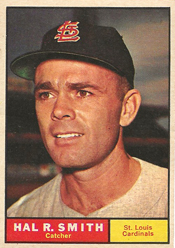
_ Cardinals catcher Hal Smith hit a grand slam, his only one in seven big-league seasons, against Koufax.

_ Cardinals manager Solly Hemus got ejected before the Dodgers made an out.

Explosive start

The Dodgers went into the Tuesday night game tied with the Braves for first place. Both were 83-66 and both had five games remaining in the regular season. The Cardinals were 68-81 and in seventh place in the eight-team league.

The matchup of Koufax and Jackson figured to be a pitcher’s duel.

Koufax struck out 18 batters against the Giants three weeks earlier, tying the major-league record set by Bob Feller of the Indians in 1938 and breaking the National League mark of 17 established by the Cardinals’ Dizzy Dean in 1933.

Jackson was 8-1 versus the Dodgers at Busch Stadium in his career and 12-5 against them overall.

From the start, though, the game defied expectations.

The first three Dodgers batters, Jim Gilliam, Charlie Neal and Wally Moon, each singled, loading the bases. After Duke Snider walked, scoring Gilliam, Hemus was ejected by plate umpire Al Barlick for arguing balls and strikes. Hemus created more commotion when he failed to leave the dugout immediately after the ejection. Coach Johnny Keane took over as Cardinals manager.

When play resumed, Norm Larker singled, driving in Neal and Moon and giving the Dodgers a 3-0 lead. Marshall Bridges relieved Jackson, threw one pitch to Gil Hodges and got him to hit into a double play, with Snider advancing to third. Maury Wills was walked intentionally and John Roseboro made an out at second, ending the inning.

“Bridges’ brilliant rescue act in the first inning cut short what promised to be an atomic blast,” the Los Angeles Times noted.

The line for Jackson: five batters faced, four hits, one walk, three runs.

Wild thing

Given a 3-0 lead, Koufax couldn’t protect it.

In the bottom half of the first, Don Blasingame walked and Joe Cunningham grounded to Koufax, who threw to second for the force. Gino Cimoli grounded out, moving Cunningham to second. After Ken Boyer walked, Gene Oliver got an infield single, loading the bases. Smith, known more for his defense than his slugging, came up next. He worked the count to 3-and-2 before belting a Koufax fastball for the grand slam and a 4-3 Cardinals lead.

Koufax yielded six grand slams in his Hall of Fame career with the Dodgers, including one to another Cardinal, Charlie James, in 1962.

After the next batter, Curt Flood, reached on an error by Gilliam at third, Chuck Churn relieved. Koufax faced seven batters and gave up two hits, two walks and four runs.

“He was just wild,” Alston said to the Los Angeles Times. “He’s the same man who struck out 18 batters the other day.”

Fastball hitter

In the ninth, Cardinals closer Lindy McDaniel, making his club-record 61st appearance of the season, was looking to protect an 11-7 lead. McDaniel hadn’t allowed a home run since May 30 when Hodges connected off him in Los Angeles.

McDaniel got the first batter, Carl Furillo, to ground out to third. Hodges singled and, after Wills lined out to second, the former Cardinal, Rip Repulski, singled.

The next batter was the 6-foot-7 rookie, Frank Howard. Smith gave McDaniel the sign for a fastball and Howard hit it into the bleachers in left-center for a three-run home run, getting the Dodgers within a run.

Howard’s homer was the second of 382 he would hit in the majors.

“Now I’m convinced he can hit a fastball,” Smith said to the St. Louis Post-Dispatch.

McDaniel recovered by getting Gilliam to ground out to second, ending the game. Boxscore

Mix and match

When the Dodgers fell behind early, Alston went to pinch-hitters to try to get favorable matchups against Bridges, a left-hander, and McDaniel, a right-hander.

“Alston pushed every button and called on just about every available athlete to save the game,” the St. Louis Globe-Democrat observed.

The nine pinch-hitters used by the Dodgers:

_ Tommy Davis, making his major-league debut, struck out in the fourth.

_ Don Demeter flied out in the fifth and stayed in the game.

_ Carl Furillo flied out in the fifth and stayed in the game.

_ Joe Pignatano walked in the sixth and stayed in the game.

_ Chuck Essegian, a former Cardinal, hit a RBI-double in the sixth.

_ Ron Fairly grounded out in the eighth.

_ Sandy Amoros grounded out in the eighth.

_ Rip Repulski singled in the ninth.

_ Frank Howard hit a three-run home run in the ninth.

According to Baseball Almanac, two other teams tied the 1959 Dodgers’ record by using nine pinch-hitters in a nine-inning game. Those teams were the Expos on Sept. 5, 1975, versus the Pirates, and the Braves on Sept. 21, 1993, against the Expos. In addition, the Cardinals and manager Tony La Russa used nine pinch-hitters in a 14-inning game on Sept. 25, 1997, versus the Reds.

The loss to the Cardinals dropped the Dodgers a game behind the Braves with four remaining. The Dodgers won three of their last four and the Braves won two, putting the clubs in a first-place tie at the end of the regular season.

The Dodgers clinched the pennant in a best-of-three playoff against the Braves, winning the first two games, and advanced to the World Series, earning the championship by winning four of six against the White Sox.

Read Full Post »

(Updated Sept. 23, 2022)

During a night when Steve Carlton pitched great, he wasn’t good enough to win.

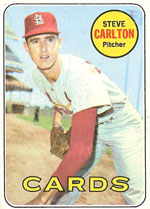
On Sept. 15, 1969, Carlton became the first pitcher in the majors to strike out 19 batters in nine innings, but it wasn’t enough to overcome the Amazin’ Mets.

Ron Swoboda hit a pair of two-run home runs against Carlton, giving the Mets a 4-3 victory over the Cardinals at Busch Memorial Stadium in St. Louis.

In addition to striking out 19 times, the Mets committed four errors, but they were a charmed club destined to become 1969 World Series champions.

In his game story for the New York Daily News, Dick Young wrote, “The Mets were absolutely no match” for Carlton, but their win “goes to prove how utterly amazin’ they really are.”

Said Mets manager Gil Hodges: “It’s great to win when you play badly.”

Getting better

Carlton, 24, wasn’t feeling well before the Monday night game with the Mets and wasn’t sure he could pitch.

“I had a fever all day and I felt so bad that I slept an extra hour and didn’t get to the ballpark until 7 o’clock, an hour before the game was to start,” Carlton told the St. Louis Post-Dispatch.

He said he took aspirins and got a rubdown from the team trainer.

The start of the game was delayed 26 minutes by rain and there was a 54-minute rain delay in the first inning.

Despite his aches and the damp conditions, Carlton struck out the sides in the first and second innings.

“I had a great fastball that kept rising and my curve was falling right off the table,” Carlton said to the Post-Dispatch.

Making mistakes

With the Cardinals ahead, 1-0, Donn Clendenon drew a walk, leading off the fourth for the Mets, and Swoboda batted next.

Carlton got ahead in the count 0-and-2 and “tried to burn another over without a waste pitch,” the New York Daily News reported.

The fastball was “right in his wheelhouse,” Carlton said, and Swoboda hit it deep into the left-field seats for a home run and a 2-1 Mets lead.

Carlton struck out the side in the fourth and the Cardinals scored twice in the fifth against Mets starter Gary Gentry, regaining the lead at 3-2.

In the middle innings, Carlton told the Post-Dispatch, “I became dizzy, tired and nauseated,” but he recovered and remained in the game.

In the eighth, Tommie Agee led off for the Mets with a single, Clendenon struck out and Swoboda came to the plate.

With the count 2-and-2, Carlton hung a slider _ “I didn’t get it inside enough,” he said _ and Swoboda lined it over the wall for a home run and a 4-3 Mets lead.

(In a January 2015 charity fundraising appearance in St. Louis, Carlton drew a laugh from the crowd when he jokingly blamed catcher Tim McCarver for the Swoboda home runs. “Tim put down the wrong fingers,” Carlton said.)

In the book “After the Miracle,” Swoboda told teammate Art Shamsky he got a batting tip before the game from Hall of Famer and Mets broadcaster Ralph Kiner.

“I went to Ralph and said, ‘I’m struggling a little. I’ve never done much against Carlton. Is there anything you might suggest?,’ ” Swoboda recalled. “So Kiner takes me down to a batting cage they had behind the left field fence. He fed me a bunch of balls off an old pitching machine and said, ‘Get your hands higher.’ I started hitting some balls real good. I went into that game with Carlton, who had extra-great stuff that night, and got some good swings off him.”

The two home runs gave Swoboda nine for the season. For his career, Swoboda batted .130 (6-for-46) versus Carlton with the two home runs.

“He’s primarily an inside fastball hitter,” Carlton said. “He has a tendency to swing through outside pitches and sometimes doesn’t reach them. If you go inside with him, you have to go way inside.”

Magic number

Carlton went into the ninth inning with 16 strikeouts and said he made up his mind to go for the record. Three pitchers had struck out 18 batters in nine innings. They were the Indians’ Bob Feller, the Dodgers Sandy Koufax (twice) and the Astros’ Don Wilson.

Carlton struck out Tug McGraw for No. 17 and Bud Harrelson for No. 18, tying the major-league mark. The 18 strikeouts also established a Cardinals club record, topping the 17 by Dizzy Dean versus the Cubs in a 1933 regular-season game and by Bob Gibson versus the Tigers in a 1968 World Series game.

The next Mets batter, rookie Amos Otis, already had struck out three times in the game.

“I was tense,” Carlton said, “but I knew Otis was tense, too, because nobody likes to go into the record book that way, as the No. 19 strikeout.”

For Otis to avoid becoming the 19th strikeout victim, Carlton said, “I thought he might bunt.”

When asked whether he considered bunting, Otis said, “If I’m going in the books, I’m going in right. I wasn’t doing any bunting.”

With the count 2-and-2, Otis swung and missed at a slider in the dirt. The ball eluded catcher Tim McCarver, who retrieved it and threw to first base in time to complete strikeout No. 19 for Carlton.

“I’m very elated to have done something no other pitcher had ever done,” Carlton said. Boxscore

Big numbers

According to the Post-Dispatch, Carlton threw 152 pitches, including 106 for strikes. He got 12 strikeouts on fastballs, five on sliders and two on curves.

Since then, four pitchers have struck out 20 batters in nine innings. They are Roger Clemens of the Red Sox (twice), the Cubs’ Kerry Wood, the Diamondbacks’ Randy Johnson and the Nationals’ Max Scherzer.

Carlton is one of four pitchers who have topped 4,000 career strikeouts. The four are Nolan Ryan (5,714), Randy Johnson (4,875), Clemens (4,672) and Carlton (4,136).

Read Full Post »

Chris Carpenter capped an unbeatable streak with a nearly unhittable performance.

On Sept. 7, 2009, Carpenter won his 11th consecutive decision, pitching a one-hitter in a 3-0 Cardinals triumph over the Brewers at Miller Park in Milwaukee.
The win gave Carpenter a season record of 16-3 with a 2.16 ERA.

It was the second one-hitter of Carpenter’s major-league career. The other occurred on June 14, 2005, against his former team, the Blue Jays, at Toronto.

Mow ’em down

The Labor Day game between the Cardinals and Brewers matched Carpenter against David Bush. who had lost his last six decisions.

In the first inning, Carpenter walked Felipe Lopez with two outs. He retired the next 11 batters before Jody Gerut hit a double to deep left field. A left-handed batter, Gerut told the St. Louis Post-Dispatch the hit was “dumb luck.”

Carpenter retired another 11 in a row before Craig Counsell led off the ninth with a walk. Corey Patterson batted next and grounded into a double play. Carpenter got Frank Catalanotto to ground out, ending the game.

Albert Pujols provided Carpenter with run support, hitting a two-run double against Bush in the fifth and scoring a run on Matt Holliday’s RBI-single against Mark DiFelice in the eighth. Boxscore

In command

Carpenter struck out 10 and was ahead in the count most of the time.

“I’m not wasting pitches,” Carpenter said to the Post-Dispatch. “I’m trying to get strike one, strike two, strike three as fast as I can, or get you to put the ball in play and let my guys work behind me.”

Said Brewers manager Ken Macha: “That was a clinic on how to move your fastball around, cutting it in, cutting it away, sinking it away from lefties and in on righties while mixing his curveball.”

Gerut, whose hit came on a first-pitch fastball, told the Associated Press, “You just hope you get a mistake because most of the time he puts it where he wants it.”

Carpenter, 34, completed the 2009 season with a 17-4 record and led the National League in ERA at 2.24.

Read Full Post »

After losing 10 of 11 decisions against the Dodgers, Al Jackson persevered and outdueled Sandy Koufax.

A left-handed pitcher who relied on a sinker for groundball outs, Jackson made his major-league debut in 1959 with the Pirates, spent most of his career with the Mets and had two strong seasons with the Cardinals.

During his first stint with the Mets from 1962-65, Jackson was 1-9 versus the Dodgers. He lost eight consecutive decisions against them before spinning a three-hitter and outdueling Claude Osteen in a 1-0 Mets victory on June 21, 1965, at Dodger Stadium. Boxscore

Two months later, on Aug. 10, 1965, Koufax got his 20th win of the season, striking out 14 Mets and beating Jackson in a 4-3 Dodgers victory at Los Angeles. Boxscore

The Mets traded Jackson and third baseman Charlie Smith to the Cardinals for third baseman Ken Boyer after the 1965 season.

Tough luck

After opening the 1966 season as a reliever, Jackson was moved into the Cardinals’ starting rotation in May, replacing Ray Sadecki, who got traded to the Giants.

The first time Jackson faced the Dodgers as a Cardinal was June 1, 1966, at St. Louis. Although he pitched well, he again took the loss. Jackson held the Dodgers to three hits in seven innings, but Koufax pitched a shutout in a 1-0 Dodgers victory.

Jackson “deserved a better fate, but he was pitted against a master,” the Los Angeles Times observed.

The Dodgers scored an unearned run in the seventh. With one out and none on, Jackson “got a slider too high and too close” to Willie Davis, who hit the pitch into the right-field corner for a triple, the St. Louis Post-Dispatch reported. When right fielder Bobby Tolan’s throw eluded relay man Julian Javier, Davis raced to the plate on the error.

“I’m sure Jackson would like to have that pitch back,” Davis said. Boxscore

The loss dropped Jackson’s career record versus the Dodgers to 1-10.

Beating the best

One month later, on July 1, 1966, at Dodger Stadium, Jackson and Koufax again were matched against one another.

Koufax had a five-game winning streak versus the Cardinals. His season record was 14-2. Jackson had been given an extra day of rest since making his last start five days earlier against the Astros.

The two left-handers held their opponents scoreless through the first six innings. With one out in the seventh, Orlando Cepeda singled and Mike Shannon slugged a home run, giving the Cardinals a 2-0 lead.

Jackson did the rest, pitching a six-hit shutout. Only one Dodgers baserunner, Wes Parker in the first inning, reached second base. Jackson got the Dodgers to ground into three double plays and walked none.

“When I have a good day, I work my infielders pretty hard,” Jackson said.

The game was completed in 1 hour, 53 minutes.

Jackson said “my breaking ball wasn’t working so good” and his fastball initially was “too straight.” A word of advice from pitching coach Joe Becker helped.

Becker “told me to become a pitcher again, instead of a thrower, and I started keeping the ball down,” Jackson said.

In the ultimate compliment, Koufax said, “I had the best stuff I’ve had all year, but Al just pitched better.” Boxscore

Action Jackson

Jackson’s gem changed his luck against the Dodgers. Six of his last eight career decisions versus the Dodgers were wins. Jackson was 2-2 with an 0.92 ERA versus the Dodgers for the 1966 Cardinals and 3-0 against them for the 1967 Cardinals.

Jackson, who was traded back to the Mets after the Cardinals won the 1967 World Series title, finished with a career mark of 7-12 and a 3.41 ERA versus the Dodgers. He was 5-2 against them as a Cardinal; 2-10 as a Met.

Here is the breakdown of Jackson’s Dodgers decisions: 3-0 vs. Don Sutton, 1-0 vs. Claude Osteen, 1-0 vs. Jim Brewer, 1-2 vs. Don Drysdale, 1-5 vs. Koufax, 0-2 vs. Joe Moeller, 0-2 vs. Pete Richert and 0-1 vs. Bill Singer.

Jackson had an overall major-league record of 67-99 with a 3.98 ERA. In two seasons with St. Louis, he was 22-19 with a 2.97 ERA.

In 1966, when he was 13-15 with a 2.51 ERA, Jackson was second on the Cardinals in wins, games started (30), complete games (11) and innings pitched (232.2). He was 12-14 with a 2.61 ERA as a starter; 1-1 with an 0.73 ERA in six relief appearances.

Jackson was 9-4 with a 3.95 ERA in 39 appearances for the 1967 Cardinals. He was 5-3 with a 4.88 ERA in 11 starts; 4-1 with a 2.81 ERA as a reliever.

Read Full Post »

« Newer Posts - Older Posts »