Feeds:
Posts
Comments

Archive for the ‘Pitchers’ Category

(updated April 10, 2026)

A closer for a rotation that often completed what it started, Joe Hoerner still served a valuable role for the 1968 National League champion Cardinals and supported the staff with a stellar season.

On June 1, 1968, Hoerner struck out six Mets in a row, tying the National League record for consecutive strikeouts by a reliever.

Hoerner went on to post an 8-2 record with 17 saves and a 1.47 ERA for the 1968 Cardinals. The left-hander ranked second in the National League in saves to the 25 by Phil Regan of the Cubs and his ERA was second on the club to the 1.12 achieved by Bob Gibson.

Led by Gibson’s 28, Cardinals starters pitched 63 complete games in 1968. Needed only for 49 innings, Hoerner usually was effective, allowing no earned runs in 40 of 47 appearances.

“Joe is almost as much of a machine out there as Bob Gibson,” Cardinals reliever Wayne Granger said to the St. Louis Post-Dispatch. “He just goes out there and does the job time after time.”

Overcoming adversity

Hoerner, son of an Iowa farmer, made his professional baseball debut in the White Sox minor-league system in 1957. A year later, Hoerner was diagnosed with muscle weakness near his heart. Because any strain on the muscle impaired Hoerner’s circulation, Hoerner was advised to change his pitching delivery from overhand to sidearm.

“I took four pills a day for a long time to strengthen the muscle, but I haven’t been bothered since then,” Hoerner told the Post-Dispatch in 1968.

Hoerner, 26, made his major-league debut in September 1963 with the Houston Colt .45s. The Cardinals acquired him in November 1965 and he pitched for them in 1966 (5-1 record, 13 saves,1.54 ERA) and 1967 (4-4, 14 saves, 2.59 ERA).

Hoerner’s team-high 14 saves for the 1967 league champion Cardinals included four against their closest pursuer, the Giants. He got an uncredited “save” that season for driving the team in a bus from the ballpark to the hotel after a game in Atlanta. Hoerner recalled the stunt in the book “Redbirds Revisited:”

“We were all walking through this tunnel toward where the team bus was parked, but there was no driver … I said, ‘I’ll drive this damn thing.’ The keys were there. I sat down and turned on the ignition. Some of the guys were laughing … They thought I was just horsing around … I knew nothing about driving a bus. Everybody was hollering, ‘Let’s go,’ and I put it in gear and off we went.

“A few of the guys decided they wanted off, but I thought, ‘What the hell. I’m this far. We’re going back to the hotel.’ So out the tunnel we go … We’re out on the street and we head back to the hotel … I had kind of forgotten how long the bus is when turning corners, and I turned a little too sharply coming into the Marriott parking lot … I was about to cream a big neon sign with the back end of the bus … A lot of glass fell (from the sign) and it was kind of noisy for a few seconds. I got the bus stopped and opened the door, and everybody just sort of disappeared like ants … I just left the bus parked out there.”

After the Cardinals won Game 7 of the 1967 World Series against the Red Sox, Hoerner was celebrating with his teammates in the locker room at Boston’s Fenway Park when a champagne bottle he was holding exploded, severing a tendon in the middle finger of his pitching hand.

“If we win many more pennants, my fingers won’t stand it,” Hoerner said.

Tough to hit

In “Redbirds Revisited,” Hoerner said, “From the middle of October (1967) until about Thanksgiving, I really didn’t know if I’d ever be able to bend that finger again … I was very, very worried that my baseball career was over.”

Hoerner recovered from the injury and yielded no runs in his first nine appearances in 1968.

“I was mainly a fastball, slider pitcher. Mostly fastball,” Hoerner told authors David Craft and Tom Owens. “I might pitch an inning or more and never throw anything but a fastball. I had excellent control and great velocity. I felt I could throw the ball pretty much where I wanted to.”

On June 1, the Cardinals played the Mets at Shea Stadium in New York. The Mets led, 4-1, before the Cardinals rallied for three runs in the seventh against Nolan Ryan, tying the score at 4-4.

Hoerner, the third Cardinals pitcher of the game, was brought in to pitch the seventh and retired the Mets in order. The Cardinals took the lead, 5-4, with a run in the eighth, but the Mets tied the score on Ed Charles’ pinch-hit home run in the bottom half of the inning.

In the ninth, Hoerner struck out Al Weis, Ron Swoboda and Don Bosch. After Mike Shannon hit a home run against Cal Koonce in the 10th, putting the Cardinals ahead, 6-5, Hoerner struck out Greg Goossen, Jerry Buchek and Jerry Grote, sealing the win. Boxscore

Hoerner’s six consecutive strikeouts came against right-handed batters.

Hoerner was effectively consistent during the 1968 season. He was 4-1 with a 1.05 ERA in home games and 4-1 with a 1.93 ERA in away games. Left-handed batters hit .189 against him and right-handed batters hit .194.

In the 1968 World Series against the Tigers, Hoerner earned a save in Game 3 with 3.2 scoreless innings in relief of Ray Washburn boxscore and was the losing pitcher in Game 5 when he faced four batters, retired none and was charged with two runs. Boxscore

Hoerner and Cardinals teammate Dal Maxvill owned a successful travel agency in St. Louis for several years.

Read Full Post »

(Updated Dec. 24, 2018)

At 17, Ray Sadecki threw with as much velocity as anyone on the Cardinals’ major-league pitching staff.

An amateur free agent, Sadecki was pursued by most big-league teams. Cardinals scout Runt Marr, who followed Sadecki for two years, recommended the club invest in the left-handed pitcher from Kansas City, Kansas.

On June 1, 1958, Sadecki signed with the Cardinals for a bonus of $50,000 and a three-year contract totaling another $18,000.

High interest

Sadecki was an exceptional prospect. At 16, he pitched four no-hitters, two in high school and two in summer league games. In his senior year at Ward High School, Sadecki was 9-0 and pitched another no-hitter. Marr said Sadecki averaged two strikeouts per inning over two high school seasons and twice struck out 21 batters in seven-inning games.

At the state high school baseball tournament at Eldorado, Kansas, in 1958, 12 of the 16 major-league teams sent scouts to watch Sadecki. Marr was joined by Cardinals minor-league director Walter Shannon. They saw Sadecki win the state championship game, capping a 17-0 season for Ward High School.

After graduating, Sadecki met with representatives from the Athletics, Pirates and Yankees. He worked out for the Orioles in Kansas City and went to Cleveland to throw for the Indians, who offered a $50,000 bonus. Sadecki returned home briefly before heading to St. Louis for a workout with the Cardinals.

Frank Sadecki, Ray’s father, asked bidders for a “$55,000 trust fund or insurance type deal that would provide a salary for life,” United Press International reported.

Hard thrower

The Cardinals announced Sadecki’s signing while he was pitching on the sidelines in a workout at Busch Stadium in St. Louis.

In his book “October 1964,” author David Halberstam wrote, “Frank Sadecki, an immigrant’s son who had not been permitted to play baseball by his father, took the $10,000 check for the first part of the bonus and showed it to his own father. The old man looked at it and broke into tears of both pleasure and anguish; the boy, he said, is making that much money just for playing a game, while he had had to work so hard all his life for so much less.”

Cardinals manager Fred Hutchinson, who pitched 10 years in the big leagues, compared Sadecki with Cardinals ace Sam Jones, who led the National League in strikeouts in 1958.

“He’s very smooth,” Hutchinson told the St. Louis Post-Dispatch. “We won’t have to do a thing with his delivery. We’ll have to develop a curveball. He throws as hard as Sam Jones does.”

In The Sporting News, Bob Broeg wrote Sadecki “has the potential of developing into one of the hardest-throwing pitchers in the game.”

After receiving mentoring from Cardinals pitching coach Al Hollingsworth in St. Louis, Sadecki was assigned to their farm club in Winnipeg.

Wild thing

Sadecki “felt some resentment from career minor-league players because he’d made so much money before he’d even thrown his first pitch,” Halberstam wrote.

On June 19, 1958, Sadecki made his pro debut, pitching a four-hitter in a win against St. Cloud. He struck out 11, walked 10 and hit a two-run home run.

Games with high totals of strikeouts and walks were commonplace for Sadecki in 1958. On July 21, he pitched a three-hitter in a win over Duluth-Superior, striking out 14 and walking 11. Facing Minot on July 29, Sadecki won a four-hitter, striking out 13 and walking nine.

Sadecki finished the 1958 season with a 9-7 record, 3.34 ERA and 11 complete games for Winnipeg. In 132 innings, he struck out 174 and walked 129.

Though he’d pitched a full schedule of high school and minor-league baseball that year, the Cardinals sent Sadecki to their Florida Instructional League for more work in October 1958.

On Oct. 15, in his debut for the Florida Instructional League Cardinals, Sadecki combined with teammates Roland Passaro and Jerry Lock on a no-hitter against the Athletics.

A month later, Cardinals pitching instructor Johnny Grodzicki said Sadecki “could be one of the game’s great left-handers. Control is his only problem.”

The Post-Dispatch called Sadecki “one of the best prospects, but he also is one of the wildest.”

VIPs impressed

On Dec. 6, with Cardinals general manager Bing Devine, manager Solly Hemus and talent evaluator Eddie Stanky in attendance, Sadecki pitched a no-hitter against the Florida Instructional League Yankees at St. Petersburg. Sadecki struck out 12, walked nine and hit a batter in a 3-0 victory.

“We won’t rush him no matter how good he looks … but we do believe that Sadecki, with his unusual speed and fine curve, can make it a quick trip to the majors,” Devine said.

Hemus, who had replaced Hutchinson as Cardinals manager, said Sadecki “throws hard and gets a lot of stuff on the ball for a boy of his age.”

Sadecki finished the Florida Instructional League season with a 5-3 record and 2.50 ERA. In 72 innings, he struck out 89, yielded 36 hits and averaged seven walks per game.

Soon after Sadecki turned 18 on Dec. 26, 1958, the Cardinals invited him to their 1959 major-league spring training camp.

Fast track

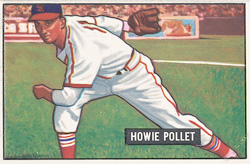
Cardinals pitching coach Howie Pollet liked what he saw from Sadecki at spring training. “We won’t try to change Sadecki’s delivery in any way,” Pollet said. “Whoever taught the boy taught him well. He has one of the finest basic, or fundamental, styles of pitching I’ve ever seen … Wherever Sadecki pitches the coming season, we’ll impress on his manager never to try to change the boy’s style. Just concentrate on having the boy practice spot control.”

In four innings pitched in Cardinals spring training games, Sadecki yielded no earned runs, two hits, two walks and struck out four.

Hemus said Sadecki “has the equipment to be a great pitcher.”

On March 26, 1959, the Cardinals sent Sadecki to their minor-league training camp at Daytona Beach, Fla., and he was assigned to Class AAA Omaha.

Sadecki was 13-9 with a 4.06 ERA for Omaha in 1959. He had 175 strikeouts and 145 walks in 193 innings.

In May 1960, Sadecki, 19, made his major-league debut with the Cardinals. He went on to earn 135 wins in 18 big-league seasons, including eight (1960-66 and 1975) with the Cardinals.

Sadecki was 68-64 for St. Louis and his best year was 1964 when he led the Cardinals in wins (20) during their run to a National League pennant. He also earned a win in Game 1 of the World Series against the Yankees.

Read Full Post »

In answering a call for help from the Cardinals, Brady Raggio got into a jam and required rescue.

On May 15, 1998, Raggio started for the Cardinals against the Marlins and allowed 11 consecutive batters to reach base before he was lifted in the first inning.

Though he was sent to the minor leagues the next day, Raggio returned to the Cardinals a month later and earned redemption.

Bad results

Needing someone to fill in for Donovan Osborne, who developed a shoulder ailment, the Cardinals called on Raggio, who was with their Class AAA Memphis club, and gave him the start in the Friday night opener of a series against the Marlins at St. Louis. Raggio, who’d made 15 appearances as a rookie with the 1997 Cardinals, was 4-2 with a 2.48 ERA at Memphis.

Though the Marlins were defending World Series champions, three of their best players _ third baseman Bobby Bonilla, catcher Charles Johnson and outfielder Gary Sheffield _ were held out of the lineup against the Cardinals while the club negotiated a deal to trade them to the Dodgers.

Raggio got the first batter, John Cangelosi, to ground out. The next eight _ Edgar Renteria, Cliff Floyd, Derrek Lee, Mark Kotsay, Gregg Zaun, Craig Counsell, Dave Berg and pitcher Brian Meadows _ each singled.

The hits by Floyd, Kotsay, Zaun, Berg and Meadows produced five runs. It could have been more except Kotsay made the second out of the inning when he drifted too far off second base after Zaun singled.

The Marlins, though, weren’t done. Batting for the second time in the inning, Cangelosi walked, loading the bases. Renteria singled again, driving in a run and making the score 6-0.

After Raggio walked Floyd, forcing in a seventh run, manager Tony La Russa replaced him with Curtis King, who got Lee to ground out, ending the Marlins’ half of the first.

Raggio departed with an ERA of 94.50, yielding seven runs in two-thirds of an inning.

“They found the holes,” Raggio said to the Miami Herald. “I thought I was making pretty good pitches, but they had, like, six groundball hits.”

La Russa agreed, telling the St. Louis Post-Dispatch, “We expected him to get a bunch of ground balls. We didn’t get anything hit at anyone. I think the results were a little misleading.”

Raggio told the Memphis Commercial-Appeal he received “some encouraging words” from La Russa after the outing. “I make the same pitches that I made in that inning in 100 more innings and I get out with no runs,” Raggio said.

Keep on trying

Down 7-0, the Cardinals chipped away, scoring a run in the first, a run in the third and four in the fifth. Meadows gave up two home runs to Ray Lankford and one to Brian Hunter. The Marlins added a run in the fourth against Kent Bottenfield and led, 8-6, after five innings.

The Cardinals made Marlins reliever Jay Powell squirm in the ninth. With two outs, John Mabry doubled, scoring Gary Gaetti from first and getting the Cardinals within a run at 8-7. When La Russa sent Willie McGee to bat for pitcher Juan Acevedo, the Marlins opted to walked him intentionally, even though he represented the potential winning run. Tom Pagnozzi ended the drama by lining out to Renteria at short. Boxscore

Raggio was returned to Memphis after the game and pitched well, boosting his record to 6-3 with a 2.50 ERA. On June 15, the Cardinals recalled him. “Brady deserves it,” said Memphis manager Gaylen Pitts. “That’s what happens when you come down and work. He could have gone the other way, but he worked hard and did what he had to do to get back.”

In his first appearance for the Cardinals since his recall, Raggio pitched 2.1 scoreless innings of relief, earning the win against the Diamondbacks. Boxscore

After two more relief stints, Raggio went back to Memphis. Released after the season, Raggio was in the Rangers’ system in 1999 and spent three years (2000-2002) in Japan. In 2003, he returned to the big leagues with the Diamondbacks.

Read Full Post »

With a pitching performance as entertaining as it was admirable, Jose Oquendo impressed teammates, frustrated the Braves and earned a spot in Cardinals lore.

On May 14, 1988, at St. Louis, Oquendo was asked by manager Whitey Herzog to relieve in the 16th inning because no one on the pitching staff was available. Oquendo shifted from first base to the mound and shut out the Braves for three innings before yielding two runs in the 19th. Though he lost, Oquendo surprised most by doing as well as he did for as long as he did.

Another surprise was the performance of Jose DeLeon, a Cardinals pitcher who played the outfield in the final four innings.

Limited options

The Saturday night game matched starting pitchers Cris Carpenter, making his major-league debut for the Cardinals, against Zane Smith. The Cardinals led, 5-4, before the Braves tied the score with a run in the seventh.

Oquendo, a utility player, entered the game in the ninth as a replacement for first baseman and ex-Brave Bob Horner. In the bottom half of the inning, Oquendo and Tony Pena were on base, with one out, when Vince Coleman hit a grounder past pitcher Jose Alvarez. Second baseman Ron Gant dived, stopped the ball and started a double play, sending the game into extra innings.

In the 12th, former Cardinals catcher Ted Simmons led off for the Braves. Facing his friend, Bob Forsch, Simmons pulled a pitch hard on the ground. Oquendo ranged to his right, snagged the ball and threw to Forsch, covering first, in time to nip Simmons.

In the 15th, Herzog brought in his last available pitcher, Randy O’Neal, whom the Cardinals acquired from the Braves the year before. O’Neal had experience as a starter and Herzog figured to let him finish the game, no matter how many innings it took.

However, after retiring the Braves in order in the 15th, O’Neal said his arm hurt. Herzog had used all his pitchers except three: DeLeon, Larry McWilliams and John Tudor. All were deemed unavailable. DeLeon had pitched 8.2 innings the previous night, McWilliams was scheduled to start the next game and had been sent home by Herzog in the 10th inning, and Tudor had a tender shoulder.

Herzog turned to Oquendo, who’d made one big-league pitching appearance, a 1987 mop-up role during a blowout loss to the Phillies.

Serious business

Selecting Oquendo to pitch, Herzog needed someone to play first base. He moved Duane Walker from left field to first and brought in DeLeon to play left.

DeLeon hadn’t played a position other than pitcher since entering the big leagues in 1983. Asked how Herzog broke the news to him, DeLeon told the St. Louis Post-Dispatch, “He said, ‘Can you play outfield?’ I said, ‘Sure.’ I didn’t mind.”

Herzog approached umpire Bob Davidson to inform him of the lineup switches. Recalled Davidson: “Whitey said he was bringing in Oquendo to pitch and he said, ‘Can I forfeit?’ ”

When catcher Steve Lake went to the mound to review the pitch signals, Oquendo told him he had three pitches: fastball, slider and split-finger. “I started chuckling,” Lake said. “Then I see that he’s dead serious.”

Ken Griffey Sr. led off the 16th against Oquendo and doubled. After Gerald Perry was walked intentionally, Ozzie Virgil Jr. hit a single to right. In a decision the Atlanta Constitution described as “a blunder,” third-base coach Willie Stargell sent Griffey to the plate, where Lake awaited with the ball after fielding a strong peg from right fielder Tom Brunansky. Griffey was out by 10 feet.

“I’ve got to thank Stargell because he didn’t hold the guy (at third),” Herzog said. “The game should have been over then.”

Mix and match

As the game moved along through the 17th and 18th, Herzog continually shifted DeLeon and Brunansky in an effort “to put DeLeon where the batter was least likely to hit the pitch,” according to the Constitution. DeLeon and Brunansky switched spots in right field and left field 11 times.

DeLeon had two fly balls hit to him and he caught both. “I was a little nervous,” DeLeon said. “My knees were shaking.”

In the 18th, with Cardinals runners on first and third, none out, Lake grounded out to third. After Luis Alicea walked, loading the bases, Walker hit a broken-bat liner that was caught by shortstop Andres Thomas and resulted in a double play when Brunansky was unable to get back to the bag at third.

“I didn’t get the job done,” said Walker. “All I had to do was hit a fly ball to end the game.”

Said Herzog: “We should have won in the 18th.”

The Cardinals stranded 21 on base in the game.

Staying alive

In the 19th, Griffey hit a two-run double against Oquendo with two outs. Rick Mahler retired the Cardinals in order in the bottom half, completing eight scoreless innings of relief and sealing a 7-5 Braves victory. Mahler “pitched the best he has in three years,” said Braves manager Chuck Tanner.

Oquendo finished with a pitching line of four innings, four hits, two runs, six walks and one strikeout. “He threw a lot of sliders and a lot of split-fingers,” said Lake. “I never knew where his fastball was going. I didn’t know if he was going to drop down (sidearm) or throw overhand.”

Oquendo became the first non-pitcher to receive a decision since outfielder Rocky Colavito won a relief stint for the Yankees against the Tigers in 1968.

“I’m glad I got a chance to pitch and I’m glad nobody got hurt,” Oquendo said.

Said Braves slugger Dale Murphy, who was hitless in seven at-bats: “It wouldn’t have looked very good if we had lost. It didn’t look too good anyway, but we won.” Boxscore

Herzog said utility player Tom Lawless would have relieved Oquendo if the game had gone to a 20th inning. “That would have been brutal,” said Lawless. “I’d already thrown batting practice.”

Read Full Post »

Sons of Polish fathers, Stan Musial and Moe Drabowsky reached the major leagues, played central roles in a baseball milestone and honored their heritages by helping others learn the game they loved.

On May 13, 1958, Musial got his 3,000th career hit, a double against Drabowsky at Wrigley Field in Chicago. The feat forever linked Drabowsky with Musial.

The relationship didn’t end there. In September 1987, Musial and Drabowsky went to Poland together to instruct men and women in their fathers’ homeland how to play baseball.

Land of opportunity

Miroslav Drabowski, later known as Moe Drabowsky, was born on July 21, 1935, in Ozanna, Poland. His father was Polish and his mother was American. In 1938, when Miroslav was 3, the family moved to the United States and settled in Connecticut.

In America, Miroslav took the name of Myron Walter Drabowski, though nearly everyone called him Moe. He was a natural as a baseball player. In school, his name often was misspelled as Drabowsky and he stuck with that, according to a biography by the Society for American Baseball Research.

After earning an economics degree from Trinity College in Connecticut, Drabowsky signed with the Cubs and made his big-league debut with them in 1956.

Musial, whose father immigrated to the United States from Poland in 1910, entered the 1958 season needing 43 hits to become the eighth player to reach 3,000. On May 12, against the Cubs at Wrigley Field, Musial got his 2,999th hit and indicated he’d prefer to achieve No. 3,000 before the fans in St. Louis.

Work day

Cardinals manager Fred Hutchinson told Musial to sit out the May 13 game at Chicago and prepare to return to the lineup May 14 against the Giants at St. Louis. Musial went to the bullpen along the right-field line at Wrigley Field and watched the game.

In the sixth inning, with the Cubs ahead, 3-1, Gene Green led off for the Cardinals and doubled. Hal Smith was up next, with pitcher Sam Jones on deck. As Smith batted, Hutchinson motioned for Musial. After Smith grounded out, Musial walked from the bullpen to the dugout, picked out a bat and went to the plate to hit for Jones. The Tuesday afternoon crowd of 5,692 cheered in approval.

Drabowsky, 22, was glad Cubs manager Bob Scheffing showed confidence in letting him pitch to Musial. Drabowsky won 13 for the Cubs in 1957 and was considered one of their best pitchers in 1958.

“I thought, ‘Here’s a guy who deserves No. 3,000.’ A nice guy,” Drabowsky told David Condon of the Chicago Tribune. “Then I remembered our 3-1 lead and that I was trying to preserve a victory. So I told myself, ‘Sure, he’s a nice guy, but he’ll have to earn No. 3,000.’ So I bore down.”

Hugs and kisses

Working methodically, Drabowsky alternated curves and fastballs. Musial fouled off three pitches to left and watched two others go wide of the strike zone.

With the count at 2-and-2, Drabowsky threw a curve. “Outside corner, higher than intended,” Drabowsky said.

In his book “Stan Musial: The Man’s Own Story,” Musial said, “I picked up the spin of the pitch, strode into the ball and drove it on a deep line into left field. I knew as soon as it left my bat that it would go between the left fielder, Walt Moryn, and the foul line.”

Musial’s No. 3,000 was a run-scoring double. “I don’t mind him getting 3,000 off me,” Drabowsky said, “but when I had two strikes, I thought I had him _ not for a strikeout, but I figured he’d hit it in the ground.” Video

As Hutchinson ran onto the field to congratulate Musial, he was followed by a pack of photographers. Umpire Frank Dascoli retrieved the ball and handed it to Musial, who was lifted for a runner, pitcher Frank Barnes.

Before leaving the field, Musial went to the box seats next to the Cardinals dugout and kissed his wife, Lillian. A photographer asked, “Say, Stan, did you know that blonde?” Musial laughed and replied, “I’d better. That’s my wife.”

Sparked by Musial’s hit, the Cardinals scored three more runs against Drabowsky in the inning and won, 5-3. Boxscore

Polish pride

Musial, who retired after the 1963 season, batted .405 with two home runs, four doubles and six walks against Drabowsky in his career.

Drabowsky pitched 17 seasons in the major leagues with eight teams: Cubs (1956-60), Braves (1961), Reds (1962), Athletics (1962-65), Orioles (1966-68 and 1970), Royals (1969-70), Cardinals (1971-72) and White Sox (1972). His best years were as an Orioles reliever. In Game 1 of the 1966 World Series, Drabowsky struck out 11 Dodgers, including six in a row, and earned the win with 6.2 innings of scoreless relief. Boxscore

In two seasons with the Cardinals, Drabowsky was 7-2 with 10 saves.

In 1987, Musial and Drabowsky reconnected, going to the town of Kutno in Poland to teach baseball to men and women in the Polish Baseball Union. It was Drabowsky’s first visit to Poland since he left when he was 3.

With equipment provided by baseball commissioner Peter Ueberroth, Musial and Drabowsky gave out enough bats, balls, gloves and catchers’ gear to supply 12 men’s teams and six women’s teams, according to the Chicago Tribune.

“We’re here to help get them going and maybe we can invite some of their coaches to the U.S. next year to see how we train so they can come home and teach the kids more,” said Musial.

The effort by Musial and Drabowsky led to Kutno, Poland, becoming home to the Little League Baseball European Leadership Training Center.

Read Full Post »

Harry Brecheen came close to being perfect for the Cardinals.

Brecheen began the 1948 season with three consecutive shutouts, including a one-hitter.

A left-hander, Brecheen followed consecutive shutouts versus the Cubs with a nearly perfect game against the Phillies. His scoreless streak reached 32 innings before the Pirates broke through with a run in the sixth inning of Brecheen’s fourth start of the season.

Hot start

Brecheen, 33, made his first start of 1948 on April 23 against the Cubs at Chicago. He yielded nine hits and a walk, but the Cubs stranded nine and the Cardinals won, 1-0. Boxscore

A week later, on May 1, Breechen got his second start, against the Cubs at St. Louis, and again held them scoreless. The Cubs got six hits and a walk, stranded seven and the Cardinals won, 4-0. Boxscore

Facing the Phillies in his third start on May 8 at St. Louis, Brecheen was extra sharp. Using a mix of screwballs, curves and fastballs, he retired the first 20 batters in a row.

With two outs in the seventh, rookie Johnny Blatnik, starting in place of slumping left fielder Harry Walker, was the batter. Brecheen got ahead on the count, 0-and-2, and decided to waste a pitch.

“I threw one in there high, above his head,” Breechen told The Sporting News.

Decisive call

Blatnik, a right-handed batter, swung at the ball and hit “a high, slow bouncer” along the third-base line, the St. Louis Post-Dispatch reported.

Third baseman Whitey Kurowski fielded the ball on the foul line and fired across the diamond to first baseman Nippy Jones. “I thought I made a good throw,” Kurowski said.

First-base umpire Babe Pinelli called Blatnik safe, an infield single that ended Brecheen’s bid to pitch the first perfect game in the big leagues since Charlie Robertson of the White Sox did it against the Tigers in 1922.

“I was aware Brecheen was pitching a perfect, no-hit game when that play came up, but if I had to call it again, it would be the same,” said Pinelli. “Blatnik was safe at first. There was no doubt about that in my mind when I called the play.”

Difference of opinions

Though the Cardinals didn’t challenge the call on the field, they were united in their belief Blatnik was out.

_ Harry Breechen: “I thought Blatnik was out at first, but, of course, I’m prejudiced.”

_ Whitey Kurowski: “From where I was standing, my throw appeared to have beaten Blatnik by a good margin.”

_ Nippy Jones: “I felt the ball hit my mitt while the base runner was still in the air. I was surprised when the umpire called him safe. In fact, I didn’t think the play was even close.”

_ Eddie Dyer, Cardinals manager: Jones “was positive in his statement when he told me Kurowski’s throw had the runner by a good half-step.”

_ Red Schoendienst, Cardinals second baseman: “I was satisfied the base runner was out.”

Throwing strikes

Blatnik was the only Phillies batter to reach base. Breechen retired the last seven in a row and the Cardinals won, 5-0. Boxscore

Brecheen exhibited pinpoint control. Richie Ashburn was the only Phillies batter who worked a count to 3-and-2, and he struck out.

After the game, Pinelli met Brecheen in a runway leading from the Cardinals’ dugout to the locker room and consoled the pitcher on missing out on a perfect performance, according to The Sporting News.

A week later, on May 15 at St. Louis, Brecheen made his fourth start, against the Pirates, and held them scoreless until, with two outs in the sixth, Frankie Gustine singled and scored on Johnny Hopp’s triple. Brecheen pitched a complete game and got the win in an 8-3 Cardinals victory.

Brecheen finished the 1948 season with a 20-7 record and led the National League in ERA (2.24), shutouts (seven) and strikeouts (149).

Read Full Post »

« Newer Posts - Older Posts »