Feeds:
Posts
Comments

Archive for the ‘Pitchers’ Category

(Updated Nov. 25, 2024)

When the Cardinals saw Dizzy Dean for the first time in the 1938 regular season, he looked a lot different to them. He was wearing the uniform of the Cubs instead of the Cardinals, he was throwing sidearm instead of overhand, and his pitches were slow instead of fast.

What remained familiar, however, was his result.

On April 24, 1938, in his first appearance at Chicago’s Wrigley Field as a member of the Cubs, Dean faced the team that traded him and pitched a shutout against the Cardinals.

Relying exclusively on off-speed pitches, or, “his dipsy-do stuff,” as the Chicago Tribune described it, because of a damaged right arm, Dean limited the Cardinals to four hits and two walks in a 5-0 Cubs victory. Dean also produced a single and scored twice.

Pitching on a Sunday afternoon before 34,520 spectators, including Cardinals owner Sam Breadon, Dean “caused clouds of gloom to gather over the Cardinals” with his performance, the St. Louis Star-Times reported.

Slow and steady

With an intimidating fastball, Dean was the ace of the Cardinals’ Gashouse Gang teams of the 1930s, leading National League pitchers in strikeouts four years in a row (1932-35) and posting win totals of 30 (1934), 28 (1935) and 24 (1936) in his peak seasons.

His career skidded off course in 1937, however, when he suffered a toe injury in the All-Star Game. Rushed back into the Cardinals’ lineup before the injury healed, Dean altered his delivery to compensate for pain in his toe and damaged his arm.

The Cardinals traded him to the Cubs on April 16, 1938, three days before the season opened. On April 20, Dean made his first regular-season appearance for the Cubs, starting against the Reds at Cincinnati, and got the win, yielding two runs over six innings in a 10-4 Chicago victory.

Before his second start, against the Cardinals, Dean and catcher Gabby Hartnett devised a plan for how to pitch to them. “Gabby knows them better than I do,” Dean told United Press. “All I had to do was put the ball where he said.”

Throwing sidearm, Dean “mixed a fast curve with a slow curve and a fadeaway knuckler curve that threw the Cardinals’ batters off stride,” home plate umpire Larry Goetz told the Star-Times.

Dean threw 92 pitches and, because “he didn’t have a fastball,” relied on “changing pace on a half-speed delivery,” The Sporting News reported.

The Cardinals “dug in at the plate and swung from their heels,” according to the St. Louis Post-Dispatch. “In so doing, they helped to beat themselves.”

Said Cardinals manager Frankie Frisch: “We were too eager. We swung too hard.”

Right stuff

The Cardinals’ hits were a pair of doubles by Terry Moore and a single each by Enos Slaughter and pitcher Max Macon.

Twice, the Cardinals had two runners on the bases, but Dean escaped unscathed.

In the second inning, with Johnny Mize on third, Moore on second and two outs, Dean got Mickey Owen to fly out to left on a 3-and-2 pitch.

In the sixth, Dean retired the first two batters before Slaughter singled and Pepper Martin walked. With Mize, a power threat, at the plate, Cubs manager Charlie Grimm had Charlie Root loosen in the bullpen.

Pitching knuckle-curves away from Mize, Dean worked the count to 1-and-2. His next pitch, described by the Post-Dispatch as a “firecracker curve,” was his fastest. Mize swung at it and popped out to third.

After retiring Mize for the last out in the ninth, Dean was swarmed by teammates. “They whacked him on the back, shook his hands and jostled him into a daze,” the Tribune reported. Hartnett and shortstop Tony Lazzeri wanted to lift Dean onto their shoulders and carry him off the field, the Star-Times observed, but Dean shook them off. Boxscore

Smart guy

Dean finished his gem in one hour, 38 minutes.

“One of the smartest pitched games I have ever seen,” said Goetz. “His control was his best asset.”

When the final was posted on the scoreboard at Sportsman’s Park in St. Louis, where 11,041 had gathered to watch the Browns play the White Sox, the crowd roared its approval in support of Dean.

Surrounded by reporters and photographers in the Wrigley Field locker room, Dean said, “I’m sure glad to get over that one. That was the game I was really worried about.”

About 5,000 fans waited in a runway outside the clubhouse to applaud Dean. “Police had to be summoned to make a path for the great man to leave the park,” the Post-Dispatch reported.

Though Dean said his arm was fine, it wasn’t. He didn’t pitch from May 4 through July 16 because of arm soreness. When he did pitch, he was effective. Dean produced a 7-1 record and 1.81 ERA in 13 appearances for the 1938 Cubs, who won the National League pennant. He started Game 2 of the World Series against the Yankees, but was the losing pitcher.

Dean, who pitched for the Cubs from 1938-41, went on to make eight career appearances against the Cardinals, but the shutout he pitched was his only win against them. Dean’s career record versus the Cardinals: 1-4 with a 5.58 ERA.

Though Dean’s pitching skills diminished while with the Cubs, his competitiveness never waned.

In the Book “Voices From Cooperstown,” Cubs second baseman Billy Herman told of the time during spring training with the Cubs when Dean used “sleight of hand” with two coins to win several bottles of rare whiskey in a bar bet.

“He kept one bottle and gave the rest away,” Herman said. “He never even wanted them. He just wanted to win. That was Diz. Cheat you on the golf course, tee them up in the rough, he’d do anything in the world _ just to win. He’d cheat you out of 50 cents in a card game and then take you out and spend $100 on you. Didn’t care about money _ he just wanted to win.”

Read Full Post »

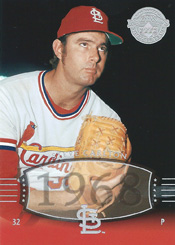
Pete Mikkelsen pitched against the Cardinals in a World Series and, four years later, helped them return to another while revitalizing his career.

On April 22, 1968, in a trade involving four pitchers, the Cubs sent Mikkelsen and Dave Dowling to the Cardinals for Jack Lamabe and Ron Piche.

Mikkelsen, who was a rookie for the Yankees in 1964 when they played the Cardinals in the World Series, appeared in five games for the 1968 Cardinals, who won the National League pennant and advanced to the World Series against the Tigers.

Though Mikkelsen spent most of the 1968 season with the Cardinals’ minor-league Tulsa Oilers affiliate, it turned around his career. Placed in the starting rotation by Tulsa manager Warren Spahn, Mikkelsen developed an effective palmball, a pitch that helped him return to the major leagues in 1969 with the Dodgers and launched him into a successful rebirth as a reliever.

Turnaround in Tulsa

After posting a 7-4 record with 12 saves for the American League champion Yankees in 1964, Mikkelsen appeared in four games for them against the Cardinals in the World Series. He was the losing pitcher in Game 5, yielding a three-run home run to Tim McCarver in the 10th inning. Boxscore

Traded by the Yankees to the Pirates for pitcher Bob Friend in December 1965, Mikkelsen, a right-hander, made 71 appearances for Pittsburgh in 1966 and was 9-8 with 14 saves. In May 1967, Mikkelsen injured his back in a car accident, lost his effectiveness and was claimed on waivers by the Cubs in August.

Mikkelsen opened the 1968 season as a Cubs reliever, but allowed home runs in each of his first three appearances and fell out of favor with manager Leo Durocher.

When the Cardinals acquired him, they assigned Mikkelsen, 28, to Tulsa. On May 5, he made his first start in three years and pitched a five-hit shutout. After posting a 6-2 record and 1.36 ERA for Tulsa, Mikkelsen was promoted to the Cardinals on June 10, 1968.

Short stay

The Cardinals wanted Mikkelsen for their bullpen. He made his Cardinals debut on June 12, 1968, against the Braves in Atlanta and pitched 1.2 scoreless innings in relief of starter Nelson Briles. Boxscore

Mikkelsen’s most impressive outing for the Cardinals came on June 23, 1968, in the first game of a doubleheader against the Braves at St. Louis. Briles started, faced five batters and was lifted without recording an out. Mikkelsen relieved and pitched eight innings, allowing one unearned run and three hits. He also committed two errors. “The fans cheered derisively for Mikkelsen when he fielded a ball cleanly,” the Post-Dispatch reported. Said Mikkelsen: “I never had been cheered by so many people just for making a catch.” Boxscore

When pitcher Dick Hughes came off the disabled list on June 30, the Cardinals returned Mikkelsen to Tulsa, even though he’d yielded only two earned runs in 16 innings (1.12 ERA).

Championship caliber

Back with the Oilers, Mikkelsen was returned to the starting rotation by Spahn. Using the palmball, Mikkelsen pitched like an ace. “I do not have the greatest fastball and I do not have the great curve,” Mikkelsen told the Los Angeles Times. “I have to have something different … My palmball really started doing things.”

Mikkelsen finished with a 16-4 record and 1.91 ERA for Tulsa. He had three shutouts among his 12 complete games. Tulsa won the Pacific Coast League title and Spahn credited Mikkelsen and outfielder Gary Geiger for supplying leadership, The Sporting News reported.

“Mikkelsen has certainly earned another major-league opportunity,” Spahn said.

In October 1968, the Cardinals traded Mikkelsen to the Dodgers for pitcher Jim Ellis. Two Dodgers right-handed relievers, Mudcat Grant and Jack Billingham, were taken by the Expos in the expansion draft and Mikkelsen was acquired to help fill those gaps.

“God didn’t mean for me to be a star,” Mikkelsen said. “I guess He just meant for me to pitch. I am resigned to that fact now. I thought it wasn’t so a few years ago.”

Mikkelsen spent four years (1969-72) with the Dodgers and was 24-17 with 20 saves. In nine big-league seasons, Mikkelsen was 45-40 with 48 saves.

Read Full Post »

Desperate for pitching, the 1943 Athletics turned to Carl Scheib, a 16-year-old with a strong arm. Eleven years later, the 1954 Cardinals, desperate for pitching, took a chance on Scheib, a 27-year-old with a damaged arm.

Scheib finished his major-league career with the Cardinals after a brief, unsuccessful stint with them.

The Cardinals’ pitching in 1954 was so bad they were willing to try just about anything to give the staff a boost. On May 7, 1954, in a creative cash transaction, the Cardinals acquired Scheib from the Athletics on a conditional basis. The Cardinals agreed to give Scheib a look in exchange for a small amount of cash to the Athletics. If the Cardinals kept Scheib for 30 days, they would increase the amount of compensation to the Athletics.

Teen-age wasteland

Scheib, born Jan. 1, 1927, became the youngest player to appear in an American League game when he debuted with the Athletics in the ninth inning of the second game of a doubleheader against the Yankees on Sept. 6, 1943. Boxscore

The 1943 Athletics had the worst pitching staff (4.05 ERA) in the league and the team, managed by Connie Mack, finished in last place at 49-105.

A year later, on June 10, 1944, Joe Nuxhall, 15, became the youngest player to appear in a major-league game when he debuted with the Reds in the ninth inning against the Cardinals.

Scheib pitched for the Athletics from 1943-45 and from 1947-54. His best season was 1948 when he had a 14-8 record and 3.94 ERA with 15 complete games. He also experienced two particularly dreadful seasons in 1950 (3-10 record, 7.22 ERA) and 1951 (1-12, 4.47).

Bargain shopping

When Scheib got to spring training in 1954, it was evident to the Athletics he was experiencing weakness in his right shoulder, according to a biography by the Society for American Baseball Research. After making his final spring training appearance, Scheib didn’t appear in another game for more than a month until given a regular-season start against the White Sox on May 3, 1954. Scheib yielded five runs in two innings and took the loss. Boxscore

Four days later, on May 7, 1954, the Cardinals made the conditional deal to land Scheib.

Cardinals pitchers gave up 34 runs in their last three games prior to acquiring Scheib. The staff would finish the 1954 season with a 4.50 ERA. Their relievers formed the worst bullpen in franchise history.

Cardinals manager Eddie Stanky said Scheib was “the best we could do because we couldn’t get a big-name pitcher without giving up too much playing strength in return.”

Two days after the deal was made, Scheib reported to the Cardinals in Cincinnati and threw pitches to coach Johnny Riddle while Stanky watched. Scheib “showed speed, a sweeping curve and promising knuckler,” the St. Louis Post-Dispatch reported.

Said Reds manager Birdie Tebbetts, a former American League catcher who had faced Scheib often: “Don’t worry about his record. He was with a poor ball club over there. If waivers had been asked on him, I’d have claimed him.”

Short stay

Scheib made his first Cardinals appearance in a start against the Phillies in the second game of a doubleheader on May 16, 1954, at Philadelphia. He struck out the first two batters, but gave up five runs, including back-to-back home runs by Johnny Wyrostek and Del Ennis, in two innings and was the losing pitcher. Boxscore

Cardinals general manager Dick Meyer said catcher Del Rice “didn’t think Scheib was as bad as those five early runs would indicate.”

Scheib was used twice in relief by the Cardinals, pitching two scoreless innings against the Reds on May 22 and yielding a home run to Cubs catcher Joe Garagiola in a stint that lasted two-thirds of an inning on May 24.

By then, the Cardinals decided Scheib wasn’t effective enough to pay additional compensation to the Athletics. On May 27, they returned Scheib to the Athletics. Two days later, the Athletics asked waivers on Scheib for the purpose of giving him an unconditional release.

Unclaimed and free to make his own deal, Scheib signed with the Portland Beavers of the Pacific Coast League. He spent two years (1954-55) with Portland and two more (1956-57) with the San Antonio Missions, managed by future Cardinals coach Joe Schultz, of the Texas League before ending his playing career.

Read Full Post »

Dick LeMay was a pitcher who impressed Carl Hubbell, earned a complete-game win in his first major-league start against Bob Gibson and was the ace on Cardinals minor-league teams managed by Warren Spahn.

Unlike Hubbell, Gibson and Spahn, who were Hall of Fame pitchers, LeMay was a journeyman. Though he pitched in the big leagues for the Giants and Cubs, LeMay spent a significant portion of his playing career in the Cardinals’ system.

LeMay pitched for Cardinals Class AAA clubs during a five-year period (1964-68) when the major-league team won three National League pennants.

Screwball specialist

A Cincinnati native, LeMay, 19, received an offer to begin his professional career with the Reds, but chose to sign with the Giants as an amateur free agent in 1958 because they offered the most money, a $12,000 signing bonus.

LeMay was toiling in the Giants’ system when, in 1961, Hubbell, the organization’s director of player development, scouted him and filed a favorable report. Like Hubbell, who had been a Giants ace in the 1930s, LeMay was left-handed and threw an effective screwball.

“When I looked at LeMay, I discovered he had a good forkball and screwball, wasn’t too fast, but could consistently get his breaking ball over,” Hubbell told The Sporting News.

Backed by Hubbell’s endorsement, LeMay was promoted to the Giants and he made his major-league debut for them on June 13, 1961, with 2.2 innings of scoreless relief against the Dodgers. After two more scoreless relief stints, LeMay got his first big-league start on June 24, 1961, versus the Cardinals at St. Louis.

The game matched LeMay against Gibson, who was in his third big-league season and starting to emerge as a consistent winner.

LeMay shut out the Cardinals until the ninth, when he yielded a run-scoring single to Carl Warwick. Powered by home runs from Orlando Cepeda (a three-run shot off Gibson) and Willie McCovey, the Giants prevailed, 6-1. LeMay got the complete-game win. Gibson went five innings and gave up five runs. Boxscore

Bob Broeg of the St. Louis Post-Dispatch reported LeMay threw “soft breaking stuff with a big motion, using a screwball and forkball more than he did a fast one.”

Appearing with Cardinals broadcaster Harry Caray on a post-game radio show, LeMay said he hoped Giants manager Al Dark “lets me get back in the bullpen. You get in more games that way.”

Ups and downs

After LeMay was shelled for seven runs in 5.2 innings in a start against the Cardinals on July 8, he returned to the bullpen. He got a win against the Cardinals on July 20, with 3.1 innings in relief of starter Sam Jones. LeMay gave up a bases-loaded double to Bill White in the sixth (two of the runs were charged to Jones), but shut out the Cardinals over the last three innings. With the score tied at 6-6 in the eighth, LeMay sparked a four-run rally against Lindy McDaniel by drawing a walk on five pitches. Boxscore

LeMay posted a 3-6 record with three saves and a 3.56 ERA for the 1961 Giants.

He made nine relief appearances for the 1962 Giants and was 0-1 with a 7.71 ERA. The loss came against the Cardinals on Sept. 20 when LeMay was unable to protect a 4-3 lead in the ninth. Boxscore

Upset by the loss, Dark “knocked a box containing three dozen hardboiled eggs off a table and scattered them about the clubhouse,” the Post-Dispatch reported.

After the 1962 season, the Giants traded LeMay to the Colt .45s. Toward the end of spring training in 1963, the Colt .45s (who later became the Astros) dealt LeMay to the Cubs. The Cubs loaned LeMay to the Atlanta Crackers, a Class AAA affiliate of the Cardinals, and he was 3-3 with a 2.22 ERA for that club before being called up by the Cubs. LeMay made nine appearances, three versus the Cardinals, for the 1963 Cubs and was 0-1 with a 5.28 ERA.

Stuck in minors

The Cubs cut loose LeMay and he signed with the Cardinals, who invited him to their 1964 major-league spring training camp as a non-roster player. When the season began, LeMay was assigned to the Class AAA Jacksonville Suns and he did well for them (12-7 record, 2.81 ERA). The Cardinals rewarded LeMay by placing him on their 40-man big-league winter roster, putting him in the mix to earn a relief job in 1965.

Before the start of spring training in 1965, The Sporting News said of the defending World Series champion Cardinals, “The bullpen shapes up pretty well, with Barney Schultz and Ron Taylor as the bellwethers and such men as Bob Humphreys, Mike Cuellar, Fritz Ackley and Dick LeMay available.”

The Cardinals, however, returned LeMay to Jacksonville for the 1965 season and he again did well (17-11, 3.19) for the Suns.

Though he was excelling at the highest level of their farm system, LeMay wasn’t prominent in the Cardinals’ plans. Left-handers such as Steve Carlton and Larry Jaster surpassed LeMay as premier prospects. LeMay, who turned 28 in 1966, spent that season with the Tulsa Oilers, a Cardinals Class AAA club, and was 14-13 with a 4.35 ERA.

In 1967, Spahn, who retired as the all-time leader in wins among left-handed pitchers, became manager of the Oilers. LeMay was Spahn’s most durable starter in 1967 (13-18, 3.48) and 1968 (16-10, 3.29).

After that, LeMay went back to the Cubs organization, pitched two more seasons at the Class AAA level, retired from playing and managed the Class A Quincy (Ill.) Cubs of the Midwest League in 1971 and 1972.

LeMay pitched in 45 major-league games, nine versus the Cardinals. He was 2-1 with a 5.13 ERA against St. Louis. His overall career mark in the big leagues is 3-8 with a 4.17 ERA.

Read Full Post »

(Updated Nov. 25, 2019)

Rusty Staub, who did his best hitting versus right-handed pitchers, and Bob Gibson were matched against one another often. Though Staub didn’t hit Gibson as well as he did most right-handers, he had a couple of significant games while facing the Cardinals’ ace.

Staub had more plate appearances (162) and more at-bats (143) versus Gibson than he did against any other pitcher in his major-league career.

A left-handed batter, Staub played 23 seasons in the big leagues, starting in 1963, when he was 19, with the Houston Colt .45s before they were renamed the Astros. An outfielder and first baseman, Staub also played for the Expos, Mets, Tigers and Rangers.

Staub had career totals of 2,716 hits and 1,466 RBI, with a .279 batting average. Against right-handed pitching, he hit .291. Gibson was among the few right-handers who fared well against Staub, limiting him to a .224 batting average, but Staub was a respected adversary, compiling 32 hits, 16 walks and 15 RBI against him.

Cardinals nemesis

In 256 games against the Cardinals, Staub batted .273, with 226 hits, 109 walks and 102 RBI. He hit .300 or better versus the Cardinals every year from 1966 to 1973. Some of his performances against St. Louis were dominant: .484 batting average and 13 RBI in 1966; .328 and 15 RBI in 1967; and .343 and 15 RBI in 1975.

In a November 2019 interview with broadcaster Dan McLaughlin, longtime Cardinals catcher Ted Simmons said, “If Rusty decided he wasn’t going to strike out, you couldn’t strike him out. I mean, it wasn’t a matter of him trying to foul the ball off. He would put an at-bat on you. Every swing was critical.”

Staub was tough on Cardinals right-handers such as Nelson Briles (.384 batting average against) and Ray Washburn (.327), and one of the left-handers he solved was Steve Carlton (.308). Staub had more RBI (25) versus Carlton than he did against any other pitcher. All four of his career home runs off Carlton came while the pitcher was with the Cardinals.

Staub was 20 when he hit his first home run against a Cardinals pitcher, left-hander Curt Simmons, 35, in 1964.

Another longtime Cardinals left-hander, Ray Sadecki, struck out Staub more times (21) than any other major-league pitcher.

Perfect at plate

On May 1, 1968, Gibson pitched 12 innings, yielding seven hits and no earned runs, in a 3-1 Cardinals victory over the Astros at Houston. Staub gave him the most trouble, with four hits and a sacrifice bunt in five plate appearances.

“You can’t trick Staub,” Gibson said to the St. Louis Post-Dispatch.

Said Cardinals center fielder Curt Flood: “Staub has a good, short stride and he seems to know what kind of pitch is coming.”

Staub, batting in the cleanup spot, produced three singles and a double.

Explaining how Gibson relied on fastballs and sliders, Cardinals catcher Johnny Edwards said, “I think Gibby threw two curves all night and the only changeup was the one Rusty Staub hit up the middle (in the fourth) for a single.”

In the Astros’ half of the 11th, with the score tied at 1-1, Jim Wynn drew a leadoff walk. Staub was up next, and even though he was perfect at the plate against Gibson, Astros manager Grady Hatton instructed him to bunt. Staub executed, moving Wynn into scoring position at second base.

After Doug Rader struck out, Cardinals manager Red Schoendienst ordered Gibson to walk John Bateman to get to Denis Menke, a career .184 batter versus Gibson. Menke grounded into a forceout. Boxscore

Sweet swing

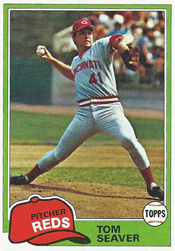
Seven years later, on April 23, 1975, Gibson was matched against Mets ace Tom Seaver in a game at New York. Staub was with the Mets then.

In the fifth, with the Cardinals ahead, 1-0, Jack Heidemann singled against Gibson and moved to second on Jerry Grote’s single. With Seaver at the plate, Gibson made a pickoff throw to second baseman Ted Sizemore. Sizemore applied a tag, but umpire Tom Gorman ruled Heidemann safe.

“He never got to the bag,” Sizemore complained.

After Seaver grounded out, Wayne Garrett walked, loading the bases, and Felix Millan hit a two-run double. After an intentional walk to Del Unser, reloading the bases, Staub came up, swung at Gibson’s first pitch, a fastball, and walloped it for a grand slam. The Mets won, 7-1.

“I’ve always said the key to hitting is to have men on base,” Staub said to The White Plains Journal News. “It doesn’t matter who bats behind you in the batting order. It matters only if men are on base in front of you and you can get a pitch to hit.”

Said Gibson: “I was having control problems and when you have control problems you don’t throw the same.” Boxscore

The grand slam was the sixth of nine Staub hit in the big leagues. Two other future Hall of Fame pitchers, Rollie Fingers and Dennis Eckersley, also yielded grand slams to Staub.

Read Full Post »

Lance Lynn was a prolific winner, a strikeout artist and a durable starter for the Cardinals, but, for all his attributes, the feat he struggled most to accomplish was pitching a complete-game shutout.

Lynn had a regular-season career record of 72-47 for the Cardinals, struck out 919 batters in 977.2 innings and pitched 175 innings or more in each of his last five active seasons with the club.

Though he made 161 regular-season starts for St. Louis, Lynn pitched only one complete-game shutout. That occurred on May 27, 2014, against the Yankees at St. Louis.

Sink or swim

Lynn, a right-hander who reached the major leagues with the Cardinals in 2011, won Game 3 of the 2011 World Series, became a full-fledged member of the starting rotation the following season and posted records of 18-7 in 2012 and 15-10 in 2013.

In 2014, he took a 5-2 record into his start against the Yankees at Busch Stadium.

Facing the Yankees for the only time in his big-league career, Lynn got them to hit into 15 groundouts. “They were caught off guard by the sinker and didn’t expect me to use it as much as you can,” Lynn said to the St. Louis Post-Dispatch. “I elevated later in the game to get fly balls when I needed it.”

The Yankees got five hits and three walks, but were 0-for-9 with runners in scoring position. “We squared some balls up,” Yankees manager Joe Girardi said to Newsday. “We had some chances to score a few runs.”

Cardinals hitters supported Lynn with four runs in the third and a run each in the fifth and seventh. Allen Craig and Matt Holliday each hit a solo home run.

Elusive goal

Lynn threw 116 pitches in eight innings. Manager Mike Matheny usually would relieve a pitcher at that point, but, knowing how much Lynn wanted a chance at a shutout, Matheny and Lynn reached a compromise. Matheny let Lynn start the ninth, but told him he would be lifted if a batter reached base.

Lynn retired the Yankees in order on 10 pitches, getting Yangervis Solarte and Alfonso Soriano to ground out and Brian Roberts to fly out. Boxscore

“Since my first day in the major leagues, that’s your goal, always to throw a complete-game shutout,” Lynn said. “Every time you go out there, that’s your goal _ not give up any runs and finish it. Took me way too long.”

Matheny told The Sports Xchange, “Everyone on the bench knew how much this meant to him. You could tell how long and hard he’d worked to make this happen. You could see the reaction of his teammates.”

Read Full Post »

« Newer Posts - Older Posts »