Feeds:
Posts
Comments

Archive for the ‘Pitchers’ Category

Delivering pitches with a motion that resembled someone cracking a whip, Jim Donohue was a top prospect in the Cardinals’ system.

In 1960, Donohue, a St. Louis native and graduate of Christian Brothers College High School, made a strong bid for a spot on the Cardinals’ Opening Day roster, but fell short of achieving the goal.

Instead, two months later, the Cardinals traded him.

Though he never pitched for the Cardinals in the regular season, Donohue did play two years in the major leagues with three American League teams.

Career choice

Donohue, son of a policeman, was a teammate of Mike Shannon, future Cardinals player and broadcaster, at Christian Brothers.

In June 1956, Donohue graduated from high school and signed with the Cardinals for $4,000.

Asked years later by reporter Jack Herman about the decision to pursue a baseball career rather than follow his father into law enforcement, Donohue replied, “I’d rather pitch than get shot at.”

Donohue, 17, made his professional debut with the 1960 Gainesville (Fla.) G-Men, a Class D club in the Cardinals’ system.

His breakout season _ the one that put him in the top tier of prospects _ occurred two years later, 1958, with the York (Pa.) White Roses, a Class A club managed by Joe Schultz.

Donohue was 7-0 with a 1.48 ERA for York.

Moving up

Impressed, the Cardinals promoted Donohue to their Class AA team, the Houston Buffaloes, in June 1958. In his Houston debut, Donohue pitched a two-hitter in a 4-0 shutout win over the Dallas Rangers. He struck out 11.

In October 1958, Donohue was invited to join other top Cardinals prospects in the Florida Instructional League. Donohue and Gordon Richardson were cited by The Sporting News as “fledgling Cards pitchers from whom much is expected.”

Donohue opened the 1959 season with the Rochester Red Wings, but soon after was sent to St. Louis’ other Class AAA club, the Omaha Cardinals, where he was reunited with manager Joe Schultz. Donohue joined a staff that included other elite pitching prospects such as Bob Gibson and Ray Sadecki.

In July 1959, Donohue pitched a two-hitter for Omaha in a 4-0 triumph over the Minneapolis Millers. Donohue retired 18 consecutive batters until Chuck Tanner singled.

“Manager Joe Schultz’s faith in young Jim Donohue is reaping rich rewards for Omaha,” The Sporting News wrote.

Said Schultz: “He’s got quite a future.”

Donohue had a 2.39 ERA in 28 appearances for Omaha. After the season, St. Louis placed Donohue on its big-league winter roster.

The Whip

During that off-season, Donohue participated in workouts at the St. Louis University gym with fellow area residents Stan Musial, Ken Boyer and Joe Cunningham of the Cardinals.

Donohue reported to 1960 spring training at St. Petersburg, Fla., determined to earn a spot on the big-league pitching staff.

At 6 feet 4 and 175 pounds, Donohue had a “buggy whip” delivery that reminded many of another right-hander, Ewell Blackwell, who had been an all-star with the Reds in the 1940s.

“Jim is rough on right-handed swingers,” Sadecki said. “He throws everything downstairs. They call him The Whip and I guess he is the closest thing to Blackwell in both physique and delivery to come along in several years.”

Sal Maglie, who ended his pitching career with the 1958 Cardinals and stayed with the organization as a scout and instructor in 1959, worked with Donohue to develop a slider to use against left-handed batters.

After Donohue had several effective outings early in 1960 spring training, Cardinals general manager Bing Devine called him the “sleeper” of training camp.

However, in April, just before the Cardinals opened the season, Donohue was sent to Rochester.

“I thought I was going to make it with the Cardinals,” Donohue said.

Big time

Donohue was 4-2 with a 4.03 ERA for Rochester. On June 15, 1960, 30 minutes before the trade deadline, the Cardinals dealt Donohue and outfielder Duke Carmel to the Dodgers for outfielder John Glenn.

In reporting the trade, the Post-Dispatch described Donohue as a “highly regarded pitching prospect who almost stuck with the varsity in the spring” and “rated among the top Cardinals farmhands.”

The Dodgers assigned Donohue to their Class AAA club, the St. Paul Saints, and he spent the rest of the 1960 season there.

In December 1960, the Tigers took Donohue in the minor-league draft. He pitched well at training camp and opened the 1961 season on the Tigers’ Opening Day roster.

Donohue made his big-league debut in the Tigers’ season opener on April 11, 1961. He pitched two scoreless innings of relief against the Indians. Boxscore

On April 23, the Tigers and Angels played a doubleheader at Detroit. Donohue got his first big-league save in the opener and his first big-league win in the second game.

In the ninth inning of the first game, the Angels had the bases loaded, one out, when Tigers manager Bob Scheffing turned to Donohue to protect a 3-1 lead. Donohue retired pinch-hitters Ken Hunt and Leo Burke on pop-outs. Boxscore

In Game 2, Donohue relieved Jim Bunning in the 11th, pitched a scoreless inning and got the win when the Tigers scored in the bottom half of the inning. Boxscore

“Donohue looked good in Florida near the end (of camp),” Scheffing said. “We had a feeling he would be a big help.”

Baseball man

Donohue was 1-1 with one save and a 3.54 ERA when the Tigers traded him to the Angels in June 1961. He got into 38 games with the 1961 Angels and was 4-6 with five saves and a 4.31 ERA.

In 1962, his last season in the majors, Donohue pitched for the Angels and Twins. His combined record for those teams was 1-1 with one save and a 4.67 ERA in 18 appearances.

Fifty-five years later, Donohue’s obituary in the Post-Dispatch noted, “His love for baseball continued throughout his lifetime.”

Previously: Clyde King mentored young Cardinals of 1960s
Read Full Post »

Consistently confrontational, Al Hrabosky was involved in controversy right down to his very last homestand as a Cardinals pitcher.

In 1977, Hrabosky, the so-called “Mad Hungarian,” was involved in a series of incidents, including feuding publicly with manager Vern Rapp, getting suspended by the club for refusing to meet with the manager and incurring the wrath of team owner Gussie Busch by defying a ban on facial hair.

Hrabosky also sparked an on-field brawl in May that year when he hit Cesar Cedeno of the Astros with a pitch.

On Sept. 26, 1977, Hrabosky capped his tumultuous season by throwing a pitch at the head of Warren Cromartie of the Expos in the opening game of the Cardinals’ final homestand.

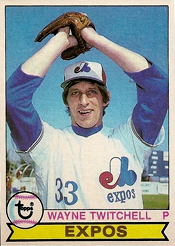
An Expos pitcher, Wayne Twitchell, peeved by what he perceived to be an intentional assault of his teammate, waited outside the Cardinals’ clubhouse to confront Hrabosky after the game.

Tough ninth

The Expos and Cardinals entered the ninth inning of the Monday night game at St. Louis with the score tied at 5-5. Among the highlights to that point were Garry Templeton’s two-run inside-the-park home run against Twitchell in the sixth and Gary Carter’s three-run home run for the Expos in the seventh against Eric Rasmussen.

Rawly Eastwick yielded singles to the first four Expos batters in the ninth. The last of those consecutive hits, by Ellis Valentine, drove in a run and put the Expos ahead, 6-5.

With the bases loaded and none out, Hrabosky relieved Eastwick.

The first batter he faced, Carter, pulled a curveball to left for a single, scoring two and giving the Expos an 8-5 lead.

“The count was 2-and-2 and he had just blown one by me,” Carter said to the Associated Press. “I consider myself a fastball hitter and I was surprised to get the curve. He got it up some and I waited for it.”

Danger zone

Next up was Cromartie. Hrabosky threw a fastball that sailed directly toward Cromartie’s head. Cromartie raised his arm to protect his face and the ball struck his right wrist.

“If he hadn’t got his hand up, it would have hit him right here,” Expos manager Dick Williams, pointing to his temple, said to the St. Louis Post-Dispatch.

Valentine tried to charge from the dugout to the mound to get at Hrabosky, but he was restrained by teammates. Players from both clubs gathered on the field but no fights erupted and no one was ejected.

“He threw at him,” Valentine said. “Everybody on the ball club knew it.”

Hrabosky stayed in the game and completed the inning. The Expos added a run on a sacrifice fly by pitcher Don Stanhouse. The Cardinals failed to score in their half of the ninth and the Expos won, 9-5. Boxscore

Face to face

Hrabosky exited the dugout through a hallway to the clubhouse. As he approached the clubhouse door, he was surprised to see Twitchell there.

Twitchell, 6 feet 6, 215 pounds, pointedly told Hrabosky, 5 feet 11, 185 pounds, that hitting Cromartie with a pitch right after yielding a two-run single to Carter “was very poor timing.”

“I asked what the hell he thought he was doing,” Twitchell said. “He said it was unintentional.”

Several Cardinals had gathered in the hallway on their way to the clubhouse. “I was drastically outnumbered,” Twitchell said.

Asked whether he was seeking a fight, Twitchell said, “If that’s what it came to, but he wouldn’t swing.”

Twitchell departed and went to the Expos clubhouse.

“He hung a pitch and Carter gets a hit,” Twitchell said of Hrabosky. “Now he’s going to take it out on the next hitter? If you are going to brush back a hitter, there’s no worse place you can put the ball.”

Hrabosky declined to comment to reporters.

Said Cardinals manager Vern Rapp: “There was no intent. What does a guy want to hit him for with two men on and nobody out?”

Hrabosky pitched in three more games for the Cardinals. After the season, he was traded to the Royals.

Previously: Bake McBride was a menace against Wayne Twitchell

Previously: Gary Carter and his two 5-RBI games against Cardinals

Read Full Post »

(Updated Nov. 27, 2021)

Facing a collection of arms ranging from a 15-year-old making his big-league debut to a 36-year-old batting practice pitcher, the 1944 Cardinals became the first team in the majors to achieve two shutout wins by margins of 16 runs or more in the same month.

On June 10, 1944, the Cardinals beat the Reds, 18-0. Two weeks later, on June 24, the Cardinals beat the Pirates, 16-0.
Both of the lopsided June shutout victories by the 1944 Cardinals occurred on Saturday afternoons and in road games _ at Cincinnati and at Pittsburgh.

The Cardinals had a total of 43 hits _ one home run _ in the two games.

Stan Musial contributed seven hits in nine at-bats with four walks.

Mort Cooper pitched the shutouts: a five-hitter and a three-hitter.

Reaching base

The Cardinals’ game against the Reds took place at Crosley Field four days after the Allies launched the D-Day invasion in France. The game attracted 3,510 cash customers, 318 servicemen and 1,641 youths from the Knothole baseball program.

Though the Cardinals had 21 hits and received 14 walks, the game was completed in a relatively brisk 2:23.

Musial had three singles, three walks, three RBI and scored four times.

The Cardinals had 19 singles and two extra-base hits. Eighth-place batter George Fallon and leadoff man Johnny Hopp each doubled.

St. Louis stranded 18 base runners, tying a major-league record.

The 18-0 score was the most lopsided shutout win in the National League since 1906 when the Cubs beat the Giants, 19-0, the St. Louis Post-Dispatch reported.

Hey, Joe

With the Cardinals ahead, 13-0, Reds manager Bill McKechnie had Joe Nuxhall, 15, make his major-league debut in the ninth inning.

With their pitching staff depleted because of military service, the Reds had signed Nuxhall that year. His parents agreed to let him join the club for home games. Because he wasn’t old enough to drive, Nuxhall took a 30-minute bus ride from his home in Hamilton, Ohio, to Crosley Field for the games, according to the Washington Post.

Nuxhall, in the dugout while the Reds prepared to bat in their half of the eighth inning, heard McKechnie call out, “Joe!”

“I said to myself, ‘He can’t be talking to me,’ ” Nuxhall told Cincinnati TV station WCET in 2005. “We had a couple of Joes on the ball club. And he says ‘Joe!’ a little louder. I looked and he said, ‘Go warm up.’ ”

Nuxhall, wearing borrowed cleats, grabbed a glove and started up the dugout steps to head to the bullpen.

“I was scared to death,” Nuxhall recalled in a 1994 interview with the Associated Press. “I got all shook up and tripped over the top step and fell flat on my face in the dirt. It was embarrassing.”

After the Reds batted in the eighth, Nuxhall took the mound to pitch the ninth, becoming the youngest player to appear in a major-league game.

“I was kind of in awe of these guys, the way they were hitting line drives,” Nuxhall said of the Cardinals.

Cardinals shortstop Marty Marion told journalist Bob Fulton, “We didn’t know he was 15 years old. Didn’t hear it mentioned even.”

Wild thing

Nuxhall threw wildly but was managing his way through the inning. Of the first four batters he faced, Nuxhall walked two and retired two on infield outs.

Runners were on first and second when Musial stepped to the plate.

“Probably two weeks prior to that, I was pitching against seventh-, eighth- and ninth-graders, kids 13 and 14 years old,” Nuxhall said. “All of a sudden, I look up and there’s Stan Musial … It was a very scary situation.

“By that time, I was all over the place (with my pitches). It wasn’t two inches outside. It was high and inside, high and outside, bouncing pitches. When (Musial) walked up there, I guess he thought I was a needle threader. My first pitch, he just lined to right. Hit it hard.”

Musial’s single loaded the bases.

Unnerved, Nuxhall walked the next three batters, leading to three runs, and yielded a two-run single to Emil Verban.

McKechnie went to the mound _ “I believe he said, ‘Joe, that’s enough,’ ” Nuxhall recalled _ and took him out of the game after he yielded five runs in the inning. Boxscore

“What the cash customers saw in the ninth didn’t exactly meet with their hearty approval,” the Cincinnati Enquirer wrote of Nuxhall’s debut.

Said Nuxhall: “Those people that were at Crosley Field that afternoon probably said, ‘Well, that’s the last we’ll see of that kid.’ ”

After his debut, Nuxhall wouldn’t pitch in the big leagues again until 1952 at age 23. He went on to play 16 seasons in the majors, earning 135 wins, and later became a beloved broadcaster for the Reds.

Hit parade

Two weeks after their trouncing of the Reds, the Cardinals were at Forbes Field against the Pirates, and Ray Sanders led the attack with a single, double, home run and two walks. He drove in three and scored twice.

Musial had four hits _ three singles and a double _ and a walk. He scored twice and had a RBI.

The Cardinals used 22 hits and seven walks for their 16 runs. They stranded 14. The game was completed in a snappy 2:02 before 4,899 paying spectators. Cooper limited the Pirates to three singles.

Xavier Rescigno, who relieved Pirates starter Fritz Ostermueller with none out in the second, gave up 17 hits and 10 runs in seven innings.

With the score 15-0, “it finally reached such a stage that (Pirates) manager Frankie Frisch sent Joe Vitelli, his batting practice pitcher, to the mound to hurl the ninth,” the Post-Dispatch reported.

Vitelli, 36, yielded back-to-back doubles to pinch-hitter Pepper Martin, 40, and Sanders for the final run. Boxscore

Previously: How Giants beat John Tudor, Cardinals, 21-2

Read Full Post »

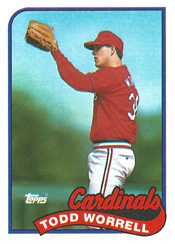
In the thick of a pennant race, Cardinals manager Whitey Herzog put pitcher Todd Worrell in right field in the ninth inning of a one-run game.

The move worked.

Ken Dayley, brought in to relieve Worrell and pitch to one batter, got an out. Worrell then returned to the mound and retired the last two batters, earning a save and preserving a Cardinals victory over the Phillies at St. Louis.

Herzog’s unorthodox maneuvering displayed the creativity and courage that helped make him a championship manager with the Cardinals. It also showed the confidence Herzog had in his players.

Mix and match

On Sept. 22, 1987, the Cardinals were looking to build their lead in the National League East Division with two weeks remaining in the regular season. Cardinals starter Danny Cox was matched against Shane Rawley of the Phillies.

With the Cardinals ahead, 3-1, Worrell relieved Cox with two outs, one on, in the eighth and retired Chris James on a force play.

In the ninth, Mike Schmidt led off with a home run against Worrell, getting the Phillies within a run at 3-2.

With Von Hayes, a left-handed batter with extra-base potential, up next, Herzog brought in Dayley, a left-handed pitcher, to face him.

Herzog wanted to keep Worrell in the game because Rick Schu, a right-handed batter, followed Hayes in the order. Herzog removed right fielder Lance Johnson and replaced him with Worrell.

Stand and watch

“I think Todd’s my best right fielder,” Herzog said to the St. Louis Post-Dispatch. “No kidding. He can play the … outfield.”

Said Cardinals second baseman Tommy Herr: “Todd is a good outfielder. He shags balls before the game and looks good. It’s not like he doesn’t have a clue out there.”

Still, Dayley didn’t want Hayes to pull a ball into right field. He threw pitches down and away. Hayes chased after those and struck out.

With that mission accomplished, Herzog lifted Dayley, put Worrell back to pitch and brought in outfielder John Morris off the bench to play right field.

“I didn’t get to use my blazing speed,” Worrell said of his uneventful stint in right.

Keep ’em guessing

It was the third time Herzog as Cardinals manager had sent a pitcher to the outfield, but the first time he brought that player back to the mound. In each of the other two times, the inning ended with the pitcher in the outfield.

“Just when you think you’ve seen it all, something else pops up,” Morris said.

When Dayley returned to the dugout, pitcher Bob Forsch asked him, “How does it feel to be replaced by the right fielder?”

Worrell got Schu to ground out for the second out of the inning. The next batter, Darren Daulton, lined out to shortstop Ozzie Smith.

The 3-2 victory gave the Cardinals four wins in a row and moved them 3.5 games ahead of the second-place Mets with 12 to play. Boxscore

Previously: Needing a strike for a save, Ken Dayley got hook instead

Read Full Post »

Though they entered September with a 10-game lead over their closest pursuer, making a pennant a virtual given, the Cardinals reacted with an outpouring of giddy wonderment on the night they clinched the 1967 National League championship.

The 1967 Cardinals were a diverse blend of proud, talented professionals who liked and respected one another. They played smart, tough, fundamentally sound baseball. Winning a title together unleashed a flow of emotions.

On Sept. 18, 1967, the Cardinals, behind the pitching of Bob Gibson, beat the Phillies, 5-1, at Philadelphia. The victory gave the Cardinals a 95-56 record with 11 games left. Even if the Cardinals lost all 11 and the second place Giants (81-68) won all 13 of their remaining games, the Cardinals couldn’t be caught.

“It’s been a great-spirited club,” Cardinals general manager Stan Musial told Philadelphia Daily News columnist Stan Hochman. “It never gave up. It met all the challenges.”

Winning combination

The Cardinals went into the Monday night game at Connie Mack Stadium knowing a win would secure a pennant. Gibson, making his third start since recovering from a broken bone in his right leg, was matched against Dick Ellsworth and they engaged in a scoreless duel through five innings.

Dal Maxvill got the Cardinals’ first hit, a leadoff single in the sixth, moved to second on Gibson’s sacrifice bunt and scored on Lou Brock’s double.

Julian Javier followed with a single to left, driving in Brock and putting the Cardinals ahead, 2-0. When the throw from left fielder Tony Gonzalez carried to the plate in an unsuccessful bid to nail Brock, Javier moved to second. After Curt Flood struck out, Ellsworth issued an intentional pass to Orlando Cepeda.

Mike Shannon foiled that strategy with a double down the left-field line. Javier scored and Cepeda went to third. Gonzalez threw to second, trying to nab Shannon, but second baseman Cookie Rojas cut off the throw and fired to third, hoping to catch Cepeda. The peg was wild and sailed past third baseman Tony Taylor. Cepeda scored, giving the Cardinals a 4-0 lead.

Gibson retired the last nine consecutive Phillies batters, completing a three-hitter. Boxscore

Letting loose

Inside the cramped visitors’ clubhouse, the Cardinals uncorked bottles of Great Western champagne. They drank from paper cups and doused each other with champagne and beer.

“They looked like college kids after an upset victory, not pros at the end of a runaway pennant race,” observed columnist Frank Dolson of the Philadelphia Inquirer. “Geysers of champagne soaked players and visitors. The new National League champions screamed and chanted and went beserk.”

As the champagne flowed, players carried onlookers, fully clothed, into the showers. Broadcaster Jack Buck and manager Red Schoendienst were among the first to get impromptu showers. Then it was Musial’s turn. With Roger Maris grabbing one arm and Phil Gagliano gripping the other, Musial, wearing a suit, was lifted into the showers as he pleaded, “No, no.”

“He emerged moments later drenched from head to foot,” Dolson wrote.

The revelry lasted more than an hour before the Cardinals gathered themselves and headed to a post-game dinner and party hosted by team owner Gussie Busch at Old Bookbinders restaurant in downtown Philadelphia.

Unity and likeability

Cardinals players cited three factors for the success of the 1967 team: 1. Unity and likability. 2. Fundamental soundness in all skillsets. 3. Contributions from younger, or less experienced, pitchers.

“I can’t remember ever having as much fun in my life playing baseball as this year,” Flood said.

Said Cepeda: “I never had so much fun in my life. Never. There are a lot of beautiful people on this ball club.”

Cepeda, acquired from the Giants in May 1966, and Maris, acquired from the Yankees in December 1966, fit well with key holdovers from the 1964 World Series champion Cardinals: Brock, Flood, Gibson, Javier, Maxvill, Tim McCarver and Shannon.

“Orlando has helped to make this ball club jell _ out on the field and in here (the clubhouse),” Flood said. “He fit in so well it is hard to remember what it was like when he wasn’t here.”

Regarding Maris, Flood said, “He’d offer you the shirt off his back and be mad if you didn’t take it. Roger is not an introvert by any means. He’s fun. A lot of fun.”

Fundamental soundness

“This club has pitching, defense, offense, speed,” Cepeda told Bill Conlin of the Philadelphia Daily News. “We can beat you so many ways.”

Flood: “We were very versatile. We didn’t have to wait around for someone to hit a home run. Lou Brock could walk, steal second and someone would single him home and we had a run.”

Maris: “The biggest thing was attitude. We had guys who felt they could hit any pitcher, any time.”

McCarver: “We had unselfish hitters and selfish pitchers. That’s right. They refused to give up any runs.”

Emerging pitching

Among the young pitchers who delivered for the 1967 Cardinals were Nelson Briles, 24, (14 wins); Steve Carlton, 22, (14 wins); Larry Jaster, 23, (nine wins); and Ron Willis, 24, (10 saves and six wins). Also, Dick Hughes, 29, a rookie, had a team-high 16 wins.

Cardinals reliever Hal Woodeshick credited pitching coach Billy Muffett.

“It was Muffett who changed Dick Hughes and Nellie Briles to the no windup delivery,” Woodeshick said to the St. Louis Post-Dispatch. “Muffett brought along Steve Carlton, too, and he changed Ron Willis to sidearm. He had to have the young pitching come through after we left spring training, or we had nothing. They ought to triple Muffett’s pay.”

Said Musial: “The young pitching made the difference.”

Previously: How Cardinals took a chance on Roger Maris


Read Full Post »

(Updated Jan. 4, 2025)

In the last game the Cardinals played in Brooklyn, they faced a pair of 21-year-old emerging aces: Don Drysdale and Sandy Koufax.

Drysdale was effective; Koufax was not. They were two of six future Hall of Famers who played against the Cardinals on Aug. 25, 1957, at Ebbets Field. The others were Roy Campanella, Gil Hodges, Pee Wee Reese and Duke Snider.

Stan Musial, who a decade earlier got his nickname, “The Man,” from Dodgers fans, was injured and didn’t play for the Cardinals in their Ebbets Field finale. In the book “We Would Have Played For Nothing,” Dodgers pitcher Ralph Branca said of Musial, “Those fans in Brooklyn … used to give him a standing ovation. He got more cheers than the Dodgers because they respected his ability.”

Musial, who batted .359 with 223 hits in 163 career games in Brooklyn, hurt his left shoulder on Aug. 22 at Philadelphia. X-rays revealed a chip fracture in his shoulder blade.

“We’re a different ballclub, not nearly as dangerous, without Stan Musial in there,” Cardinals manager Fred Hutchinson told the St. Louis Post-Dispatch.

Sentimental journey

Though a move to Los Angeles for the 1958 season wasn’t official, it was widely known the Dodgers intended to leave Brooklyn, barring an 11th-hour deal for a new ballpark. The Dodgers planned to follow the Giants, who had announced their plans to depart New York for San Francisco after the season.

Ebbets Field had been the site of epic Cardinals-Dodgers games, especially in the 1940s when the two franchises accounted for seven National League pennants in a nine-year span from 1941-49.

The 1957 Cardinals were in the middle of a 22-game road trip that began Aug. 13 and would take them to Chicago, Milwaukee, New York, Philadelphia, Brooklyn, Pittsburgh, Chicago again and Cincinnati before ending Sept. 3.

A crowd of 10,883 turned out for the Cardinals’ farewell appearance at Brooklyn. A mist fell and wind whipped through Ebbets Field, bringing a raw feel to an atypical summer Sunday.

The game matched Drysdale against Sam Jones.

After retiring the first two batters, Drysdale walked Joe Cunningham and Wally Moon and plunked Ken Boyer with a pitch, loading the bases. He escaped unscathed by striking out Del Ennis.

Drysdale held the Cardinals hitless until Moon led off the fourth with a double.

Powered by Gil Hodges, who reached Jones for a two-run homer and RBI-double, the Dodgers led, 6-2, through seven.

Comeback bid

In the eighth, Moon drove in a run with a single, making the score 6-3 and knocking out Drysdale. Ed Roebuck relieved.

In the ninth, the Cardinals got within two, 6-4, on a Don Blasingame double that scored Bobby Smith and moved Dick Schofield to third.

With one out, Al Dark came to the plate, looking to drive in the runners from second and third and tie the score. Instead, Dark grounded out to Roebuck and the runners held. Disgusted, Dark flung his batting helmet into the dugout.

Plate umpire Augie Donatelli, thinking the player was upset with him, ejected Dark. “I resent Donatelli’s mind-reading act,” Dark said.

With Cunningham due next, Dodgers manager Walter Alston wanted a left-handed pitcher, so he removed Roebuck and brought in Koufax.

Hutchinson countered, sending Hal Smith, a right-handed batter, to face Koufax.

Old pro

Koufax walked Smith, loading the bases. The next batter, Moon, also walked, forcing in a run and making the score 6-5.

With the bases still loaded, Alston pulled Koufax and replaced him with a starter, Sal Maglie. Making his first relief appearance since May, Maglie, 40, was brought in to face Ken Boyer. Mixing guile with skill, Maglie struck out Boyer on three pitches, clinching the victory. Boxscore


Read Full Post »

« Newer Posts - Older Posts »