Feeds:
Posts
Comments

Archive for the ‘Trades’ Category

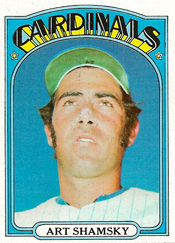
A St. Louis homecoming was neither sentimental nor successful for Art Shamsky.

On Oct. 18, 1971, Shamsky was the best-known name among the four players the Cardinals acquired in a trade with the Mets. The Cardinals sent pitchers Harry Parker and Chuck Taylor, first baseman-outfielder Jim Beauchamp and infielder Chip Coulter to the Mets for Shamsky and pitchers Jim Bibby, Rich Folkers and Charlie Hudson.

Bibby would develop into a successful starting pitcher for the Rangers, Indians and Pirates, and Folkers became a reliable reliever for the Cardinals, but at the time of the deal neither was a prominent player. Bibby had no big-league experience and Folkers had spent part of one season in the majors.

Shamsky, born in St. Louis and raised in suburban University City, was an outfielder and first baseman who hit with power from the left side. He helped the Mets become World Series champions in 1969. The Cardinals projected him to be a pinch-hitter and role player for them in 1972, but it didn’t work out.

Cardinals fan

In his book, “The Magnificent Seasons,” Shamsky said of his boyhood in the St. Louis area, “My life was basically two things: Following the St. Louis Cardinals, or playing baseball with my friends.”

Shamsky’s favorite Cardinals player was Stan Musial and he’d ride a streetcar to the original Busch Stadium to see him play.

Starting at age 8, Shamsky played Khoury League youth baseball for the John C. Roberts Shoe Co. team managed by Milton Mandel. “Art was so small when we first got him,” Mandel told the St. Louis Post-Dispatch, “that we used him as leadoff man in hopes he’d be walked. I never thought he’d sprout the way he did.”

According to the Dayton Daily News, Shamsky “paid his own expenses to the Cardinals’ rookie camp in St. Petersburg when he was still in high school, but he was turned back as a kid who was too skinny and lacked power.”

What the Cardinals didn’t count on, the Dayton newspaper noted, was “the development of his wrists and fast hands.”

Regarding those quick wrists, Shamsky told the Post-Dispatch, “I strengthened them by working out a lot, playing handball and squeezing rubber balls.”

After graduating from University City High School at age 16 in 1958, Shamsky attended the University of Missouri for one year. Though the Cardinals made an offer, the Reds signed him in September 1959. The next season, his first in the minors, Shamsky was a roommate of Pete Rose, according to the Society for American Baseball Research.

Power source

On April 17, 1965, Shamsky, 23, made his big-league debut for the Reds in his hometown. Pinch-hitting at Busch Stadium, he struck out against Cardinals ace Bob Gibson. Boxscore

Two months later, Shamsky beat the Cardinals with a home run to the Busch Stadium pavilion roof versus Gibson. Boxscore

“Shamsky has a smooth, easy stroke,” the Post-Dispatch reported. “He ties into the ball well because of his quick, strong wrists.”

According to the Cincinnati Enquirer, Shamsky was a hitter “who many say can whip the bat as quick as the great Ted Williams.”

In 1966, Shamsky hit 21 home runs, including four in consecutive plate appearances. The first three came on Aug. 12 at Cincinnati when the lanky slugger entered a game against the Pirates in the eighth inning. Each time Shamsky batted, the Reds were behind. One of his home runs put them ahead and the other two tied the score. Boxscore

“That was the greatest clutch-hitting performance I ever saw,” Pete Rose said to the Dayton Daily News.

The next time Shamsky batted, on Aug. 14 against the Pirates, he hit another home run, giving him four in a row. Boxscore

“His power comes from his wrists rather than his arms or body,” Dayton columnist Si Burick observed. “If he depended on his biceps or any other part of his body, he would be working in an office.”

Aching back

In November 1967, Mets president Bing Devine acquired Shamsky from the Reds. A month later, Devine replaced Stan Musial as Cardinals general manager.

After platooning with Cleon Jones in left field for the Mets in 1968, Shamsky experienced back problems in 1969 and opened the season on the disabled list.

In his book, “After the Miracle,” Shamsky said, “The pain was so bad that I honestly wondered if I was ever going to play again.

“To make matters worse, I would get hooked on Percocet, an opioid analgesic, relying on the pills when I started playing again and taking sleeping pills at night.”

Shamsky batted .300 with 14 home runs in 100 games for the 1969 Mets, who won the World Series championship. He also hit .538 (with seven hits) in the National League Championship Series against the Braves. Video

After hitting .293 in 1970, Shamsky’s back woes intensified and he had a .185 batting mark in 1971.

“I’ve been to so many different doctors, chiropractors and osteopaths for my back pain,” Shamsky said in his book. “I once saw a doctor who stuck cotton swabs of cocaine up my nose to deaden my nerves.

“I desperately wanted to keep playing ball.”

City slicker

Though Devine made the trade to acquire Shamsky for a second time and bring him to the Cardinals, he told the Post-Dispatch, “It’s a major deal only from the standpoint of numbers.” Or, as the New York Daily News noted, it was a trade “more distinguished for the quantity than the quality.”

Shamsky, a New York City resident who partnered with former Yankees infielder Phil Linz in owning two nightclubs there, was described by the New York Times News Service as “thoroughly modern Manhattan.”

Shamsky didn’t attempt to cloak his feelings about the trade. “To be honest,” he said to the Post-Dispatch, “my home is now in New York and I have two businesses there, so I’d rather have stayed in New York.”

The back problems followed Shamsky from New York to Cardinals spring training camp. After hitting .190 in Grapefruit League games, Shamsky was released by the Cardinals before the 1972 season began.

He played briefly in 1972 for the Cubs and Athletics, failed to hit with either, and was finished as a player at age 30.

Shamsky’s career batting average in the majors was the same as his career batting average versus the Cardinals: .253.

He was at his best against right-handers, hitting .417 (10 hits) against Don Drysdale and .350 (14 hits) versus Jim Bunning. Shamsky also hit four home runs, including a grand slam, against the Cardinals’ Nelson Briles.

Read Full Post »

On the verge of giving up hope of reaching the major leagues, Ron Allen persevered and was given a chance by the Cardinals.

On Sept. 15, 1971, in a swap of minor-leaguers, the Cardinals acquired Allen from the Mets for third baseman Bobby Etheridge.

A switch-hitting first baseman, Ron Allen was the younger brother of big-leaguers Dick Allen and Hank Allen.

Dick Allen was a slugger who hit 34 home runs when he played for the Cardinals in 1970.

Ron Allen also had power, but hadn’t advanced out of the minor leagues since he signed with the Phillies in 1964.

In August 1972, nearly a year after the Cardinals dealt for him, Allen was 28 and in his ninth season in the minors when he got the call he had waited for so long.

All in the family

Four Allen brothers, Coy, Hank, Dick (also known as Rich or Richie) and Ron, were all-state high school basketball players in their hometown of Wampum, Pa., according to The Sporting News. All also were baseball standouts.

The oldest brother, Coy, went to work in the steel mills, Ron Allen told the Philadelphia Daily News. Hank, Dick and Ron got other opportunities.

Dick Allen was a 16-year-old amateur shortstop in 1958 when Phillies scout Johnny Ogden first saw him. “I knew this boy could be one of the great hitters,” Ogden told The Sporting News.

Determined to keep Dick Allen from getting away, the Phillies signed Hank Allen, 19, to a $4,000 contract in April 1960. Soon after, Dick Allen, 18, signed with the Phillies for $70,000. Both were right-handed batters.

Ron Allen, 21 months younger than Dick, tried to keep pace with him. A natural left-hander, Ron learned to hit from both sides of the plate in high school.

“We’ve always been as close as two brothers can be, both on and off the field,” Ron Allen told Bill Conlin of the Philadelphia Daily News. “In baseball, I played third and he played short the first two years we played. I hit third and he hit fourth. The year he signed with the Phillies, I hit cleanup and he hit third. I had a better average, around .500, but he hit about seven more homers than me.”

While Hank and Dick pursued professional baseball careers, Ron enrolled at Youngstown State in Ohio.

“Mom was determined there was going to be one Allen who went to college,” Ron told the Philadelphia Daily News. “Mom was pretty set on it.”

A history major, Ron Allen excelled in basketball and baseball at Youngstown State. After his junior year, he signed with the Phillies. At 6 feet 3 and 210 pounds, Ron was a prospect “with good power,” the Philadelphia Inquirer noted.

That same year, Dick Allen became the first of the Allen brothers to reach the majors, and he made an impact. Dick led the National League in extra-base hits and total bases in 1964 and won the Rookie of the Year Award.

Two years later, Hank Allen got to the big leagues with the Senators.

Down on the farm

Ron Allen spent his first three seasons (1964-66) in the Phillies’ system at the Class A level. At spring training in 1967, the Philadelphia Daily News reported, “No man in the Phillies camp can propel a baseball further than” Ron Allen, but “the rap on his hitting is he swings at too many bad balls and strikes out too much.”

“All I want to do is get to the big leagues,” Ron said. “I’ll shine shoes to get there if I have to.”

While Dick Allen thrived as a big-league slugger, Ron remained stuck in the minors. His sixth and best season in the Phillies’ system came in 1969 when he hit .300 with 25 home runs and 97 RBI for Class AA Reading.

After the season, Dick Allen, who had run-ins with Phillies management, was traded to the Cardinals.

Ron Allen, who spent winters working as a draftsman for the city engineering department in Youngstown, reported to Phillies spring training in 1970, but didn’t impress. “I don’t think he’s going to hit good pitching,” farm director Paul Owens told Stan Hochman of the Philadelphia Daily News.

On April 10, 1970, the Phillies traded Ron Allen to the Mets.

“I knew the Phillies wouldn’t give me a chance,” Ron told United Press International. “They said one Allen is enough. I was really happy to be traded.”

The Mets assigned him to the minor leagues. He hit 21 home runs in the Mets’ farm system in 1970 and 20 the next year before the Cardinals acquired him after the completion of the 1971 minor-league season.

The wait ends

Assigned to the Cardinals’ Class AAA Tulsa team in 1972, Ron hit .267 with 16 home runs and 51 RBI in 103 games.

On Aug, 7, 1972, the Cardinals released backup first baseman Donn Clendenon and opted to call up Ron to replace him.

Cardinals director of player development Bob Kennedy said Ron told him he had been considering quitting baseball, the St. Louis Post-Dispatch reported.

Elated by the promotion, Ron said to Kennedy, “I don’t want four or five years in the major leagues. I just want one swing.”

Four nights later, on Aug. 11 against the Pirates, Ron made his major-league debut. Batting for pitcher Lowell Palmer, he struck out versus ex-Cardinal Nelson Briles. Boxscore

On Aug. 13, in the second game of a doubleheader against the Pirates, Ron started for the first time in the majors. Playing first base in place of Matty Alou, he was hitless in four at-bats versus Steve Blass. Boxscore

Ron’s highlight came on Aug. 17 at San Diego against the Padres. He entered the game in the eighth inning after Joe Torre, playing first base for an injured Alou, was ejected.

Leading off the ninth, Ron got his first big-league hit, a home run to right against reliever Mike Corkins.

“Allen hit a good pitch, low and away,” Corkins told the Post-Dispatch. “He used to hurt me in the minors, too.” Boxscore

Life after baseball

The home run was Allen’s only hit in the majors. In 14 plate appearances for the Cardinals, Ron had three walks and one hit, batting .091. The Cardinals released him to Tulsa on Sept. 5, 1972. Having achieved his goal of reaching the majors, Ron retired from baseball.

Ron told United Press International he was “grateful for what I got. It’s been a constant struggle just to make it to the top.”

That same year, Dick Allen, playing for the White Sox, led the American League in home runs and RBI, and won the Most Valuable Player Award. Hank Allen also played for the White Sox that season.

Hank finished his big-league career in 1973 and Dick’s last season was 1977.

Hank became a thoroughbred horse trainer and Ron was his stable foreman, according to the Los Angeles Times. In 1989, Northern Wolf, a horse trained by Hank, raced in the Kentucky Derby and Preakness.

Ron was inducted into the Youngstown State athletic hall of fame in 1990.

In 2010, when he was 66, Ron fulfilled a promise made to his mother and completed his college education, earning a bachelor’s degree in general studies from Youngstown State.


Read Full Post »

Relegated to long relief and mop-up roles with the Reds, Doug Bair got a chance to revive his career with the Cardinals.

On Sept. 10, 1981, the Cardinals acquired Bair from the Reds for infielder Neil Fiala and pitcher Joe Edelen.

Durable and effective, Bair gained the confidence of manager Whitey Herzog and was a key contributor to the Cardinals’ World Series championship year in 1982.

Traveling man

A right-hander who pitched college baseball at Bowling Green, Bair was picked by the Pirates in the second round of the 1971 amateur draft.

In five seasons as a starting pitcher in the Pirates’ farm system, Bair “spent so much time in buses, he qualified for a Greyhound pension,” Hal McCoy of the Dayton Daily News noted.

In 1976, his sixth season in the minors, Bair became a reliever and pitched well enough to earn a promotion to the Pirates in September.

After the season, he was traded to Oakland. Bair got into 45 games for the 1977 Athletics and led them in saves (eight), but the team was out of contention by mid-July and finished in last place.

“Things got completely out of hand there,” Bair told the Dayton Daily News. “Some veterans were showing up 10 or 15 minutes before game time.”

The Athletics traded their ace, Vida Blue, to the Reds after the season, but commissioner Bowie Kuhn voided the deal. So the Reds settled for Bair instead.

Bair impressed manager Sparky Anderson, who made him the Reds’ closer in 1978.

“He’s so smooth and easy,” Anderson told the Cincinnati Enquirer. “Just like Don Gullett was. Smooth, easy, then flip. Pfffft. Boom. The fastball is right on top of you. You can’t sit on it or he’ll eat you alive with his breaking pitch.”

Bair was 7-6 with 28 saves and a 1.97 ERA for the 1978 Reds. He remained their closer at the beginning of the 1979 season, but manager John McNamara, who had replaced Anderson, switched to Tom Hume later in the year.

Change of scenery

In December 1980, Whitey Herzog, who had the dual role of Cardinals manager and general manager, was “talking in earnest” to the Reds about a proposed trade, the St. Louis Post-Dispatch reported. The Reds offered a package of pitchers, Bair, Mike LaCoss and Paul Moskau, for catcher Terry Kennedy, but Herzog opted to deal Kennedy to the Padres for reliever Rollie Fingers and others.

With Hume and Joe Price getting most of the meaningful relief work, Bair was moved to the back of the Reds’ bullpen in 1981.

Though Bair had a 5.77 ERA in 24 appearances for the 1981 Reds, Cardinals scout Mo Mozzali highly recommended him, Joe McDonald, executive assistant to Herzog, told the Post-Dispatch.

Seeking a reliable reliever to set up closer Bruce Sutter, the Cardinals took a chance on Bair.

“I know I can perform,” Bair said to the Cincinnati Enquirer. “It’s really a new life for me.”

Back in step

After Bair, 32, reported to the Cardinals, pitching coach Hub Kittle detected a flaw in his delivery and made a fix.

“When I stepped back to get my left leg into rocking position, I was stepping toward first base entirely too much,” Bair told The Sporting News. “Now I step more straight back toward second. I’m lifting my leg more than swinging it. It keeps me more in balance.”

In his first appearance for the Cardinals, Bair pitched a scoreless inning against the Mets and got the win. Boxscore

Bair didn’t allow a run in his first six innings as a Cardinal. In 11 games for them in 1981, he was 2-0 with a save and a 3.45 ERA.

In April 1982, the Cardinals acquired another Reds reliever, Jeff Lahti. He joined, Sutter, Bair and Jim Kaat in giving the Cardinals a dependable bullpen.

Bair got off to a strong start (1-0, 1.04 ERA in April and 2-1, one save, 2.21 ERA in May) and was splendid in the stretch run (1-0, two saves, 1.65 ERA in September).

“He’s just as important to the team as I am,” Sutter said to The Sporting News.

Bair made 63 regular-season appearances for the 1982 Cardinals, and allowed only nine of 38 inherited runners to score. He yielded 69 hits in 91.2 innings.

“He’s worked very, very hard,” Kittle told the Cincinnati Enquirer. “Lots of dedication. Doug Bair is as tough a son of a buck as you’ll ever find. A good man.”

Bair was 5-3 with eight saves and a 2.55 ERA in the regular season in 1982. He was the losing pitcher in Game 4 of the World Series against the Brewers.

Second title

In 1983, Bair was 1-1 with a save and a 3.03 ERA in 26 games for the Cardinals when they traded him in June to the Tigers, where he was reunited with manager Sparky Anderson.

Bair helped the Tigers to a World Series championship in 1984.

The Cardinals reacquired him in September 1985 to help in their pennant push. He pitched a total of two scoreless innings. After the season, Bair, 36, became a free agent and signed with the Athletics.

In 15 years in the majors with seven teams, Bair was 55-43 with 81 saves. He was 8-4 with 10 saves and a 2.72 ERA for the Cardinals, and 0-0 with six saves and a 3.86 ERA against the Cardinals.

Read Full Post »

With the sort of name once found in dime store novels, Pickles Dillhoefer made quite an impression as a Cardinals catcher.

At 5 feet 7, 154 pounds, Pickles was a gherkin who played a position filled with hulks. What he lacked in size he made up for in spirit. Aggressive and energetic, Dillhoefer was popular with teammates and fans.
An example of his fiery approach occurred on Aug. 4, 1921, when he came to the defense of a fallen teammate in a game against the Giants.

Sadly, six months later, soon after one of the happiest events of his life, Dillhoefer experienced a tragic twist of fate.

On the move

William Martin Dillhoefer was born and raised in Cleveland. The first four letters of his surname led to him being called Pickles by boyhood pals, according to the Society for American Baseball Research. The nickname followed Dillhoefer into baseball.

Dillhoefer reached the big leagues with the Cubs as a backup catcher in 1917 and made his debut in a game against the Cardinals. Boxscore

After the season, the Cubs swapped Dillhoefer, Mike Prendergast and $55,000 to the Phillies for Bill Killefer and future Hall of Famer Grover Cleveland Alexander. Dillhoefer played in eight games for the 1918 Phillies before enlisting in the Army during World War I.

Discharged, he was packaged in a trade on Jan. 21, 1919. The Phillies sent third baseman Milt Stock, pitcher Dixie Davis and Dillhoefer to the Cardinals for pitcher Gene Packard and infielders Doug Baird and Stuffy Stewart.

Handy man

Frank Snyder was the Cardinals’ Opening Day catcher in 1919, with Dillhoefer and Verne Clemons the backups. When the Cardinals dealt Snyder to the Giants in July 1919, Clemons became the starter.

Sometimes, when Dillhoefer wasn’t playing, manager Branch Rickey used him as a coach on the baselines. Dillhoefer possessed a “foghorn voice and peppery coaching tactics,” the St. Louis Star-Times noted.

A right-handed batter with little power, Dillhoefer made 24 starts at catcher for the Cardinals in 1919 and 57 in 1920.

The Star-Times described Dillhoefer as “a brainy player noted for his aggressiveness.”

According to the St. Louis Post-Dispatch, “Dillhoefer was one of the most popular players in St. Louis. He had such a fighting spirit, boundless enthusiasm and excellent baseline coaching qualities. He was considered one of the club’s best assets on the field and at the box office.”

Playing rough

On Thursday afternoon, Aug. 4, 1921, when the Giants and Cardinals played at Sportsman’s Park in St. Louis, the catchers were Frank Snyder, the former Cardinal, and Dillhoefer.

The Cardinals broke a scoreless tie in the sixth inning. Joe Schultz led off with a single, advanced to second on Milt Stock’s sacrifice bunt and scored on a Rogers Hornsby single.

In the eighth, Schultz collapsed when hit behind the left ear by a pitch from Art Nehf. The plunking apparently was unintentional because Nehf’s “groan of regret could be heard in the press box,” the Post-Dispatch reported.

Cardinals rushed from the dugout to attend to Schultz. “After two or three minutes, he was able to sit up and take a drink,” according to the Post-Dispatch.

Dillhoefer barked at the Giants, accusing Nehf of trying to brush back Schultz. He warned them to be ready to duck when it was their turn to bat.

Those were fighting words to Frank Snyder. He approached Dillhoefer, threw down his mask and glove, and “began swinging rights and lefts,” the Post-Dispatch reported.

Snyder landed at least one punch to Dillhoefer’s face, according to the New York Daily News.

Snyder was 6 feet 2 and 185 pounds, five inches taller and more than 30 pounds heavier than his counterpart, but Dillhoefer “waded right in and was holding his own” until umpire Ernie Quigley got between the two men.

Quigley “locked his arm around Snyder and pushed him halfway across the diamond,” the Post-Dispatch reported. “Either Quigley is very strong, or Snyder did not want to fight any more, for Quigley wheeled him around the field like a toy wheelbarrow.”

Snyder and Dillhoefer were ejected. As Schultz was helped to the dugout, “several policemen appeared on the scene, half a dozen Cardinals held the enraged Dillhoefer, and the crowd yelled at Snyder,” the Post-Dispatch reported.

According to the Star-Times, Snyder “tried to climb into the stands” to reach the hecklers, and was escorted by two policemen to the dugout.

Angered by something a spectator said, Giants outfielder Casey Stengel started a fight and was ejected. “In the excitement,” the Post-Dispatch noted, “half a dozen bottles and several seat cushions were thrown in the general direction of the Giants’ dugout.”

After play resumed, Cardinals rookie starter Bill Pertica completed a six-hit shutout. Boxscore

Heartbreaking turn

Dillhoefer made 42 starts for the 1921 Cardinals and was in their plans for the next season.

On Jan. 14, 1922, Dillhoefer married teacher Massie Slocum in her hometown of Mobile, Ala. After a honeymoon in New Orleans, they were returning to St. Louis when Dillhoefer became ill. He was admitted to St. John’s Hospital in St. Louis on Jan. 19 and was diagnosed with typhoid fever.

According to the Mayo Clinic, typhoid fever is caused by salmonella typhi bacteria. Contaminated food and water or close contact with an infected person cause typhoid fever.

Dillhoefer, 28, still was in the hospital when he died on Feb. 23, barely a month after his wedding.

“I can hardly believe Dilly is gone,” manager Branch Rickey told the Star-Times from the Cardinals’ spring training camp in Orange, Texas.

“I knew he was a very sick man, but it is a big shock to learn of his death. Dillhoefer endeared himself to me and all the players. He wasn’t very big as catchers go, but he made up for lack of size by possessing a lion heart.”

Two days after his death, Dillhoefer was buried in Mobile. Among the pallbearers were Rickey, Cardinals players Verne Clemons, Bill Sherdel and Milt Stock, and Cardinals scout Charley Barrett, the Associated Press reported.

The St. Louis Browns, who held spring training in Mobile, were represented at the funeral by manager Lee Fohl, coach Lefty Leifield and catchers Hank Severeid and Pat Collins.

According to the Society for American Baseball Research, Dillhoefer’s widow remained a teacher and never remarried. She died in 1985, 63 years after her wedding, and was buried beside her husband.

Read Full Post »

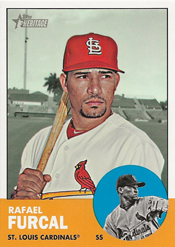
In his 11 seasons with the Braves and Dodgers, shortstop Rafael Furcal reached the playoffs nine times, but never got to a World Series. When the chance came to join the Cardinals, Furcal sensed they might get him where he wanted to go.

On July 31, 2011, the Cardinals acquired Furcal from the Dodgers for outfielder Alex Castellanos. As a player with 10 years or more of big-league service, including at least five with the same team, Furcal’s permission was needed to make the deal.

Furcal gave his approval, and both he and the Cardinals benefitted. Taking over the leadoff spot in the batting order and providing consistent defense, Furcal reached the World Series for the only time, helping the 2011 Cardinals win the championship.

Premier player

Born and raised in the Dominican Republic, Furcal was 22 when he debuted in the majors with the Braves in 2000. He won the National League Rookie of the Year Award, finishing ahead of Cardinals pitcher Rick Ankiel.

In 2003, Furcal turned an unassisted triple play against the Cardinals. He also achieved double-digit totals that season in doubles (35), triples (10) and home runs (15) and was named to the National League all-star team for the first time.

Furcal had a career-high 46 steals in 2005 and again got to double digits in doubles (31), triples (11) and home runs (12). 

After six seasons (2000-2005) with the Braves, he became a free agent and joined the Dodgers. In 2006, Furcal had a career-high 196 hits and scored 100 runs for the fourth consecutive year.

Furcal twice opposed the Cardinals in the playoffs, with dissimilar results. He hit .091 against them in the 2000 National League Division Series and .500 in the 2009 Division Series.

Time is right

In 2008, Furcal had back surgery. He twice was on the disabled list in 2010 and spent two more stints there with the Dodgers in 2011.

Soon after he came off the disabled list for the second time in July 2011, the Cardinals sent scouts Marty Keough and Bill Gayton to follow him for a week.

“One of the more animated players in the clubhouse, Furcal also was the Dodgers’ offensive spark when healthy,” the Los Angeles Times noted.

The Cardinals were in the market for a shortstop to replace Ryan Theriot, who went into a batting slump in July 2011.

The scouts liked what they saw from Furcal. The Dodgers, who wanted to create an opening for shortstop prospect Dee Gordon, were willing to deal.

Furcal told the St. Louis Post-Dispatch, “It’s part of my dream to win a World Series ring. I think it’s time to do it.”

Contributing to the cause

Post-Dispatch columnist Bernie Miklasz endorsed the trade, calling Furcal a “winning player.”

The Cardinals hoped Furcal would play as well for them as he had against them. He hit .344 versus the Cardinals in his career.

On the day of the deal, the Cardinals (57-50) were in second place in their division, 1.5 games behind the Brewers. With Furcal’s arrival, Theriot shifted to second and shared playing time with Skip Schumaker.

In September, Furcal contributed to the Cardinals’ successful surge.

On Sept. 9, in the opener of a three-game series versus the Braves at St. Louis, Furcal had three walks, a hit and scored two runs, including the tying one in the ninth, in a 4-3 Cardinals victory. Boxscore

Two weeks later, on Sept. 19, Furcal had three hits, including two doubles, and scored a run, helping the Cardinals beat Phillies ace Roy Halladay for the first time. The 4-3 win moved the Cardinals to within 2.5 games of the Braves for the wild-card spot. Boxscore

The Cardinals were 18-8 in September and got into the playoffs. Furcal had 50 hits in 50 regular-season games for them and scored 29 runs.

“You saw how much better our club was when he was on our team,” Cardinals general manager John Mozeliak said to the Post-Dispatch. “He really solidified our defense up the middle.”

In a January 2012 interview, Cardinals broadcaster and former pitcher Rick Horton told me, “Defense matters. It’s an absolute fact that if you can’t catch the ball better than the rest, you’re going to lose games you shouldn’t lose … The Cardinals became better up the middle when they had Furcal at shortstop.”

Making an impact

Furcal had a prominent role in each of the Cardinals’ decisive games of the 2011 postseason.

In the finale of the National League Division Series versus the Phillies, Furcal led off the game with a triple against Roy Halladay and scored on Skip Schumacher’s double. Chris Carpenter pitched a shutout and the Cardinals won, 1-0. Boxscore

When the Cardinals clinched the pennant with a win in Game 6 of the National League Championship Series against the Brewers, Furcal hit a home run. Boxscore

Furcal batted leadoff in every game of the Division Series and League Championship Series, and in the first six games of the World Series versus the Rangers.

For Game 7 of the World Series, manager Tony La Russa put Theriot in the leadoff spot and dropped Furcal to seventh. Furcal responded with two hits. He also was hit by a pitch with the bases loaded in the fifth, scoring Albert Pujols from third.

The Cardinals won, 6-2, and were World Series champions. Boxscore

Knockout blow

Eligible to become a free agent, Furcal signed a two-year, $14 million contract with the Cardinals in December 2011.

He was selected to the National League all-star team in 2012 and was the starting shortstop. In the fourth inning against the Rangers’ Matt Harrison, Furcal tripled and scored on Matt Holliday’s single. Boxscore

Furcal’s season ended on Aug. 30, 2012, when he suffered a ligament tear in his right elbow. Pete Kozma replaced him and helped the Cardinals return to the playoffs.

At spring training in 2013, Furcal injured the elbow again while making a sidearm throw. He had Tommy John surgery to repair the torn ligament and was sidelined the entire season.

Furcal briefly played for the Marlins in 2014.

In 14 big-league seasons, Furcal batted .281 with 1,817 hits and 314 stolen bases. Highlights video

Read Full Post »

Center fielder Colby Rasmus lost his place in the starting lineup when he lost the confidence of manager Tony La Russa. Then Rasmus lost his spot on the club.

On July 27, 2011, Rasmus was the marquee name in a multi-player trade the Cardinals made with the Blue Jays. The Cardinals dealt Rasmus and pitchers Trever Miller, Brian Tallet and P.J. Walters for pitchers Edwin Jackson, Octavio Dotel, Marc Rzepczynski and outfielder Corey Patterson.

Rasmus underachieved with the Blue Jays. The trio of pitchers acquired for him all earned wins in the 2011 postseason, helping the Cardinals become World Series champions.

Family feud

A left-handed batter, Rasmus was chosen by the Cardinals in the first round of the 2005 amateur draft.

According to the St. Louis Post-Dispatch, within the Cardinals’ organization, Rasmus became known as “Luhnow’s boy” because he was the first draft pick of scouting director Jeff Luhnow. Cardinals owner Bill DeWitt Jr. became enamored of Luhnow, a data-driven analyst who clashed with general manager Walt Jocketty, and put him in charge of the Cardinals’ player development group.

Rasmus was 22 when he debuted in the majors with the Cardinals in 2009. He hit .251 with 16 home runs as a rookie.

In July 2010, La Russa and Rasmus had a heated exchange in the dugout. Rasmus requested a trade on more than one occasion. The Cardinals kept him and he batted .276 with 23 home runs for the season, but with more strikeouts (148) than hits (128). No other player on the 2010 Cardinals struck out 100 times.

The relationship between Rasmus, La Russa and the coaches deteriorated in 2011. La Russa said coaches Mark McGwire and Mike Aldrete offered to help Rasmus but were rejected. Rasmus instead took instruction from his father, Tony Rasmus, a high school coach who played three seasons in the Angels’ farm system.

“It’s just a fact,” La Russa told the Post-Dispatch. “He was listening to someone else about his hitting.”

Colby Rasmus told Toronto’s National Post, “My dad coached me all the way growing up. He has a big interest in my baseball, wants me to play good and knows my swing pretty well.”

Tony Rasmus was discovered in the Busch Stadium clubhouse video room after working with his son in an indoor batting cage, the Post-Dispatch reported.

Rasmus struggled to make consistent contact. In mid-July, his batting average dropped to .241. Fed up, La Russa benched him and started Jon Jay in center.

Time to act

Concerned Rasmus was becoming what the Post-Dispatch described as “an eroding asset,” the Cardinals made him available for trade.

Cardinals general manager John Mozeliak “believed he had to cash in Rasmus now or risk seeing the trade chip lose more value idling on the bench,” Post-Dispatch columnist Bernie Miklasz noted.

The Blue Jays, White Sox and Rays showed the most interest.

The Cardinals talked to the White Sox about pitchers Edwin Jackson and Matt Thornton. The Rays offered pitchers Jeff Niemann, J.P. Howell and a prospect, but lost interest when Mozeliak wanted another pitcher, Jeremy Hellickson or James Shields, the Post-Dispatch reported.

The Blue Jays became front-runners for Rasmus when they acquired Edwin Jackson from the White Sox, and packaged him with Dotel, Rzepczynski and Patterson.

Blue Jays general manager Alex Anthopoulos “has long coveted Rasmus, and he moved heaven, earth and a passel of players to get him,” the National Post reported.

On the day of the trade, the Cardinals (55-48) were in first place, a half-game ahead of the Brewers (55-49) in the National League Central Division.

“The soap opera triangle between Tony La Russa, Colby Rasmus and Tony Rasmus is gone, along with whatever distractions it caused,” declared the Post-Dispatch.

In announcing the deal, Mozeliak said, “This is a window to win.”

Miklasz noted, “In dealing Rasmus, the Cardinals should have secured a No. 2 starter and an elite prospect. This deal has short-term value. It makes sense for 2011.”

In conclusion, Miklasz wrote, “The Cardinals clearly wanted to get Colby and his daddy as far away as possible.”

Anthopoulos told the National Post, “We think we’re getting a player who has a chance to be part of this core. They’re hard to add.”

In three seasons with St. Louis, Rasmus batted .259 and had 330 hits and 320 strikeouts. “I might not have done as well as some people wanted me to, but I played hard and, looking back on it, that’s all I can say,” Rasmus said. “I’m happy with what I did.”

Tony Rasmus went on Toronto radio programs and criticized La Russa and the Cardinals. In response, Miklasz advised that Colby Rasmus “already has a reputation for letting his father control him and fight battles for him. By going off on Toronto radio shows, Tony Rasmus is only reinforcing the opinion that Colby is immature and in need of protection by daddy.”

Return on investment

Rasmus batted .173 for the 2011 Blue Jays and had more strikeouts (39) than hits (23).

The 2011 Cardinals surged in September, posting an 18-8 record for the month and finishing at 90-72. Though they placed second in their division and fourth overall in the league, the Cardinals qualified for the playoffs.

In the National League Division Series, Edwin Jackson, who was 5-2 for the Cardinals in the regular season, started and won Game 4 against the Phillies. Boxscore

Octavio Dotel, who had three wins and a save for the Cardinals in September, had two wins in the playoffs. He beat the Phillies in Game 2 of the Division Series Boxscore and won Game 5 against the Brewers in the National League Championship Series. Boxscore

Marc Rzepczynski was the winning pitcher in the pennant-clinching Championship Series Game 6 versus the Brewers. Boxscore. He also pitched 2.2 scoreless innings in four appearances in the World Series against the Rangers.

Rasmus went on to play four seasons with the Blue Jays, batting .234 with far more strikeouts (447) than hits (342).

He also played for the Astros, Rays and Orioles. He was 31 when he played his last game in the majors.

Though he never played in a World Series or got named an all-star, Rasmus received $47.4 million in salary during his career in the majors, according to baseball-reference.com. In 10 seasons, he batted .241 with 891 hits and 1,106 strikeouts. Video of career highlights

Read Full Post »

« Newer Posts - Older Posts »