Feeds:
Posts
Comments

Archive for the ‘Trades’ Category

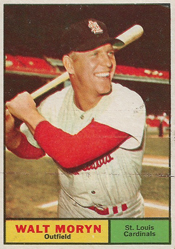
Walt Moryn was a big blonde slugger who hailed from Paul Bunyan country and was nicknamed Moose.

On June 15, 1960, the Cardinals acquired Moryn from the Cubs for utility player Jim McKnight and $25,000.
An outfielder and left-handed pull hitter, Moryn’s swing seemed tailored for the original Busch Stadium in St. Louis, where the shortest distance for a home run was to right.

Though no longer in his prime when he joined the Cardinals, Moryn, 34, had enough pop remaining in his bat to elicit calls of “M-o-o-o-s-e” from the fans in St. Louis when he got hold of a pitch.

Cubs clouter

Moryn was born and raised in St. Paul, Minn. His paternal grandparents immigrated to the U.S. from Russia and his maternal grandparents came from Poland. Moryn entered the Navy when he was 18 and served on an ammunition ship in the Pacific for two years during World War II.

When he returned home, Moryn played baseball in an industrial league. In August 1947, the Dodgers held a tryout camp in St. Paul. Moryn attended and was signed on the recommendation of scout Andy High, a former Cardinals infielder.

Moryn was 28 when he debuted in the majors with the Dodgers in June 1954. He also spent part of 1955 with them and was traded to the Cubs after the season.

For a stretch of three seasons, 1956-58, Moryn hit with consistent power and became a favorite of Cubs fans. He had 23 home runs in 1956, 33 doubles in 1957 and 26 home runs in 1958.

After his production declined to 14 home runs in 1959, Moryn was platooned in left field with Frank Thomas in 1960.

The signature play of Moryn’s career occurred on May 15, 1960, when he made a shoestring catch of a line drive by the Cardinals’ Joe Cunningham with two outs in the ninth to preserve a no-hitter by Don Cardwell. Video

Though Moryn was batting .294 and had an on-base percentage of .366 in 38 games for the 1960 Cubs, his home run total was a mere two when the Cubs shipped him to the Cardinals. Moryn told the Chicago Tribune he was on the outs with Cubs general manager John Holland. “He’s been trying to get rid of me for three years,” Moryn said.

Popular player

To make room for Moryn on their roster, the Cardinals sent Leon Wagner, their Opening Day left fielder, to the minors. The Cardinals were loaded with outfielders. Cunningham, Moryn and Stan Musial batted from the left side, and Curt Flood, Bob Nieman and John Glenn batted from the right. Moryn figured to platoon with Nieman in left.

“At Busch Stadium, I think Moryn still will be dangerous,” Cardinals coach Johnny Keane told the St. Louis Globe-Democrat.

Though listed at 6 feet 2 and 205 pounds, Moryn told the St. Louis Post-Dispatch he weighed 225. St. Louis writers had fun with his alliterative name and his size, referring to him as “Mighty Moose Moryn” and “a mass of muscle from Minnesota.”

Moryn was popular with teammates and helped rookies.

Second baseman Jerry Kindall, another St. Paul native who entered the majors with the Cubs in 1956, told the Chicago Tribune, “He gave the appearance of a very gruff guy, but if you were a teammate, you saw through that in a hurry. He was really a tender-hearted guy.”

In the book “We Played the Game,” Tim McCarver said when he was with the Cardinals as an 18-year-old in 1960, “Guys like Walt ‘Moose’ Moryn and Kenny Boyer couldn’t have been friendlier.”

Hot in August

In his Cardinals debut, on June 17, 1960, against the Braves, Moryn was 0-for-5 and struck out four times. Boxscore

Moryn hit .100 for the Cardinals in June and .194 in July, but sizzled in August, hitting .433 with 19 RBI in 23 games for the month.

“Cardinals crowds raise the “M-o-o-o-s-e’ call whenever the big blonde comes to the plate,” The Sporting News noted.

Moryn’s August performances at home included:

_ Aug. 6 vs. the Reds: 3-for-4, including a triple and a home run, and two RBI. Boxscore

_ Aug. 7 vs. the Reds: 2-for-2, including a home run and a walk, and two RBI. Boxscore

_ Aug. 17 vs. the Giants: 3-for-5, including a home run, and three RBI. Boxscore

_ Aug, 26 vs. the Pirates: 4-for-4, all singles, against Bob Friend. Boxscore

Moryn ended August with a .314 batting average since he joined the Cardinals.

Role player

Though he hit a three-run home run off Robin Roberts to carry the Cardinals to a 4-1 triumph at Philadelphia on Sept. 9, Moryn fell back into a slump and hit .154 for September.

In 75 games for the 1960 Cardinals, Moryn hit .245 with 11 home runs. He batted .301 at Busch Stadium and .196 on the road. Moryn also hit .266 versus right-handers and .111 against left-handers. He was a terror against the Reds, hitting .440 with five home runs and 11 RBI in 11 games for the 1960 Cardinals.

Moryn made 49 starts in the outfield _ 30 in right and 19 in left _ for the 1960 Cardinals.

At spring training in 1961, Moryn surprised the Cardinals by reporting at 198 pounds. “I’ve never been this light before,” he told the Globe-Democrat.

Regarding his playing weight in 1960, Moryn told the Post-Dispatch, “I realized I had let myself get too heavy.”

Cardinals trainer Bob Bauman predicted a slender Moose would slug more home runs at Busch Stadium. “I can see Moryn hitting a lot out on Grand Avenue this year,” Bauman said.

Used exclusively against right-handers and mostly as a pinch-hitter, Moryn, 35, never got untracked with the 1961 Cardinals. He hit .125 in 17 games and was traded to the defending World Series champion Pirates on June 15, 1961, for minor-league catcher Roberto Herrera and cash.

Three days later, on June 18, 1961, in his third game with the Pirates, Moryn, naturally, hit a three-run home run versus the Cardinals’ Larry Jackson. Boxscore

It was one of the last highlights for Moryn in the majors. He hit .200 in 40 games for the Pirates in 1961, his last season in the big leagues.

Read Full Post »

(Updated Nov. 21, 2024)

For the second time in five years, the Cardinals in June got a future Hall of Fame pitcher who helped them become champions.

On June 16, 1930, the Cardinals acquired Burleigh Grimes from the Braves for pitchers Bill Sherdel and Fred Frankhouse.

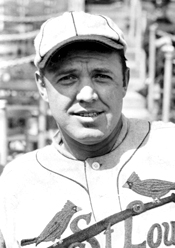
A spitball specialist whose dark stubble gave him a menacing look on the mound, Grimes, 36, had a reputation as an intimidating competitor and consistent winner.

In the book “Voices From Cooperstown,” Cubs second baseman Billy Herman said, “Burleigh Grimes was … real hard-nosed. The day he’d pitch, he didn’t want anyone even looking at him. He was mean on the mound.”

With the Cardinals, Grimes was 13-6 in 1930 and 17-9 in 1931, and they won National League pennants both years. In the 1931 World Series, Grimes, pitching in pain caused by an inflamed appendix, started and won the deciding Game 7.

Like Grimes, Grover Cleveland Alexander, a right-hander destined for election to the National Baseball Hall of Fame, was acquired by the Cardinals in a June transaction. The Cardinals claimed Alexander, 39, on waivers from the Cubs in 1926 and he helped them win pennants in 1926 and 1928. His strikeout of the Yankees’ Tony Lazzeri with the bases loaded in Game 7 was the iconic moment in the Cardinals’ first World Series championship.

Winning formula

Grimes, 23, made his debut in the majors with the Pirates in 1916. After posting a 3-16 record in 1917, a trade to the Dodgers (involving outfielder Casey Stengel) revived Grimes’ career. Grimes was 19-9 in 1918, the first of 14 consecutive seasons of double-digit wins.

In February 1920, baseball outlawed the spitball, but exempted pitchers who threw the pitch in the majors before then. Grimes was one of those exempted and was permitted to throw the spitball the remainder of his career. He chewed slippery elm bark for the substance used for the pitch.

Grimes four times had 21 or more wins in a season for the Dodgers, including 1920 when he was 23-11 for the National League champions. “No pitcher in baseball history was a more determined fighter,” The Sporting News reported.

Off the field, Grimes was talkative and thoughtful. He studied and analyzed pitching techniques and willingly shared his views. On the field, he was intense.

“There was only one man standing between me and more money, and that was the guy with the bat,” Grimes said.

The St. Louis Post-Dispatch noted, “When pitching, he is a snarling hard-to-get-along-with personality. He glares at an infielder who makes an error behind him and sneers at umpires who fail to meet his approval in their decisions.”

Bust with Braves

In 1928, Grimes was with the Pirates and was 25-14. The next year, he was 16-2 and on pace for 30 wins when he was struck on the right thumb by a ball off the bat of the Giants’ Bill Terry in July. Sidelined a month, Grimes won once the rest of the 1929 season and finished at 17-7.

A holdout in spring training in 1930, Grimes was traded to the Braves in April when the Pirates rejected his demand for a two-year contract. Rushed into the season without any spring training, Grimes struggled to a 3-5 record and 7.35 ERA for the 1930 Braves, who sought to unload his contract.

When offered Bill Sherdel (3-2, 4.64 ERA) and Fred Frankhouse (2-3, 7.32) for Grimes, the Braves agreed. The year before, Frankhouse was 7-2 for the Cardinals. Sherdel had been with them since 1918 and eight times had seasons of double-digit wins, including 21-10 for the 1928 National League champions.

Sherdel told the Post-Dispatch, “I’ll be pulling for the Cardinals except when I pitch against them.”

Said Frankhouse, “I was hoping we’d land Grimes, but I didn’t even think I might be sent away.”

The Boston Globe concluded, “The Braves cannot be any worse off with Sherdel and Frankhouse. In fact, they should benefit for all the good the high-priced Burleigh Grimes was to them.”

Braves manager Bill McKechnie, who managed the Cardinals to the 1928 pennant, had a different viewpoint, telling the Globe there was no doubt Grimes would win a lot of games for St. Louis.

Making a difference

Grimes joined a Cardinals rotation of Bill Hallahan, Syl Johnson, Jesse Haines and Flint Rhem.

“We have made a deal that will make us a more dangerous pennant contender,” said Cardinals manager Gabby Street. “Grimes is a great pitcher.”

According to the Post-Dispatch, Grimes told club owner Sam Breadon, “You didn’t make any mistake when you got me. There’s nothing the matter with my arm.”

On the day the Cardinals got Grimes, they lost to the Dodgers and their record dropped to 26-28.

The addition of Grimes, along with the return to the lineup of two ailing future Hall of Famers, second baseman Frankie Frisch (spike wound) and left fielder Chick Hafey (sinuses), eventually helped propel the Cardinals higher in the standings.

After posting losing records in June and July, the 1930 Cardinals surged to 23-9 in August and 21-4 in September. Grimes had a significant role. He was 5-2 in August and 4-1 in September.

When Grimes shut out the Pirates on Sept. 25, 1930, it enabled the Cardinals to keep a three-game lead over the Cubs with three to play, assuring at least a share of the pennant. Boxscore

The Cardinals clinched the next day and faced the Athletics in the World Series.

Grimes was 12-4 with a 3.13 ERA as a starter for the 1930 Cardinals and 1-2 with a 6.35 ERA as a reliever. He pitched a pair of five-hitters in the 1930 World Series, but was the loser in both. The Athletics won four of six versus the Cardinals.

In the 1931 World Series rematch, Grimes was 2-0 with a 2.04 ERA. He beat Lefty Grove in Game 3 and George Earnshaw in Game 7.

Field manager

Two months after his World Series success, Grimes, 38, was traded by the Cardinals to the Cubs for outfielder Hack Wilson and pitcher Bud Teachout.

The Cardinals reacquired Grimes in July 1933 after he was released by the Cubs. He pitched in four games for the Cardinals in 1933 and four more in 1934. Grimes also pitched for the Yankees and Pirates in 1934, his last season as a big-league pitcher, and finished with a career record of 270-212.

In 1935, he became manager of a Cardinals farm club in Bloomington, Ill.

In 1937, 20 years after he was traded for Casey Stengel, Grimes replaced Stengel as Dodgers manager. Grimes managed the Dodgers for two seasons before Leo Durocher took over the role.

Grimes managed for several more seasons in the minors, including 1945 and part of 1946 with the Cardinals’ Rochester farm team.

Read Full Post »

The 1970 Cardinals found the closer they needed, but, following a familiar pattern, gave up on him too soon.

On May 29, 1970, St. Louis got Ted Abernathy from the Cubs for infielder Phil Gagliano.
A right-hander, Abernathy, 37, threw underhanded with a delivery described as submarine style.

At 6 feet 4, he was a formidable presence when he whipped his right arm down low to the ground and sent the ball zipping toward the plate.

The Cardinals needed quality relief and Abernathy provided it. He made 11 appearances for them and was 1-0 with a save and 2.95 ERA.

Inexplicably, a month after the Cardinals acquired Abernathy, general manager Bing Devine dealt him to the Royals for pitcher Chris Zachary, who was assigned to the minors.

Abernathy went on to pitch in 36 games for the 1970 Royals and was 9-3 with 12 saves and a 2.59 ERA for them. He joined Wayne Granger (Reds), Dave Giusti (Pirates), Joe Hoerner (Phillies) and Mudcat Grant (Athletics and Pirates) as premier relievers dealt by Devine during his second stint with the Cardinals.

In 1970, when the Cardinals ranked last in the league in saves (20) and their team leader was Chuck Taylor (eight), Granger, Giusti, Hoerner and Grant had a combined record of 32-16 with 94 saves.

Adapt and adjust

Abernathy threw overhand until he injured his right shoulder as a high school freshman and switched to a sidearm delivery.

After signing with the Senators in 1952, Abernathy made his major-league debut with them in 1955.

Near the end of the 1956 season, Abernathy hurt his right elbow. Trying to compensate for the pain, he put pressure on his shoulder and damaged it again. Weakened, Abernathy was 2-10 with a 6.78 ERA for the Senators in 1957.

Except for two appearances for the Senators in 1960, Abernathy spent the next five seasons (1958-62) in the minors. After undergoing shoulder surgery in 1959, he adopted the submarine delivery.

In 1963, Abernathy, 30, made it back to the majors with the Indians and experienced a career rebirth. With his arm strength restored and his submarine delivery perfected, Abernathy became a durable, effective big-league reliever.

“His delivery was sweeping so low it swept him to the top as a relief pitcher,” the St. Louis Post-Dispatch noted.

Late bloomer

Abernathy was the National League leader in saves twice (31 for 1965 Cubs and 28 for 1967 Reds). He also led the league in games pitched three times (84 for 1965 Cubs, 70 for 1967 Reds and 78 for 1968 Reds).

Relying on a sinking fastball, curve and knuckleball he used as a changeup, Abernathy thrived on work. The more often he pitched, the better the results.

“If I don’t have to work more than a couple of innings, I can go for seven or eight days in a row, take a rest, and do it again,’ Abernathy told The Sporting News.

In 1970, during his second stint with the Cubs, Abernathy began the season as the setup reliever to closer Phil Regan.

On May 16, 1970, Abernathy relieved Cubs starter Ken Holtzman in the ninth inning of a game at St. Louis. With the Cubs ahead, 3-1, Abernathy was brought in to face slugger Dick Allen with the bases loaded and two outs.

With the count at 2-and-1, Abernathy needed to throw a strike, but his pitch sailed toward Allen. Though he tried to turn away, the ball struck Allen in the back of the head.

“I was surprised Allen didn’t get out of the way,” Abernathy told the Post-Dispatch. “I yelled to him, but I guess he didn’t hear me.”

Allen’s advancement to first allowed the runner from third to score, carrying the Cardinals to within a run at 3-2, but Regan came in and got Joe Torre to line out to center, ending the game. Boxscore

Come and gone

Two weeks later, the Cubs traded Abernathy to the Cardinals. Though Abernathy had a 2.00 ERA and a save in 11 games for the 1970 Cubs, manager Leo Durocher had lost confidence in him.

“The Cardinals were the only team who wanted Abernathy,” Durocher told the Chicago Tribune. “They needed relief pitching and were willing to take the chance. Maybe he’ll help them. I don’t know. All I know is that every time I put him in a game this year he was getting bombed.”

Before the Cardinals acquired Abernathy, five pitchers, Chuck Taylor, Tom Hilgendorf, Jerry Johnson, Sal Campisi and Billy McCool, earned saves for them in 1970. A week before Abernathy arrived, the Cardinals got another closer candidate, Frank Linzy, from the Giants.

“What they’re doing, of course, is indulging in a bit of wishful thinking when they claim anything in sight with a toeplate,” Bob Broeg wrote in the Post-Dispatch.

On May 30, 1970, Abernathy made his Cardinals debut at St. Louis against the Dodgers and pitched 3.1 innings in relief of starter Santiago Guzman. Boxscore

Abernathy got a save a week later in a game Bob Gibson won against the Padres at St. Louis. Boxscore

On June 27, 1970, in his last Cardinals appearance, Abernathy worked out of a bases-loaded jam he inherited and got the win versus the Phillies at St. Louis. Boxscore

Four days later, he was traded to the Royals.

Royal gift

“I was pitching well for the Cardinals,” Abernathy said. “At least I thought I was pitching pretty well. I asked Bing Devine (about the trade) and he told me, ‘That’s baseball. You move around.’ ”

When Abernathy reported to the Royals, he said to manager Bob Lemon, “I need work.” Lemon replied, “You came to the right place.”

Abernathy pitched five times in his first six days with the Royals and was 3-0 with a save and 0.96 ERA. In his first 9.1 innings, he allowed a run and struck out 13.

Lemon, an ace for the Indians when Abernathy debuted in the American League 15 years earlier, knew how to utilize his reliever. Abernathy was 5-3 with four saves in July, 2-0 with four saves in August and 2-0 with four saves in September. Right-handed batters hit .202 against him.

Abernathy was the second productive player the Royals got from the Cardinals in 1970. A month earlier, they obtained second baseman Cookie Rojas.

“We appreciate the Cardinals,” Royals general manager Cedric Tallis said to the Post-Dispatch. “They treated us as equals, not as just another expansion club, the way everybody else did.”

Abernathy’s combined 1970 record with the Cubs, Cardinals and Royals was 10-3 with 14 saves and a 2.60 ERA.

Abernathy pitched for the Royals again in 1971 and 1972, ending his 14 years in the majors with a 63-69 record and 149 saves.

Read Full Post »

(Updated Sept. 12, 2025)

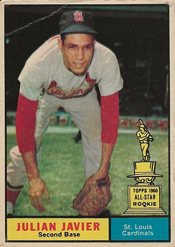
Opening the way to a pipeline of talent, second baseman Julian Javier was the first player from the Dominican Republic to play for the Cardinals.

On May 27, 1960, the Cardinals acquired a pair of Pirates prospects, Javier and reliever Ed Bauta, for starting pitcher Vinegar Bend Mizell and infielder Dick Gray.
Making the leap from the minor leagues to the Cardinals’ lineup, Javier became the third player born in the Dominican Republic to play in the major leagues. Before him were Ozzie Virgil of the 1956 Giants and Felipe Alou of the 1958 Giants.

Javier was the Cardinals’ second baseman for 12 years and contributed to three National League pennants and two World Series titles. Dominican Republic natives who followed him to the Cardinals included Albert Pujols, Joaquin Andujar, Pedro Guerrero and Tony Pena.

Opportunity knocks

Javier was born and raised in San Francisco de Macoris, Dominican Republic. Located in the northeast section of the Caribbean island country, his hometown is one of the world’s largest producers of cocoa beans. A son of a truck driver, Javier had seven siblings.

In 1956, when he was 19, Javier attended a Pirates tryout camp in the Dominican Republic and was offered a contract by scout Howie Haak. Javier signed for $500, The Sporting News reported.

“We didn’t know about bonuses then,” Javier said in 1967. “Today, I would ask for $50,000.”

Javier began the 1960 season, his fifth in the Pirates’ farm system, with their Columbus, Ohio, club. The Pirates had a future Hall of Famer, Bill Mazeroski, as their second baseman and were planning to convert Javier to shortstop, the St. Louis Post-Dispatch reported.

When the 1960 Pirates got off to a fast start, winning 12 of their first 15 games, general manager Joe Brown began looking for ways to keep the team in contention. To bolster the starting pitching, he made Javier available for trade.

Infield shift

In 1960, Alex Grammas, 34, moved from shortstop to second base for the Cardinals to make room for Daryl Spencer, who was acquired from the Giants. Shortstop was Spencer’s preferred position, but Grammas “did not adjust too well to second base,” The Sporting News reported.

“I think Grammas is more at home at shortstop,” Cardinals manager Solly Hemus told the St. Louis Globe-Democrat.

On May 9, 1960, Hemus said Grammas would go back to shortstop and Spencer would shift to second “to tighten our defense.”

The switch “caught Cardinals brass by surprise” and Spencer “felt he was being made a scapegoat,” according to The Sporting News.

Cardinals general manager Bing Devine sought a better solution. He wanted to acquire a young middle infielder, either a second baseman or a shortstop, who would provide long-term stability.

According to Bob Broeg of the Post-Dispatch, the Cardinals pursued Reds shortstop prospect Leo Cardenas, “the tall, skinny kid who looks as though he might be another Marty Marion.” Rejected, the Cardinals’ focus turned to Javier.

Help wanted

Cardinals director of player procurement Eddie Stanky, a former second baseman, scouted Javier and recommended him. Stanky said Javier was “one of the best prospects in the minors” and “his speed was second only to that of Vada Pinson of the Reds,” The Sporting News reported.

“He’s one of the fastest right-handed batters I’ve ever seen,” Stanky said to the Post-Dispatch.

The Cardinals weren’t the only club interested. The Phillies wanted a second baseman, too, and were talking to the Pirates about a swap of pitcher Don Cardwell for Javier. According to the Pittsburgh Post-Gazette, the Phillies scouted Javier for 10 days, but “the scout reported back to the front office that Javier struck out too often and had a tendency to become injured.”

After the Phillies dealt Cardwell to the Cubs for second baseman Tony Taylor, the Cardinals offered Vinegar Bend Mizell to the Pirates for Javier. Pirates general manager Joe Brown viewed Mizell, 29, as a good fit to join a rotation with Bob Friend, Vern Law and Harvey Haddix. Mizell was 1-3 for the Cardinals in 1960, but he had five seasons of double-digit win totals in his previous six with them.

“We are sacrificing a future for the present because in Mizell we have a known quantity,” Brown said.

The Pittsburgh Press noted, “Javier wouldn’t have made it with the Pirates for two or three years, but the team needed pitching help now.”

Javier, 23, hit .288 for Columbus in 1960 and Devine called him “an outstanding glove man as well as an improving hitter,” the Globe-Democrat reported.

“We consider this a major addition to the Cardinals’ regular lineup now and for the future,” said Devine.

Bob Broeg of the Post-Dispatch concluded, “It took courage to give up a player of some reputation for one with none at the major-league level.”

Hot start

On May 28, 1960, Javier made his debut in the majors at second base for the Cardinals against the Giants at St. Louis. He had six putouts, three assists and helped turn a double play. Batting eighth, Javier singled twice versus Billy O’Dell. Boxscore

Hemus used Javier’s arrival to make other moves. Spencer shifted back to shortstop and Grammas was benched. Bill White went from center field to first base, replacing Stan Musial, and Curt Flood took over in center.

With White and Javier solidifying the right side of the infield, and Flood in center, the Cardinals improved. On the day they got Javier, the Cardinals were 15-20. After the trade and the moves to upgrade the defense, they were 71-48.

“Javier knows how to make the tough double play,” Hemus told the Post-Dispatch. “He makes the club solid. Not many balls are falling in with him and Curt Flood out there. Those two have helped make our pitching better.”

In the book “Few and Chosen,” Cardinals catcher Tim McCarver said Javier’s skill at turning double plays earned him the nickname “Phantom.”

“Runners never got to his legs,” McCarver said. “Javier was rarely on the bag. His timing was perfect and his hands and feet were so quick, you often couldn’t even see the exchange (of the ball).”

In addition to showing good range in the field on grounders and pop-ups, Javier hit safely in 10 of his first 11 games. In his third game, on May 30 at Los Angeles, he hit his first big-league home run, leading off the fourth versus Clem Labine of the Dodgers. Boxscore

On June 3, Javier hit two triples versus the Giants’ Mike McCormick at San Francisco, “amazing everybody with his breathtaking speed,” The Sporting News observed. Boxscore

Four days later, on June 7, Javier’s wife came from the Dominican Republic to St. Louis and saw her husband play in the majors for the first time. Javier raked the Phillies for three singles. Boxscore

Stellar career

The 1960 Cardinals finished at 86-68, nine games behind the champion Pirates, who were 95-59. Mizell, in his last good season, was 13-5 for the 1960 Pirates.

Javier hit .237 with eight triples and 19 stolen bases for the 1960 Cardinals. His 15 sacrifice bunts led the league. Though he also made the most errors among National League second basemen, Javier was named to the Topps all-rookie team.

In 12 seasons with St. Louis, Javier batted .258 with 1,450 hits, twice led National League second basemen in putouts and twice was named an all-star, including 1963 when he was part of a Cardinals starting infield with Bill White, Dick Groat and Ken Boyer.

In Game 7 of the 1967 World Series, Javier’s three-run home run versus Jim Lonborg of the Red Sox was a key blow in the Cardinals’ championship clincher.

Javier was traded to the Reds for pitcher Tony Cloninger in March 1972. As a utility player, he helped the Reds win the pennant in his last season in the majors.

Read Full Post »

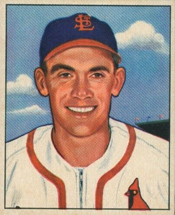
Johnny Lindell faced the Cardinals in a World Series as a Yankees outfielder and in a regular season as a pitcher for the Pirates and Phillies. He also played for the Cardinals for a couple of months when they sought power for their lineup.

On May 15, 1950, the Cardinals purchased the contract of Lindell from the Yankees for the $10,000 waiver price.

Lindell was an intriguing player because of the multiple roles he performed. He began his professional career as a pitcher, moved to outfielder and went back to pitching again.

A strapping 6 feet 4 and 225 pounds, Lindell batted and threw right-handed. Talented as well as versatile, he pitched for one pennant-winning Yankees team and played outfield for another. As a hitter, he twice led the American League in triples and as a pitcher he once led the National League in most walks issued.

Pitching prospect

Lindell developed his athletic skills in high school at Monrovia, Calif., near Pasadena. He was offered a chance to play football at the University of Southern California but signed with the Yankees when he was 19 in 1936. The Yankees sent him to their farm club in Joplin, Mo., and he posted a 17-8 record.

Working his way through the minor leagues, Lindell became a prominent pitching prospect. He was 18-7 with a 2.70 ERA for the Kansas City Blues in 1940.

Lindell began the 1941 season with the Yankees, made his major-league debut in a pinch-hitting appearance on April 18 and was sent to their farm club in Newark, N.J. Lindell was 23-4 with a 2.05 ERA for Newark in 1941 and the Yankees made plans to have him on their pitching staff in 1942.

Though he pitched in 23 games for the 1942 Yankees and was 2-1 with a 3.76 ERA, Lindell’s fastball and curve no longer were effective and manager Joe McCarthy lost confidence in him. Lindell didn’t pitch in the 1942 World Series versus the Cardinals.

According to The Sporting News, McCarthy told Lindell after the season, “Johnny, it does not look as if you ever will be a really good pitcher. However, you have the makings of a hitter.”

Lindell worked on his hitting in winter ball in California and reported to spring training in 1943 as an outfield candidate.

New role

The Yankees’ center fielder, Joe DiMaggio, and right fielder, Tommy Henrich, entered military service in 1943 and the club needed outfielders. Lindell was the Yankees’ 1943 Opening Day right fielder and remained in the lineup throughout the season. Lindell started 64 games in right, 52 in center and four in left for the American League champions. He led the league in triples (12) and was named to the all-star team.

In the 1943 World Series against the Cardinals, Lindell hit .111 but was involved in a critical play.

After the teams split the first two games, the Cardinals led, 2-1, in Game 3. Lindell led off the eighth inning with a single and advanced to second when center fielder Harry Walker bobbled the ball. George Stirnweiss bunted to first baseman Ray Sanders, whose throw to third arrived ahead of Lindell.

As third baseman Whitey Kurowski went to apply the tag, Lindell “came into the bag like a 10-ton truck,” crashing into Kurowski and knocking the ball loose, The Sporting News reported. The impact snapped Kurowski’s head back.

Lindell said the collision was unavoidable because Kurowski positioned himself in front of the base. “What was I to do? Beg his pardon?” Lindell asked.

Said Cardinals manager Billy Southworth: “Lindell played ball the way I like to see it played.”

The play woke up the Yankees, who scored five runs in the inning and won, 6-2.  Boxscore

Lindell had his best season in 1944. As the Yankees’ center fielder, he hit .300 with 33 doubles, 18 home runs and 103 RBI. He led the league in triples (16), extra-base hits (67) and total bases (297).

After spending part of 1945 in military service, Lindell returned to the Yankees in 1946 and was their Opening Day left fielder. In 1947, Lindell batted .500 in the World Series against the Dodgers, collecting nine hits in 18 at-bats and driving in seven runs in six games, despite cracking a rib in Game 5.

Right fit

Lindell’s playing time decreased when Casey Stengel became Yankees manager in 1949. After starting in left field on Opening Day in 1950, Lindell struggled, hitting .190 in 21 at-bats.

The 1950 Cardinals were stocked with left-handed hitters, led by Stan Musial and Enos Slaughter, and were looking for a power bat from the right side. Lindell, 33, was an available candidate.

“He’s a good competitor, a clutch player,” Cardinals manager Eddie Dyer told The Sporting News.

Though he had spent 15 years in the Yankees’ organization, Lindell welcomed the move to St. Louis. “I wanted to be traded because I didn’t fit Casey Stengel’s idea of a ballplayer,” Lindell told the St. Louis Post-Dispatch. “Not enough obvious spark, I guess.”

Lindell reported to the Cardinals 15 pounds over his regular weight of 225, the Post-Dispatch noted, but Dyer played him immediately in left field.

In his Cardinals debut, Lindell went 0-for-4 against the Dodgers’ Preacher Roe, but in his next game he hit a two-run home run into the upper deck in left at Ebbets Field in Brooklyn against rookie Billy Loes. Boxscore

A month later, on June 24, 1950, Lindell’s 10th-inning home run against Bob Chipman gave the Cardinals a 7-6 triumph over the Braves at Boston. Boxscore

Though 12 of Lindell’s 21 hits for the Cardinals were for extra bases, including five home runs, he batted .186 in 36 games and “his fielding had slipped along with his hitting,” the Post-Dispatch reported.

On July 17, 1950, the Cardinals sent Lindell to their farm team at Columbus, Ohio. After playing in five games there, the Cardinals accommodated his request to be sent to a Pacific Coast League club closer to his California home and traded him to the Hollywood Stars, a farm team of the Dodgers.

On the mound again

In 1951, Lindell went back to pitching and was 12-9 with a 3.03 ERA for Hollywood. Relying on a knuckleball, Lindell was dominant in 1952, posting a 24-9 record and 2.52 ERA for Hollywood, which had become a Pirates affiliate.

Lindell returned to the big leagues in 1953 as a member of the Pirates’ starting rotation. On May 3, 1953, he earned his first National League win, a four-hitter against the Cardinals at Pittsburgh. Boxscore

After posting a 5-16 record and 4.71 ERA for the Pirates, Lindell’s contract was sold to the Phillies on Aug. 31, 1953. He earned one win for the Phillies and it came against the Cardinals at St. Louis. Lindell struck out 11, walked eight and ignited the winning rally in the ninth with a run-scoring single. Boxscore

Lindell “would have had a far easier time if his catchers had been able to hold” the knuckleball, the Post-Dispatch reported.

The win was Lindell’s last as a pitcher. He was 1-1 with a 4.24 ERA for the Phillies. His combined record for the Pirates and Phillies in 1953 was 6-17 with a 4.66 ERA, and in six starts versus the Cardinals he was 2-4 with a 3.64 ERA. Lindell led National League pitchers in allowing the most walks (139) and wild pitches (11).

In 1954, Lindell didn’t pitch, made seven plate appearances, all as a pinch-hitter, for the Phillies and was released on May 10.

In 12 big-league seasons, Lindell hit .273 and had a pitching record of 8-18.

Read Full Post »

(Updated June 15, 2023)

Mike Torrez, a big guy with big talent, capped a hot personal stretch for the Cardinals with his most dominant pitching performance.

On April 15, 1970, Torrez pitched a one-hitter for the Cardinals against the Expos at St. Louis. The win was the 11th in a row for Torrez. He won his last nine decisions of 1969 for the Cardinals and his first two of 1970.

A 6-foot-5, 220-pound right-hander, Torrez joined Bob Gibson, Steve Carlton and Jerry Reuss in a Cardinals rotation primed to become one of baseball’s best, but it didn’t work out.

The Cardinals traded Carlton because of a contract squabble, Reuss because he wouldn’t shave his moustache and Torrez because he couldn’t control his pitches.

Wild thing

Born in Topeka, Kansas, Torrez was 18 when he signed with the Cardinals in September 1964.

In 1967, his fourth season in the Cardinals’ farm system, Torrez was assigned to Tulsa, whose manager was pitching legend Warren Spahn.

At mid-season, Torrez was 3-8 and struggled to get pitches over the plate. Torrez said Spahn helped him to focus. Hand-written on Torrez’s glove were four words: think, concentrate, throw strikes.

“I know I’ve got one of the best arms in the organization,” Torrez told The Sporting News.

Torrez turned around his season, winning six consecutive decisions, and became the Pacific Coast League’s “most exciting pitcher,” The Sporting News reported.

“At last, I’m throwing strikes and thinking out there,” Torrez said.

The Cardinals, on their way to the 1967 National League pennant, called up Torrez in September. He made his big-league debut in relief against the Pirates and was picked to make his first start on Sept. 22 against the Braves.

“I had time to think about what could happen to me and I got nervous,” Torrez told Sports Illustrated. “You look around and all of a sudden you are in the major leagues. They were all there _ Cepeda, Maris, Flood, Brock _ and I knew they were yelling for me, but you feel so alone.”

Torrez’s nervousness showed in the first inning when the first three Braves batters reached base, but he limited the damage to one run. He went five innings and didn’t give up another run after the first. Boxscore

Gobbling up wins

Torrez opened the 1968 season with the defending World Series champion Cardinals, was 2-1 in five games and got sent down to Tulsa.

In 1969, Torrez stuck with the Cardinals. He was 10-4, but had almost as many walks (61) as strikeouts (62).

If Torrez could control his pitches, the Cardinals figured, he could be a big winner. “His potential is unlimited,” Cardinals pitching coach Billy Muffett told the St. Louis Post-Dispatch in March 1970.

In his book, “Baseball for Brain Surgeons and Other Fans,” Cardinals catcher Tim McCarver said, “When Mike Torrez was a young Cardinals pitcher, he was tougher to catch than Bob Gibson. I was struck on the inside of the wrist on one pitch without the ball even touching the mitt. That’s how much his ball was moving. It was heavy and exploding.”

Torrez had a big appetite, too. On the eve of his first start in 1970, he dined in Montreal and “put away a 20-ounce steak,” the Post-Dispatch reported. “The restaurant charged by the ounce and the price was 75 cents an ounce, or $15.”

The next night, Torrez, well-fortified, won, limiting the Expos to one earned run in 8.1. innings.

Wild but wily

The Expos were the opponent again when Torrez made his next start at St. Louis.

Relying primarily on a fastball, Torrez held the Expos hitless through seven innings.

“I was conscious of the no-hitter in the sixth inning,” Torrez told the Montreal Gazette. “I thought I could do it.”

The No. 8 batter in the order, Adolfo Phillips, led off the eighth for the Expos.

“I had been pitching him inside all night and I was trying to jam him,” Torrez told the Post-Dispatch, “but I put the ball right over the plate.”

Phillips lashed at the fastball and sent a grounder skimming along the AstroTurf between third baseman Dick Allen and shortstop Dal Maxvill. Neither could reach it and the ball rolled through for a single.

Though he walked six, Torrez went on to complete his first shutout in the majors and his only one-hitter. Boxscore

Overcoming adversity

Lacking command, Torrez couldn’t sustain his early success in 1970. He finished the season 8-10 with a 4.22 ERA and had more walks (103) than strikeouts (100).

In 1971, his career nearly unraveled. In nine games for the Cardinals, Torrez was 1-2 with a 6.00 ERA, walking 30 and striking out eight. On June 15, 1971, the Cardinals traded Torrez to the Expos for reliever Bob Reynolds. The Expos sent Torrez to the minors and his struggles continued. He was 2-4 with an 8.16 ERA for Winnipeg, walking 52 and striking out 45.

Torrez revealed he was having marital problems and admitted he’d become overweight.

“I was all mixed up,” Torrez told The Sporting News. “I used to lie awake nights wondering what to do about my marriage. I wondered what was going on back home. I didn’t know if I should be there and forget baseball. It was difficult to concentrate.”

Torrez and his wife divorced and he went on a diet. In 1972, Expos pitching coach Cal McLish helped Torrez develop a slider and sinking fastball.

The results were immediate. Torrez was 16-12 with a 3.33 ERA for the 1972 Expos, working 243.1 innings.

Torrez went on to pitch 18 years in the majors. Though he became known for throwing the pitch Bucky Dent of the Yankees hit for an improbable home run to beat the Red Sox in a one-game playoff for a division title, Torrez had more success than failure.

He had a career record in the majors of 185-160 and 10 times had seasons of double-digit wins, including 1975 when he was 20-9 for the Orioles. In 1977, Torrez made two starts for the Yankees in the World Series against the Dodgers and won both.

Read Full Post »

« Newer Posts - Older Posts »