Feeds:
Posts
Comments

Archive for the ‘Trades’ Category

With one bold move, the Cardinals got a No. 1 starter for their rotation and a closer for the bullpen.

On Nov. 16, 1999, the Cardinals acquired pitchers Darryl Kile, Dave Veres and Luther Hackman from the Rockies for pitchers Manny Aybar, Jose Jimenez, Rich Croushore and infielder Brent Butler.
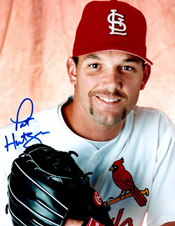
Kile, a bust with the Rockies, became the Cardinals’ ace. Veres, relying on a split-fingered pitch, brought stability to the closer’s role.

The trade was bold because, as Cardinals general manager Walt Jocketty told the St. Louis Post-Dispatch, “We gave up an awful lot of young talent.” Five months earlier, Jimenez pitched a no-hitter against the Diamondbacks. Aybar became a premier prospect when he was 10-0 for the Cardinals’ top farm club in 1998.

As it turned out, the trade paid immediate dividends for the Cardinals. Kile and Veres filled two prominent roles and significantly helped the Cardinals return to the postseason in 2000 for the first time in four years.

Ups and downs

Kile was obtained by the Cardinals two weeks before he turned 31. He made his major-league debut in 1991 with the Astros and developed into a consistent starter for them. In 1997, Kile was 19-7 with a 2.57 ERA for the Astros. He became a free agent after the season and signed with the Rockies.

The move to mile-high Denver was a disaster for Kile. When his curveball flattened out in the rarefied air of Coors Field, he tried to improvise by making perfect pitches and lost both his groove and his confidence.

In 1999, he was 8-13 with a 6.61 ERA in 32 starts. One of his few good performances was on April 29, 1999, when he pitched a complete game in a 6-2 Rockies win against the Cardinals at St. Louis. Boxscore

“Kile just wasn’t a good pitcher at Coors Field,” said Jim Leyland, manager of the 1999 Rockies. “Most guys aren’t. He just didn’t trust his stuff in that ballpark.”

Kile was 5-3 with a 7.44 ERA at Coors Field in 1999, but he also was bad on the road _ 3-10 with a 5.89 ERA, an indication he “just lost his confidence,” Jocketty said.

Post-Dispatch columnist Bernie Miklasz wrote, “Kile’s road stats essentially are irrelevant. His confidence was shot because of the battering he took at Coors. Once a pitcher’s confidence is punctured, it doesn’t matter if he’s pitching in Coors, Busch Stadium or Yellowstone National Park. He will be ineffective.”

Time for a change

The Cardinals were convinced Kile would regain his confidence and effectiveness if he pitched his home games in St. Louis.

In seven seasons with the Astros, Kile was 71-65. In two seasons with the Rockies, he was 21-30. Kile impressed the Cardinals by taking ownership of his poor Rockies record rather than blaming the conditions.

“When you make good pitches, you get outs,” Kile said. “You make bad pitches, you don’t, no matter where you pitch.”

Miklasz concluded, “There is nothing wrong with Kile’s arm or attitude. His mind and his curveball should benefit from the switch to St. Louis.”

Kile’s stoicism aside, Veres said pitching in Denver was different than anywhere else. “A bad pitch there doesn’t go to the wall,” Veres said. “It goes 20 feet over the wall.”

Stepping up

Veres was 33 when the Cardinals acquired him and he was relatively new to the closer’s role. In 1993, he was in his eighth minor-league season and headed nowhere when Astros instructor Brent Strom taught him to throw a split-fingered pitch. Veres mastered it and got to the big leagues for the first time with the Astros in 1994 at age 27.

Used as a setup reliever by the Astros and Expos, Veres was made a closer with the Rockies in 1999 and thrived in the role, earning 31 saves.

When Dennis Eckersley departed for free agency after the 1997 season, the Cardinals tried Jeff Brantley and Ricky Bottalico as the closers without much success. Veres was their next choice.

Success in St. Louis

At spring training in 2000, Cardinals pitching coach Dave Duncan was impressed by what he saw from Kile, who was 3-0 with a 1.35 ERA in his first 10 innings in exhibition games.

“He doesn’t act like he’s lacking in confidence,” Duncan said.

Kile was named the Opening Day starter for the Cardinals in 2000, beat the Cubs and went on to post a 20-9 record. Veres had 29 saves.

In three seasons with the Cardinals, Kile was 41-24. On June 22, 2002, Kile, 33, died of a heart attack caused by blocked arteries.

Veres appeared in 71 games in each of his three Cardinals seasons and earned 48 saves and 11 wins.

Luther Hackman, the other pitcher acquired in the deal with the Rockies, also pitched in three seasons for St. Louis and was 6-6 with one save.

Read Full Post »

The Cardinals began to rebuild their starting pitching rotation for the 21st century with the acquisition of a Cy Young Award winner.

On Nov. 11, 1999, the Cardinals traded catcher Alberto Castillo, reliever Lance Painter and pitching prospect Matt DeWitt to the Blue Jays for Pat Hentgen.

It was an important deal for the Cardinals, who sought to become contenders after three years (1997-99) of failing to qualify for the postseason. Better pitching was one of their needs.

Hentgen, 31, achieved double-digit win totals for the Blue Jays in seven consecutive seasons (1993-99) and received the American League Cy Young Award in 1996.

After acquiring Hentgen, the Cardinals added pitchers such as Darryl Kile, Andy Benes and reliever Dave Veres, and, along with the emergence of rookie Rick Ankiel, the upgrades made a difference.

After finishing 75-86 in 1999 with a starting rotation primarily of Darren Oliver, Kent Bottenfield, Jose Jimenez, Kent Mercker and Garrett Stephenson, the Cardinals in 2000 finished 95-67, won a division title and reached the National League Championship Series with a rebuilt rotation of Kile, Hentgen, Stephenson, Ankiel and Benes.

Reliable starter

Hentgen, a right-hander, made his major-league debut with the Blue Jays in September 1991, started and won Game 3 of the 1993 World Series for them against the Phillies and got the Cy Young Award in 1996 when he was 20-10 and led the American League in innings pitched (265.7), complete games (10) and shutouts (three).

He made 183 consecutive starts for the Blue Jays without missing a turn before shoulder tendinitis ended the streak in August 1998.

After a slow start to the 1999 season, Hentgen regained strength in his shoulder. Though he no longer had an overpowering fastball, he relied on location to frustrate batters. He often put pitches on the outside corner to induce groundballs and, if batters edged closer to the plate, he could deliver a pitch inside.

In August 1999, Blue Jays manager Jim Fregosi decided to have Hentgen skip a turn in the rotation, but didn’t inform the pitcher. Hentgen learned of the decision from a newspaper reporter. A month later, Hentgen and Fregosi had a heated argument in a closed-door clubhouse meeting, the National Post reported.

Hentgen finished the 1999 season with an 11-12 record and 4.79 ERA in 34 starts, but was 5-5 with a 2.87 ERA after Aug. 1.

The Blue Jays shopped him and the Tigers expressed interest, but the Cardinals made the best offer. The Blue Jays wanted Painter to replace left-hander reliever Graeme Lloyd, who departed for free agency.

Good fit

Hentgen was the fifth Cy Young Award winner acquired by the Cardinals since the honor was initiated in 1956. The others were Bruce Sutter (who won the award with the 1979 Cubs), Fernando Valenzuela (1981 Dodgers), Rick Sutcliffe (1984 Cubs) and Dennis Eckersley (1992 Athletics). Bob Gibson and Chris Carpenter are the only pitchers to receive the award as Cardinals.

The Cardinals had talked to the Dodgers about a trade for pitcher Ismael Valdes before making the deal for Hentgen, according to the St. Louis Post-Dispatch.

“We’ve been working on this deal for a long time,” Cardinals general manager Walt Jocketty said. “We had tried to acquire him earlier in the year, but we weren’t able to. Finally, we got it worked out.”

Jocketty described Hentgen as a pitcher with “great upside.”

“I’m very confident he’s going to be a horse for us,” Jocketty said.

Cardinals manager Tony La Russa said Hentgen reminded him of Todd Stottlemyre, a former Blue Jays pitcher who excelled for the Athletics and Cardinals with Dave Duncan as his pitching coach.

Post-Dispatch columnist Bernie Miklasz predicted Hentgen and Duncan would work well together. “Hentgen appears to be the ideal Duncan project,” Miklasz wrote.

The Cardinals also were seeking a catcher and Hentgen recommended his 1999 Blue Jays teammate, Mike Matheny. When the Blue Jays released Matheny after acquiring Castillo in the Hentgen deal, the Cardinals followed Hentgen’s advice and signed Matheny.

Big fix

When Hentgen struggled with command of his pitches early in spring training with the 2000 Cardinals, Duncan studied video of the performances and discovered a flaw in Hentgen’s delivery, the Post-Dispatch reported.

“Instead of going straight to the plate, I’m going toward the on-deck circle,” Hentgen said. “It’s as if I’m pitching to the plate five seats over.”

As a result, “the arm just drags, so I had nothing on the ball and no location,” Hentgen said.

Hentgen made his Cardinals debut with a start in the second game of the 2000 season and got the win in a 10-4 victory over the Cubs at St. Louis. He retired 11 consecutive batters from the second through fifth innings. Boxscore

On Sept. 14, 2000, Hentgen beat the Cubs again, pitching a three-hit shutout at St. Louis. Boxscore

“He kept the ball down and got ahead in the count,” said Matheny.

Duncan said, “His delivery was perfectly consistent from start to finish … When you’re getting called third strikes on good hitters, you’re executing your pitches.”

Hentgen finished with a 15-12 record for the 2000 Cardinals, winning six of eight decisions from Aug. 2 to Sept. 14, and was second on the staff in games started (33). He also started and lost Game 5 of the 2000 National League Championship Series when the Mets clinched the pennant.

Granted free agency after the postseason, Hentgen signed with the Orioles.

In 14 seasons in the big leagues, Hentgen was 131-112.

Read Full Post »

George Culver, a dapper dresser who threw a sharp slider, seemed suited for a spot in the starting rotation of the Cardinals until his season unraveled like a spool of cheap threads.

On Nov. 5, 1969, the Cardinals acquired Culver from the Reds for pitcher Ray Washburn.

Culver, 26, and Washburn, 31, were right-handers who pitched no-hitters in the major leagues. Culver threw a no-hitter for the Reds against the Phillies on July 29, 1968. Boxscore Washburn had a no-hitter for the Cardinals versus the Giants on Sept. 18, 1968. Boxscore

The Cardinals projected Culver as a younger, more versatile version of Washburn and acquired him on the recommendation of Vern Benson and Hal Smith, former Cardinals players and coaches who were Reds coaches on the staff of manager Dave Bristol when Culver pitched for Cincinnati in 1968 and 1969. After Bristol was replaced by Sparky Anderson, Benson and Smith rejoined the Cardinals and urged general manager Bing Devine to make a deal for Culver.

Culver earned a spot in the Cardinals’ starting rotation in spring training and won his first three starts of the 1970 regular season, but an elbow ailment curtailed his progress and the Cardinals traded him to the Astros.

Here’s the scoop

When Culver was in eighth grade, he combined his passion for sports with an interest in writing.

“I’d listen to a game on the radio and then write a story about the game,” he told the St. Louis Post-Dispatch. “Then I’d compare what I wrote with the story of the game that would appear in the newspaper.”

As a freshman in Bakersfield, Calif., Culver became sports editor of the high school newspaper and eventually covered prep sports events as a freelancer for the local newspaper, the Bakersfield Californian.

When he wasn’t covering sports, Culver excelled at participating. He was best at baseball. He eventually signed with the Yankees, spent a season in their farm system and was selected by the Indians in the minor-league draft.

Culver, 23, made his major-league debut with the Indians in September 1966. He arrived in the clubhouse wearing a sport jacket and carrying a suitcase containing one suit. For the next month, he wore the jacket or the suit every day and was needled by teammates for lacking a better wardrobe, he told the Post-Dispatch.

“I didn’t want to be a country dresser,” Culver said. “The next year, I got a $5,000 bonus for being in the big leagues 90 days and I went out and spent about two grand on clothes.”

From then on, Culver became as well-known for his outfits as he was for his pitching.

Fashionable player

A reliever in 1967, Culver led Indians pitchers in appearances (53) and posted a 7-3 record with three saves. Traded to the Reds, he became a starter, led them in innings pitched (226) and was 11-16 with a 3.23 ERA in 1968.

Described by the Bakersfield Californian as a “mod-style bachelor,” Culver, who was divorced, developed what the Post-Dispatch called “nocturnal habits.” He liked to golf during the day and shoot pool and play bridge or poker at night.
Whatever he did, he looked marvelous doing it.

“Culver is a good-looking, green-eyed guy who resembles his idol, golf’s dashing Doug Sanders, in physical appearance and sartorial splendor,” Bob Broeg of the Post-Dispatch observed.

On the day they met, Broeg reported, Culver was wearing “white shoes, cream-colored trousers and a brilliant orange sweater.”

Culver told Broeg he liked to wear purple or pink. “I know those colors aren’t very manly,” Culver said, “but they’re beautiful.”

According to the Bakersfield newspaper, Culver had a “purple Edwardian-style suit,” but he said, “I don’t wear that purple outfit anymore. I favor all-white suits now.”

Culver said he had 150 pairs of slacks and 50 Banlon shirts. “I’d rather spend 50 bucks on clothes than on a date,” he told Broeg.

The focus on fashion paid off. A Los Angeles clothing manufacturer hired Culver as a sales representative and he carried “sample swatches of material as well as color and style charts on his baseball travels,” the Bakersfield Californian reported.

Even the back of Culver’s Topps baseball card noted, “George likes to wear mod-style clothes.”

Fresh start

In July 1969 while with the Reds, Culver became ill. He was sent to a Cincinnati hospital and diagnosed with hepatitis. He returned to the club late in the season, made five appearances and finished with a 5-7 record and 4.26 ERA.

The bout with hepatitis gave Culver “a good warning about the condition of his liver” and inspired him to change his lifestyle, the Post-Dispatch reported. After his trade to the Cardinals, Culver said, “I’ve given up drinking and I’ve recently kicked a four-pack-a-day cigarette habit.”

At Cardinals spring training camp in 1970, Culver competed with Chuck Taylor and Jerry Johnson for the fifth starter spot in a rotation with Bob Gibson, Steve Carlton, Nelson Briles and Mike Torrez.

Benson said Culver has “the arm to start and relieve and the heart to do both.”

Culver won the starting role by posting a 1.73 ERA in 26 innings in Grapefruit League games.

“He keeps the ball down consistently,” said Cardinals manager Red Schoendienst.

Culver made his Cardinals debut with a start in the home opener against the defending World Series champion Mets on April 10, 1970, at Busch Memorial Stadium. He limited the Mets to two earned runs in 7.2 innings, contributed two RBI and got the win in a 7-3 Cardinals triumph before 45,960. Boxscore

Culver got complete-game wins in each of his next two starts, beating the Pirates in Pittsburgh Boxscore and the Reds at St. Louis. Boxscore After three starts, he was 3-0 with a 1.40 ERA.

Meet the press

When Culver began his professional baseball career, the Bakersfield newspaper gave him a twice-a-month sports column, “Culver’s Clubhouse,” and he still was writing it while with the Cardinals.

“I write all my own stuff,” Culver said. “I try to give the readers information they wouldn’t ordinarily get.”

While with the Cardinals, Culver’s columns included insights on:

_ Teammate Bob Gibson: “He’s one of the hardest workers in camp and you’d never know he’s 34 years old. There isn’t a tougher competitor in the game.”

_ Artificial turf in St. Louis: “One thing the AstroTurf should cut down is infield hits. It’s almost impossible to hit a slow groundball and you will never see a ball die after being bunted unless the hitter uses a sand wedge.”

_ Pitching in Pittsburgh: “I’m glad they don’t have AstroTurf there yet. I might get one of our infielders killed.”

He also was considering writing a book about his adventures playing winter baseball in the Caribbean. The working title: “Maybe Mañana.”

Short stay

Since late in spring training with the Cardinals, Culver’s right elbow was aching. After the 3-0 start to the season, Culver was winless in his next four starts and his ERA increased to 4.66.

Schoendienst moved Culver to the bullpen in mid-May and replaced him in the rotation with rookie Santiago Guzman. In four relief appearances, Culver was 0-1 with a 4.32 ERA.

On June 13, 1970, the Cardinals traded Culver to the Astros for two utility players, Jim Beauchamp and Leon McFadden, and promoted rookie Al Hrabosky to take his spot in the bullpen.

Culver made 32 relief appearances for the 1970 Astros, was 3-3 with three saves and a 3.20 ERA and had elbow surgery after the season. He went on to pitch for the Dodgers and Phillies, finishing with a career record of 48-49, 23 saves and a 3.62 ERA in nine big-league seasons.

Read Full Post »

(Updated Nov. 25, 2024)

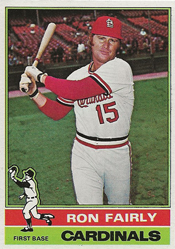
Ron Fairly tormented Bob Gibson as an opponent and helped him as a teammate.

A first baseman and outfielder, Fairly played 21 years (1958-78) in the major leagues, primarily with the Dodgers and Expos, and spent two seasons (1975-76) with the Cardinals. He played in four World Series for the Dodgers, including 1965 when he batted . 379 against the Twins.

A left-handed batter with a line drive stroke, Fairly did some of his best work against Gibson, the Cardinals’ ace.

During his Hall of Fame career, Gibson yielded more hits (48) and more doubles (10) to Fairly than he did to any other batter.

In addition to having his career highs in hits and doubles against Gibson, Fairly produced a career-best 24 RBI versus him.

In his 1968 book, “From Ghetto to Glory,” Gibson said, “I don’t have to make a mistake against Fairly. Whatever I throw, he just hits it _ I don’t care what it is _ and always when somebody is on base. The guy is just a pretty good hitter.”

Four decades later, in his book, “Sixty Feet, Six Inches,” Gibson described Fairly as a batter who “would punch the ball over the shortstop’s head and you couldn’t strike him out. I tried to pitch him in, like I did a lot of left-handed hitters, and I didn’t have any luck with that. I’d pitch him away, make a good pitch, and he’d dump it over the shortstop’s head.”

In 1975, Fairly’s first season with the Cardinals and Gibson’s last, Gibson benefitted from Fairly’s formidable hitting.

On July 27, 1975, Fairly had two hits, two walks, one RBI and scored a run in the Cardinals’ 9-6 victory over the Phillies at St. Louis. Gibson got the win, the 251st and last of his career, with four scoreless innings of relief. Boxscore

Fairly talented

Fairly attended the University of Southern California, signed with the Dodgers in June 1958 and made his debut with them three months later at age 20.

He established himself as a smooth fielder at first base and a consistent hitter.

Chicago columnist Jerome Holtzman rated Fairly “the best first baseman I’ve ever seen coming in on a bunt.”

Dodgers manager Walter Alston, in a 1965 interview with Bob Broeg of the St. Louis Post-Dispatch, said he regarded Fairly the best hitter with runners on base of any of the players he’d managed.

For his career, Fairly had 17 home runs and 100 RBI versus the Cardinals. He batted .302 against Gibson, with 48 hits, including four home runs, in 159 at-bats. Fairly’s on-base percentage versus Gibson was .369.

In Gibson’s autobiography, “Stranger to the Game,” Gibson’s friend and teammate Joe Torre said, “Ron Fairly hit Gibby about as well as anybody did.”

On July 15, 1964, Fairly hit two home runs, one against Gibson and the other versus Ray Washburn, in a 13-3 Dodgers victory over the Cardinals at St. Louis. Boxscore

Regarding the Gibson fastball he hit for the homer, Fairly said, “I just got around in front of the pitch and laid the bat on the ball. Gibson supplied the power.”

The next day, Fairly hit a homer against Ray Sadecki. For the three-game series, Fairly had 10 RBI and six hits in 13 at-bats.

A year later, on June 3, 1965, at St. Louis, Fairly hit a two-run home run off Barney Schultz with two outs in the eighth, erasing a 10-9 deficit and lifting the Dodgers to an 11-10 victory. Boxscore

Fairly hit the first walkoff home run of his major-league career on Sept. 25, 1970, for the Expos against the Cardinals in Montreal. With the Cardinals ahead, 5-4, the Expos had two on and two outs in the ninth when Fairly hit an 0-and-2 fastball from rookie Al Hrabosky for a game-winning homer. Boxscore

“I can’t hit a ball any better than that,” Fairly said to the Montreal Gazette.

Proud pro

On Dec. 6, 1974, the Cardinals acquired Fairly from the Expos for a pair of prospects, first baseman Ed Kurpiel and infielder Rudy Kinard. Cardinals general manager Bing Devine projected Fairly to be a pinch-hitter and backup to rookie first baseman Keith Hernandez. Fairly, 36, told The Sporting News, “I expect to play a lot. I’d like to play every day.”

Hernandez, 21, opened the 1975 season as the starter, struggled and was sent to the minors in June.

Fairly, getting starts at first base and in the corner outfield spots, became a valuable player for the 1975 Cardinals. He hit .301 and had an on-base percentage of .421. He also hit .343 as a pinch-hitter. On July 8, 1975, at St. Louis, Fairly hit a grand slam against Pete Falcone of the Giants. Boxscore

“I don’t fool around in batting practice,” Fairly said. “I try to hit with game situations in mind. Too many players fool around too much in batting practice and that gets them in bad habits.”

Fairly shared his knowledge with Cardinals teammates. According to The Sporting News, catcher Ted Simmons, “regarded by many as the purest hitter now active in the game,” listened to the advice Fairly gave him on hitting.

Hernandez returned to the Cardinals in September 1975 and regained his starting job. In his memoir, “I’m Keith Hernandez,” Hernandez said Fairly “took the time to show me how to better break in a first baseman’s mitt and how to cheat a little bit on a close putout at first.”

“You’re moving forward to get the ball with the glove, extending your body, and your foot comes off the bag just before the ball arrives,” Fairly told Hernandez. “Don’t rush it, or the ump will catch you pulling your foot.”

In his book, Hernandez said, “I worked on it every day during infield until I had it, and took Ron’s sly little move with me for the rest of my career.”

Fairly found his old nemesis, Bob Gibson, to be a good teammate. In an interview with Cardinals Yearbook in 2018, Fairly told Joe Schuster that Gibson “was really good with my kids.”

“He was their favorite player,” Fairly said. “They would go by his locker and talk to him until he got tired. Then he’d call them little green flies _ ‘That’s enough now. You little green flies need to leave me alone since I have to take a shower and get out of here.’ They loved him and I have tremendous respect for him.”

Watching Fairly’s impact on the Cardinals, Expos owner Charles Bronfman admitted, “That Fairly deal was very unfortunate. I think Ron fooled a lot of us by playing a lot better than we expected.”

The next season, Fairly hit .264 and had an on-base percentage of .385 for the Cardinals before they sold his contract to the Athletics on Sept. 14, 1976. He batted .364 with runners in scoring position for the 1976 Cardinals.

Overall, in his two St. Louis seasons, Fairly batted .289 with a .409 on-base percentage.

He went on to play for the Athletics, Blue Jays and Angels, finishing his career with 1,913 hits.

Read Full Post »

(Updated Sept. 1, 2024)

Bobby Del Greco was a graceful center fielder with a strong arm, but he was no Bill Virdon.

Del Greco was a principal figure in one of the Cardinals’ most lopsided trades.

On May 17, 1956, the Cardinals dealt center fielder Bill Virdon to the Pirates for Del Greco and pitcher Dick Littlefield.

Virdon, 24, was the winner of the 1955 National League Rookie of the Year Award. Del Greco, 23, was seeking a chance to play regularly in the major leagues.

The deal was a dud for the Cardinals. Virdon played 11 years with the Pirates, producing 1,431 hits, earning a Gold Glove Award and helping them win a World Series championship. Del Greco played part of one season for the Cardinals, couldn’t hit consistently and was sent to the Cubs.

Great glove

A Pittsburgh native, Del Greco was signed to a Pirates contract by Hall of Famer Pie Traynor. In 1952, Del Greco was 19 when he made his major-league debut with the Pirates against the Cardinals and produced three hits and a walk in five plate appearances. Boxscore

After hitting .217 in 99 games for the 1952 Pirates, Del Greco spent the next three seasons in the minor leagues. He played for the Hollywood Stars of the Pacific Coast League in 1955 and hit .287 with 26 doubles and 21 stolen bases for manager Bobby Bragan. Del Greco also caught the attention of Fred Hutchinson, manager of the rival Seattle Rainiers.

In 1956, Bragan became manager of the Pirates and Hutchinson became manager of the Cardinals. Bragan chose Del Greco to be the Opening Day center fielder for the 1956 Pirates.

Del Greco has “a strong, accurate arm and the instinct of throwing to the right base,” The Sporting News noted. He “gets a tremendous jump on any fly ball and can outrun some of them.”

Seeing is believing

The Cardinals opened the 1956 season with Wally Moon as the first baseman and an outfield of Hank Sauer in left, Virdon in center and Stan Musial in right.

After batting .281 as a Cardinals rookie in 1955, Virdon got off to a slow start in 1956. Cardinals general manager Frank Lane suspected Virdon might have deteriorating vision. Also, Virdon, like Musial and Moon, batted left-handed and Lane wanted an outfielder who batted from the right side.

Hutchinson suggested Del Greco as a replacement for Virdon and Lane began trade talks with the Pirates after the Phillies declined to deal center fielder Richie Ashburn for Virdon.

On May 13, 1956, Del Greco hit two home runs in a game at Pittsburgh against the Phillies’ Harvey Haddix, a former Cardinal. Lane was at the game to scout Del Greco and was impressed. Boxscore

Del Greco’s two-homer game “was the biggest boost for the trade,” Pirates general manager Joe Brown told The Sporting News.

Pirates plunder

Though Virdon was batting .211 in 24 games for the 1956 Cardinals, the trade was viewed as a major risk for them. Moon told Cardinals Yearbook in 1999, “Bill was an exceptionally good defensive player. I was most unhappy when they traded him to Pittsburgh.”

Del Greco was batting .200 for the 1956 Pirates and they primarily were playing him against left-handers.

Hutchinson called Del Greco “a terrific outfielder” with “a real good arm and speed.” He told the St. Louis Post-Dispatch, “Yes, I’d have to say (he’s) better than Virdon.”

Lane said, “We liked Del Greco because he seemed to have more drive than Bill.”

Citing the eyesight issue, Lane said, “Maybe, as has been suggested, we decided it would be better to let Pittsburgh or another club worry about whether he still has major-league vision.”

Lane added, “It wasn’t only Virdon’s failure to get base hits. Bill wasn’t even hitting the ball hard.”

Brown said the Pirates “wanted Virdon badly,” and when Lane readily agreed to the deal, “I began to wonder if there might be something wrong with Virdon.”

Turns out, Virdon was fine. He batted .334 with 170 hits in 133 games for the Pirates in 1956 and played a splendid center field. Virdon “is certainly on a par even with the fabulous Willie Mays,” The Sporting News remarked. “Pittsburgh fans compare him with the gifted Vince DiMaggio and Lloyd Waner.”

Del Greco batted .215 in 102 games for the 1956 Cardinals. He hit .176 in home games and overall his batting average with runners in scoring position was .098 (5-for-51).

“What a terrible deal,” Sauer said in the book “We Played the Game.” Virdon “was a great fielder, much better than Del Greco.”

A defiant Lane told The Sporting News, “I make no pretensions of perfection in trading. I merely hope to make more good deals than bad ones.”

Moving on

After the 1956 season, Del Greco played winter ball in Havana. Cardinals scout Al Hollingsworth went to Cuba to see Del Greco and said, “One thing he’s got to learn is to forget the long ball.”

At spring training in 1957, rookie Bobby Gene Smith won the Cardinals’ center field job when Del Greco batted .101 in Grapefruit League exhibition games.

On April 20, 1957, the Cardinals traded Del Greco and pitcher Ed Mayer to the Cubs for outfielder Jim King.

Del Greco played for the Cubs (1957), Yankees (1957-58), Phillies (1960-61 and 1965) and Athletics (1961-63), and batted .229 in his career in the majors.

Read Full Post »

The Cardinals never envisioned Dave Giusti to be a closer and neither did the Pirates. When Giusti transformed into one of the National League’s best saves specialists, he helped the Pirates become an East Division power.

On Oct. 21, 1969, the Cardinals traded Giusti and catcher Dave Ricketts to the Pirates for outfielders Carl Taylor and Frank Vanzin.

Giusti, a right-hander, wanted to remain a starting pitcher and the Cardinals didn’t see a spot for him in their projected rotation in 1970.

The Pirates figured Giusti to be a spot starter and middle-inning reliever.

Giusti became the Pirates’ closer only because they had no one else available after their other options faltered.

His emergence as a stopper gave the Pirates an advantage over the Cardinals. The Pirates finished in first place in the East Division five times in a six-year stretch from 1970-75. The Cardinals, who struggled for bullpen help while trading pitchers who became quality closers, failed to win a title in that period.

Wanted man

After winning their second consecutive pennant in 1968, the Cardinals sought to acquire Giusti from the Astros to join a starting rotation of Bob Gibson, Steve Carlton, Nelson Briles and Ray Washburn. Giusti achieved a double-digit win total for the Astros each season from 1966-68.

On Oct. 11, 1968, the Cardinals got Giusti and catcher Dave Adlesh from the Astros for catchers Johnny Edwards and Tommy Smith, but three days later the Padres selected Giusti in the National League expansion draft.

Cardinals general manager Bing Devine was willing to try again. On Dec. 3, 1968, the Cardinals acquired Giusti from the Padres for infielder Ed Spiezio, outfielder Ron Davis, catcher Danny Breeden and pitcher Philip Knuckles.

Initially, the move paid dividends. Giusti won two of his first three starts for the 1969 Cardinals, but in May he injured his back and spent a month on the disabled list. When he returned, he struggled and was moved into a long-inning relief role. Giusti finished the 1969 season with a 3-7 record and 3.61 ERA.

The Cardinals in 1970 planned to have a starting rotation of Gibson, Carlton, Briles, Mike Torrez and Jerry Reuss. In need of a hitter to improve their bench strength, the Cardinals dangled Giusti in trade talks.

Supply and demand

Devine was confident the Cardinals made a good deal in acquiring Taylor for Giusti. A right-handed batter and the step-brother of Orioles slugger Boog Powell, Taylor hit .348 in 221 at-bats for the 1969 Pirates. He had a .415 batting average (17-for-41) as a pinch-hitter. After Taylor accused Pirates management of keeping him on the bench because of “politics,” teammates nicknamed him “Senator.”

The Tigers offered pitcher Joe Sparma for Taylor, the Pittsburgh Post-Gazette reported, but the Pirates preferred Giusti after getting a recommendation from their best player, Roberto Clemente. “He always had good stuff and he is a tough competitor,” Clemente said.

Pirates general manager Joe Brown told The Sporting News, “He can start and relieve. This was a big factor in making the trade.”

The Pirates projected their 1970 starting pitchers to be Steve Blass, Bob Moose, Dock Ellis, Bob Veale and Luke Walker, but Giusti said, “I want to be in the starting rotation. I think I can be a better pitcher if I’m used in rotation.”

Surprising development

Giusti, 30, went to spring training, hoping to convince Pirates manager Danny Murtaugh to make him a starter. Instead, he pitched poorly, yielding 12 runs in 15 spring training innings.

“His curveball hangs and his fastball lacks zip,” the Pittsburgh Post-Gazette reported. “He is not getting the ball down. Most of his pitches, especially his breaking pitches, appear to go to the hitter’s strength, about chest high.”

Giusti told the Pittsburgh Press, “I guess I was pressing. I went down there trying to show the club I could become the fifth starter and, as a result, I wasn’t throwing the ball the way I can.”

The Pirates opened the 1970 season with Giusti as a middle-inning reliever and Chuck Hartenstein as their closer. A slender right-hander, Hartenstein was nicknamed “Twiggy.” He struggled in April, posting a 7.04 ERA in six appearances. Two other closer candidates, Joe Gibbon and Bruce Dal Canton, weren’t the answer, so in desperation Murtaugh turned to Giusti.

Using a palmball, his version of a changeup, Giusti was able to pitch often and well as the closer. By mid-July, he was 8-0 with 14 saves and a 2.37 ERA.

“He’s our bread and butter now,” Murtaugh said.

In June 1970, the Pirates placed Hartenstein on waivers and he was claimed by the Cardinals. A month later, after he posted an 8.77 ERA in six appearances for the Cardinals, Hartenstein was released.

No relief

Giusti finished with a 9-3 record and 26 saves in 1970. The Pirates (89-73) won the division title, five games ahead of the second-place Cubs, and the Cardinals (76-86) came in fourth.

One of the Cardinals’ biggest problems was relief pitching. The staff produced 20 total saves, including eight by team leader Chuck Taylor.

Cardinals management counted on the starters to pitch deep into games and was slow to recognize the growing importance of having a strong bullpen with a dependable closer. The Cardinals weren’t developing top relievers, and they were giving away pitchers, like Giusti, who had the ability to do the job.

In 1970, three of the top closers in the majors were pitchers recently traded by the Cardinals _ Wayne Granger (35 saves) of the Reds, Giusti (26) and Mudcat Grant (24) of the Athletics. The Pirates acquired Grant from Oakland in September 1970 to join Giusti for the pennant push.

Against the Cardinals in 1970, Giusti was 3-0 with a save.

The next season, the Pirates became World Series champions. Giusti produced 30 saves and a 2.93 ERA. His ERA against the Cardinals, who finished as runners-up to the Pirates in the division, was 1.13. The Cardinals’ saves leader in 1971 was Moe Drabowsky, with eight.

Giusti pitched a total of 5.1 scoreless innings in the 1971 World Series against the Orioles and got a save in Game 4.

In seven seasons with the Pirates, Giusti was 47-28 with 133 saves and a 2.94 ERA.

Read Full Post »

« Newer Posts - Older Posts »