Feeds:
Posts
Comments

Archive for the ‘Trades’ Category

(Updated April 30, 2023)

From a public relations perspective, the trade of Ken Boyer from the Cardinals to the Mets was a disaster. From a baseball perspective, it was a marquee deal that produced mixed results.

ken_boyer11On Oct. 20, 1965, the Cardinals traded Boyer, their third baseman and cleanup batter, to the Mets for pitcher Al Jackson and third baseman Charlie Smith.

Cardinals general manager Bob Howsam made the trade because he indicated he believed Boyer, 34, was in decline and the club needed pitching and speed to adapt to their spacious new downtown stadium in 1966.

Howsam said Jackson, 29, bolstered the rotation, and he saw Smith, 28, as a more agile third baseman than Boyer with more power potential.

Bing Devine, former Cardinals general manager who was special assistant to Mets president George Weiss, advocated for New York to acquire Boyer as much for his leadership and professionalism as for his ability to produce runs and stabilize the third base position.

In their first four seasons after entering the National League as an expansion team in 1962, the Mets developed a reputation as a clownish club. Devine envisioned Boyer as a player who could help change that perception.

Ham-handed Howsam

The trade was unpopular with many Cardinals fans. Boyer was Cardinals royalty. In handling the trade callously, Howsam appeared to treat Boyer disrespectfully.

Boyer, who signed with the Cardinals as an amateur free agent in 1949, played 11 seasons for St. Louis (1955-65) and was named an all-star seven times.

He also won the Gold Glove Award five times and earned the NL Most Valuable Player Award in 1964, when he produced 24 home runs, 119 RBI and 100 runs in leading the Cardinals to a pennant and World Series title. Overall, Boyer had 1,855 hits in 1,667 career games with the Cardinals, including 255 home runs and 1,001 RBI.

Boyer learned of the deal in a phone call with reporter Jack Herman of the St. Louis Globe-Democrat.

“You’re kidding,” Boyer said when told of the trade. “That’s really something.

“Seventeen years is a long time (with one organization). I don’t know what to think right now. I wouldn’t be truthful if I didn’t say I was sorry to be leaving.”

The Sporting News reported “various Cardinals officials tried to contact” Boyer to tell him about the trade, but Cardinals fans concluded management, especially Howsam, didn’t try hard enough.

“As soon as the Boyer deal became public property, Cardinals fans touched off a storm,” The Sporting News reported. “They swamped all the news media and even tried to get through to Cardinals general manager Bob Howsam to register protests and threats to cancel tickets.”

The furor was comparable to the uproar that ensued when the Cardinals traded popular standouts such as Rogers Hornsby, Enos Slaughter and Red Schoendienst.

Support from Stan

Schoendienst, who completed his first season as Cardinals manager in 1965, endorsed the trade of Boyer. “We’re sorry to see Kenny go, but good left-handed pitchers are few and far between,” Schoendienst told the Associated Press. “Smith can drive in the runs and is an improved fielder.”

Stan Musial, a Cardinals vice president in 1965, told United Press International the trade was a “good deal” for St. Louis. Musial was impressed by Jackson. “Al is a good competitor,” Musial said. “That guy can beat the tough clubs.”

Said Howsam: “We hate to see a player of Ken’s caliber go, but we had a chance to get a man in Smith who is a power hitter and good fielder, and a fine starting pitcher in Jackson. We felt we couldn’t pass it up.”

Developing a deal

Initially, the Cardinals talked with the Astros about a deal that would have featured Boyer for third baseman Bob Aspromonte. The Mets had been discussing with the Angels a trade of Jackson and Smith for outfielder Jose Cardenal.

When those talks stalled, The Sporting News reported, the Cardinals and Mets struck their deal.

Jackson earned a franchise-leading 40 wins in his four seasons with the Mets. In 1965, Jackson was 8-20 with a 4.34 ERA.

Smith, who played for the Dodgers, Phillies and White Sox before joining the Mets, hit .244 in 1965. His power numbers that season (20 doubles, 16 home runs, .393 slugging percentage) were better than those produced in 1965 by Boyer (18 doubles, 13 home runs, .374 slugging percentage).

“I think I’ll be able to help the Mets,” Boyer said. “The sentiment is gone for the Cardinals … It will strictly be on a business basis now.”

Boyer led the 1966 Mets in RBI (61) and doubles (28) and was second on the club in home runs (14).

In his autobiography, “Cleon Jones: Coming Home,” Mets outfielder Cleon Jones said, “Ken Boyer was an icon, the very best at what he did at his position. Ken Boyer was one of the greatest third basemen to play the game. He was a great defensive player, an offensive force and became a great teammate.

“He was the kind of guy who would always reach out to his teammates. He could talk about the game in a way that made you feel like you belonged in the league, that you could do it because he wasn’t talking to you about what you did wrong but about how you have to be prepared to be successful. That was one of the bright spots in my early career. to have Ken Boyer as a teammate and to watch him go out on the field and perform like he did.”

Al Jackson was second to Bob Gibson in wins (13), complete games (11) and innings pitched (232.2) for the 1966 Cardinals. He had nine wins for the 1967 World Series champion Cardinals, then was dealt back to the Mets.

Charlie Smith had 104 hits and struck out 81 times in 116 games for the 1966 Cardinals. He produced 10 home runs and 43 RBI. After the season, Smith was traded to the Yankees for Roger Maris and was replaced at third by Mike Shannon.

 

Read Full Post »

Seeking a general manager who could turn the Cardinals from flops into champions, team owner Gussie Busch sought the advice of the leader of the publication considered the authority on baseball.

frank_laneAs the 1955 season neared its end, Busch asked J.G. Taylor Spink, publisher of The Sporting News, to recommend the best general manager to hire. Spink suggested Frank Lane of the White Sox.

In September 1955, Lane resigned from the White Sox and sent a telegram to Busch. The wire read: “Have tux, will travel.”

On Oct. 6, 1955, Busch hired Lane to be general manager of the Cardinals.

In a column for The Sporting News, Spink wrote of Lane’s hire, “Probably the most exciting chapter in the history of St. Louis baseball is about to be enacted … The Cardinals will have a team that will win more games _ or the players who lose won’t be around long.”

Taking a trader

Busch bought the Cardinals in 1953 and appointed one of his Anheuser-Busch executives, Dick Meyer, as general manager. Meyer was better suited to run the business side of the franchise rather than the baseball operations side.

As the Cardinals headed to a 68-86 record and next-to-last finish in the National League in 1955, Busch wanted a general manager with a proven record of producing a winner.

Lane, a longtime baseball executive, became general manager of the White Sox after they finished the 1948 season in last place at 51-101. He improved the White Sox through trades and they posted 89 wins in 1953, 94 in 1954 and 91 in 1955.

In seven seasons (1949-55) with the White Sox, Lane made 241 trades involving 353 players, earning the nickname “Trader.”

Rich resources

Busch sent Meyer to New York to begin negotiations with Lane during the 1955 World Series between the Dodgers and Yankees. That led to a follow-up meeting involving Busch, Lane and Meyer in St. Louis.

The Cardinals signed Lane, 59, to a three-year contract. Meyer was promoted to executive vice president. Bill Walsingham Jr., a Cardinals vice president for nine years, resigned, acknowledging the club didn’t need two vice presidents.

Busch gave Lane “full authority” to make all baseball decisions.

“I had three offers but only considered one of them _ the job with the St. Louis club,” Lane said. “Why? Because the Cardinals have the potential for a great club and I know the management has the wherewithal to get what it needs if it doesn’t have what it takes to win.

“I don’t think I’m going too far when I say we should be a first division club and quite possibly a contender if we made the deals needed to augment an already fine nucleus of talent.”

Asked if any Cardinals players were untouchables for trading, Lane replied, “Yes. We’ll start with Stan Musial, then add Red Schoendienst, Bill Virdon, Wally Moon, Ken Boyer, Harvey Haddix and a few others.”

Lane identified the Cardinals’ top needs as a first baseman, catcher and pitching.

His first major move was to replace manager Harry Walker with Fred Hutchinson, the former Tigers manager.

Bad deals

According to Bob Broeg in the book, “Redbirds: A Century of Cardinals Baseball,” Lane would watch Cardinals home games from the roof outside the Busch Stadium press box, “squinting like a sun worshipper who didn’t see well and listening to the radio.”

“Lane lived for baseball, traveling always with a radio at his ear and a stack of newspaper sports sections under his arm,” Broeg observed.

Expecting magic, the Cardinals instead saw blunders in the trades Lane made in 1956. Among his worst deals that season:

_ Pitchers Harvey Haddix and Stu Miller to the Phillies for pitchers Murry Dickson and Herm Wehmeier.

_ Center fielder Bill Virdon to the Pirates for outfielder Bobby Del Greco and pitcher Dick Littlefield.

_ Second baseman Red Schoendienst and others to the Giants for shortstop Alvin Dark and others.

When Busch got wind of Lane’s plans to trade Musial to the Phillies for pitcher Robin Roberts, he blocked the deal, then told Lane that any future trade proposals would have to be approved by Busch and Meyer before being enacted.

The 1956 Cardinals finished in fourth place at 76-78.

Win or else

Before the 1957 season, Busch told a Knights of Columbus banquet audience, “If the Cardinals don’t win this year or next, Frank Lane will be out on his ass.”

Lane was miffed. Wanting assurances he had the owner’s support, Lane asked Busch to extend his contract beyond 1958. Busch refused.

Lane did make a couple of good trades before the 1957 season, acquiring pitcher Sam Jones from the Cubs and slugging outfielder Del Ennis from the Phillies. The Cardinals placed second in the NL in 1957 at 87-67.

Still upset by Busch’s win-or-else ultimatum before the season and offended that he had to get approval before making deals, Lane resigned in November 1957, with a year remaining on his Cardinals contract, and became general manager of the Indians.

Busch replaced Lane with Bing Devine.

Read Full Post »

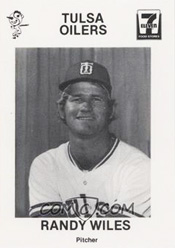
Randy Wiles was the pitcher the Cardinals traded to acquire Tony La Russa.

randy_wilesIn a deal made with the intention of jump-starting a pair of stalled minor-league careers, the Cardinals sent Wiles to the White Sox in exchange for La Russa on Dec. 15, 1976.

From there, the careers of the two players took different paths.

La Russa played one season as an infielder in the Cardinals system before beginning a long and successful second career as a manager, including 16 years (1996-2011) with St. Louis. His two World Series titles, three National League pennants and a franchise-leading 1,408 wins with the Cardinals helped get him elected to the National Baseball Hall of Fame.

Wiles, a left-hander, pitched briefly with the White Sox in 1977, got traded back to the Cardinals after the season and was out of baseball by the end of 1978.

Good potential

Randy Wiles was selected by the Cardinals in the fifth round of the 1973 draft after earning all-Southeastern Conference honors at Louisiana State University.

He was drafted just ahead of another pitcher, LaMarr Hoyt, who went on to become a big-league all-star.

In his first two seasons in the Cardinals’ system, Wiles established himself as a prospect with big-league potential.

He spent 1973 with the Gulf Coast Cardinals (managed by Ken Boyer) and Class A St. Petersburg, posting a 2.81 ERA in 16 games.

In 1974, Wiles had one of the best seasons of any pitcher in the Cardinals organization, with eight wins and a 2.56 ERA at Class AA Arkansas. Wiles won seven of his last eight decisions, yielding two runs for the month of August.

“Everything just clicked,” Wiles told The Sporting News. “I was consistent every time out.”

Reverse course

Wiles opened the 1975 season at Class AAA Tulsa, playing again for Boyer. Instead of positioning himself for a promotion to the big leagues, Wiles took a step back, posting a 5.92 ERA in 11 games.

“I was so inconsistent … I couldn’t keep the ball down,” said Wiles.

The Cardinals demoted him to Arkansas. Dejected, Wiles was 4-5 with a 3.45 ERA in 12 games for the Class AA club.

“I probably had an attitude problem when I was sent down to Arkansas from Tulsa,” Wiles said. “I tried to shake it, but I couldn’t. I gained a lot of weight, too. I wasn’t in shape.”

At spring training in 1976, Wiles pitched well. “I had the best spring I’ve ever had,” he said. “I gave up only one run. Ken Boyer said I would be with him (at Tulsa).”

Instead, the Cardinals sent Wiles to Arkansas. The Cardinals had signed a batch of former big-league pitchers _ Lloyd Allen, Roric Harrison, Lerrin LaGrow and Harry Parker _ and assigned them to Tulsa, leaving no spots available for Wiles.

Relying primarily on a fastball and slider, Wiles rebounded, with a 2.72 ERA in 21 games for Arkansas. “He should be in Tulsa,” said Arkansas manager Jack Krol. “He just got caught up in the numbers game this year. The organization is still high on him. He’s a good pitcher.”

Wiles did get promoted to Tulsa during the 1976 season and, reunited with Boyer, had a 3.90 ERA in 12 games.

Minor deal

After the season, his fourth in the Cardinals system, Wiles, 25, was traded to the White Sox for La Russa, who had batted .259 at Class AAA Iowa in 1976.

La Russa, 32, no longer was considered a big-league prospect, but he appealed to the Cardinals as a player-coach who could mentor infielders such as Jim Riggleman and Ken Oberkfell at Class AAA New Orleans.

“He was kind of looking out for me a little bit,” Riggleman said in the book, “Tony La Russa: Man on a Mission.” “He became like a big brother to me. He gave me a lot of advice and you knew there was a lot of respect for him among the players.”

The White Sox sent Wiles to Iowa for the 1977 season. In August, they promoted him to the big leagues.

Wiles appeared in five games for Chicago, with a 1-1 record and 10.12 ERA. After two weeks with the White Sox, Wiles was placed on waivers and claimed by the Cardinals, who sent him to join La Russa in New Orleans.

After the season, the Cardinals traded Wiles again _ to the Astros for pitcher Ron Selak, a former Cardinals prospect who had been selected by St. Louis three rounds ahead of Wiles in the 1973 draft.

Meanwhile, the Cardinals talked with La Russa about becoming manager of their rookie league club at Johnson City, Tennessee. Though flattered, La Russa said he’d rather seek a position at a higher level of the minor leagues.

In 1978, Wiles, 27, pitched his final season of professional baseball, with the Astros’ Class AAA club in Charleston, W.Va. La Russa launched his career as a manager that season, with the Class AA Knoxville affiliate of the White Sox. A year later, La Russa, 34, became White Sox manager.

Previously: The story of how Tony La Russa got his 1st Cards win

Previously: Tony La Russa and the night he got to be No. 3

Read Full Post »

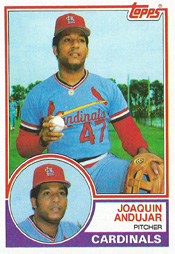
Hub Kittle provided the Cardinals with the insight to see the potential in Joaquin Andujar and transform him into a consistent winner.

joaquin_andujar7Kittle was the pitching coach for the 1981 Cardinals when he recommended Andujar to Whitey Herzog.

“Crazy as a loon, but he could throw,” Kittle said to the New York Times. “Make you want to weep, he had so much talent.”

Dominican connection

Kittle, a longtime pitching coach and instructor, managed clubs in the Dominican Republic during the winters from 1967-76 and got to know Andujar, a prospect in the Reds organization.

An Astros coach from 1971-75, Kittle recommended Andujar and in October 1975 the Astros got him from the Reds.

Kittle joined the Cardinals in 1976 as a roving pitching instructor and remained in the Cardinals minor-league system until Herzog, performing the dual role of manager and general manager, named him pitching coach of the big-league club in 1981. Herzog had played winter baseball for a team in Navojoa, Mexico, managed by Kittle in 1954.

Let’s make a deal

In June 1981, the Cardinals were looking to deal center fielder Tony Scott, who was eligible to become a free agent after the season. Kittle suggested a swap of Scott for Andujar and told Herzog, “I know how to handle him.”

”I knew this kid could help us,” Kittle said. “His mechanics were all fouled up, but we knew he could pitch.”

Andujar earned 11 wins for the Astros in 1977 and 12 in 1978, but his behavior sometimes was bizarre. According to the New York Times, Andujar’s Astros antics included “taking a shower with his uniform on, pouring a carton of cold milk over his head to cool off in the clubhouse, blowing smoke off his imaginary six-shooter, running the bases with a one-armed jacket, coming up with injuries that could not always be diagnosed.”

On June 6, 1981, in the seventh inning of an Astros game versus the Mets, manager Bill Virdon approached Andujar in the dugout and informed him he’d been traded to the Cardinals for Scott. “He (Virdon) told me he hoped I would do well,” Andujar told the Associated Press. “He told me I could go take a shower right then if I wanted. I said, ‘No, I want to stay here and be an Astro as long as I can.’ This is like leaving your family.”

Reclamation project

Andujar was 2-3 with a 4.94 ERA for the 1981 Astros. When he got to the Cardinals, Kittle went to work on restoring Andujar’s slider.

“He’s a guy that needs three pitches _ fastball, change and slider,” Kittle said. “After that, we’ll have to get him sound physically. He’s a big, strong guy and has to work hard.”

Andujar responded to Kittle’s mentoring. He was 6-1 with a 3.74 ERA for the Cardinals in 11 appearances in strike-shortened 1981.

“I used to kick my leg high and look up,” Andujar said to the Society for American Baseball Research. “I wasn’t looking at home plate.”

Kittle got him to stop that.

Andujar also would lift an iron ball between innings when he pitched. Kittle got him to stop that, too. “He’s strong, but not that strong,” Kittle said.

Championship caliber

Andujar became a free agent after the 1981 season and signed a $1.2 million, three-year contract to stay with the Cardinals. “I decided to sign with the Cardinals because I like Whitey Herzog and the way he manages,” said Andujar. “All I want to do is pitch and help the Cardinals win the pennant.”

In 1982, Andujar earned 15 wins in the regular season, got the win in the decisive Game 3 of the National League Championship Series against the Braves and was the winning pitcher in Games 3 and 7 of the World Series versus the Brewers.

In 1984-85, Andujar became the first Cardinals pitcher with consecutive 20-win seasons since Bob Gibson in 1969-70.

Andujar was 68-53 with a 3.33 ERA in five years with the Cardinals.

Read Full Post »

The 1970s was a decade when the Cardinals dealt a significant number of quality starting pitchers, most notably Steve Carlton, Jerry Reuss, Mike Torrez and Jim Bibby.

jim_bibby2A 6-foot-5, 235-pound right-hander, Bibby possessed a fastball Whitey Herzog compared with Nolan Ryan’s.

Bibby, traded by the Cardinals to the Rangers on June 6, 1973, pitched a no-hitter for Texas against the Athletics on July 30, 1973. Boxscore

Herzog, manager of the 1973 Rangers, knew Bibby could be special. Bibby pitched in the Mets’ minor-league system when Herzog was their farm director. It was Herzog who encouraged the Rangers to acquire Bibby from St. Louis.

Career challenges

Bibby, 20, signed with the Mets as an amateur free agent in July 1965. The Mets assigned him to their rookie league club at Marion, Va. One of his teammates was another hard-throwing prospect, 18-year-old Nolan Ryan.

After the season, Bibby was drafted into the Army and his baseball career was put on hold. He spent 1966 and 1967 in the military, including a hitch in Vietnam.

When Bibby resumed his baseball career in 1968, Herzog was in his second year overseeing the Mets’ farm system as their director of player development. Over the next two years, Bibby progressed through that system. The Royals tried to trade for him in December 1969, but the Mets declined.

Bibby’s career hit a roadblock when he needed back surgery in 1970. The procedure required removing bone from his hip and attaching it to his spine to strengthen vertebrae. Bibby sat out the 1970 season, the third year in the last five he couldn’t play baseball.

“There were times during that recuperation period when I wondered if it was worth it,” Bibby told The Sporting News. “I thought maybe it just wasn’t meant for me to play baseball, that maybe I should quit and get into something else.”

Bibby persevered and returned in 1971. Herzog assigned him to Class AAA Tidewater and when Bibby’s record reached 14-2 at the end of July he awaited a promotion to the big leagues. “I wonder what more the Mets want me to do or show,” Bibby said. “I feel I’ve proved myself down here.”

Bibby finished 15-6 with a 4.04 ERA in 27 games for Tidewater. He struck out 150 in 176 innings but issued 109 walks.

Terrific at Tulsa

On Oct. 18, 1971, the Mets traded Bibby, pitchers Rich Folkers and Charlie Hudson and outfielder Art Shamsky to the Cardinals for pitchers Chuck Taylor and Harry Parker, outfielder Jim Beauchamp and infielder Chip Coulter.

The Sporting News reported it “came as no surprise” the Mets gave up on Bibby and added, “The big guy throws hard, but that’s about all.”

Bibby, 27, went to spring training in 1972 as a candidate for the No. 5 spot in the Cardinals’ rotation. The role instead went to Al Santorini and Bibby was sent to Class AAA Tulsa.

With his path to the big leagues stalled again, Bibby was becoming best known as the older brother of Henry Bibby, a starting guard for three national championship basketball teams under UCLA coach John Wooden.

At Tulsa, Jim Bibby started well, pitching a four-hit shutout on Opening Day.

In July, Bibby struck out 16 in each of two consecutive starts.

In 27 starts for Tulsa, Bibby was 13-9 with a 3.09 ERA, striking out 208 in 195 innings. He pitched 13 complete games and showed improved control, walking 76.

Winning debut

Bibby was promoted to the Cardinals in September 1972. He made his big-league debut on Labor Day, Sept. 4, getting the start and the win in the second game of a doubleheader against the Expos at St. Louis. Bibby gave up three runs in the first, including a two-run triple to former Cardinal Tim McCarver, followed by five consecutive scoreless innings before yielding another run in the sixth.

The Cardinals won, 8-7. Bibby’s line: 6.1 innings, 7 hits, 4 runs, 5 walks, 5 strikeouts. Boxscore

In six starts for the 1972 Cardinals, Bibby was 1-3 with a 3.35 ERA.

Command issues

At spring training in 1973, Bibby competed with Alan Foster, Mike Nagy and Santorini for the No. 5 spot in the rotation.

In the exhibition opener, a 4-0 Cardinals triumph over the Mets, Bibby displayed a “powder-river fastball,” The Sporting News reported.

Bibby and Nagy became the finalists for the last pitching spot on the Opening Day roster. Both had run out of minor-league options. The Cardinals chose Bibby, trading Nagy to the Rangers “because Bibby throws harder than Nagy,” The Sporting News reported.

Used sparingly, Bibby struggled with his command, walking 17 in 16 innings. In six appearances, including three starts, Bibby was 0-2 with a 9.56 ERA for the 1973 Cardinals.

Whitey’s wisdom

On June 6, 1973, the Cardinals dealt Bibby to the Rangers for Nagy and catcher John Wockenfuss. In two seasons with St. Louis, Bibby was a combined 1-5 with a 5.11 ERA.

Explaining the deal, Cardinals general manager Bing Devine said of Bibby, “There’s his age (28) and Whitey Herzog knows about him. Whitey said Bibby has a better arm than half his pitchers.”

Said Herzog: “What interested us about Bibby was the fastball. I’d say only Nolan Ryan throws consistently harder in this league. Since this is a breaking-ball league, we felt that if Bibby could get the ball over the plate, he might be successful.”

Herzog instructed Bibby to reduce his assortment of pitches, saying, “With your speed and your slider, you don’t need a curveball … Smoke. That’s your strength. Smoke! Use it.”

Following Herzog’s advice and getting the work he craved, Bibby pitched effectively. Red Sox slugger Carl Yastrzemski said of Bibby, “He’s faster than Vida Blue.”

Bibby at his best

On July 30, 1973, Bibby pitched his masterpiece, a no-hitter in a 6-0 Rangers victory at Oakland. Bibby struck out 13 and walked six.

In the ninth, Bibby issued a leadoff walk to Sal Bando, who swiped second. The next batter, Reggie Jackson, worked the count full. Bibby unleashed a fastball Jackson said he never saw for strike three.

“That last one was the best pitch I ever saw,” said Jackson. “Well, really, I didn’t see it. I heard it.”

Bibby retired Deron Johnson on a groundout and got Gene Tenace to pop out, completing the first Rangers no-hitter.

The next year, Bibby earned 19 wins for the 1974 Rangers.

In 12 years with the Cardinals, Rangers, Indians and Pirates, Bibby had a record of 111-101 with a 3.76 ERA. He made two starts for the Pirates in the 1979 World Series, including Game 7, and posted a 2.61 ERA. In 1980, he had 19 wins for the Pirates and was named an all-star.

In 1984, Bibby, 39, was in his second stint with the Rangers. They released him on June 1 and, eight days later, the Cardinals, managed by Herzog, gave him another chance.

The Cardinals assigned Bibby to Class AAA Louisville, which was managed by his former Rangers and Pirates teammate, Jim Fregosi.

Bibby made two relief appearances for Louisville and didn’t allow a run in five innings, though he walked six and gave up five hits. On July 1, the Cardinals released him. Nearly 20 years after he signed with the Mets, Bibby’s pitching career was done.

Previously: Cardinals, Texas deals: Jim Bibby to Fernando Tatis

Read Full Post »

Unwilling to reward him sufficiently for being one of their key players of the 1980s, the Cardinals were prepared to let Willie McGee depart as a free agent after the 1990 season, but when the Athletics unexpectedly found themselves in need of a center fielder, the Cardinals suddenly were in position to deal.

On Aug. 29, 1990, the Cardinals traded McGee to the Athletics for outfielder Felix Jose, third baseman Stan Royer and minor-league pitcher Daryl Green.

The Cardinals had been resigned to receiving only a compensation pick in the amateur draft if, as expected, McGee had become a free agent and signed with another club.

General manager Dal Maxvill was delighted when his counterpart, Sandy Alderson of the Athletics, called and expressed interest in trading for McGee. Because McGee figured to become available as a free agent, Maxvill said he hadn’t been receiving attractive trade offers for him.

The Athletics, though, became motivated to deal when their center fielder, Dave Henderson, suffered a knee injury on Aug. 20 and went on the disabled list. Unsure how long Henderson would be sidelined but fearing it could be for the remainder of the season, the defending World Series champions didn’t want to jeopardize a chance at another title by lacking an experienced center fielder.

Right circumstance

Alderson said he and Maxvill talked for several days about a deal for McGee. The Cardinals wanted Jose. The Athletics were reluctant to trade him. Alderson described Jose as being “a powerful switch-hitter” with an “outstanding arm” and “excellent speed.” When Alderson relented, the Cardinals felt fortunate to receive such a prized prospect.

“I feel pretty good about it, really,” Maxvill said to the St. Louis Post-Dispatch. “If we had to move McGee for whatever reasons, we did well. But it was circumstance _ Henderson’s injury _ more than any ability on my own.”

Said Cardinals manager Joe Torre: “We made out very well rather than (McGee) walking off and us getting a draft choice.”

Added Alderson: “With the injury to Henderson, we really looked at the short term rather than the long term potential for us.”

Being a switch hitter added to the Athletics’ interest in McGee. Anticipating they would face the Red Sox and their right-handed aces, Roger Clemens and Mike Boddicker, in the American League Championship Series, the Athletics wanted hitters who could bat left-handed. On the same day they acquired McGee, the Athletics also got Harold Baines, a designated hitter and left-handed batter, from the Rangers.

Athletics manager Tony La Russa told the Los Angeles Times, “Felix Jose has done a fine job for us … but if anyone thinks he gave us a better chance to win than Willie McGee does, I’d have to question that judgment.”

Location added to the appeal of the trade. McGee was born in San Francisco, went to high school in Richmond (10 miles north of Oakland) and had a house about a 25-minute drive from Oakland Coliseum.

“I just didn’t want to trade him to some city just for the heck of it,” Maxvill said. “I made an effort to get him back home to Oakland.”

Said McGee: “If I had any place to go, that was it.”

Late-night goodbye

McGee, 31, was a four-time all-star and fan favorite who had played a central role in the Cardinals winning three National League pennants and a World Series championship in the 1980s. He won the NL Most Valuable Player Award and a batting title in 1985.

After the 1987 season, McGee signed a three-year, $4.1 million contract. With that deal about to expire after the 1990 season, McGee was seeking a contract from the Cardinals for three years and $9 million. The Cardinals, though, were offering no more than $7 million for three years, according to Rick Hummel of the Post-Dispatch.

Maxvill conceded that the Cardinals were unlikely to sign McGee. They had a prospect, Ray Lankford, ready to take over in center field.

After the Cardinals beat the Reds in Cincinnati on Aug. 29, they were preparing to leave the ballpark about 1 a.m. and go to the airport for a flight to Atlanta when McGee, walking in a tunnel at Riverfront Stadium, was approached by Torre and informed of the trade.

McGee, with a smile and with tears welling in his eyes, told Hummel, “I just appreciated the opportunity to play in St. Louis. There were some of the best people and some of the best managers there.” He added that playing for the Cardinals since 1982 had been “a beautiful nine years of my life.”

McGee’s departure left shortstop Ozzie Smith as the lone remaining Cardinals player from their 1982 World Series championship team.

Saying he and McGee “were like brothers,” Smith added, “It’s a sad ending to a great time in baseball history for St. Louis.”

Batting champ

McGee hit .335 in 125 games for the 1990 Cardinals. He ranked second in the NL in batting at the time of the trade. At the end of the season, McGee had the best batting average in the NL and was declared the league’s batting champion because he had 542 plate appearances with the 1990 Cardinals, exceeding the requisite number (502) needed to qualify for the title.

McGee hit .274 in 29 games for the Athletics. With 31 hits for Oakland and 168 for St. Louis, McGee led the major leagues in hits in 1990, with a total of 199.

After the season, McGee became a free agent and signed with the Giants for four years and $13 million. After stints with the Giants and Red Sox, McGee, again a free agent, returned to the Cardinals for the 1996 season and was reunited with La Russa. McGee’s second stint with St. Louis lasted four years. He retired after the 1999 season.

Jose was the Cardinals’ starting right fielder in 1991 and 1992. He batted .298 overall for St. Louis, with an on-base percentage of .352. The Cardinals traded him to the Royals in the deal that brought them first baseman Gregg Jefferies.

Royer hit .258 in parts of four seasons (1991-94) with the Cardinals. Green pitched in the Cardinals’ farm system in 1991 and never reached the big leagues.

Previously: Five fabulous facts about Willie McGee

Read Full Post »

« Newer Posts - Older Posts »