Larry Wilson caused NFL quarterbacks to lay awake at night with worry and Bill Nelsen was no exception.
 Nelsen had a prominent role in the play that defined the Pro Football Hall of Fame career of Wilson, the St. Louis Cardinals safety who was as tough as any player in the NFL.
On Nov. 7, 1965, in a game between the Cardinals and Pittsburgh Steelers at Busch Stadium in St. Louis, Wilson intercepted a pass from Nelsen while wearing casts on both fractured hands.
Wilson’s performance remains an enduring testament to his willpower and illustrates why he was so widely respected.
Mind game
Wilson, who played his entire professional career (1960-72) with the Cardinals, fractured his hands in a game against the New York Giants on Oct. 31, 1965, at New York.
Cardinals head coach Wally Lemm said Wilson would play the following Sunday versus the Steelers at St. Louis. Wilson “may be handicapped in making interceptions,” Lemm said to the St. Louis Post-Dispatch, “but he’ll play if at all possible. He’s too valuable a man in all ways to do without.”
Nelsen, in his third NFL season and his first as the Steelers’ starting quarterback, said he had a premonition Wilson would pick off one of his passes.
“I just knew Larry Wilson was going to get an interception,” Nelsen told the Post-Dispatch. “Lying awake the night before the game, I was thinking there was no way he could catch one with his hands wrapped up to protect his fractures, but I knew he was going to get one.”
Finding a way
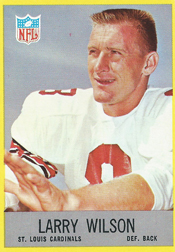
Wilson’s interception set up a Cardinals touchdown in the final 75 seconds of the first half.
The Steelers led, 3-0, and had possession at their 20-yard line when Nelsen threw toward the middle of the field. Wilson caught the ball against his chest at the Steelers’ 37 and returned it to the 3.
“It nestled into my arms nicely,” Wilson said to the Associated Press. Video
Noting Wilson made the only interception of the game, Post-Dispatch sports editor Bob Broeg wrote, “Wilson did what teammates with healthy and unencumbered fingers couldn’t do.”
Asked by Sports Illustrated in a 1995 interview whether it was painful to have Nelsen’s pass hit his damaged hands, Wilson replied, “The only painful thing about it was I should have scored.”
Steelers offensive line coach Ernie Hefferle called the wiry Wilson “one of the gutsiest players in football.”
“I believe he wants to make every tackle,” Hefferle told the Pittsburgh Post-Gazette.
Getting open
On the first play after Wilson’s interception, halfback Bill Triplett ran three yards for a touchdown and the Cardinals led 7-3 at halftime.
The Cardinals held a 14-3 lead entering the fourth quarter, but the Steelers rallied and went ahead, 17-14, with 1:12 to play.
Taking possession at their 20, the Cardinals noticed the Steelers moved into a prevent defense. Completing a couple of short passes across the middle, quarterback Charley Johnson advanced the Cardinals to their 41 with 46 seconds to go. “In their prevent defense, the Steelers had put three backs on one side to cover the receivers coming out of our double-wing formation,” Johnson told the Post-Dispatch.
Johnson asked Billy Gambrell, a slight speedster, if he could beat the safety. Gambrell said he could and Johnson called the play.
With split end Sonny Randle running a route down the left side, Gambrell cut across the middle. Gambrell caught Johnson’s pass at the Steelers’ 20 and sped into the end zone for a 59-yard touchdown reception.
Said Steelers head coach Mike Nixon, “We had two men covering Gambrell … One of the two should have been with him, but the little guy got away from both.”
The Cardinals won, 21-17. Boxscore
Making the plays
Wilson played again the next week against the Chicago Bears, but re-injured his right hand and sat out four games.
He returned for the season finale on Dec. 19 against the Cleveland Browns at St. Louis and intercepted three Frank Ryan passes, returning the first one more than 90 yards for a touchdown. Video
Wilson made a total of 52 career interceptions for the Cardinals.
In May 1968, three years after Wilson picked off his pass in St. Louis, Nelsen was traded by the Steelers to the Browns, and his career took off. Nelsen played five seasons (1968-72) with the Browns and started in five playoff games for them.
Nelsen had his best season in 1969 when he threw for 2,743 yards and 23 touchdowns in leading the Browns to a 10-3-1 record. He tied Fran Tarkenton of the Giants for second in the NFL in touchdown passes in 1969, trailing only the Los Angeles Rams’ Roman Gabriel, who had 24.
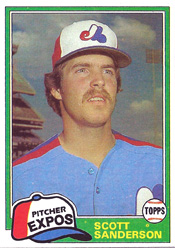 Sanderson was 23 and in his second major-league season with the Expos when he earned the complete-game win versus the Cardinals in the second game of a doubleheader on Sept. 16, 1979, before 59,282 spectators at Olympic Stadium.
 On April 23, 1999, Tatis became the only major-league player to hit two grand slams in one inning. The Cardinals’ cleanup hitter achieved the feat against Chan Ho Park in the third inning of a Friday night game at Dodger Stadium in Los Angeles.
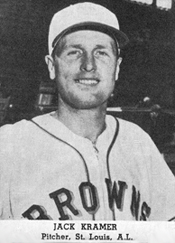 In April 1944, the Browns set an American League record by winning their first nine games.
 On April 15, 1959, Gibson made his major-league debut for the Cardinals against the Dodgers at Los Angeles and the first batter he faced, Baxes, hit a home run.
 On April 14, 1969, the Cardinals opposed the Expos at Montreal in the first regular-season major-league game played outside the U.S.
 RetroSimba