Feeds:
Posts
Comments

After losing their way while trying to navigate a path to the top of the 1958 National League standings, the Cardinals embarked on an odyssey of cultural awakening and confidence building.

In the fall of 1958, the Cardinals traveled to Japan for a goodwill tour and a series of 16 exhibition games against Japanese all-star teams. Along the way, the Cardinals also played exhibition games in Hawaii, Guam, Philippines, Okinawa Island and South Korea.

The Cardinals began the journey from St. Louis on Oct. 9, 1958, and completed the trip with their return on Nov. 18, 1958.

During their adventure, the Cardinals won nearly every game, providing a boost to their self-esteem after finishing the regular season at 72-82, 20 wins fewer than the National League champion Braves.

In addition, the Cardinals were exposed to a world they never knew.

Palaces and diamonds

The Cardinals took 20 players, along with manager Solly Hemus and coaches Johnny Keane and Harry Walker, on the excursion.

They had eight pitchers _ Bob Blaylock, Ernie Broglio, Jim Brosnan, Larry Jackson, Sam Jones, Vinegar Bend Mizell, Phil Paine and Bill Wight.

Brosnan agreed to write columns for the St. Louis Post-Dispatch during the trip.

The 12 Cardinals position players were Ruben Amaro, Don Blasingame, Ken Boyer, Joe Cunningham, Alex Grammas, Gene Green, Ray Katt, Wally Moon, Stan Musial, Bobby Gene Smith, Hal Smith and Lee Tate.

As the Cardinals boarded a plane at Lambert Field in St. Louis, “Musial was the last man up the ramp,” the Post-Dispatch reported. “Musial had the biggest camera kit of all the big camera kits. When the trip is finished, Hemus will know what every Cardinal can do with a 35-millimeter.”

The Cardinals arrived in Honolulu on Oct. 10 and were welcomed by “a hula dancing troupe and a high school band,” the Associated Press reported. The team was taken to Iolana Palace and met with Hawaii Governor William Quinn, a graduate of St. Louis University. Musial was presented a key to the city by Honolulu Mayor Neal Blaisdell.

The Cardinals won all three exhibition games in Hawaii against local teams whose rosters were supplemented by visiting big-league players Lew Burdette, Bob Turley and Eddie Mathews, who were paid to participate.

On the way to the Japanese mainland from Hawaii, the Cardinals stopped at Guam, Manila and Okinawa Island and won an exhibition game against locals or military clubs at each site.

Play to win

The Cardinals arrived in Tokyo on Oct. 20, 1958.

“Dressed in bright maroon coats, white shirts, light gray ties with black and white stripes, light gray trousers and black shoes, they were given a rousing welcome by more than 1,500 fans, most of them flag-waving children,” the Associated Press reported.

From the airport, the Cardinals were driven through Tokyo in 13 decorated open cars and presented with large floral bouquets by kimono-clad women. The team also was greeted by a group of American children, residents of Yokohama, dressed in Cardinals uniforms.

The Cardinals prepared to play 16 games throughout Japan, plus one in Seoul, South Korea.

“We’re going to win all 16 games during our Japan visit,” Hemus said. “My boys are going to hit at least 25 home runs in Japan. No one wants to lose even goodwill games. We came to Japan to win every game we can.”

On Oct. 23, 20,000 people streamed into Tokyo’s Komazawa Stadium to watch the Cardinals conduct their first workout. “I never saw so many people watch a mere workout,” Hemus said.

Altering slightly his prediction of a sweep, Hemus said, “If we lose more than two games to the Japanese all-stars, I’m going to be mighty disappointed.”

Clubhouse chronicler

Broadcaster Joe Garagiola accompanied the Cardinals on the trip and his broadcasts were carried by Cardinals flagship radio station KMOX.

Readers of the Post-Dispatch were treated to Brosnan’s insightful, clever prose. Some examples:

_ “At Chunichi Stadium in Nagoya, the Japanese proved they can hit a hanging curveball as far as anyone. I threw one in the ninth and this fellow, Yomauchi, parked it in the center field seats, 410 feet away.”

_ “An amazingly industrious people, the Japanese are handicapped by lack of land, but utilize every foot-acre, each tillable clod of black earth. In the bottomlands, the rice is planted, the garden plots are stuffed with huge cabbages and turnips, and the slopes sport timber and orchards. Even the mountains look hand-formed.”

_ “They say it goes to 35-below at Sapporo in December. At the Sapporo Grand Hotel, a grand hotel, under a sheet, two blankets and a quilt three inches thick, I burrowed in for the winter. Which lasted for nine hours; then we suited up for another game.”

_ “To get to the Hotel Fujiya from Tokyo, we had to take a narrow road, just wide enough for an English bicycle, down which Japanese buses go careening madly in order to keep on schedule. Arriving in a downpour, after a three-hour ride, everyone was struck by the beauty of the bar.”

_ “The hotel’s rooms are not numbered, as from 100 to 1,000, but given individual names, such as Chrysanthemum, Cape Jasmine and Nandina Japonica. Try to remember that at 3 in the morning after a bottle of sake.”

Lost in translation

To the delight of Hemus, the Cardinals won 14 of the 16 games against the Japanese all-stars, plus the exhibition in Seoul versus the South Korean all-stars.

On the way back, several Cardinals departed in San Francisco and headed from there to their homes. The rest of the party went on to St. Louis and emerged from the plane “looking like gypsies traveling first class,” with luggage laden with souvenirs, the Post-Dispatch reported.

The trip was a success, but it didn’t help the Cardinals compete any better in the National League. They lost 15 of their first 20 games in 1959 and finished the season next-to-last at 71-83.
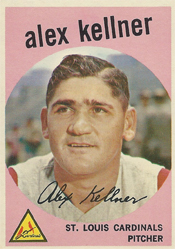
Cardinals pitcher Alex Kellner understood the importance of control and precision in his work both on and off the field.

During the baseball season, Kellner relied on pinpoint command of his curveball to keep batters off balance. After the season, he relied on complete command of a different set of skills to capture a mountain lion.
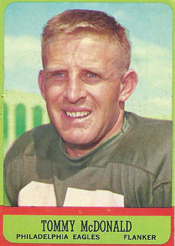
Kellner, who pitched in the major leagues for 12 seasons, including 1959 with the Cardinals, was an avid outdoorsman who hunted for jaguars and bears, went spearfishing in the ocean and, according to several accounts, pursued mountain lions to capture for sale to zoos and circuses.

Meet me in St. Louis

Kellner was born in Tucson, Ariz., in 1924. His father was a cattle rancher and newspaper stenographer, according to a biography by the Society for American Baseball Research.

In 1941, when he was 16, Kellner signed with the Reds and pitched in their minor-league system. Two years later, he enlisted in the Navy and served in the South Pacific during World War II. After his discharge, the Reds released Kellner and he signed with the Athletics.

Kellner, a left-hander, made his major-league debut with the Athletics in 1948 and earned 20 wins for them in 1949. He remained with the Athletics until he was claimed off waivers by the Reds on June 23, 1958. Kellner was 7-3 with a 2.30 ERA for the 1958 Reds, including 2-1 with an 0.65 ERA in three appearances against the Cardinals.

On Oct. 3, 1958, the Reds traded Kellner, first baseman George Crowe and shortstop Alex Grammas to the Cardinals for outfielder Del Ennis, shortstop Eddie Kasko and pitcher Bob Mabe.

Wild kingdom

While with the Reds, reports surfaced of Kellner’s wildlife adventures.

Kellner “rassles Arizona mountain lions in the off-season for pleasure and profit,” the Associated Press reported on July 16, 1958.

In its Oct. 8, 1958, edition, readers of The Sporting News learned Kellner had a “hazardous winter pursuit _ roping mountain lions in his native Arizona.” Kellner “sells the big cats to zoos and circuses,” The Sporting News reported.

Kellner, 34, made his regular-season debut with the Cardinals on April 25, 1959, earning a win with five scoreless innings of relief against the Dodgers at St. Louis. Boxscore

In his next appearance, April 30, 1959, Kellner got a start versus the Braves at Milwaukee and was matched against Warren Spahn. Hank Aaron hit a home run in the fourth, giving the Braves a 1-0 victory. Boxscore

“Kellner knows how to handle enemy batters as easily as he does jaguars and mountain lions,” the St. Louis Post-Dispatch reported.

Man vs. beast

Kellner used dogs to pursue mountain lions. When out of options during such a chase, a mountain lion’s natural inclination is to climb a tree because dogs cannot do the same. With the mountain lion in the tree and the dogs gathered below, Kellner would lasso a rope and attempt to capture the animal.

Kellner, assisted by two other men, including his brother Walt, “once took a mountain lion alive in the mountains of southern Arizona,” Post-Dispatch outdoors columnist James Kearns reported. “Dogs were used to tree the animal.”

In the book “Baseball Players of the 1950s,” Walt, who pitched briefly for the Athletics, said, “I was right there with Alex in the off-seasons hunting down mountain lions and bears for zoos and circuses.”

Kellner also “killed a 275-pound black bear in the western part of the state and wild pigs outside Tucson,” the Post-Dispatch reported. “A year ago, he made a 1,000-mile trip into Mexico and brought down a 141-pound jaguar in Nayarit. He got motion pictures of the animal as it took refuge in a tree, snarling and spitting at the pursuing dogs.”

“I tackle anything,” Kellner said.

King of the sea

Kellner, 6 feet, 215 pounds, indicated his most worrisome experience occurred while spearfishing in the Gulf of California near the Mexican town of Puerto Libertad.

“I was skin diving for fish about 200 yards from shore when this sea lion stuck his head out of the water a few feet away,” Kellner told the Post-Dispatch. “He was as big as I am. I looked him over and he looked me over. He circled me four times, making a survey from all angles. I never took my eyes off him.

“He disappeared beneath the water, but returned about five minutes later. I suppose he was just being playful, but I was glad when he left for good.”

Kellner pitched effectively for the Cardinals as a starter and reliever until June 23, 1959, when he started again against the Braves at Milwaukee. After retiring the first two batters, Andy Pafko and Eddie Mathews, in the first inning, Kellner was pitching to Aaron when he felt a searing pain in his left elbow.

Kellner, who suffered a muscle tear in the elbow, was removed from the game and never pitched again. Boxscore

His record for the 1959 Cardinals was 2-1 with a 3.16 ERA in 12 appearances, including four starts.

Kellner had a career mark of 101-112 with a 4.41 ERA for the Athletics (1948-58), Reds (1958) and Cardinals (1959).

In a game featuring an inordinate number of big plays, Philadelphia Eagles flanker Tommy McDonald produced one nearly every time he touched the football.

On Dec. 16, 1962, McDonald made four catches, three for touchdowns, in a game versus the St. Louis Cardinals at Busch Stadium. In a NFL career filled with achievements, it was McDonald’s best performance against the Cardinals.
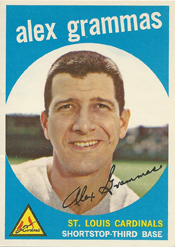
McDonald was one of the NFL’s most amazing players. At 5 feet 9, 175 pounds, he was a prolific pass catcher who regularly produced touchdowns.

Walking tall

McDonald was born in Roy, New Mexico, and his father was a farmer and electrician who set up a spotlight outside the barn “so his sons could play basketball after milking the cows each night,” according to The Daily Oklahoman.

A multi-sport athlete in high school, McDonald was recruited by the University of Oklahoma and was a running back for coach Bud Wilkinson on three consecutive unbeaten teams from 1954-56. McDonald scored 17 touchdowns, 16 rushing and one receiving, for the 1955 national champions. McDonald’s success at Oklahoma earned him election to the College Football Hall of Fame.

“There are worlds of people with potential physical abilities greater than McDonald’s,” Wilkinson said to Sports Illustrated. “About his only real advantages are quickness and extraordinary determination.”

The Eagles selected McDonald in the third round of the 1957 NFL draft and converted him to a receiver.

McDonald was undersized but tough. On Oct. 4, 1959, a week after he broke his jaw and had it wired shut, McDonald played against the New York Giants and scored four touchdowns _ three on receptions and the other on a punt return.

As a teen, McDonald lost the tip of his left thumb in a motorbike accident, the New York Times reported, but he was as sure-handed as any receiver in the NFL.

McDonald also benefitted from learning the proper way to go down after being tackled by much larger defensive players. “I fall like 175 pounds of spaghetti,” McDonald said.

“He has the balance of a gymnast,” Sports Illustrated observed, and as teammate Tom Brookshier said, “The little rat is strong as a bull.”

Good chemistry

Quarterback Norm Van Brocklin, traded by the Rams to the Eagles in 1958, mentored McDonald “in the art of running pass patterns,” the Times reported, and McDonald became Van Brocklin’s favorite receiver.

McDonald led the NFL in touchdown receptions (nine) in 1958.

In the 1960 NFL championship game against the Packers, McDonald caught three passes from Van Brocklin for 90 yards and a touchdown in a 17-13 Eagles victory.

“If I had to pick one guy to throw the ball to with the game on the line, I’d pick McDonald,” Van Brocklin told Ray Didinger, author of “The Eagles Encyclopedia.”

Van Brocklin retired after the 1960 season and his protege, Sonny Jurgensen, took over as Eagles quarterback. Jurgensen and McDonald were friends and clicked on the field. McDonald led the NFL in receiving yards (1,144) in 1961.

Jurgensen, McDonald and Van Brocklin all would be elected to the Pro Football Hall of Fame. “I wound up with two great quarterbacks _ Van Brocklin and Jurgensen,” McDonald told The Daily Oklahoman. “You couldn’t go in a chemistry lab and mix up two better arms.”

Thrill ride

The Eagles and Cardinals each entered the 1962 season finale with a 3-9-1 record. Played on a sunny St. Louis Sunday with a temperature of 40 degrees and before a crowd of 14,989, the game quickly became what the Philadelphia Daily News described as “a spectator’s dream but a coach’s nightmare.”

Among the highlights:

_ McDonald made four catches for 162 yards. Three of those grabs were for touchdowns of 56, 60 and 40 yards, the latter “a remarkable diving catch,” the Philadelphia Inquirer reported.

_ Jurgensen threw for 419 yards and five touchdowns. He did most of that damage from a shotgun formation designed to buy time against the Cardinals’ blitzes, according to the Inquirer.

_ Timmy Brown, the Eagles’ halfback, rushed for 50 yards and caught five passes for 199 yards, including touchdown receptions of 60 and 82 yards.

_ John David Crow, the Cardinals’ running back, rushed for three touchdowns and snared a 16-yard touchdown toss from quarterback Charley Johnson.

_ Johnson threw for 386 yards and two touchdowns and also ran for a score.

_ Sonny Randle, a Cardinals split end, made three catches for 134 yards and a touchdown.

_ Taz Anderson, a Cardinals flanker, totaled 175 yards on eight receptions.

The Cardinals led, 31-28, at halftime and won, 45-35. Game summary and Video

“I’ve never seen a shoddier defensive show by two teams,” said Eagles head coach Nick Skorich.

Cardinals head coach Wally Lemm said, “It seemed both teams wanted to give the game away, didn’t it?”

The teams combined for 1,087 yards _ 589 for the Cardinals; 498 for the Eagles.

“The defensive indolence gave the illusion of offensive excellence,” the Philadelphia Daily News concluded.

Finding the end zone

McDonald six times made three touchdown catches in a game _ five times for the Eagles and the other for the Rams.

He played 12 years in the NFL for the Eagles (1957-63), Cowboys (1964), Rams (1965-66), Falcons (1967) and Browns (1968). His last regular-season game was for the Browns against the Cardinals on Dec. 14, 1968.

McDonald finished his NFL career with 495 catches for 8,410 yards and 84 touchdowns. When he retired, his 84 touchdown receptions were the second-most in NFL history, behind the 99 for the Packers’ Don Hutson. McDonald was inducted into the Pro Football Hall of Fame in 1998.

“I think catching passes is judgment, mostly,” McDonald said. “I’ve got good vision, good peripheral vision. I think sometimes I can see things the defensive back doesn’t see.”


Seeking stability at shortstop, the Cardinals went back to the past in a bid to enhance their future.

On Oct. 3, 1958, the Cardinals reacquired shortstop Alex Grammas, first baseman George Crowe and pitcher Alex Kellner from the Reds for shortstop Eddie Kasko, outfielder Del Ennis and pitcher Bob Mabe.
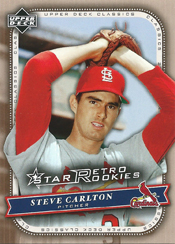
The key to the deal for the Cardinals was Grammas, who had been their starting shortstop in 1954 and 1955 after being acquired from the Reds.

After using eight players at shortstop in 1958, the Cardinals were eager to have someone they knew who could do the job consistently, if not spectacularly.

Moving around

Grammas played baseball for Mississippi State and earned a degree in business. After graduating in 1949, he signed with the White Sox and played in their minor-league system until he was traded to the Reds in June 1951.

The Reds kept Grammas in the minor leagues and in 1953 they loaned him to the Kansas City Blues, a Yankees farm club. Grammas produced his best season for the Blues, batting .307 with 179 hits in 140 games as the everyday shortstop.

The Reds, who had smooth-fielding Roy McMillan as their shortstop, traded Grammas to the Cardinals on Dec. 2, 1953, for pitcher Jack Crimian and $100,000.

Grammas replaced Solly Hemus as the Cardinals’ starting shortstop in 1954. Grammas batted .264 and ranked second among National League shortstops in fielding percentage at .966. In 1955, Grammas continued his good glove work (.968 fielding percentage), but his batting average dipped to .240.

Frank Lane, who as White Sox general manager had traded Grammas to the Reds in 1951, became Cardinals general manager after the 1955 season and wanted more run production from a shortstop than Grammas was able to give.

Grammas opened the 1956 season as the starter, but on May 16 he was traded with outfielder Joe Frazier to the Reds for utility player Chuck Harmon. A month later, Lane dealt second baseman Red Schoendienst to the Giants for Alvin Dark, who became the Cardinals’ everyday shortstop.

Anatomy of a deal

Dark provided the hitting Lane sought, but all did not end well. Lane clashed with Cardinals owner Gussie Busch, departed after the 1957 season and was replaced by Bing Devine. Dark lacked fielding range as a shortstop, got traded by Devine to the Cubs in May 1958 and was replaced by Kasko, who’d been the Cardinals’ starting third baseman as a rookie in 1957.

Kasko made 64 starts at shortstop, didn’t hit well and was benched. Besides Dark and Kasko, others who played shortstop for the 1958 Cardinals were Ruben Amaro, Ken Boyer, Gene Freese, Johnny O’Brien, Dick Schofield and Lee Tate.

As the 1958 season neared its end, Devine, under orders from Busch, reluctantly fired manager Fred Hutchinson and replaced him with Busch’s personal choice, Hemus. While attending the 1958 World Series between the Braves and Yankees, Devine and Hemus went searching for a shortstop.

During Game 1 at Milwaukee, Devine and Hemus sat in the stands near their Reds counterparts, general manager Gabe Paul and manager Mayo Smith. According to Si Burick of the Dayton Daily News, Devine said to Paul, “I’ll take Alex Grammas.” Paul demanded Ennis in return.

“Cincinnati did not want to give up Grammas, one of the top utility infielders of the game, though a weak hitter,” Burick reported.

At Game 2, the trade interest between Devine and Paul got serious and, in an attempt at being discreet, they passed notes to one another from their box seats. One of Devine’s notes to Paul read, “It’s Grammas or nobody.”

Devine and Paul agreed to meet again when the World Series shifted to New York and they made the deal around noon on Oct. 3.

Encore performance

“Whether Grammas will be an improvement over Kasko is a question,” Bob Broeg wrote in the St. Louis Post-Dispatch. “Neither can hit for average or distance. Grammas is considered by the Cardinals’ management to be steadier afield.”

The Cincinnati Enquirer declared, “Grammas, as everybody knows, is an excellent glove man, but an all-American out at the plate.”

Grammas was glad to be rejoining the Cardinals and told the Associated Press, “I like Solly Hemus. He helped me a lot with the Cards before, as much as a fellow ever did in baseball. If I was going to be traded, I couldn’t think of a place to go that I’d like better than St. Louis.”

Of the other two players acquired by the Cardinals from the Reds, Crowe was projected to be a pinch-hitter and backup first baseman and Kellner was expected to help as a left-handed reliever.

After the 1958 World Series was completed, the Cardinals went on a goodwill tour of Japan. Grammas was part of the entourage; Crowe and Kellner weren’t. The exhibition games against Japanese teams gave the Cardinals a chance to evaluate Grammas and he impressed.

Grammas, 33, opened the 1959 season as the Cardinals’ starting shortstop and he kept the job throughout the year, making 123 starts, batting .269 overall and ranking third in fielding percentage (.964) among National Leaguers at the position.

Crowe, 38, hit .301 in 103 at-bats for the 1959 Cardinals. He also played for them in 1960 and 1961, became a mentor to players such as Curt Flood, Bob Gibson and Tim McCarver, and stayed with the Cardinals as an instructor and scout after his playing days. Kellner, 34, was 2-1 with a 3.16 ERA in 12 appearances for the 1959 Cardinals before an elbow ailment ended his major-league pitching career.

After the 1959 season, the Cardinals obtained power-hitting shortstop Daryl Spencer from the Giants. Grammas opened the 1960 season as the Cardinals’ starting second baseman and held that job until the end of May, when he was replaced by rookie Julian Javier.

Grammas was a Cardinals utility player for the remainder of 1960, all of 1961 and part of 1962 before he was traded with outfielder Don Landrum to the Cubs for infielder Daryl Roberston and outfielder Bobby Gene Smith on June 5, 1962.

In 1968, Steve Carlton was a National League all-star and ranked second among the Cardinals in shutouts and strikeouts, but manager Red Schoendienst didn’t start him during the World Series against the Tigers.

Schoendienst gave starts in Games 1, 4 and 7 to Bob Gibson and started Nelson Briles in Games 2 and 5 and Ray Washburn in Games 3 and 6.
Carlton, who pitched well in a start for the Cardinals against the Red Sox in the 1967 World Series, was used as a reliever in the 1968 World Series, even though he’d made only one relief appearance during the season.

Decades later, it’s hard to imagine how a team could have future Hall of Famers Gibson and Carlton in the rotation and not utilize both as starters in a seven-game World Series. The Tigers won four of those games, earning the championship, and naturally one wonders whether the outcome would have been different if Carlton had gotten a start.

After a sensational first half of the 1968 season, Carlton struggled in September and Schoendienst wasn’t comfortable starting him in October, but Briles also slumped late in the season and the Cardinals lost both of his World Series starts.

Ups and downs

Carlton, 23, won seven of his first eight decisions for the 1968 Cardinals, got selected to the all-star team and pitched a scoreless inning for the National League in its 1-0 victory over the American League Boxscore

Carlton and Larry Jaster were the left-handers in a Cardinals rotation with Gibson, Briles and Washburn. The starting pitching in 1968 propelled the Cardinals on a path to a second consecutive league championship.

At times, Carlton was dominant, pitching a three-hitter against the Phillies on May 24 and a one-hitter versus the Cubs on June 19.

After pitching a two-hitter against the Phillies on Aug. 1, Carlton had a season record of 11-5 with a 2.73 ERA, but then he began to lose command of the strike zone and lost four decisions in a row.

“It’s not that Steve is walking too many,” Schoendienst said to The Sporting News. “He’s been getting behind (in the count) on too many batters.”

Decision time

After the Cardinals clinched the pennant in Carlton’s win over the Astros on Sept. 15, Schoendienst and pitching coach Billy Muffett used the last two weeks of the season to determine the starters for the World Series. Gibson, who had won 15 in a row and would finish with a 1.12 ERA, was a given. So, too, was Briles, who would finish with 19 wins. The candidates for the No. 3 World Series starter were Carlton and Washburn.

On Sept. 18, 1968, Washburn significantly helped his case by pitching a no-hitter against the Giants. Two days later, on Sept. 20, Carlton started against the Dodgers, was unable to locate either his fastball or his curve, gave up four runs and seven hits and was lifted after 1.2 innings.

“Steve Carlton apparently removed all doubt as to whether Ray Washburn would start the third game of the World Series,” the St. Louis Post-Dispatch declared. “Even before Carlton failed, manager Red Schoendienst said, ‘It looks like it will be Washburn in the third game.’ ” Boxscore

Though Washurn was 2-3 in September, his ERA for the month in six starts was 2.08 and he finished the season at 14-8 with a 2.26 ERA.

Carlton was 1-2 with a 4.13 ERA in five September starts, allowing 39 hits in 28.1 innings, and finished the season at 13-11, five shutouts, 162 strikeouts and a 2.99 ERA. As a starter, Carlton was 13-10 with a 2.98 ERA. In his last start of the season, Carlton pitched five scoreless innings before Schoendienst decided to give his relievers some work.

Though Briles finished the season 19-11 with a 2.81 ERA, he was 2-2 with a 4.67 ERA in five September starts, allowing 44 hits in 34.2 innings. Briles yielded 13 earned runs over his last 14.2 innings.

Pitching problems

A year earlier, Briles and Carlton each got a start in the 1967 World Series and each pitched well. Briles started Game 3, yielded seven hits and two runs in nine innings and got the win. Carlton started Game 5, yielded three hits and one run in six innings and took the loss in a 3-1 Red Sox victory. Boxscore

In 1968, after Gibson started Game 1, struck out 17 and shut out the Tigers, Briles started Game 2 and gave up four runs in five innings.

Carlton, making his first relief appearance since June 9, relieved Briles in the sixth with Willie Horton on first, none out and the Tigers ahead, 3-0. Jim Northrup hit the first pitch from Carlton for a single, moving Horton to second. After Bill Freehan popped out, Don Wert walked, loading the bases. Carlton struck out Mickey Lolich for the second out, but Dick McAuliffe followed with a two-run single, giving the Tigers a 5-0 lead. They won, 8-1. Boxscore

“If Schoendienst was thinking about giving Steve Carlton a shot at a starting assignment, he probably was discouraged by the left-hander’s showing in relief of Briles,” the Post-Dispatch offered.

Washburn won Game 3 and Gibson won Game 4, putting the Cardinals a victory away from clinching the championship. Schoendienst started Briles instead of Carlton in Game 5. When Briles was relieved by Joe Hoerner with one out and one on in the seventh, the Cardinals led, 3-2, but Hoerner allowed all four batters he faced to reach base and the Tigers rallied for a 5-3 triumph. Boxscore

In Game 6, Washburn started and gave up five runs in two innings. Jaster relieved and yielded three runs without recording an out. The Tigers went on to a 13-1 victory. Carlton pitched three innings and allowed one run, a home run by fellow future Hall of Famer Al Kaline. Boxscore

“If Cardinals fans did any second-guessing of manager Red Schoendienst, it involved his choice of relievers _ Larry Jaster instead of Steve Carlton in the Tigers’ third inning,” The Sporting News reported.

The Tigers beat Gibson in Game 7 and won a World Series title for the first time since 1945.

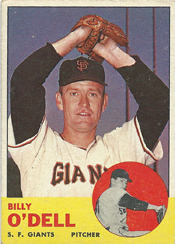
Billy O’Dell was a left-handed pitcher who had success in the National League but the Cardinals’ Tim McCarver caused him trouble, hitting two grand slams against him.

O’Dell is best known as a starter for the 1962 National League champion Giants. He was 19-14 for them and led the staff in starts (39), complete games (20), innings pitched (280.2) and strikeouts (195).

Three years later, in February 1965, the Giants dealt O’Dell to the Braves, who converted him into a closer.

Fit to be tied

On Aug. 16, 1965, the Braves led the Cardinals, 8-4, in the eighth inning at St. Louis. Braves reliever Phil Niekro yielded consecutive singles to Bill White, Phil Gagliano and Ted Savage, loading the bases with no outs. Manager Bobby Bragan brought in O’Dell to face McCarver, a left-handed batter.

O’Dell entered the game with a 1.80 ERA and a string of 28 consecutive innings without allowing an earned run, but McCarver hit O’Dell’s first pitch into the right-field pavilion for a grand slam, tying the score at 8-8.

“That’s about the only real hit I’ve ever got off O’Dell,” McCarver said to the St. Louis Post-Dispatch.

In the ninth, Eddie Mathews poked a two-run single to center against Hal Woodeshick and the Braves won, 10-8. “Woodeshick jammed me good with that pitch,” said Mathews. O’Dell retired the Cardinals in the bottom half of the ninth and got the win. Boxscore

Against all odds

Two years later, on June 14, 1967, O’Dell was with the Pirates and he got the start against the Cardinals’ Bob Gibson at Pittsburgh.

In the first inning, the Cardinals loaded the bases with two outs, bringing up McCarver. O’Dell’s first pitch to him was a strike. The second was an inside fastball and McCarver lifted a high fly to right. Roberto Clemente moved toward the foul line, looking to make a catch, but the ball carried and dropped over the screen, just inside the foul pole, for a grand slam.

“Giving Bob Gibson a 4-0 lead before he even throws a ball is like matching Green Bay with Slippery Rock” in football, The Pittsburgh Press reported.

The Cardinals won, 7-4, and O’Dell took the loss. Boxscore

McCarver hit six grand slams in his major-league career. Four came against right-handers Larry Bearnarth of the Mets, Gary Wagner of the Phillies, Fred Gladding of the Astros and Rick Baldwin of the Mets and two were hit against O’Dell, who usually was effective versus left-handed hitters, limiting them to a .222 batting average in a 13-season career in the major leagues.

O’Dell yielded four grand slams as a big-leaguer _ the two to McCarver and the others to right-handed batters Ray Boone of the Tigers and Gene Oliver of the Braves.

Win some, lose some

O’Dell had a 10-8 record and 4.04 ERA in 42 career appearances versus the Cardinals. He pitched two shutouts against them. The first was May 28, 1960, in an 8-0 victory at St. Louis. O’Dell was backed by Willie Mays, who hit a pair of two-run home runs. Boxscore

O’Dell’s second shutout of the Cardinals was May 10, 1962, a 6-0 victory at St. Louis. Gibson started for the Cardinals and gave up a three-run home run to Willie McCovey. The win gave O’Dell a 5-0 record. Boxscore

A month later, on June 10, 1962, Curt Flood of the Cardinals got his first walkoff home run in the big leagues and it came against O’Dell in the opener of a doubleheader at St. Louis.

O’Dell started for the Giants and took a 5-4 lead into the ninth. After Bobby Gene Smith led off with a single, Dal Maxvill made his first big-league appearance, batting for pitcher Bobby Shantz, and popped out. Flood followed with a two-run home run, lifting the Cardinals to a 6-5 triumph. Boxscore

“It was like David against the Giants as Curt Flood, all 155 pounds of him, sent a slingshot home run into the left-field bleachers,” the Post-Dispatch reported.

Said Flood: “I had decided to swing at the first pitch that looked like a strike. O’Dell didn’t seem as sharp as he had been. He had us swinging at a lot of bad balls.”

Flood batted .309 (21-for-68) versus O’Dell in his career. McCarver hit .333 (8-for-24) against him.

O’Dell never pitched in the minor leagues. He was a standout at Clemson University, joined the Orioles after signing with them on June 8, 1954, and was mentored by pitching coach Harry Brecheen, the former Cardinals left-hander. After entering military service in 1955, O’Dell rejoined the Orioles in September 1956.

O’Dell had a career record of 105-100 with a 3.29 ERA for the Orioles, Giants, Braves and Pirates.