Feeds:
Posts
Comments

A master at changing speeds and controlling his pitches, Stu Miller was a remarkable rookie for the 1952 Cardinals. He earned complete-game wins in each of his first three appearances for St. Louis, yielding a total of one earned run.

stu_miller2In a 16-year big-league career, primarily with the Giants and Orioles, Miller produced 105 wins and 154 saves, led the National League in ERA (2.47) in 1958 and led each league in saves (a NL-best 17 in 1961 and an American League-high 27 in 1963).

It was the Cardinals, though, who developed him and brought him to the majors.

Road to Redbirds

At 21, Miller signed with the Cardinals in 1949 after attending a tryout camp in his home state, Massachusetts.

He quickly rose through their minor-league system, posting records of 16-13 with Class D Hamilton in 1950, 13-10 with Class B Winston-Salem in 1951 and 11-5 with Class AAA Columbus in 1952.

After winning eight of his last 10 starts at Columbus for manager Johnny Keane, Miller, 24, was promoted to the Cardinals in August 1952. Cardinals manager Eddie Stanky was surprised to see his new right-hander was slight (5 feet 10, 150 pounds) and, according to St. Louis writer Bob Broeg, “looks more like a ribbon clerk than a pitcher.”

Dazzling debut

Stanky tabbed Miller to make his big-league debut in a start against the Cubs at Chicago on Aug. 12, 1952.

“Stu’s got ice water in his veins,” Cardinals pitcher Harry Brecheen said to The Sporting News. “I went over the Chicago lineup with him at dinner before his first major-league start and asked him if he’d be nervous. ‘Maybe for one pitch,’ he told me. But the way he curved that first strike past Tommy Brown, I don’t think he was tense at all.”

Miller struck out Brown and settled into a groove, baffling the Cubs with a fastball, changeup and curve.

In the bottom of the ninth, with the Cardinals ahead, 1-0, the Cubs put runners on first and third with two outs. Brecheen was warming in the bullpen.

With Bill Serena at the plate, Stanky went to the mound and stared into the eyes of Miller.

“I’m all right,” Miller told the manager.

Stanky stayed with Miller.

Serena worked the count to 3-and-2. Miller threw a fastball and Serena struck out, ending the game and securing the shutout win. Boxscore

“I warmed up in the ninth inning and worked up more of a sweat than he did pitching nine innings,” Brecheen said.

The Cubs were limited to six hits _ five singles and a Hank Sauer double _ and two walks.

“I bet he showed me eight or nine different speeds,” Cardinals catcher Del Rice said. “He was really right when he said he could get his slow stuff over nine out of every 10 pitches.”

Plenty of poise

Five days later, Aug. 17, 1952, Miller made his second start, facing the Reds at St. Louis.

Again, he took a shutout into the ninth.

With the Cardinals ahead, 2-0, the Reds put runners on first and second with two outs.

The batter, Roy McMillan, hit a grounder to shortstop Solly Hemus, who booted the ball, retrieved it and made a wild throw. Joe Adcock scored from second, Andy Seminick went from first to third and McMillan made it to second.

Miller, who would have had his second consecutive shutout if Hemus hadn’t made two errors on the play, prepared to face Bob Borkowski with two runners in scoring position and a one-run lead.

Stanky went to the mound and peered into the eyes of Miller.

“I’ll get him out,” Miller said.

Borkowski struck out looking, giving Miller his second straight complete-game win and the Cardinals a 2-1 victory. Boxscore

“He must be more than 24,” Stanky said, “because he’s too smart and too calm to be that young.”

Said Cardinals farm director Joe Mathes, who was among those who had recommended the Cardinals call up Miller: “Hitting is timing and how the hell can they time something that comes up there at a different speed each time?”

It’s Miller time

In his third start, Aug. 22, 1952, against the Giants at St. Louis, Miller pitched another gem _ striking out nine in a complete-game three-hitter _ and got the win in a 3-1 Cardinals victory. Boxscore

After his first three appearances in the big leagues, Miller was 3-0 with a 0.33 ERA in 27 innings.

In his fourth start, a 4-3 Dodgers triumph over the Cardinals on Aug. 26, 1952, Miller took the loss, even though he held Brooklyn to four hits and struck out 10 in another complete game. Two of the Dodgers’ runs were unearned. Boxscore

Miller finished 6-3 with a 2.05 ERA for the 1952 Cardinals.

Ended as started

The remainder of his Cardinals career wasn’t nearly as successful. Miller was 7-8 with a 5.56 ERA for St. Louis in 1953 and 2-3 with a 5.79 ERA in 1954. He spent the 1955 season at Class AAA Omaha, where he was 17-14.

With an 0-1 record and 4.91 ERA for the 1956 Cardinals, Miller was traded with pitchers Harvey Haddix and Ben Flowers to the Phillies for pitchers Murry Dickson and Herm Wehmeier.

In four seasons with St. Louis, Miller was 15-15 with seven saves and a 4.47 ERA.

At age 40 in 1968, Miller ended his playing career as it started _ in the Cardinals organization. Released by the Braves, Miller signed with the Cardinals’ Class AAA Tulsa team, managed by Warren Spahn, and was 1-2 with a 6.43 ERA in 13 games.

Previously: Take a look at the worst bullpen in Cardinals history

Previously: Shelby Miller leads Cardinals rookies to 36 wins

After considering Roberto Alomar and Alex Cora, the Cardinals chose Mark Grudzielanek to be their second baseman in 2005.

mark_grudzielanekOn Jan. 6, 2005, Grudzielank, a free agent, signed a one-year, $1 million contract with the Cardinals. He replaced Tony Womack, who became a free agent and signed with the Yankees after hitting .307 with 26 stolen bases for the 2004 Cardinals.

Grudzielanek, 34, hit .307 in 81 games for the 2004 Cubs after missing the first two months of the season because of an Achilles’ tendon injury.

In the St. Louis Post-Dispatch, columnist Bernie Miklasz wrote, “I like the Cardinals’ signing of Mark Grudzielanek to play second base … Grudzielanek won’t steal bases or run as well as Womack did. But his on-base percentage is about the same, and he will hit for more power and drive in more runs.”

Cora, 29, hit .264 with 10 home runs for the 2004 Dodgers. The Cardinals lost interest when the free agent demanded a multiyear contract. (Two weeks after the Cardinals got Grudzielanek, Cora signed with the Indians. He hit .205 for them and was traded to the Red Sox in July 2005.)

Alomar, 36, was nearing the end of a Hall of Fame career. A free agent, he had played for the Diamondbacks and White Sox in 2004. A final season with a contender such as the Cardinals was appealing. Instead, after the Cardinals passed, Alomar signed with the Rays but retired before the 2005 season started.

Tough, competitive

Grudzielanek began his big-league career with the 1995 Expos. He hit .281 in four years with the Expos, .284 in five years with the Dodgers and .312 in two years with the Cubs before joining the Cardinals.

“We’re getting a guy who will fit in with our club for a lot of reasons,” Walt Jocketty, Cardinals general manager, told the Post-Dispatch.

Said Cardinals manager Tony La Russa: “Grudzielanek is a tough player. He looks the same every day. He’s very competitive. That’s the No. 1 thing we like in him.”

The Cardinals got what they expected. In 2005, Grudzielanek led National League second basemen in fielding percentage (.990) and double plays turned (108). He batted .294 (155 hits in 137 games) with 30 doubles and 59 RBI.

Prime producer

Only Albert Pujols (38) and Jim Edmonds (37) had more doubles for the 2005 Cardinals than Grudzielanek. He also ranked third on the club in hits, trailing Pujols (195) and David Eckstein (185).

Grudzielanek became the first Cardinals second baseman to have as many as 30 doubles and 59 RBI in a season since Tommy Herr (30 doubles, 61 RBI) in 1986.

On April 27, 2005, Grudzielanek hit for the cycle against the Brewers at St. Louis. No other Cardinals hitter has achieved that feat since. Boxscore

With Grudzielanek at second base, the Cardinals won their second consecutive NL Central title and achieved 100 regular-season wins for the second year in a row. In the 2005 postseason, Grudzielanek fielded flawlessly, committing no errors in nine games for the Cardinals.

He became a free agent on Oct. 27, 2005, and signed a multiyear contract with the Royals two months later. The Cardinals opened the 2006 season with Aaron Miles as their second baseman.

Previously: Roberto Alomar: double trouble for Cardinals

Previously: Spring fling: How Tony Womack sparked 2004 Cardinals

(Updated April 6, 2026)

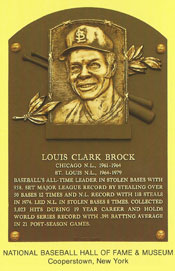
Recognition for being a player of multiple skills was as important to Lou Brock as being elected to the National Baseball Hall of Fame.

lou_brock11On Jan. 7, 1985, Brock got elected his initial time on the Baseball Writers Association of America Hall of Fame ballot.

Though base stealing was his signature talent, attributes such as smarts, work ethic, teamwork, being a catalyst and ability to intimidate foes helped make Brock a Hall of Famer.

Aside from the inaugural Hall of Fame class of Ty Cobb, Babe Ruth, Honus Wagner, Christy Mathewson and Walter Johnson, the 14 players who preceded Brock in being elected their first time on the ballot were Ted Williams, Stan Musial, Bob Feller, Jackie Robinson, Sandy Koufax, Ernie Banks, Willie Mays, Warren Spahn, Mickey Mantle, Al Kaline, Bob Gibson, Hank Aaron, Frank Robinson and Brooks Robinson.

“I think my greatest gift was the ability to be a force on the field, to beat you many ways,” Brock said to United Press International. “I was an unpredictable guy who could beat you in the clutch.”

Red Schoendienst, Brock’s manager from 1965-76, said to Super Sports magazine in 1969, “What’s there he can’t do? He’s a streak on the bases. He can hit and he also can hit with power. He can turn singles into doubles and doubles into triples. He can cover the outfield with the best around … He has to be the most exciting player in the game.”

Brock was named on 315 of 395 ballots (79.5 percent). A candidate needed to be named on 75 percent of the ballots to get elected.

Also elected that year was Hoyt Wilhelm. A knuckleball specialist, Wilhelm was the first relief pitcher elected. He played for nine teams, including the 1957 Cardinals.

Food for thought

Growing up in rural Louisiana, Brock didn’t pay attention much to baseball early in his boyhood until a teacher assigned him to research the lives of players, such as Jackie Robinson and Stan Musial, and present a report to the class.

In the book “Redbirds Revisited,” Brock recalled to authors David Craft and Tom Owens, “In stumbling through what I’d read about these ballplayers, I guess there was this one paragraph that stated these guys got something like $8 to $10 a day meal money. This was an economically poor rural community, remember, and one thing school kids identified with was lunch. Eating. A meal. I had trouble getting a quarter for meal money, and these guys were getting maybe 40 quarters a day. I thought, ‘Wow. Can you believe that?’ That stayed with me, and I wanted to learn more about baseball.”

Brock began playing sandlot baseball, went to Southern University, excelled in the sport there, and signed with the Cubs.

Offensive force

Brock played 16 years (1964-79) with the Cardinals after four seasons (1961-64) with the Cubs. His most impressive career statistics: 938 stolen bases (the National League record) and 3,023 hits in 2,616 games.

With the Cardinals, Brock had 888 steals, 1,427 runs and 2,713 hits in 2,289 games. Primarily a left fielder, Brock ranks second to Stan Musial all-time among Cardinals in hits, runs and games.

(With 1,469 strikeouts as a Cardinal, 20 more than Ray Lankford, Brock is the club’s franchise leader in that category, too. “I’m the type of hitter who leaves the bench swinging and that’s why I don’t really possess the qualifications for a leadoff man,” Brock told Super Sports magazine. “I don’t look for walks, the way a leadoff hitter should … I just look for the baseball. I don’t care if it’s not in the strike zone. I see it, I hit it.”

Brock also ranks second all-time among big leaguers in steals (Rickey Henderson has 1,406). He led the National League in steals eight times, including 1974, when he had a career-high 118 at age 35.

“His speed meant so much that he had a greater effect and worried more pitchers than any home run hitter did,” Ted Sizemore, the Cardinals infielder who often batted second in the order behind Brock in 1974, told The Sporting News.

Said Brock: “I was a force that had to be reckoned with.”

In a 2014 interview with Cardinals Magazine, Brock said, “The stolen base artist has a passion. He is always seeking to occupy a piece of territory behind the enemy line, and there is something distasteful to the opposition about getting out there and taking that territory.

“If you hit a double, you actually land at second base, but if you walk, there’s something arrogant about looking at second base and saying, ‘I want to go over there and stand, and I’m going to do it between pitches.’ ”

Asked to describe his legacy, Brock said it was an “ability to light the fuse to enthusiasm, to cause teams and myself to play to the limit of their ability. You become a chemist, which makes a team tick. I think I had that ability.”

Will to win

Acquired along with pitchers Paul Toth and Jack Spring from the Cubs for pitchers Ernie Broglio and Bobby Shantz and outfielder Doug Clemens on June 15, 1964, Brock sparked the Cardinals to two World Series titles (1964 and 1967) and three National League pennants.

“He was a hard worker,” Bing Devine, the Cardinals general manager who made the trade, said to the Associated Press. “He worked very hard to become the expert base stealer he was. The base stealing is the dramatic thing about him, but he was an all-around ballplayer.”

Brock told Cardinals Magazine, “Being a base stealer was a double whammy. You had to be in shape, along with the rest of your teammates, but you also had to be in base-stealing shape, or you weren’t going to be successful. That was a special challenge, all by itself, that you had to prepare for.”

Brock excelled in the spotlight. He batted .391 (34-for-87) with 16 runs, 14 steals and 13 RBI in 21 World Series games for the Cardinals.

“He was as good as I’ve ever seen rising to the occasion,” Devine said.

United Press International columnist Milton Richmond described Brock as “the thinking man’s ballplayer. He knew almost as much about gravity and motion as Sir Isaac Newton.”

Ted Sizemore, a Dodgers second baseman before joining the Cardinals, had the perspective of observing Brock as an opponent as well as a teammate. Sizemore told Cardinals Magazine, “He slid very late and a lot of times the guys on the club wondered how he didn’t break his ankle sliding so late. Being on the other end of that, I hated tagging him because his knee was always up so high when he came in. You could break your hand putting it in there.”

Keith Hernandez, who joined the Cardinals as a 20-year-old first baseman in 1974, recalled Brock as a Hall of Fame person.

“He helped me more than anybody in my career,” Hernandez said. “He’s one of the guys in my career that if they weren’t around at a certain stage I might not have made it … He was such a giving person.”

(Updated Oct. 30, 2024)

In January 1985, the Cardinals forced out general manager Joe McDonald, friend and working partner of Whitey Herzog. The move signaled to Herzog, the Cardinals’ manager, that he, too, was vulnerable and could be ousted if his club didn’t contend in 1985.

joe_mcdonaldHerzog responded by leading the Cardinals to National League pennants in two of the next three seasons (1985 and 1987), securing his reputation as an innovative winner and capping a managerial career that would lead to his election to the National Baseball Hall of Fame.

Front office upheaval

On Jan. 3, 1985, Cardinals owner Gussie Busch said McDonald, the franchise’s general manager since 1982, had resigned and would remain with the club as a consultant. While vaguely acknowledging McDonald had made “a number of contributions to the team,” Busch also said “a change was needed to build the club into a pennant winner.”

In The Sporting News, Rick Hummel noted Busch’s statement “did not sound as if the move (by McDonald) was voluntary.” McDonald, 55, confirmed as much, telling the Associated Press he’d “look for another job” and was “too young to retire.”

Internal strife

After the Cardinals won the World Series championship in 1982 with Herzog as manager and McDonald as general manager, they finished fourth in the six-team NL East in 1983 and third in 1984.

Expectations were the Cardinals would finish out of contention in 1985, too. After the 1984 season, closer Bruce Sutter became a free agent and bolted the Cardinals for the Braves and McDonald dealt the club’s top run producer, right fielder George Hendrick, to the Pirates.

Concern about the direction the Cardinals were headed was one reason Busch was unhappy with McDonald. Another: Busch was irked McDonald hadn’t informed him about personal problems plaguing Cardinals outfielder David Green, who was entering a treatment center.

In his book, “That’s a Winner,” Cardinals broadcaster Jack Buck wrote, “McDonald made the mistake of not informing Mr. Busch before the story was in the news. Busch had made it clear he did not want to be surprised by anything he heard about his team. He wanted the information first _ and that was one of the reasons McDonald was fired as general manager.”

Committee rules

In a story headlined “Herzog’s Future Could Be In Doubt,” Hummel wrote, “Now that Joe McDonald has resigned, or been fired, as the St. Louis Cardinals general manager, what will become of manager Whitey Herzog, McDonald’s close friend? … Herzog couldn’t be blamed for wondering what the future of the Cardinals is … His input in the organization seems to have been lessened considerably in the past couple of years.”

A three-man executive committee of Busch, attorney Lou Susman and chief operating officer Fred Kuhlmann played a larger role in key Cardinals decisions.

Wrote Hummel, “Herzog and McDonald found it increasingly difficult to work within that framework because they had to get approval from the executive committee on most proposed transactions and, as often as not, they could not find all three members of the committee in town at the same time.”

In his book “White Rat: A Life in Baseball,” Herzog said, “I’d never seen an organization that was as screwed up as ours was when 1985 began.”

Met as Mets

McDonald and Herzog worked together in the Mets organization from 1966-72. In 1967, Bing Devine, the former Cardinals general manager who had become a Mets executive, named McDonald director of scouting and Herzog director of player development.

Herzog went on to become a big-league manager. McDonald became general manager of the Mets in 1975, replacing Bob Scheffing, and held that position through 1979 until new ownership replaced him with Frank Cashen.

McDonald and Herzog were reunited in 1980 when McDonald joined the Cardinals as assistant to Herzog, who was both general manager and manager.

In February 1982, Herzog, tired of negotiating player contracts, suggested to Busch that McDonald should become general manager. Busch agreed and the announcement was made in April 1982.

(Years later, in recalling how he relinquished the general manager job, Herzog said to Cardinals Yearbook, “He (Busch) tore up my contract and gave me a $75,000 raise. I gave up one job and got a $75,000 raise. Pretty good deal, huh?”)

Life after Cardinals

After the Cardinals ousted McDonald, they contracted with consultant Tal Smith to assist them in a search for a replacement. On Feb. 25, 1985, Dal Maxvill, the former Cardinals shortstop, was named general manager.

Meanwhile, McDonald pursued his plan to find another front-office job.

In 1987, McDonald joined the Tigers as director of player development. He replaced Bill Lajoie as Tigers general manager in 1991 and held that position for two years before he was replaced by Jerry Walker.

After leaving the Tigers, McDonald became a scout for the Angels, Rockies and Red Sox. He was a Red Sox scout when they won World Series championships against the Cardinals in 2004 and 2013.

Previously: Why Gussie Busch fired Bing Devine in championship year

(Updated Jan. 6, 2015)

The Cardinals were a tough opponent for Randy Johnson.

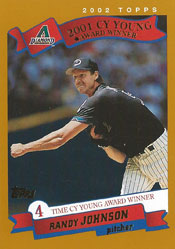
randy_johnsonThe 6-foot-10 left-hander had a 7-7 record and 4.17 ERA versus the Cardinals in 16 regular-season career starts. He also was 0-2 against them in two postseason starts.

Johnson, who has 303 wins, five Cy Young awards and ranks second all-time in strikeouts (4,875), was elected to the National Baseball Hall of Fame on Jan. 6, 2015.

Cardinals slugger Albert Pujols was a Johnson nemesis, batting .458 (11-for-24) against him in the regular season, with five home runs and 13 RBI. He also hit a home run versus Johnson in the postseason.

Here is a look at some memorable matchups between Johnson and the Cardinals:

Roughed up by Redbirds

Mike Matheny and Eli Marrero hit solo home runs on consecutive pitches off Johnson in the third inning and Edgar Renteria knocked him from the game with a three-run homer in the sixth, powering the Cardinals to a 9-4 victory over the Diamondbacks on April 8, 2001, at Phoenix.

Johnson yielded 11 hits and nine runs in 5.2 innings. He also walked two and hit two with pitches. Pujols, batting fourth for the first time in the big leagues, had a two-run double off Johnson and Fernando Vina contributed a two-run single. Rick Ankiel got the win, his last as a big-league starter. Boxscore

The nine earned runs were the most Johnson had yielded in a game since April 10, 1994, when the Blue Jays scored 10 in 2.1 innings against him.

“A game like this will stick with you a little while … I pitched real bad,” Johnson said to the Arizona Daily Star after the loss to the Cardinals.

Johnson, 38, recovered from the pounding and posted one of his best seasons. He was 21-6 with a National League-leading 2.49 ERA for the 2001 Diamondbacks. He struck out a career-best 372 and earned his third consecutive NL Cy Young Award.

Pujols delivers

In Game 2 of the NL Division Series at Phoenix on Oct. 10, 2001, Pujols hit his first postseason home run, a two-run shot off a high fastball from Johnson in the first inning, and sparked the Cardinals to a 4-1 victory over the Diamondbacks.

“I wish I could have that pitch back,” Johnson said to the St. Louis Post-Dispatch.

Said Pujols: “That was my pitch.”

Johnson also yielded a run in the third. Pitcher Woody Williams doubled, advanced to third on a bunt by Vina and scored on a sacrifice fly by Placido Polanco.

Johnson went eight innings, surrendering three runs on six hits and two walks. He struck out nine. Boxscore

“He made two mistakes the whole game, to Pujols and Woody Williams,” said Diamondbacks catcher Damian Miller. “The only two bad pitches.”

Good game plan

Jim Edmonds and Scott Rolen each hit a two-run home run off Johnson, leading the Cardinals to a 12-2 triumph against the Diamondbacks in Game 1 of the 2002 NL Division Series on Oct. 1 at Phoenix. Matheny contributed a RBI-single and a double against Johnson.

In six innings, Johnson allowed 10 hits, six runs and two walks. Boxscore

The Cardinals benefitted from a disciplined approach, laying off sliders and waiting for fastballs, according to Joe Strauss of the Post-Dispatch.

“We did a great job of sticking to our game plan,” said Edmonds. “We made him pitch and tried to hit strikes instead of being overaggressive and trying to match his power.”

Said Diamondbacks manager Bob Brenly: “It appeared to me that he was rushing a little bit. When he does that, his velocity drops (and) his slider is not quite as sharp as it usually is. They were a very unforgiving team to him.”

Escape act

The Cardinals hit four home runs off Johnson, but he escaped with a no-decision in an 8-6 Diamondbacks victory on Sept. 1, 2008, at Phoenix.

Pujols hit a two-run home run and Yadier Molina, Joe Mather and Felipe Lopez each hit solo shots against Johnson. He gave up six hits and five runs in 3.2 innings. Eight of the 11 outs Johnson recorded were on strikeouts. Boxscore

Last win

In his last career appearance against the Cardinals, Johnson gave up two home runs to Pujols but earned the win _ the last of his big-league career _ in a 6-3 Giants victory on June 30, 2009, at St. Louis.

Johnson gave up four hits, four walks and three runs in 5.1 innings. Pujols hit a solo home run in the fourth and a two-run shot in the sixth. Ryan Ludwick accounted for the other two hits off Johnson: a double and a triple. Boxscore

The first home run by Pujols carried an estimated 445 feet. “I didn’t make the pitch I wanted to make,” Johnson said to the San Jose Mercury News. “I think it will probably be landing sometime shortly.”

Johnson has the most career strikeouts of any left-hander. Only right-hander Nolan Ryan (5,714) has more. Johnson and Steve Carlton (4,136) are the only left-handers with more than 3,000 strikeouts.

Johnson ranks fifth all-time among left-handers in wins, trailing Warren Spahn (363), Carlton (329), Eddie Plank (326) and Tom Glavine (305).

Previously: Rick Ankiel and his last hurrah as a pitcher

(Updated March 13, 2023)

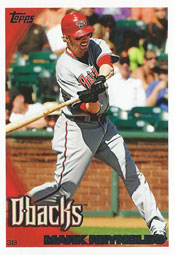
While facing the Cardinals at St. Louis in 2008, Mark Reynolds of the Diamondbacks became the first big-league player to strike out 200 times in a season.

mark_reynoldsSix years later, Reynolds joined the Cardinals as a role player.

A free agent who played for the 2014 Brewers, Reynolds signed a one-year, $2 million contract with the Cardinals on Dec. 11, 2014. The Cardinals hoped he would provide right-handed power. They knew, though, he also would strike out a lot.

Starting in 2006, total strikeouts in the majors increased regularly, according to The Sporting News. Reynolds was the model for that trend.

Poor plate discipline

On Sept. 25, 2008, Reynolds struck out in the second inning against Cardinals starter Joel Pineiro. It was Reynolds’ 200th strikeout that season. He struck out again in the seventh. Boxscore

After the game, Reynolds told Rick Hummel of the St. Louis Post-Dispatch, “It’s obviously something I have to work on for next year. It’s not the greatest of records to have. It’s a matter of pitch recognition and being more patient and more selective. I can’t tell you how many times I’ve gotten to 3-and-2 and swung at ball four.”

Reynolds finished the 2008 season with 204 strikeouts, breaking the big-league record of 195 set by Adam Dunn of the 2004 Reds. The record had been 189 strikeouts by Bobby Bonds of the 1970 Giants until Dunn topped the mark 34 years later.

“Records are made to be broken. Maybe somebody will come along and break my record,” Reynolds told Hummel.

Instead, Reynolds broke his own record the next season.

Whiffs pile up

In 2009, Reynolds struck out 223 times. That remains the big-league record.

“Deep down inside, I’m sure it bothers him more than he likes to portray,” said 2009 Diamondbacks manager A.J. Hinch.

Reynolds reached 200 strikeouts in a season three times: 204 in 2008, 223 in 2009 and 211 in 2010. He was with the Diamondbacks all three seasons.

Tyler O’Neill holds the Cardinals club record for striking out the most times in a season. O’Neill fanned 168 times in 2021, breaking the franchise mark of 167 set by Jim Edmonds in 2000.

Power potential

The reason Reynolds remained in the majors was he hit home runs. In 2009, when he established the strikeout record of 223, Reynolds produced 44 home runs and 102 RBI for the Diamondbacks. Reynolds hit 22 home runs in 378 at-bats for the 2014 Brewers.

“When that production is coming with the strikeouts,” Hinch said, “it (the record) is almost a moot point.”

Paul Molitor, who produced 3,319 hits and never struck out 100 times in a season, told The Sporting News in 2014, “Guys that are good hitters and hit for a high average should probably be striking out 10 percent of the time.”

Reynolds hit 13 home runs and struck out 121 times in 382 at-bats for the 2015 Cardinals. He became a free agent after the season and went to the Rockies.

In 13 seasons in the majors, Reynolds had 1,283 hits (298 for home runs) and 1,927 strikeouts.

“I don’t know if it’s the mentality of the players,” said Molitor, “but they’re definitely not concerned about it.”