Feeds:
Posts
Comments

(Updated Nov. 10, 2019)

The Cardinals’ all-time leader in regular-season plate appearances for a year isn’t a noted leadoff batter such as Lou Brock or Vince Coleman. It’s Taylor Douthit.
matt_carpenter3The Cardinals’ top 10 in regular-season plate appearances in a year, according to Baseball-reference.com:

1. Taylor Douthit, 752 in 1928.

2. Taylor Douthit, 748 in 1930.

3. Curt Flood, 739 in 1964.

4. Lou Brock, 729 in 1970.

5. Don Blasingame, 728 in 1957.

6. Lou Brock, 727 in 1973.

7. Bill White, 726 in 1963.

8. Lou Brock, 724 in 1967.

9. Stan Musial, 722 in 1949.

10. Lou Brock, 721 in 1971.

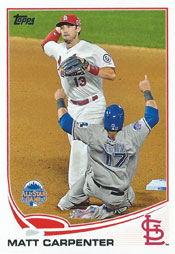
The most recent Cardinals player who came closest to cracking the top 10 was Matt Carpenter, who had 717 regular-season plate appearances in 2013.

A player is credited with a plate appearance each time he completes a turn batting. Unlike an at-bat, a plate appearance may result in a walk, a hit by pitch, a sacrifice bunt or a sacrifice fly.

The all-time major-league leader in regular-season plate appearances in a year is Jimmy Rollins of the 2007 Phillies at 778.

Musial is the Cardinals’ career leader in regular-season plate appearances at 12,717.

Cardinals catalyst

Among Cardinals, no one was better at getting to the plate in a season than Douthit.

A right-handed batter, Douthit, 27, was the center fielder and leadoff batter for the 1928 National League champion Cardinals. He hit .295 with 191 hits and 84 walks in 752 plate appearances in 1928. In the only game he wasn’t in the leadoff spot that season, he batted fifth in four plate appearances.

He also was a high-quality center fielder.

Despite his success, Douthit was the subject of trade speculation after the 1928 season.

In its Oct. 25, 1928, edition, The Sporting News reported Douthit “is one of the mysteries of baseball. He has been a great fielder for years, perhaps the best fly chaser in the game today … This year, he started out like a champion batter. He was the first hitter to collect 100 safeties. His fielding, as always, was brilliant. Then, in midseason, he slumped as a batter and stayed in the slump right through the World Series.”

At the end of July, Douthit had a season batting average of .347, but he hit .218 in August and .179 in September. In the 1928 World Series against the Yankees, Douthit was 1-for-11 (.091).

“If Douthit is traded,” The Sporting News reported, “he’ll make the Cards weep frequently … It will be difficult to remember his early-season hitting after the long late summer and fall when he was looked upon as the man who officially opened every game by making the first out.”

The Cardinals kept Douthit and it was a good decision. He helped them win another National League pennant in 1930. Douthit hit .303 that season with 201 hits and 60 walks in 748 plate appearances. In the 11 games he wasn’t in the leadoff spot, he batted third in 54 plate appearances.

Again, though, he had a miserable World Series, hitting .083 (2-for-24) against the Athletics.

In 1931, Douthit was challenged for the center field job by rookie Pepper Martin. On March 26, 1931, The Sporting News reported, “There was much winter conversation about (Pepper) Martin … But that doesn’t make Douthit anybody’s snail. Taylor always has been a good hitter and a brilliant fielder and, unless he breaks a leg or an arm, he’ll play 154 games for the Redbirds in center field.”

That prediction didn’t pan out. The Cardinals wanted Martin in center field. Though Douthit was hitting .331, he was traded to the Reds on June 15, 1931, for outfielder Wally Roettger.

In nine seasons (1923-31) with the Cardinals, Douthit hit .300 and produced 1,006 hits. His on-base percentage with St. Louis was a sparkling .373.

Lou Brock was expected to have a breakout year in 1964 _ with the Cubs, not the Cardinals.

lou_brock8From October 1963 until the start of the 1964 season, Brock was heralded as an emerging superstar who, along with Billy Williams and Ron Santo, gave the Cubs legitimate hope of building a contender.

Instead, the Cubs deviated from their plan to construct a team with Brock as a cornerstone. Desperate for experienced pitching, the Cubs traded Brock and pitchers Jack Spring and Paul Toth to the Cardinals on June 15, 1964, in a deal that brought them pitchers Ernie Broglio and Bobby Shantz along with outfielder Doug Clemens.

Brock propelled the Cardinals to the 1964 National League pennant with his hitting (.348 batting average in 103 games) and speed (33 steals) after being acquired from the Cubs.

Many had predicted he would produce those kinds of numbers for Chicago.

After hitting .258 with 24 steals for the Cubs in 1963, his second full season in the major leagues, Brock, 24, finished runner-up to Cardinals catcher Tim McCarver in balloting by the Associated Press for the honor of National League sophomore of the year.

“Brock is going to be one of the great players in the game within a few years,” Cubs executive Bob Whitlow told The Sporting News in October 1963.

A month later, The Sporting News reported, “In order to acquire (an) extra starting hurler, the Cubs will not break up their infield nor will they deal either Billy Williams or Lou Brock of the outfield.”

Said Santo: “As for Brock, he’s just going to keep getting better.”

Brock led the Cubs in hitting at .380 during the 1964 spring training season.

In a poll of National League writers conducted by The Sporting News before the start of the 1964 regular season, Brock was selected the Cubs player “likeliest to improve.”

Brock started the season well, hitting .306 in April, but batted .221 in May. He entered June in a 4-for-29 slump. On the day he was traded to the Cardinals, his batting average was .251.

Cubs beat writer Edgar Munzel sensed the Cubs were erring in dumping Brock. Calling Brock “a great young prospect,” Munzel wrote, “Even though he was hitting only .251, the youngster combines power with tremendous speed. He was a constant base-running threat.”

Brock, acquired by the Cardinals three days before his 25th birthday, went on to enjoy a spectacular 19-year big-league career, with 3,023 hits, 938 stolen bases and election to the National Baseball Hall of Fame in 1985.

Previously: Bill White: We thought Brock deal was nuts

(Updated Aug. 2, 2020)

In considering a career path for 1972, Mike Shannon could have attempted a comeback as a Cardinals player or accepted a position on manager Red Schoendienst’s coaching staff. He also could have become a minor-league manager. Instead, he became a Cardinals broadcaster.

mike_shannon3Shannon, who helped the Cardinals win three National League pennants and two World Series titles in the 1960s as a right fielder and third baseman, had his playing career cut short in 1970 because of a kidney disease. He spent the 1971 season as the Cardinals’ assistant director of promotions and sales.

In May 1971, Shannon told the Los Angeles Times-Washington Post News Service, “Ever since I’ve been working, since I was 19 years old, I’ve been in the St. Louis organization. On and off the field, I’m a Cardinal all the way. The difference now is I’m trying to sell the Cardinals off the field.”

After one season in promotions and sales, Shannon went looking for another role. According to the St. Louis Post-Dispatch, Shannon had bought a 350-acre cattle ranch in central Missouri and was prepared to spend his time doing that if he couldn’t get another position with the Cardinals.

In The Sporting News, columnist Dick Young reported Stan Musial told him Shannon “will try to make a comeback with the Cardinals” as a player in 1972.

A month later, The Sporting News reported “Shannon had been in the picture as a coach” for Schoendienst’s 1972 staff. Years later, Shannon told Dan Caesar of the Post-Dispatch that when he declined the coaching opportunity, “I felt really bad because jobs were really tough to get in baseball, but it just wasn’t the kind of money I needed to get by on with five kids to raise and send to college.”

According to the Post-Dispatch, Cardinals general manager Bing Devine offered Shannon the chance to become manager of the Cardinals’ 1972 Class AAA Tulsa club, replacing Warren Spahn. Shannon later confirmed he rejected the offer.

Instead, Shannon was selected in November 1971 to join Jack Buck and replace Jim Woods on the Cardinals broadcast team for 1972.

Opportunity knocks

In the book “Jack Buck: That’s a Winner,” Buck recalled the position opened for Shannon when Woods, unwilling to make promotional appearances on behalf of the Cardinals and team owner Anheuser-Busch, departed for a job with the Oakland Athletics.

“Woods became ill with a gallbladder attack shortly after he was hired (by the Cardinals), and later didn’t do the things he was expected to do by our bosses,” Buck said. “He thought Anheuser-Busch demanded too much of the broadcasters and (he) didn’t show at appearances they wanted him to make in the community, and didn’t attend luncheons and banquets.

“Woods didn’t like someone telling him he had to be here or there at a certain time, although he knew that was part of the job. He left as soon as he could.”

Swing and miss

Years later, Shannon told Mike Eisenbath of the Post-Dispatch that when he accepted the broadcasting job, “I don’t think I was looking at doing it past one year. I just figured, ‘I think I’ll try this.’ ”

Unpolished, Shannon struggled to adapt to broadcasting.

“Shannon’s delivery at first was about as jagged as a broken beer bottle,” the Post-Dispatch’s Dan Caesar wrote.

Broadcaster Jay Randolph said to the Post-Dispatch, “Shannon was raw, raw, raw. Man, he was chopped meat.” Said broadcaster Ron Jacober: “There were a lot of dissatisfied listeners. I myself wondered how in the world could they have hired this guy. He was just awful.”

Shannon knew it. In 1972, he told the Post-Dispatch, “I have a poor radio voice … I’m not the guy with the golden lungs … I’ll probably be moving out of this business into raising cattle eventually.”

Years later, reflecting on his 1972 broadcast debut, Shannon told the Evansville Courier & Press: “It was like buying a new house. I didn’t know where the bathroom was or where the garage was. I knew nothing about the mechanics.”

Shannon told the Post-Dispatch, “I didn’t become frustrated, but a lot of the listeners may have been.”

That’s a winner

Shannon credited Jack Buck with teaching him on the job.

“My real ace in the hole I had was Jack,” Shannon told the Post-Dispatch. “Good Lord of mercy, I don’t know what I would have done without him. That man helped me so much. I didn’t have to go to broadcasting school. Working with Jack was like having a private tutor on the job training.”

Buck opened his home to Shannon for training sessions.

“We’d have a tape recorder and a stopwatch, and I’d try to coach him on how to do a scoreboard show,” Buck said to the Post-Dispatch.

Shannon became a success and remained a Cardinals broadcaster for parts of six decades. His conversion to broadcasting “turned out to be pure inspiration,” the Post-Dispatch observed. “Shannon has given Cardinals fans years of expertise, laughter, malaprops, insight and frequent doses of uncommon common sense.”

He never tried to be perfect. “Perfection was hung on a cross a long time ago,” Shannon said.

(Updated April 5, 2026)

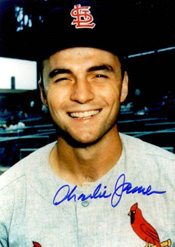
After Stan Musial retired, Charlie James was chosen to replace him as the Cardinals’ left fielder in 1964.

Three months into the season, James was replaced by Lou Brock.

charlie_james2 A St. Louis native, James was a standout athlete at Webster Groves High School and went on to play halfback for the University of Missouri football team and outfield for the baseball team. After his junior season in football, James chose to pursue a career in baseball. The Cardinals signed him in January 1958 and, after a stint in the minors, he was promoted to the big leagues in August 1960.

While playing professional baseball, James earned a bachelor of science degree and a master’s degree in electrical engineering from Washington University in St. Louis.

During the winter, before reporting to spring training with the 1964 Cardinals, James taught electrical engineering courses as an instructor at Washington University. Cardinals infielder Dal Maxvill, also a Washington University graduate in electrical engineering, was moonlighting as a recruiter for the school’s engineering department and Charley Johnson, starting quarterback for the NFL St. Louis Cardinals, was working on his doctorate in chemical engineering there, The Sporting News noted.

Endorsed by Stan

James hit .268 with 10 home runs and 45 RBI in 116 games for the 1963 Cardinals. With Musial retiring and right fielder George Altman traded to the Mets, the Cardinals talked with the Giants about a trade of James and pitcher Ray Sadecki for outfielder Felipe Alou, The Sporting News reported.

Instead, the Cardinals went into 1964 spring training with James as the popular choice to replace Musial in left.

“Altman and I drove in 105 runs last year,” Musial said, “but I’m sure that James and (right fielder Carl) Warwick can do better than that playing all the time. I’m sure they’ll do much better.”

The Sporting News observed, “James, in particular, has been groomed to take Stan the Man’s place ever since he joined the varsity in 1960. Musial, in fact, back in 1959 pin-pointed the former Missouri gridder as the next major outfield star for the Cardinals.”

(According to the Houston Post, when reporters asked how he got along with Musial, James would grin and say, “Just fine. Stan goes his way and I go mine. He goes to the deposit window and I go to the withdrawal window.”)

James hit .320 in 20 spring training games in 1964 and appeared to validate the Cardinals’ confidence in him.

“Charlie is responding well to the challenge,” said manager Johnny Keane. “He knows it is his job and he’s going to keep it.”

Said Musial: “Charlie will get 15 to 20 homers for us.”

Goodbye, Charlie

The Cardinals opened the 1964 season with James in left, Curt Flood in center and Carl Warwick in right.

James, 26, had some big games early in the 1964 season:

_ April 22: He hit a three-run home run off Sandy Koufax in the Cardinals’ 7-6 victory over the Dodgers. Boxscore

_ May 8: He had three hits off Jack Fisher and scored twice in the Cardinals’ 5-4 loss to the Mets. Boxscore

_ May 15: He hit two home runs, one off starter Denny Lemaster and the other against Bobby Tiefenauer, in the Cardinals’ 10-6 victory over the Braves. Boxscore

A right-handed batter, James was hitting .281 on May 19 before he slumped, producing two hits in his next 22 at-bats and dropping his batting mark to .246. By June 15, the day the Cardinals acquired Brock from the Cubs, James was hitting .238.

James was limited to six starts after July 4. He ended the season with a .223 batting average, five home runs and 17 RBI in 88 games. He struggled to hit right-handed pitching, producing a .196 batting average, and was unproductive with runners in scoring position (.183).

With his hitting (.348) and speed (33 steals), Brock was the catalyst in propelling the Cardinals to the National League pennant.

James went hitless in three pinch-hit appearances against the Yankees in the 1964 World Series. After the season, he was traded to the Reds, played one season with them and launched a successful business career, eventually becoming president of Central Electric Co. in Fulton, Mo.

According to the book “Cardinals Where Have You Gone?” by Rob Rains, when James became company president in 1972 it had annual sales of $1 million. At the time of his retirement in 1998, the company did $22 million in annual sales. “I do think my experience competing in baseball helped me prepare for the competition in business,” James said.


Thinking they had the next Bo Jackson, the Cardinals turned down the chance to draft Frank Thomas.

paul_colemanIn the first round of the June 1989 baseball draft, the Cardinals, with the sixth pick, selected outfielder Paul Coleman of Frankston (Texas) High School.

With the next pick, No. 7, the White Sox chose Thomas, a first baseman from Auburn University.

Thomas, a two-time winner of the American League Most Valuable Player Award, was elected to the National Baseball Hall of Fame on Jan. 8, 2014. Playing for the White Sox, Blue Jays and Athletics from 1990-2008, Thomas hit .301 with 521 home runs and 1,704 RBI in his big-league career.

Coleman never reached the major leagues.

The top seven selections in the first round of the 1989 draft:

1. Ben McDonald, pitcher, Orioles.

2. Tyler Houston, catcher, Braves.

3. Roger Salkeld, pitcher, Mariners.

4. Jeff Jackson, outfielder, Phillies.

5. Donald Harris, outfielder, Rangers.

6. Paul Coleman, outfielder, Cardinals.

7. Frank Thomas, first baseman, White Sox.

All except Jackson and Coleman played in the big leagues. Only Thomas made the Hall of Fame.

Sure bet

The Cardinals rated Coleman the fifth-best player in the draft, the St. Louis Post-Dispatch reported, and felt fortunate he was available at No. 6.

“We’ve been looking for a power hitter and we think Coleman is the type of guy who is going to come through,” Fred McAlister, Cardinals director of scouting, told Vahe Gregorian of the Post-Dispatch. “He’s built along the lines of a Bo Jackson.”

Coleman, 5 feet 11 and 215 pounds, hit .498 with 39 home runs in his high school career.

A right-handed batter, Coleman had 119 RBI in 93 high school games. As a senior, he was successful on all 25 of his stolen base attempts. He was 63-for-67 in steal attempts during his prep career.

“We’ve had five of our people look at him,” McAlister said. “I’ve seen him three times myself. He’s an outstanding individual. We’re very fortunate to have had the opportunity to select him.”

Cardinals scout Hal Smith, a former big-league catcher with St. Louis, saw Coleman hit a home run that soared more than 500 feet. “It just went on into the night and you never saw it again,” Smith said. “It left everything.”

Local hero

Coleman, the first outfielder chosen by the Cardinals in the first round since Andy Van Slyke in 1979, was delighted to be taken so early by St. Louis. “I lost my breath when I heard,” he said.

Said Sonny Perry, baseball coach at Frankston High School: “It’s the biggest thing that’s ever happened to this town. It’s the biggest thing that ever will happen to this town.”

Coleman spent five years in the Cardinals’ minor-league system, never advancing beyond Class AA.

His best professional season was in 1993 with the Cardinals’ Arkansas club in the Texas League. Playing for manager Joe Pettini as part of an outfield with John Mabry and Allen Battle, Coleman hit .244 with 24 doubles, seven home runs and 30 RBI in 123 games.

Big Hurt

Thomas, 6 feet 5 and 240 pounds, hit .403 with 19 home runs and 83 RBI for Auburn in 1989.

“He’s strong with outstanding power and not that bad defensively,” Al Goldis, White Sox scouting director, said to the Chicago Sun-Times on draft day. “He does need to lose weight, though.”

A year later, Aug. 2, 1990, Thomas made his big-league debut with the White Sox.

Previously: Frank Thomas let his bat do talking vs. Cardinals

(Updated June 16, 2023)

Cardinals players once offered to defer payments on their salaries in order to help management find the money to sign free-agent pitcher Greg Maddux.

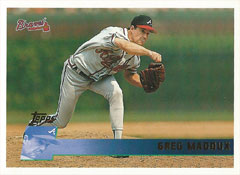
greg_maddux2Despite mutual interest between Maddux and the Cardinals, a deal couldn’t be reached.

Instead, Maddux signed with the Cubs in February 2004.

Elected to the National Baseball Hall of Fame by the Baseball Writers Association of America on Jan. 8, 2014, Maddux earned 355 wins, four Cy Young Award trophies and 18 Gold Glove honors in a 23-year big-league career with the Cubs, Braves, Dodgers and Padres.

After the 2003 season, when Maddux left the Braves and became a free agent, he was among the pitchers the Cardinals pursued.

Right pitcher at right price

In 2003, St. Louis snapped a streak of three straight years in the playoffs. The problem was the pitching. After the season, general manager Walt Jocketty strengthened the staff by acquiring Jason Marquis, Ray King and Adam Wainwright from the Braves and signing free agents Jeff Suppan and Julian Tavarez.

King and Tavarez bolstered the bullpen. Marquis and Suppan joined Matt Morris and Woody Williams in the starting rotation. The Cardinals were hopeful Chris Carpenter, who sat out the 2003 season because of an injury, could become the fifth starter in 2004.

Maddux offered an enticing option. Though 37, he remained effective. He won 16 for the Braves in 2003, his 16th consecutive season with at least 15 wins.

In his book, “Baseball for Brain Surgeons and Other Fans,” broadcaster and former Cardinals catcher Tim McCarver said, “Greg Maddux gets into the mind of a batter and can stay one step ahead of him, and he also has extraordinary control over all his pitches. Every time he throws the ball, he affirms that velocity is less important than movement and location plus deception.”

Jocketty met with Scott Boras, the agent representing Maddux, on Dec. 12, 2003, and spoke by phone with him three days later, Joe Strauss of the St. Louis Post-Dispatch reported. Jocketty “refused to rule the Cardinals out” of the bidding for Maddux, Strauss wrote.

A month later, Maddux remained unsigned. At the Cardinals’ January 2004 Winter Warmup event in St. Louis, team owner Bill DeWitt Jr. told fans, “We’re not real sure what Greg Maddux wants to do. He’d be a welcome addition to any staff. At the right price, we’d be interested.”

Stars offer to help

In early February 2004, Morris told his hometown newspaper in Middletown, N.Y., he called Jocketty and offered to “take less money this season” if the Cardinals signed Maddux, reported Rick Hummel of the Post-Dispatch.

On Feb. 8, 2004, in a column headlined “Ownership Must Listen to Players’ Pitch for Maddux,” Bernie Miklasz of the Post-Dispatch revealed Jim Edmonds, Jason Isringhausen and Scott Rolen had joined Morris in offering to restructure their 2004 contracts to provide the Cardinals money in the budget to sign Maddux.

“According to media reports, several Cardinals stars have signaled to management their willingness to defer salary and assist the team’s effort to sign Greg Maddux,” Miklasz wrote. “This is a significant development. If crucial franchise pieces such as Edmonds, Morris, Izzy and Rolen want to rearrange dollars to give the Cardinals short-term financial flexibility, the owners should play ball.”

Just before spring training began, though, Maddux accepted the Cubs’ offer of a three-year contract for $24 million.

In the end, the Cardinals prevailed.

Maddux was 16-11 in 33 starts for the 2004 Cubs. Morris, Williams, Marquis, Suppan and Carpenter all posted double-digit wins for the 2004 Cardinals. St. Louis had the best record in the National League at 105-57 and finished 16 games ahead of the third-place Cubs.

Previously: How the Cardinals battled Greg Maddux