Feeds:
Posts
Comments

As a Cardinals rookie in 1962, first baseman Fred Whitfield was one of the best power-hitting prospects the franchise had produced in years.

fred_whitfield“He has a quicker bat than anyone on the Cardinals and he can reach the roof at Busch Stadium,” coach Vern Benson told The Sporting News.

Said Phillies manager Gene Mauch after watching Whitfield pound Philadelphia pitching: “Fred Whitfield is the greatest hitter I’ve ever seen _ for the number of times I’ve seen him bat against us.”

The Sporting News hailed Whitfield as the Cardinals’ “biggest surprise of 1962” and Whitfield was selected by big-league managers, coaches and players as the first baseman on the 1962 Topps all-star rookie team.

Signed by Cardinals scout Mercer Harris, Whitfield was a standout in the minor leagues. He hit .309 with 23 home runs for Keokuk in 1958; .285 with 28 homers for Winston-Salem and Tulsa in 1959; .310 with 22 homers for Tulsa in 1960; and .301 with 18 homers for Charleston in 1961.

Whitfield, 24, went to the big-league spring training camp in 1962, but was sent to the Cardinals’ farm club in Atlanta before the season began. Atlanta manager Joe Schultz said Whitfield “could hit 30 home runs in our park.”

He was batting .323 and leading the International League in home runs (eight) and RBI (28) when he was promoted to the Cardinals on May 26, 1962.

The Cardinals were seeking a right-handed batter to replace injured outfielder Minnie Minoso. Because of a weak throwing arm after he hurt his shoulder as an American Legion pitcher, Whitfield only could play first base. Unlike Minoso, he batted left-handed.

According to The Sporting News, it was Cardinals business manager Art Routzong who convinced general manager Bing Devine and manager Johnny Keane to promote Whitfield.

Routzong asked, “Why not bring up the best hitter in our farm system, Fred Whitfield?”

Replied Keane: “Maybe you’ve got something there.”

In his first five pinch-hit appearances for the Cardinals, Whitfield produced three hits and a walk.

On June 10, 1962, in the second game of a doubleheader at St. Louis against the Giants, Cardinals first baseman Bill White pulled a thigh muscle and Whitfield replaced him. In the sixth inning, Billy Pierce twice brushed back Whitfield. On the next pitch, Whitfield hit a three-run home run. “The ball disappeared over the roof in right-center and sailed across Grand Boulevard,” The Sporting News reported. Boxscore

Whitfield went on a tear, with 10 RBI in four games. On June 12, 1962, his two-run homer in the eighth inning off Paul Brown erased a one-run deficit and lifted the Cardinals to a 3-2 victory over the Phillies. Boxscore

“In the five years I’ve been with the Cardinals,” said Routzong, “we have never brought up anyone who has come through with so many clutch hits in so few opportunities as Whitfield.”

Among Whitfield’s other big hits for St. Louis:

_ A three-run pinch-hit home run against the Braves’ Claude Raymond on July 3, 1962. Boxscore

_ A 10th-inning pinch-hit home run off Pirates closer Roy Face on July 15, 1962. Boxscore

_ A pinch-hit three-run home run against Jay Hook of the Mets on July 28, 1962. Boxscore

_ A grand slam off Phillies left-hander Bill Smith on Aug. 12, 1962. Boxscore

Whitfield finished the 1962 season with a .266 batting average, eight home runs and 34 RBI in 158 at-bats for the Cardinals. He hit .333 as a pinch-hitter and .412 with two outs and runners in scoring position. He was especially effective versus the Phillies, batting .313 with 13 RBI in 12 games.

“Fred did an exceptionally good job, especially as a pinch-hitter and part-time player, jobs usually handled by older, experienced men,” Devine said.

However, Whitfield became expendable because White, who batted left-handed, was entrenched at first base, and the Cardinals needed pitching.

On Dec. 15, 1962, the Cardinals dealt Whitfield to the Indians for pitcher Ron Taylor and infielder Jack Kubiszyn.

“If eyebrows were raised over the price Devine had to pay … it was understandable,” The Sporting News reported. “The Cardinals had not come up with a genuine longball threat for years until Fred Whitfield exploded on the scene early last summer.”

Whitfield hit 20 or more home runs three times for the Indians (21 in 1963, 26 in 1965 and 27 in 1966). In a nine-year major-league career (1962-70), he played for the Cardinals, Indians, Reds and Expos, batting .253 with 108 home runs.

On Feb. 9, 1988, the Cardinals acquired a starter to complete what they hoped would be the premier pitching staff in the National League.

jose_deleon2The Cardinals got pitcher Jose DeLeon from the White Sox for pitcher Ricky Horton, outfielder Lance Johnson and $100,000. DeLeon, 27, was thought to be on the verge of transforming from underachiever to big winner. He long had been coveted by Cardinals manager Whitey Herzog.

With a starting rotation of DeLeon, John Tudor, Joe Magrane, Danny Cox and Greg Mathews, plus a bullpen of Todd Worrell, Ken Dayley, Bob Forsch, Scott Terry and Steve Peters, Herzog told Rick Hummel of the St. Louis Post-Dispatch “this has got a chance to be the best pitching staff I’ve ever had … Every day we go out there, we’ve got a chance to win.”

According to columnist Peter Pascarelli in The Sporting News, “Their pitching is now as deep as that of any club in the National League East.”

Unfortunately for the Cardinals, it didn’t turn out that way.

Cox (elbow) and Mathews (shoulder) had injuries and each was limited to 13 starts in 1988. Magrane spent two months on the disabled list that year because of a torn muscle in his right side. Tudor was dealt to the Dodgers in August 1988. National League champions the year before, the Cardinals finished 76-86 in 1988.

DeLeon had two good seasons for the Cardinals, then faded, losing more than twice as many as he won over his next three seasons with St. Louis.

When the trade was made, Herzog told Hummel that DeLeon is a “very good gamble for us. He gives us a right-handed pitcher who can scare some people.”

“With our ballpark, our defense and his maturity … if he’s ever going to blossom into an outstanding big-league pitcher, it should be now,” Herzog said.

Cardinals general manager Dal Maxvill said DeLeon is “a fine, young pitcher who … should be a starter for several years. There are not many pitchers out there who can throw 90 mph consistently.”

Maxvill and White Sox general manager Larry Himes had discussed a deal during the baseball winter meetings in December 1987. Himes wanted Horton, Johnson and catcher Tom Pagnozzi for DeLeon. “I didn’t want to make the deal with Pagnozzi in it,” Maxvill told Hummel.

When the White Sox settled instead for cash, the trade was made.

Johnson hit .333 with 42 stolen bases for Class AAA Louisville team in 1987, but the Cardinals already had a stellar center fielder, Willie McGee. If the Cardinals hadn’t signed free-agent first baseman Bob Horner to replace the departed Jack Clark, Johnson would have played center field for the 1988 Cardinals, with McGee moving to right field and Jim Lindeman shifting from right to first base, the Chicago Sun-Times reported.

Hummel wrote that Johnson didn’t fit as a backup outfielder because St. Louis already had Curt Ford and John Morris, both left-handed batters like Johnson.

Horton had been a versatile and effective starter and reliever for St. Louis. Herzog told Hummel, “I’m really sorry to trade Horton because Rick’s been a very good pitcher for us any way we used him.”

Said Horton (now a Cardinals broadcaster): “It would be a lot easier staying in St. Louis. I make my home here and I will continue to do so … but it might be the best thing for me to go to Chicago. The White Sox obviously are interested in my services and I feel I can do a job for them. Any time somebody wants you, it’s a positive thing.

“I have no bitterness toward the Cardinals … I hope Jose DeLeon wins 20 games for them and they go back to the World Series.”

Most observers thought the Cardinals made a good trade.

Columnist Moss Klein of The Sporting News: “DeLeon, loaded with ability, could become a consistent winner for the Cardinals if he improves his control.”

Pascarelli: “Jose DeLeon gives the Cardinals another starter capable of pitching 200 innings … It was a solid move by St. Louis.”

“All the people in the Cardinals organization have liked DeLeon for a number of years now,” Herzog said. “I know they think he’s got potential. I think he might be ready to come into his own.”

Said DeLeon to Hummel: “I’ve grown up as a man and everything is coming my way now.”

DeLeon was 13-10 for the 1988 Cardinals. His 208 strikeouts that season ranked third among National League pitchers.

In 1989, DeLeon had his best season with St. Louis. He was 16-12. He led the National League in strikeouts (201) and was second in games started (36) and third in innings pitched (244.7).

DeLeon was 29-22 in his first two seasons with the Cardinals; 14-35 in his last three years with them. He was 7-19 in 1990 (leading the league in losses), 5-9 in 1991 and 2-7 in 1992. The Cardinals released him Aug. 31, 1992, and he signed with the Phillies about a week later.

In five years with the Cardinals, DeLeon was 43-57 with a 3.59 ERA. He yielded just 778 hits in 917.2 innings, but wasn’t able to win consistently enough.

Stan Musial and Earl Weaver were Cardinals spring training teammates. Both were elected to the National Baseball Hall of Fame _ Musial for his accomplishments as a Cardinals player and Weaver for his success as an Orioles manager.

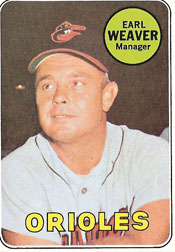
earl_weaverMusial, 92, and Weaver, 82, died on the same day, Jan. 19, 2013.

In March 1952, Musial, 31, was in his prime, having led the National League in batting average, triples and runs scored in 1951.

Weaver, 21, was in the Cardinals’ major-league camp for the first and only time. The 5-foot-7 second baseman was the youngest and shortest member of the Cardinals’ 40-man roster in March 1952, The Sporting News reported.

A St. Louis native, Weaver signed with the Cardinals at 17 in February 1948, a month after he was graduated from Beaumont High School. He played for the Woltman Jewelers team that won the St. Louis Intermediate Municipal League championship three times and also for the Fred W. Stockham American Legion team that won Missouri state titles in 1945 and 1947, The Sporting News reported.

In his first four seasons (1948-51) in the Cardinals’ farm system, Weaver played on four teams that won league championships: West Frankfort (Illinois State) in 1948, St. Joseph (Western Association) in 1949, Winston-Salem (Carolina) in 1950 and Omaha (Western League) in 1951. Weaver’s manager at Winston-Salem and at Omaha was George Kissell.

When Winston-Salem clinched the 1950 Carolina League title with a 3-1 victory over Burlington in Game 5 of the best-of-seven series, pitcher Vinegar Bend Mizell hit a home run and Weaver drove in the deciding runs with a bases-loaded single in the sixth inning. “Scouts of the parent St. Louis Cardinals describe Weaver as a Solly Hemus type,” The Sporting News declared, comparing Weaver with the Cardinals’ feisty shortstop.

After being named to the 1951 Western League all-star team along with Omaha teammate Ken Boyer, Weaver entered 1952 determined to win a spot on the Cardinals’ Opening Day roster as a backup to second baseman Red Schoendienst.

The Sporting News, in its March 5, 1952, edition, reported, “In Earl Weaver, the smallest athlete in camp _ 5 feet 7 _ the Cardinals have a fine infield prospect, a smooth workman around second base and a fair hitter.”

When the Cardinals opened their 1952 spring training schedule on March 8 against the Yankees at St. Petersburg, Fla., the top three in their batting order were Weaver at second base, Hemus at shortstop and Musial in left field. Weaver had two hits and Musial had one in the Yankees’ 11-5 victory over the Cardinals.

The next day, March 9, 1952, Weaver again batted leadoff and started at second base and Musial was in left field, batting third. Weaver and Musial went hitless, but the Cardinals beat the Yankees, 3-1.

What made that game remarkable is 10 of the players _ three Cardinals and seven Yankees _ became major-league managers. They were Weaver, Hemus and catcher Del Rice of the Cardinals; catchers Yogi Berra and Ralph Houk, shortstops Jerry Coleman and Gene Mauch, second baseman Billy Martin, pitcher Eddie Lopat and right fielder Hank Bauer of the Yankees.

(When manager Bauer was fired by the Orioles in July 1968, he was replaced by his first-base coach, Weaver.)

Weaver played and started in many spring training games for the 1952 Cardinals. Among his highlights:

_ On March 10, batting leadoff and playing second base, Weaver was 2-for-4 with two RBI in the Cardinals’ 8-5 victory over the Braves at Bradenton, Fla. Musial had a double in two at-bats.

_ On March 13, Weaver was 2-for-4 with a stolen base and Musial was 1-for-4 in the Reds’ 2-1 victory over the Cardinals at St. Petersburg.

_ On March 14, Weaver had two hits, including a home run off Bob Porterfield, when the Cardinals and Senators played to a 6-6 tie in a game called in the sixth inning because of rain at St. Petersburg.

_ On March 19, Weaver contributed a pinch-hit single for the Cardinals in a game won by the Red Sox, 3-2, at St. Petersburg. The starting left fielders were Musial and Ted Williams. Musial was 2-for-3; Williams, 0-for-3.

Though he impressed the Cardinals, Weaver was returned to the minor leagues at the end of spring training.

Weaver played two more seasons in the Cardinals’ system before his contract was purchased by Denver, a minor-league affiliate of the Pirates, in September 1953.

Weaver played 14 seasons in the minor leagues without appearing in a major-league game.

He established himself as big-league caliber as Orioles manager by winning 1,480 regular-season games, six division titles, four American League pennants and a World Series championship in 17 seasons.

Few recalled, though, his professional baseball career began as a Cardinals prospect who joined Musial as a regular for one glorious month in spring training.

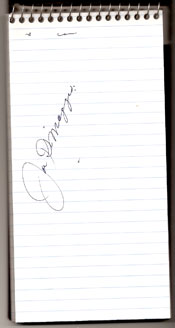
An encounter with Joe DiMaggio preceded my only meeting with Stan Musial.

joe_dimaggioIn January 1989, I resided in Pembroke Pines, Fla., located between Miami and Fort Lauderdale. Super Bowl XXIII, featuring the Bengals and 49ers in the last game coached by San Francisco’s Bill Walsh, was being held in Miami that month.

Among the many Super Bowl festivities in the days leading up to the game was a weekday celebrity golf tournament on the Blue Monster course at the Doral resort in Miami. Among the celebrities: Stan Musial.

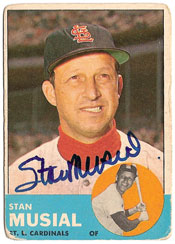
I was 32 and a lifelong fan of Musial, but I never had met him. Figuring I might never get another chance, I hatched a plan. I would go to Doral and attempt to meet him. I brought a Sharpie pen, my 1963 Topps Musial baseball card, a notebook and a ballpoint pen. My hope was to have Musial autograph the card or a page in the notebook.

I arrived mid-morning. Amazingly, there was no admission charge, no restrictions and virtually no spectators. I parked, walked onto the grounds and made my way to a concrete path behind what turned out to be the ninth green, near where I had entered.

Three men, all close to my age then, were the only people nearby. Two appeared to be acquainted with one another and seemed to be there just to see celebrities. The third clearly was either a memorabilia dealer or a representative of one. He had a large bag and inside it were pristine baseballs wrapped individually in cardboard boxes.

I asked the guy with the baseballs whether he knew how long it might be before Musial and his group appeared.

“DiMaggio is coming up to the tee,” he said, pointing to a patch of turf across a pond. “Musial is in the group after that.”

“DiMaggio?” I responded. “I’m here to see Musial.”

The four of us stood apart, watching a group hit to the green of the par-3 ninth. Soon, a pair of golf carts rolled along the perimeter of the pond and up the path toward us. There, in the lead cart, was the silver-haired Yankee Clipper, Joe DiMaggio.

We stood frozen, keeping a respectful distance, as DiMaggio and his group walked onto the green. As they putted, I edged closer to DiMaggio’s cart.

The idea of meeting Stan Musial left me awestruck. I respected DiMaggio, but, naively or not, didn’t revere him.

After the group had putted out and DiMaggio neared his cart, I approached. I could feel the other three guys pressing behind me, like the Scarecrow, Tin Man and Lion did when Dorothy met the Wizard of Oz.

I reached for the notebook and the ballpoint pen.

“Mr. DiMaggio,” I said. “May I have your autograph?”

DiMaggio looked purposefully into the eyes of each of us.

“I’ll remember you,” he said, addressing us as a group. “I better not see any of you behind the 18th green, asking for another autograph.”

With that, he reached for my notebook and pen and signed his name. (The autograph I received is shown above.)

He signed a baseball for the memorabilia guy and he signed something, though I didn’t notice what, for the other two.

For me, that was the appetizer. A best-in-class gem, indeed, but still an appetizer to the main course.

Next on the tee, Stan Musial.

We watched as Musial and his group hit their shots across the pond. I stood transfixed as the carts headed toward us. First thing I noticed was Musial had a cigar. They walked onto the green and finished the hole. I told the others I wanted to approach Musial first. They could tell I meant it.

As he neared his cart, I introduced myself and began telling him the story of how I became a fan of Stan Musial and the Cardinals. He listened carefully but showed little reaction. I felt like I was babbling and was rushing to finish. When I was done, he replied with three words: “Wonderful. Thank you.”

I was delighted.

I held up the baseball card and Sharpie. He signed with a careful and purposeful stroke. I appreciated that.

Then he turned to the others and signed autographs for them.

As he did, one of his playing partners, who had been listening to what I had said, came up to me.

“He’s every bit as nice a person as you have heard and what you would hope,” the stranger said to me.

It was just what I needed to hear.

“If you want,” Musial’s playing partner said to me, “you can follow along on the next hole.”

I walked to the 10th tee, a par-5, and watched Musial and his group hit their shots. They roared off in their carts and I followed behind, watching each hit a second shot.

By now, though, I was feeling more like a stalker than a loyal fan.

I turned and headed back to the parking lot.

I had accomplished what I had set out to do. I had met Stan Musial. I got to tell him my story and how much he meant to me. I had gotten a personal autograph. There was nothing more to do.

And, oh, yeah, I got stared down by Joe DiMaggio, too.

Previously: How Stan Musial made me a Cardinals fan

Stan Musial is the reason I have been a St. Louis Cardinals fan since 1963, when I was 7 years old.

stan_musial22My paternal grandfather immigrated to the United States from Poland before World War I and settled in Bayonne, N.J. He was a proud Polish-American. During the 1940s, when Musial won three National League batting titles and led the Cardinals to four pennants and three World Series championships, my grandfather became a Stan Musial fan. Musial’s father also immigrated to America from Poland.

My father was a Brooklyn Dodgers fan, but he, too, rooted for Musial. The Dodgers fans at Ebbetts Field in Brooklyn respected Musial so much that they gave him the nickname, “The Man.”

My grandfather and father wanted me to see Musial play in person, so they purchased three tickets for the Cardinals’ last scheduled 1963 appearance in New York. On Aug. 8, 1963, a Thursday afternoon, we were among the 8,309 who went to the Polo Grounds to see the Cardinals play the Mets.

Musial was 42 and speculation was he would retire after the season. The Polo Grounds had been the home field of the Giants when they were based in New York and Musial hit well there.

“There’s something sentimental about this old place,” Musial said in an Associated Press story published before the game. “For one thing, I’ve always been a Giants fan. When I was a kid, Carl Hubbell and Mel Ott were my heroes. I’ve enjoyed playing here because of the short fences and the nice crowds. Now, this is goodbye. It’s a bit sad.”

During our drive into New York from New Jersey, my grandfather and father told me stories about Musial. To a 7-year-old, that was enough to convince me Musial was the greatest baseball player. And, because he played for the Cardinals, my 7-year-old’s logic said, they must be the greatest baseball team.

Before a pitch was thrown, I was devoted to Stan Musial and the Cardinals.

When the starting lineups were announced, my grandfather and father were disappointed Musial was being given the day off against Mets left-hander Al Jackson.

Still, being at a big-league ballgame was thrilling for me and I recall taking in the sights and sounds from our second-deck seats on the first-base line.

In the ninth inning, with the Mets ahead, 3-2, the Cardinals had a runner on first with two outs when our wishes came true. Musial was sent to bat for pitcher Bobby Shantz.

I recall focusing on the figure at the plate and seeing Musial in his famous batting crouch, the number 6 looking huge on the back of his jersey.

Jackson walked Musial on four pitches, and I was satisfied to see the plate appearance. Gary Kolb was put in to run for Musial before Curt Flood grounded out, ending the game.

In January 2012, while interviewing Jackson at the Mets’ training facility in Port St. Lucie, Fla. he stunned me by bringing up that Aug. 8, 1963, encounter with Musial.

I was asking Jackson about Flood and Jackson said:

“Great defensive player. He was a great hitter, too. Here was a man who got 200 hits every year. But asking about Flood reminds me of when I was still pitching for the Mets and we were playing the Cardinals in the Polo Grounds. I had a one-run lead in the ninth inning. There were two outs (and a runner on first base) and here comes Stan Musial to pinch-hit.

“I always said, ‘My momma didn’t raise no fool.’ Flood was due up after Musial. And as good a hitter as Flood was, I thought about how years back, (pitcher) Harvey Haddix had told me how dangerous this man Musial was in the clutch. And so I said to myself, ‘I got a one-run lead in the ninth inning. This man is not going to beat me.’ I threw four pitches outside and he went on to first base. I got the next man, Flood, to ground out. Game over.” Boxscore

The summer of 1963 also was the first year I began collecting Topps baseball cards. My maternal grandmother and my mother would buy them for me in waxpacks for a nickel apiece. Never once had I found a Stan Musial card in a pack.

A few days after my Polo Grounds experience, a friend told me he had a 1963 Topps Stan Musial card. I told my father about it and he instructed me to find out what my friend would accept in a trade. My friend, a Yankees fan, wanted the Yankees team card. I had it, and my father decided to help me broker a deal.

I invited my friend to meet me and my father in our yard and to bring the Musial card. When I offered the Yankees team card in exchange, my father sensed hesitation from my friend. Thinking fast and sorting through my stack, my father told me to include a card of Yankees catcher Johnny Blanchard in a two-for-one deal.

I was aghast. My father told me it was a good deal. So I handed over both cards and got the Musial one. It is shown here. Musial autographed it for me in 1989.

(Updated July 4, 2020)

The St. Louis Cardinals and Milwaukee Brewers are rivals in the National League Central Division now, but in 1953 Milwaukee appeared to be a rival in trying to lure the Cardinals from St. Louis.

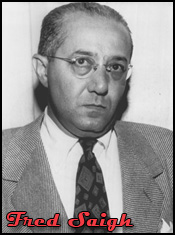
fred_saighHow close the Cardinals came to moving to Milwaukee in February 1953 is unclear, but Anheuser-Busch wasn’t willing to take any chances. The St. Louis-based brewery stepped forward and bought the Cardinals from Fred Saigh when it appeared Saigh was willing to sell to a Milwaukee syndicate.

Tax cheat

On Jan. 28, 1953, Saigh, who had owned the Cardinals since 1947, was sentenced to 15 months in prison and fined $15,000 for federal income tax evasion.

“This means, of course, I will have to dispose of the Cardinals,” Saigh said in addressing the court. “There is no way I can stay in baseball.”

Saigh, an attorney who invested in commercial real estate, had entered a plea of no contest to two counts of evading $19,299 in taxes.

Addressing Judge Roy Harper in court after the sentence was announced, Saigh said, “I think you’ve been too tough with me.”

Replied Harper: “You plead that you are guilty to those essential elements, and if you were not guilty, you should have stood upon a plea of not guilty. Don’t come in and plead before me and then ask me to say you are wrong.”

Buy and sell

Saigh and Postmaster General Robert Hannegan purchased the Cardinals from Sam Breadon in 1947 for about $4 million, but, the Associated Press reported, “by what Saigh termed a ‘gimmick’ in the tax law, he and Hannegan were able to buy the club and its widespread minor-league holdings for a cash outlay of only $60,800.”

Because of failing health, Hannegan sold his stake in the Cardinals to Saigh in January 1949.

Four years later, facing jail time, Saigh put a price tag of $4.5 million on the Cardinals, according to the Associated Press. Several media outlets reported Bill Walsingham, a Cardinals executive and nephew of Sam Breadon, was the leading candidate to buy the club. Joe Reichler of the Associated Press wrote: “Bill Walsingham Jr. probably will be the new owner of the St. Louis Cardinals.”

By Feb. 1, 1953, The Sporting News reported, Saigh had received 30 to 40 bids for the franchise. Quietly, Anheuser-Busch indicated to Saigh it might be interested in buying the Cardinals.

Out-of-town shoppers

Saigh claimed the best offer he received was in excess of $4 million from a Milwaukee group that planned to move the Cardinals to Wisconsin.

“When it became apparent that an out-of-town group was ready to purchase the Cardinals at a price which I felt was a fair value for the club, I informed Mr. (August) Busch and his associates of the impending sale,” Saigh said in a statement.

The Sporting News reported the Milwaukee businessmen had the “inside track” to buy the Cardinals. Saigh was “about to close a deal with a Milwaukee group,” according to the Associated Press.

In his book, “Stan Musial: The Man’s Own Story,” the Cardinals outfielder said Saigh, after being approached by the Milwaukee group, “prepared to go to New York to get commissioner Ford Frick’s approval for sale of the Cardinals.” Before Saigh departed, Musial said, a group consisting of Anheuser-Busch executives and St. Louis bankers convinced him to delay until they had a chance to prepare a bid.

Local discount

On Feb. 20, 1953, Saigh announced he was selling the Cardinals to Anheuser-Busch for $3.75 million, less than what he could have gotten from the Milwaukee buyers, he claimed.

The Associated Press wrote, “The St. Louis Cardinals, close to being transferred to Milwaukee a week ago, counted themselves as one of the money clubs today with solid financial backing in the old hometown. Anheuser-Busch Inc. bought the club for the announced purpose of keeping the Cardinals in St. Louis.”

Anheuser-Busch representatives told reporters Saigh had “made several important concessions to keep (the Cardinals) here and deserves sincere appreciation.”

R.G. Lynch of the Milwaukee Journal reported a different version. In a piece picked up by The Sporting News, Lynch wrote Saigh had hyped the notion of a Milwaukee offer in order to drive up the purchase price from Anheuser-Busch.

“There’s a big chuckle in the St. Louis baseball deal,” Lynch wrote. “It involves the Milwaukee offer, which Fred Saigh says he turned down in order to keep the Cardinals in St. Louis. There was no Milwaukee offer. All Saigh ever had was an inquiry from Fred Miller, Milwaukee brewer, as to how much he wanted for the property. The answer was $4 million-plus, and that was the end of it.

“Saigh was forced to sell and every potential buyer knew it. So he grasped at this straw and built it into a scarecrow.

“Whether or not this maneuver helped Saigh to get a better price, no one will ever know, except the Anheuser-Busch people, and they won’t tell.”

Fearing he couldn’t compete with the financial resources of Anheuser-Busch, Bill Veeck, owner of the St. Louis Browns, tried moving his club to Milwaukee but the American League blocked the deal. In March, Milwaukee got its team when the Braves moved there from Boston just before the start of the 1953 season.

Saigh died at 94 in December 1999. In an obituary, the New York Times reported: “Saigh was released from prison in November 1953 after serving six months and soon began buying shares in Anheuser-Busch. He was said to have become the largest single owner of the brewery’s stock outside the Busch family, at one point with holdings worth about $60 million.”