(Updated July 3, 2020)
On July 3, 1967, the eve of Independence Day in St. Louis, the Cardinals and Reds put on an explosive display using fists instead of fireworks.
In the first inning, the Reds were humiliated when the Cardinals built a 7-0 lead in support of Bob Gibson.
 With two outs, Lou Brock attempted to steal second.
He was unsuccessful, but to the Reds it was an unnecessary attempt to pile on.
“A guy who tries to steal with a seven-run lead has to be nuts … Our club has pride,” Reds shortstop Tommy Helms said to the St. Louis Post-Dispatch. “We don’t like to be shown up.”
When Brock next came to bat, leading off the fourth with the Cardinals still ahead 7-0, reliever Don Nottebart drilled him with a pitch.
Gibson knew what to do next. When Tony Perez led off the Cincinnati fifth, Gibson unleashed a fastball toward Perez’s ear. Perez dived to the dirt to avoid being hit.
In his book “Stranger to the Game,” Gibson said, “My first pitch buzzed past Perez’s ear, which should have been an indication that I wasn’t trying to hit him. If a pitcher is trying to hit a batter, the last place he wants to throw the ball is at the head because it’s the easiest thing to move. When I wanted to hit somebody, I threw slightly behind him because a batter will instinctively jump backwards when he sees the ball coming toward him.”
Added Gibson, “The brushback of Perez was merely a message to lay off Brock.”
Broiling hot
On the next pitch, Perez flied out to right. On his way to the dugout, he crossed in front of the mound and said something to Gibson that the pitcher described as “uncharacteristically nasty.”
Gibson took a few steps toward Perez. So did Cardinals first baseman Orlando Cepeda. This star-studded convergence of future Hall of Famers caused both benches to empty.
No punches were thrown, but just when it appeared order was being restored, the Reds relievers came storming onto the field from the bullpen. They were led by Bob Lee, a hulk who made a beeline for Cepeda.
“Lee started calling me names,” Cepeda said.
Said Lee: “I came in from the bullpen because it looked to me as if Cepeda was going to swing at Perez. I grabbed Cepeda and shoved him out of the way.”
In Cepeda’s biography, “Baby Bull,” Cardinals catcher Tim McCarver said Lee “ran in to where we were standing and said, ‘Cepeda! I want you, Cepeda!’ Then Orlando smoked him. This ignited the worst fight I was ever in.”
Gibson recalled in his autobiography, “As Lee was looking around and ranting, Cepeda tapped him on the shoulder and coldcocked him with a single punch.”
Said McCarver: “Bob Lee sure got more than he wanted when he went after Orlando.”
Lee told a different version. “I didn’t swing at anyone and nobody hit me,” Lee said. “Cepeda took one swing at me. I couldn’t get at him, or I would have put his lights out.”
Out of control
If the words between Gibson and Perez lit the fuse, the altercation between Cepeda and Lee set off the explosion.
According to the book “El Birdos,” Cepeda punched Pete Rose three times in the back of the head.
“Rose was like a wild man after being sucker-punched by big Orlando Cepeda,” the Cincinnati Enquirer reported. “He was swinging in all directions and not missing too often.”
Gibson wrestled with Helms as the fight spilled into a dugout. When Rose and others went to Helms’ rescue, Gibson began grabbing Reds players in the dugout and hurled them, one by one, onto the field. Cardinals outfielder Bobby Tolan, watching from the top dugout step, dived into the pile of brawlers to help Gibson.
“I actually got in some good licks on Rose and Helms,” Gibson said.
Said Cardinals broadcaster Jack Buck: “I’ll never forget the sight. There was Gibson in the Reds’ dugout visibly manhandling about three Reds and tossing them bodily out of the dugout and onto the field.”
When Nottebart grabbed McCarver, Brock “planted a punch” on the Reds pitcher, “leaving his calling card in blood,” the Dayton Daily News reported.
Lou Smith of the Enquirer described the free-for-all as “the wildest this writer witnessed in more than three decades of writing baseball. It was a lulu.”
According to multiple published accounts, it took 20 St. Louis policemen 12 minutes to break up the fights.
When Reds first baseman Deron Johnson saw a policeman confront manager Dave Bristol, Johnson said, “Don’t you draw a stick on him,” the Dayton Daily News reported.
One policeman, Robert Casey, suffered a dislocated jaw in the fracas. “I don’t know whether I was hit by a fist or an elbow,” Casey said.
McCarver said, “Bristol threw a punch and broke Casey’s jaw.”
About 25 players and coaches were treated for wounds, mostly cuts and bruises. Among the injured: Gibson (jammed right thumb), Helms (chipped tooth), Nottebart (facial cuts) and Bristol (gashed leg).
The eyeglasses of Cardinals second baseman Julian Javier were shattered and he had to wear reading glasses the rest of the game. “He said he could see the ground balls, but not the pop flies,” Cardinals manager Red Schoendienst said.
Lee was the only player ejected.
Gibson, who was crafting a perfect game (the first 13 batters were retired, nine on strikeouts) before the fights began, stayed in, lasted 7.2 innings and got the win in a 7-3 Cardinals victory. Boxscore
Gibson said the fight “lit a fire” in the Cardinals and helped propel them to the pennant and the World Series championship that season.
Said Brock: “We hadn’t been going well and that fight really woke us up.”
 Hrabosky thought he still had something to offer. He had dropped 15 pounds, shaved his Fu Manchu, cut his hair, added a forkball to his mix and conceded that “some of my off-the-field habits need changing.”
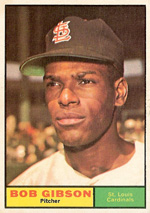 Koufax had a 3-8 record for the Dodgers. Gibson was 1-2 for the Cardinals. Both had been tried as starters and were deemed to be too inconsistent.
 Broglio didn’t earn his first win that year until May 16. On May 29, his record was 1-1. No one could have predicted what would happen next.
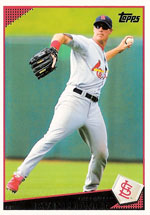 Ludwick represented himself and the team with class. He was supposed to be just a fill-in outfielder and pinch hitter when he joined the Cardinals in 2007. Instead, he developed into a blue-collar all-star who played aggressively and enthusiastically. He will be missed.
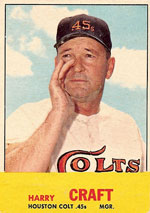 “Harry Craft was a guy who was always in my corner,” Herzog told the crowd at Cooperstown, N.Y. “He kind of saved my career. Claimed me on waivers when I wasn’t doing so good at Washington.

