Feeds:
Posts
Comments

After he was graduated from Miami University in Oxford, Ohio, Walter Alston was ready to become a high school teacher. A knock on his door altered those plans.

Ninety years ago, in June 1935, Alston grabbed an opportunity to play professional baseball, signing a minor-league contract with the Cardinals.

The offer came from Frank Rickey, a Cardinals scout and brother of the club’s general manager, Branch Rickey. The day after Miami’s commencement ceremony, Alston was at home in tiny Darrtown, Ohio, when Frank Rickey surprised him with a rap on the door.

“Want to play pro baseball?” he asked.

In the book “Walter Alston: A Year at a Time,” Alston recalled to author Jack Tobin, “What a question to ask! I’d dreamed about that since I was old enough to throw that little rubber ball against the brick smokehouse out on our first farm.”

Alston went on to spend 10 seasons in the Cardinals’ system. He didn’t make it big as a player _ just one shaky appearance in a major-league game _ but it was the Cardinals who gave him the chance to manage in the minors.

That experience helped launch him into a long and successful career with the Dodgers that led to his election to the Baseball Hall of Fame.

Hard work and patience

Alston was born on a small farm just north of Cincinnati, in Venice, Ohio. (Renamed Ross Township.) His father was a tenant farmer and stonemason. The family moved from farm to farm, wherever work was available, in southwest Ohio.

When Alston was a boy, his parents bought him a black Shetland pony. He named her Night. Alston rode the pony bareback to grade school in Ohio villages such as Camden and Morning Sun.

The family fell into debt when Alston was in seventh grade and moved to the hamlet of Darrtown. Alston’s father found work in nearby Hamilton at a Ford auto plant, producing wheels and running boards for $4 a day.

Alston developed a passion for baseball. His father taught him to throw with velocity. “Put some smoke on the ball,” he’d say. The youngster did it so well he got nicknamed “Smokey” and pitched in high school.

In May 1930, near the completion of his freshman year at Miami, Alston, 18, married his childhood sweetheart, Lela. The Great Depression had devastated the economy and Alston couldn’t afford to stay in college. He and Lela moved in with her parents in Darrtown and he took work wherever he could find it, going from farm to farm to seek pay for day labor. The county gave him a job cutting roadside weeds with a scythe. “That paid a dollar a day and I was happy to have it,” Alston told author Jack Tobin.

Two years later, in the summer of 1932, Alston still was whacking weeds when a local Methodist minister, Rev. Ralph Jones, an education advocate, urged him to return to Miami and earn a degree. According to author Si Burick in the book “Alston and the Dodgers,” Jones said to Alston, “Smokey, you’ve got a good mind. You can be somebody if you go back to college.”

Jones gave Alston $50 to use toward his tuition. Alston re-enrolled at Miami for the 1932 fall semester. “We never could have saved $50 on my dollar a day cutting weeds,” Alston told Jack Tobin. “That $50 … got me back in and paid a good part of my tuition for that year.”

Alston majored in industrial arts and physical education. He also played varsity baseball and basketball. There were no athletic scholarships and money was scarce. In between classes and athletics, Alston worked jobs on campus.

“I took a job driving a laundry truck for 35 cents an hour and I got my lunch free every day in exchange for racking up billiard balls in a pool hall,” he told journalist Ed Fitzgerald. “Summers, the college gave me a job painting dormitories.”

Alston played sandlot baseball for various town teams, too. One of those, the Hamilton Baldwins, had Alston at shortstop and Weeb Ewbank, the future football coach of the Baltimore Colts and New York Jets, in center field.

Cardinals prospect

Alston was taking an exam near the end of his senior year in 1935 when he was told someone was waiting to see him. It was Harold Cook, school superintendent in New Madison, Ohio. Cook was recruiting teachers and offered Alston a salary of $1,350 to come to New Madison. Alston accepted.

A few days later, Frank Rickey showed up at the door. (The Alstons didn’t have a home telephone then.) Rickey had seen Alston play two games _ one at shortstop and one as a pitcher _ for Miami and was impressed. When Alston mentioned he’d made a commitment to teach in New Madison, Rickey explained the minor-league season would be finished by Labor Day, enabling him to return to Ohio for the school year.

Rickey offered no signing bonus. He told Alston, 23, he’d be paid $135 a month to play in the Cardinals’ system that summer. Alston signed on the spot.

The next day, Alston’s wife drove him to Richmond, Ind., where he boarded a bus for St. Louis. Upon arrival, Alston checked into the YMCA downtown. The next morning, he went to the Cardinals’ offices to find out where he was being assigned. The Cardinals told him to come back tomorrow. This went on for a week until, finally, Branch Rickey informed Alston he would play for the Greenwood (Mississippi) Chiefs of the East Dixie League.

Cardinals scout Eddie Dyer (who, years later, became St. Louis manager) drove Alston from St. Louis to Mississippi in a roadster. Player-manager Clay Hopper put Alston at third base and he hit .326 in 82 games.

Every fall and winter for the next 14 years, Alston taught high schoolers _ six years at New Madison and eight at Lewiston, Ohio _ in order to make ends meet after spending spring and summer in the minors. He taught industrial arts, general science and biology, and coached basketball before leaving in March for spring training.

The teaching experience later helped him as a manager. “Like students, ballplayers can’t all be treated the same,” Alston told Si Burick. “Some need encouragement. Some do better if left alone. Others need to be driven. You simply have to study each individual and get him to produce the best that’s in him.”

Darrtown remained Alston’s home. Los Angeles Times columnist Jim Murray described it as “the place where time forgot” and “where the 11 o’clock news is the barber.” Alston built a house at the corner of Apple and Cherry streets. It was the first brick house in Darrtown. “My dad laid all the bricks and mixed the mortar,” he told Sports Illustrated.

In the backyard tool shed, Alston put his industrial arts skills to good use, making most of the furniture for his house. “His bookshelves and chests and spice racks and desks are a wonder of patient, meticulous workmanship,” Sheldon Ocker of the Akron Beacon-Journal reported.

When he wasn’t woodworking, Alston enjoyed skeet shooting, riding his two Honda motorcycles and playing billiards.

After Alston became an established big-league manager, billiards legend Willie Mosconi was a guest at Alston’s Darrtown home, where Alston had a pool table. “I ran 47 balls, which is pretty good for me,” Alston told Gordon Verrell of the Long Beach Press-Telegram. “He shot, made six or seven and missed, and then I ran 10 or 12. I didn’t get another shot. He ran the next 154.”

Alston didn’t mind losing to a master such as Mosconi. Getting defeated by Cardinals pitcher Steve Carlton in 1969 was another matter. “He beat us 1-0 that night at the ballpark and, if that didn’t make me mad enough, he beat me later that night in a game of pool,” Alston told Gordon Verrell. Boxscore

Ready or not

For his second season in the Cardinals’ system in 1936, Alston was assigned to Huntington, W.Va. Player-manager Benny Borgmann taught him to play first base. The club’s shortstop was a skinny teenage rookie, Marty Marion.

For the second consecutive year, Alston hit .326. He also produced 35 home runs and 114 RBI. Scout Branch Rickey Jr., son of the Cardinals’ general manager, was impressed. On Rickey Jr.’s recommendation, Alston was called up to the Cardinals in September and instructed to join the team in Boston.

Alston packed a beat-up cardboard suitcase and took a train to New York City, where he was to make a connection to Boston. At Grand Central Station, he was gawking at the ceilings and the people when he bumped into a woman. “The suitcase hit the floor, broke open and scattered all my clothes and belongings across the floor,” he recalled to Jack Tobin. “There seemed to be hundreds and hundreds of people all racing in a different direction. I was on my hands and knees, trying to pick up my shirts and shorts … and to keep from being trampled.”

A Good Samaritan directed him to a luggage shop nearby. Alston spent most of the $20 he had on a new suitcase and boarded the train to Boston.

When he arrived at the Kenmore Hotel, the team was at the ballpark. The desk clerk told Alston he could go to the dining room and sign for anything he ordered. “One look at the menu convinced me I was in for a hard time,” Alston told Jack Tobin. “I had never heard of half the things and couldn’t pronounce most of the words … Finally I decided on some clams. I’d always heard Boston was famous for them. When they brought them out, I wasn’t sure just how you were supposed to eat them.”

During his month with the Cardinals, Alston pitched batting practice, took infield practice with other rookies and otherwise sat on the bench. A fellow Ohioan, pitcher Jesse Haines, 43, took a liking to Alston, 24, and showed him what to do and how to do it. “No matter what I asked, he knew the answer,” Alston said to Jack Tobin. “Most days he took me to and from the ballpark. He was my buddy.”

Put me in, coach

On the final day of the season, the Cardinals played at home in the rain against the Cubs. Plate umpire Ziggy Sears had a miserable time. Neither team cared for the way he called balls and strikes. Sears ejected Cardinals coach Buzzy Wares and Cubs manager Charlie Grimm for arguing with him.

As the Cardinals came off the field in the seventh, first baseman Johnny Mize made a remark while passing the umpire. Offended, Sears ejected Mize.

Because the Cardinals’ other established first baseman, Rip Collins, had been used as a pinch-hitter a couple of innings earlier, manager Frankie Frisch had to go with his only other first baseman, Alston.

When the Cubs batted against Dizzy Dean in the eighth, Alston was at first, making his big-league debut. Augie Galan led off with a single. Phil Cavarretta followed with a bunt. Third baseman Don Gutteridge fielded cleanly and made an accurate throw to Alston, but the first baseman bobbled the ball. Cavarretta reached safely on the error and Galan stopped at second.

Next up was Billy Herman. He bunted toward Alston. The rookie threw to third, but not in time to nab Galan, and the bases were loaded. All three runners eventually scored, giving the Cubs a 6-1 lead.

In the ninth, the Cardinals scored twice and had a runner on base, with two outs, when Alston batted for the first time. The pitcher was Lon Warneke, a three-time 20-game winner. Alston fouled off a pitch. He ripped another down the line in left but it, too, curved foul near the pole. Then he struck out, ending the game. Boxscore

The next day, the headline in the St. Louis Star-Times blared, “Walter Alston Makes Blunders That Eventually Beat Dizzy Dean, 6-3.”

Follow the leader

The Cardinals put Alston on their 40-man winter roster, but Johnny Mize still was on the team and the club acquired another first baseman, Dick Siebert, from the Cubs. Because of his teaching job, Alston couldn’t report to 1937 spring training until March 15. A couple of weeks later, he was back in the minors.

Alston had a few more good seasons in the Cardinals’ system, but knew he likely wouldn’t be returning to the big leagues. “I had enough power, but … I couldn’t hit the good pitching, just the mediocre pitching,” he told Sports Illustrated.

Branch Rickey asked Alston to become a player-manager in 1940 and he eagerly accepted. Alston managed Cardinals affiliates for three seasons (1940-42). Then Rickey moved to the Dodgers. Alston kept playing for Cardinals farm teams desperate to fill rosters depleted by World War II military service.

In 1944, Alston was released by the Cardinals. He returned to Darrtown, figuring to go fulltime into teaching. Then came another bang on the door. It was the son of the man who operated the Darrtown general store. The boy told Alston there was an urgent long-distance phone call for him at the store. Alston darted the two blocks, grabbed the receiver and heard the voice of Branch Rickey.

“First thing he did was give me a good going over for not having a phone and told me to get one,” Alston said to Jack Tobin. “Then he offered me the manager’s job at Trenton (N.J.) in the Interstate League.”

Alston managed for 10 seasons in the Dodgers’ system. In November 1953, he was chosen to replace Chuck Dressen as Dodgers manager. Working on one-year contracts, Alston managed the Dodgers for 23 years, leading them to seven National League pennants and four World Series titles. He was inducted into the Baseball Hall of Fame in 1983.

As Jim Murray wrote, “He made his profession’s hall of fame not because he could hit or throw a curveball better than anyone else but because he excelled in the far more difficult area of human endeavor.”

Known for their rowdy behavior, the Gashouse Gang Cardinals had the tables turned on them during an exhibition at Bridgeport, Connecticut, in June 1935.

Confronted by spectators who stormed the field “snatching caps, gloves and even trying to hold the players while attempts were made to steal their shoes from their feet,” the reigning World Series champions “were thankful to escape with their lives,” the St. Louis Post-Dispatch reported.

Featuring the likes of Dizzy Dean, Leo Durocher, Pepper Martin and Joe Medwick, the Gashouse Gang Cardinals were a cocky bunch. In Bridgeport, though, the club staggered, not swaggered, out of town.

Coming to Connecticut

Though the Cardinals became World Series champions with a colorful cast of characters in 1934, the Great Depression took a toll on revenue. Sharing Sportsman’s Park with the American League Browns, the 1934 Cardinals drew a mere 334,863 to their home games. After the World Series, club owner Sam Breadon considered selling the Cardinals to an Oklahoma oilman, Lew Wentz, or relocating the franchise to Detroit.

Eager for a buck, Breadon agreed to have the 1935 Cardinals stop in Bridgeport on their way to Boston and play an exhibition game against a semipro team. Bridgeport appealed to Breadon because game organizers offered him a guaranteed amount from ticket sales. Another incentive was the Bridgeport ballpark. It had lights, a novelty for the Cardinals. (On May 24, 1935, three weeks before the Cardinals went to Bridgeport, the first night game in the majors was played at Cincinnati.)

As Tim Wiles of the Baseball Hall of Fame noted, “Night baseball … did much to reinvigorate attendance, helping draw fans out into the cooler night air in the days before home air conditioning was widespread … An aura of gimmickry seemed to some to be part and parcel of the night baseball experience.”

After completing a series at home against the Cubs, the Cardinals arrived by train in Bridgeport on Monday, June 10, for their exhibition that night.

(Twenty-four years earlier, in 1911, a train carrying the Cardinals derailed in Bridgeport. Fourteen people were killed. The Cardinals escaped injury and helped in rescue efforts.)

Located on the Long Island Sound, Bridgeport was an industrial center. In 1875, its mayor was the greatest showman, P.T. Barnum, founder of Barnum & Bailey Circus. Notable Bridgeport natives include actor Robert Mitchum, playwright and gay rights activist Larry Kramer, and singer/guitarist John Mayer.

Bridgeport also has a rich baseball history. Big-league players born there include pitchers Rob Dibble, a “Nasty Boy” reliever for the 1990 World Series champion Reds; Kurt Kepshire, starter for the 1985 National League champion Cardinals; and Charles Nagy, starter on two American League pennant winners for Cleveland.

The first professional team in Bridgeport played in the Eastern League in 1885. When the league folded in 1932, Bridgeport was without a minor-league club, but industries there stocked several strong semipro teams. That’s why the Cardinals had a semipro opponent, the Automotive Twins, for their June 1935 exhibition.

Assault and battery

Pitchers Jesse Haines and Phil Collins, who were scheduled to start the next two regular-season games, and first baseman Rip Collins, who didn’t feel well, were sent ahead to Boston. The rest of the Cardinals got off the train in Bridgeport.

Trouble brewed from the outset. There were disputes about the gate receipts and “for a time it seemed that the Cardinals would have to depart without a game or their guarantee,” the Post-Dispatch reported. Eventually, though, the matter was settled, but the game didn’t begin until 9 p.m. According to the Associated Press, 3,500 people attended “in spite of threatening weather.”

When the Cardinals were in the field, spectators climbed out of the stands and swiped caps, shoes, sweatshirts, sweaters, gloves and bats, the Post-Dispatch reported. Some were wildly bold and aggressive.

According to reporter J. Roy Stockton, Terry Moore “was mobbed in center field by a group trying to get his cap. When he resisted, he was tripped, and the hoodlums tried to take off his shoes. A well-directed kick gave him a chance to escape. (Later), while he was chasing a fly ball, his cap was snatched from his head.”

Others surrounded Cardinals outfielder Ernie Orsatti. “When he resisted, he was pummeled, thrown to the ground and walked upon,” the Post-Dispatch reported.

All the baseballs were stolen, except one. “There were long delays while it was being retrieved after being hit to the outfield or to foul territory,” according to the Post-Dispatch.

By mutual agreement, the game was halted after eight innings. The Cardinals won, 9-4. Rookie pitcher Ray Harrell went the distance for St. Louis. Ernie Orsatti had three hits and Joe Medwick contributed a pair of doubles.

When the game ended, the Cardinals “had to take bats in hand to protect their remaining equipment as they retreated to taxicabs,” the Post-Dispatch reported. “Charlie Wilson (a third baseman) twice was dragged from a taxicab by a group of hoodlums seeking souvenirs and had to fight his way out of the mob.”

The headline in the next day’s Post-Dispatch declared: “Cardinals Pummeled By Hoodlums; Robbed Of Caps, Gloves.”

Recovery time

In Boston on Tuesday, June 11, rain postponed the Cardinals’ game against the Braves. As the Post-Dispatch noted, St. Louis players “welcomed the day of rest after their experience at Bridgeport.”

Some of the Cardinals spent the unexpected off day at Rockingham Park, the thoroughbred horse racing track in Salem, New Hampshire. “Some of the lads got the price of a new suit, and some will wear the old jeans for some time to come,” the Boston Globe reported.

In his syndicated newspaper column, Dizzy Dean wrote, “One thing the rain does is give the ballplayers a chance to go sightseeing. Boston is a great place for that (and) you can’t beat them steamed clams.”

Returning to the field on Wednesday, June 12, the Cardinals swept a doubleheader from the Braves _ and didn’t get mugged by anyone at the ballpark. Boxscore and Boxscore

Ticked off with his Cardinals teammates and the plate umpire, Dizzy Dean threw a tantrum instead of his fastball.

On June 4, 1935, at Pittsburgh, the St. Louis ace experienced an unlucky inning against the Pirates. Dean blamed the umpire and the Cardinals fielders. An argument ensued in the dugout and it nearly led to a fight.

When he returned to the mound, a petulant Dean lobbed soft tosses to Pirates batters, inviting them to bash the ball.

The antics reflected poorly on him. A year earlier, Dean was the pride of St. Louis. A 30-game winner during the 1934 season, he won two more, including Game 7, in the World Series. His sulk in Pittsburgh, though, sullied his stature.

Bad breaks

In the Tuesday game against the Pirates, Dean was in command early. With the Cardinals ahead, 2-0, he retired the first two batters in the third. Then Lloyd Waner walked. On a hit-and-run, Waner took off for second and Woody Jensen sliced a grounder to the left side. Because Leo Durocher correctly went to cover second when he saw Waner break from first, Jensen’s grounder rolled through the vacated shortstop spot and into left for a single, the Pirates’ first hit of the game.

It was a tough break for Dean. He walked the next batter, Paul Waner, loading the bases. Up came the cleanup hitter, Arky Vaughan. Dean got two strikes on him, then threw a pitch that cut the corner of the plate and froze Vaughan. Dean thought it was strike three, ending the inning. Plate umpire Cy Rigler ruled it a ball. Dean ranted and stormed around the mound.

On the next pitch, Vaughan bounced a grounder to Burgess Whitehead, filling in for hobbled player-manager Frankie Frisch at second base. It should have been a routine out, allowing Dean to escape the inning unscathed, but Whitehead fumbled the ball for an error, Lloyd Waner scored from third and the bases remained loaded.

Dizzy was seething, but it got worse. Pep Young followed with a short fly that fell just out of the reach of right fielder Jack Rothrock for a double. All three runners scored, giving the Pirates a 4-2 lead.

After retiring Gus Suhr on a pop-up to end the inning, Dean confronted Frisch in the dugout and demanded to know why the manager didn’t come onto the field to support him in his beef with Rigler. According to the St. Louis Globe-Democrat, Frisch replied, “I can’t umpire the game for you. Let’s bear down and win this.”

Boiling point

Dean pitched a scoreless fourth, but when the Cardinals went to bat in the fifth, he resumed barking at Rigler from the dugout. Teammate Joe Medwick said to him, “Lay off Rigler and bear down in there,” the Globe-Democrat reported.

According to biographer Robert Gregory in the book “Diz,” Dean began berating his teammates as a “bunch of lousy, no-good ballplayers.” First baseman Rip Collins roared at Dean, “Shut up,” then told the pitcher the team was fed up with his “crazy shit” and if he didn’t close his “fucking mouth” somebody was going to do it for him. Dean said, “You do it, if you’re man enough and not yellow.”

According to the “Diz” book, Collins was about to swing at Dean when Frisch stepped between them. A few feet away, Medwick warned the pitcher not to say another thing. Dean said, “Fuck you.”

Medwick then picked up a bat and started toward Dean. Pitcher Paul Dean rushed to his brother’s side. Medwick intended to separate them, saying one swing of the bat to the head would get both, according to biographer Robert Gregory.

Pepper Martin and other Cardinals got in between Medwick and the Deans, preventing any violence. Frisch ordered Dizzy to the other end of the dugout.

Soft tosses

While the drama unfolded in view of spectators seated on the first-base side of the field, the Cardinals scored in the fifth, getting within a run at 4-3.

Frisch kept Dean in the game, but Dizzy’s mood hadn’t improved. Looking to spite his teammates, he began to lob pitches to the Pirates in their half of the fifth. “You or I or Lefty the bat boy could have hit what he was throwing,” J. Roy Stockton reported in the St. Louis Post-Dispatch.

As the Globe-Democrat noted, “It looked as if Dizzy’s offerings were coming up as fat as well-fed geese.”

The Pirates pounded him for four runs in the fifth, gratefully taking an 8-3 lead. According to the Post-Dispatch, Cardinals catcher Bill DeLancey “ran out half a dozen times and pleaded with Dizzy to bear down. Durocher halted the game to do the same thing. Rip Collins added his voice (but) Dizzy was disgusted and he would not pitch Dean baseball.”

After Woody Jensen whacked a soft toss for a home run in the sixth, Durocher threw up his hands in disgust. Asked later about the shortstop’s reaction, “Dizzy said he did not care what Durocher did” and implied Durocher was so clueless he “did not know what town he was playing in,” the Globe-Democrat reported.

Frisch and other Cardinals accused Dean of “laying down” on them. Pirates players also said Dean eased up and quit, according to the Globe-Democrat.

Dean was lifted for a pinch-hitter in the seventh. The Pirates won, 9-5. The loss dropped Dean’s record to 6-5, giving him almost as many defeats as he had during his entire 1934 season (30-7). Boxscore

Bruised feelings

In the clubhouse, Frisch called a meeting and warned Dean that a repetition of his behavior would result in a suspension and $5,000 fine. “No one man is bigger than this game,” Frisch told the Globe-Democrat.

Cardinals owner Sam Breadon said to the St. Louis Star-Times, “I’ll stand behind Frisch 100 percent.”

Dean’s reactions swayed from apologetic to defiant.

“I’m sorry … I just flew off my head,” he said to the Post-Dispatch. He also told the newspaper, “I haven’t done nothing to apologize for. The Cardinals ought to apologize to me. I put money in their pockets winning the pennant and World Series. What do I get for it all? Nothing but a lot of abuse.”

To the Globe-Democrat, Dean said, “The best thing the Cardinals can do is to trade me. I’m not going to stand for this kind of stuff … As for Medwick, I’ll crack him on his Hungarian nose.”

Regarding Frisch’s threat of a $5,000 fine, Dean told the newspaper, “It wasn’t $5,000. It was $10,000. Yeah, ten grand. You know what I think? They’re trying to take away a big chunk of the money my contract calls for.”

(In 1935, Dean got an $18,500 salary, plus a $2,500 signing bonus.)

Most viewed Dean as the villain in the incident. A headline in The Pittsburgh Press declared, “Dizzy Likes To Dish it Out But Can’t Take It.” A Cardinals fan, James MacNaughton Jr. of University City, Mo., sent Dean a telegram: “Take off the high hat, put on your ball cap and win games.”

Two days after Dean’s stunt, Frisch used him in relief of Jesse Haines at Pittsburgh. Dean pitched two scoreless innings and “at times looked as fast as the golf greens at Oakmont” where the U.S. Open was being played near Pittsburgh, the Globe-Democrat reported. Boxscore

(Dean found time during the Pirates series to attend a round of the 1935 U.S. Open. He was seen in the gallery following “The Silver Scot,” Tommy Armour, and South African Sid Brews, according to columnist Paul Gallico.)

When the Cardinals returned by train to St. Louis, Dean was greeted at the station by his wife, Patricia, who told columnist Sid Keener, “I can handle Dizzy. I’m going to take him home and talk to him.”

Forgive and forget

Dean’s first appearance in St. Louis since the Pittsburgh episode came in a start against the Cubs on Sunday, June 9, 1935.

As Dean came off the mound after retiring the Cubs in the first, four lemons were thrown at him from the stands. When he went to bat in the second, another 10 lemons were hurled at Dean and he was booed by some of the 14,500 spectators. Dean pushed one of the lemons out the the batter’s box with the end of his bat, then ripped a single, driving in a run.

“Not a boo or jeer was heard after the second inning,” the Post-Dispatch noted.

Dean doubled to the wall in left in the fourth and, when he doubled again in the seventh, driving in another run, he received a “deafening round of applause,” the Star-Times reported.

His pitching (a six-hitter) was as good as his hitting (two doubles, a single, three RBI, two runs scored). The Cardinals won, 13-2, and, as the Globe-Democrat noted, “in the end, it seemed as if every one was cheering” Dean. Boxscore

“I poured ’em all I had,” Dean told the Post-Dispatch.

Asked about the lemons thrown, Dean said it was the work of Cubs fans. “No true St. Louis fan would do such a thing to Dizzy Dean,” he told the Star-Times.

Dean predicted that if he continued to perform well, “St. Louis fans will be throwing roses at me.”

Dizzy went on to post a 28-12 record for the 1935 Cardinals. Though they had a better mark in 1935 (96-58) than they did in their championship season the year before (95-58), the Cardinals placed second to the Cubs (100-54).

As Cardinals manager, Branch Rickey either was ahead of his time or hopelessly out of step with the times. Take your pick. Either way, Cardinals owner and president Sam Breadon decided Rickey no longer should be manager.

One hundred years ago, on May 30, 1925, Breadon changed managers, replacing Rickey with Rogers Hornsby. Rickey remained with the club in a front-office role.

The shakeup turned out to be good for the Cardinals. Player-manager Hornsby led them to their first National League pennant and World Series championship in 1926. Focused on baseball operations, vice president Rickey built the Cardinals into a perennial contender.

On shaky ground

After managing the St. Louis Browns (1913-15), Rickey joined the Cardinals and became their manager in 1919. In his first six years, he piloted the club to three winning seasons: 1921 (87-66), 1922 (85-69) and 1923 (79-74). Then the Cardinals took a big step backwards, finishing 65-89 in 1924 and drawing a mere 272,885 at its home games.

Knowing Breadon was considering a change, Rickey offered to resign during 1925 spring training but reconsidered, according to St. Louis Post-Dispatch columnist John Wray. “I look at this team I have put together and I can visualize it winning the flag,” Rickey told Breadon. “I have the stuff here and I want another chance. I think I deserve it because I assembled all this talent.”

Breadon wasn’t convinced. In his autobiography, “My War With Baseball,” Hornsby said Rickey sought his help with Breadon. “I went to Breadon and said that Rickey was the smartest man in baseball,” Hornsby recalled. “Breadon suggested I take the job as manager, but I wasn’t interested.”

Before spring training ended, Breadon formerly offered Hornsby the job, but he declined. “I recommended that Breadon keep Rickey,” Hornsby said in his autobiography. “I also told Breadon that if the Good Lord himself were to … manage this club, he couldn’t do any better. It was a lousy team.”

Decision time

The 1925 Cardinals won five of their first eight, then nosedived, losing seven in a row at home before mostly small crowds.

When the Cardinals were in Pittsburgh for a series with the Pirates, Breadon showed up. On Friday, May 29, Hornsby was having breakfast at the Hotel Schenley when traveling secretary Clarence Lloyd approached him and said Breadon wanted to meet. In his autobiography, Hornsby recalled that as he passed by the table of Rickey and coach Burt Shotton, Rickey said to him, “Breadon wants you to manage the team.”

Hornsby replied, “I don’t want to manage. He knows that.”

“Then will you ask Breadon to give me another chance?” Rickey said to Hornsby. “If he won’t, see if you can get him to let Shotton here be the manager.”

Hornsby said, “OK.”

(In addition to coaching, Shotton managed the Cardinals on Sundays, because Rickey promised his mother before signing his first professional contract that he would abstain from baseball activities on Sundays.)

Hornsby met in Breadon’s room and was offered the job. Hornsby said no.

According to the book “Branch Rickey: A Biography” by Murray Polner, Breadon barked back, “I won’t have any goddamned Sunday school teacher running my team. You’re going to run it.”

In his autobiography, Hornsby said he and Breadon had the following exchange:

Hornsby: “You mean, Rickey’s through?”

Breadon: “That’s exactly right _ as manager.”

Hornsby: “What about Shotton as manager?”

Breadon: “I don’t want any Rickey man either.”

It was agreed Hornsby should think over the proposal and inform Breadon of the decision the next day. “I went back down and told Rickey what Breadon had said,” Hornsby recalled in his autobiography. “Rickey didn’t cuss or anything, but he got pretty mad and said he would sell all his stock in the Cardinals.”

According to the Rickey biography, Rickey said to Hornsby, “Judas priest, the man (Breadon) is stabbing me in the back.”

At the ballpark that day, Hornsby slugged a two-run home run, but the Cardinals lost, dropping their record to 13-23. It turned out to be the last game Rickey would manage. Boxscore

Making the switch

According to his autobiography, Hornsby went to Breadon on Saturday, May 30, and told him “the only way I would be interested in becoming manager would be if I could buy Rickey’s stock … Then baseball could be my business for life.” Breadon assured him that would be arranged. The two agreed Hornsby would become player-manager, effective Sunday, May 31. “I expect him to put new fight into the Cardinals,” Breadon told the Associated Press.

In reporting on the managerial switch, James M. Gould of the St. Louis Star-Times wrote, “The pupil succeeds the master.”

Hornsby, 29, became the youngest manager in the National League. He was a few months older than player-manager Bucky Harris, 28, of the American League’s Washington Senators. Other player-managers in the majors in 1925 included Dave Bancroft of the Braves, Ty Cobb of the Tigers, Eddie Collins of the White Sox, George Sisler of the Browns and Tris Speaker of the Indians.

“I feel that with Rickey as vice president and business manager, and Hornsby as playing manager, we have one of the greatest combinations in baseball,” Breadon told the Post-Dispatch.

He also said to the Associated Press, “Rickey is a valuable man and we want to utilize his knowledge of baseball and his great judgment of players. He is a great organizer and a builder, and that is his sphere.”

Breadon’s words, though, didn’t appease Rickey, who resented being ousted as manager. According to Rickey’s biography, he described Breadon’s action as “clumsily brutal.”

According to author Murray Polner, Rickey felt betrayed and considered leaving the Cardinals to become athletic director at Northwestern University, but his wife Jane talked him out of it.

In his book “Mr. Rickey’s Redbirds,” author Mike Mitchell wrote that Rickey later said, “My fault as a manager … was due to my apparent zeal. I discussed the game every day … as if the game coming up was the game of the year.”

With Rickey out and Hornsby taking over effective May 31, coach Shotton was tasked with managing the Cardinals in the May 30 Saturday doubleheader at Pittsburgh, according to “Mr. Rickey’s Redbirds.” The Pirates won both, totaling eight triples in Game 2. Boxscore

Rickey’s reviews

Reaction to the managerial move mostly was favorable:

_ J. Roy Stockton, Post-Dispatch: “The Cardinals should do well under Hornsby. He will not overmanage the team. If there was any just criticism of Branch Rickey’s regime, it was that he burdened the team with too much management. He tried to pitch for the pitchers and to catch for the catchers … He lacked poise when directing his men … He decided on a plan of action and then … he hesitated, pondered over the danger and changed the plan.”

_ Tommy Holmes, Brooklyn Eagle: “Some attribute the failure of the team to Rickey’s attempt to mastermind the Cardinals. He wanted to do all the thinking that was to be done on the team … Branch exercised his managerial authority by requiring the batter to keep in constant touch with his wagging from the bench. A hitter up there with the bases full, to bust it and nothing else, had to strain his neck getting the signal on every ball pitched.”

_ Henry Farrell, United Press: “Rickey had a lot of trick ideas about handling of a ballclub that made some of the older athletes feel like they were being treated like children. He not only had blackboard talks on baseball but he extended his skull practice to include arithmetic and the grammar school arts and sciences.”

_ John B. Foster, Dayton Daily News: “The greatest weakness of (Rickey) was … his lack of playing instinct. He usually managed to change pitchers at the wrong time … Almost every manager in the National League figured upon his doing the wrong thing at the wrong time … Opposing managers figured they would get away with games if they forced Rickey to change pitchers.”

_ The Sporting News: “The elevation of Hornsby to the management was the most popular choice that could have been made for the fans.”

Different approach

Indeed, fans gave Hornsby a big reception when he was led to the plate by St. Louis mayor Victor Miller and presented with several floral pieces before the start of his managerial debut on Sunday, May 31. During the game, the Post-Dispatch noted “a new spirit exhibited by the players” and “a dash that had been missing for some time.” Hornsby contributed two hits, two walks, two runs scored and a RBI in a 5-2 Cardinals victory over the Reds. Boxscore

The next day, Hornsby started Jesse Haines against the Reds. In four starts for Rickey in 1925, Haines was yanked from the games and lost all four. In his first start for Hornsby, he pitched a complete game and won. Boxscore

A week later, Hornsby bought 1,167 shares of Rickey’s Cardinals stock at $43 a share, a total investment of $50,181, the St. Louis Globe-Democrat reported. As author Mike Mitchell noted, “Upset about being removed as manager, Rickey made an emotional and short-sighted decision.”

Meanwhile, Hornsby canceled the daily team meetings and daily morning workouts that had been the norm when Rickey managed. “You can’t drill for two hours and then get out in the afternoon with all your pep and play some more,” Hornsby explained to the Star-Times.

The Cardinals won 15 of their first 19 games with Hornsby as manager and finished at 77-76. Hornsby’s hitting helped, too. In 1925, he was named recipient of the National League Most Valuable Player Award and led the league in batting average, on-base percentage and slugging percentage for the sixth year in a row.

In a move more desperate than daring, the Cardinals attempted to bolster their starting rotation by acquiring a retired pitcher who’d been through a bankruptcy, admitted to having been a problem drinker and was thought to have lost velocity on his pitches.

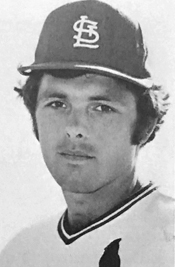
Ron Bryant, a left-hander who followed a 24-12 record for the 1973 Giants with a 3-15 mark in 1974, then went on baseball’s voluntarily retired list, was dealt to the Cardinals in May 1975. Two months later, they released him.

The Cardinals paid a high price to find out Bryant was washed up. A prospect they traded for him, Larry Herndon, developed into one of the National League’s top rookies in 1976, then became a starting outfielder for the 1984 World Series champion Tigers.

Opportunity knocks

In 1965, Giants scout Eddie Montague went to see a California high school infielder, Bob Heise, play for Vacaville. The opposing pitcher, Ron Bryant of Davis, threw a no-hitter.

On Montague’s recommendation, the Giants drafted Bryant in the 22nd round. He signed the day after his graduation but had low expectations for his baseball career. “I just didn’t believe I had the ability to make the big leagues,” he later said to the Atlanta Constitution. “I didn’t think I had the fastball or anything else.”

Bryant didn’t strike out many _ “I can’t. I am just not an overpowering pitcher,” he told the Atlanta newspaper _ but “he pitched cleverly,” Glenn Dickey of the San Francisco Chronicle noted, and made it to the majors with the Giants as a reliever and spot starter.

The Giants’ equipment man, Mike Murphy, nicknamed Bryant “Bear” because of his resemblance to the animal, not the football coach. Bryant was 6-foot and 210 pounds and “looked like a bear, with his chunky build, his way of walking and his curly hair,” Murphy told The Sporting News.

A performance against the Cardinals in April 1971 earned Bryant a spot in the starting rotation. When Frank Reberger developed a shoulder problem and departed after allowing the first two Cardinals batters to reach base, Bryant relieved, pitched nine innings and got the win. “A major turning point,” he told The Sporting News. “If I hadn’t had that opportunity, or hadn’t pitched well, I might have stayed in the bullpen.” Boxscore

Five days later, Bryant pitched a three-hitter against the Pirates for his first shutout. Boxscore

The Cardinals were involved in another pivotal game for Bryant in June 1972. With one out in the eighth inning and the Giants ahead, 3-0, manager Charlie Fox removed Bryant for a reliever. After the Cardinals rallied and won, Bryant criticized Fox for taking him out. Boxscore

In his next start, against the Cubs, Fox left Bryant alone and he pitched a two-hit shutout. As Bryant headed for the dugout after the final out, Fox came onto the field and bowed to the pitcher. Boxscore

Bryant went on a six-game winning streak and finished the 1972 season with a 14-7 record, including four shutouts, and 2.90 ERA.

Good and bad

While Bryant was progressing on the field, he was having trouble away from baseball. The pitcher and his wife filed for bankruptcy in November 1972, the San Francisco Examiner reported.

After a loss to the Cardinals in May 1973, Bryant’s season record was 3-3. Then, while watching game film, he discovered a flaw in how he was releasing the ball. Bryant made a correction and won eight in a row. Video at 9:20

Bryant stacked up wins faster than any pitcher in the league. He won his 20th before September and finished with 24, most for a Giants left-hander since Carl Hubbell had 26 in 1936. The Sacramento Zoo named a 10-month-old sloth bear in honor of the pitcher nicknamed Bear.

It should have been the best of times for Bryant but it wasn’t. He and his wife divorced. Then there was the drinking. Bryant “drank considerably,” Art Spander of the San Francisco Chronicle noted.

During the 1973 season, Charlie Fox found Bryant “lurking in the hotel bar once too often and pushed him out the door,” according to columnist Wells Twombly.

Glenn Dickey of the Chronicle wrote of Bryant’s 24-win season, “There is no question that the attention went to his head. He drank too much and his marriage disintegrated. Nothing he ever did was intended maliciously, but he did a lot of damage to people, including himself.”

“Drinking had been one of my problems,” Bryant told The Sporting News.

Slip sliding away

When Bryant reported to 1974 spring training, “he was desperately overweight,” Wells Twombly reported. “Not only that, he was living from beer to beer and nearly everybody knew it.”

After a Cactus League game in Yuma, Ariz., the Giants took a bus ride across the desert to Palm Springs, Calif. Shortly after 8 p.m., they arrived at the Tropics, a Polynesian-styled resort that featured a coffee shop (regrettably named Sambo’s), two cocktail lounges (The Reef and The Cellar) and a steakhouse (The Congo Room). The place became a celebrity hangout in the 1960s. Victor Mature (who played opposite Hedy Lamarr in “Samson and Delilah”) had a private table in The Congo Room. Elvis Presley and Nancy Sinatra used to relax by the pool.

The pool looked inviting to Bryant. About 11 p.m., the Bear went belly-flopping down a slide, lost control, tumbled off and slammed into the concrete edge of the pool, opening a gash near his right rib cage. Some 30 stitches were required, The Sporting News reported.

Bryant said drinking didn’t cause the mishap (he’d had two beers, the Examiner reported), but that was no solace to Charlie Fox, who called it “an unfortunate, silly accident,” the Examiner reported.

Sidelined for six weeks, Bryant was ineffective when he returned. His 3-15 record included an 0-2 mark against the Cardinals.

“That pool accident threw everything out of whack,” Bryant told the San Francisco Chronicle. “It preyed on my mind. What happened was my own fault, nobody else’s … I have to admit I should have had more dedication.”

Coming and going

In December 1974, Bryant and his wife remarried and he gave up drinking. However, he came to 1975 spring training at close to 220 pounds, The Sporting News reported, and performed inconsistently. “He would pitch well to a couple of batters and then his mind would wander,” the San Francisco Chronicle observed.

Wes Westrum, who replaced Charlie Fox as manager, said Bryant showed “no velocity” on his pitches, The Sporting News reported. Pitching coach Don McMahon concurred, saying Bryant’s “velocity and control were off.”

Just before the season began, Bryant, 27, told the Giants he was retiring.

“I don’t think there’s any chance I’ll change my mind … I’m not really enjoying playing,” he said to the Oakland Tribune.

Two weeks later, Bryant changed his mind. He asked the Giants to reinstate him, but baseball rules required he had to wait until the season was 60 days old before he could pitch in a regular-season game. For Bryant, that meant June 6.

Uninterested in keeping him, the Giants looked to make a trade. To their glee, the Cardinals agreed to give up two prospects, pitcher Tony Gonzalez and outfielder Larry Herndon, to get him. The deal was made on May 9, 1975.

Unsatisfied with the performances of John Denny and 39-year-old Bob Gibson, the Cardinals were looking to revamp their starting rotation. After dealing for Bryant, they acquired Ron Reed from the Braves. Denny was demoted to the minors, Gibson got banished to the bullpen and Bryant and Reed were tabbed to replace them as starters.

To get much-needed work, the Cardinals sent Bryant to extended spring training in Florida. Primarily facing minor-league rookies whose low-level summer leagues hadn’t started yet, Bryant allowed one hit in six innings.

Next, the Cardinals chose him to start in a June 5 exhibition game against their Class AAA team at Tulsa. It was a disaster. Bryant allowed nine runs and 12 hits in 4.1 innings. “Lots of the time, I didn’t have much of an idea of what I was doing out there,” he confessed to the St. Louis Post-Dispatch.

Nonetheless, the Cardinals activated him. Pitching in relief, he faced three batters in his first appearance and allowed three hits. Boxscore

Then came a start against the Pirates. Bryant gave up two home runs _ a two-run wallop by Willie Stargell and a three-run rocket from Rennie Stennett _ and retired just three batters before being relieved by Gibson. Boxscore

Cardinals manager Red Schoendienst saw enough. He removed Bryant from the starting rotation and put Gibson back in.

Given a chance at relief work, Bryant mostly was ineffective. The Cardinals asked him to accept a demotion to Tulsa but he refused. “If he’d have gone down to Tulsa, where he could do some pitching, he could have come back to spring training (in 1976) and helped us,” Schoendienst told the Post-Dispatch.

Instead, the Cardinals released Bryant on July 31, 1975. In 10 appearances covering 8.2 innings for them, he was 0-1 with a 16.62 ERA.

Two years after leading the National League with 24 wins, Bryant was finished as a big-league pitcher.

Yogi Berra wasn’t kidding when he said, “It ain’t over till it’s over.”

Berra’s playing days certainly appeared to be over in October 1963 when he became manager of the Yankees. “I’ll have enough trouble managing,” he said to the Associated Press in explaining why he was done playing.

More than a year later, though, the St. Louisan was behind the plate, catching for the 1965 Mets in a spring training game against the Cardinals.

Five months earlier, as Yankees manager, Berra’s club lost to the Cardinals in the 1964 World Series. Afterward, Berra was fired and replaced by the Cardinals’ manager, Johnny Keane. The Mets hired Berra to be a player-coach on the staff of the manager he played for the most as a Yankee, Casey Stengel.

Never say never

Berra appeared in a World Series in 14 of 18 seasons as a Yankees player. A three-time recipient of the American League Most Valuable Player Award, he totaled 2,148 hits and 1,430 RBI with the Yankees.

After the 1963 World Series, Yankees manager Ralph Houk was moved to the front office and Berra replaced him, getting a one-year contract for $35,000, a $5,000 cut from his salary as a player. Asked to describe his feelings about the job, Berra told the New York Daily News, “I just hope I can stay in the same shoes as Houk did.” Asked what he’d learned from those who managed him, Berra said, “You can observe a lot just by watching.”

Though the 1964 Yankees won the American League pennant with the best record (99-63) in the majors and reached Game 7 of the World Series, Berra was fired. As the Daily News noted, “It is generally believed the Yankees brass felt Berra had lost disciplinary control of the ballplayers.”

The Yankees offered him a contract to remain as a consultant. Berra accepted, but got them to include an escape clause. A month later, in November 1964, he jumped to the Mets. In addition to coaching, Berra would be added to the playing roster as a catcher and pinch-hitter if he performed well enough at spring training.

Old-timers’ days

On the first day of spring training for the 1965 Mets at St. Petersburg, Fla., observers had flashbacks to another era. Berra took cuts in the batting cage. Pitcher-coach Warren Spahn, the former Braves ace, instructed prospects on the mound. Four-time 1936 Olympic gold medalist Jesse Owens, listed as Mets track coach, led players in conditioning exercises. Former Cardinals manager Eddie Stanky, director of player development, was in uniform, directing infield drills.

As Joseph Durso of the New York Times noted, “The Mets opened their spring training circus while manager Casey Stengel (approaching 75) stood like a ringmaster behind home plate bellowing, ‘Yes, sir, come see the amazing Mets.’ ”

Berra was the main attraction, drawing cheers from onlookers when he put on a catcher’s mitt to warm up a teenage pitcher and then again at batting practice.

A couple of weeks later, on March 14, Stengel selected Spahn (nearly 44) and Berra (nearly 40) to start in a Grapefruit League game against the Cardinals. Philadelphia Daily News columnist Larry Merchant described the pitcher-catcher combination as “the oldest, ugliest battery in captivity.”

When the Cardinals took batting practice, their vice president, Stan Musial, 44, came out in uniform and joined in. Musial, who retired from playing two years earlier, “slammed out a dozen drives,” Cy Kritzer of the Buffalo News reported.

Some of the Mets, including Berra and Spahn, gathered to watch him. After sending a pitch to the bleachers in right, Musial said to them, “You fellows inspire me. If you ancients can make a comeback, maybe I’ll try it, too. I’m only nine months older than you, Spahnie.”

Spahn replied, “Don’t do it, please. This league is rough enough without you to worry about.”

According to the Buffalo News, Stengel chimed in. “You’re a vice president, ain’t you?” he said to Musial. “You can do what you want to do. If you’re aiming for a comeback, we can use you. I’d have some fun in those late innings, sending you and Yogi to pinch-hit.”

Musial replied, “Yogi will hit. Hitting is like swimming. If you learn early enough, you’ll hit long after you’ve lost the rest of your skills.”

When the game began, the sight of Spahn on the mound and Berra behind the plate “was enthusiastically greeted by the Geritol set” that made up most of the crowd of 2,989 at Al Lang Field, the Daily News reported.

Spahn’s first pitch, a fastball that cut across the plate for a strike to Lou Brock, sent “a murmur of approval” through the stands, columnist Red Smith noted.

Brock then beat out a high bouncer over the mound for an infield single and Curt Flood walked on a 3-and-2 pitch. After getting two strikes on the next batter, Bill White, Spahn spun a roundhouse curve from a sidearm delivery, fooling White, who swung and missed for strike three, then stood there and laughed. “The pitch fooled me, too,” Berra told Red Smith. “I didn’t expect it to act like that.”

Spahn worked three innings and allowed three runs. Berra was hitless. He flied out against Bob Gibson and whiffed versus rookie Nelson Briles. “He struck me out with a heck of a quick-dipping sinker,” Berra told the St. Louis Post-Dispatch. “The kid has a real arm.”

Asked by the New York Times what was the hardest thing to do in catching a game for the first time since September 1963, Berra replied, “Bend down.”

Like old times

On April 27, two weeks after the Mets began the 1965 season, Berra was activated to the playing roster while maintaining his coaching duties. In his first week, he made one pinch-hit appearance. Then came one last moment of glory.

A couple of hours before the Mets played the Phillies on May 4 at Shea Stadium, Berra was talking with Newsday’s Joe Donnelly. “Give me a cigarette,” Berra said to the reporter. After inhaling deeply, Berra continued, “Maybe I’ll play tonight.” When Donnelly chuckled, Berra barked, “Why not? Let’s find out.”

Moments later, Berra met with Stengel and asked to catch. Stengel put him in the No. 6 spot in the batting order.

When Berra saw Phillies ace Jim Bunning before the game, he needled him: “I wish you were pitching. If I couldn’t get a hit off you, I’d know I was through.”

The Phillies’ starter instead was Ray Herbert, a pitcher Berra faced often during the 1950s when both were in the American League.

Berra’s first test came on defense in the first inning and he did well, making a tough putout at the plate. With Johnny Callison on third, Alex Johnson hit a chopper that was fielded by pitcher Al Jackson. As Callison charged home, Jackson threw to Berra, “who had the plate guarded beautifully,” Red Foley of the Daily News reported. “Callison stopped short, ducked, then tried to veer around Yogi,” but Berra ‘”was spry enough to pin him with the ball.”

Berra got a standing ovation when he batted with Ed Kranepool on second and Joe Christopher on first, two outs, in the first. Herbert threw a pitch around Berra’s eyes and he lined it to center for a single, his first National League hit.

It also should have been his first National League RBI, but this being the Mets, the hit didn’t deliver a run. Center fielder Cookie Rojas threw to third, where Christopher was tagged out before the slow-moving Kranepool reached the plate.

As the game unfolded, Al Jackson got into a good groove with Berra catching him. The Phillies couldn’t score.

With the Mets ahead, 1-0, in the seventh, reliever Gary Wagner gave up a leadoff single to Berra. “I was going to take him out for a pinch-runner,” Stengel told the Philadelphia Daily News. “I only wanted to catch him five innings.”

Jackson interceded, saying to Stengel, “Leave him in there.”

Berra took second on Ron Swoboda’s single, then scored on Roy McMillan’s single to center. When Swoboda reached second, he applauded while watching Berra cross the plate. “I get such a kick out of it because I think a lot of people decided he was no longer capable of this,” Swoboda told Newsday.

Berra’s run turned out to be the difference in a 2-1 Mets triumph. Jackson pitched a complete game and struck out 11. In the book “Baseball’s Greatest Players,” Jackson said, “Yogi was … a huge asset to me … You looked in for the sign like he had some magic. He did.” Boxscore

Stepping aside

When he tried to catch five days later against the Braves, it was a different story. Berra went hitless, striking out three times, and made an error, dropping a pop fly. “Essentially, his reflexes weren’t up to the major league standards,” the New York Times declared.

Berra knew that this time his playing days really were over, and he called it quits. “It’s hard for me to see the ball,” he confessed to the New York Daily News.

As he told Joe Donnelly, “I always felt when a guy couldn’t hit a fastball, he might as well hang up the bat.”

Berra remained with the Mets as coach until 1972, when he took over as manager after the death of Gil Hodges and led them to a pennant a year later.