Feeds:
Posts
Comments

A kind gesture by Reds manager Sparky Anderson turned a disappointing ending into an uplifting moment.

On Oct. 15, 1970, the Reds were one out away from being eliminated in the decisive game of the World Series against the Orioles. At a time when some managers might be feeling despair, Anderson was feeling compassion.

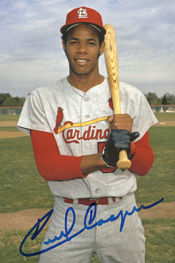
The Reds’ Pat Corrales, a loyal, seldom-used backup catcher who had experienced personal tragedy, never had played in a World Series game. Realizing Corrales might never get another chance, and knowing how meaningful it would be to him, Anderson sent him to bat for one of the Reds’ hottest hitters, Hal McRae.

In his brief plate appearance, Corrales made the last out of the 1970 World Series, but the result didn’t matter. Unlike Hall of Famers such as George Sisler and Ernie Banks, Corrales had gotten to play in a World Series, and Anderson, in his first season as a big-league manager, had enhanced his growing reputation by being a considerate leader.

Three years earlier, Anderson and Corrales were in the Cardinals’ system _ Anderson as a manager looking to move up in rank, and Corrales as a catcher looking to show he could hit.

Cardinals connections

Anderson joined the Cardinals as a minor-league manager in March 1965. Corrales was acquired by the Cardinals in a trade with the Phillies in October 1965. Cardinals general manager Bob Howsam dealt Bill White, Dick Groat and Bob Uecker to the Phillies for Alex JohnsonArt Mahaffey and Corrales.

After managing St. Petersburg to a 91-45 record in 1966, Anderson was looking to manage the Cardinals’ top farm club, Tulsa, in 1967, but Stan Musial, who’d replaced Howsam as general manager, gave the job to Warren Spahn. Anderson was assigned to manage Modesto. After the 1967 season, Howsam, who had become general manager of the Reds, hired Anderson to manage in the Cincinnati farm system. Two years later, he became manager of the Reds.

Corrales, 25, spent the 1966 season as backup to Cardinals catcher Tim McCarver, but got into a mere 28 games and hit .181. “I’m probably the only guy in the league who has thrown out more runners than he has hits,” Corrales told The Sporting News.

Actually, it was a tie. Corrales finished the 1966 season with 13 hits and threw out 13 runners attempting to steal.

Afterward, Corrales reported to the Cardinals’ Florida Instructional League team to work on his hitting. The manager was George Kissell and Sparky Anderson was his assistant. When Corrales injured a knee, the Cardinals acquired Johnny Romano from the White Sox to be McCarver’s backup. Corrales played the 1967 season at Tulsa for Spahn, and hit .274 in 130 games.

Howsam and the Reds knew their top prospect, Johnny Bench, would be the starting catcher in 1968, replacing Johnny Edwards, and viewed Corrales as a potential backup. On Feb. 8, 1968, Howsam acquired Corrales for the second time, trading Edwards to the Cardinals for him and Jimy Williams. 

Devastating death

Corrales began the 1968 season with the Reds’ farm team at Indianapolis, managed by Don Zimmer, and hit .273 in 77 games. He got called up to the Reds in July to provide relief for Bench, who started 81 games in a row. On July 29, 1968, Corrales was the catcher when the Reds’ George Culver pitched a no-hitter against the Phillies.

Corrales impressed Reds management and was popular with teammates. Asked about Corrales, Pete Rose told The Sporting News, “There’s a man who can do it all. He knows what’s going on out there every minute. Corrales makes a pitcher think on the mound.”

Corrales stuck with the Reds in 1969.

On July 22, 1969, Corrales’ wife, Sharon, 27, gave birth to a son at 5:02 a.m. at Cincinnati’s Christ Hospital. It was the couple’s fourth child. They had three daughters, the oldest, 5, and twins, 3.

Ten hours later, Sharon died in the hospital. The cause was pulmonary embolism, a blood clot in the lungs, the Dayton Daily News reported.

Corrales returned to the Reds a week after Sharon’s funeral. Several teams raised money for an education fund for Corrales’ children, Newsday reported. Among the fund-raisers were the Orioles. According to The Sporting News, Orioles players donated money from fines collected by their clubhouse kangaroo court. Orioles wives raised funds with a bake sale and paper flower sale.

After the 1969 season, the Reds changed managers, replacing Dave Bristol with Sparky Anderson. At spring training in 1970, Anderson said, “In Corrales, I’ve got the best backup catcher in baseball.”

People skills

Corrales hit .236 in 43 games for the 1970 Reds, who finished first in the West Division. Against the Cardinals, he hit .417 (5-for-12).

In the National League Championship Series, the Reds swept the Pirates, and Corrales didn’t play. In the World Series, the Orioles won three of the first four games, and again Corrales didn’t play.

In Game 5 at Baltimore, the Orioles led, 9-3, entering the ninth. Sparky Anderson called to the bullpen, where Corrales had been catching throws from Reds relievers, and told him to come to the dugout.

According to the Dayton Daily News, Anderson approached Hal McRae, who hit .455 in the World Series, and told him, “Unless somebody gets on base before you, I’m going to have Pat hit for you. It’s not a reflection on you. I want him to have a chance to get his name in a World Series box score.”

McRae told Anderson he understood.

After starter Mike Cuellar retired the first two batters, Bench and Lee May, Anderson sent Corrales to the plate. Anderson, who played one season in the majors and 10 in the minors, appreciated a role player such as Corrales, who lived in Bench’s shadow.

“Anyone who plays his heart out for you all year deserves a chance to play in a World Series,” Anderson told the Cincinnati Enquirer. “Corrales has done that for us and I wasn’t going to let this chance get away.”

To the Dayton Daily News, Anderson said, “I wasn’t being sentimental. I was being honest. I’d have let him down by not letting him bat.”

Corrales hit Cuellar’s first pitch to third. Brooks Robinson fielded it and threw to first for the final out, clinching the championship for the Orioles. Boxscore

Explaining why he swung away, Corrales told the Cincinnati Enquirer, “I wasn’t going to take nothing when I went up there. I wanted to hit.”

Regarding the move by Anderson, Corrales told Newsday, “I appreciate he thought of giving me the chance.”

Ritter Collett of the Dayton Journal Herald called Anderson’s action “a considerate gesture, like a coach getting his seniors into the final game.”

Wells Twombly wrote in The Sporting News, “It was a charming gesture, full of good, rich schmaltz. The lovely thing about Sparky is he dares to be corny in a violently cynical age.”

Said Anderson, “The World Series still is the biggest sporting event in America. That’s why I wanted to make sure Pat had a chance to get his name in a box score. It means a lot to a guy.”

Corrales never played in another World Series. He did coach in five World Series (1991, 1992, 1995, 1996 and 1999) for the Braves on the staff of manager Bobby Cox.

In his last hurrah as a National League player, Joe Morgan helped the Phillies dethrone the Cardinals.

A second baseman who began his big-league career with the Houston Colt .45s, Morgan spent his prime years as an integral member of championship Reds teams in the 1970s.

A two-time recipient of the National League Most Valuable Player Award as well as a member of the Baseball Hall of Fame, Morgan was 5 feet 7 but hit like a giant. He produced 2,517 hits and 1,133 RBI in 22 seasons in the majors. He also won five Gold Glove awards for fielding.

Morgan, a left-handed batter who flapped his left elbow as a distinctive timing mechanism before unleashing his swing, consistently clobbered the Cardinals.

A career .271 hitter, he batted .293 versus the Cardinals. His on-base percentage against them was .408. In 203 games versus the Cardinals, Morgan had 216 hits and 147 walks. He hit .313 against Bob Gibson and struck out a mere three times in 83 career at-bats versus the Cardinals’ ace.

In 1976, when Morgan was at his peak, he hit .452 versus the Cardinals, and his on-base percentage against them was an astounding .578. In 45 plate appearances against the 1976 Cardinals, Morgan had 14 hits and 12 walks.

Seven years later, with the 1983 Phillies, Morgan’s numbers against the Cardinals weren’t as great, but his performance remained devastating.

Power surge

In December 1982, after two seasons with the Giants, Morgan, 39, was traded to the Phillies, and was reunited with a prominent pair of former Big Red Machine teammates, Pete Rose and Tony Perez.

Playing in the same National League East Division as the Cardinals, who won the World Series championship in 1982, the 1983 Phillies were assembling a group of baseball royalty in the hope of overtaking the Cardinals. In addition to Morgan, Rose and Perez, the Phillies had Mike Schmidt and Steve Carlton.

Early on, the Phillies fizzled. They were 9-13 in May and lost their first four games in June.

On June 9, 1983, the Phillies went into their home game against the Cardinals with a record of 22-25. Morgan was batting .193.

Before the game, Morgan worked with coaches Deron Johnson and Bobby Wine to correct a flaw in his swing. Johnson noticed Morgan was committing too soon to pitches, and suggested Morgan rely more on his hands for timing. “As soon as I did, I felt good,” Morgan told the Philadelphia Inquirer.

In the bottom of the first inning, Morgan led off with a home run against Joaquin Andujar. The Cardinals came back and led, 5-1, heading to the bottom of the eighth, but Andujar unraveled. A double and two singles produced a run, making the score 5-2, and brought Morgan to the plate with two on and none out.

With the count 1-and-0, Andujar threw a fastball and Morgan walloped it over the wall in right for his second home run of the game, tying the score at 5-5.

“I wanted to go up and get a pitch I could pull and maybe hit out of the ballpark,” Morgan said. “I knew the situation, and I knew what I’m here for. I’m here to add some power. I could go up there and try to slap a ball to right, but they brought me here to do a job.”

It was the first time Morgan hit two home runs in a game since 1977. When Andujar gave up the second home run, he threw his hands up in disgust. “I feel like I want to kill myself,” Andujar told the St. Louis Post-Dispatch.

The Phillies got a run against Cardinals relievers in the 11th and won, 6-5. Boxscore

Repeat performance

Morgan said he thought the comeback victory would propel the Phillies into a winning streak, but it didn’t happen. Instead, the Phillies experienced a dismal July. Manager Pat Corrales was fired and replaced by Paul Owens. Morgan suffered a hamstring pull and batted .060 for July.

On Aug. 5, 1983, the Phillies were in St. Louis to play the Cardinals, and both Morgan and the club remained in a funk. The Phillies were 53-50 and trailed the first-place Pirates. Morgan was batting .192 for the season.

In the second inning, with the Phillies ahead, 2-0, Morgan faced John Stuper with two on and two outs. With the count 3-and-0, Morgan got a fat pitch and hit it over the wall in right for a three-run home run. In the seventh, Morgan hit a solo home run versus Dave Von Ohlen, giving him his second two-homer game of the season against the Cardinals. The Phillies won, 10-7. Boxscore

“I’m really glad for Joe,” Owens said. “It’s good to see him finally relax a little.”

Experience counts

Entering September, four teams were in contention for the National League East title. The Pirates (68-63) led, but the Phillies (67-64), Expos (66-64) and Cardinals (65-65) were close behind.

The Phillies took control, and Morgan played a prominent part. 

The Phillies were 22-7 in September, including 6-0 against the Cardinals, and finished atop the division at 90-72. The Cardinals were 12-18 in September and finished at 79-83.

Morgan hit .337 in September and had 18 RBI in 24 games. He had unusual numbers against the Cardinals for the season: a .181 batting average, but five doubles, four home runs and 13 RBI in 17 games.

The Phillies prevailed in the National League Championship Series versus the Dodgers and advanced to the World Series against the Orioles. Though the Orioles won four of five games, Morgan hit two home runs.

Released by the Phillies after the World Series, Morgan signed with the Athletics, who wanted him as their second baseman. After 21 seasons in the National League, Morgan, 40, completed his playing career in the American League with the 1984 Athletics.

If not for the effective relief pitching of Ron Perranoski, the Cardinals, not the Dodgers, might have won the 1963 National League pennant and given Stan Musial a chance to end his playing career in a World Series.

A left-hander, Perranoski played 13 years in the majors and coached another 17 years in the big leagues.

In 1963, the Dodgers held a one-game lead over the Cardinals heading into a three-game series at St. Louis. The Dodgers swept, with Perranoski earning a save and a win, and went on to clinch the pennant.

Cool and collected

Born and raised in New Jersey, Perranoski early on displayed poise and a calm disposition on the mound. “As a high school pitcher, mom and dad used to complain they couldn’t tell whether I’d won or lost by the way I looked when I came home,” Perranoski told the Los Angeles Times.

He enrolled at Michigan State and was a roommate and teammate of Dick Radatz, who, like Perranoski, would become a dominant reliever in the majors.

Perranoski signed with the Cubs in June 1958. After two years in their farm system, the Cubs traded Perranoski to the Dodgers for infielder Don Zimmer. Former Cubs manager Bob Scheffing, who considered Perranoski a top prospect, told the St. Louis Post-Dispatch, “If I were still with Chicago, they’d have made that Perranoski trade over my dead body.”

After posting a 2.58 ERA in the minors in 1960, Perranoski pitched well at spring training in 1961 and earned a spot on the Dodgers’ Opening Day roster. His first big-league save came on April 18, 1961, against the Cardinals. In what the Los Angeles Times described as “a brilliant piece of relief pitching,” Perranoski retired Bill White with the bases loaded in the eighth, and set down the side in order in the ninth. Boxscore

A year later, in May 1962, Musial’s single off a curve from Perranoski gave Musial his 3,431st hit and moved him ahead of Honus Wagner for No. 1 on the National League career hit list.

Reliable relief

In 1963, there were no better relievers in the majors than the former Michigan State roommates, Perranoski and Radatz. Perranoski was 16-3 with 21 saves and a 1.67 ERA for the 1963 Dodgers. Radatz, a hulking right-hander nicknamed “The Monster,” was 15-6 with 23 saves and a 1.97 ERA for the 1963 Red Sox.

The Los Angeles Times described Perranoski as the “miracle man of the 1963 Dodgers. If the others can’t win them, he will.”

With Perranoski in the bullpen, and Sandy Koufax, Don Drysdale and Johnny Podres heading the starting rotation, the Dodgers had the best ERA in the National League in 1963, but the Cardinals kept pace with them.

Entering the Sept. 16-18 series at St. Louis, the Dodgers were 91-59 and the Cardinals were 91-61.

The Cardinals became sentimental favorites when Musial, their 42-year-old icon, revealed in August that 1963 would be his last year as a player. Musial had played in four World Series, but none since 1946, and many were pulling for the Cardinals to overtake the Dodgers and give Musial a storybook finish to his career.

Naturally, Perranoski and the Dodgers had other ideas.

Impressive pitching

Podres and Ernie Broglio were the starting pitchers for the opening game of the Dodgers-Cardinals series. The score was tied at 1-1 when the Dodgers struck for two runs in the top of the ninth against relievers Bobby Shantz and Ron Taylor.

Perranoski replaced Podres for the bottom of the ninth and got the save, retiring Dick Groat, Musial and Ken Boyer in order. Boxscore

“Podres still can make the big haul and Perranoski puts the cash in the bank,” the Post-Dispatch noted.

Said Podres: “I knew Perranoski would be ready. He’s the best relief pitcher there is.”

When Koufax pitched a four-hit shutout against the Cardinals in Game 2, the Dodgers moved three ahead in the standings. Boxscore

The Cardinals needed to win the series finale to keep their pennant hopes from fading.

Great escape

The starting pitchers for Game 3 were the Cardinals’ Bob Gibson and the Dodgers’ Pete Richert. In the eighth, with the Cardinals ahead, 5-1, the Dodgers scored three times against Gibson and Shantz, getting within a run.

Dodgers manager Walter Alston picked Perranoski to pitch the bottom of the eighth and he retired the side in order. In the ninth, Dick Nen, in his debut game, hit a home run against Ron Taylor, tying the score at 5-5.

Perranoski again retired the Cardinals in order in the ninth, but he got into trouble in the 10th. Dick Groat led off and tripled. “I tried to jam Groat with a fastball, but I got it up,” Perranoski told the Post-Dispatch.

Alston went to the mound for a conference with Perranoski. Don Drysdale was throwing in the Dodgers’ bullpen, but Alston later said, “I was going all the way with Perranoski.”

Alston asked Perranoski whether he wanted to pitch to the next batter, Gary Kolb, or load the bases with intentional walks to set up a forceout at the plate. Perranoski opted to pitch to Kolb, a left-handed batter who entered the game in the seventh to run for Musial.

“I wasn’t too alarmed because I knew I had control and I felt if I got beat they’d have to beat me on my best pitch,” Perranoski told the Los Angeles Times.

Kolb struck out looking at an outside curve.

Perranoski gave intentional walks to Ken Boyer and Bill White, loading the bases for Curt Flood. “I knew Flood was a tough cookie to double up, but I had to get him to hit the ball on the ground,” Perranoski said.

After jamming Flood with an inside fastball, Perranoski got him to chase an outside curve. Flood hit a bouncer to shortstop Maury Wills, who threw to the plate to get the forceout on Groat.

With two outs and the bases loaded, Mike Shannon came up next. “I knew Shannon was a good fastball hitter,” Perranoski said.

Perranoski started him off with a sinker. Shannon hit a tapper to third. Jim Gilliam fielded the ball and threw to first in time to retire Shannon and end the threat.

Long career

The Cardinals didn’t get another good scoring opportunity against Perranoski. In the 13th, the Dodgers scored an unearned run against Lew Burdette. Perranoski retired the Cardinals in order in the bottom half of the inning, sealing the 6-5 Dodgers win and crushing the Cardinals’ pennant chances. Boxscore

With six innings of scoreless relief, Perranoski got his 16th win of the season. “This was the biggest game I ever pitched,” he said. “It’s got to be my biggest thrill.”

Cardinals manager Johnny Keane said, “I’ve never seen anyone get them out better than he does time after time.”

The Dodgers went on to clinch the pennant, finishing at 99-63. The Cardinals placed second at 93-69.

Perranoski pitched in three World Series for the Dodgers. He also pitched for the Twins, Tigers and Angels, leading the American League in saves in 1969 and 1970.

Perranoski was Dodgers pitching coach from 1981-94. Among the pitchers he helped develop were Orel Hershiser, Rick Sutcliffe and Fernando Valenzuela.

He also mentored reliever Tom Niedenfuer. According to the Los Angeles Times, Perranoski “sort of adopted him.”

“Possibly the greatest thing Perranoski did for Niedenfuer was tell him to throw with the same motion as Goose Gossage,” the Los Angeles Times reported.

In 1985, Niedenfuer led the Dodgers in saves, but in Game 5 of the National League Championship Series he gave up a walkoff home run to the Cardinals’ Ozzie Smith. In the next game, Dodgers manager Tommy Lasorda ordered Perranoski to tell Niedenfuer to pitch to Jack Clark with two on, two outs and a base open, and Clark hit a home run, carrying the Cardinals to the pennant.

With his playing career at a crossroads, Jay Johnstone took advantage of a chance to go to spring training with the Cardinals and show he still had the ability to perform in the majors.

An outfielder and left-handed batter, Johnstone played 20 seasons in the majors for eight teams.

Though he never played in the regular season for the Cardinals, his stint with them at spring training in 1974 was an important part of his career.

After flopping with the White Sox and Athletics, Johnstone’s future in the majors appeared bleak, but he regained his batting stroke in Cardinals’ spring training. Though they had no room for him on the Opening Day roster, the Cardinals liked Johnstone and spoke well of him to other clubs. The Phillies gave Johnstone a chance, and it worked out splendidly for him.

Ups and downs

Johnstone was born in Connecticut and grew up in California. His father, Jack, signed with the Cardinals but entered the Army during World War II and never got a chance to play professional baseball, according to the Society for American Baseball Research.

Jay Johnstone was 17 when he signed with the Angels in 1963 and 20 when he made his debut in the majors with them in 1966.

After the 1970 season, the Angels traded Johnstone to the White Sox. Urged to hit for power, Johnstone delivered a career-high 16 home runs for the White Sox in 1971, but messed up his swing. After he hit .188 in 1972, the White Sox wanted to reduce his salary 20 percent. Johnstone, the club’s player union representative, refused to accept the pay cut, and was released in March 1973.

“He should have been fighting for a job instead of feeling he had one,” White Sox director of player personnel Roland Hemond said to the Chicago Tribune.

Johnstone told The Sporting News, “Chicago really tried to put it to me.”

The Athletics signed Johnstone and assigned him to their Tucson farm team. He hit .347 for Tucson, but it was a different story when he got called up to the Athletics. Johnstone hit .107 in 23 games for the 1973 Athletics and was 0-for-11 as a pinch-hitter.

Tryout with Cardinals

Cardinals director of player personnel Bob Kennedy saw Johnstone play at Tucson and gave a favorable report to general manager Bing Devine. Kennedy “told me he liked him a lot and felt he could help,” Devine told The Sporting News.

After the season, Johnstone played winter baseball in Puerto Rico and led the league in RBI. Impressed, the Cardinals purchased Johnstone’s contract from the Athletics on a conditional basis in January 1974 and placed him on their 40-man big-league roster. The conditional clause meant the Cardinals had until April 1 to decide whether to keep Johnstone or offer him back to the Athletics.

“He’s got a lot of talent and he just might be at the age when he can play up to his capacity,” Devine said.

Johnstone, 28, did well at Cardinals spring training camp. He hit .296 in exhibition games. “I hit the ball hard,” Johnstone told the St. Louis Post-Dispatch.

The Cardinals “liked his style,” The Sporting News noted, but decided they had better alternatives. Tim McCarver, in his second stint with the Cardinals, was kept as the top pinch-hitter from the left side, and other left-handed batters, Jose Cruz and Jim Dwyer, were designated as backup outfielders.

Johnstone “thought he had the team made,” The Sporting News reported. “Instead, he was released outright.”

When the defending World Series champion Athletics showed no interest in taking back Johnstone, the Cardinals offered to help him.

“Bing Devine said he’d get on the phone right away and try to get me with another club,” Johnstone told the Post-Dispatch.

Back in the bigs

The Dodgers wanted Johnstone to join them as a pinch-hitter, but he turned down the opportunity.

“I would have been strictly a left-handed pinch-hitter there,” Johnstone told the Philadelphia Daily News. “At my age, it wasn’t what I wanted. It’s the toughest job in baseball. I thought I was capable of playing every day.”

Phillies coach Bobby Wine, Johnstone’s manager in Puerto Rico, recommended him. When Phillies director of player personnel Paul Owens offered Johnstone a chance to begin the season as an outfielder with their Toledo farm club, he accepted, hoping it would lead to a promotion to the big leagues.

Toledo manager Jim Bunning, the former pitcher, future Baseball Hall of Famer and future United States senator, clashed with Johnstone, who had a reputation for being a free spirit and practical joker. Johnstone was fined by Bunning for lack of hustle and for missing signs, but he also hit .316 for Toledo.

“I think he knows he has talent, but he really hasn’t looked at himself in the mirror,” Bunning said to the Philadelphia Inquirer. “He hasn’t asked himself, ‘Why was I in the minors? Why have five organizations said I can’t do it this way?’ “

Johnstone told the Philadelphia Daily News he and Bunning just didn’t connect: “I didn’t like him. He didn’t like me.”

In July 1974, Johnstone got called up to the Phillies, and he made the most of the chance. Johnstone hit .380 for the Phillies in July and finished the season at .295. He also hit .346 versus the 1974 Cardinals.

After five seasons with the Phillies, Johnstone went on to play for the Yankees, Padres, Dodgers and Cubs. He hit .282 against the Cardinals for his career.

Johnstone’s final big-league at-bat came as a pinch-hitter against the Cardinals’ Danny Cox in Game 3 of the 1985 National League Championship Series at St. Louis. Batting for Rick Honeycutt, Johnstone grounded out to Tommy Herr.

In 1964, the year he revived his baseball career, Jim Owens nearly derailed the Cardinals’ pennant chances. He also struck out Lou Brock in his first at-bat for the Cardinals.

Once a prized Phillies prospect, Owens clashed with the club’s management and created havoc as part of a group of hard-drinking pitchers dubbed the Dalton Gang.

The Phillies finally gave up on him, and so did his next team, the Reds.

With his career spiraling, Owens, 30, got a lifeline from the Houston Colt .45s in 1964, and made the most of the opportunity. Used as a reliever and spot starter, Owens was most effective against the Cardinals. He was 4-0 with one save and a 2.51 ERA against them in 1964.

Only the Mets had a worse record than the Colt .45s in the National League in 1964, but the Cardinals were unable to take full advantage. Partly because of Owens’ success against them, it took the Cardinals until the final day of the season to clinch the National League pennant.

Great expectations

Owens was born in Gifford, Pa., near the New York state border. The Phillies were defending National League champions when he signed with them at 17 in 1951.

A right-hander, Owens quickly rose throught the Phillies’ farm system. He was a 22-game winner in 1952, and he won 22 again in 1953 for Terre Haute, a team managed by Hub Kittle.

“Owens was the finest pitching prospect this club ever had, and that includes Robin Roberts,” Phillies owner Bob Carpenter told the Philadelphia Daily News.

Owens got to the majors with the Phillies in 1955, but lost his first six decisions. He didn’t get a win for them until 1958. Owens finally began to fulfill expectations in 1959, when he was 12-12 with 11 complete games, but it also was the year he joined the Dalton Gang.

Gang’s all here

Turk Farrell, Jack Meyer, Seth Morehead and Owens were the Phillies pitchers in 1959 who formed the Dalton Gang. According to Sports Illustrated, Phillies coach Tom Ferrick gave the group its name because of their outlaw antics. The real Dalton Gang robbed banks and trains in the late 1800s, primarily in the Kansas and Oklahoma territories.

Sports Illustrated described the Phillies’ Dalton Gang as “a group of wild-living, fun-loving, hell-raising players” who shared a “common love of the fast, loose life _ hard drinking, frequent fighting, late hours and casual friendships.”

Si Burick of the Dayton Daily News called the gang “a hard-riding, after-hours” group, and cited Owens for being “known as an athlete of questionable off the field habits, one who has been especially indiscreet in the drinking league.”

Asked about Owens, Phillies manager Gene Mauch told Burick, “There are people in baseball who drink as much as he does, maybe more, but they don’t get into trouble like him.”

Farrell and Owens were road roommates for one year in the minors and four years with the Phillies. During the 1960 season, in an effort to stop the shenanigans, Mauch split up the pair, rooming Farrell with coach Ken Silvestri and Owens with coach Peanuts Lowrey.

“Silvestri would go to bed at 10 o’clock,” Farrell told The Sporting News. “I’d keep the TV set on until 4 and order up some beer. Jim did the same thing in his room. We kept this up for 10 days and finally Silvestri and Lowrey went to Mauch and begged him to change his mind. So Mauch roomed me and Owens back together.”

One year, the Phillies offered Owens a $500 bonus if he promised to behave. According to Sports Illustrated, he “didn’t even make it through spring training. He got involved in a barroom brawl in Florida, lost the bonus and was fined an extra hundred to boot.”

In 1961, when Owens stormed out of Phillies training camp because of a disagreement with Mauch and threatened to quit, Larry Merchant of the Philadelphia Daily News described him as “a magnificent pitcher from the eyebrows down” and said the reason for Owens’ sulking was “as clear as a head full of vodka stingers.”

Not done yet

After the 1962 season, the Phillies traded Owens to the Reds for infielder Cookie Rojas. Owens pitched poorly for the 1963 Reds and in July they sent him to their San Diego farm club.

The demotion apparently was a wakeup call for Owens. He was 4-2 with a 2.21 ERA for the Reds’ farm team. The Colt .45s claimed him in the December 1963 minor-league draft, and Owens went to pitch winter ball in Venezuela in order to prepare to make a bid for a return to the majors in spring training.

In Venezuela, facing lineups stocked with major leaguers, Owens was the league’s best pitcher. He was 8-2 with an 0.72 ERA. All was going splendidly until on Jan. 29, 1964, when Owens was taken to a hospital for treatment of a leg wound.

According to The Sporting News, multiple variations were reported of how Owens cut his leg. Two newspaper reporters said Owens “had been stabbed during a Valencia barroom argument.” Valencia police said Owens “attempted to act as peacemaker on behalf of a friend during a fight and was cut in the right thigh” by someone wielding a knife. The president of the Valencia ballclub said Owens was injured in a swimming pool mishap. Owens said he slipped in a bowling alley and fell on top of a glass tumbler.

Old pro

Stitched up, Owens reported to the Colt .45s and “was the surprise of spring training,” The Sporting News reported. He earned a spot in the starting rotation and was reunited with his Dalton Gang buddy, Turk Farrell, who also was a Colt .45s starter.

“I always thought Jim was a good pitcher,” Farrell said. “He got the shaft in Philadelphia. Everybody tried to tell him how to pitch and how to live and he never got to pitch enough. If they would have left him alone, he’d have been all right.”

On April 26, 1964, Owens started against the Cardinals and got his first win for the Colt .45s, beating his former Phillies teammate, Curt Simmons. Boxscore

Two months later, on June 15, Owens relieved, retired all nine batters he faced, and got the win against the Cardinals. Brock, acquired earlier in the day from the Cubs, appeared as a pinch-hitter and struck out on three pitches from Owens. Boxscore

Owens also got relief wins versus the Cardinals on June 24 and Aug. 19, and earned a save against them on Aug. 8.

“Although Owens has been haunted in his career by a reputation for off the field hijinks, he has been a model of good deportment on the Colt .45s,” The Sporting News reported. “It is plain Jim would like to live down the playboy label of his youth.”

Owens was called “Bear” by his teammates because he had “the square build and somewhat lumbering gait of a medium-sized grizzly,” The Sporting News noted.

The nickname also fit his demeanor. According to The Sporting News, Owens “stays to himself as much, or more, than any other player on the Houston club. He is quiet, seldom smiles and does not engage much in small talk. On the mound, he acts like a man in a bad temper. He scowls as he pitches, and when he takes a throw from his catcher, he jerks at the ball in a short, angry gesture.”

Owens finished with an 8-7 record, six saves and a 3.28 ERA for the 1964 Colt .45s. The next year, the team became the Astros, and Owens again was tough versus the Cardinals, with a 1-0 record, a save and 2.08 ERA against them.

In June 1967, Owens made his last appearance as a pitcher, giving up a three-run home run to Orlando Cepeda in a relief stint versus the Cardinals. Boxscore

In a reversal of roles, the one-time baseball bad boy joined management, becoming an Astros coach for the remainder of 1967, and stayed in the job until 1972.

“He knows more about pitching than anybody on this club,” Astros manager Grady Hatton told The Sporting News.

(Updated Feb. 21, 2023)

Hank Aaron was the recipient of a special delivery from Bob Gibson.

On July 28, 1970, Gibson threw a knuckleball in a game for the first time. The batter he threw it to was Aaron.

The unlikely pitch from a premier fastball pitcher to a premier fastball hitter occurred in a game between the Cardinals and Braves at Atlanta.

Mighty matchups

Aaron, 36, and Gibson, 34, still were at the top of their games in 1970. Aaron would finish the season with 38 home runs and 118 RBI. Gibson would finish at 23-7 and win his second National League Cy Young Award.

The two future Hall of Famers faced each other often. Aaron completed his career with 163 at-bats against Gibson. Only Billy Williams (174) batted more times versus Gibson.

Aaron batted .215 versus Gibson for his career. He had 35 hits, including eight home runs, and struck out 32 times. “Gibson was every bit as mean as (Don) Drysdale, and he threw harder,” Aaron said in his autobiography “I Had a Hammer.”

In his book, “Sixty Feet, Six Inches,” Gibson said, “There are very few guys who can consistently hit that 95 mph fastball that’s up above the belt. Hank Aaron could. Aaron swung down on the ball. He’d get backspin on it and hit line drives that would start off close to the ground and just keep going unless the fence got in the way.”

“I’d avoid throwing Hank Aaron a fastball over the plate if there was any possible way I could get around it,” Gibson said. “That man did not miss a fastball.”

In Gibson’s first two starts against the 1970 Braves, Aaron tagged him for five hits in eight at-bats.

Entering their third and final matchup of the season on a hot, humid night in Georgia, Gibson had a surprise for Hammerin’ Hank.

Ready or not

Before the game, Gibson told catcher Joe Torre he wanted to throw a knuckleball.

“I’ve been fooling around with that pitch on the sidelines for what, three, four years?” Gibson said to the St. Louis Post-Dispatch. “I figured I finally had enough guts to throw it in a game. I just wanted to see what would happen.”

In the first inning, the Braves had a runner on second, one out, and Aaron at the plate. When the count got to 2-and-2, Gibson decided to unveil the knuckleball.

“I got it over and it went down pretty good,” Gibson said.

Aaron swung at it and popped out to second baseman Julian Javier.

In his book, Gibson recalled, “As he ran back to the dugout, he yelled to me, ‘What the hell was that?’ I laughed and told him, all proud, ‘That was my knuckleball.’ ”

Gibson knew Aaron sometimes could be coaxed into chasing tantalizingly slow pitches. Five years earlier, in 1965, the Cardinals’ Curt Simmons threw a high, floating changeup to Aaron, who hit the ball over the wall but was called out by the umpire for stepping out of the batter’s box.

Gibson said he tried a knuckleball as a substitute for a changeup.

“Knuckleballs, incidentally, aren’t thrown with your knuckles,” Gibson said in his book. “They’re thrown with your fingernails. The reason they call it a knuckleball is because that’s what the hitter sees when you dig your fingernails into the seam.”

Encore in ninth

Gibson retired 12 of the first 13 Braves batters, and the Cardinals built a 6-0 lead against Jim Nash and Bob Priddy.

According to the Atlanta Constitution, Braves manager Lum Harris said Gibson “was bringing it up there in a hurry. I wondered if we’d get any runs off him.”

In the sixth, Aaron drove in a run with a single and the Braves scored three times in the inning. “I pitched dumb,” Gibson said of his sixth-inning effort. “I just tried to get by on nothing but fastballs, and I was getting tired.”

The Braves added another run in the seventh, getting within two at 6-4.

In the ninth, the Braves brought in the master knuckleball specialist, 48-year-old Hoyt Wilhelm, to pitch, and he retired the Cardinals in order. “Old Hoyt was something,” Harris marveled.

After retiring Felix Millan in the bottom half of the inning, Gibson again faced Aaron, who popped out to second base for the third time in the game.

“I got Aaron on that pop-up in the ninth on a knuckler,” Gibson told the Atlanta Constitution.

Torre said to the Post-Dispatch, “In the ninth, when Henry popped up, it looked as if he had a good ball to hit, but just when Henry got the bat around to where the pitch was, the ball sailed out. Henry never had a chance. All Henry said was, ‘Son of a bitch.’ ”

Gibson struck out the next batter, Rico Carty, to complete the game and earn the win, boosting his record to 13-5. His totals for the game: 9 innings, 12 hits, 4 runs, 1 walk, 7 strikeouts. Boxscore

“Twelve hits are a lot to give up and still win, but I’m not complaining,” said Gibson.

In his book, Gibson said he rarely threw another knuckleball.

“Every time I threw a changeup, somebody would whack it over some fence, or in between the outfielders,” Gibson said. “Unfortunately, my knuckleball wasn’t much better.”