Feeds:
Posts
Comments

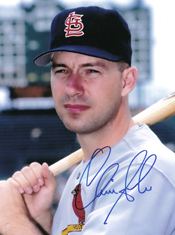
A stint with the Cardinals enabled Matt Keough to share a championship season with his father.

A right-hander who pitched in the majors for nine years, Keough endured an epic losing streak and survived being struck in the temple by a foul ball.

His father, Marty Keough, was a big-league outfielder who became a scout for the Cardinals. Marty scouted for the Cardinals from 1980 to 2018. Matt’s uncle, Joe Keough, also was an outfielder in the majors.

In September 1985, Matt Keough returned to the big leagues with the Cardinals after two seasons in the minors. Matt and Marty were in the same organization for the first time. While Marty was looking for talent to keep the Cardinals successful, Matt was looking to help them win a division title.

Changing positions

Matt Keough was a baseball standout at Corona del Mar High School near Newport Beach, Calif., just as his father Marty was years earlier in Pomona, Calif. A prized prospect of the Red Sox, Marty played 11 years in the majors.

In 1973, Matt, 18, signed with the Athletics after he was chosen in the seventh round of the amateur baseball draft. In his first three seasons (1974-76) in the minors, he played shortstop and third base. His manager in each of those years was Rene Lachemann, a future Cardinals coach.

Lachemann was a Keough booster. Though Keough threw well, he was an inconsistent hitter. When he struggled to hit at spring training in 1977, the Athletics made him a pitcher. “To me, it was make or break,” Keough told The Sporting News.

At Class AA Chattanooga in 1977, Keough led Southern League pitchers in strikeouts (153). He made the jump from Class AA to the majors in September.

Hitting the skids

The next year, Keough was named to the 1978 American League all-star team managed by the Yankees’ Billy Martin. In the All-Star Game at San Diego, Keough relieved Jim Palmer in the third inning and gave up a single to the Cardinals’ Ted Simmons, loading the bases with two outs, before escaping the jam by getting Rick Monday to fly out. Boxscore

A season of promise ended badly when Keough lost his last four decisions and finished at 8-15.

His personal losing streak carried over to the 1979 season. Keough lost his first 14 decisions, giving him 18 consecutive losses over two seasons. His 0-14 record in 1979 tied Joe Harris of the 1906 Red Sox for most losses to start a season. Keough’s 18 consecutive losses were one short of the league record of 19 in a row by Bob Groom of the 1909 Senators and John Nabors of the 1916 Athletics.

The skid ended on Sept. 5, 1979, when Keough got the win against the Brewers at Oakland, pitching a five-hitter before 1,772 spectators, including his uncle Joe. Boxscore

“I’m 1-0 now,” Keough said. “That’s how I’m looking at it. Everything else is behind me.”

Keough finished the 1979 season at 2-17.

Different approach

In the winter after the 1979 season, Keough played in Puerto Rico for a team managed by his former minor-league mentor, Rene Lachemann, who worked to restore the pitcher’s confidence.

Another positive development for Keough was a management change in Oakland. Two years after managing Keough in the All-Star Game, Billy Martin was named Athletics manager in 1980 and his sidekick, Art Fowler, became pitching coach.

“The main thing with Martin and Fowler is the confidence they give you,” Keough told the Minneapolis Star-Tribune. “They make you believe.”

According to some American League hitters, including Reggie Jackson and Jim Rice, Martin and Fowler also taught Keough to throw a banned pitch, the spitball.

Keough called the accusations “sour grapes.” Fowler said, “It’s nothing but a little sinker. They just turn the fastball over a little and throw strikes.”

In explaining the pitch to Gannett News Service, Keough said, “Fowler can take you down to that bullpen and show you how to throw the fastball without seams.”

Keough was 16-13, with 20 complete games, for the 1980 Athletics, and the starting staff made the cover of Sports Illustrated the following spring.

Going backward

Keough won his first six decisions of 1981 before feeling pain in his right shoulder. Some suggested Martin overworked him, but Keough said he hurt the shoulder when he slipped on the mound in Baltimore. Keough was 10-6 in 1981 and 11-18 in 1982.

In 1983, Martin returned to New York to manage the Yankees, who made a deal to acquire Keough. Experiencing persistent shoulder pain, Keough was 3-4 with a 5.17 ERA for them.

After the season, Keough agreed to go to the minor leagues in 1984 to try to develop a knuckleball. He was assigned to the Class AA Nashville team because the pitching coach was knuckleball master Hoyt Wilhelm.

After posting a 6.75 ERA in seven starts for Nashville, Keough was diagnosed with a partial tear of the rotator cuff and put on the disabled list. He underwent arthroscopic surgery in October 1984 and the Yankees released him.

Comeback trail

On April 23, 1985, the Cardinals signed Keough to a minor-league contract and sent him to extended spring training in Florida. In 19 innings, Keough had a 1.93 ERA and the Cardinals assigned him to Class AAA Louisville.

Keough, 30, had a 3.35 ERA in 19 starts for Louisville manager Jim Fregosi. “He’s gotten better and better since he’s been with us,” Fregosi told the Louisville Courier-Journal. “I really think he can pitch in the big leagues again.”

Cardinals manager Whitey Herzog said, “He always had a good spitball at Oakland.”

On Sept. 9, 1985, the Cardinals, in first place by a half game ahead of the Mets, called up Keough from Louisville. He made his Cardinals debut that night, pitching four scoreless innings in relief of Kurt Kepshire in a 3-1 win over the Cubs at St. Louis. Boxscore

Five days later, Keough relieved Kepshire again and pitched two scoreless innings against the Cubs in a 5-4 Cardinals win at Chicago. Boxscore

Herzog yanked Kepshire from the rotation and gave Keough a start on Sept. 19 against the Phillies, but he gave up five runs before being lifted in the third inning and the Phillies won, 6-3. Boxscore

“I was pitching 2-and-1 and 2-and-0 on everybody and I usually don’t do that,” Keough told the St. Louis Post-Dispatch.

Keough’s last appearance for the Cardinals came Sept. 24 when he worked two scoreless innings in relief of Ricky Horton in a game the Cardinals won, 5-4, versus the Pirates. Boxscore

Keough was 0-1 with a 4.50 ERA as a Cardinal, but in three relief stints he allowed no runs and struck out eight in eight innings.

Checkered past

The 1985 Cardinals went on to win the National League pennant. Keough was ineligible to pitch in the postseason because he joined the club too late, but the Cardinals gave him a championship ring. Granted free agency, he signed with the Cubs and split the 1986 season, his last in the majors, with them and the Astros.

Keough made one appearance against the Cardinals. Filling in for scheduled starter Dennis Eckersley, who developed back spasms, Keough pitched four innings, gave up a two-run single to Ozzie Smith and took the loss in a 4-3 Cardinals win over the Cubs at St. Louis on June 5, 1986. Boxscore

Like his father Marty, who finished his playing career in Japan in 1968, Matt went to Japan and pitched for four years (1987-90) with the Hanshin Tigers.

Keough, who had a big-league career record of 58-84, tried a comeback with the Angels at spring training in 1992. While seated in the dugout during a game at Scottsdale, Ariz., Keough was hit in the temple by a foul ball off the bat of the Giants’ John Patterson. Marty Keough, scouting the game for the Cardinals, watched as medical personnel attended to his son. Matt developed a blood clot in his brain and needed surgery.

Keough recovered and went on to scout for the Angels and Rays. He also served as special assistant to the general manager of the Athletics.

In April 2005, Keough was involved in a car accident in California, injuring a pedestrian. He pleaded guilty to felony charges of driving under the influence after he crashed his vehicle into another at a red light, pushing the vehicle into a man walking his bike across the street, police said to the Orange County Register. The injured man was admitted to a hospital.

In December 2007, Keough was arraigned on charges he was binge drinking at a bar in violation of his probation, authorities told the Orange County Register. The arrest came less than a week after Keough was released from the Newport Beach lockup, where he spent seven weeks as a jail trustee washing patrol cars and cleaning the facility after he was caught violating parole.

Rich Hacker, a protege of Whitey Herzog, developed and coached players for championship Cardinals clubs.

Hacker managed teams in the St. Louis farm system for four years and was a big-league coach on Herzog’s staff for five seasons, including 1987 when the Cardinals were National League champions. Hacker also was a coach for the Blue Jays when they won consecutive World Series titles in 1992 and 1993.

From boyhood in southern Illinois to his days as a big-league shortstop and later as a scout, manager and coach, Hacker was strongly influenced by Herzog.

Early learner

Hacker was born in Belleville, Ill., and raised in New Athens, Ill., Herzog’s hometown. Rich’s uncle, Warren Hacker, pitched in the majors for 12 seasons and was a 15-game winner for the 1952 Cubs.

Herzog was a big-league outfielder from 1956-63 and “when he would come home to New Athens, there would be a freckle-faced, redheaded kid waiting on his front porch, hoping for a game of catch. The kid’s name was Richie Hacker,” wrote Kevin Horrigan of the St. Louis Post-Dispatch.

“We always knew when he was home,” Hacker recalled. “He drove this big, old Edsel and you couldn’t miss it. He’d bring home bats and balls for us to play with and we’d get a game up out in the street. We’d play pepper and the kid who caught the most balls got to take the bat and ball home.”

Hacker played baseball and basketball at New Athens High School. The Cardinals selected him in the 39th round of the 1965 amateur draft but he enrolled at Southern Illinois University. After his sophomore year, the Mets, whose director of player development was Herzog, took him in the eighth round of the 1967 draft and signed him.

Hacker fielded well but couldn’t hit much. On March 31, 1971, the Mets traded Hacker and Ron Swoboda to the Expos for Don Hahn. Hacker began the season at minor-league Winnipeg, but got called up to the Expos in late June when shortstop Bobby Wine went on the disabled list.

Reaching the top

On July 2, 1971, Hacker made his big-league debut, starting at shortstop in both games of a doubleheader versus the Phillies at Montreal. In the first game, Hacker went hitless against Rick Wise but played flawless defense for winning pitcher Dan McGinn. Boxscore

“Hacker is just a great shortstop,” McGinn told the Montreal Gazette. “He should find it a cinch here after fielding balls on the bumpy infield at Winnipeg.”

In the second game, Hacker got his first big-league hit, a double versus Woodie Fryman to drive in Coco Laboy from third, and “showed the fans why the Expos feel he has a major-league glove,” the Gazette reported. Boxscore

A few days later, when Wine returned, Hacker went back to Winnipeg with instructions to try switch-hitting.

Hacker rejoined the Expos in September. His last hit in the majors came Sept. 26, 1971, when he singled versus Cardinals reliever Dennis Higgins at St. Louis. Boxscore

After spending 1972 and 1973 in the minors, Hacker, 26, was finished as a player. “I knew I wasn’t a prospect anymore,” Hacker said.

Earning respect

Out of baseball for two years, Hacker wanted back in. He spent three seasons (1976-78) as head baseball coach at Southeastern Illinois College and two years (1979-80) as a Padres scout. In 1981, the Blue Jays hired him to scout and to manage their Gulf Coast League team.

Herzog, who joined the Cardinals in 1980, had the dual roles of general manager and manager, and his influence was substantial. The Cardinals hired Hacker to manage their farm club at Johnson City, Tenn., in 1982. Among the prospects at Johnson City were Vince Coleman and Terry Pendleton.

Hacker managed three seasons at Johnson City and one at Erie, Pa.

In November 1985, Hacker was named to the Cardinals’ coaching staff, replacing Hal Lanier, who became Astros manager. Hacker got the job after rejecting a chance to be Astros director of player development, the Post-Dispatch reported.

Herzog regarded Hacker “as one of the brightest minds in the organization,” the Post-Dispatch noted.

“I’ll tell you one thing,” Herzog said. “I wouldn’t have made a guy coach just because he comes from New Athens. Otherwise, I would have brought the bartender in here. He was better to me than anyone else.

“Rich Hacker has a hell of a future in baseball,” Herzog said. “He was a smart player, a smart minor-league manager and a smart scout.”

Hacker was Cardinals first-base coach from 1986-88. When Nick Leyva left the Cardinals’ coaching staff to become Phillies manager, Hacker replaced him as third-base coach in 1989.

Accident victim

After Herzog abruptly quit in July 1990, Joe Torre became manager and wanted to bring in different coaches for 1991. Hacker departed and became third-base coach on the staff of Blue Jays manager Cito Gaston. The Blue Jays won a division title in 1991 and a World Series championship in 1992.

In 1993, when the Blue Jays were on their way to a second straight World Series crown, Hacker made plans to visit his family at home in Belleville, Ill., during the all-star break.

On Sunday, July 11, 1993, Hacker took a flight to St. Louis and arranged to drive himself home. At about 11:45 p.m., Hacker was driving across the Martin Luther King Bridge from downtown St. Louis “when one of two speeding cars that were drag racing across the bridge from Illinois crashed into Hacker’s eastbound vehicle head-on,” the Post-Dispatch reported.

Hacker suffered head injuries and a broken right ankle.

“He was wearing his seat belt,” said Dr. Marc Shapiro, director of trauma services at the St. Louis University Medical Center. “If Mr. Hacker was not wearing his seat belt, his injuries would be much more serious. We might not even be talking about him now.”

Hacker told the Post-Dispatch his condition “was touch and go for a while.” Regarding the accident, Hacker said, “I don’t remember a darn thing. I guess that is the body’s way of protecting us.”

Hacker was in a rehabilitation hospital until Sept. 3, 1993. Among his visitors were Blue Jays team doctor Ron Taylor, the former Cardinals pitcher, and Cardinals coach Red Schoendienst and his brother Elmer. When Elmer Schoendienst was a Cardinals prospect in 1948, he was injured and five teammates were killed when their team bus was hit head-on by a truck near St. Paul, Minn. “He’s been very kind to me,” Hacker told the Post-Dispatch.

On Oct. 8, 1993, Hacker threw the ceremonial first pitch before Game 3 of the American League Championship Series at Toronto.

With Hacker unable to work on the field, the Blue Jays, in a fitting twist, hired Leyva to replace him as third-base coach. Hacker remained on the Blue Jays’ coaching staff in 1994 and was given special assignment duties, including charting every pitch of each game from the press box, Toronto’s National Post reported.

Hacker was out of baseball in 1995, though the Blue Jays paid him his full salary of $75,000, the Post-Dispatch reported. In 1996, he became a Padres scout, a position he held until he retired after the 2003 season.

Several retired Cardinals players posted tributes to Hacker on his obituary page.

John Tudor called Hacker “a class act and great person” and said “he was such an unheralded part of those 1980s teams.”

Ozzie Smith said, “Rich was one of the nicest people I have ever met. We spent a lot of time talking baseball and him hitting me ground balls.”

The Phillies gave up on Curt Simmons and the Cardinals benefited.

On May 19, 1960, the Cardinals signed Simmons on his 31st birthday. A left-handed pitcher, Simmons was released a week earlier by the Phillies after he played in 13 seasons for them and won 115 games.

Determined to show the Phillies he wasn’t done, Simmons became a dependable Cardinals starter and did some of his best work against his former team.

Simmons was 4-0 against the Phillies in 1960 and 4-0 versus them again in 1964 when they finished a game behind the National League champion Cardinals.

Prized pitcher

Simmons was a standout pitcher for high school and American Legion teams in his hometown of Egypt, Pa., near Allentown. The Phillies signed him for $65,000 in 1947 when he was 18 and sent him to their farm team in Wilmington, Del.

Simmons had “a face like a B-picture villain,” the Sporting News noted, and threw with a herky-jerky motion. He was 13-5 for Wilmington and got called up to the Phillies near the end of the season. He made his major-league debut in a start against the Giants on Sept. 28, 1947, at Philadelphia and pitched a five-hitter in a 3-1 win. Boxscore

“I wouldn’t trade Curt Simmons for an entire ball club,” Phillies manager Ben Chapman told the Philadelphia Inquirer. “I mean every word of it.”

In 1950, the Phillies, managed by Eddie Sawyer, won the National League pennant behind the pitching of Robin Roberts (20-11), Simmons (17-8) and Jim Konstanty (16-7, 22 saves), but Simmons was called into the Army before the World Series against the Yankees.

Simmons “was a better pitcher than Roberts in 1950 and it looked as if he’d stay that way,” Sawyer told The Sporting News. “He had more natural stuff than Robbie. He was a bonus kid trying to grow into a major leaguer and in 1950 he suddenly arrived. For the first time, he had control. He could throw a strike whenever he wanted.”

After serving in the Army through 1951, Simmons returned to the Phillies in 1952 and picked up where he left off, posting a 14-8 record with six shutouts.

In June 1953, Simmons was mowing his lawn when he accidently sliced off part of the big toe on his left foot. He pitched again a month later and remained a mainstay in the starting rotation, finishing 16-13, but Phillies owner Bob Carpenter said, “To me, his fastball lost that strikeout zip after the accident.”

Under repair

In April 1959, Simmons underwent surgery to remove bone chips in the left elbow. He returned to the Phillies in late May and made seven relief appearances, but Simmons wanted to test his elbow in a series of starts. He agreed to go to the Phillies’ farm team at Williamsport, Pa., “to find out for myself if I could still pitch, if my arm could take the strain,” he told the Inquirer.

Simmons was 4-1 in six starts at Williamsport and declared himself ready to return to the Phillies in 1960. At spring training, Simmons had a 1.97 ERA in 32 innings and Sawyer picked him to start the Phillies’ second game of the season, their home opener against the Braves.

The good vibes of spring training disappeared as soon as the season began. The Phillies lost the season opener to the Reds at Cincinnati on April 12 and Sawyer resigned the morning of the home opener on April 14, saying he no longer wanted to manage.

Gene Mauch, named to replace Sawyer, couldn’t arrive in Philadelphia in time for the home opener, so coach Andy Cohen filled in. Simmons started, gave up home runs to Hank Aaron and Joe Adcock in the first inning and was lifted after the first two batters reached base in the second.

In his next start, his first for Mauch, Simmons faced five Pirates batters, retired none and was taken out.

Simmons made two relief appearances and was released on May 11. His totals for the 1960 Phillies: four innings, eight runs, 13 hits, six walks.

“I don’t think I would have been released if Sawyer had been there,” Simmons told the Philadelphia Daily News. “When he quit, my stock went down to zero.”

Good move

The Cubs, Pirates and Orioles showed interest in Simmons, but the Cardinals were the first to make a firm offer with no conditions.

Solly Hemus, who played for the Phillies before becoming Cardinals manager, called his ex-teammate and asked simply, “Arm OK?”

“Yeah,” said Simmons.

“Then I want you,” Hemus replied.

After four relief appearances for the Cardinals, Simmons went into the starting rotation. In his first start, June 19 versus the Braves at Milwaukee, Simmons pitched six innings, allowed two runs and impressed, though he didn’t factor in the decision, a 4-3 Cardinals win. Boxscore

“I liked Curt’s fastball,” Cardinals pitching coach Howie Pollet told the St. Louis Post-Dispatch. “He proved his arm was sound again.”

Take that!

Simmons’ first win for the Cardinals was extra satisfying because it came in his next start, June 25, versus the Phillies at Philadelphia. Simmons pitched 8.2 innings in the 1-0 triumph. It was his first win in the majors since Sept. 1, 1958.

“I knew I could pitch somewhere this year,” Simmons told the Inquirer.

Simmons and Phillies starter Jim Owens were locked in a scoreless duel until Ken Boyer led off the top of the ninth with a home run.

In the bottom half of the ninth, Lee Walls, batting with one out and none on, hit a drive deep to left. “I was afraid Walls’ ball might go for a home run,” Simmons told the Post-Dispatch.

Rookie John Glenn, who entered the inning as a defensive replacement for Stan Musial, leaped and got the web of his glove on the ball, but it fell out as he came down against the wall. Walls stopped at second with a double.

The next batter, rookie Ken Walters, hit a liner to right-center. Right fielder Joe Cunningham rumbled over, dived, slid on his belly and caught the ball inches from the grass for the second out.

Up next was Pancho Herrera, who had three singles in three at-bats against Simmons in the game. Hemus lifted Simmons for Lindy McDaniel, who got the save when center fielder Curt Flood made a running catch of Herrera’s shot to right-center. Boxscore

What a gift

The Cardinals won each of Simmons’ first six starts for them, though he was 2-0 with four no-decisions.

On July 31, 1960, he faced the Phillies for the second time, gave up 13 hits, all singles, but no walks and got the win as the Cardinals prevailed, 9-2, at St. Louis. Boxscore

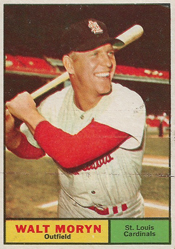
A week later, on Aug. 9, 1960, Simmons pitched a five-hit shutout against the Phillies at Philadelphia. Afterward, Cardinals outfielder Walt Moryn asked Philadelphia reporters, “You guys got any more players you want to give away over there?”

Simmons told the Philadelphia Daily News, “I think I’m throwing at times as hard as I’ve thrown in the last five years, but the big thing is I’m keeping the ball down and I’ve been working on a half-baked screwball I use as a changeup. The fastball is the bread and butter though. If my fastball is no good, I can throw all the junk I want to and it won’t help.” Boxscore

On Sept, 11, 1960, Simmons got his seventh win of the season, and his fourth versus the Phillies, in a 7-3 Cardinals triumph at Philadelphia. “I wish we had him pitching for us the way he’s been pitching,” said Mauch. Boxscore

Simmons finished 7-4 with a 2.66 ERA for the 1960 Cardinals. Against the Phillies, he was 4-0 with a 1.02 ERA.

Simmons pitched for the Cardinals from 1960-66 and was 69-58 with 16 shutouts. In 1964, when the Cardinals were World Series champions, Simmons was 18-9.

In June 1966, the Cardinals sold Simmons’ contract to the Cubs. His 20th and final season in the majors was 1967 with the Angels. Simmons posted a career mark of 193-183 with 36 shutouts. His career record versus the Phillies was 19-6.

Cardinals third baseman Tommy Glaviano experienced a fielder’s worst nightmare.

On May 18, 1950, Glaviano made four errors, including three in a row in the ninth inning, in a game against the Dodgers at Ebbets Field in Brooklyn. The Cardinals, who led 8-0 entering the eighth inning, lost 9-8.

The Cardinals committed a total of six errors in the game, but the most costly were Glaviano’s gaffes in the ninth, when the Dodgers scored five times in what the New York Daily News described “as miraculous a finish as this famed Ebbets Field grotto had ever seen.”

Hot corner hustler

Glaviano was born and raised in Sacramento. The Cardinals signed him when he was 17. After two seasons in the Cardinals’ farm system, Glaviano served three years (1943-45) in the Coast Guard before returning to the minors.

After producing a .415 on-base percentage in 106 games for Columbus, Ohio, in 1948, Glaviano won the Cardinals’ third base job at spring training in 1949.

At 5 feet 9 and 175 pounds, Glaviano was “a short, stocky throwback to the glamorous Gashouse Gang era,” The Sporting News reported.

Bob Broeg of the St. Louis Post-Dispatch described Glaviano as “a sawed-off Pepper Martin.”

Glaviano, 25, made his major-league debut on April 19, 1949, in the Cardinals’ season opener versus the Reds at Cincinnati.

The Reds led, 1-0, in the sixth inning and had runners on second and third, with two outs, when Harry Brecheen got Virgil Stallcup to hit a slow grounder. Glaviano went far to his left, gloved the ball and whipped a side-armed throw to first. The ball sailed off target, struck Stallcup in the left cheek and bounced away, allowing both runners to score on the error. The Reds won, 3-1. Boxscore

Glaviano and another rookie, Eddie Kazak, split time at third base for the 1949 Cardinals. Glaviano hit .267 and played the last three weeks of the season with torn cartilage in his throwing arm, The Sporting News reported.

Good start to season

In 1950, Kazak was the Opening Day third baseman for the Cardinals, but Glaviano took over a week into the season. “The pitchers feel better with him at third,” Cardinals manager Eddie Dyer told The Sporting News.

Batting leadoff, Glaviano quit swinging for homers and got more selective at the plate. “He’s learning how to hit outside pitching to the opposite field,” Dyer said.

Glaviano hit .342 in his first 20 games for the 1950 Cardinals and made four errors. He “has covered more ground than any Cardinals third baseman in years,” Broeg noted in the Post-Dispatch.

Storm clouds

On a raw overcast Thursday afternoon with a temperature of 50 degrees, the Cardinals played the finale of a three-game series at Brooklyn after losing the first two to the Dodgers.

Glaviano’s home run leading off the fourth inning against starter Joe Hatten extended the Cardinals’ lead to 4-0.

With the Cardinals ahead, 8-0, in the sixth, errors by Glaviano and second baseman Red Schoendienst put Dodgers runners on first and third with none out. Starter Howie Pollet escaped unscathed, getting Jackie Robinson on a grounder to the mound, Carl Furillo on a pop foul and Gil Hodges on a strikeout.

“Here was a game that appeared so far gone that even the manager had given up on it, and you couldn’t blame him,” Dick Young wrote in the New York Daily News. The Dodgers “had looked more miserable than the weather. They hadn’t hit, their pitching had been punk, and even their defense, which has been Brooklyn’s matchless pride, had been butchered.”

Pollet limited the Dodgers to four hits through seven innings, but in the eighth it began to rain and his back stiffened. Furillo hit a three-run home run. After Duke Snider and Bruce Edwards each singled, putting runners on first and third with two outs, Gerry Staley relieved Pollet and yielded a run-scoring single to Pee Wee Reese, cutting the Cardinals’ lead to 8-4.

Throwing away a win

With rain falling steadily, Jim Russell led off the Dodgers’ ninth with a double against Staley and came home on Jackie Robinson’s double, making the score 8-5.

Al Brazle relieved and retired Furillo for the first out. Hodges hit a grounder to short, but Marty Marion “slipped on the muddy infield and couldn’t get his body behind a throw to first,” the Post-Dispatch reported.

Robinson stayed at second on the play and Hodges was safe with an infield single. Brazle walked Snider, loading the bases.

Roy Campanella hit a one-hopper to Glaviano, who hoped to start a game-ending double play. In his haste, Glaviano made a wide throw to second and Schoendienst had to leave the bag to catch it. Robinson scored from third on the error, cutting the Cardinals’ lead to 8-6, and the bases remained loaded.

Rookie Cloyd Boyer relieved Brazle and got Eddie Miksis to hit a high bouncer directly to Glaviano. Instead of throwing to second for a likely forceout and the start of a possible game-ending double play, Glaviano fired the ball toward home. The wild toss pulled catcher Del Rice off the plate and he “had to dive flat on his face for the save,” the New York Daily News reported.

Hodges scored from third on Glaviano’s second consecutive error, getting the Dodgers within a run at 8-7, and the bases still were full.

Reese came up next and hit a sharp grounder to Glaviano, who was positioned near the bag. “He had planned to scoop it up, step on third and fire to first” to complete a game-ending double play, the New York Daily News reported.

Instead, in moving toward the bag, Glaviano let the ball trickle through his legs and roll into short left field for an error. Snider and Campanella scored. giving the Dodgers a 9-8 victory. Boxscore

Stayin’ alive

Dick Young’s lead paragraph in the next morning’s New York Daily News was a gem: “Joe Garagiola didn’t get any sleep last night. He lay awake to make sure his roommate, Tommy Glaviano, wouldn’t take a walk out a window.”

The St. Louis Globe-Democrat described the collapse as “one of the goofiest shows” staged by the Cardinals. The Post-Dispatch called it “a cruel body blow.”

In the clubhouse, Glaviano sat with his head lowered, “trying to fight back tears that wanted to pour like the chilling rain which fell from the time the Dodgers’ bats first began to rattle,” the Post-Dispatch reported.

“The kid’s insides are eating him out,” said Cardinals reserve infielder Eddie Miller, “but he’ll be all right.”

Dyer said, “That was the most bitter defeat of any I’ve had in the years I’ve managed.”

In the Post-Dispatch, Broeg described Glaviano as a third baseman “with a thick chest, courage and agility” as well as “a scatter arm.”

“About his arm,” Dyer said, “it hasn’t been as accurate since he hurt his right shoulder two years ago at Columbus. I think it locks on him when he throws in a hurry, spoiling his aim.”

Dyer stuck with Glaviano at third base the rest of the 1950 season. He hit .285 with 29 doubles and scored 92 runs. His 25 errors at third base were one less than the 26 of the Giants’ Hank Thompson, who made the most misplays among 1950 National League third basemen.

Marty Marion became Cardinals manager in 1951 and decided at spring training to move Glaviano to center field. On April 10, a week before the regular season opened, Glaviano crashed into an outfield wall pursuing a drive in an exhibition game against the Browns and injured his right shoulder.

Glaviano wasn’t the same after the injury. He was a utility player for the Cardinals in 1951 and 1952. The Phillies claimed him on waivers and he spent 1953, his final season in the majors, with them.

Johnny Lindell faced the Cardinals in a World Series as a Yankees outfielder and in a regular season as a pitcher for the Pirates and Phillies. He also played for the Cardinals for a couple of months when they sought power for their lineup.

On May 15, 1950, the Cardinals purchased the contract of Lindell from the Yankees for the $10,000 waiver price.

Lindell was an intriguing player because of the multiple roles he performed. He began his professional career as a pitcher, moved to outfielder and went back to pitching again.

A strapping 6 feet 4 and 225 pounds, Lindell batted and threw right-handed. Talented as well as versatile, he pitched for one pennant-winning Yankees team and played outfield for another. As a hitter, he twice led the American League in triples and as a pitcher he once led the National League in most walks issued.

Pitching prospect

Lindell developed his athletic skills in high school at Monrovia, Calif., near Pasadena. He was offered a chance to play football at the University of Southern California but signed with the Yankees when he was 19 in 1936. The Yankees sent him to their farm club in Joplin, Mo., and he posted a 17-8 record.

Working his way through the minor leagues, Lindell became a prominent pitching prospect. He was 18-7 with a 2.70 ERA for the Kansas City Blues in 1940.

Lindell began the 1941 season with the Yankees, made his major-league debut in a pinch-hitting appearance on April 18 and was sent to their farm club in Newark, N.J. Lindell was 23-4 with a 2.05 ERA for Newark in 1941 and the Yankees made plans to have him on their pitching staff in 1942.

Though he pitched in 23 games for the 1942 Yankees and was 2-1 with a 3.76 ERA, Lindell’s fastball and curve no longer were effective and manager Joe McCarthy lost confidence in him. Lindell didn’t pitch in the 1942 World Series versus the Cardinals.

According to The Sporting News, McCarthy told Lindell after the season, “Johnny, it does not look as if you ever will be a really good pitcher. However, you have the makings of a hitter.”

Lindell worked on his hitting in winter ball in California and reported to spring training in 1943 as an outfield candidate.

New role

The Yankees’ center fielder, Joe DiMaggio, and right fielder, Tommy Henrich, entered military service in 1943 and the club needed outfielders. Lindell was the Yankees’ 1943 Opening Day right fielder and remained in the lineup throughout the season. Lindell started 64 games in right, 52 in center and four in left for the American League champions. He led the league in triples (12) and was named to the all-star team.

In the 1943 World Series against the Cardinals, Lindell hit .111 but was involved in a critical play.

After the teams split the first two games, the Cardinals led, 2-1, in Game 3. Lindell led off the eighth inning with a single and advanced to second when center fielder Harry Walker bobbled the ball. George Stirnweiss bunted to first baseman Ray Sanders, whose throw to third arrived ahead of Lindell.

As third baseman Whitey Kurowski went to apply the tag, Lindell “came into the bag like a 10-ton truck,” crashing into Kurowski and knocking the ball loose, The Sporting News reported. The impact snapped Kurowski’s head back.

Lindell said the collision was unavoidable because Kurowski positioned himself in front of the base. “What was I to do? Beg his pardon?” Lindell asked.

Said Cardinals manager Billy Southworth: “Lindell played ball the way I like to see it played.”

The play woke up the Yankees, who scored five runs in the inning and won, 6-2.  Boxscore

Lindell had his best season in 1944. As the Yankees’ center fielder, he hit .300 with 33 doubles, 18 home runs and 103 RBI. He led the league in triples (16), extra-base hits (67) and total bases (297).

After spending part of 1945 in military service, Lindell returned to the Yankees in 1946 and was their Opening Day left fielder. In 1947, Lindell batted .500 in the World Series against the Dodgers, collecting nine hits in 18 at-bats and driving in seven runs in six games, despite cracking a rib in Game 5.

Right fit

Lindell’s playing time decreased when Casey Stengel became Yankees manager in 1949. After starting in left field on Opening Day in 1950, Lindell struggled, hitting .190 in 21 at-bats.

The 1950 Cardinals were stocked with left-handed hitters, led by Stan Musial and Enos Slaughter, and were looking for a power bat from the right side. Lindell, 33, was an available candidate.

“He’s a good competitor, a clutch player,” Cardinals manager Eddie Dyer told The Sporting News.

Though he had spent 15 years in the Yankees’ organization, Lindell welcomed the move to St. Louis. “I wanted to be traded because I didn’t fit Casey Stengel’s idea of a ballplayer,” Lindell told the St. Louis Post-Dispatch. “Not enough obvious spark, I guess.”

Lindell reported to the Cardinals 15 pounds over his regular weight of 225, the Post-Dispatch noted, but Dyer played him immediately in left field.

In his Cardinals debut, Lindell went 0-for-4 against the Dodgers’ Preacher Roe, but in his next game he hit a two-run home run into the upper deck in left at Ebbets Field in Brooklyn against rookie Billy Loes. Boxscore

A month later, on June 24, 1950, Lindell’s 10th-inning home run against Bob Chipman gave the Cardinals a 7-6 triumph over the Braves at Boston. Boxscore

Though 12 of Lindell’s 21 hits for the Cardinals were for extra bases, including five home runs, he batted .186 in 36 games and “his fielding had slipped along with his hitting,” the Post-Dispatch reported.

On July 17, 1950, the Cardinals sent Lindell to their farm team at Columbus, Ohio. After playing in five games there, the Cardinals accommodated his request to be sent to a Pacific Coast League club closer to his California home and traded him to the Hollywood Stars, a farm team of the Dodgers.

On the mound again

In 1951, Lindell went back to pitching and was 12-9 with a 3.03 ERA for Hollywood. Relying on a knuckleball, Lindell was dominant in 1952, posting a 24-9 record and 2.52 ERA for Hollywood, which had become a Pirates affiliate.

Lindell returned to the big leagues in 1953 as a member of the Pirates’ starting rotation. On May 3, 1953, he earned his first National League win, a four-hitter against the Cardinals at Pittsburgh. Boxscore

After posting a 5-16 record and 4.71 ERA for the Pirates, Lindell’s contract was sold to the Phillies on Aug. 31, 1953. He earned one win for the Phillies and it came against the Cardinals at St. Louis. Lindell struck out 11, walked eight and ignited the winning rally in the ninth with a run-scoring single. Boxscore

Lindell “would have had a far easier time if his catchers had been able to hold” the knuckleball, the Post-Dispatch reported.

The win was Lindell’s last as a pitcher. He was 1-1 with a 4.24 ERA for the Phillies. His combined record for the Pirates and Phillies in 1953 was 6-17 with a 4.66 ERA, and in six starts versus the Cardinals he was 2-4 with a 3.64 ERA. Lindell led National League pitchers in allowing the most walks (139) and wild pitches (11).

In 1954, Lindell didn’t pitch, made seven plate appearances, all as a pinch-hitter, for the Phillies and was released on May 10.

In 12 big-league seasons, Lindell hit .273 and had a pitching record of 8-18.

(Updated Sept. 19, 2022)

As a youth in his hometown of Winston-Salem, N.C., where the Cardinals had a farm club, Don Cardwell rooted for a promising prospect, Joe Cunningham. A few years later, Cunningham made the dramatic final out in the best game Cardwell pitched in the major leagues.

On May 15, 1960, Cardwell pitched a no-hitter for the Cubs against the Cardinals at Wrigley Field in Chicago. It was Cardwell’s first appearance for the Cubs since being acquired from the Phillies, and it was the first no-hitter pitched against the Cardinals in 41 years. Before Cardwell, Hod Eller of the Reds was the last to do it on May 11, 1919.

Needing one more out to complete the no-hitter, Cardwell faced his boyhood favorite, Cunningham, who laced a sinking line drive. The ball seemed destined to drop for a single until left fielder Walt Moryn made a catch near his shoetops.

Cardinals connections

While in high school, Cardwell got a job at the Winston-Salem ballpark. “I used to hang up the score for each inning on the board and get $2.50 a night for doing it,” Cardwell told the St. Louis Post-Dispatch. “I went to the park often to watch Harvey Haddix, Vinegar Bend Mizell, Joe Cunningham and Don Blasingame.”

In his senior season of prep baseball, Cardwell pitched a pair of no-hitters. The first was a perfect game and the second occurred in the state title game.

Cardwell was 18 when the Phillies signed him in 1954. He made his big-league debut with them three years later. A 6-foot-4 right-hander, Cardwell threw hard from a sidearm delivery but had losing records with the Phillies.

“Catching his ball was like catching a brick. It was that heavy,” Phillies first baseman Ed Bouchee said in the book “We Played the Game.”

On May 13, 1960, the Phillies traded Cardwell and Bouchee to the Cubs for second baseman Tony Taylor and catcher Cal Neeman. Cardwell wasn’t surprised to be traded, but expected it would be to the Cardinals, whose manager, Solly Hemus, had been his Phillies teammate.

“I thought I’d be with your ball club by now,” Cardwell told the Post-Dispatch.

Hello, Chicago

Two days after the trade, Cardwell was the starting pitcher for the Cubs in Game 2 of a Sunday doubleheader against the Cardinals at Chicago.

In Game 1, Larry Jackson pitched a four-hitter in a 6-1 victory, ending the Cardinals’ eight-game losing streak. It was their first road win of the season in 13 attempts. Boxscore

Entering Game 2, Cardwell was an unlikely candidate to pitch a no-hitter versus the Cardinals. He had an 0-3 record against them since reaching the majors.

The Cardinals’ batting order was Cunningham, right field; Alex Grammas, shortstop; Bill White, first base; Ken Boyer, third base; Daryl Spencer, second base; Leon Wagner, left field; Curt Flood, center field; Hal Smith, catcher; Lindy McDaniel pitcher.

With one out in the first inning, Cardwell issued a walk to Grammas before retiring the next 26 batters in a row.

“His fastball was his best pitch,” Cubs catcher Del Rice told The Sporting News. “We used some breaking stuff early in the game, but from the fifth inning on I called fastballs almost entirely.”

Cardwell credited Rice and an unusual pitching delivery with making a difference in his performance.

Rice, 37, debuted with the Cardinals in 1945 and played for them the first 11 years of his major-league career. “I never had to shake Del off once,” Cardwell said. “He called the pitches perfectly.”

As for his pitching motion, Cardwell explained he developed a way to go into his windup with the ball in his glove instead of his hand because he suspected batters were detecting his pitches. “I was determined to hide my pitches better,” he said.

Cardwell “doesn’t have the ball in his right hand when he starts his windup,” The Sporting News observed. “The ball is in his glove. Cardwell pumps once with both arms going above his head, but with his right hand empty. Then he repeats the pumping action and at the top of the windup he takes the ball out of the glove and comes through with the pitch.”

Tough outs

The biggest threats to Cardwell’s no-hitter came in the last two innings.

In the eighth, Spencer led off “with a sizzling smash” to second baseman Jerry Kindall, who ranged to his right, “got in front of it, gloved it on a wicked first hop” and threw to first in time, The Sporting News reported.

After Wagner grounded out, Stan Musial batted for Flood. Cardwell threw sinking fastballs and Musial struck out. “I was swinging at the sound,” Musial told the Post-Dispatch.

Said Rice: “He was really humming at the finish.”

In the ninth, Cardwell’s former Phillies teammate, Carl Sawatski, batting for Hal Smith, led off and sent a drive to right. Bob Will, who stood 5 feet 10, usually played right field for the 1960 Cubs, but after Will went hitless in Game 1, manager Lou Boudreau put George Altman, who stood 6 feet 4, in right for Game 2. “Altman went back and grabbed the ball with a one-handed, leaping catch in front of the wall,” The Sporting News noted.

“When George Altman reached high to get Carl Sawatski’s drive, I went up three feet with him,” Cardwell told the Post-Dispatch.

Several Cubs told the St. Louis Globe-Democrat that Bob Will never would have reached Sawatski’s drive.

After George Crowe, batting for McDaniel, flied out to center, Cunningham came to the plate. The drama intensified with each pitch as Cunningham worked the count to 3-and-2.

Cunningham hit a low liner to left. Walt Moryn, nicknamed “Moose,” loped forward and reached down at the last moment to catch the ball before it landed.

“For this once,” wrote The Sporting News, “the Moose turned gazelle.”

Moryn told the Chicago Tribune, “If I’d have missed that last catch, I’d have been begging for an error.”

Said Cardwell: “When Walt Moryn came in and grabbed that low liner by Cunningham, I sank to the ground with him.” Video

“Thousands of fans poured onto the field and surrounded their new hero,” the Associated Press reported. “A score of ushers and police officers needed something like a half hour to get Cardwell safely into the Cubs dressing room.”

The Cubs won, 4-0, in a game played in 1:46. Boxscore

Changing places

On June 15, 1960, exactly one month after his big catch, Moryn was traded by the Cubs to the Cardinals.

Cardwell was 8-14 for the 1960 Cubs. He was 15-14 in 1961 and 7-16 in 1962.

On Oct. 17, 1962, the Cubs traded Cardwell, Altman and catcher Moe Thacker to the Cardinals for pitchers Jackson and McDaniel, plus catcher Jimmie Schaffer.

“Cardwell is a quality pitcher with a quality arm who has never lived up to his potential,” Cardinals general manager Bing Devine told the Globe-Democrat.

Cardwell never pitched for the Cardinals. A month after they acquired him, the Cardinals dealt Cardwell and shortstop Julio Gotay to the Pirates for shortstop Dick Groat and pitcher Diomedes Olivo. Groat played a key role in helping the Cardinals become World Series champions in 1964.

Cardwell twice was a 13-game winner for the Pirates. In 1969, he pitched for the World Series champion Mets.

In 40 appearances, including 32 starts, versus the Cardinals in his career, Cardwell was 5-19 with a 4.55 ERA.