Feeds:
Posts
Comments

Archive for the ‘Games’ Category

Rescued from the Reds farm system, where he languished as a reliever, Kurt Kepshire developed into a starter for a Cardinals contender.

On Dec. 6, 1982, Kepshire was chosen by the Cardinals in the Rule 5 draft after being left off the Reds’ big-league winter roster.

The Cardinals might have kept Kepshire in a relief role as well if not for a fluke incident involving an Army tank.

Smashing success

A right-hander, Kepshire was a standout pitcher his senior season at Bridgeport Central Catholic High School in Connecticut. Five days before he was to start in a state quarterfinal playoff game, a careless classmate accidently pounded Kepshire’s pitching hand with a sledgehammer, breaking his index and middle fingers, the St. Louis Post-Dispatch reported.

“My coach said, ‘You can’t pitch,’ ” Kepshire recalled to The Sporting News. “I said, ‘Watch me warm up.’ “

Given the start, Kepshire struck out 17 and got the win. A few days later, he started and won the state championship game. “I pitched in pain, I’ll tell you that,” Kepshire said to The Sporting News. “It was pride. I love to pitch and I love a challenge.”

Kepshire enrolled at the University of New Haven and signed with the Reds after being selected in the 25th round of the 1979 amateur draft.

Used primarily as a reliever, Kepshire pitched four seasons in the Reds organization before he was drafted by the Cardinals on the recommendation of their Louisville farm club manager, Joe Frazier, according to the Post-Dispatch.

Ready, aim, fire

Assigned to the Cardinals’ Class AA Arkansas team in 1983, Kepshire made 19 relief appearances before being promoted to Class AAA Louisville.

Soon after Kepshire arrived in Louisville, Jim Fregosi, who had replaced Frazier as manager, approached him an hour before a game versus Omaha and asked if he could start. “I was shocked,” Kepshire told the Louisville Courier-Journal.

Fregosi made the request because Louisville’s scheduled starting pitcher, Todd Worrell, sprained his back “when he slipped off a tank that he was inspecting” while visiting a military museum at Fort Knox earlier that day, the Louisville newspaper reported.

Under the headline “Tanks A Lot,” the Courier-Journal reported that Kepshire pitched six scoreless innings in his surprise start and got the win in Louisville’s 2-0 triumph over Omaha.

“He threw great,” catcher Tom Nieto told the Louisville newspaper. “His fastball was just taking off and he was spotting pitches and keeping the ball down, going right at them.”

In 21 appearances, including 10 starts, for Louisville in 1983, Kepshire was 6-2.

Big-league stuff

Sent back to Louisville to begin the 1984 season, Kepshire was in the starting rotation from the first day. Relying on a fastball and slider, he was 7-5 in 16 starts when the Cardinals called him to the big leagues in July to replace John Stuper in the starting rotation.

“Kepshire wasn’t ready (for the majors) at the beginning of the season, but he’s come into his own,” Fregosi told the Post-Dispatch. “He has a better idea of how to pitch.”

Making his debut in a start against the Giants the day after his 25th birthday, Kepshire allowed one run in 8.1 innings and got the win. “He challenges those guys,” Herzog told The Sporting News. “He’s got guts. I love it.” Boxscore

A month later, Kepshire prevailed in a start against Nolan Ryan and the Astros. Boxscore

Praising Kepshire for his willingness to pitch inside to batters, Herzog told The Sporting News, “He’s got nerve. Of all the kid pitchers, he’s going to be the best.”

The rookie capped his season with shutouts of the Cubs and Expos, finishing 6-5 with a 3.30 ERA. Boxscore and Boxscore

Cardinals pitching coach Mike Roarke said Kepshire “made tremendous progress” since spring training and adjusted to a change in his delivery that enabled him “to throw downhill,” the Post-Dispatch reported.

Falling out

Kepshire went to spring training in 1985 assured of a spot in a Cardinals starting rotation with Joaquin Andujar, John Tudor and Danny Cox. “He goes after hitters and he doesn’t rattle easily,” Herzog told the Post-Dispatch in March 1985. “Right now, I’m looking at him as a good No. 3 starter.”

After beating the Pirates on Aug. 15, Kepshire had a season record of 9-6, but then staggered down the stretch, winning one of his next six starts.

In his last start, Sept. 14 versus the Cubs, Kepshire threw 14 pitches and 13 were out of the strike zone. After walking the bases loaded, he was lifted with the count 1-and-0 count on the next batter. Boxscore

Kepshire finished the season 10-9. His wins were important for a division champion that finished just three games ahead of the Mets, but he walked more (71) than he struck out (67) and gave up more hits (155) than innings pitched (153.1). The Cardinals left him off their playoff roster.

“I still think he can be a hell of a pitcher,” Herzog told the Post-Dispatch. “He needs an off-speed pitch, and he’s got a good one in the bullpen, but he can’t get it over in a game.”

Kepshire said to the newspaper, “I stunk it up the second half of (the) season. That’s my fault. It was a mental thing. I was in a rut.”

Different direction

The Cardinals tried to trade Kepshire after the season but didn’t get any takers, the Post-Dispatch reported.

“The Cardinals are dead wrong on me,” Kepshire said to the Springfield (Ill.) State Journal-Register. “I can throw strikes.”

He opened the 1986 season with them, made two appearances, including a start, and was demoted to Louisville.

“I don’t ever see myself coming back here,” Kepshire said to the Post-Dispatch as he left St. Louis.

Herzog responded, “If he has that attitude, he’ll never come back.”

Kepshire spent what he described to United Press International as “a miserable year” in the Cardinals farm system in 1986, signed with the Cleveland Indians after the season, got released in spring training, pitched in Mexico and in the minors for Expos and Twins affiliates, but never got back to the majors.

His career record with the Cardinals was 16-15, including marks of 4-1 against the Cubs and 3-0 versus the Giants.
Read Full Post »

Given a chance to become a division rival of the Cardinals, the Royals balked. 

In November 1997, the Brewers moved from the American League to the National League, joining the Cardinals, Astros, Cubs, Pirates and Reds in the Central Division.

The Brewers went because the Royals said no.

Musical chairs

After deciding to expand by adding the Tampa Bay Rays for the 1998 season, the American League had a geography problem. The Rays, naturally, belonged in the East Division, but five teams already were situated there. Same with the Central. The West had four teams, but putting the Rays there wasn’t practical.

Major League Baseball officials, of course, devised a convoluted solution.

To open a spot for the Rays in the East, the plan was to shift the Detroit Tigers to the Central. To create a spot for the Tigers, it was decided to move a franchise from the American League Central to the National League Central.

Because the Royals were strong proponents of realignment, the American League invited them to be the franchise that moved to the National League.

What appealed to the Royals was the possibility of an in-state division rivalry with the Cardinals, a scenario that had Royals chief executive officer David Glass “picturing a happy life in the National League,” the Kansas City Star reported.

In 1997, baseball had interleague play for the first time, and “our three best gates were when the Cardinals were here Labor Day weekend,” Glass told the Kansas City newspaper.

The Royals “agonized over their decision,” but opted to remain in the American League for two reasons:

_ Public sentiment, including among season ticket-holders, was for the Royals to stay put, general manager Herk Robinson told the Kansas City Star.

_ The Royals, run by a five-person limited partnership since the death of owner Ewing Kauffman in 1993, were for sale and the “timing wasn’t right” to switch leagues, Glass told the Kansas City newspaper. “It would be most helpful if we had an owner in place that could help in this decision,” Glass said.

When the Royals, who had played in the American League since 1969, opted to stay, the Brewers volunteered to be the franchise that switched leagues.

Turn back the clock

On Nov. 5, 1997, Major League Baseball’s executive council voted unanimously to move the Brewers to the National League.

Milwaukee had experienced many changes as a major-league franchise. In 1901, the Milwaukee Brewers were an original American League member. After one season, they became the St. Louis Browns.

In 1953, after unsuccessfully trying to lure the Cardinals from St. Louis, Milwaukee became a National League city when the Braves moved there from Boston. The Milwaukee Braves won two National League pennants and a World Series title before the franchise moved again to Atlanta for the 1966 season.

Big-league baseball returned to Milwaukee in 1970 when the Seattle Pilots of the American League relocated there and were renamed the Brewers. In 1982, the Brewers won their only American League pennant, but the Cardinals prevailed in the World Series.

Having the Brewers become a National League team was a hit with those who appreciated Milwaukee’s years as a Braves franchise.

Brewers owner Bud Selig, who also was the acting baseball commissioner, told the Associated Press, “Those of us old enough to remember the glory days of Hank Aaron, Eddie Mathews, Johnny Logan, and Warren Spahn and Lew Burdette, we view this as coming home.”

Aaron called it “a great day for Milwaukee.”

The Brewers became the first major-league team to switch leagues in the 1900s.

Polling found that 75 percent of fans in Milwaukee favored realignment, the Associated Press reported, and Selig said such overwhelming public support was an important factor in the Brewers volunteering to move to the National League.

Roots of a rivalry

Asked about the Brewers transferring rather than the Royals, Cardinals owner Bill DeWitt Jr. said to the St. Louis Post-Dispatch, “Either one would have been a good choice. They’re cities which have good baseball histories and which are good Midwestern markets. Both would have fit into the Central Division.”

Five months earlier, the Brewers and Cardinals played a regular-season interleague game against one another for the first time.

Played at County Stadium in Milwaukee on a Monday night before 23,503, the Brewers arranged for four players from the 1982 World Series (Cecil Cooper and Gorman Thomas of the Brewers, and Bob Forsch and Darrell Porter of the Cardinals) to sign autographs before the game. Porter caught the ceremonial first pitch from Selig, no small feat because Selig threw the ball in the dirt, five feet from the plate.

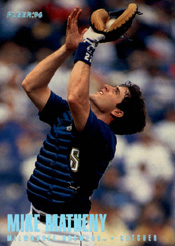
The Brewers won the game, 1-0, with Mike Matheny catching the combined shutout of Ben McDonald and Bob Wickman. Boxscore

The next night, 38,634 came to watch, with the teams wearing replicas of their 1982 World Series uniforms (Brewers in pinstripes and Cardinals in robin-egg blue). The Cardinals’ left fielder was Willie McGee, 38. As a rookie, he had hit two home runs and made a leaping catch against the wall in Game 3 of the 1982 World Series at Milwaukee. McGee had two hits in the regular-season interleague game, but the Brewers won, 4-3, beating Fernando Valenzuela. Boxscore

In the series finale, after franchise icon Robin Yount made the ceremonial first pitch, the Brewers completed the sweep, winning 8-4. Boxscore

Win some, lose some

The first time the Brewers faced the Cardinals as National League rivals was at St. Louis in May 1998. Spectators received pins recognizing the Brewers’ first season in the league. Todd Stottlemyre and Jeff Brantley pitched a combined shutout, and Ron Gant, Brian Jordan and Ray Lankford hit home runs in a 7-0 Cardinals triumph. Boxscore

The Cardinals were 8-3 versus the Brewers in 1998, the most wins they had against any opponent that season, but the Astros won the Central Division title. (The Astros switched to the American League starting with the 2013 season, reducing the National League Central to five teams.)

Since joining the National League, the Brewers have not won a pennant.

Read Full Post »

At a time when St. Louis had two of baseball’s most exceptional hitters, Rogers Hornsby of the Cardinals and George Sisler of the Browns, another appeared on the verge of joining their ranks.

Cardinals left fielder Austin McHenry was a ballplayer with special gifts. He hit steadily and with authority, got on base often, generated bundles of runs and fielded with an athletic grace. He also had an easygoing likeability. The kids in the Knothole Gang program adored him and so did his teammates.
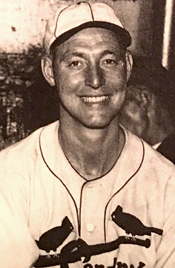
A right-handed batter with a knack for getting extra-base hits, McHenry was in his fourth year with the Cardinals when he had a season that elevated him into the top tier of his profession. He batted .350 for the 1921 Cardinals, with 201 hits, 102 RBI and an on-base percentage of .393.

He was headed for another big season in 1922 before he began experiencing intense headaches and blurred vision. He was only 27, a player entering his prime and showing signs of brilliance. How could he feel so out of sorts, he wondered?

On the rise

McHenry was born and raised in rural Adams County in southern Ohio. When he was 18, he attended a baseball camp in Portsmouth, Ohio, operated by a scout, Billy Doyle. Converted from second baseman to outfielder, McHenry blossomed and turned pro the next year, signing with a minor-league team in Portsmouth. One of his teammate on the 1915 Portsmouth club was catcher Pickles Dillhoefer.

From Portsmouth, McHenry and Dillhoefer advanced to the American Association minor-league club at Milwaukee in 1916. The Cubs acquired Dillhoefer after the season and he reached the majors with them in 1917.

A year later, it was McHenry’s turn to get a shot at the big time. Acting on the recommendation of their scout, Billy Doyle, who had been tracking him since the Portsmouth baseball camp, the Reds signed McHenry and brought him to spring training in 1918, the Cincinnati Enquirer reported.

In late March, McHenry’s nose got split when he was struck by a baseball bat, according to The Cincinnati Post, and Reds manager Christy Mathewson sent him back to minor-league Milwaukee.

The last-place Cardinals acquired McHenry from Milwaukee in June 1918 and made him their left fielder. Cardinals president Branch Rickey, who made the deal, told the St. Louis Star-Times, “McHenry may prove a sensation.”

A year later, McHenry was reunited with his former minor-league teammate, Pickles Dillhoefer, who was acquired by the Cardinals in January 1919.

Among the best

From 1918 to 1920, McHenry improved his hits and RBI totals each year with the Cardinals, then had his breakout season in 1921. The Giants tried to acquire him, and so did the Reds, without success, the New York Times reported.

“McHenry is without question one of the game’s greatest outfielders, and he is one of the game’s greatest hitters,” The Sporting News declared in January 1922.

According to the Star-Times, McHenry was “fast and an accurate judge of a driven ball. He was flashy on defense. At the bat, he was one of the most efficient hitters … Next to Hornsby, probably one of the hardest hitters in the league.”

Teammates called McHenry “The Airedale,” like the breed of terrier, “because of his fleetness of foot, his tenacity, courage and spirit,” the St. Louis Post-Dispatch reported.

To the Knothole Gang youngsters, admitted without charge to the left field bleachers in St. Louis, McHenry “could do no wrong,” the Star-Times reported.

According to the Post-Dispatch, “Their favorite chant was, ‘Oooooh, Mack!’ ‘Oooooh, Mack!,’ with the Mack snapped out.”

As the Star-Times noted, “He was a great big boy himself _ unspoiled, unselfish and gifted with the finest of natures.”

Troubled times

On Feb. 23, 1922, McHenry and the Cardinals were jolted by the death of teammate Pickles Dillhoefer, 28, from typhoid fever.

If Dillhoefer’s death foreshadowed more dark days, it wasn’t evident two months later when the Cardinals opened the season, with Hornsby and McHenry each driving in two runs in a 10-1 drubbing of the Pirates. Boxscore

McHenry streaked on. On April 28, he had four hits and two RBI versus the Cubs. Boxscore A month later, he had another four-hit game and three RBI against the Phillies. Boxscore

On June 12, his batting average for the season reached .326.

Mysteriously, soon after, McHenry “gradually lost strength and couldn’t see a ball while he was running,” the Post-Dispatch reported. “When he stood still, he could trace the flight of a ball very easily, but the moment he ran after it, his vision immediately became blurred.”

According to his hometown Portsmouth Daily Times, during a game against the Reds on June 26, McHenry went to Rickey and said, “Branch, I can’t see the balls as they hit out my way.”

Rickey told McHenry to return to his village home in Blue Creek, Ohio, to seek treatment and rest.

A month later, McHenry informed Rickey he was ready to return to the Cardinals. He appeared in two games, but it was clear McHenry was suffering. His head ached violently and he still had eyesight problems, The Cincinnati Post reported.

Rickey advised McHenry to go home and consult with physicians. That’s when it was discovered McHenry had a brain tumor.

Final days

The scout, Billy Doyle, said he believed the brain tumor could be attributed to a pitch that struck McHenry in the temple during a minor-league game in 1916. “Doyle was in the grandstand when (McHenry) was felled in his tracks by the pitched ball,” the Portsmouth Daily Times reported. “Six years later, McHenry began to feel a sore spot over his left temple, where he was hit by the ball. It gradually became more acute and finally began to affect his eyesight.”

McHenry was admitted to Good Samaritan Hospital in Cincinnati and doctors determined an operation was necessary. On Oct. 19, 1922, Dr. George Heur, who performed the surgery, said part of the tumor was removed  but because of its location it was impossible to remove all of it, the Portsmouth newspaper reported.

A month later, McHenry, still in the Cincinnati hospital, took a turn for the worse. When doctors informed him his condition was terminal, he was taken home to Blue Creek at his request, the Cincinnati Enquirer reported.

McHenry, 27, lapsed into unconsciousness on Nov. 26 and died the next morning, according to the Portsmouth newspaper. He was survived by his parents, his wife and their two children, ages 5 and 3.

At the funeral two days later, pallbearers included three members of the Cardinals _ pitcher Jesse Haines, outfielder Burt Shotton and secretary-treasurer Hi Mason. Branch Rickey couldn’t attend because of an illness in his family.

“The sorrow of the loss of a great ballplayer is overshadowed by the loss of a dear friend,” Rickey said to the Post-Dispatch.

As the Portsmouth Daily Times concluded, “It seems a queer twist of fate that so young a man and who had so much to live for must be cut down when he really was coming into the best days of his short but brilliant career.”

Read Full Post »

Nimble footwork in the field and on the bases helped make shortstop Charlie Gelbert a prominent part of Cardinals championship clubs, yet it was a stumble that nearly cost him his foot and his playing career.

On Nov. 16, 1932, during a hunting trip in Pennsylvania, Gelbert accidently shot himself just above his left ankle when he tripped over a vine in the underbrush.

Gelbert underwent multiple operations and was unable to play baseball the next two years. Undaunted, he defied the odds and returned to the Cardinals in 1935.

Three years later, in 1938, White Sox pitcher Monty Stratton accidently shot himself, resulting in the amputation of his right leg above the knee. Stratton’s determined effort to pitch professionally again inspired a Hollywood movie with Jimmy Stewart in the lead role.

No film was made about Charlie Gelbert, but his comeback was just as amazing.

Name game

When Charlie Gelbert was born in Scranton, Pa., he was christened Magnus Ott Gelbert. “Magnus and Ott were the family names of my father’s grandparents in Germany,” Gelbert later told The Sporting News.

The father, Charles, a veterinarian, had been an all-America football player at the University of Pennsylvania in the 1890s. An offensive guard and defensive lineman who was 5 feet 9 and 170 pounds, Charles “was called The Miracle Man because he did so much with so little,” according to the National Football Foundation.

From as early as he could remember, Magnus Ott Gelbert disliked his name. “The boys hung all sorts of nicknames on me,” he recalled to The Sporting News. “Maggie, of course, was one of them. So I had the name changed.”

When he was 8, Magnus Ott Gelbert became Charles Magnus Gelbert, but everyone called him Charlie.

On the rise

Like his father, Charlie Gelbert became a standout athlete, but his best sport was baseball. While excelling at Lebanon Valley College in Annville, Pa., Gelbert was signed by Cardinals scout Pop Kelchner.

After three years in the minors, Gelbert got to the Cardinals in 1929 and became their shortstop. He helped them to consecutive National League pennants in 1930 and 1931 and a World Series championship.

A right-handed batter, Gelbert hit .304 during the 1930 regular season and .353 in the World Series. He followed with a .289 batting average in 1931. His squeeze bunt in Game 2 of the 1931 World Series scored Pepper Martin from third base with an insurance run. Boxscore

In 13 World Series games for the Cardinals, Gelbert played 113 innings at shortstop without making an error.

“I consider Gelbert one of the most brilliant shortstops in the game,” Cardinals owner Sam Breadon told the St. Louis Star-Times.

St. Louis columnist Sid Keener wrote, “He could hit, field, run and throw. He handled difficult grounders with ease. His throws from deep field were straight to the mark. He was an artist in playing a slow hopper in back of the pitcher.”

As a hitter, Keener noted, “He’d stretch singles into doubles and doubles into triples by daring running.”

Shotgun blast

About a week before Thanksgiving Day in 1932, Gelbert and four companions went hunting in the mountains near McConnellsburg, Pa., about 25 miles from the Maryland state line.

When Gelbert tripped on a vine, he lost his balance and fell backward, sending his feet into the air. As he crashed down heavily, the butt of his shotgun struck the ground and the weapon discharged. The load of pellets struck him in the left leg, about two inches above the ankle, and “left a ragged wound,” according to the Chambersburg (Pa.) Public Opinion newspaper.

“I thought my foot had been severed,” Gelbert told the St. Louis Star-Times. “Blood was streaming from my foot.”

According to the St. Louis Post-Dispatch, “At its deepest point, the wound severed muscles, nerves and blood vessels.” Part of his fibula bone also was shattered.

Responding to Gelbert’s shrieks, his hunting companions rushed to his aid and applied a tourniquet. Gelbert “was carried about a half mile before he could be placed” in a car of one of the hunters, the Chambersburg newspaper reported.

Gelbert was driven about 25 miles to the Chambersburg hospital. After five days there, he was transferred to a hospital in Philadelphia.

At some point, gangrene set in and doctors advised amputating Gelbert’s left foot. “I knew what that meant,” Gelbert, 26, told the Star-Times. “I’d be through as a ballplayer. I pleaded with my doctors to give me the last chance” to save the foot.

Gradually, the infection started to clear and amputation wasn’t necessary, the Star-Times reported, but he faced a long recovery.

“I never thought he’d play ball again,” Cardinals second baseman Frankie Frisch told the New York Times.

Moving forward

Teammate Sparky Adams, whose winter residence was about two hours from Philadelphia, visited Gelbert in the hospital several times, and most of the Cardinals sent him cards and letters, the Post-Dispatch reported.

A couple of days before Christmas, five Philadelphia Athletics (coach Eddie Collins, and players Jimmie Foxx, Jimmy Dykes, Lew Krausse Sr and Jim Peterson) came to his hospital room and brought presents. Gelbert and the Cardinals had opposed the Athletics in both the 1930 and 1931 World Series.

To replace Gelbert, the Cardinals made a trade for Dodgers shortstop Gordon Slade. The Cardinals’ Rogers Hornsby described Slade to columnist Sid Keener as “a brilliant player _ defensively, I mean. The team is strong enough in batting to carry a light-hitting shortstop.”

Slade started at shortstop on Opening Day for the 1933 Cardinals, but soon after was sent to the minors. In May, the Cardinals got a capable replacement, acquiring Leo Durocher from the Reds.

Durocher led National League shortstops in fielding percentage in 1933, and helped the 1934 Gashouse Gang Cardinals become World Series champions.

Gelbert received no salary from the Cardinals while sidelined in 1933 and 1934, the Star-Times reported. Cardinals players voted him a World Series share of $1,000 in 1934 _ a goodwill gesture Gelbert was grateful for in the Great Depression era. “It was Frisch who guided the players to make the generous action,” the Post-Dispatch reported. “He told the players, ‘Be big and the baseball world will accept you as big. Be cheap and the world will jeer and get you down.’ “

Remarkable return

In 1935, doctors gave Gelbert the green light to return to baseball, and he headed to the Cardinals’ training camp in Bradenton, Fla., hoping to earn a spot on the Opening Day roster of the reigning World Series champions.

“His presence in training camp was believed to be just a sympathetic gesture by the Cardinals’ officials,” the Post-Dispatch reported. “That he would ever again be deemed fit to become a cog for a pennant outfit was not dreamed of.”

As the St. Louis Globe-Democrat noted, “For two years he scarcely put the weight of his body on the shattered left leg.”

Gelbert, 29, had a shaky start to his comeback, then began making slow, steady progress. Frisch, the Cardinals’ player-manager, was patient and allowed Gelbert to ease back in. He gave Gelbert a spot on the Opening Day roster as a backup to Durocher at short and to Pepper Martin at third base.

One week into the season, Gelbert appeared in a game, running for catcher Bill DeLancey. Boxscore

A month later, on May 21, 1935, Gelbert got to bat. Boxscore

Gilbert’s first hit in his comeback year was a single against former teammate Tex Carleton of the Cubs on June 2. Boxscore

A week later, Frisch put Gelbert in the starting lineup for the slumping Durocher, who was batting .215.

On June 9, in a game versus the Cubs, Gelbert had four hits, including a home run against Charlie Root, drove in three runs and scored twice. Boxscore

Gelbert made 12 starts at shortstop for the Cardinals in June, hit .340 for the month and continued to play after he was spiked in the left foot during a game against the Cubs.

The sight of Gelbert producing and playing through pain seemed to snap Durocher from his slump. Reinstated at shortstop, Durocher batted .290 with 22 RBI in July and hit well the rest of the season.

Position switch

Early in August, after Pepper Martin was injured, Frisch started Gelbert at third base and he made the most of the opportunity.

“He has been fielding confidently and hitting in a timely fashion,” The Sporting News reported.

Sid Keener noted in the Star-Times, “He has fielded phenomenally at the far corner, handling torrid cracks with the utmost ease, making perfect throws to first base, prancing to short left field for difficult pop twisters, and getting his share of hits in the pinch.”

Gelbert made 30 starts at third base for the 1935 Cardinals. For the season, he hit .292, including .309 with runners in scoring position. He did this even though, as Sid Keener wrote, “Whenever too much pressure is put on the left foot, Gelbert reeks with pain.”

The Cardinals opened the 1936 season with Gelbert, 30, as their third baseman, but he hit .167 in May and got benched. After batting .229 for the season, the Cardinals traded him to the Reds.

Gelbert was a utilityman with the Reds (1937), Tigers (1937), Senators (1939-40) and Red Sox (1940).

He served in the Navy for three years during World War II, mostly in the Pacific, and achieved the rank of lieutenant commander. Afterward, he became baseball coach at Lafayette College in Pennsylvania and amassed a record of 307-176.

Read Full Post »

(Updated July 31, 2023)


In his return to the Cardinals, Tim McCarver was hoping to be their first baseman, even though he’d never played the position in the big leagues.

On Nov. 6, 1972, the Cardinals traded outfielder Jorge Roque to the Expos for McCarver.

As the Cardinals’ catcher during their glory days in the 1960s, McCarver played on two World Series championship clubs and three National League pennant winners. He hit .311 in 21 World Series games for the Cardinals, In the 1964 classic against the Yankees, McCarver hit the game-winning home run in the pivotal Game 5 and had a steal of home in Game 7.

When the Cardinals reacquired him, it appeared his role would be as a reserve, but McCarver, 31, had other ideas.

Changing places

The Cardinals traded McCarver and Curt Flood to the Phillies for Dick Allen in October 1969. Flood refused to report, triggering the antitrust challenge that led to free agency for players. McCarver became the Phillies’ catcher. Limited to 44 games in 1970 because of a broken hand, he came back the next season, hit .278 and got into a fight with former Cardinals teammate Lou Brock.

In 1972, McCarver slumped, entering June with a .208 batting average, and fell into disfavor with manager Frank Lucchesi. “The Phillies had been trying since the end of the 1971 season to trade McCarver,” The Sporting News reported. “Lucchesi was not satisfied with McCarver’s receiving or throwing.”

McCarver sank deeper into Lucchesi’s doghouse when he argued with him in the lobby of a Pittsburgh hotel about the manager’s decision to ban beer on a charter flight from Montreal. In his book, “Oh, Baby, I Love It,” McCarver recalled, “I told him that the players deserved to be treated as adults.”

The Expos were interested in McCarver as a utility player. Though McCarver never had played a position other than catcher since entering the majors with the Cardinals at 17 in 1959, Expos manager Gene Mauch wanted him to play third base and left field as well as back up rookie catcher Terry Humphrey.

Mauch phoned McCarver to find out whether he’d be willing to try other positions. In his book, McCarver said Mauch told him, “If (former teammate) Mike Shannon can do it, you can.”

After McCarver agreed, the deal was made.

On June 14, 1972, Lucchesi informed McCarver he’d been traded to the Expos for catcher John Bateman. In his book, McCarver said he replied, “If you didn’t get any more for me than Bateman, you got fucked.”

In his Expos debut, McCarver started in left field. A week later, he started at third base against the Cardinals at St. Louis. “If fellows like Joe Torre and Yogi Berra could make the transition, there’s no reason McCarver can’t,” Mauch told The Sporting News. “Tim is a much better all-round athlete than those fellows.”

In August, McCarver replaced Humphrey, who was batting below .200, as the Expos’ catcher. “I know there are catchers who can throw better than I can,” McCarver said to The Sporting News, “but I can produce something that will help the team.”

(McCarver told writer Roger Angell, “Gene Mauch is one of the few managers who really understood and appreciated catching.”)

On Oct. 2, 1972, McCarver was catching when Bill Stoneman pitched a no-hitter against the Mets. Boxscore

McCarver hit .251 for the 1972 Expos. He made 13 starts in left field, five at third base and 42 as catcher.

Mix and match

The Cardinals, who finished 21.5 games behind the division champion Pirates in 1972, were looking to strengthen many areas, including the bench. One position that didn’t need improvement was catcher. Future Hall of Famer Ted Simmons was stationed there.

So, when they traded for McCarver, the conventional wisdom was he’d be a utility player and pinch-hitter. McCarver thought otherwise. “I’ve got plenty of baseball left in me and I don’t like people categorizing me as a reserve,” he told The Sporting News.

McCarver went to the Cardinals’ Florida Instructional League camp in St. Petersburg and got lessons from teacher George Kissell on how to play first base.

When the Cardinals gathered for spring training in 1973, McCarver arrived in top shape after a winter of workouts. Manager Red Schoendienst needed to determine whether it would be better to open the season with Joe Torre at first base and rookie Ken Reitz at third, or shift Torre to third and start McCarver at first.

Reitz impressed with his fielding, so Torre stayed at first.

For the first two weeks of the 1973 season, McCarver was used as a pinch-hitter, but on April 22, in the second game of a Sunday doubleheader at Philadelphia, it felt like old times when the Cardinals started Bob Gibson on the mound and McCarver behind the plate. In the eighth inning, with the Phillies ahead, 1-0, Gibson walked, stole second and scored on McCarver’s single versus Dick Ruthven. The Phillies won on Mike Schmidt’s walkoff home run against Gibson with two outs in the ninth, dropping the Cardinals’ record to 1-12. Boxscore

Desperate, Schoendienst went for offense over defense in the Cardinals’ next game against the Dodgers, starting Ted Simmons in right field for the first time as a big-leaguer and McCarver at catcher. The Cardinals scored only twice, but Rick Wise pitched a shutout for them. Boxscore

A week later, Schoendienst tried Simmons at first base, and McCarver got to catch Gibson in his win versus the Padres. Boxscore

At that point, McCarver still hadn’t played at first base, but change was coming.

On-the-job training

On May 17, 1973, Torre injured his left leg in a collision at the plate with Cubs catcher Randy Hundley. McCarver made his debut as a first baseman, replacing Torre in the second inning. Boxscore

While Torre was sidelined for two weeks, McCarver filled in, hitting .316 for the month of May and fielding like a catcher. In his book, McCarver said, “I was trained to block balls thrown in the dirt, not catch them. At first base, I blocked a hell of a lot of balls, but I didn’t actually catch too many.”

Nonetheless, when Torre returned, Schoendienst sometimes shifted him to third in order to get McCarver into the lineup at first base.

On June 2, 1973, McCarver, batting for Ken Reitz, hit his first home run of the season, a grand slam against the Astros’ Fred Gladding, lifting the Cardinals to a 6-2 victory. McCarver hit .500 (7-for-14) with the bases loaded for the 1973 Cardinals. Boxscore

The next day, McCarver, playing first base, scored the tying run in the ninth and drove in the winning run in the 10th versus the Astros. “The Cardinals have won 14 of their last 16 games and tough Timmy has been a sparkplug in the resurgence,” Dick Kaegel wrote in the St. Louis Post-Dispatch. Boxscore

On July 26, 1973, McCarver caught Gibson for the final time. He replaced Simmons in the seventh and caught the last three innings in a 13-1 rout of the Mets. According to baseball-reference.com, McCarver caught more of Gibson’s games (214) than any other catcher. Boxscore

Make or break

First base was the position McCarver played the most in 1973, though he never felt quite comfortable there.

Recalling a game against the Phillies, McCarver said in his book, “With a runner on second, two out, a ground ball was hit three steps to my right. I should have fielded it, but, of course, didn’t. Fully realizing there’d be no play at the plate, I thought it a good time to try to figure out how I missed the ball. Jose Cruz, the right fielder, had other ideas. Trained to hit the cutoff man _ me _ that’s exactly what he did, right in the back.

“Bobby Wine, the first base coach, fell to his knees laughing as I yelled out to Cruz, ‘That’s the first time you’ve hit the cutoff man all year.’ “

In September, when the Cardinals had a chance to finish first in a weak division, McCarver did his best to help. He made 17 September starts at first base and committed no errors. For the month, McCarver hit .333 with 14 RBI and had an on-base percentage of .405.

The Cardinals finished 81-81. McCarver hit .266 overall but .291 as a first baseman. (He batted .205 as a pinch-hitter and .171 as a catcher.) He made 68 starts at first base and 10 at catcher.

McCarver rarely played the next season. He hit .217 in 106 at-bats for the 1974 Cardinals and was sent to the Red Sox in September.

Read Full Post »

The first home run hit by Leon Durham for the Cubs came against the relief ace the Cardinals acquired for him.

On April 29, 1981, Durham slugged a two-run home run versus Bruce Sutter to tie the score at Wrigley Field in Chicago.

Four months earlier, the Cardinals had traded Durham, Ken Reitz and Ty Waller to the Cubs to get Sutter as their closer. He did the job, leading the National League in saves in three of his four seasons with the Cardinals and helping them win a World Series championship in 1982.

Nonetheless, it was a peculiar quirk of fate that when Sutter did have his first setback with the Cardinals, it was Durham who was responsible.

Still pals

Sutter was successful in his first four save opportunities for the Cardinals, including his first appearance against the Cubs.

In St. Louis on April 20, 1981, the Cubs played the Cardinals for the first time since the Sutter trade. Sutter, who played five seasons for the Cubs and won the 1979 National League Cy Young Award while with them, visited his former team’s clubhouse before the game “to renew old acquaintances,” the Chicago Tribune reported.

Later, from the Cardinals’ dugout, “It was really strange before the game, looking over there at the Cubs across the field and realizing I wasn’t one of them,” Sutter told the Tribune, “but once the game started, all of the feelings were gone. When I had to pitch against them, it was just a job. That’s what they pay me to do.”

Entering in the eighth to protect a 2-1 lead, Sutter retired all six batters he faced. He struck out two (Ivan DeJesus and Steve Henderson) and got Durham on a pop fly to left for the final out. Boxscore

“Bruce is the best at what he does,” Cubs manager Joey Amalfitano told the Tribune. “It looked like somebody pulled the pins out the way his ball was dropping when he struck out DeJesus.”

Showing there were no hard feelings, Sutter said to the St. Louis Post-Dispatch, “I’ll probably go out later and have a few beers with some of the guys I played with.”

Durham delivers

Nine days later, the Cardinals made their first visit of the season to Chicago for a doubleheader with the Cubs at Wrigley Field.

The Cubs won the opener, snapping a 12-game losing streak to put their season record at 2-13. Sutter relieved in the seventh inning of the second game with the Cardinals ahead, 2-0. He hadn’t allowed a run in five appearances totaling 10.2 innings for the Cardinals.

Sutter retired the first Cubs batter, then gave up a single. Durham was up next. As a Cardinals rookie in 1980, Durham had a single and a walk in two plate appearances versus Sutter, then a Cub.

Like many of the Cubs, Durham got off to a poor start in 1981. The triple he hit against the Cardinals’ Jim Kaat in the first game of the doubleheader raised his batting average to .209 and produced just his second RBI of the season. He still was seeking his first home run as a Cub.

Digging in against Sutter in Game 2, Durham later told the Tribune, “I was really keyed up to face him. Any time you face a guy you’ve been traded for, you really want to get a piece of him.”

A left-handed batter, Durham sliced a Sutter pitch into a strong wind. “The ball barely reached the basket in front of the left field stands,” the Tribune noted, but was good enough for a two-run home run, tying the score at 2-2. 

“I just wanted a hit off him,” Durham said to the Post-Dispatch. “He got me in St. Louis, and I got him today.”

Sutter told the newspaper, “I threw my best pitch. He hit it out. That’s the way it goes when you’re a relief pitcher.”

Sutter held the Cubs scoreless in the eighth and ninth before being lifted for a pinch-hitter.

With the score still tied after 11 innings, the game was suspended because of darkness. It was scheduled to be resumed July 3, but the players’ strike kept that from happening. The suspended game never was resumed and was declared a tie, with all statistics counting in the record books. Boxscore

Durham hit two more home runs against Sutter. Both came for the Cubs in 1985 when Sutter was with the Braves. For his career, Durham had a .412 batting average and .444 on-base percentage (seven hits and a walk in 18 plate appearances) versus Sutter.

In 1982, when the Cardinals were World Series champions, Sutter had six saves in seven appearances versus the Cubs, but his career ERA against them was 5.36, by far his highest versus any foe.

Against the Cardinals, Sutter had 25 career saves and a 3.21 ERA.

Read Full Post »

« Newer Posts - Older Posts »