Feeds:
Posts
Comments

Archive for the ‘Hitters’ Category

As an 11-year-old Cardinals fan, Bill Mueller attended Game 7 of the 1982 World Series at Busch Stadium in St. Louis and witnessed his hometown team clinch the championship against the Brewers.
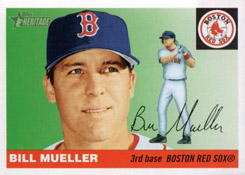
bill_muellerTwenty-two years later, Mueller returned to a World Series for the first time.

As a 33-year-old big-league veteran, Mueller was the third baseman for the Red Sox in Game 4 of the 2004 World Series at Busch Stadium in St. Louis and witnessed Boston break the hearts of his hometown team by clinching the championship against the Cardinals.

Ten years after that, Mueller has come full circle.

On Nov. 17, 2014, Mueller was named assistant hitting coach of the Cardinals, replacing David Bell, who was promoted to bench coach after Mike Aldrete departed for a coaching job with the Athletics. Mueller had been hitting coach of the Cubs during the 2014 season. He will serve under Cardinals hitting coach John Mabry in 2015.

McGee a favorite

A native of the St. Louis suburb of Maryland Heights, Mo., Mueller grew up a Cardinals fan. Center fielder Willie McGee was his favorite player, Mueller told Jeff Horrigan of the Boston Herald in October 2004.

As a rookie in 1982, McGee sparked the Cardinals to their first National League pennant in 14 years. After splitting the first six games of the 1982 World Series with the Brewers, the Cardinals faced a Game 7 showdown at Busch Stadium.

Mueller attended the game with his father. Their seats were in the upper deck of the outfield. “The nosebleed section,” Mueller told The Patriot Ledger of Quincy, Mass., in 2004.

The Brewers’ Ben Oglive smacked a home run off Joaquin Andujar near the section where the Muellers sat. That’s one of Bill Mueller’s enduring memories of the game. What’s most memorable, of course, is that the Cardinals won, 6-3, earning their first World Series title since 1967. “Pretty cool,” Mueller said of the experience. Boxscore

Turning pro

Mueller became a baseball standout at De Smet Jesuit High School in Creve Coeur, Mo., and at Missouri State University in Springfield. He was drafted by the Giants and made his big-league debut with them in 1996.

In his first appearance at Busch Stadium with the Giants in August 1996, Mueller got five hits in 10 at-bats during a four-game series. Three years later, on May 25, 1999, Mueller hit a grand slam off Kent Mercker at Busch Stadium before more than 30 family and friends in a 17-1 Giants victory over the Cardinals. Boxscore

After the 2000 season, the Giants traded Mueller to the Cubs. He spent two years in Chicago, became a free agent and signed with the Red Sox. In his first season with Boston, Mueller was the 2003 American League batting champion, hitting .326 in 146 games.

Mueller vs. Rolen

The next season, Mueller helped Boston win the American League pennant, their first since 1986. He would be going to the World Series for the first time as a player and for the only time since he attended as a fan in 1982.

“That (1982) was my last experience with a World Series and now I’m going back for a World Series in St. Louis and I’m part of it,” Mueller said to Dan O’Neill of the St. Louis Post-Dispatch on the eve of the 2004 World Series. “It’s really a pretty amazing thing when you think about it.”

In most media previews of the 2004 World Series, the Cardinals, with Scott Rolen, were rated as having the advantage at third base over Mueller and the Red Sox. Rolen had hit 34 home runs with 124 RBI during the regular season and would win his fifth consecutive Gold Glove Award in 2004.

Mueller, though, proved the experts wrong.

The Red Sox swept the Cardinals, winning the first two games at Boston and the next two at Busch Stadium, and earned their first World Series championship since 1918, ending what some considered to be a curse placed on the franchise after it had traded Babe Ruth to the Yankees.

Mueller played an integral role in Boston’s dominance of the Cardinals. He batted .429 (6-for-14) with four walks in the World Series. His on-base percentage was .556. He scored three runs and drove in two.

His counterpart, Rolen, was hitless in 15 at-bats.

Previously: Paul Molitor vs. Cardinals: Sensational, strange 1982 World Series

Read Full Post »

(Updated May 24, 2025)

A central figure in an unpopular trade, Alvin Dark responded with a hitting display that endeared him to Cardinals fans and gained him satisfaction against his former team.

al_darkDark was a three-time all-star shortstop with the Giants and 1948 National League Rookie of the Year with the Braves. He played for 14 seasons in the major leagues and hit a combined .323 in 16 World Series games for the Braves (1948) and Giants (1951 and 1954). Dark also managed four big-league clubs, winning a pennant with the 1962 Giants and a World Series championship with the 1974 Athletics.

On June 14, 1956, Cardinals general manager Frank Lane traded second baseman Red Schoendienst, a nine-time all-star, to the Giants. The key player the Cardinals received in return was Dark.

The full trade was Schoendienst, outfielder Jackie Brandt, catcher Bill Sarni, pitcher Dick Littlefield and two players to be named (shortstop Bob Stephenson and pitcher Gordon Jones) to the Giants for Dark, outfielder Whitey Lockman, catcher Ray Katt, pitcher Don Liddle and cash.

Lane made the trade because he wanted to move Don Blasingame from shortstop to second base. He figured trading Schoendienst would land him a shortstop in return. Lane had been trying for months to get Dark.

“The Giants wanted a second baseman, the Cardinals a shortstop and everybody was pleased except the Cardinals fans, who, understandably, loved Red. He was the finest second baseman in the game,” Dark said in his book “When in Doubt, Fire the Manager.”

Said Lane to The Sporting News: “We let Schoendienst go with great reluctance, naturally, but to get a star like Dark you’ve got to give a star.”

Cardinals fans expressed their displeasure. “The switchboard at Busch Stadium lighted up like a Christmas tree and stayed that way for more than two hours June 14,” wrote The Sporting News.

Dark, 34, hit .366 in his first 28 game for the Cardinals.

On July 12, the Giants visited St. Louis for the first time since the trade. Dark had nine hits in 11 at-bats and seven RBI, sparking the Cardinals to a three-game sweep. Schoendienst had three hits in 11 at-bats and walked twice.

In the first game of the series, won by the Cardinals, 5-3, on July 12, Dark drove in the winning run with a sacrifice fly in the seventh. Boxscore

Dark drove in the winning run again in Game 2, a 7-5 Cardinals triumph on July 13. With the score tied at 5-5 in the eighth, he hit a two-run double against Hoyt Wilhelm. Boxscore

In the series finale on July 14, Dark was 3-for-3 with three RBI against starter Al Worthington in the Cardinals’ 5-2 triumph. Boxscore

Dark had seven hits in his last seven at-bats of the series.

“He’s a polished professional, a real leader who leads without being ostentatious,” Lane said.

Dark hit .286 in 100 games for the 1956 Cardinals. According to the 2004 Cardinals Yearbook, no one in the majors used a bat as light as Dark’s: 28 ounces.

In 1957, Dark batted .290. One of his best games occurred July 24 when he tripled twice _ against Sal Maglie and Sandy Koufax _ and scored twice in a 3-0 Cardinals victory over the Dodgers. Boxscore

By 1958, Dark, 36, had lost fielding range. The Cardinals had a replacement, shortstop Eddie Kasko, on the roster. Dark was traded to the Cubs on May 20, 1958, for pitcher Jim Brosnan.

Dark had 306 hits in 258 games over three seasons for the Cardinals and batted .289. He produced four hits in a game seven times.


Read Full Post »

(Updated on April 5, 2022)

In 2014, I interviewed Tommy Davis and Jerry Reuss about some of their peers who were candidates for election to the National Baseball Hall of Fame.

boyer_davisDavis played 18 seasons in the big leagues (1959-76), primarily as an outfielder, and was the National League batting champion in both 1962 and 1963 with the Dodgers. Overall, Davis hit .294 in his major-league career.

Reuss, a St. Louis native who began his career with the Cardinals. pitched 22 seasons in the big leagues (1969-90) and earned 220 wins.

Here is what Davis and Reuss said about some of the candidates:

Dick Allen

Primarily a first baseman and third baseman, Allen was 1964 National League Rookie of the Year with the Phillies and 1972 American League Most Valuable Player with the White Sox. He led the American League in home runs in 1972 (37) and 1974 (32) and was a league leader in extra-base hits three times.

Dubbed “the bad boy of baseball,” Allen hit .292 with 1,848 hits, 351 home runs and 1,119 RBI in 15 major-league seasons (1963-77).

In 1970, his lone Cardinals season, Allen primarily played first base and hit .279 with 34 homers and 101 RBI in 122 games. Allen and Reuss were teammates that year.

_ Tommy Davis on Dick Allen: “Great hitter. He had a 40-ounce bat that he used. He couldn’t pull the ball, but he could go about 400 feet, 450, to right-center. Easily.”

_ Jerry Reuss on Dick Allen: “Tremendous power. Good teammate. Personally, I like him. Hall of Fame chances: No.”

Ken Boyer

Boyer was the 1964 National League Most Valuable Player with the Cardinals and he won five Gold Gloves as a St. Louis third baseman. Boyer ranked in the top 10 in RBI in the NL seven times and in the top 10 in total bases six times.

In 15 major-league seasons (1955-69), Boyer batted .287 with 2,143 hits, 282 home runs and 1,141 RBI.

He played for the Cardinals for 11 years and hit .293 for them with 1,855 hits and 1,001 RBI in 1,667 games.

Boyer and Davis were teammates on the 1967 Mets and 1968 White Sox. Boyer coached the 1971 Cardinals team that included Reuss as a starting pitcher.

_ Tommy Davis on Ken Boyer: “He was consistent at third base. Good hitter. His defense was so good it was ridiculous.”

_ Jerry Reuss on Ken Boyer: “That’s a tough one. He had leadership capabilities. I don’t know how he stacked up against other third basemen. He’s a maybe, but more toward the no side.”

Jim Kaat

A three-time 20-game winner, Kaat earned 283 wins. Kaat had 15 consecutive seasons (1962-76) with double-figure wins. He was the 1962 American League leader in shutouts (five) with the Twins and the 1966 AL leader in wins (25).

Kaat spent his last four big-league seasons (1980-83) with the Cardinals, winning 19, saving 10 and appearing in four of the seven games of the 1982 World Series.

_ Tommy Davis on Jim Kaat: “He was sneaky. He knew how to pitch. He knew how to set you up. He was a tough left-hander.”

_ Jerry Reuss on Jim Kaat: “Yes for the Hall of Fame. He won 16 Gold Gloves. Enough said.”

Minnie Minoso

The outfielder won three Gold Gloves (1957, 1959, 1960) and finished in the top 10 in the American League in hitting eight times. Minoso three times led the AL in triples and three times led the AL in stolen bases.

Playing primarily for the White Sox and Indians from 1951-64 (he appeared in nine games in 1949, three in 1976 and two, at age 54, in 1980), Minoso batted .298 with 1,963 hits, 186 home runs, 1,023 RBI and 205 stolen bases.

In 1962, his lone National League season, Minoso was plagued by injuries and hit .196 in 39 games for the Cardinals.

I didn’t ask Reuss about Minoso because the Cuban Comet’s last full big-league season was 1964 when Reuss was just 15.

_ Tommy Davis on Minnie Minoso: “Good outfielder. He could fly. He was already good when he got to the major leagues. He helped baseball as a pioneer for Cuban ballplayers and later as an ambassador for Chicago.”

Read Full Post »

Jerry Reuss Banner

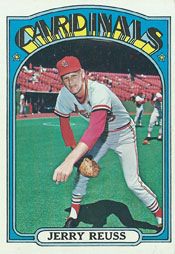
On Nov. 11, 2014, I visited the Dodgers Adult Baseball Camp at Historic Dodgertown in Vero Beach, Fla., to seek out Jerry Reuss for an interview about his time as a pitcher with the Cardinals.

Dressed in a home white Dodgers uniform, Reuss, 65, was patient, thoughtful, articulate and polite.

He debuted with the Cardinals in September 1969 and pitched for them in 1970 and 1971, posting an overall 22-22 record before he was traded to the Astros in April 1972.

In a 22-year major-league career, primarily with the Dodgers (nine years) and Pirates (six years), Reuss was 220-191 with a 3.64 ERA. In 2014, he published a book “Bring in the Right-hander,” a delightful retrospective on his career. You can order an autographed copy at his Web site www.jerryreuss.com.

jerry_reuss2Q.: Two months after the Cardinals traded Steve Carlton, they traded you. It was first reported you were traded because you were in a contract dispute with owner Gussie Busch. Later it comes out it was about your moustache. True?

Reuss: “It was about growing a moustache. Bob Broeg (a writer) had said something to that effect and I thought, ‘No, they wouldn’t be that concerned about that.’ I lived with that for 20 or 25 years.

“It wasn’t until the mid-90s when I was in St. Louis and I went to a ballgame and I saw Bing Devine, who was working as a scout. He had been the general manager of the Cardinals when I was traded. I said, ‘Bing, you got a minute?’ He said, ‘Yeah. Why don’t you sit down and we’ll talk.’ So I asked him about the deal. I figured enough time had passed that I could do that.

“He was more than happy to tell me. He said Mr. Busch at times would act on an impulse. This was one of those times. He insisted on me being traded because I had the moustache. Bing thought if given a little time he (Busch) would come to his senses and make a wise baseball decision rather than a personal decision.

“But he kept hammering about the moustache and would say, ‘Did you get rid of him yet? Why not?’ And the ultimatum was put like this: ‘If you don’t get rid of him, I’ll get rid of you and get somebody who will get rid of him.’ So when you’re faced with a situation like that, you do what has to be done.”

Q.: You still have a moustache and it has become something of a signature look for you…

Reuss: “Yeah. But when you look back about how that was the thinking in baseball in the early 70s and then just two or three years later baseball began to change with the times. Guys were coming in with long hair and beards. And you just wonder: What was the stink all about?

“So on the matter of just a little bit of facial hair _ you could barely see it _ people would ask, “Why didn’t you shave it?’ And I’d say, ‘There wasn’t a rule that the Cardinals had to be clean-shaven and be like a military situation. If it doesn’t bother anybody, if it’s not a rule, then what are we talking about here?’ ”

Q.: Your last year with the Cardinals, 1971, was the year your teammate, Joe Torre, led the National League in hitting and RBI and won the MVP Award. Could you see then the leadership qualities that later would make him a Hall of Fame manager with the Yankees?

Reuss: “Oh, sure. Lights out. At that early age, I just wondered whether there were guys like that on every team.

“He was managing the club on the field. Red (manager Schoendienst) just stepped back and said, ‘Joe, you have a grasp of it. You take care of it. When you’re on the field, you see things that I don’t.’ And Joe, being wise enough and knowing his boundaries, would go to Red and say, ‘Would you consider this or would you consider that?’

“Sometimes there was a lineup that was put out and Joe would go to Red and say, ‘This player won’t say it to you but he’ll say it to me. You might want to give him a day off.’ And Red would say, ‘All right. Let’s do that.’ He’d make the lineup change. Joe was able to get those things from players and he did it only because it helped the club. It wasn’t anything personal with the player.

“You could see the leadership. I’ve never come across another player who was like him. There were a couple that had some of those qualities _ I understand Cincinnati had a few. (Johnny) Bench was one of those guys _ that when he spoke, everybody just said, ‘Let’s reconsider this.’ Joe was that way all the time. Joe was more far-reaching. You knew he would be a manager.”

Q,: After leaving the Cardinals, you played for seven big-league teams. As a St. Louis native who began his career with the hometown team, did you ever hope to return to the Cardinals?

Reuss: “I never gave it a whole lot of thought. Once I got to Los Angeles (in 1979), I said, ‘This is home. This is where I want to be.’ It’s where I always wanted to play.

“Back in those days, it was one of the few grass fields. Lots of artificial turf then. My knees were feeling it. And then I became a ground ball pitcher and the infield I had behind me was particularly adept at playing at Dodger Stadium on the lawn.

“As a result, I had a good defensive ball club become a great defensive ball club. They got a lot of ground balls. That’s where my success was and that’s where I wanted to stay. When I was ready to change teams, I was past my prime. Rather than a lot of teams coming to me, I was going to them and just hoping for a chance.”

Q.: The player who had the most at-bats against you was

Reuss: “Pete Rose. Did you see what he hit against me?”

Q.: .244 in the regular season. (29-for-119).

Reuss: “I couldn’t believe that.”

Q.: What was your secret?

Reuss: “There was no secret. Pete hit me the same way he hit everybody else. It’s just that, when he hit the ball against me, more often it was right at somebody. Did you see the number of times he struck out against me? (9) He was making contact. He came up there swinging.”

Part 1: Jerry Reuss on Bob Gibson as a teammate: He was tough

Read Full Post »

Bing Devine thought he added the final piece to a championship contender when he acquired Gold Glove shortstop Ed Brinkman for the Cardinals. What the general manager didn’t know was he had dealt for a shortstop who did better playing on grass and dirt than on artificial turf.

ed_brinkmanFor the Cardinals, who played their home games on artificial turf at Busch Stadium, the deal was a dud.

On Nov. 18, 1974, the Cardinals, Tigers and Padres made a blockbuster trade. The Tigers sent Brinkman, outfielder Dick Sharon and pitcher Bob Strampe to the Padres for first baseman Nate Colbert. The Padres then swapped Brinkman and catcher Danny Breeden to the Cardinals for pitchers Sonny Siebert, Alan Foster and Rich Folkers.

Brinkman, who turned 33 three weeks after the deal, won a Gold Glove Award in 1972 with the Tigers when he led American League shortstops in fielding percentage (.990). Brinkman played 72 consecutive games without an error that season. He was named an American League all-star in 1973.

The Cardinals finished 1.5 games behind the first-place Pirates in the National League East in 1974 with a starting shortstop, Mike Tyson, who made 30 errors in 143 games. Tyson also struggled to stay trim. The Sporting News described him as being “built more like a catcher than a shortstop. Barrel-chested and with a belly to match.”

Moving Tyson to a utility role and adding Brinkman to a starting infield of Keith Hernandez at first, Ted Sizemore at second and Ken Reitz at third appeared to strengthen the Cardinals’ defense and give them the piece they needed to catch the Pirates in 1975.

Positive vibes

In a story headlined “Bing Beams Over Brinkman,” Devine told The Sporting News, “We now have eight solid men in our starting lineup.”

The Sporting News agreed, calling Brinkman “the experienced shortstop the Cardinals long had been seeking.”

Said Cardinals pitcher Bob Gibson: “We’re stronger at shortstop with Eddie Brinkman.”

Steady Eddie

Brinkman was a Cincinnati Western Hills High School teammate of Pete Rose. At 19, Brinkman debuted in the major leagues with the 1961 Senators. He joined the Tigers in October 1970 in the trade that sent pitcher Denny McLain to the Senators. With his steady defense, Brinkman helped Detroit win a division title in 1972.

Tigers general manager Jim Campbell called Brinkman “one of the finest professional players I’ve ever been around in my life.”

Detroit correspondent Jim Hawkins described Brinkman as “one of the best shortstops ever to wear a Detroit uniform.”

Good start

The early reviews about Brinkman with the Cardinals were encouraging. He asked for and was issued uniform No. 5 because he said it was the number closest to the No. 6 worn by two of his favorites, Stan Musial of the Cardinals and Al Kaline of the Tigers.

Brinkman hit .355 in spring training exhibition games for St. Louis. He produced RBI in five of six regular-season games from April 11 through April 18.

After 17 April games for the Cardinals, Brinkman was batting .283.

Plastic grass

Rather than solidify the shortstop position, though, Brinkman weakened it. Getting to balls on the lightning-quick artificial turf was far different than fielding on grass and dirt.

“The Cardinals quickly became disenchanted with Brinkman, who was accustomed to the real grass in the American League,” The Sporting News reported.

Brinkman started 24 games at shortstop for the 1975 Cardinals and committed six errors, five on artificial turf.

Cardinals manager Red Schoendienst reinstated Tyson as the starting shortstop on May 5. Later that month, Mario Guerrero, acquired in April from the Red Sox, became the starter. Brinkman, who made three errors in seven May games, was relegated to the bench.

Devine, admitting he had erred but noting there had been a robust market for the shortstop, said, “A lot of other people were fooled about Brinkman.”

Sent packing

On June 4, 1975, the Cardinals traded Brinkman and pitcher Tommy Moore to the Rangers for outfielder Willie Davis. Brinkman played one game for the Rangers and was dealt to the Yankees for cash. The Rangers needed the money to swing a deal with the Indians for pitcher Gaylord Perry.

The 1975 Cardinals tied for third in the National League East, 10.5 games behind the champion Pirates.

During spring training in 1976, the Yankees released Brinkman, ending his playing career.

Seven years later, in 1983, Brinkman became a coach under White Sox manager Tony La Russa, joining a staff that included Dave Duncan and Jim Leyland. Brinkman remained with the White Sox after Jim Fregosi replaced La Russa in June 1986. He coached until 1988, became a scout and worked for the White Sox until he retired in 2000.


Read Full Post »

(Updated Dec. 8, 2024)

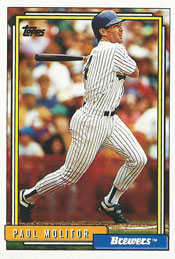
Paul Molitor is linked with Willie McGee and Darrell Porter as central figures in two prominent plays in the 1982 World Series between the Brewers and Cardinals.

paul_molitorMolitor was the third baseman and leadoff batter for the American League champion Brewers in 1982. He was selected by the Cardinals in the 28th round of the 1974 amateur draft, but chose to attend the University of Minnesota instead. Three years later, the Brewers drafted him in the first round, launching him onto a 21-year career in the majors. Molitor produced 3,319 hits and was elected to the National Baseball Hall of Fame.

In 1982, Molitor, along with Robin Yount, Cecil Cooper and Ted Simmons, played a prominent role in the Brewers winning their lone pennant. He followed that with a World Series versus the 1982 Cardinals that was both sensational and strange.

Here’s a look:

Hits record

Molitor became the first player to get five hits in a World Series game. After grounding out in the first inning, Molitor had five singles in his next five at-bats in Game 1 at St. Louis.

No one else produced five hits in a World Series game until the Cardinals’ Albert Pujols did it in Game 3 of the 2011 World Series. Boxscore

Molitor got his five hits in Game 1 off three pitchers: Bob Forsch (in the second, fourth and sixth), Dave LaPoint (in the eighth) and Jeff Lahti (in the ninth). Boxscore

“He’s a heck of a ballplayer,” Cardinals manager Whitey Herzog said to The Sporting News, “but he had only one line drive. He had three infield singles and a broken-bat bloop. Nothing you can do to stop things like that.”

In the book “Where Have You Gone ’82 Brewers?,” Molitor said, “Five singles. Ozzie (Smith) dove and knocked down three of them at short and almost threw me out on two of them. It was a heck of a way to have your first World Series game unfold.”

Molitor and Yount (four hits in Game 1) were the first teammates to get four hits apiece in a World Series game since the Cardinals’ Joe Garagiola, Whitey Kurowski and Enos Slaughter each had four hits against the Red Sox in Game 4 of the 1946 World Series. Boxscore

Bashing at Busch

Molitor batted .355 (11-for-31) in the seven-game World Series in 1982. He hit .526 (10-for-19) in the four games at St. Louis and .083 (1-for-12) in the three games at Milwaukee.

After his 5-for-6 performance in Game 1, Molitor hit .240 (6-for-25) for the remainder of the World Series. When he grounded out to lead off Game 2, he missed a chance to tie Goose Goslin (1924 Senators) and Thurman Munson (1976) for the World Series record of hits in six consecutive at-bats.

Molitor was devastating when batting with runners in scoring position, hitting .714 (5-for-7) against the Cardinals.

Porter power

After the Brewers won Game 1, 10-0, at St. Louis, the Cardinals felt pressure to win Game 2 before heading to Milwaukee. In the eighth, the Cardinals scored a run, breaking a 4-4 tie.

Molitor led off the ninth against closer Bruce Sutter. In a matchup of future Hall of Famers, Molitor bunted for a single, increasing the pressure on Sutter and his catcher, Darrell Porter.

The next batter was another future Hall of Famer, Robin Yount.

“I told Bruce to be sure to hold him (Molitor) close to the base because I figured they might either try a bunt or a steal,” Porter said to The Sporting News.

Brewers manager Harvey Kuenn called for a hit-and-run.

Said Porter: “I never thought they would try to hit and run.”

Sutter threw his signature pitch, the split-finger fastball. When thrown effectively, the ball dipped sharply into the dirt.

This time, Sutter made a mistake. The pitch stayed up, at shoulder level.

Yount, trying to hit the ball the opposite way to right field, swung and missed. Porter fired a strike to second base and nailed Molitor.

Sutter retired the next two batters and the Cardinals had their first World Series win since Game 4 of 1968. Boxscore

Robbed by McGee

In Game 3 at Milwaukee, Molitor led off the bottom of the first by smashing a Joaquin Andujar fastball into the teeth of a 16 mph wind in center field. Willie McGee, the rookie center fielder, raced to the wall, 402 feet from home plate, climbed the canvas and made the catch.

Inspired, McGee went on to have one of the all-time best games in World Series lore, hitting two home runs, driving in four runs and making another leaping grab in the ninth to deprive Gorman Thomas of a two-run home run. Boxscore

Recalling the catch of Thomas’ drive, McGee said to Cardinals Yearbook in 2016, “The key to making that catch is timing … You condition yourself during batting practice to chase fly balls like that one, and to working on timing your jump.”

Read Full Post »

« Newer Posts - Older Posts »