Feeds:
Posts
Comments

Archive for the ‘Hitters’ Category

A short stint with the Cardinals was the end of the line in the playing career of Gary Sutherland. Afterward, he dropped them a line in gratitude.

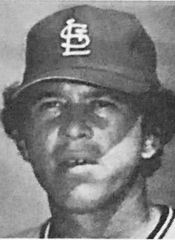
A utilityman whose best position was second base, Sutherland played 13 seasons in the majors with the Phillies (1966-68), Expos (1969-71), Astros (1972-73), Tigers (1974-76) and Padres (1977) before finishing with the 1978 Cardinals.
He appeared in 10 games for the Cardinals, a team on its way to 93 losses. Cut from the roster in May, Sutherland, 33, sent the team a letter. According to the St. Louis Post-Dispatch, it read:

“Dear Cards:

“I’m sorry I wasn’t able to say goodbye to all of you and that I wasn’t able to contribute much to the ballclub other than keeping the smokers stocked in cigarettes, and having an unblemished record as a prosecuting attorney (in clubhouse mock court hearings).

“My career has been a very good one for me and I have no regrets whatsoever other than having to leave so many friends. Everyone’s playing days must end some day and it seems my time has come …

“I want to wish everyone the best of luck. There’s still a long way to go and I know you’re capable of making it to the top this year. How can you miss? If I can’t make the team, as great as I am, you’ve got to be the best.”

Sutherland went on to become a scout for the Dodgers and Angels, then moved into the Angels’ front office. He was 80 when he died on Dec. 16, 2024.

Baseball bloodlines

Gary Sutherland was raised in Glendale, Calif., by a father (Ralph) who pitched in the Cardinals’ system and was 15-3 for Newport, Ark., in 1936, and a mother who was a catcher for a semipro softball team in Culver City, Calif. Dad pitched batting practice to Gary and his brothers and mom caught their throws in the backyard. Gary’s older brother, Darrell, pitched in the majors for the Mets and Indians.

A second baseman at University of Southern California, Gary Sutherland was chosen for the U.S. team that went to the 1964 Summer Olympics in Tokyo. Baseball then was a demonstration sport, not in medal competition.

The Phillies signed Sutherland, 20, in November 1964. Minor-league teammates dubbed him Casper, as in the cartoon ghost, because of his pale complexion. (Sutherland later was diagnosed with hypoglycemia, or low blood sugar.)

After reaching the majors in September 1966, Sutherland stuck with the Phillies as a utility player the next two seasons. He appeared at second base, shortstop, third base, left field, right field, and went to the Florida Instructional League to learn catching in case he was needed in an emergency.

A right-handed contact hitter _ “The name of his game is ping, not power,” Bill Conlin noted in the Philadelphia Daily News _ Sutherland stung the Cardinals a couple of times in 1968.

With the Cardinals ahead, 3-2, at Philadelphia, the Phillies had two on, two outs, in the ninth when Sutherland batted against rookie reliever Hal Gilson. Left fielder Lou Brock shifted toward left-center because, as manager Red Schoendienst told the St. Louis Post-Dispatch, Sutherland “never pulls the ball.”

Gilson threw a slider down and in _ “Always a tough pitch for me to handle,” Sutherland told the Daily News. To nearly everyone’s surprise, he drove it toward the corner in deep left. Brock made a long run and leaped. The ball barely went over his glove for a double. Both runners scored, giving the Phillies a 4-3 walkoff win. “He probably won’t pull the ball to the left field corner the rest of the year,” Schoendienst moaned to the Post-Dispatch. Boxscore

Four months later at St. Louis, Ray Washburn started for the Cardinals in his first appearance since pitching a no-hitter. With the score tied at 1-1 in the ninth, the Phillies had a runner on third, two outs, when Washburn intentionally walked former teammate Bill White to pitch to Sutherland. Swinging at a slow curve, Sutherland lashed a double to center, driving in the winning run. Boxscore

Original Expo

The Expos selected Sutherland in the October 1968 National League expansion draft. Gene Mauch, Sutherland’s first big-league manager, was with Montreal. Expos scout Eddie Lopat, who watched Sutherland hit .339 for the Phillies in September 1968, told the Montreal Star, “He’s the best utilityman I saw in the National League.”

Sutherland became the Expos’ starting second baseman. Mauch stuck with him even after Sutherland went hitless in his first 22 at-bats.

On June 8, 1969, Sutherland helped the Expos end a 20-game losing streak. Ahead 2-0 on a Rusty Staub home run, the Expos had runners on the corners, one out, in the fourth against the Dodgers’ Bill Singer when Sutherland perfectly executed a suicide squeeze bunt, scoring Mack Jones from third. The Expos won, 4-3. Boxscore

Sutherland finished the 1969 season with 130 hits (third-most on the club) and 26 doubles. Platooned with Marv Staehle in 1970, Sutherland slumped to .206, then reverted to a reserve role in 1971 after the Expos acquired Ron Hunt.

Traded to the Astros in 1972, Sutherland spent most of that season and the next in the minors.

Tiger tale

Getting demoted “was quite a shock,” Sutherland said to the Detroit Free Press, but a silver lining was he got to play regularly and that helped improve his hitting. He batted .299 for Oklahoma City in 1972 and .294 for Denver in 1973.

The Tigers acquired Sutherland to be their second baseman in 1974. “I’m not going to be outstanding in anything because I’m limited in so many ways,” Sutherland cautioned the Free Press. “I don’t have enough power to hit a lot of home runs and I don’t run well enough to be a .300 hitter.”

He did enough to stay in the lineup. Adept at turning the double play “about as well as any second baseman in the business,” according to the Montreal Star, Sutherland also contributed at the plate for the Tigers. In 1974, he had career highs in hits (157), RBI (49) and total bases (194). With the 1975 Tigers, Sutherland combined 130 hits with a career-best 45 walks.

Though he ended up with just 24 home runs in the majors, Sutherland had some surprising swats. He slugged homers in consecutive seasons versus the Cardinals’ Steve Carlton at Montreal. Boxscore and Boxscore

With the Tigers, facing Catfish Hunter for the first time, Sutherland hit two homers in a game at Oakland. A disgusted Hunter told the San Francisco Examiner, “Both pitches in the same spot, fastball up, slider up, both landed in the same spot.” Sutherland, a good sport, said to the newspaper, “I’m sure the wind helped them out.” Boxscore

The Tigers dealt Sutherland to the Brewers in June 1976. Released after the season, he joined the 1977 Padres and hit .316 for them as a pinch-hitter.

Good connections

Hoping to keep playing after getting released by the Padres in December 1977, Sutherland called Buzzie Bavasi of the Angels and asked for a roster spot. Bavasi said he didn’t have an opening. Soon after, in a talk with St. Louis general manager Bing Devine, Bavasi learned the Cardinals were seeking a backup infielder. Bavasi suggested Sutherland.

The Cardinals signed Sutherland to a minor-league contract and invited him to spring training as a non-roster player. Sutherland beat out Ken Oberkfell for one of the two reserve infield spots. The other went to Mike Phillips.

The 1978 Cardinals, though, were a mess. Manager Vern Rapp was fired in April, Ken Boyer replaced him and Sutherland no longer fit the plans. In eight plate appearances for the Cardinals, he produced one hit and two sacrifice bunts.

Just before getting released, Sutherland made an important contribution to the Cardinals. Bing Devine was considering a trade for Padres outfielder George Hendrick. Devine asked Sutherland for an opinion of his former Padres teammate. As Devine recalled to the Post-Dispatch, Sutherland “told me he never knew of a player who had a better relationship with his teammates than Hendrick did with the Padres.”

Devine made the deal and Hendrick helped the Cardinals become World Series champions in 1982.

The ability to assess talent helped Sutherland become a Dodgers scout and coordinator of their professional scouting department. Then the Angels hired him for the same roles.

Sutherland “was a significant influence” in the Angels’ decision to hire manager Mike Scioscia, the Los Angeles Times reported. Scioscia led the Angels to their only World Series title in 2002.

Sutherland became special assistant to Angels general manager Bill Stoneman. Sutherland and Stoneman had been Expos teammates. According to the Times, Sutherland rose to No. 2 on the Angels’ baseball operations staff.

Read Full Post »

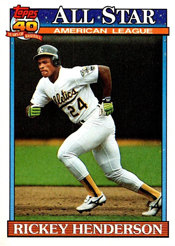
Imagine having the American League batting champion and the National League batting champion from the same season at the top of the order. The 1990 Oakland Athletics came close to having that happen.

Manager Tony La Russa put Rickey Henderson in the leadoff spot and Willie McGee in the No. 2 position during the last weeks of the 1990 season and then into the playoffs and World Series.

After leading most of the way, Henderson finished a close second to the Royals’ George Brett in the 1990 AL batting race. (His consolation prize, if you will, was the AL Most Valuable Player Award.) McGee, who played for the Cardinals before being dealt to Oakland near the end of August, won the 1990 NL batting title.

The combination of Henderson and McGee as table setters, followed by bashers Jose Canseco and Mark McGwire, might make a pitcher reconsider his vocation.

Athletic ability

At Oakland Tech High School, Henderson excelled in multiple sports and the one he liked best was football. He recalled to the San Francisco Examiner, “That was my game, football … I wanted to play for the (Oakland) Raiders.”

His mother, though, preferred he pursue baseball. So, Henderson turned down a football scholarship offer from Arizona State and signed with the Athletics when they drafted him at 17 in 1976.

During his first stint with the Athletics (1979-84), Henderson achieved 130 stolen bases in 1982, breaking the record of 118 held by the Cardinals’ Lou Brock. Traded to the Yankees in December 1984, Henderson was reacquired by the Athletics in June 1989 and helped them become World Series champions.

Doing it all

In 1990, as the Sacramento Bee described it, Henderson, “flamboyantly acting as if he were the leading man in a Broadway show,” deployed all his considerable skills. He led the league in on-base percentage (.439), runs scored (119) and stolen bases (65), and placed second to Cecil Fielder in slugging (.577).

“There’s nobody in our league doing more than (Henderson),” Tony La Russa said to the Bee.

Athletics pitcher Scott Sanderson told the newspaper, “When Rickey is determined to dominate a game, he can do it.”

Henderson hit .330 or better each month from April through July in 1990. He entered August at .340 for the season.

When Athletics center fielder Dave Henderson (no relation to Rickey) suffered a knee injury in August, general manager Sandy Alderson acquired Willie McGee to fill in for the injured outfielder. Winner of the 1985 National League MVP Award, McGee hit .335 for the 1990 Cardinals. On Aug, 29, the day Oakland obtained McGee, Rickey Henderson led the American League at .323.

McGee was from the Bay Area and still resided there. The Cardinals opted to trade him (for Felix Jose, Stan Royer and Daryl Green) rather than lose him to free agency after the season.

“McGee batting behind Henderson gives the A’s incredible speed at the top of the lineup,” Oakland Tribune columnist Dave Newhouse wrote.

Rangers pitcher Bobby Witt told the Examiner, “With Rickey Henderson leading off and Willie McGee batting second, that’s a great lineup.”

Dynamic duo

Though it took McGee a while to adjust to being with a different team _ “Every day I expect red (uniforms), and it’s green,” he told the Sacramento Bee _ he and Henderson teamed up for several strong performances.

On Sept. 3, for instance, at Boston’s Fenway Park, Henderson led off the game with a single, McGee followed with another single and the rattled rookie, Dana Kiecker, threw a wild pitch. The Athletics went on to score five runs in the inning and won, 9-5. Henderson and McGee combined for four hits, two walks, two steals, three runs and three RBI.

Red Sox designated hitter Mike Marshall, who played for the Dodgers against the Athletics in the 1988 World Series, told the Boston Globe, “They’re a strong team, mostly because now they’ve got that leadoff threat. They’ve got Rickey and now they’ve got McGee. He’s almost just as bad (to defend against).” Boxscore

Later that week, at Yankee Stadium, “Henderson lit the fuse and McGee kept it burning,” the Oakland Tribune reported.

With the Yankees ahead 2-1, Henderson led off the eighth with a home run into the third deck in left against Mike Witt, tying the score. McGee then lined a single to right and, when Jesse Barfield juggled the ball, Willie dashed to second. Irritated, Witt threw a wild pitch, enabling McGee to reach third. Then came another wild toss, and McGee scored the winning run.

As the Sacramento Bee noted, “Each time, the moment the ball trickled away, McGee took off. Seriously quick instincts.”

Tony La Russa told Newsday, “He’s got real explosion, plus he’s got guts. Often the guts factor is underestimated with baserunning. Willie has more guts than most.” Boxscore

The next day, with the score tied 3-3 in the ninth, the Athletics had one on, two outs, when Henderson worked a walk against the Yankees’ Greg Cadaret. McGee was next. After falling behind in the count, he fouled off five two-strike pitches before sending a drive to right. Mel Hall said he thought the ball would come directly to him, but it carried and sliced toward the corner.

“Hall pirouetted in the outfield before falling face-first onto the warning track,” the New York Daily News reported. The ball landed there, too, and bounced against the wall. Both runners scored and McGee streaked to third with a triple. The Athletics won, 7-3.

“An at-bat doesn’t get any better than that,” La Russa told Newsday’s Joe Donnelly. “Willie’s one of the smartest players I’ve ever been involved with. You can see it in the field, on the bases and at the plate.” Boxscore

Hit and run

In mid-September, George Brett, batting .256 through June, overtook Henderson in the race for the 1990 American League batting title.

With a week to go, Brett was at .330 and Henderson at .324. To protect his lead, Brett sat out three of the remaining six games, skipping two tough left-handers, Chuck Finley and Mark Langston, and knuckleballer Tom Candiotti.

Henderson said to the Oakland Tribune, “I respect (Brett), but I really thought he should have played. I guess I feel he did it a little different than I thought a good ballplayer would.”

Brett finished four percentage points ahead of Henderson, becoming at 37 the oldest American League batting champion since Ted Williams (40) in 1958. Brett also became the first player to win batting titles in three decades _ 1976 (.333), 1980 (.390) and 1990 (.329).

(No one ever won an AL batting title while playing for the Oakland Athletics.)

McGee had enough at-bats with the 1990 Cardinals to qualify for the National League batting crown. He won it with a .335 mark, finishing ahead of the Dodgers’ Eddie Murray (.330).

Comings and goings

The Athletics won their third straight American League pennant in 1990, sweeping the Red Sox in the playoffs, but then got swept by the Reds in the World Series.

McGee became a free agent and signed with the Giants, the team he rooted for as a youth. In December 1995, he returned to the Cardinals, who were managed then by Tony La Russa.

Henderson got traded to the Blue Jays in July 1993, returned to the Athletics five months later, left for the Padres in October 1995, returned to the Athletics in January 1998 and left again for the Mets in December 1998.

With the 1999 Mets, Henderson had 13 hits and five walks in 25 plate appearances versus the Cardinals _ a .720 on-base percentage.

He completed his big-league career in 2003 as the all-time leader in runs scored (2,295) and stolen bases (1,406).

Read Full Post »

During their primes, Rocky Colavito in the American League and Ken Boyer in the National were prominent run producers. At one point, the Tigers and Cardinals considered swapping them for one another.

Late in their careers, Colavito and Boyer became teammates _ with the White Sox, who got them for a pennant chase, and with the Dodgers, who hoped they’d boost a popgun attack.

Urban and rural

A son of Italian immigrants, Rocco Colavito grew up in a Bronx tenement. His father, who came to America after serving in the Italian army during World War I, was a truck driver. When Rocky was 9, his mother died, and his older sister ran the household.

Colavito was a Joe DiMaggio fan. According to the book “Don’t Knock The Rock,” Colavito “copied DiMaggio’s wide open batting stance. When he was privileged to see his idol play, he made mental notes of DiMaggio’s every movement, his every mannerism, and tried, on the field and before the mirror in the small bedroom he shared with his two older brothers, to make them his.”

In 1950, Colavito, 17, tagged along with some sandlot pals to a tryout with a Cleveland Indians scout. Colavito’s strong throwing arm earned him a contract and he entered the Cleveland farm system in 1951.

Kenton Boyer grew up in rural Missouri. His father was a laborer. His mother did laundry for others. Their home lacked electricity and indoor plumbing during Ken’s formative years, according to a 2016 biography of Boyer.

His father instilled Ken and his brothers with a passion for baseball. “Fifty-cent baseball gloves were typical gifts on Christmas Day,” biographer Kevin D. McCann noted. “Spring couldn’t come soon enough to use them and they often ran outside to play catch in the snow. When authentic baseballs were scarce, they threw homemade ones made of string and put together by their mother, or simply hit corncobs with a bat.”

In 1949, the year he turned 18, Ken Boyer impressed his favorite team, the Cardinals, in a series of tryouts. They signed him and sent him to the minors.

(All seven Boyer brothers played professional baseball. Clete, Cloyd and Ken reached the majors. Len, Lynn, Ron and Wayne stayed in the minors.)

High performance

Right-handed batters with power, Colavito and Boyer became big-leaguers in 1955 _ Rocky, an Indians outfielder; Ken, a Cardinals third baseman _ and it didn’t take long for them to achieve prominence.

With Cleveland, Colavito twice led the American League in extra-base hits. He and Harmon Killebrew each clouted a league-high 42 home runs in 1959. In a game at Baltimore that year, The Rock slammed four home runs. Boxscore

(The only other American League players with four-homer games: Lou Gehrig, 1932 Yankees; Pat Seerey, 1948 White Sox; Mike Cameron, 2002 Mariners; Carlos Delgado, 2003 Blue Jays; and Josh Hamilton, 2012 Rangers.)

Two days before the 1960 season opener, general manager Frank Lane (who, when he was with the Cardinals, traded Red Schoendienst and tried to deal Stan Musial and Ken Boyer) sent Colavito to the Tigers for American League batting champion Harvey Kuenn. “I traded a hamburger for a steak,” Lane said.

(For the multitudes of irate Colavito fans in Cleveland, Lane’s comment “may be remembered longer than Marie Antionette’s ‘Let them eat cake,’ ” Boston Globe columnist Harold Kaese suggested.) 

Colavito totaled 45 home runs and 140 RBI for the Tigers in 1961 and followed that with 37 homers and 112 RBI in 1962, the year he led the American League in total bases for the second time.

Meanwhile, Boyer excelled for the Cardinals. With the exception of 1957, when he temporarily was moved to center field, Boyer had 90 or more RBI and more than 20 home runs each season from 1956-62. In that seven-year stretch, he hit better than .300 five times and won multiple Gold Glove awards.

Blame game

Following the 1962 season, frustration was high among Tigers and Cardinals followers. Neither team had been in a World Series since the mid 1940s. More was wanted from Colavito and Boyer.

Colavito’s critics pointed to his .236 batting average with runners in scoring position in 1962.

As for Boyer, he struck out 104 times in 1962 _ the first Cardinal with 100 whiffs since Steve Bilko in 1953. (By comparison, Colavito, with his 37 homers, fanned a mere 68 times in 1962, and never totaled 100 strikeouts.)

“The boo birds probably would shed few tears if Ken Boyer were dealt,” The Sporting News noted in October 1962.

A Colavito-for-Boyer deal seemed to some a good fit.

With Willie Horton in the wings, the Tigers considered Colavito expendable. With Stan Musial nearing retirement, the Cardinals needed a corner outfielder.

According to Boyer’s biography, asked in October 1962 about a possible deal for Colavito, St. Louis general manager Bing Devine said, “We’ll take a hard-hitting outfielder, but I don’t think Detroit would be willing to let Colavito go.”

The Cardinals instead made a trade with the Cubs for right fielder George Altman, who wasn’t the big bopper they expected.

Talk of a Colavito-for-Boyer deal was renewed during the 1963 season. In the Detroit Free Press, columnist Joe Falls wrote, “From all you hear, it looks as if The Rock will be wearing another uniform by the time the 1964 season rolls around _ a National League uniform, at that. The best bet is he will go to the Milwaukee Braves or St. Louis Cardinals in a deal for Eddie Mathews or Ken Boyer.”

According to Bob Burnes of the St. Louis Globe-Democrat, the Cardinals lost interest when the Tigers wanted a player in addition to Boyer.

Lowering their sights, the Tigers sent Colavito, Bob Anderson and cash to the Kansas City Athletics in November 1963 for Jerry Lumpe, Ed Rakow and Dave Wickersham. After a season with the A’s, Colavito returned to Cleveland in 1965 and led the league in RBI (108) and walks (93).

Meanwhile, Boyer enjoyed a career year with the 1964 Cardinals, driving in a league-high 119 runs, belting a grand slam in the World Series and helping the Cardinals become champions. He was named the National League Most Valuable Player Award winner.

Twelve months later, Boyer was shipped to the Mets.

To the rescue

Managed by Eddie Stanky, the 1967 White Sox relied on starting pitching (Joe Horlen, Gary, Peters, Tommy John), a strong bullpen (Bob Locker, Hoyt Wilhelm, Wilbur Wood), defense and speed (Don Buford, 34 steals; Tommie Agee, 28).

Run production was a weakness. No one on the 1967 White Sox hit 20 home runs or produced 65 RBI. Yet, in late July, the White Sox were atop the American League standings.

If they could add a proven run producer or two, the White Sox figured to enhance their chances of winning the pennant.

On July 22, 1967, the White Sox got Boyer, 36, from the Mets. A week later, they picked up Colavito, 34, from Cleveland.

The deals reunited Boyer and Colavito with Eddie Stanky. Stanky was Boyer’s first manager in the majors with the 1955 Cardinals, and he coached with Cleveland when Colavito was there in 1957-58.

Boyer hit .377 in his first 15 games with the White Sox. Against Cleveland’s Luis Tiant, Boyer’s two-out single tied the score in the ninth, and Colavito’s two-run homer in the 10th won it. Boxscore

The next night, Boyer stroked four hits and scored twice, and Colavito contributed three hits, three runs and a RBI in another win at Cleveland. Boxscore

Asked to assess the value of Boyer and Colavito, Stanky said to the Chicago Tribune, “They’ve given us extra-base punch, but just as important is the big psychological lift. You can sense this on the field and in the clubhouse.”

Boyer belted a Mike Marshall slider for a game-winning homer against the Tigers at Detroit. Boxscore

A week later, after Boyer and Colavito helped in a win versus the Athletics, Stanky told the Tribune, “I don’t know where we’d be without them, but we can’t expect Ken and Rocky to do it all by themselves. We need a couple of other fellows to start picking us up with their bats.” Boxscore

The support, however, didn’t come. The White Sox batted .215 in August and .213 in September. They fell out of first but stayed in the race.

On Sept. 13, in the 17th inning of a scoreless game against Cleveland, Boyer singled with one out. Buddy Bradford ran for him, moved to second when Bobby Tiefenauer’s knuckler eluded rookie catcher Ray Fosse, and scored the winning run on Colavito’s single. Boxscore

Two weeks later, Boyer hit a home run against Sam McDowell in a 3-1 victory that put the White Sox a game out of first. Boxscore

If the White Sox won the pennant, Boyer would face the Cardinals in the 1967 World Series, but Chicago lost its last five games and the Red Sox emerged as American League champions.

Colavito and Boyer combined to produce 50 RBI for the 1967 White Sox.

Finishing up

In March 1968, the Dodgers obtained Colavito. Two months later, they added Boyer. Though the Dodgers had stellar pitching (Don Drysdale, Don Sutton, Claude Osteen and Bill Singer), the hitters lacked pop. Their home run leader was Len Gabrielson (10). Their top RBI producer was Tom Haller (53).

Playing in the National League for the first time, Colavito struggled (.204, three homers). Boyer did better, batting .271. Though he only had 221 at-bats, he ranked third on the Dodgers in RBI (41).

The last hurrah for Boyer and Colavito as teammates came on June 3, 1968. Each had a RBI in a 2-0 win versus Bob Veale and the Pirates. Boxscore

A month later, the Dodgers released Colavito and he finished the season, his last, with the Yankees. Boyer played one more year with the 1969 Dodgers.

Both men became major-league coaches _ Colavito with the Indians and Royals; Boyer with St. Louis _ and Boyer also managed the Cardinals.

Read Full Post »

A trade of Dave Parker for George Hendrick during their playing days would have been a headliner. That didn’t happen, but this did: Parker and Hendrick essentially were swapped for one another as coaches.

After coaching for the Angels in 1997, Parker became Cardinals hitting coach. He replaced Hendrick, who took the Angels coaching job Parker vacated.

Parker’s stint with St. Louis lasted one season. Though the Cardinals had the highest home run total in the National League with Parker as hitting coach in 1998, he wasn’t brought back. Manager Tony La Russa said Parker wasn’t dedicated to the job because he was spending time on the Popeyes fried chicken restaurant he owned in Cincinnati.

A success in the restaurant business, Parker capped his athletic career on Dec. 8, 2024, when a committee elected him to the Baseball Hall of Fame for his playing feats. The 16-member committee included former Cardinals Lee Smith, Ozzie Smith and Joe Torre, and Dick Kaegel, a former St. Louis Post-Dispatch reporter.

Show time

A left-handed batter and right fielder, Parker hit for average and power, produced runs and played with flair for the Pirates (1973-83), Reds (1984-87), Athletics (1988-89), Brewers (1990), Angels (1991) and Blue Jays (1991).

Nicknamed “Cobra” for the way he waved the bat before uncoiling with a quick swing, Parker was the National League batting champion in 1977 (.338) and 1978 (.334). He led the league in hits (215) and doubles (44) in 1977 and was the NL Most Valuable Player Award recipient in 1978.

A three-time Gold Glove Award winner with a powerful throwing arm, Parker played for two World Series champions (1979 Pirates and 1989 Athletics) and the 1988 pennant-winning A’s.

A career .290 hitter, he batted .314 versus the Cardinals. He totaled 2,712 hits and 1,493 RBI in 19 seasons in the majors.

(Parker respected fellow mashers. In his memoir, Keith Hernandez recalled, “Dave Parker, one of the most talented players I’ve ever seen, came strolling up to Ted Simmons and me after witnessing a round of batting practice in Pittsburgh and exclaimed, ‘You two are the hittingest white boys I’ve ever seen.’ Simmons laughed and I loved it: I’m Keith Hernandez, Hittingest White Boy.”)

Parker made his mark in other ways, too. He was one of the first ballplayers to wear an earring on the field (a diamond with a dangly cross) and one of the first to perform a showboating home run trot.

(Parker developed variations of his trot. He’d shoot at a base with his fingers as he neared it, according to the Post-Dispatch. Or, he’d trudge toward first “like a fat man up Heartbreak Hill,” Stan Sutton of the Louisville Courier-Journal noted, and slowly circle the bases. “I’ve hit over 300 of these,” Parker told the Los Angeles Times in 1989. “I deserve the opportunity to run them out any way I want.”)

Testifying in a 1985 federal drug trial regarding cocaine distribution among ballplayers, Parker detailed his cocaine use from 1976 to 1982, and identified colleagues who used the drug, in exchange for immunity.

Business decisions

In 1992, Parker sought to own a business in Cincinnati, where he grew up and still resided. According to the Cincinnati Enquirer, “A broker suggested Parker open a Burger King restaurant. Before the deal closed, the broker instead directed Parker to Popeyes because there were 18 Burger Kings in the region and one Popeyes.”

Parker and his wife, Kellye, bought a Popeyes on busy Reading Road in Roselawn, a Cincinnati neighborhood. According to the Enquirer, Parker could be found in the dining area or in the kitchen “where he regularly preps food or helps staff.”

“We call our Roselawn restaurant the colonel-killer,” Parker told the newspaper. “I think there are something like three KFCs that have gone out of business on Reading Road since we’ve been there.”

During the summer of 1996, Parker met with Terry Collins, then manager of the Astros, who were in town for a series against the Reds. Parker and Collins were teammates in the minors. Parker told him he was interested in getting back into baseball, the Los Angeles Times reported.

In November 1996, a month after the Astros fired him, Collins was hired to manage the Angels. He retained Rod Carew as hitting coach, but added Parker to the staff. Though Parker had no coaching experience, “He bring tremendous credibility,” Collins told the Times. “He knows how to win, what it takes to win. He brings the presence and knowledge of what it takes to be successful.”

Parker, 45, said to the Times, “I know I have to display clubhouse leadership. That was the understanding when I took the job.”

Or, as the Times put it, Parker was enlisted “to help give the Angels a long-needed kick in the rear end.”

Another motivation for Parker was his appearance on the Baseball Hall of Fame ballot for the first time in 1997. As he told the Post-Dispatch, “With the Hall of Fame voting, I came back to baseball just to be more visible.”

Parker was assigned to be the first base coach and instruct the outfielders, a group that included Jim Edmonds.

Here’s the plan

As a player, George Hendrick totaled 1,980 hits, including 267 home runs, and never struck out as many as 90 times in a season. In his two years as Cardinals hitting coach, the team ranked a lackluster seventh in the National League in runs scored in 1996 and 11th in 1997. Worse, the 1997 Cardinals struck out more than any other team in the league.

The combination of the strikeouts and the hitters’ lack of application frustrated Hendrick. Though manager Tony La Russa was interested in having him return in 1998, Hendrick opted to leave, the Post-Dispatch reported.

In October 1997, Parker, who played for La Russa when he managed the Athletics, was hired to replace Hendrick. “Parker will be entrusted with correcting the Cardinals’ strikeout total,” the Post-Dispatch reported.

Parker told the paper, “When I played for Tony, I taught Jose Canseco a two-strike stance and he cut down on his strikeouts quite a bit (from 157 in 1987 to 128 in 1988). He also hit 17 home runs (from a total of 42) with his two-strike stance.”

By encouraging a batter with two strikes in the count to spread out his stance and cut down his swing, “You concentrate on just putting the ball in play,” Parker said to reporter Rick Hummel. “You look for the fastball and adjust to everything else.”

Working with a 1998 Cardinals lineup that included Ron Gant, Brian Jordan, Ray Lankford and Mark McGwire, Parker arranged contests during batting practice at spring training. According to the Post-Dispatch, “Coaches call out situations to the hitters and points are subtracted for bad execution, such as not moving a runner along. At the end of the competition, the losing side of hitters has to serve drinks and sandwiches.”

Parker told the newspaper, “You put it in their heads every day and eventually it gets there. You get a guy at third base with less than two outs, you don’t swing at a slider away … It’s constant repetition.”

One and done

Though the Cardinals still struck out a lot (1,179 times), they scored more runs in 1998 (810) than they did in 1997 (689).

Afterward, Parker told the Post-Dispatch, “If they want me back, I’d come back.” However, the Cardinals informed him he wasn’t wanted because his business interests interfered with his coaching duties.

“Coaching is a commitment,” La Russa told the Post-Dispatch. “I don’t know any coach who’s really outstanding that can have a conflict (of interest). The entrepreneur side of (Parker) prevented a total dedication to coaching … Coaching, if you do it right, consumes you. If you get into professional coaching and managing, if you have a business, you’d better find somebody to run it for you. He made a decision to divide his interests, and you can’t do that.”

Parker told the newspaper, “I really enjoy baseball, but I just don’t like being away from business … It’s tough being gone for eight months a year. My wife is working almost to death.”

Regarding his stay with St. Louis, he added, “If I had known it would have been so short, I never would have left the Angels.”

Mike Easler replaced Parker. Soon after, Mark McGwire sued People First Inc, distributor of a pain reliever, The Freedom Formula, saying the company falsely claimed he endorsed the product.

According to the Post-Dispatch, the lawsuit contended that “Dave Parker, who promoted The Freedom Formula, distributed the product to McGwire and several teammates (in 1998). Parker asked McGwire to pose for a photograph of him holding a bottle of The Freedom Formula. As a courtesy to Parker, McGwire posed for the picture but never consented to its use for any commercial purpose.”

(McGwire’s lawyer told the newspaper the dispute had nothing to do with Parker’s departure from the Cardinals. The suit was dropped when People First Inc. agreed to stop using McGwire’s likeness, the Post-Dispatch reported.)

Parker’s Popeyes restaurant continued to do well and he eventually opened a second one in Forest Park, a Cincinnati suburb.

Read Full Post »

When the Cardinals offered Rico Carty the chance to begin his professional baseball career with them, the right-handed power hitter from the Dominican Republic was receptive. Then again, Carty was agreeable to signing with any club.

Away from home for the first time, Carty, 19, played in the Pan-American Games at Chicago in 1959. Impressed by his hitting, several big-league clubs sought to sign him.

“The Cardinals made the best offer, $2,000, and I wanted to go with them,” Carty told the St. Louis Post-Dispatch.

Unschooled in English, Carty signed with the Cardinals and also with at least three other teams _ Braves, Giants and Pirates. “I didn’t know you couldn’t sign with more than one club,” Carty told the Associated Press.

Carty also was under contract to Estrellas, a professional team in the Dominican Republic. When the Braves made a deal with Estrellas to acquire the rights to Carty, he became a member of the Milwaukee organization and all other contracts were voided, the Post-Dispatch reported.

A National League batting champion (.366 in 1970), Carty played for 15 seasons with the Braves and five other clubs in a career marked by health and injury woes, conflict and controversies.

Finding his way

Carty had 15 brothers and sisters. His father worked in a sugar mill and his mother was a midwife. As a teen, Carty became an amateur boxer, winning 17 of 18 bouts, but quit at the insistence of his mother, according to the Post-Dispatch.

His slugging on the diamond got him to the pros, but his fielding held him back. When Carty entered the Braves’ farm system in 1960, they tried him at catcher. As Carty recalled to the Atlanta Journal, “I was really brutal catching.”

With the Austin (Texas) Senators in 1963, Carty was moved to the outfield. He produced 100 RBI and was hailed “the best hitting prospect in the organization,” according to The Sporting News.

Called up to the Braves in September 1963, Carty, 24, made his major-league debut in a pinch-hitting stint at St. Louis and struck out against Ray Sadecki. Boxscore

Big-league bat

Batting .408 at spring training in 1964, Carty made the Braves’ Opening Day roster and continued his torrid hitting.

On May 23, 1964, at Milwaukee, Carty clouted two home runs for five RBI against the Cardinals’ Roger Craig. Boxscore

Carty’s hitting, combined with his adventures in the outfield, made him the darling of the bleacher fans at Milwaukee’s County Stadium. “They cheer every move he makes,” The Sporting News noted. “He is a thrill a minute fielder, the type who starts the wrong way on a ball and winds up making a circus catch.”

For the season, Carty hit .330. Against the Cardinals, who became 1964 World Series champions, the rookie batted .343 in 18 games.

Applying the hammer

The Braves moved to Atlanta after the 1965 season and Carty became a fan favorite there, too.

“Carty can most definitely charm the fans,” Frank Hyland of the Atlanta Journal observed. “They love him and he plays them like a drum. There is perhaps no athlete in any sport who makes himself as available as Carty.”

Rod Hudspeth of the Atlanta Journal added, “Carty has a lot of ham and a little con artist in him. He knows exactly when to turn and flash the big smile to a fan wanting a snapshot, the precise time to sign autographs and milk the most mileage from them, and the opportune moment to toss a baseball into the stands and get the big crowd reaction.”

Inside the clubhouse, it was a different story. “He was not well-liked by many teammates,” the Journal reported. Columnist Furman Bisher noted, “Teammates give him wide berth, even fellow Dominicans Felipe Alou and Sandy Alomar.”

In his autobiography “Alou: My Baseball Journey,” Felipe Alou said, “About the only guy I ever saw Hank (Aaron) have a problem with was Rico Carty … Rico was easy to have a problem with. He was defiant, belligerent, constantly challenging … Rico was a brawny guy who liked to intimidate people.”

On a Braves charter flight from Houston to Los Angeles in 1967, Carty got into an argument with Aaron and it boiled over into a fight.

In his autobiography “I Had a Hammer,” Aaron said, “Carty was playing cards two rows behind me when I heard him call me a ‘black slick.’ I stood up and asked him what he said, and he repeated it … A second later, we were swinging at each other … My fist went right by his head and put a hole in the luggage rack of the plane. Our teammates finally broke it up. I think there were three guys holding me.”

Aaron and Carty each told the Atlanta Constitution he was sorry the fight happened, but Aaron added, “He called me a name that I couldn’t take, and I would have fought anybody for that. It was a matter of principle and pride … If I’m called that name again, I’ll fight again.”

Carrying on

At spring training in 1968, Carty was diagnosed with tuberculosis. While undergoing six months of treatment in a sanatorium at Lantana, Fla., Carty received a letter from Cardinals manager Red Schoendienst, who was stricken with tuberculosis shortly after he played for the Braves in the 1958 World Series. “He said I was lucky that I would not have to be cut, like him,” Carty told Ira Berkow of Newspaper Enterprise Association. (Schoendienst underwent surgery to remove part of an infected lung.)

Back with the Braves in 1969, Carty suffered three shoulder separations but hit .342, helping Atlanta win a division title. Columnist Jesse Outlar noted, “That seemed inconceivable. You simply don’t spend an entire year in a hospital, then belt major league pitching at that clip with bum or sound shoulders.”

Carty, 30, reached his peak with the 1970 Braves. He batted .423 for April, .448 for May and put together a 31-game hitting streak. Though left off the All-Star Game ballot, a flood of write-in votes from the fans made him a National League starting outfielder along with Hank Aaron and Willie Mays.

A month later, Carty got into a clubhouse scuffle with teammate Ron Reed

The season ended with Carty as the league leader in hitting (.366) and on-base percentage (.454). He produced the highest batting average to lead the National League since Stan Musial hit .376 for the Cardinals in 1948.

Tough to take

Good times were followed by the bad. In December 1970, Carty suffered a triple fracture of his left knee, plus torn cartilage, when he collided with Matty Alou while chasing a fly ball during a game in the Dominican Republic. The severity of the injury prevented Carty from playing in 1971.

More trouble awaited.

In August 1971, while Carty and his brother-in-law, Carlos Ramirez, were in a car at a stoplight in Atlanta, two off-duty policemen pulled up alongside and accused them of being “cop-killing niggers,” the Atlanta Journal reported.

Carty noticed a uniformed officer inside a police car nearby and drove up to report what had happened. The off-duty cops followed and there was an altercation. Carty said the three white policemen beat him and his brother-in-law, using a billy club and the butt of a revolver. Carty and his relative were handcuffed and arrested on charges of assault and creating turmoil.

Atlanta mayor Sam Massell said the police actions appeared to be “blatant brutality,” United Press International reported.

Upon review, the three cops were fired by Atlanta police chief Herbert Jenkins. According to the Atlanta Constitution, Jenkins called it “the worst case of misconduct of a police officer I’ve ever seen.”

In dismissing all charges against Carty and his brother-in-law, Municipal Court Judge Robert M. Sparks Jr. said the defendants were “shamefully handled.”

Soon after, in an unrelated incident, Carty’s barbecue restaurant in Atlanta was destroyed in a fire.

Slow motion

Carty’s attempt to come back from the shattered knee and other ailments (he was hospitalized for pleurisy in 1971) was a struggle. At 1972 spring training, he said to United Press International, “When I came back after being sick with tuberculosis, it was just a matter of resting and building up my strength. Now there is pain to overcome. It does not hurt when I bat, but when I run it hurts.”

Braves manager Lum Harris told the wire service, “Rico never was a speedster, but I’ve never seen him as slow as he is now.”

Carty played in 86 games for the 1972 Braves, hit .277 and was traded to the Rangers for pitcher Jim “Pink” Panther.

The Rangers figured Carty to be an ideal designated hitter, but manager Whitey Herzog wasn’t impressed with what he saw. In the book “Seasons in Hell,” Herzog said to author Mike Shropshire, “When Rico runs from home plate to first, you could time him with a sundial.” Herzog also said he thought Carty was “crazier than a peach orchard sow.”

After a game against the Orioles, Carty told Shropshire he intentionally fouled off a pitch he thought was ball four because he didn’t want to spoil Jim Palmer’s bid for a perfect game. When Shropshire informed Herzog of this, the manager rolled his eyes and replied, “What a bunch of crap.”

According to the Fort Worth Star-Telegram, Herzog and Carty almost got into a dugout fistfight in June after Carty cussed Herzog for not backing him in a dispute with an umpire over a called strike. Soon after, Carty was sent packing. He finished out the season with the Cubs and Athletics.

Unwanted in the majors, Carty, 34, went to the Mexican League in 1974.

Another stab

Once again, Carty showed it was unwise to count him out. He hit .354 in the Mexican League. That impressed the Cleveland Indians, who brought him back to the majors in August 1974.

In four seasons with Cleveland, Carty batted .303, but he and manager Frank Robinson clashed. Robinson described his relationship with Carty as “a cold war,” the Associated Press reported.

Carty and Robinson soon were gone from Cleveland. Carty had one more big season, 1978, when he combined for 31 home runs and 99 RBI with the Blue Jays and Athletics.

During a road trip with the Blue Jays in 1979, a toothpick pierced Carty’s finger when he reached into a travel bag. Carty removed part of the toothpick, but the tip remained lodged under the skin.

“The thing keeps me from gripping the bat right, but they tell me it will work its way out eventually,” Carty told the Toronto Star.

The finger got infected and Carty “had to squeeze pus from his hand before hitting,” the Star reported.

Though the sliver finally was removed, his batting average sank like a martini olive untethered from its cocktail stick. He ended the season, his last, at .256.

That cost Carty a .300 career batting mark. He settled instead for .299.

Read Full Post »

Joe Schultz batted in a minor-league game when he was 14, played nine years in the majors, helped develop Cardinals prospects such as Bob Gibson and Tim McCarver, and coached for St. Louis clubs that won two World Series titles and three National League pennants.

The role that defined his baseball career, though, was his one season as Seattle Pilots manager.

In November 1969, Schultz was fired after the Pilots finished at the bottom of their division in their only American League season.

Instead of it being a footnote in his career, Schultz’s stint with Seattle became a climax because of the book “Ball Four.” In chronicling his time with the Pilots, pitcher Jim Bouton made Schultz a central figure in the bestseller.

All in the family

Though born in Chicago, Joe Schultz Jr. grew up in the family home in St. Louis on Labadie Avenue, a couple of blocks from Sportsman’s Park. His father, Joe Sr., was an outfielder who played 11 seasons in the majors, including from 1919-24 with the Cardinals. In those days, little Joe Jr. “wore a cutdown Cardinals uniform, circled the bases after games at Sportsman’s Park and slid until he was a tired tyke,” according to Bob Broeg of the St. Louis Post-Dispatch.

After his playing days, Joe Sr. managed in the minors, including three seasons (1930-32) with the Cardinals’ Houston farm team. During the summers, Joe Jr. joined his dad wherever he was managing.

Dizzy Dean pitched for Joe Sr. at Houston. The manager let his 12-year-old son catch Dean’s warmup throws. “I’d catch him all right _ until he really cut loose,” Joe Jr. recalled to the Post-Dispatch.

(Nearly 30 years later, when Joe Jr. managed Omaha, Bob Gibson pitched for him. So, father and son had the distinction of managing Dizzy Dean and Bob Gibson.)

In 1932, just after he turned 14, Joe Jr. made his pro baseball debut.

“My dad was managing Houston and we were playing Galveston in the last game of the season,” Joe Jr. recalled to the Kansas City Star. “He got to the ninth inning and sent me up (to bat). A left-hander named Hank Thormahlen (35 years old and a 20-game winner) was pitching. I got a single to center field. I don’t remember being nervous about it. I guess I was too young to realize what was happening.”

(After a stint as a Cardinals scout _ he was the one who recommended pitcher Mort Cooper to them _ Joe Sr. became farm director of the Pirates. He was in South Carolina to see Pirates farm teams training there when he died at age 47 of ptomaine poisoning.)

Player and teacher

As a ballplayer for St. Louis University High School and the Aubuchon-Dennison American Legion team, Joe Jr. “could pop the ball on the roof at Sportsman’s Park,” the Post-Dispatch declared.

The Cardinals signed Joe Jr. in 1936 and sent him to their farm club at Albany, Ga., where he roomed with another catcher from St. Louis, Bob Scheffing. (Like Joe Jr., Scheffing would play and manage in the majors.)

Schultz reached the big leagues with the Pirates in September 1939, but the next year, in the minors at Portland, he broke his right shoulder when he tripped over first base. Three years later, he hurt his throwing arm again. “It’s tough catching when you can’t throw properly,” Schultz said to the Post-Dispatch. “Like trying to play the piano without fingers.”

A backup catcher with the Browns (1943-48), Schultz excelled as a pinch-hitter. In 1946, he had a .516 on-base percentage (10 hits, six walks) in 31 plate appearances as a pinch-hitter. The left-handed batter hit .386 overall (22 for 57) that season.

After a year (1949) as a Browns coach, Schultz managed in the farm systems of the Browns, Indians, Reds, Orioles and Cardinals. He managed Cardinals farm teams from 1958-62. The former catcher was instrumental in the development of Tim McCarver, who played for three minor-league teams Schultz managed.

Calling McCarver “a natural born leader,” Schultz said to the Post-Dispatch, “He’s got the best hustle, drive, and most contagious winning spirit I’ve ever seen.”

After leading Atlanta to an International League championship in 1962, Schultz was promoted to the coaching staff of Cardinals manager Johnny Keane. (Thirty years earlier, Keane played shortstop and hit .324 for a Springfield, Mo., squad managed by Schultz’s father.)

Schultz coached first base for the 1964 World Series champion Cardinals. After Keane left for the Yankees, his successor, Red Schoendienst, retained Schultz and made him the third-base coach. Schultz also continued to mentor McCarver, who became an all-star with the Cardinals.

“I feel that my catching has become better,” McCarver told the Post-Dispatch in 1966. “A big reason is Joe Schultz. Schultz stays on me all the time, reminding me to work my arm up and throw strikes. He keeps driving me to work harder on defense and with the pitchers.”

(Schultz also liked backup catcher Bob Uecker. He told the Post-Dispatch, “Uecker has an excellent arm. He gives the pitcher a good target. He moves well around the plate and is an outstanding handler of pitchers.”)

In September 1968, with the Cardinals on their way to securing a second consecutive National League pennant, Schultz was named manager of the Seattle Pilots. He beat out two former Seattle minor-league managers, Joe Adcock and Bob Lemon, for the job.

No pressure

Schultz, 51, brought a relaxed, old-school style to managing the expansion club.

“I liked Joe Schultz a lot,” Pilots infielder John Kennedy said to the Everett (Wash.) Daily Herald. “He knew what he was dealing with. He wanted to win, but he was realistic enough to know that our chances of winning were also slim and none. So he took it that way. He was a fun guy to play for.”

Jim Bouton told the newspaper, “Joe was an easygoing guy, very spontaneously funny, very unintentionally funny. I don’t think he could really stomach being a baseball manager. He was much more suited to the backslapping and cheerleading that comes better from a coach.”

“Ball Four” is filled with examples of Schultz’s sanguine sayings to his players:

_ “Well, boys, it’s a round ball and a round bat and you got to hit it square.”

_ “Boys, I guess you know we’re not drawing as well at home as we should. If we don’t draw fans, we’re not going to be making the old cabbage.”

“OK, men, up and at ’em. Get that old Budweiser.”

On June 9, John Gelnar escaped a bases-loaded jam in the 10th inning to earn his first save in a Pilots victory at Detroit. According to Bouton, in the clubhouse afterward, Schultz told his team, “At a way to stomp on ’em, men. Pound that Budweiser into you and go get ’em tomorrow.” Then he spotted Gelnar sipping from a pop bottle. “For crissakes, Gelnar,” Schultz said, “You’ll never get them out drinking Dr. Pepper.” Boxscore

(“Some people have said I made all that stuff up,” Bouton told the Everett newspaper. “My answer is that I can’t write that well. I could never have dreamed up Joe Schultz. I’m not that clever.”)

In “Ball Four,” Bouton wrote, “There’s a zany quality to Joe Schultz that we all enjoy and that contributes to keeping the club loose.”

The Pilots won three of their first four games and continued to surprise skeptics with their play the first two months of the 1969 season. On May 27, their 20-21 record gave them a better winning percentage than the White Sox (17-19), Yankees (21-24), Senators (21-26), Angels (12-28) and Indians (10-27).

Tommy Harper, an infielder and outfielder who’d been in the majors since 1962, thrived under Schultz, who told the Kansas City Star: “At the start of the season, I called Harper in and told him, ‘Why don’t you be like Lou Brock? You can make yourself better known and earn some money. You’ve got speed. Any time you can get a jump, go ahead and steal.”

Emboldened, Harper had 73 steals for the 1969 Pilots and they led the major leagues in stolen bases (167). As Bouton noted of Schultz in his book, “He’s letting Harper run on his own and letting the guys hit and run, and he doesn’t get angry when they get thrown out stealing. It makes for a comfortable ballclub.”

The Pilots also had Don Mincher (25 homers) and Tommy Davis (80 RBI), plus a deep bullpen with Diego Segui (12-6, 12 saves), Bob Locker (2.18 ERA, six saves), John O’Donoghue (2.96 ERA, six saves) and Bouton (2-1, 3.91 ERA).

Overall, though, Pilots batters struck out too much (1,015 times, most in the league) and their pitchers gave up the most runs (799) and most home runs (172) in the majors.

After stumbling to 9-20 for July and 6-22 for August, the Pilots finished 64-98.

One and done

Though as Bouton noted in his book, “I’ve heard no complaints about Joe. I think he’s the kind of manager everybody likes,” Pilots general manager Marvin Milkes fired Schultz.

“I have no regrets,” Schultz told the Tacoma News Tribune. “I thought we did all right for the first year. The players hustled and never got into any trouble … We were an entertaining club … In the end, it’s always the manager’s fault, but I can go down in the record books as the one and only Pilots manager.”

Indeed, with ownership in financial trouble, the franchise was sold, moved to Milwaukee for the 1970 season and renamed the Brewers.

Schultz was a Royals coach in 1970, then joined manager Billy Martin’s staff with the Tigers in 1971. When Martin was fired in September 1973, Schultz became interim manager and guided the Tigers to a 14-14 record. He remained a Tigers coach on manager Ralph Houk’s staff through the 1976 season.

Asked his opinion of “Ball Four,” Schultz told Rich Myhre of the Everett Daily Herald he never finished reading it. “I wouldn’t waste my time reading the rest of it,” he said.

However, according to Bouton in his follow-up book, “I’m Glad You Didn’t Take It Personally,” Schultz said of “Ball Four,” “The more I think about it, it’s not so bad.”

Read Full Post »

« Newer Posts - Older Posts »