After being demoted to the minors early in his rookie season with the Cardinals, Bob Gibson got a chance to return a few months later and showed he belonged in the big leagues.
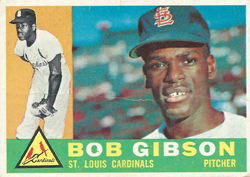 On July 30, 1959, Gibson made his first major-league start for the Cardinals and pitched a shutout in a 1-0 triumph over the Reds at Crosley Field in Cincinnati.
The win was the first of a club-record 251 Gibson achieved with the Cardinals. He and fellow Baseball Hall of Famer Jesse Haines (210) are the only pitchers to earn 200 wins as Cardinals.
Work in progress
Gibson, 23, made his big-league debut for the Cardinals on April 15, 1959, in a relief appearance against the Dodgers at Los Angeles Memorial Coliseum.
After pitching in three games, all in relief, for the Cardinals and posting a 10.12 ERA, Gibson was demoted to Class AAA Omaha on April 28, 1959.
Playing for manager Joe Schultz, Gibson was 9-9 with a 3.07 ERA in 135 innings pitched for Omaha.
In his book “From Ghetto to Glory,” Gibson said, “Pitching regularly, my early wildness practically vanished. That pleased me and evidently it pleased the Cardinals.”
The Cardinals brought him back on July 29, 1959, and manager Solly Hemus told him he’d start the next night against the Reds.
Close call
Before the game, Reds farm director Phil Seghi told Bill Ford of the Cincinnati Enquirer that Gibson nearly signed with the Reds instead of the Cardinals in 1957 when he was attending Creighton University in Omaha.
“As late as 2 in the morning, he agreed to verbal terms with us,” Seghi said, “but by daylight he had jumped to the Cardinals.”
Seghi said “a member of the Gibson family nixed the deal” with the Reds.
According to the Dayton Daily News, Gibson’s basketball coach at Creighton, Tommy Thomsen, scouted for the Reds and recommended Gibson.
“The Reds looked him over a few times and decided they liked what they saw,” the Dayton newspaper reported. “So they told Thomsen to go to work on him and try to get him to sign. Thomsen thought he was making progress until he read Gibson had signed with Omaha, a Cardinals farm. The Reds representatives quickly got in touch with Gibson and the youngster said he was a native of Omaha and he felt honor-bound to sign with the hometown team.”
Tested early
Gibson was matched in his first Cardinals start against Reds rookie Jim O’Toole. Years earlier, Gibson and O’Toole competed for a roster spot on a semipro team in South Dakota and Gibson got the job.
In the first inning, Gibson quickly got into trouble when Johnny Temple led off with a walk and the next batter, Vada Pinson, singled. Gus Bell grounded to short, forcing Pinson at second and advancing Temple to third. With runners on first and third, one out, Gibson escaped the mess unscathed when Frank Robinson flied out to shallow center and Jerry Lynch grounded out.
The Cardinals scored in the second. Ken Boyer led off with a double, moved to third on Bill White’s groundout to second and scored on Joe Cunningham’s single. In the bottom half of the inning, Gibson struck out his first big-league batter, Willie “Puddin’ Head” Jones.
In the fifth, O’Toole’s single “bounced off the left shin of Gibson, momentarily throwing fear into the Cards,” the Cincinnati Enquirer reported, but Gibson was able to continue and got the next batter, Temple, to ground into a double play.
Dramatic ending
Gibson’s biggest challenge occurred in the ninth.
Lynch led off with a single and Ed Bailey followed with a liner toward White at first base. White stopped the hard smash with the thumb of his glove. The ball fell to the ground and White picked it up and threw to second in time to force out Lynch.
With a runner on first, Jones popped out to the catcher for the second out, but Gibson walked pinch-hitters Frank Thomas and Don Newcombe on eight consecutive pitches to load the bases for Temple, who was batting .328.
In his book “Stranger to the Game,” Gibson said, “I was half-expecting Hemus to yank me out of the game.”
Reliever Marshall Bridges was ready in the bullpen, the St. Louis Post-Dispatch reported, but Hemus stuck with Gibson.
Gibson’s first two pitches to Temple were outside the strike zone and called balls. After a called strike on the third pitch, Temple fouled off a delivery to even the count at 2-and-2.
On the next pitch, a fastball, Temple hit a liner to shallow center and it was caught by Curt Flood for the final out.
The Cincinnati Enquirer called Gibson’s ninth-inning escape act “a credit to his competitive determination.”
Gibson, sipping a cup of orange soda, told the Post-Dispatch, “I can throw a lot harder, but my shoulder has been a little sore for the past week.” Boxscore
Hit or miss
Gibson lost his next five decisions before earning a win on Sept. 12, 1959, in a start against the Cubs at Wrigley Field in Chicago. Gibson pitched a six-hitter, struck out 10 and drove in a run in the 6-4 Cardinals victory.
He didn’t pitch again for two weeks until Hemus used him in relief in the last game of the season against the Giants on Sept. 27, 1959.
In “from Ghetto to Glory,” Gibson said, “I was so bored I would sit on the bench in the far corner of the dugout and I’d just about fall asleep because it’s no fun when you’re not playing.”
Gibson finished with a 3-5 record and 3.33 ERA in 13 appearances for the 1959 Cardinals. His ERA as a starter was 3.16.
“The few times I did get a chance to pitch I could not possibly be sharp because of lack of work,” Gibson said. “Especially when I went eight or nine days without pitching. I’d be exceptionally strong and the ball would move every which way. I never knew where it was going and, as a result, I walked a lot of men (39 in 75.2 innings) and made too many mistakes.”
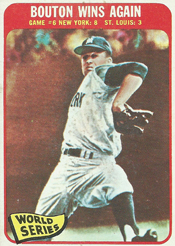 In 1964, Bouton made two starts for the Yankees against the Cardinals in the World Series and won both.
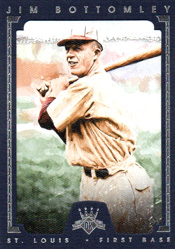 On July 6, 1929, the Cardinals set a franchise record for most runs in a game when they beat the Phillies, 28-6, in the second game of a doubleheader at Baker Bowl in Philadelphia.
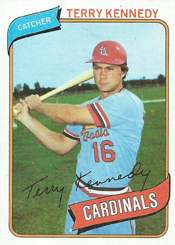 On July 1, 1979, Kennedy hit his first big-league home run, a grand slam, in Game 1 of the Sunday doubleheader at St. Louis and delivered a walkoff RBI-single on a broken-bat pop fly in Game 2.
 Banks, the Cubs’ sunny slugger, always wanted to play as much baseball as possible and his desire for doubleheaders led to his catchphrase.
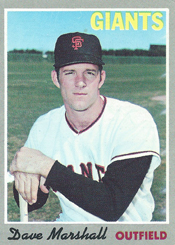 Marshall played in the big leagues from 1967-73 as an outfielder for the Giants, Mets and Padres.
 RetroSimba