Feeds:
Posts
Comments

Archive for the ‘Opponents’ Category

(Updated March 5, 2026)

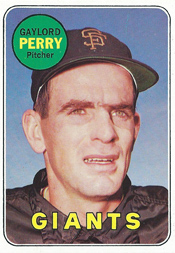
On a night when Juan Marichal was supposed to start for the Giants, Gaylord Perry got the call instead and outdueled the most dominant pitcher in baseball.

On Sept. 17, 1968, Perry pitched a no-hitter against the Cardinals at Candlestick Park in San Francisco. The Giants won, 1-0, overcoming a typically stellar performance by Bob Gibson.

Perry, pitching on three days’ rest because Marichal was sidelined by a sore right knee, tired in the eighth, prompting Giants pitching coach Larry Jansen to ask manager Herman Franks whether a reliever should get ready. Franks stuck with Perry, who delivered the only no-hitter of his Hall of Fame career.

One and done

The Tuesday night game against the Giants was the Cardinals’ first since they clinched the National League pennant two days earlier on Sept. 15, 1968, at Houston.

Manager Red Schoendienst started most of his regulars against Perry. The exceptions were Bobby Tolan, who substituted for Lou Brock in left field, and Phil Gagliano, who replaced Julian Javier at second base.

Gibson, on his way to securing NL Most Valuable Player and Cy Young awards, entered the game with a 21-7 record and 1.13 ERA. Perry was 14-14 and 2.55.

In the bottom of the first inning, Giants second baseman Ron Hunt, a St. Louis native, hit Gibson’s third pitch of the game over the left-field fence for a home run, his second and last of the season.

Hunt told the San Francisco Examiner the pitch “was about waist high and I think Gibson was just trying to throw me a strike.”

“Hunt hit a fastball that I threw a little inside,” Gibson said to United Press International.

Getting wet

In the second, the Cardinals got their first base runner when Mike Shannon walked with two outs, but Perry retired the next batter, Gagliano.

With two outs in the fourth, Perry made what he described as a “fat pitch,” a high slider, to Orlando Cepeda, but it was popped up to first baseman Willie McCovey, who caught it in foul territory for an out.

“The most important thing was my control,” Perry said to the Associated Press. “I was hitting the spots, keeping the ball low and my slider was really working.

“I knew after the fifth inning that I had a chance for a no-hitter and I tried to hit the corners all the way.”

Perry threw three types of pitches _ “a fastball, a sinking slider and a slider that was breaking real sharp on the outside,” catcher Dick Dietz told the Examiner.

“Most of the Cardinals charged that Perry threw about 75 percent spitballs or Vaseline balls,” the St. Louis Post-Dispatch reported.

“Perry was throwing his same old sinker, but it was wet and it sure dropped,” Schoendienst said.

Wetting the ball with saliva or any substance such as Vaseline was against the rules, and the Cardinals were adamant Perry was in violation. Cepeda told the Post-Dispatch that Perry threw him six spitballs or Vaseline balls in his last at-bat, and pinch-hitter Johnny Edwards said all but one pitch to him were spitters.

Giants reliever Frank Linzy told the Tulsa World, “Gaylord threw about 90 percent spitters that night.” Linzy said Vaseline usually was hidden behind the right ear and underside of the left wrist.

In his 1974 book “Me and the Spitter,” Perry admitted, “I was greasing that night, but only a few times.”

“I had a great slider that day. Honest,” Perry said.

Fine fielding

Cardinals center fielder Curt Flood said, “We were trying to do anything to get a base hit.”

The Cardinals came close to getting a hit in the sixth.

Dal Maxvill led off and smacked a sharp grounder to Perry’s left. A right-hander, Perry wore his glove on his left hand and he was able to field the ball and throw out Maxvill. “The ball just fell right into my glove,” Perry said to the Post-Dispatch. “If the ball had been hit to my right, I couldn’t have got it.”

With two outs, Tolan cracked a hard grounder between first and second, but McCovey snared it and made a perfect toss to Perry, who was covering first. Perry credited McCovey with making a “tremendous play to his right.”

The Cardinals hit two balls to the outfield the entire game and both were caught by Bobby Bonds in center.

Finish the job

In the eighth, Gagliano walked with two outs and Jansen, the pitching coach, didn’t like what he was seeing. “When a pitcher’s ball starts to come up from the (batter’s) knees and gets around the waist or higher, then you have to feel he is beginning to tire,” Jansen said. “That’s the way it looked in the eighth.”

Jansen told Franks, “I think he is beginning to lose his stuff. Do you want to get somebody warm?”

Franks replied, “Not until they get a hit off him.”

After the walk to Gagliano, Perry struck out Edwards, who was batting for Maxvill.

In the ninth, Brock, batting for Gibson, led off and grounded out to short. Tolan followed with a groundout to second and Flood, who led the club in hits, came up next. “I was really worried about Flood,” Perry said. “Flood hits to all fields and I thought he might hit a ball between the infielders.”

Instead, Flood took three called strikes. Boxscore

Good calls

In his book “Stranger to the Game,” Gibson praised home plate umpire Harry Wendelstedt, “who distinguished himself with what I consider to be the best job of calling balls and strikes that I ever witnessed.”

“Harry didn’t miss a pitch all night,” said Gibson, “and I told him so afterwards. That wasn’t an easy thing for me to do, not only because I was reluctant to compliment an umpire, as a rule, but mostly because I was not in a sociable mood when the game ended.”

Gibson’s line: 8 innings, 4 hits, 1 run, 2 walks, 10 strikeouts. “That may have been one of the best games I ever pitched,” Gibson told Stan McNeal of Cardinals Yearbook in 2018.

Perry’s line: 9 innings, 0 hits, 0 runs, 2 walks, 9 strikeouts.

The no-hitter was the first against the Cardinals since Don Cardwell of the Cubs did it on May 15, 1960. Perry also became the first Giant to toss a no-hitter since Marichal achieved one against Houston on June 15, 1963.

Perry’s gem was completed in one hour, 40 minutes and played before 9,546 spectators. He threw 101 pitches.

After celebrating with a dish of ice cream, Perry signed autographs for about 100 fans who were waiting for him outside the clubhouse.

Less than 24 hours later, on Wednesday afternoon, Sept. 18, 1968, Ray Washburn pitched a no-hitter against the Giants in the Cardinals’ 2-0 victory at Candlestick Park. Boxscore

Perry and Washburn became the first big-league pitchers to toss no-hitters in consecutive games.

Read Full Post »

(Updated July 26, 2025)

Mark Whiten remains the only Cardinals player to hit four home runs in a game.

On Sept. 7, 1993, in the second game of a doubleheader at Cincinnati, Whiten hit a grand slam, a pair of three-run home runs and a two-run home run, leading the Cardinals to a 15-2 victory over the Reds. Boxscore

“This is the No. 1 achievement I’ve ever witnessed,” Cardinals manager Joe Torre said to the St. Louis Post-Dispatch.

Whiten’s 12 RBI tied the big-league single-game record established by Jim Bottomley of the Cardinals on Sept. 16, 1924, against the Dodgers at Brooklyn. In that game, Bottomley produced six hits _ three singles, a double and two home runs. The home runs were a grand slam and a two-run shot. Boxscore

Whiten was the 12th big-league player to hit four home runs in a game and the first since Bob Horner of the Braves did it on July 6, 1986, against the Expos at Atlanta. Boxscore

Eight major-league players have hit four home runs in a game since Whiten did it, bringing the total number of those who have achieved the feat to 20.

Whiten, Gil Hodges and Josh Hamilton are the only major-league players to hit four home runs in a game and have at least one runner on base for each of the four.

Whiten, a switch-hitter, hit each of his four home runs while batting left-handed against Reds right-handers. Whiten said he hit a fastball on each home run.

“Even though they were fastballs down the middle, you still have to know what to do with them,” Cardinals third baseman Todd Zeile said. “You can’t even do what he did in batting practice.”

Here is a look at each of Whiten’s four home runs, including the calls by KMOX broadcasters Jack Buck and Mike Shannon as published by the Post-Dispatch:

Home run No. 1

In the first inning, Whiten hit a 2-and-0 pitch from rookie starter Larry Luebbers 408 feet to left-center for a grand slam.

Jack Buck on KMOX: “Swing and a long one to left-center. That one won’t be caught. At the wall and goodbye.”

Home run No. 2

In the sixth, Mike Anderson, making his major-league debut, relieved Luebbers and walked the first two batters he faced, Zeile and Gerald Perry. Whiten was the next batter and he drilled the first pitch from Anderson 397 feet to right-center for a three-run home run.

Mike Shannon on KMOX: “Swing and a long one into right field. On the move the right fielder (Tim) Costo can’t get it. Over the wall and seven RBI in the second game for Whiten … Have a big evening and Whiten said, ‘I don’t mind if I do.’ ”

Home run No. 3

In the seventh, Whiten hit a 2-and-1 pitch from Anderson 388 feet to right for another three-run home run.

Jack Buck on KMOX: “Here’s another pitch and another home run by Whiten. He walks down to first base as it is over the fence for a three-run homer.”

Home run No. 4

When Whiten came up in the ninth to face the original Nasty Boy closer, Rob Dibble, the Cardinals had a 13-2 lead, a runner on first and one out.

“Do you think Dibble will come after him?” Jack Buck asked on the air, building the drama for his listeners. “Do you think Dibble will let him swing the bat?”

Dibble’s first two pitches to Whiten were outside the strike zone.

Said Whiten: “I felt he was going to try to pitch around me.”

“”I’m not going to walk him,” Dibble told the Cincinnati Enquirer. “That’s not my style. Put it in play, fine.”

With the count at 2-and-0, Whiten swung at Dibble’s next offering and crushed it 441 feet off the facing of the second-deck seats in right-center for a two-run home run.

Jack Buck on KMOX: “Swing and a long one. Looks like he did it. Four home runs for Mark Whiten. He powdered one over the center field fence … Man, what a blast that was! What a blast this is! … Excuse me while I applaud.”

On Cardinals’ television, Jack’s son, Joe Buck, was doing the play-by-play and his call of Whiten’s fourth home run was: “Into center field. Did he? Yes!”

Said Whiten: “It’s like when Michael Jordan gets in the zone. He’s going to score 50 points. That’s kind of the way I felt.”

Here is a video of all four home runs: Video

Ten years later, Whiten told Gabriel Kiley of Cardinals Gameday Magazine, “I was more excited about the third one because I had never hit more than two in a game in my life. The fourth dinger was icing on the cake.”

Whiten didn’t use his bat model to hit any of the four home runs, Rick Hummel of the Post-Dispatch reported, and “word is he has been using Jose Oquendo’s bat.”

Oquendo hit no home runs for the 1993 Cardinals. “There are plenty of home runs left in that bat,” Torre said.

The next night, in his first at-bat of the game leading off the second against the Reds’ Bobby Ayala, Whiten singled.

“What a bum,” Jack Buck said to listeners in his most endearing wise guy tone. “That’s the best he can do?”

Read Full Post »

They came from places one might find in a John Grisham novel, but Wilmer Mizell of Vinegar Bend, Ala., and Ed Bailey of Strawberry Plains, Tenn., were real and they were central characters in an unusual game between the Cardinals and Reds.

On Sept. 1, 1958, in the opening game of a doubleheader at St. Louis, Mizell established a National League record for most walks in a shutout, issuing nine in a 1-0 Cardinals victory.

One reason Mizell was able to thrive despite a lack of command was his ability to retire Bailey in key situations. Three times, Bailey batted with two on and two outs and Mizell got him out each time.

Path to success

Mizell was from Leakesville, Miss., located along the Chickasawhay River in the southeast part of the state near the Alabama border. The nearby town of Vinegar Bend, Ala., became Mizell’s adopted home because Leakesville was on the Vinegar Bend mail route.

At 16, Mizell began playing baseball in Sunday leagues in Vinegar Bend and from then on he became known as Vinegar Bend Mizell.

A left-handed pitcher, Mizell signed with the Cardinals in 1949 when he was 18 and established himself as a top prospect. He was 12-3 with a 1.98 ERA for Albany (Ga.) in 1949 and also had strong seasons for Winston-Salem (17-7, 2.48) in 1950 and Houston (16-14, 1.97) in 1951.

Mizell got to the major leagues with the Cardinals in 1952, posted a 10-8 record and issued the most walks (103) of any National League pitcher. After composing a 13-11 record for the Cardinals in 1953, Mizell spent two years in military service and rejoined the Cardinals in 1956.

Windmill windup

Mizell brought an 8-11 record into his Labor Day start against the Reds in 1958. He faced his first challenge in the first inning when Bailey batted with two outs and runners on first and second.

Bailey, a left-handed batter, was born and raised in Strawberry Plains, about 20 miles from Knoxville, and made his major-league debut with the Reds in 1953. He became their starting catcher in 1956 when he hit 28 home runs.

Mizell got Bailey to fly out to right and escaped the first inning unscathed.

The Cardinals scored the lone run in the second against hard-luck Reds left-hander Joe Nuxhall, whose defense let him down. Ken Boyer led off, grounded to third baseman Alex Grammas and reached safely when Grammas booted the ball. After Joe Cunningham flied out, Gene Green hit a roller to second baseman Johnny Temple, who was thinking he could turn a double play, but when he went to scoop the ball it got past him for an error. Boyer advanced to third and Green was safe at first.

Wally Moon followed with a high chopper to the right of the mound. As Nuxhall reached for the ball, Boyer streaked to the plate and Nuxhall’s only play was to throw to first to retire Moon.

In the third, Bailey came up with two outs and runners on first and third, and again he flied out to right.

Mizell, described by the Cincinnati Enquirer as a “big left-hander with the windmill windup,” walked six in the first four innings, but had a no-hitter entering the fifth.

Escaping trouble

In the fifth, Temple singled for the Reds’ first hit, but was erased on Jerry Lynch’s double-play grounder. Pete Whisenant followed with a single, stole second and also stole third. Frank Robinson walked and stole second, giving the Reds runners on second and third with two outs and Bailey at the plate.

Bailey grounded out to second, ending the Reds’ best threat. He would hit .140 (7-for-50) against Mizell in his big-league career.

The Reds put a runner on base in every inning except the ninth and stranded 11. They had nine walks, five stolen bases and four singles but no runs, snapping a six-game winning streak.

The Post-Dispatch described the game as “an unusual thriller” and The Sporting News reported it as “a weird duel.” Boxscore

Mizell threw 150 pitches.

The major-league record for most walks issued in a shutout is 11 by Lefty Gomez of the American League Yankees on Aug. 1, 1941, in a 9-0 victory over the Browns at New York. Boxscore

Read Full Post »

Jackie Robinson hit for the cycle one time in his major-league career and he did it in inverse order against four different Cardinals pitchers.

On Aug. 29, 1948, Robinson produced a home run, triple, double and single for the Dodgers in the first game of a doubleheader at Sportsman’s Park in St. Louis. Robinson also scored three runs, drove in two and had a stolen base, propelling the Dodgers to a 12-7 victory.

In the second game, Robinson had two singles, a sacrifice bunt and a run scored, helping the Dodgers sweep with a 6-4 triumph in 10 innings and lifting them into first place in the National League.

Making a move

The Dodgers won the 1947 National League pennant under manager Burt Shotton, who filled in while Leo Durocher was suspended for association with gamblers. Durocher returned in 1948 and the Dodgers started poorly, losing 19 of their first 31 games. On July 2, they were in last place at 27-35.

On July 16, 1948, Shotton came back to the Dodgers after Durocher departed to manage the Giants. The Dodgers surged and were back in contention entering the doubleheader against the Cardinals.

The first game of the doubleheader matched Dodgers rookie Paul Minner against Cardinals ace Harry Brecheen and attracted 33,826, the biggest crowd of the season at Sportsman’s Park.

Billy Cox opened the game for the Dodgers with a single and Robinson followed with his home run, a line drive over the wall in left. Pee Wee Reese reached on shortstop Marty Marion’s error and Bruce Edwards connected on a two-run home run, giving the Dodgers a 4-0 lead and driving Brecheen out of the game without recording an out.

Until then, Brecheen had yielded three home runs all season.

Extra incentive

Robinson, “spurred by constant boos from the crowd,” according to the New York Daily News, led off the third inning with a triple against Ted Wilks.

In the fourth, Robinson doubled to left against Al Brazle, swiped third and scored on Reese’s line out to center.

Robinson lined out to center in the sixth against Red Munger before he completed the cycle with a single in the eighth off Gerry Staley.

Robinson’s last at-bat of the game in the ninth resulted in a fly out against Jim Hearn.

Described by Bob Broeg of the St. Louis Post-Dispatch as “the nimble Negro star,” Robinson was 4-for-6 in the game.

“He was simply poison to the Cardinals hurlers in the opener,” the Associated Press reported. Boxscore

Pennant push

In the second game, Robinson’s two hits brought his batting average to .300 for the season and the Dodgers’ sweep of St. Louis pulled them into a virtual first-place tie with the Braves. The Dodgers had a 66-51 record and .564 winning percentage and the Braves were 69-54 and .561.

Robinson, in his second Dodgers season after breaking the major league’s segregation practices the year before, finished the 1948 season with a batting mark of .296. He hit .329 in 19 games against the Cardinals in 1948.

After winning 39 of 55 games in their surge from last place to first, the Dodgers eventually faded and finished in third place at 84-70. The Braves won the pennant with a 91-62 record and the Cardinals placed second at 85-69.

Read Full Post »

A reckless, senseless act by Vince Coleman blew up in his face, putting him at risk for a jail sentence and casting him into baseball limbo.

On Aug. 26, 1993, the Mets cut their connection to Coleman, telling him to stay home, after prosecutors charged him with a felony for throwing an explosive device similar to a grenade into a parking lot and injuring three people, including two children.

Though a month remained in the 1993 season and Coleman had another year left on his contract, Mets co-owner Fred Wilpon said Coleman “will not play here again as a Met” regardless of the legal outcome of the case. His stint with them was marred by injuries and controversies until he reached rock bottom with the felony charge.

Follow the money

An outfielder with exceptional speed, Coleman debuted in the major leagues with the Cardinals in 1985, established a big-league single-season rookie record with 110 stolen bases, scored 107 runs and sparked St. Louis to a National League pennant. Coleman was the unanimous choice for the National League Rookie of the Year Award.

Coleman led the league in stolen bases in each of his six seasons with St. Louis, swiping more than 100 three times.

After the 1990 season, when Coleman, 29, became a free agent, the Cardinals offered him a four-year, $10.5 million contract. Coleman rejected it for the Mets’ offer of four years at $11.95 million.

While with the Mets, Coleman had trouble on and off the field. Plagued by damaged hamstrings, he was limited to 72 games and 37 stolen bases in 1991 and 71 games and 24 stolen bases in 1992.

Coleman feuded with manager Jeff Torborg and coach Mike Cubbage and he was suspended for two games after shoving Torborg. In 1992, Coleman was one of three Mets players investigated in a rape allegation until authorities in Port St. Lucie, Fla., determined there wasn’t enough evidence to file charges.

Under attack

On July 24, 1993, Coleman and teammate Bobby Bonilla got into a Jeep driven by Dodgers outfielder Eric Davis after a game at Dodger Stadium. As a prank, Coleman tossed a M-100, described by authorities as a military device having 200 to 300 grains of gunpowder and used to simulate grenades, into the parking lot where a group of people were gathered to seek autographs from players.

The M-100, which packed the equivalent power of a quarter-stick of dynamite, exploded and injured a 2-year-old girl, who suffered second-degree burns to a cheek and damage to an eye and finger; an 11-year-old boy, who had cuts on his shin; and a 33-year-old woman, who complained of vertigo and ringing in her ear, according to the Los Angeles Fire Department.

Salvador Hernandez, who witnessed the incident, told the Los Angeles Times he saw Coleman toss the M-100 and “he definitely meant to throw it at the fans.”

Another witness, Veronica Mayhew, told the New York Daily News the M-100 “started fizzing and everybody thought it was a smoke bomb, but then it just blew up really big and sparks flew everywhere.”

Five days later, Coleman called his actions “inappropriate,” but complained about being portrayed as insensitive and uncaring.

Clear message

Coleman, batting .279 with 38 stolen bases, played his last game for the Mets on July 31, 1993, against the Cardinals at St. Louis. After that, manager Dallas Green, who’d replaced Torborg in May, removed Coleman from the lineup until authorities determined whether to file charges.

On Aug. 3, 1993, the Los Angeles district attorney’s office charged Coleman with one count of unlawful possession of an explosive device. A spokesman said prosecutors opted for a felony charge instead of a misdemeanor because of the strength of the explosive and the injuries. Coleman faced a maximum sentence of three years in jail.

In a prepared statement, Coleman said, “I take full responsibility for a very foolish act for which I am suffering greatly. It was never my intent to hurt anyone.”

At Coleman’s request, the Mets placed him on an unpaid leave of absence.

Meanwhile, public pressure was applied on the Mets to do more to punish Coleman.

_ Steve Serby, New York Daily News: “There really is no point in keeping Vince Coleman around anymore … Coleman is nothing but trouble.”

_ Michael Ventre, Los Angeles Daily News: “Baseball produces a higher percentage of immature knuckleheads than any other sport. Sitting on the throne today as the king of all of them is Coleman … Here’s hoping somebody lowers the boom on Vince.”

_ Bernie Miklasz, St. Louis Post-Dispatch, noting how pitcher Nolan Ryan pummeled Robin Ventura after Ventura charged the mound: “It’s a shame Vince Coleman didn’t charge Ryan … Maybe we ought to have Nolan Ryan clean this game up, administer his brand of frontier justice, and restore baseball’s vanishing morality.”

Three weeks into his leave of absence, the Mets told Coleman he never would be welcomed back to the team.

“I think it would be in Vince Coleman’s best interests and the New York Mets’ best interests that he never wear a New York Mets uniform again,” Wilpon said.

Said Green: “You’ve got to have guys who care about their responsibilities as a professional and care about the organization and care about winning. There were times that wasn’t Vinny’s first goal.”

Plea bargain

Coleman hired Robert Shapiro to be his defense attorney. Shapiro, one of the lawyers who represented O.J. Simpson in his double-murder trial, sought to have the charge against Colman reduced to a misdemeanor.

On Oct. 22, 1993, Coleman entered a plea of innocent to the felony charge in municipal court in Los Angeles. Two weeks later, on Nov. 5, after Shapiro and prosecutors negotiated an agreement, Coleman pleaded guilty to a misdemeanor charge of possession of an explosive device.

A one-year jail term was suspended. Coleman was given three years of probation and assigned 200 hours of community service. He also agreed to make restitution to the three people he injured.

Deputy district attorney Bill Hodgman said he consulted with the victims and their families to determine whether to accept the plea agreement and all agreed he should, the Associated Press reported.

“I’m relieved, very relieved,” Coleman said. “I’m sorry it happened. I’ve suffered dearly.”

On Jan. 5, 1994, the Mets traded Coleman to the Royals for outfielder Kevin McReynolds.

Coleman played four more big-league seasons with four teams, Royals, Mariners, Reds and Tigers, before making an unsuccessful comeback bid with the Cardinals in 1998.

Read Full Post »

(Updated Nov. 26, 2024)

Harry Walker and Vince DiMaggio, members of prominent baseball families, displayed dazzling speed and skills in making plays against one another in a game between the Cardinals and Pirates.

On Aug. 31, 1943, at Pittsburgh, Walker drove a ball past DiMaggio in center field and circled the bases for a two-run inside-the-park home run, lifting the Cardinals to a 4-2 victory.

Walker might have had another inside-the-park home run earlier in the game, but DiMaggio made a sensational catch to deprive him.

All in the family

Harry Walker made his major-league debut with the Cardinals in 1940. After spending parts of three seasons (1940-42) with the Cardinals, he was their starting center fielder in 1943.

Harry was the fourth member of his family to play in the big leagues. His father, Ewart Walker, was a pitcher with the Senators from 1909-12 and his uncle, Ernie Walker, was an outfielder with the Browns from 1913-15. Harry’s brother, Dixie Walker, was the best-known, playing 18 seasons (1931 and 1933-49) in the majors as a hard-hitting outfielder with the Yankees, White Sox, Tigers, Dodgers and Pirates. Dixie’s given name was Fred and he was eight years older than Harry.

Vince DiMaggio was the oldest of three brothers who became outfielders in the big leagues. Vince made his major-league debut with the Braves in 1937. Joe DiMaggio, two years younger than Vince, got to the big leagues first, with the Yankees in 1936, and played 13 seasons in a Hall of Fame career. Dom DiMaggio, five years younger than Vince, played for the Red Sox for 11 years after debuting with them in 1940.

In the book “My Greatest Day in Baseball,” Cardinals pitcher Dizzy Dean said a nightclub owner, Johnny Perkins, bet him he wouldn’t strike out Vince DiMaggio the first time he came up in a game at Boston.

“I did, and when I went back to the bench I made motions to (Perkins) I’d double the bet the next time,” Dean said. “I struck (DiMaggio) out again, and I put everything back on a third bet, and I fanned him three straight times.

“Then Perkins wanted to make it all or nothing, so I took him, and when DiMaggio came up again he lifted a pop foul back of the plate. I thought (Bruce) Ogrodowski was going to catch it, and I ran and hollered, ‘Let it go, let it go.’ He couldn’t get the ball anyway, as it turned out, because it hit the screen, but I’d have bumped him sure as hell if he’d got under it. I wanted to win that bet. I struck DiMaggio out on the next pitch. Four straight times!” Boxscore

Vince was dealt by the Braves to the Yankees on Feb. 4, 1939, and was assigned to their minor-league club at Kansas City. Vince never did join Joe on the Yankees. On Aug. 5, 1939, Vince was acquired by the Reds and, nine months later, in May 1940, the Reds traded him to the Pirates. Vince became the Pirates’ starting center fielder, succeeding Lloyd Waner. In 1941, Vince produced 21 home runs and 100 RBI.

On the run

In the 1943 game at Pittsburgh, the Cardinals had runners on second and third, one out, when Harry Walker faced Pirates starter Bob Klinger in the third inning at Forbes Field. Walker, a left-handed batter, lined a pitch to right-center and Vince DiMaggio gave chase.

“DiMaggio was racing backward at full speed when he glanced back, leaped” and speared the ball on the dead run, the St. Louis Post-Dispatch reported.

The Pittsburgh Press said, “If Vince hadn’t made that final stretch, Walker would have had an inside-the-park homer.”

According to the Post-Dispatch, “DiMaggio made as fine a catch as you’ll ever see on a ballfield.”

Marty Marion tagged and scored from third on the play, giving the Cardinals a 1-0 lead, and Walker was credited with a RBI.

Finding the gap

In the ninth, with the score tied at 2-2, the Cardinals had pitcher Red Munger on second base with two outs and Walker at the plate against Klinger. Walker hit a drive to left-center and DiMaggio again took off in pursuit.

“Vince made a desperate lunge for the ball,” the Post-Dispatch reported, but it landed just beyond his reach and skidded to the wall.

Munger scored easily from second with the go-ahead run and Walker circled the bases for an inside-the-park home run and a 4-2 Cardinals lead. Munger retired the Pirates in order in the bottom half of the inning, sealing the victory for St. Louis. Boxscore

The home run was the second of Walker’s big-league career. A line-drive hitter who sprayed the ball to all fields rather than an upper-cut swinger, Walker hit 10 home runs, including two inside the park, in 11 major-league seasons.

Read Full Post »

« Newer Posts - Older Posts »