Feeds:
Posts
Comments

Archive for the ‘Opponents’ Category

Predictably, a brawl involving two of the most temperamental characters in the major leagues, “The Mad Hungarian” and “One Tough Dominican,” was both intense and cartoonish.

On May 6, 1977, a melee among the Astros and Cardinals occurred in the ninth inning of a game at Busch Memorial Stadium in St. Louis.
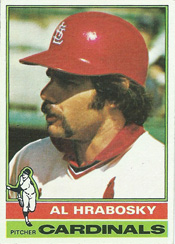
Astros batter Cesar Cedeno took issue with being drilled by a pitch from Cardinals reliever Al Hrabosky, the self-psyching showman known as “The Mad Hungarian.”

When Cedeno charged the mound, both dugouts emptied and fights erupted across the field, lasting 10 minutes before the game could resume.

Besides Hrabosky and Cedeno, the most prominent combatants included:

_ Joaquin Andujar, the Astros pitcher and self-proclaimed “One Tough Dominican,” who, like Cedeno, would play for the Cardinals in the 1980s.

_ Ted Simmons, the strong-willed Cardinals catcher and on-field leader.

_ Roger Freed, the burly and popular Cardinals pinch-hitter.

_ Dave Rader, a Cardinals backup catcher and former all-league high school football linebacker.

_ Cliff Johnson, a strapping 6-foot-4 Astros power hitter.

Asked by the St. Louis Post-Dispatch to summarize the histrionics, Astros player Enos Cabell aptly declared, “It was a goodie.”

Slap happy

Tension developed in the seventh inning. With the Cardinals ahead, 2-0, Johnson was grazed by a pitch from starter Pete Falcone.

Simmons, crouched behind the plate, and Johnson exchanged words.

“He didn’t think I got hit,” Johnson told the Post-Dispatch.

In what he said was a playful gesture, Johnson slapped Simmons in the head.

“I told him, ‘Clifford, relax,’ ” Simmons said. “He told me, ‘Take it easy.’ ”

Said Johnson: “I was just trying to get his attention.”

In the eighth, Hrabosky relieved Falcone and retired the Astros in order. The Cardinals scored twice in the bottom half of the inning and took a 4-0 lead into the ninth.

Mind games

As Cedeno approached the plate to lead off the ninth, Hrabosky went behind the mound, turned his back on the batter and went into his self-motivating meditation act.

Miffed, Cedeno left the batter’s box, went to the on-deck circle, used a rag to apply pine tar to his bat handle and waited for Hrabosky to get onto the mound.

Home plate umpire Bob Engel “waved in disgust” for Hrabosky to pitch, the Post-Dispatch reported.

Hrabosky “threw up his hands in seeming protest,” wrote Rick Hummel.

The first pitch, a fastball, plunked Cedeno in the left arm.

Cedeno dropped his bat and advanced toward the mound. Hrabosky dropped his glove and waited.

As they neared, Cedeno threw a punch. Hrabosky ducked, avoiding the blow.

“If I get knocked down, I’m in a world of trouble,” Hrabosky said.

Simmons stormed toward Cedeno and jumped on his back.

Bedlam reigns

Battles broke out all over.

Andujar, at the center of a fight near the third-base line, swung wildly in every direction. One of his swipes nearly clipped umpire Bill Williams in the jaw.

After Williams ejected Andujar, the pitcher desperately tried to get at the umpire and had to be restrained by coach Deacon Jones and teammate Bob Watson. Colleague John McSherry prevented Williams from going after Andujar, according to United Press International.

Cedeno was involved in multiple skirmishes, the Post-Dispatch reported.

Simmons, after rescuing Hrabosky, dived “into a pileup in an attempt at peacemaking.” When he emerged, Simmons shed “his catching equipment, with the exception of one shin guard, and motioned the Astros to come after him if they wished,” Hummel reported.

Though some Astros moved toward him, none dared take on Simmons.

“They were doing a lot of woofing,” Simmons said.

Johnson, the Astros outfielder, tried to lighten the mood by shadow boxing some of the Cardinals, comically tugging at an umpire’s jacket and pretending to kick another umpire in the rear.

As the field began to clear, Cedeno and Freed got into a fight near the first-base line. While the two threw punches, Rader bolted toward Cedeno, tackled him around the midsection and drove him back 15 yards, Hummel wrote. Video

Show goes on

Andujar and Freed were the only players ejected.

When the game resumed, Hrabosky and Simmons still were the St. Louis battery and Cedeno was the base runner at first.

Cedeno swiped second and Watson drew a walk.

Hrabosky got Joe Ferguson to hit into a third-to-first double play, with Watson taking second. Johnson doubled, driving in Watson and making the score 4-1.

Art Howe walked, bringing the potential tying run to the plate. Hrabosky finally ended the drama by getting Cabell to line out to shortstop Garry Templeton. Boxscore

Lighten up

Hrabosky claimed the pitch that struck Cedeno wasn’t intentional. “I just thought it was an inside pitch,” he told the Associated Press. “I’ve been told there are certain people I’m supposed to pitch up and in. I know there’s a certain way I have to pitch him and I’m going to do it.”

Said Simmons: “I didn’t call for it (a brushback pitch). I think you have to assume it was an accident.”

The Astros weren’t buying that explanation. “There should have been more punches thrown,” said Watson. “You don’t hit a man and get away with it. It was flagrant. The umpire should have kicked Hrabosky out.”

In the clubhouse, after tempers cooled, Johnson, the prankster, waited for Cedeno to head to the showers and placed an autographed photo of Hrabosky on his teammate’s chair. The picture was inscribed, “Next time, it’ll be two.”

When Cedeno returned to his locker and saw the photo, he looked around the clubhouse, yelled, “Damn you, Johnson,” and laughed.

Previously: Cesar Cedeno and his amazing month with Cardinals

Read Full Post »

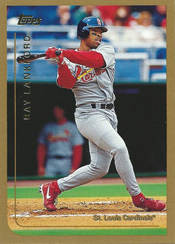
Proving he was recovered from major surgery and still had the ability to alter the outcome of a game, Ray Lankford dazzled the Dodgers in an epic ninth-inning performance that delivered a win for the Cardinals against their former closer.

In his first game since having an off-season rotator cuff operation on his left shoulder, Lankford sparked a Cardinals comeback against the Dodgers and Todd Worrell on April 22, 1997.

The Cardinals trailed by a run with two outs and none on in the ninth when Lankford performed his magic.

Help wanted

The Cardinals went to Los Angeles to complete a road trip that began with three games in Miami against the Marlins and continued with three versus the Padres in Honolulu.

Lankford, working his way back to form on an injury rehabilitation assignment with the Class A minor-league affiliate at Prince William, Va., initially wasn’t expected to rejoin the Cardinals until May 1.

However, when the Cardinals struggled to score five total runs over four games _ a pair of 2-1 losses to the Marlins and wins of 1-0 and 2-1 over the Padres _ general manager Walt Jocketty sent Jerry Walker, vice president for player personnel, to watch Lankford at Prince William.

When Jocketty received a glowing report _ “Jerry said he was swinging the bat well and throwing well,” Jocketty told the St. Louis Post-Dispatch _ the Cardinals brought Lankford to Los Angeles for the series opener against the Dodgers.

Call the closer

Manager Tony La Russa put Lankford in center field and batted him third in the order, behind Ron Gant and ahead of Brian Jordan, against Dodgers starter Pedro Astacio. Lankford drew a walk in the first inning, grounded out in the third, doubled in the fifth and flied out in the seventh.

In the ninth, Dodgers manager Bill Russell brought in Worrell to protect a 4-3 lead.

Worrell, 37, had pitched six seasons (1985-89 and 1992) for the Cardinals, amassing 129 saves and a 2.56 ERA. He was a key member of their 1985 and 1987 pennant-winning clubs.

The former Cardinal had gotten off to a good start for the 1997 Dodgers, with five saves and a 1.12 ERA.

Speed burns

Worrell appeared on his way to a routine save against the Cardinals. He retired Delino DeShields on a groundout and struck out Gant.

Lankford came up next and reached first safely on an infield single.

With Jordan at the plate, Lankford swiped second. Then he stole third.

“When we let catchers know that we’re running, that can kind of mess them up a little,” Lankford said.

A rattled Worrell walked Jordan.

“The prevailing theory is that when Lankford got to third with the tying run Worrell was reluctant to throw his slider for fear he would bounce it in the dirt,” wrote Rick Hummel of the Post-Dispatch.

The next batter, Gary Gaetti, was 2-for-19 on the season with runners in scoring position. With Jordan running on the pitch, Worrell grooved a fastball that Gaetti pulled into the left-field corner, scoring Lankford and Jordan and giving the Cardinals a 5-4 lead.

John Mabry followed with a double to right-center, scoring Gaetti.

“You don’t see that happen very often when Todd can’t hold the lead,” Russell told the Los Angeles Times.

Said Worrell: “Some nights you have it, some nights you don’t. I can’t get the third out. It makes it hard to swallow.”

Cardinals closer Dennis Eckersley set down the Dodgers in order in the bottom of the ninth, sealing the 6-4 St. Louis victory. Boxscore

Pressure points

“I figured (Lankford) would provide a spark,” said Jocketty. “I think he put some life into the team.”

Said La Russa: “Could it be any better than that? It was just the way he did it. He got base hits, he walked, he stole bases, he played good defense. Wow.”

The next night, April 23, the Dodgers led the Cardinals, 2-1, with one out and the bases empty in the ninth when Russell brought in Worrell. Gaetti greeted him with an infield single and was lifted for a pinch-runner, Steve Scarsone.

Mabry struck out and Scarsone swiped second.

Up next was Gant. He hit a towering fly into a 25-mph wind to left that was caught for the final out. “If the wind hadn’t been blowing in,” said Worrell, “that ball might have gone out.” Boxscore

Worrell, in the last year of an 11-season major-league career, posted 35 saves for the 1997 Dodgers, but had a 2-6 record and 5.28 ERA.

Lankford had one of his best Cardinals seasons in 1997. He batted .295 with 36 doubles, 31 home runs, 98 RBI and 21 stolen bases in 133 games. His on-base percentage of .411 was his single-season career high.

Previously: Ray Lankford found redemption in 5-strikeout game

Read Full Post »

(Updated Feb. 26, 2022)

Embracing the aloha spirit, the Cardinals accepted an opportunity for a Hawaiian adventure and avoided trouble in paradise.

In April 1997, the Cardinals participated in the first regular-season major-league games played in Hawaii. The three games against the Padres in Honolulu were part of a 10,200-mile Cardinals trip that included stops in Miami and Los Angeles.

“There is a special challenge every season,” Cardinals manager Tony La Russa said to the St. Louis Post-Dispatch. “This will be one of them.”

The risk was worth the reward. The Cardinals won two of the three games in Hawaii, drew large crowds to Aloha Stadium and enjoyed the visit.

“If this isn’t heaven, it’s close to it,” Cardinals outfielder Ron Gant said.

Player approval

The Padres, who in 1996 played the Mets in Monterrey, Mexico, in the majors’ first regular-season series outside the United States or Canada, were seeking to expand their fan base and marketing reach by scheduling a 1997 series in Hawaii.

Initially, the Padres asked the Astros to move a series from San Diego to Honolulu, but the Houston club declined.

The Padres then turned to the Cardinals.

Cardinals management approached catcher Tom Pagnozzi, the club’s union representative, and asked him to put the idea to a vote of his teammates. Pagnozzi said Cardinals players voted almost unanimously to play the Padres in Honolulu rather than San Diego.

“It was not a close vote,” Pagnozzi informed the Post-Dispatch. “It was completely one-sided. That surprised me a lot.”

Said Cardinals general manager Walt Jocketty: “We gave the players the right to say yes or no. We wouldn’t have done it if the players hadn’t agreed to it.”

Jocketty said the Padres “are paying our expenses over what they would have been if we had played in San Diego.”

While in Hawaii, Cardinals players were to get double the usual amount of meal money _ $125 per day.

“Another 100 beans and I’m going to be styling in Hawaii,” Cardinals reliever Dennis Eckersley said.

Cross country trip

After finishing a homestand in St. Louis on Monday, April 14, the Cardinals went to Miami to play three games with the Marlins. After losing the series finale on Thursday afternoon, April 17, the Cardinals boarded a plane in Fort Lauderdale for a 12-hour trip to Honolulu.

The Padres, who finished a road trip in Pittsburgh on Wednesday, April 16, got to Hawaii on Thursday, April 17, a day ahead of the Cardinals.

“Maybe they’re already drinking Mai Tais,” Cardinals pitcher Todd Stottlemyre said.

The Cardinals arrived in Honolulu at 2 a.m. on Friday, April 18. The Padres scheduled a workout at Aloha Stadium for their players that day. The Cardinals told their players to take the day off.

La Russa told the Post-Dispatch he probably would use the off day to visit the U.S.S. Arizona. Players John Mabry, Mark Sweeney and T.J. Mathews went surfing. Third baseman Gary Gaetti tried snorkeling.

According to an article about the trip in the 1997 All-Star Game program, “Cardinals players visited hospitals and military bases during their visit. The Cardinals also spent time fishing, participating in a canned food drive, playing golf and getting to know the people. Naturally, there even was time to sample a Hawaiian staple, the luau.”

Pitching prowess

The Cardinals and Padres were scheduled to play a doubleheader on Saturday, April 19, starting at 4:05 pm on the artificial surface of Aloha Stadium.

In the opener, Cardinals starting pitcher Matt Morris was struck on his right hand by a Tony Gwynn line drive in the first inning.

Morris completed a scoreless first and batted in the second, then departed when he couldn’t grip the ball.

Mark Petkovsek relieved and pitched six scoreless innings. Mathews and Eckersley finished with a scoreless inning apiece and the Cardinals won, 1-0. The run was scored in the sixth when, with two outs, Brian Jordan doubled, swiped third and went home on catcher John Flaherty’s wild throw. Boxscore

“I had a good fastball down in the zone,” Petkovsek told the Honolulu Advertiser. “As we progressed into the game, I used my changeup and curve a little more.”

The Cardinals won the second game, 2-1, behind the three-hit pitching of Alan Benes and a RBI apiece by Sweeney and Mabry. Boxscore

Attendance for the doubleheader was 37,382.

The Cardinals became the first team to sweep a doubleheader with three total runs since the Indians beat the Blue Jays by the same scores on May 17, 1981.

Second bananas

In the 2:05 pm series finale on Sunday, April 20, the Padres won, 8-2, before a crowd of 40,050. The Cardinals’ highlight was Gant’s inside-the-park home run.

Gant circled the bases and belly-flopped across home plate after center fielder Rickey Henderson crashed into the wall while pursuing the drive. “I thought I had a pretty good jump on it, but when you get out toward the wall it seems like you’re going downhill _ and then I stumbled a little bit,” Henderson told the Honolulu Star-Bulletin. Video and Boxscore

Reaction from the Cardinals to the Hawaii experience largely was positive.

“The trip wasn’t really a problem,” La Russa said. “We had plenty of time with the day off. The toughest part of this was playing a doubleheader and then coming back the next day to play when it’s really warm.”

La Russa was surprised the Padres organized the Hawaii weekend, not Major League Baseball (which did endorse it). Thus, the Padres were promoted more heavily and more favorably than the Cardinals.

In his column for the Star-Bulletin, Dave Reardon wrote, “La Russa didn’t like his team being billed as the Washington Capitals to the Padres’ Harlem Globetrotters. Can’t blame him.”

After the finale, the Cardinals went to Los Angeles, had an off day on Monday, April 21, and opened a series against the Dodgers with a 6-4 victory on Tuesday, April 22.

Previously: Before Kolten Wong, Joe DeSa gave Cards Hawaiian punch

Read Full Post »

In a pivotal Easter weekend showdown with the Mets, the Cardinals proved to the reigning World Series champions they wouldn’t be intimidated, even when their best pitcher got a bad break.

Looking to re-establish themselves as contenders, the Cardinals swept a three-game series from the Mets in April 1987.

The glory of that achievement was marred, however, when Cardinals ace John Tudor broke a bone below his right knee in a freak dugout collision with Mets catcher Barry Lyons on Easter Sunday.

“We got a sweep, but the broom broke,” Cardinals trainer Gene Gieselmann said to the St. Louis Post-Dispatch.

With Tudor projected to be sidelined for three months, it appeared the Cardinals’ chances of dethroning the Mets had been damaged.

Instead, the Cardinals pulled together and, with Tudor’s help down the stretch, won their third National League pennant in six years.

Message delivered

In 1986, the Mets had a 108-54 record, finishing 28.5 games ahead of the Cardinals in the NL East, and went on to win the pennant and World Series championship. The Mets won eight of nine games in St. Louis against the Cardinals that season.

The April 17-19 series was the Mets’ first visit to St. Louis in 1987 and the Cardinals wanted to send an early message they wouldn’t be pushovers.

Tudor started the series opener on April 17 and got the win in a 4-3 Cardinals victory. In the fifth inning, with the Mets ahead, 3-2, Tudor started the comeback with a single off Bob Ojeda. Tommy Herr put the Cardinals in front, 4-3, with a two-run single. Ricky Horton pitched three scoreless innings in relief of Tudor for the save. Boxscore

Herr delivered another key blow in the second game of the series on April 18. After the Cardinals got a run in the bottom of the ninth to tie the score at 8-8, Herr hit a grand slam off Jesse Orosco with two outs in the 10th, lifting St. Louis to a 12-8 triumph. Boxscore and video

Fateful foul

The Easter Sunday pitching matchup on April 19 in the series finale was Greg Mathews for the Cardinals against Sid Fernandez.

In the third, with the Cardinals ahead, 1-0, St. Louis slugger Jack Clark lofted a pop fly that carried toward the home team dugout.

Lyons, making his first start of the season in place of Gary Carter, who was getting a day off, gave chase, barreling full steam in pursuit of the ball.

Looking skyward, Lyons kept running hard as he neared the Cardinals’ dugout.

“I thought I had a play on it, but the ball was right in the sun and I couldn’t judge where I was,” Lyons told the Post-Dispatch.

Reckless chase

Tudor and teammates were standing on the first step of the dugout. As his teammates scattered, Tudor reached out to try to prevent Lyons from tumbling down the steps and onto the dugout floor.

“I tried to catch him,” Tudor said. “I don’t know what the hell he was thinking about. He never even broke stride. If I wasn’t there, I don’t know what would have happened to him.

“I got up on the first step, expecting him to slide. Most catchers come in and slide and you can stop them … He never stopped. When I tried to sidestep him, he took me that way. He kind of pinned me. He caught my foot _ and hip _ against the bench. The bottom of my foot was against the bench.”

The collision snapped Tudor’s right tibia bone. Lyons was unhurt. Video

The ball, uncatchable, landed several rows into the stands.

Said Cardinals manager Whitey Herzog: “Nobody thought Barry was coming in. There wasn’t any play. The Easter Bunny couldn’t have caught that ball _ and he can jump.”

Costly win

Tudor was taken to a hospital and his right leg was placed in a cast.

The Cardinals went on to win the game, 4-2, completing the sweep. Boxscore

“You look at the three games they won and I think the deciding factor in all of them was defense,” said Mets outfielder Mookie Wilson. “… They’re probably the best defensive ballclub in baseball. They are going to be a force to be reckoned with.”

A force that would be without Tudor until August.

“Now we’ll see how good I can manage,” Herzog said.

Happy ending

When Tudor returned to the lineup Aug. 1 for a start against the Pirates, the resilient Cardinals were in first place in the NL East at 62-39, four games in front of the Expos and 6.5 ahead of the Mets.

Tudor won eight of nine decisions after he returned, finishing with a 10-2 record for the season.

The last of those wins came on Oct. 2 when Tudor faced Lyons for the first time since Easter. Lyons singled twice in two at-bats against Tudor _ “He hit two changeups that I hung. Bad pitches,” Tudor said _ but the Cardinals won, 3-2. Boxscore

St. Louis finished the regular season atop the NL East at 95-67, three ahead of the runner-up Mets, and clinched the pennant by winning four of seven in the NL Championship Series against the Giants.


Read Full Post »

Over a two-year period, when he lost far more than he won, Astros pitcher Bob Bruce prevailed in a series of duels with Cardinals ace Bob Gibson.

Bruce was 9-18 in 1965 and 3-13 in 1966 for a combined record of 12-31. Gibson was 20-12 in 1965 and 21-12 in 1966 for a combined record of 41-24. Yet, in the four starts pairing Bruce against Gibson in those two seasons, Bruce was 3-1 with a 1.69 ERA.

In nine years (1959-67) in the majors, primarily with losing Houston clubs, Bruce was 49-71 with a 3.85 ERA. Against the Cardinals, the right-hander was 4-8 with a 2.45 ERA in 20 appearances, including 14 starts.

In a relief appearance versus the Cardinals on April 19, 1964, at Houston, Bruce became the 12th major-league pitcher to strike out three batters on nine pitches, according to the Houston Chronicle. Bruce achieved the feat in the eighth inning, striking out Bill White, Charlie James and Ken Boyer on an assortment of off-speed pitches. In the ninth, after yielding a single to Johnny Lewis, Bruce struck out the side. Boxscore

Tim McCarver, Cardinals catcher, said Bruce was a right-handed version of St. Louis left-hander Curt Simmons.

“Bruce is rough on left-handed batters with his slow stuff,” McCarver said to the St. Louis Post-Dispatch. “He has a good motion like Simmons. He keeps the ball down. He keeps you honest with fastballs on the hands.”

Another Cardinal, Phil Gagliano, said, “Bruce never gives you anything good to hit.”

Though he started multiple games against Cardinals pitchers such as Ernie Broglio, Ray Sadecki and Ray Washburn, the St. Louis opponent Bruce faced the most was Gibson.

Hot stuff

Pitching for the Houston Colt .45s in their first season in the National League, Bruce was paired against Gibson for the first time on July 22, 1962. The Cardinals won, 3-1, on a sweltering Sunday afternoon at Colt Stadium.

With the temperature in the upper 90s, Bruce pitched seven innings, giving up all three runs in the second. Gibson contributed a two-out, RBI-single.

Relying primarily on fastballs and working on three days of rest, Gibson pitched 8.2 innings for the win.

Lindy McDaniel earned the save by getting Billy Goodman to ground out with runners on second and third, two outs, in the ninth.

“I wanted a breaking ball on Goodman and Gibson didn’t have enough left,” Cardinals manager Johnny Keane told the Post-Dispatch when asked why he lifted Gibson. Boxscore

Bruce and Gibson would not be paired against one another as starters for three years. Then Bruce began his stretch of winning three of four against Gibson.

Here’s a look at those games:

Surprise slugger

Bruce held the Cardinals to two runs in eight innings and got the win in a 5-2 Astros victory at St. Louis on June 4, 1965.

Gibson was burned by home runs from a pair of players who were physical opposites. In the sixth, Walt Bond, a 6-foot-7 outfielder, hit a two-run home run into the teeth of a wind blowing in from right field. With two outs in the ninth, Ron Brand, a 5-foot-7 catcher, hit a three-run home run, snapping a 2-2 tie. It was the second of three home runs Brand would hit in an eight-year career in the majors.

Brand had hit Gibson’s first pitch of the at-bat deep but foul. The home run came with the count 1-and-2. “That first pitch was surprise enough,” Brand said. “I hardly ever hit a ball that hard. I never hit two like that in one inning.”

The Cardinals had eight singles off Bruce until McCarver led off the bottom of the ninth with a double. Jim Owens relieved and retired the next three batters, preserving the win for Bruce. Boxscore

Home sweet dome

Bruce pitched a six-hit shutout in a 2-0 victory over the Cardinals at the Astrodome on July 21, 1965. All the St. Louis hits were singles.

Gibson yielded four hits in seven innings, though he injured the little finger on his right hand reaching for a hard grounder by Joe Morgan in the fifth.

With the finger swollen and painful _ the injury later was diagnosed as a torn capsule joint _ Gibson remained in the scoreless game.

Bob Lillis, a former Cardinals infielder, broke the tie that inning with a two-run double, a pop fly to right-center that barely eluded center fielder Curt Flood. “I was a step behind the ball and I might as well have been a day late,” Flood said.

Bruce, described by the Post-Dispatch as “no Humpty Dumpty,” preserved the win by getting McCarver to fly out with two on and two outs in the ninth. Boxscore

Solid Goldfinger

Though his injured finger remained swollen, Gibson limited the Astros to four singles in a 3-1 victory at St. Louis on Aug. 5, 1965.

Gibson, who greeted well-wishers by extending his left hand, said, “The finger doesn’t bother me so much when I throw a fastball, but it really smarts when I throw curves. I bunch the fingers to throw curves and the little finger presses against the next finger on curves.”

McCarver drove in two of the three runs off Bruce without a hit. McCarver hit a sacrifice fly in the fourth and his hard groundout to first in the sixth scored Flood from third.

“I’d like to be able to pitch like Gibson _ even with a sore finger,” Bruce said. Boxscore

Eyeing a win

In his final matchup against Gibson, Bruce held the Cardinals to two hits in eight innings in a 6-1 victory at St. Louis on July 8, 1966. Gibson was lifted after surrendering four runs and eight hits in 4.1 innings.

Bruce entered the game with a record of 1-6 and a 5.98 ERA. An infection in his right eye that threatened his sight had kept him from pitching from April 20 until June 5. After beating Gibson and the Cardinals, Bruce told the Post-Dispatch he still didn’t have satisfactory vision in the eye. Boxscore


Read Full Post »

Struggling to score, the Cardinals opened the 1997 season by losing a franchise-record six in a row.

From April 1-6, the 1997 Cardinals scored a total of 12 runs in losing three to the Expos at Montreal and three to the Astros at Houston. All the games were played indoors.

It was the first time the Cardinals started a season 0-6.

The ugly start put the Cardinals in a hole from which they couldn’t recover. Never getting their record above .500, the 1997 Cardinals finished 73-89.

Expectations had been for a much different outcome.

High hopes

In 1996, Tony La Russa’s first season as St. Louis manager, the Cardinals (88-74) won the National League Central Division title and swept the Padres in the NL Division Series. After getting within a win of clinching the 1996 pennant before losing to the Braves in the NL Championship Series, the Cardinals were supposed to be contenders in 1997.

At a banquet in February 1997, La Russa raised the stakes, predicting the Cardinals would repeat as division champions.

The Cardinals had a successful spring training in Florida, posting a 19-11 record in exhibition games.

“So far, the signs are outstanding _ the way they’ve gone through the drills, the way they’ve competed in the games and the way they’ve related to each other and the coaches,” La Russa said to the St. Louis Post-Dispatch. “The signs are all go.”

After departing Florida, the Cardinals went to Arlington, Texas, and to Baltimore to play exhibition games against the Rangers and Orioles before opening the season on April 1 at Montreal.

In his column for the Post-Dispatch, Bernie Miklasz wrote, “La Russa has had the game face on since, oh, about Dec. 26. It should be a good year. The Cardinals should repeat as Central Division champions.”

Loss #1, April 1, at Montreal

In the bottom of the ninth inning, with the score tied at 1-1, Cardinals reliever Tony Fossas walked pinch-hitter Sherman Obando with the bases loaded, forcing in the winning run and giving the Expos a 2-1 victory. Boxscore

Obando never took a swing in the six-pitch at-bat. “I didn’t see the ball up, so I didn’t swing,” Obando said.

The Cardinals scored their run in the sixth when Delino DeShields scampered home from third on a wild pitch from Jim Bullinger.

Loss #2, April 2, at Montreal

The Expos, behind the pitching of Jeff Juden, Omar Daal and 39-year-old Lee Smith, held the Cardinals to two singles and won, 4-1.

For the second consecutive game, the lone Cardinals run was scored by DeShields advancing from third to home on a wild pitch.

Said La Russa: “I have confidence that good hitters are going to hit.” Boxscore

Loss #3, April 3, at Montreal

The Cardinals blew leads of 2-0 and 4-2, losing 9-4. The Expos raked starter Alan Benes for 10 hits and seven runs in 4.2 innings.

“You can draw any conclusions you want to,” said La Russa. “They just flat outplayed us all three games.” Boxscore

The next day, in Houston, Miklasz met with La Russa before the game and described the manager as looking “as cheerful as your basic werewolf.”

“Those three insipid losses (at Montreal) made baseball’s most famous vegetarian more nauseated than he would by a plate stacked high with pepperoni, sausage and bacon,” Miklasz wrote.

Said La Russa: “We should have been more competitive in each of those three games. There’s no reason why we shouldn’t have done better in how we played _ and the manager should have done a better job.”

Loss #4, April 4, at Houston

Jeff Bagwell’s bases-loaded single off Eric Ludwick in the 11th snapped a 2-2 tie and lifted the Astros to a 3-2 victory.

The Cardinals started a season 0-4 for the first time since 1985.

St. Louis stranded 13 base runners. John Mabry drove in both Cardinals runs. Boxscore

In four games, the Cardinals were batting .167 with runners in scoring position.

“I feel terrific about our club,” La Russa said. “There isn’t anything we didn’t try to do tonight. The effort was there, the intensity, everything.”

Loss #5, April 5, at Houston

The Astros beat the Cardinals, 6-2. With their 0-5 record, the 1997 Cardinals matched the teams of 1902, 1919, 1960 and 1973 for worst start in franchise history.

Wrote Miklasz: “The lineup is as lethal as a Pez dispenser.”

Sid Fernandez started and earned the win in his final appearance of a 15-year major-league career. Ramon Garcia pitched four scoreless innings in relief for the save. Boxscore

“It’s a six-month test … I still like our club a lot,” said La Russa.

Loss #6, April 6, at Houston

Bagwell, hitting for infielder Tim Bogar in the eighth, delivered a two-run, two-out double off John Frascatore, erasing a 2-1 Cardinals lead and carrying the Astros to a 3-2 victory. Boxscore

The three-game sweep gave the Astros more wins against the Cardinals in 1997 than they had in 1996, when they lost 11 of 13 to St. Louis.

Having set the franchise record for most losses to begin a season, the Cardinals limped back to St. Louis for their home opener.

“I think I see guys trying to force things,” La Russa said. “It’s human nature. I hope they do. Otherwise, it means they don’t care.”

Said Cardinals third baseman Gary Gaetti: “It’s hard not to press when you’re really trying to get that first one.”

That’s a winner

After an off-day in St. Louis on April 7, the Cardinals played their home opener on April 8.

Willie McGee, 38, hitting for pitcher Mark Petkovsek, rescued the Cardinals by slashing a home run off Ugueth Urbina with two outs in the bottom of the ninth, giving St. Louis a 2-1 triumph over the Expos. Boxscore

“You couldn’t write a better script,” Mabry said of McGee’s streak-busting blast.

Said La Russa: “This was more dramatic than anything I’ve seen in a movie.”

Previously: Why Cards chose Delino DeShields over Ryne Sandberg

Read Full Post »

« Newer Posts - Older Posts »