Feeds:
Posts
Comments

Archive for the ‘Trades’ Category

(Updated Feb. 14, 2022)

The Cardinals almost dealt Bob Gibson to the Washington Senators.

In December 1960, the Cardinals and the Pirates had trade talks with the Senators regarding left-handed reliever Bobby Shantz.

“I wanted Shantz to cement our bullpen as the second man behind Lindy McDaniel, just as the Pirates wanted him behind Roy Face,” Cardinals general manager Bing Devine told Oscar Kahan of The Sporting News.

The Senators asked the Cardinals for right fielder Joe Cunningham, Devine said.

“When I would not make the deal,” Devine told Kahan, “they expressed interest in Bob Gibson.”

Gibson, 25, was unhappy with the way he was being utilized by Cardinals manager Solly Hemus. Gibson pitched in 27 games for the 1960 Cardinals, posting a 3-6 record and 5.61 ERA.

The Senators “said it would take a lot more than Gibson to get Shantz,” Devine told the St. Louis Post-Dispatch.

Kahan, citing an anonymous source, reported in the Dec. 28, 1960, edition of The Sporting News the Cardinals offered the Senators three players for Shantz:

1. Bob Gibson

2. Either pitcher Ron Kline or outfielder Walt Moryn.

3. Any one of these minor leaguers: pitchers Ed Bauta, Willard Schmidt and Dean Stone, and outfielders John Glenn and Ben Mateosky.

“Ron Kline and Bob Gibson, each of whom would be a starter for the Senators, have been mentioned as possible trade bait for Shantz,” the St. Louis Globe-Democrat reported.

Devine thought it was an offer the Senators couldn’t refuse. “I think I wound up offering more than they got from the Pirates, but we could not get together,” Devine said.

Senators manager Mickey Vernon had been a Pirates coach during the 1960 season and became impressed by several Pittsburgh prospects, especially first baseman R.C. Stevens.

The Senators swapped Shantz to Pittsburgh for Stevens, outfielder Harry Bright and pitcher Bennie Daniels.

Pirates general manager Joe Brown “beat me to the draw on Shantz,” Devine told the Post-Dispatch. “I feel that maybe I blew the thing, but we were ready to make a similar deal with Washington with players off our (big-league) roster.”

It was a deal the Senators would regret.

_ Stevens, who hit 37 home runs with 109 RBI for Class AAA Salt Lake City in 1960, played in 33 games for the Senators in 1961, with no homers and two RBI. He never played another season in the big leagues.

_ Bright, who hit 27 homers with 119 RBI for Salt Lake City in 1960, played two seasons with the Senators before he was traded to the Reds.

_ Daniels had a 37-60 record and 4.14 ERA in five seasons with the Senators.

When the Cardinals replaced Hemus with Johnny Keane in July 1961, Gibson blossomed into an ace, becoming the greatest Cardinals pitcher and leading St. Louis to two World Series championships and three pennants.

And, Devine ended up acquiring Shantz, after all.

After one season with Pittsburgh, the Pirates lost Shantz to the Houston Colt .45s in the expansion draft. On May 7, 1962, Houston traded Shantz to the Cardinals for outfielder Carl Warwick and pitcher John Anderson.

In three years with St. Louis, Shantz had a 12-10 record, 15 saves and a 2.51 ERA.

A final twist: While many recall pitcher Ernie Broglio was the key player Devine traded to the Cubs on June 15, 1964, for outfielder Lou Brock, what often gets overlooked is Shantz also was part of the deal.

So, instead of trading Gibson for Shantz, Devine ended up keeping Gibson, acquiring Shantz and trading him for Brock. Today, Gibson and Brock are members of the National Baseball Hall of Fame.

Read Full Post »

(Updated Aug. 11, 2024)

On Dec. 9, 1980, in a trade that successfully altered the course of the franchise, the Cardinals acquired closer Bruce Sutter from the Cubs for first baseman Leon Durham, third baseman Ken Reitz and utility player Ty Waller.

Sutter gave the Cardinals the reliable closer they had been lacking. With Sutter as the anchor, manager Whitey Herzog built a deep bullpen that handcuffed the opposition and took pressure off the starting staff.
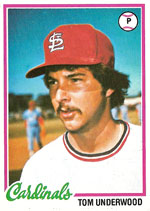
Sutter, who would be elected to the National Baseball Hall of Fame, was a key to turning the Cardinals from underachievers throughout the 1970s to World Series champions in 1982.

In his first year with St. Louis, the strike-hampered 1981 season, Sutter had a National League-leading 25 saves. In 1982, he led the NL in saves again, with 36.

In the five years before Sutter’s arrival, no Cardinals reliever had recorded more than 13 saves in a season.

In his book, “White Rat: A Life in Baseball,” Herzog said, “Relief pitchers like Bruce Sutter are worth their weight in gold.”

Wheeling and dealing

At the 1980 baseball winter meetings in Dallas, Herzog, who had the dual role of general manager and manager, completed a multiplayer deal in which he acquired closer Rollie Fingers from the Padres. He still wanted Sutter, who had won the 1979 National League Cy Young Award. Herzog viewed Fingers as insurance in case a deal with the Cubs couldn’t be completed.

Herzog called Fingers “the great relief pitcher I needed, but not the one I really wanted. The guy I was really after was Bruce Sutter.”

The Cubs were willing to deal Sutter because he had been awarded a $700,000 yearly salary, about twice as much as the club wanted to pay, in an arbitration ruling the year before.

When Herzog first approached the Cubs about Sutter, their general manager, Bob Kennedy, wanted Durham, Waller and second baseman Tom Herr, Herzog said.

Regarding Durham, Herzog told the St. Louis Post-Dispatch, “I hate to give him up. Durham is one of the top five prospects in the game.”

Cardinals scout Fred McAlister told the Chicago Tribune, “Quite frankly, in Durham, the Cubs may be getting another Dave Parker. If this guy ain’t a prospect, then nobody is.”

Herzog said he tried to get the Cubs to accept a package of players excluding Durham and Herr, but Kennedy responded, “No Durham, no Sutter.”

Herzog offered first baseman Keith Hernandez instead of Herr.

“I offered them Hernandez in a package deal,” Herzog said in the book, “You’re Missin’ A Great Game.” “But … Kennedy didn’t want to take on that big salary.”

When the Cardinals countered with an offer of Durham, Reitz and Waller, the Cubs accepted.

Upping the ante

Herzog was ready to part with Reitz, who he deemed “a fine-fielding third baseman but a streak hitter and maybe one of the slowest runners I’ve seen.” He hoped to shift Ken Oberkfell from second to third and put Herr at second.

Reitz, however, had a no-trade clause in his contract and wasn’t eager to approve a move to the Cubs. According to the Post-Dispatch, Reitz finally consented when the Cubs offered to increase his salary and the Cardinals agreed to compensate him for waiving the no-trade clause. Herzog said the Cardinals gave Reitz $50,000 to approve the trade. Newspapers reported the price was $75,000.

Chicago Tribune columnist Bob Verdi wrote, “It would have been nice had Kennedy held out for Ted Simmons, whose average for 81 games in Wrigley Field might have bordered on astronomical.”

Because he had signed free-agent catcher Darrell Porter, Herzog wanted to move Simmons from catcher to first base and put Hernandez in left field.

When Simmons balked at moving to first base, Herzog shipped Simmons, Fingers and pitcher Pete Vuckovich to the Brewers for pitchers Dave LaPoint and Lary Sorensen and oufielders David Green and Sixto Lezcano.

Good as expected

“The Cardinals have a chance to win the pennant with Bruce,” Kennedy told the Chicago Tribune, “but we have to rebuild, and he couldn’t win the pennant for us.”

Sutter said he was glad to leave the Cubs.

“I just don’t see any chance of the Cubs becoming a winner,” Sutter told the Chicago Tribune. “There’s not much in their minor-league system and it’s pretty obvious we didn’t have enough talent up here. It seems like the minute you become good around here, and they have to pay you for being good, they get rid of you because they don’t want to pay you. You just can’t operate that way.”

Sutter added, “The ballclub I’m going to is going to be a winner, and that matters more than anything.”

Using a split-fingered pitch Herzog described as looking “like a rock skipping on water _ tough to pick up, let alone hit,” Sutter was the stopper Herzog desired.

“When I got to St. Louis, I was sure I got myself a top-flight closer,” Herzog said. “…I realized it was smarter to start building my staff at the back, with that one potent guy, and move forward from there. I’d get that guy who could shut the door the last two innings, cut the other guy’s chance from 27 (outs) to 21, and hope my starters were good enough to get me through the sixth (inning).”

Sutter changed the dynamics of the game for the Cardinals. “Sutter might be the most important pitcher I ever had,” Herzog said. “He was sure the best relief pitcher I ever saw.”

Sutter led the league in saves in three of his four seasons with St. Louis. In the 1982 World Series, in which the Cardinals won four of seven games against the Brewers, Sutter had a win and two saves, closing out the decisive Game 7. Video

In an interview for the 2006 Baseball Hall of Fame yearbook, Sutter said, “I had a great time playing there. Whitey Herzog was the best. I learned a lot of baseball from Whitey Herzog.”

Claude Osteen, who pitched and coached in the big leagues, said most hitters couldn’t resist swinging at Sutter’s split-fingered pitch.

“So many times I’ve seen him come in to pitch and not be sharp and the majority of his out pitches are balls,” Osteen told the Philadelphia Daily News in 1985, “but the pitch just looks so appealing to the hitter that they can’t lay off of it. I’ve only seen one of two hitters _ Mike Schmidt is one and Ted Simmons was one of the best _ who were good at laying off of that pitch. Those two hitters constantly have Sutter behind in the count because they don’t swing at that pitch. That’s the secret to it.”

Read Full Post »

Tom Underwood’s time with the Cardinals was brief _ 19 games pitched in 1977 _ but he was an integral part of two trades that significantly shaped the St. Louis team.

A left-handed pitcher, Underwood was the centerpiece of a controversial trade by the Cardinals that sent outfielder Bake McBride and pitcher Steve Waterbury to the Phillies on June 15, 1977. In addition to Underwood, the Cardinals got outfielders Dane Iorg and Rick Bosetti.

McBride was popular with Cardinals fans and players, but he feuded with first-year St. Louis manager Vern Rapp. McBride was the first Cardinal to defy Rapp’s hair-length code and he bristled at Rapp’s demand that McBride trim his mutton chop sideburns.

Because McBride had undergone knee surgery in 1976, Rapp wanted to move him from center field to right field and place Tony Scott in center. When McBride balked at the move, it triggered the trade to Philadelphia.

The Cubs thought they had a deal to acquire Underwood from the Phillies for outfielders Jose Cardenal and Greg Gross. When the Cardinals made McBride available, the Phillies dealt with St. Louis instead.

McBride, who batted .307 in five years with St. Louis, helped the Phillies to three division titles and the 1980 World Series championship.

Underwood was 6-9 with a 4.95 ERA (17 starts, two relief appearances) with St. Louis. He walked (57) almost as many as he struck out (66).

The Cardinals wanted Underwood because their only left-handed starter, Pete Falcone, was struggling and two other rotation members (Larry Dierker and John Denny) were slowed by injuries. At the time of the trade, Underwood was 23 and coming off consecutive winning seasons for the Phillies. The Cardinals envisioned him as a pitcher who could pay dividends for years.

As a Cardinal, Underwood was effective against left-handed batters (he held them to a .186 batting average with no home runs). Right-handed batters pounded him for a .299 batting average and seven homers.

In his nine losses with St. Louis, Underwood had a 7.82 ERA and opponents batted .363 against him.

Underwood’s best-pitched game for the Cardinals came against the Cubs in Wrigley Field on Sept. 6, 1977. He pitched a complete game, yielding six hits and a run while striking out eight in a 3-1 Cardinals victory. Catcher Ted Simmons homered, singled, walked, scored a run and drove in two.  Boxscore

On Dec. 6, 1977, Underwood and picher Victor Cruz were traded by the Cardinals to the Blue Jays for pitcher Pete Vuckovich and outfielder John Scott.

Vuckovich, a tough right-hander, pitched well (39-31, 3.21 ERA) in three years with St. Louis. He, along with Simmons and reliever Rollie Fingers, were dealt by the Cardinals to the Brewers in December 1980 for pitchers Dave LaPoint and Lary Sorensen and outfielders David Green and Sixto Lezcano. That trade was critical to the construction of the Cardinals and Brewers into pennant winners in 1982.

Underwood went on to pitch for the Blue Jays, Yankees, Athletics and Orioles. In an 11-year big-league career, he was 86-87 with a 3.89 ERA.

Read Full Post »

In October 1965, the Cardinals shocked their fans with the trade of third baseman Ken Boyer to the Mets.

Boyer had been a fixture for the Cardinals since 1955. He was an all-star in seven of his Cardinals seasons, five times won a Gold Glove Award and was the National League winner of the Most Valuable Player Award in 1964.

General manager Bob Howsam, anticipating the Cardinals’ move to spacious, new Busch Stadium in 1966, wanted younger, faster players. On Oct. 20, 1965, he dealt Boyer to the Mets for third baseman Charlie Smith and pitcher Al Jackson. Boyer was 34 and Smith, 28.
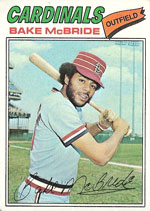
The deal Howsam initially wanted to make for Boyer was with the Astros, while the Mets first offered Smith and Jackson to the Angels.

According to a report in the Nov. 6, 1965, edition of The Sporting News, Howsam offered Boyer to the Astros for third baseman Bob Aspromonte. The deal would have included other players, but the keys were Boyer and Aspromonte.

Dick Peeples, sports editor of the Houston Chronicle, broke the story. (He also revealed that Astros general manager Paul Richards rejected a trade offer of outfielder Jim Wynn to the Reds for outfielder Frank Robinson; a month later, Robinson was dealt to the Orioles.)

Aspromonte was 27 at the time of the proposed deal. A competent fielder (he twice led NL third basemen in fielding), he wasn’t a strong run producer. In a 13-year big-league career, he never had more than 12 home runs and 69 RBI in a season.

While the Cardinals were negotiating with the Astros, Mets executive Bing Devine was offering Smith and Jackson to the Angels, according to a story by Ross Newhan in the Nov. 20, 1965, edition of The Sporting News. The Mets wanted outfielder Jose Cardenal in return.

When Angels general manager Fred Haney “dallied,” as Newhan reported, Devine turned to the Cardinals. Devine had been the Cardinals’ general manager before being fired in 1964 and knew Boyer well.

The Cardinals and Mets made the deal, setting off a firestorm of protest from Cardinals fans.

A year later, just before leaving the Cardinals to become general manager of the Reds, Howsam traded Smith to the Yankees for right fielder Roger Maris. That deal, which prompted Mike Shannon’s conversion from a right fielder to a third baseman, was integral in shaping the Cardinals into pennant winners in 1967 and 1968.

If the Cardinals had acquired Aspromonte instead of Smith, would the deal for Maris have occurred? Possibly (Aspromonte was a Brooklyn native), but we’ll never know.

Read Full Post »

The passing of former Phillies pitcher Wayne Twitchell on Sept. 16, 2010, brought to mind one of the most electrifying performances in the career of Cardinals speedster Bake McBride.

In the Phillies’ home opener on April 11, 1975, McBride sparked the Cardinals to a 6-3 victory with a three-run inside-the-park home run to center field against Twitchell. Boxscore

McBride, a left-handed batter, went 4-for-5 with four RBI and two runs scored that night. Against Twitchell, who started and lasted five innings, McBride was 3-for-3.  He singled in the first, homered in the third and singled again in the fifth.
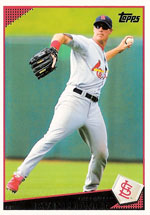
His home run came after Lou Brock singled and Ted Sizemore walked. McBride then drove a Twitchell pitch into center field and circled the bases.

McBride tormented Twitchell throughout his career, hitting .480 (12-for-25) against him.

In a twist of fate, the Phillies made trades involving McBride and Twitchell within minutes of one another on June 15, 1977.

After falling short in an aggressive bid to acquire pitcher Tom Seaver from the Mets (Seaver was dealt to the Reds instead), the Phillies traded Twitchell and catcher Tim Blackwell to the Expos for catcher Barry Foote and pitcher Dan Warthen.

With the trade deadline rapidly approaching, the Phillies then acquired McBride and pitcher Steve Waterbury from the Cardinals for pitcher Tom Underwood and outfielders Dane Iorg and Rick Bosetti.

The deal upset the Cubs, who thought they had a commitment from the Phillies to send them Underwood for outfielders Jose Cardenal and Greg Gross.

McBride became expendable because first-year Cardinals manager Vern Rapp preferred Tony Scott in center field and because the Cardinals were concerned about McBride being slowed by shoulder and knee problems. McBride also had clashed with Rapp over the club’s ban on facial hair and long sideburns.

McBride gave the Phillies an effective leadoff batter. He helped them to division titles in 1977 and 1978, and to a World Series championship in 1980.

Twitchell, a 6-foot-6 right-hander, had been named to the 1973 National League all-star team. Writing about the trades in the July 2, 1977, edition of The Sporting News, Ray Kelly suggested the Phillies “were reluctant to let him (Twitchell) go because he’s one of the hardest throwers around.”

Twitchell went from the Expos to the Mets and then the Mariners.

His last big-league season was 1979 and he finished his career with a 48-65 record.

Read Full Post »

The trade of Ryan Ludwick from the Cardinals to the Padres is understandable if it gives St. Louis the financial flexibility to eventually sign Albert Pujols to an extension. Still, it’s a downer.

Ludwick represented himself and the team with class. He was supposed to be just a fill-in outfielder and pinch hitter when he joined the Cardinals in 2007. Instead, he developed into a blue-collar all-star who played aggressively and enthusiastically. He will be missed.

What often went unappreciated with Ludwick was his potent slugging. He ranks 12th in Cardinals history for highest career slugging percentage (a player’s total number of bases reached on hits divided by official times at bat).

Here are the top dozen career slugging percentage leaders as a Cardinal (minimum 1,500 plate appearances):

Mark McGwire, .683

Albert Pujols, .622

Johnny Mize, .600

Rogers Hornsby, .568

Chick Hafey, .568

Stan Musial, .559

Jim Edmonds, .555

Joe Medwick, .545

Jim Bottomley, .537

Rip Collins, .517

Scott Rolen, .510

Ryan Ludwick, .507

To put that in perspective, here are just some of the players with lower slugging percentage’s than Ludwick’s as a Cardinal: Ken Boyer (.475), Bill White (.472), George Hendrick (.470), Enos Slaughter (.463), Ted Simmons (.459), Joe Torre (.458), Orlando Cepeda (.454) and Keith Hernandez (.448).

Read Full Post »

« Newer Posts - Older Posts »